Lead (CED0000002)

Record Information
Version1.0
Creation Date2009-03-06 18:57:54 UTC
Update Date2026-04-06 04:22:59 UTC
Accession NumberCHEM000002
Identification
Common NameLead
ClassSmall Molecule
Description
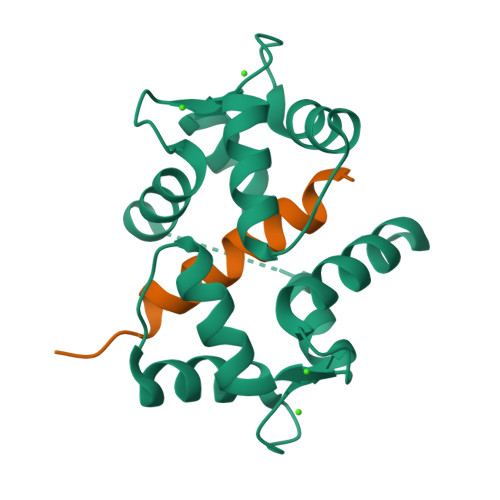
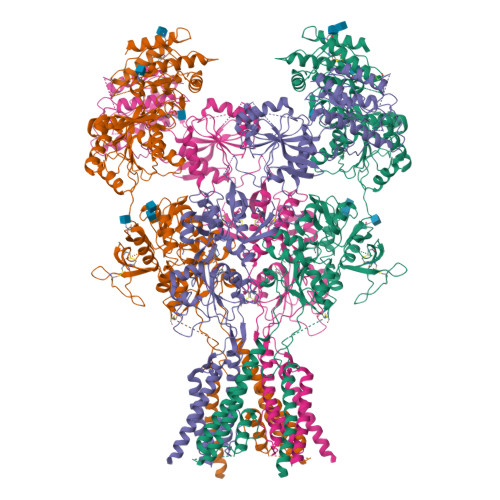
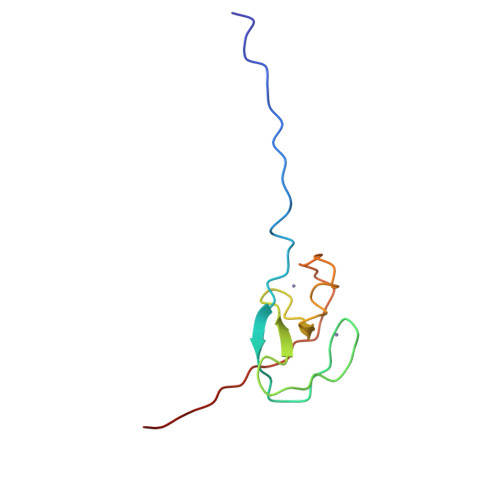
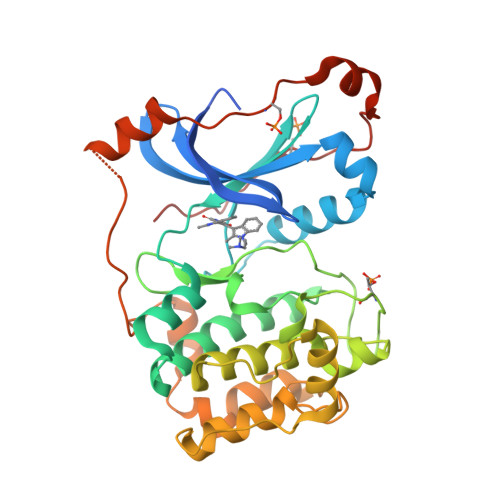
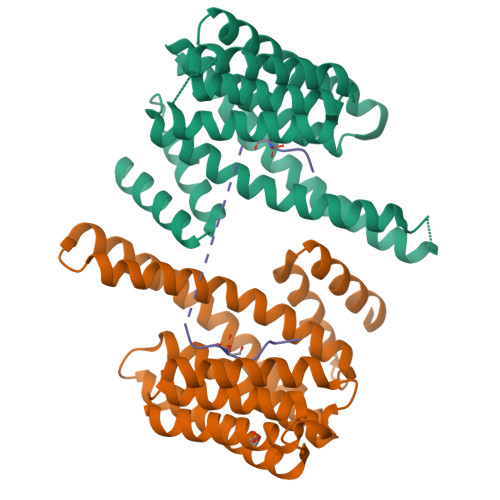
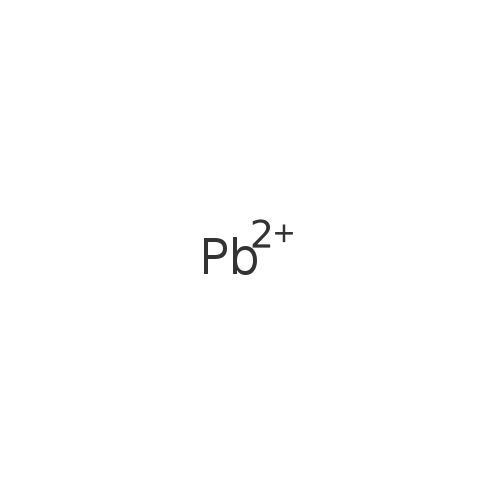
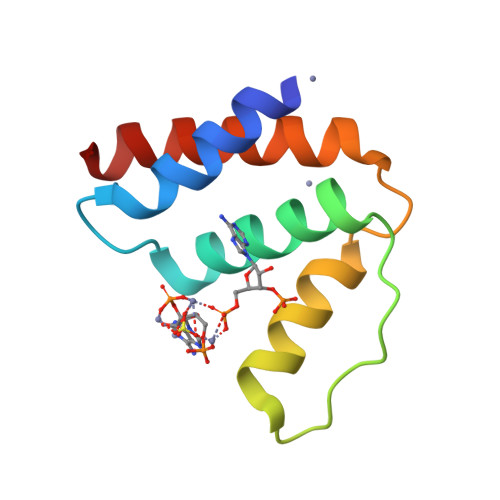
Lead belongs to the homogeneous post-transition metal compounds, a class of homogeneous metal compounds within the inorganic compounds. It is an exogenous solid with the formula Pb and an average molecular weight of 207.20 g/mol. Industrial applications include its use as a lubricating agent and as a degradant or impurity. In the context of plastics, lead is used in polyurethane, polyamide, acrylonitrile butadiene styrene, expanded polystyrene, low-density polyethylene, and high-density polyethylene; it is present in polyvinyl chloride and high impact polystyrene, and is released in polycarbonate, polystyrene, polyethylene, and polyethylene terephthalate. Lead is a biological neurotoxin associated with cancer (PMC11827045). Exposure occurs through inhalation, touch, and oral routes, with recorded sources including food contact materials, food processing and cookware (such as the processing of meats and fish, and fermentation processes for molasses and beer), and electrical and electronic equipment (including antennas, amplifiers, contacts, electric switches, and discharge lamps). The compound interacts with 26 recorded protein targets. It binds to sodium/potassium-transporting ATPases (ATP1A1, ATP1A2, ATP1A3, ATP1A4, and four others). It competitively inhibits calcium at protein kinase C (including PRKCA, PRKCB, PRKCD, PRKCI, and two others), which alters the blood-brain barrier and impairs brain microvascular function. Lead exhibits competitive inhibition at the NMDA receptor (including GRIN1, GRIN2A, GRIN2B, GRIN3B, and three others), affecting neurotransmitter release. It also inhibits ferrochelatase, mitochondrial (FECH) and delta-aminolevulinic acid dehydratase (ALAD), preventing the biosynthesis of heme. Additionally, lead binds to ACBP, thymosin beta-4, and calmodulin; the latter interference with calcium binding alters cAMP messenger pathways and neurotransmitter release.
Contaminant Type
  • Cigarette Toxin
  • Food Toxin
  • Household Toxin
  • Human Neurotoxin
  • Industrial/Workplace Toxin
  • Inorganic Compound
  • Lead Compound
  • Metabolite
  • Metal
  • Natural Compound
  • Pollutant
Chemical Structure
Synonyms
ValueSource
LEAD (II) ionChEBI
Lead, ion (PB2+)ChEBI
PbChEBI
PB(2+)ChEBI
PB2+ChEBI
GloverHMDB
haro Mix MH-204HMDB
Lead ion (PB2+)HMDB
Lead(2+) ionHMDB
OmahaHMDB
PlumbumHMDB, ChEBI
Methyl 2-bromo-6-(((2-(5,6-dihydro-1,4,2-dioxazin-3-yl)-2-((4-(4-nitrophenyl)-1,3-thiazol-2-yl)amino)ethyl)sulfanyl)-methyl)-5-hydroxy-3-methoxybenzoateMeSH, HMDB
82PBChEBI
BleiChEBI
PlombChEBI
PlomoChEBI
Chemical FormulaPb
Average Molecular Mass207.200 g/mol
Monoisotopic Mass207.977 g/mol
CAS Registry Number7439-92-1
IUPAC Nameλ²-lead(2+) ion
Traditional Nameλ²-lead(2+) ion
SMILES[Pb++]
InChI IdentifierInChI=1S/Pb/q+2
InChI KeyRVPVRDXYQKGNMQ-UHFFFAOYSA-N
Chemical Taxonomy
Description Belongs to the class of inorganic compounds known as homogeneous post-transition metal compounds. These are inorganic compounds containing only metal atoms,with the largest atom being a post-transition metal atom.
KingdomInorganic compounds
Super ClassHomogeneous metal compounds
ClassHomogeneous post-transition metal compounds
Sub ClassNot Available
Direct ParentHomogeneous post-transition metal compounds
Alternative ParentsNot Available
Substituents
  • Homogeneous post-transition metal
Molecular FrameworkNot Available
External Descriptors
Biological Properties
StatusDetected and Not Quantified
OriginExogenous
Cellular Locations
  • Cytoplasm
  • Extracellular
Biofluid LocationsNot Available
Tissue LocationsNot Available
ApplicationsNot Available
Biological Roles
Chemical RolesNot Available
Organoleptic EffectsNot Available
Physical Properties
StateSolid
AppearanceBluish-white metallic solid, turns grey when exposed to air.
Experimental Properties
PropertyValue
Melting Point327.5°C
Boiling Point1740 °C
SolubilityNot Available
Predicted Properties
PropertyValueSource
logP0.03ChemAxon
Physiological Charge2ChemAxon
Hydrogen Acceptor Count0ChemAxon
Hydrogen Donor Count0ChemAxon
Polar Surface Area0 ŲChemAxon
Rotatable Bond Count0ChemAxon
Refractivity0 m³·mol⁻¹ChemAxon
Polarizability1.78 ųChemAxon
Number of Rings0ChemAxon
BioavailabilityYesChemAxon
Rule of FiveYesChemAxon
Ghose FilterNoChemAxon
Veber's RuleYesChemAxon
MDDR-like RuleNoChemAxon
Spectra
Spectra
Spectrum TypeDescriptionSplash KeyDeposition DateView
Predicted LC-MS/MSPredicted LC-MS/MS Spectrumsplash10-014i-0090000000-123b547ace2c14730ca1Not AvailableView Spectrum
Predicted LC-MS/MSPredicted LC-MS/MS Spectrumsplash10-03di-0090000000-5199439513f6f28b5c21Not AvailableView Spectrum
Toxicity Profile
Mechanism of ToxicityLead mimics other biologically important metals, such as zinc, calcium, and iron, competing as cofactors for many of their respective enzymatic reactions. For example, lead has been shown to competitively inhibit calcium's binding of calmodulin, interferring with neurotransmitter release. It exhibits similar competitive inhibition at the NMDA receptor and protein kinase C, which impairs brain microvascular formation and function, as well as alters the blood-brain barrier. Lead also affects the nervous system by impairing regulation of dopamine synthesis and blocking evoked release of acetylcholine. However, it's main mechanism of action occurs by inhibiting delta-aminolevulinic acid dehydratase, an enzyme vital in the biosynthesis of heme, which is a necesssary cofactor of hemoglobin. (11, 2, 4, 10) At blood lead levels between 25 and 60 μg/dL, neuropsychiatric effects such as delayed reaction times, irritability, and difficulty concentrating, as well as slowed motor nerve conduction and headache can occur. Anemia may appear at blood lead levels higher than 50 μg/dL. In adults, Abdominal colic, involving paroxysms of pain, may appear at blood lead levels greater than 80 μg/dL.
Carcinogenicity (IARC Classification)2B, possibly carcinogenic to humans. (9)
Minimum Risk LevelChronic Inhalation: 0.05 mg/m3 (8)
SymptomsSymptoms of chronic lead poisoning include reduced cognitive abilities, nausea, abdominal pain, irritability, insomnia, metal taste in the mouth, excess lethargy or hyperactivity, chest pain, headache and, in extreme cases, seizures, comas, and death. There are also associated gastrointestinal problems, such as constipation, diarrhea, vomiting, poor appetite, weight loss, which are common in acute poisoning. (1, 7)
TreatmentLead poisoning is usually treated with chelation therapy using DMSA, EDTA, or dimercaprol. (7)
Toxicity ValuesNot Available
Health Effects
Health EffectRelationshipDirectionReference
cancerassociated_withNot AvailablePMC11827045
Exposure Sources
Source IDSourceSectorReference
494Food contact materialsFood, food processing & cookwareNot Available
505AmplifiersElectrical & Electronic EquipmentNot Available
506AntennasElectrical & Electronic EquipmentNot Available
512ContactsElectrical & Electronic EquipmentNot Available
514Discharge LampsElectrical & Electronic EquipmentNot Available
517Electric SwitchesElectrical & Electronic EquipmentNot Available
520Emergency Protective DevicesElectrical & Electronic EquipmentNot Available
527MagnetsElectrical & Electronic EquipmentNot Available
529Power CablesElectrical & Electronic EquipmentNot Available
530Radio Transmission SystemsElectrical & Electronic EquipmentNot Available
536Superconductive Or Hyperconductive Conductors Cables Or Transmission LinesElectrical & Electronic EquipmentNot Available
537Television SystemsElectrical & Electronic EquipmentNot Available
538Thin Magnetic FilmsElectrical & Electronic EquipmentNot Available
544Fermentation Processes For BeerFood, food processing & cookwareNot Available
546Molasses And Treatment Of MolassesFood, food processing & cookwareNot Available
551Processing FishFood, food processing & cookwareNot Available
552Processing MeatsFood, food processing & cookwareNot Available
553Treatment Of HopsFood, food processing & cookwareNot Available
579Manufacture Of Iron Or SteelIndustrial manufacturing & chemical processingNot Available
581Paper Making MachinesIndustrial manufacturing & chemical processingNot Available
584BuoysMarine, shipping & aquacultureNot Available
592Marine Propulsion Or SteeringMarine, shipping & aquacultureNot Available
597ChemosterilantsAgriculture & land managementNot Available
602MolluscicidesAgriculture & land managementNot Available
604Pest AttractantsAgriculture & land managementNot Available
607Rodenticides(1)Agriculture & land managementNot Available
608RodenticidesAgriculture & land managementNot Available
638Decorating TextilesTextiles, leather & furnishingsNot Available
643HeadwearTextiles, leather & furnishingsNot Available
653SewingTextiles, leather & furnishingsNot Available
Pathways
0 pathways

No pathways found

No metabolic pathways have been associated with this synthetic chemical

Targets
StructureProteinUniProt IDOrganismRelationshipDetails
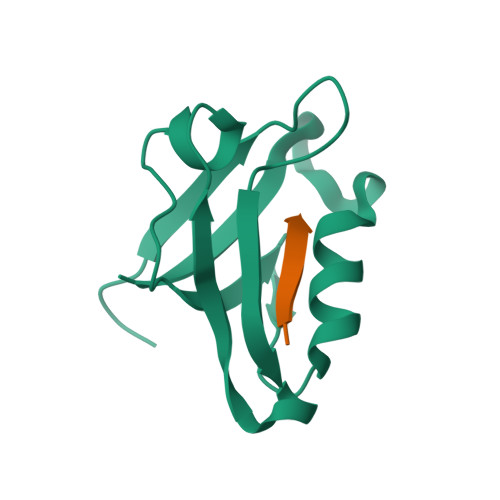
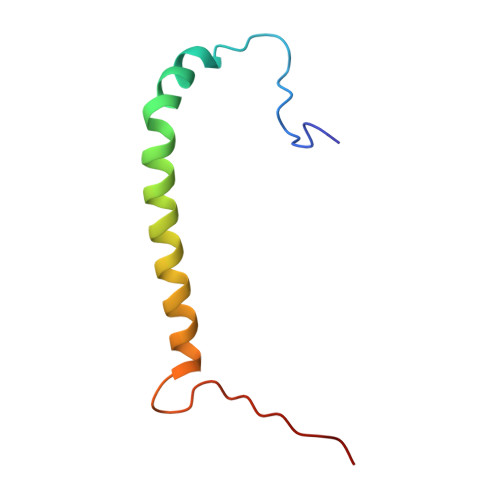
Acyl-CoA-binding protein structureClick to view 3D structureAcyl-CoA-binding proteinP07108HumansKnownLead is known to bind ACBP, which is responsible for the regulation of various processes such as acyl-CoA metabolism, GABA-A/benzodiazepine receptor modulation, steroidogenesis, intestinal cholecystokinin release, and insulin secretion. (A21)
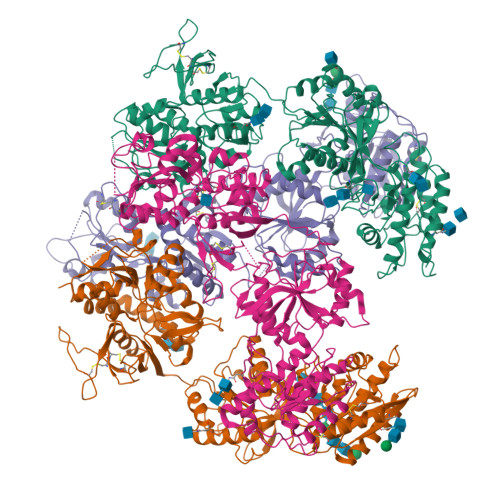
Ceruloplasmin structureClick to view 3D structureCeruloplasminP00450HumansKnownNot Available
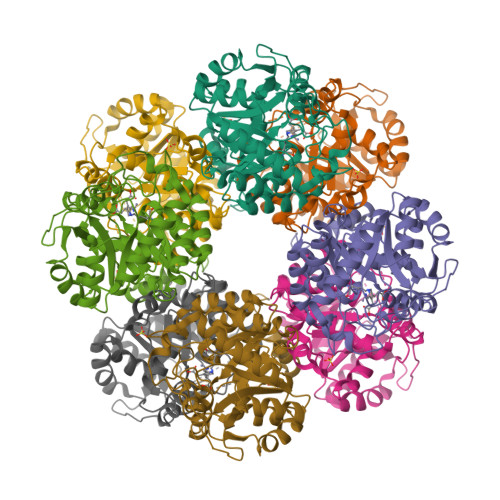
Delta-aminolevulinic acid dehydratase structureClick to view 3D structureDelta-aminolevulinic acid dehydrataseP13716HumansKnownLead inhibition of ALAD prevents the biosynthesis of heme, which is a necesssary cofactor of hemoglobin. (L21)
Ferrochelatase, mitochondrial structureClick to view 3D structureFerrochelatase, mitochondrialP22830HumansKnownLead inhibition of ferrochelatase prevents the biosynthesis of heme, which is a necesssary cofactor of hemoglobin. (L21)
Glutamate receptor ionotropic, NMDA 1 structureClick to view 3D structureGlutamate receptor ionotropic, NMDA 1Q05586HumansKnownLead exhibits competitive inhibition at the NMDA receptor, affecting neurotransmitter release. (A22)
Glutamate receptor ionotropic, NMDA 2A structureClick to view 3D structureGlutamate receptor ionotropic, NMDA 2AQ12879HumansKnownLead exhibits competitive inhibition at the NMDA receptor, affecting neurotransmitter release. (A22)
Glutamate receptor ionotropic, NMDA 2B structureClick to view 3D structureGlutamate receptor ionotropic, NMDA 2BQ13224HumansKnownLead exhibits competitive inhibition at the NMDA receptor, affecting neurotransmitter release. (A22)
Glutamate receptor ionotropic, NMDA 2C structureClick to view 3D structureGlutamate receptor ionotropic, NMDA 2CQ14957HumansKnownLead exhibits competitive inhibition at the NMDA receptor, affecting neurotransmitter release. (A22)
Glutamate receptor ionotropic, NMDA 2D structureClick to view 3D structureGlutamate receptor ionotropic, NMDA 2DO15399HumansKnownLead exhibits competitive inhibition at the NMDA receptor, affecting neurotransmitter release. (A22)
Glutamate receptor ionotropic, NMDA 3A structureClick to view 3D structureGlutamate receptor ionotropic, NMDA 3AQ8TCU5HumansKnownLead exhibits competitive inhibition at the NMDA receptor, affecting neurotransmitter release. (A22)
Click to view 3D structureGlutamate receptor ionotropic, NMDA 3BO60391HumansKnownLead exhibits competitive inhibition at the NMDA receptor, affecting neurotransmitter release. (A22)
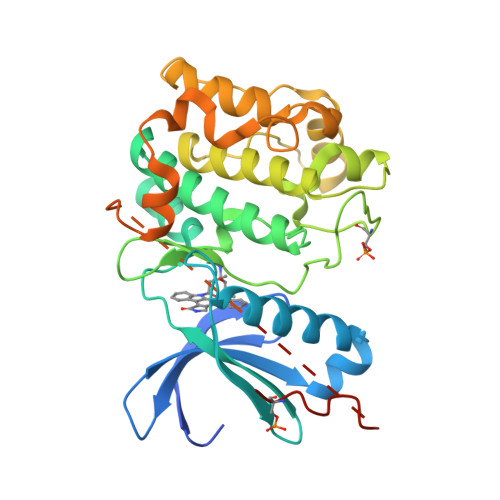
Protein kinase C alpha type structureClick to view 3D structureProtein kinase C alpha typeP17252HumansKnownLead exhibits competitive inhibition with calcium at protein kinase C, which impairs brain microvascular formation and function, as well as alters the blood-brain barrier. (L136)
Protein kinase C beta type structureClick to view 3D structureProtein kinase C beta typeP05771HumansKnownLead exhibits competitive inhibition with calcium at protein kinase C, which impairs brain microvascular formation and function, as well as alters the blood-brain barrier. (L136)
Protein kinase C delta type structureClick to view 3D structureProtein kinase C delta typeQ05655HumansKnownLead exhibits competitive inhibition with calcium at protein kinase C, which impairs brain microvascular formation and function, as well as alters the blood-brain barrier. (L136)
Protein kinase C epsilon type structureClick to view 3D structureProtein kinase C epsilon typeQ02156HumansKnownLead exhibits competitive inhibition with calcium at protein kinase C, which impairs brain microvascular formation and function, as well as alters the blood-brain barrier. (L136)
Protein kinase C iota type structureClick to view 3D structureProtein kinase C iota typeP41743HumansKnownLead exhibits competitive inhibition with calcium at protein kinase C, which impairs brain microvascular formation and function, as well as alters the blood-brain barrier. (L136)
Protein kinase C theta type structureClick to view 3D structureProtein kinase C theta typeQ04759HumansKnownLead exhibits competitive inhibition with calcium at protein kinase C, which impairs brain microvascular formation and function, as well as alters the blood-brain barrier. (L136)
Serotransferrin structureClick to view 3D structureSerotransferrinP02787HumansKnownNot Available
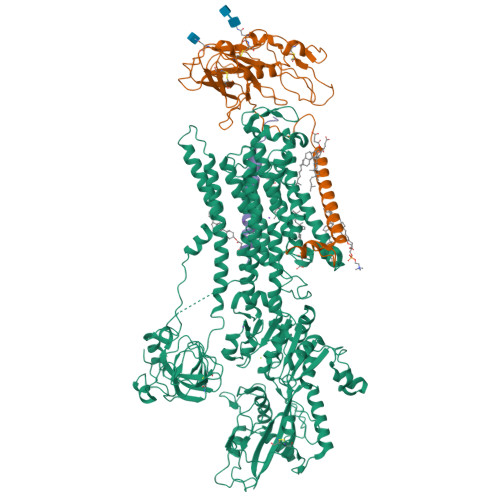
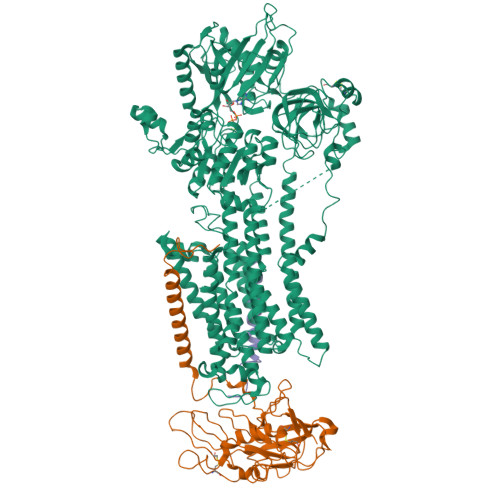
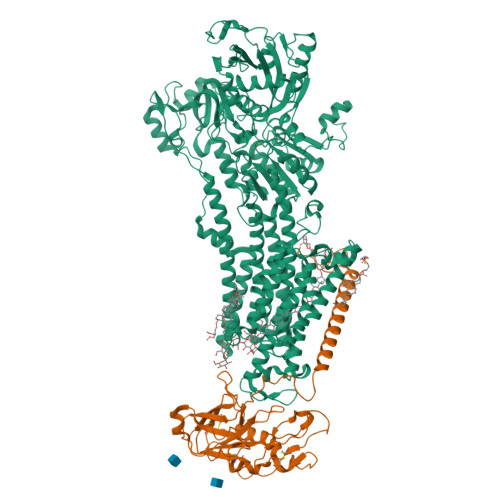
Sodium/potassium-transporting ATPase subunit alpha-1 structureClick to view 3D structureSodium/potassium-transporting ATPase subunit alpha-1P05023HumansKnownLead binds to sodium/potassium-transporting ATPases. (A24)
Click to view 3D structureSodium/potassium-transporting ATPase subunit alpha-2P50993HumansKnownLead binds to sodium/potassium-transporting ATPases. (A24)
Sodium/potassium-transporting ATPase subunit alpha-3 structureClick to view 3D structureSodium/potassium-transporting ATPase subunit alpha-3P13637HumansKnownLead binds to sodium/potassium-transporting ATPases. (A24)
Sodium/potassium-transporting ATPase subunit alpha-4 structureClick to view 3D structureSodium/potassium-transporting ATPase subunit alpha-4Q13733HumansKnownLead binds to sodium/potassium-transporting ATPases. (A24)
Sodium/potassium-transporting ATPase subunit beta-1 structureClick to view 3D structureSodium/potassium-transporting ATPase subunit beta-1P05026HumansKnownLead binds to sodium/potassium-transporting ATPases. (A24)
Click to view 3D structureSodium/potassium-transporting ATPase subunit beta-2P14415HumansKnownLead binds to sodium/potassium-transporting ATPases. (A24)
Click to view 3D structureSodium/potassium-transporting ATPase subunit beta-3P54709HumansKnownLead binds to sodium/potassium-transporting ATPases. (A24)
Sodium/potassium-transporting ATPase subunit gamma structureClick to view 3D structureSodium/potassium-transporting ATPase subunit gammaP54710HumansKnownLead binds to sodium/potassium-transporting ATPases. (A24)
Concentrations
Not Available
External Links
DrugBank IDNot Available
HMDB IDHMDB0004628
FooDB IDFDB003777
Phenol Explorer IDNot Available
KNApSAcK IDNot Available
BiGG IDNot Available
BioCyc IDNot Available
METLIN IDNot Available
PDB IDNot Available
Wikipedia LinkLead
Chemspider ID4509317
ChEBI ID25016
PubChem Compound ID5352425
Kegg Compound IDC06696
YMDB IDNot Available
ECMDB IDNot Available
References
Synthesis ReferenceNot Available
MSDSLink
General References
1. Gidlow DA: Lead toxicity. Occup Med (Lond). 2004 Mar;54(2):76-81.
2. Ostapczuk P, Valenta P, Rutzel H, Nurnberg HW: Application of differential pulse anodic stripping voltammetry to the determination of heavy metals in environmental samples. Sci Total Environ. 1987 Feb;60:1-16.
3. Jeng SL, Lee SJ, Lin SY: Determination of cadmium and lead in raw milk by graphite furnace atomic absorption spectrophotometer. J Dairy Sci. 1994 Apr;77(4):945-9. doi: 10.3168/jds.S0022-0302(94)77030-2.
4. Tripathi RM, Raghunath R, Sastry VN, Krishnamoorthy TM: Daily intake of heavy metals by infants through milk and milk products. Sci Total Environ. 1999 Mar 9;227(2-3):229-35.
5. Najarnezhad V, Jalilzadeh-Amin G, Anassori E, Zeinali V: Lead and cadmium in raw buffalo, cow and ewe milk from west Azerbaijan, Iran. Food Addit Contam Part B Surveill. 2015;8(2):123-7. doi: 10.1080/19393210.2015.1007396. Epub 2015 Mar 25.
6. Semaghiul Birghila, Simona Dobrinas, Gabriela Stanciu and Alina Soceanu. Determination of major and minor elements in milk through ICP-AES. Environmental Engineering and Management Journal. November/December 2008, Vol.7, No.6, 805-808
7. G.K. Murthy, U. Rhea, J.T.Peeler. Rubidium and Lead Content of Market Milk. Journal of Dairy Science. 50(5), May 1967, p. 651-654
8. A. Foroutan et al. The Chemical Composition of Commercial Cow's Milk (in preparation)
9. Patricia Cava-Montesinos, M. Luisa Cervera Agustín Pastor Miguel de la Guardia. 2005. Room temperature acid sonication ICP-MS multielemental analysis of milk.Analytica Chimica Acta Volume 531, Issue 1, Pages 111-123
10. Sola-Larrañaga C., Navarro-Blasco I. 2009. Chemometric analysis of minerals and trace elements in raw cow milk from the community of Navarra, Spain. Volume 112, Issue 1, Pages 189-196