Hexachlorocyclopentadiene (CHEM000151)
| Record Information | |||||||||||||||||||||||||||||||||||||||||||||||||||||||
|---|---|---|---|---|---|---|---|---|---|---|---|---|---|---|---|---|---|---|---|---|---|---|---|---|---|---|---|---|---|---|---|---|---|---|---|---|---|---|---|---|---|---|---|---|---|---|---|---|---|---|---|---|---|---|---|
| Version | 1.0 | ||||||||||||||||||||||||||||||||||||||||||||||||||||||
| Creation Date | 2009-03-06 18:58:12 UTC | ||||||||||||||||||||||||||||||||||||||||||||||||||||||
| Update Date | 2026-08-22 19:40:01 UTC | ||||||||||||||||||||||||||||||||||||||||||||||||||||||
| Accession Number | CHEM000151 | ||||||||||||||||||||||||||||||||||||||||||||||||||||||
| Identification | |||||||||||||||||||||||||||||||||||||||||||||||||||||||
| Common Name | Hexachlorocyclopentadiene | ||||||||||||||||||||||||||||||||||||||||||||||||||||||
| Class | Small Molecule | ||||||||||||||||||||||||||||||||||||||||||||||||||||||
| Description | Hexachlorocyclopentadiene (HCCPD) is a light, lemon-yellow liquid that has a sharp, musty odor. It easily turns from a liquid to a vapor when exposed to air. The vapor looks like a blue haze. HCCPD is a manufactured chemical and does not occur naturally in the environment. It is made by adding chlorine to cyclopentadiene, or by removing chlorine from octachlorocyclopentane. HCCPD is used to make a group of related pesticides (aldrin, chlordane, dieldrin, endosulfan, endrin, heptachlor, isodrin, mirex, and pentac) referred to cyclodienes. Only two of these pesticides, endosulfan and pentac, are currently registered for use in the United States. (1) | ||||||||||||||||||||||||||||||||||||||||||||||||||||||
| Contaminant Sources |
| ||||||||||||||||||||||||||||||||||||||||||||||||||||||
| Contaminant Type |
| ||||||||||||||||||||||||||||||||||||||||||||||||||||||
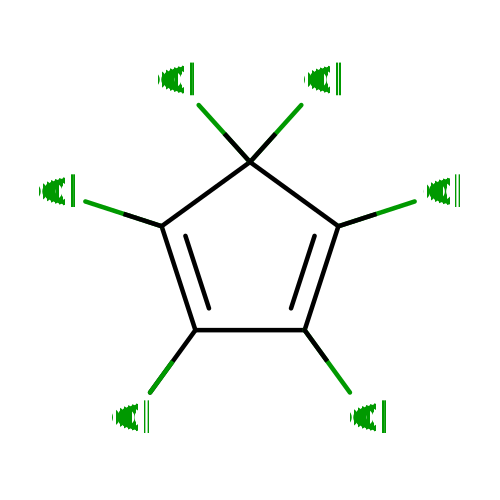
| Chemical Structure | 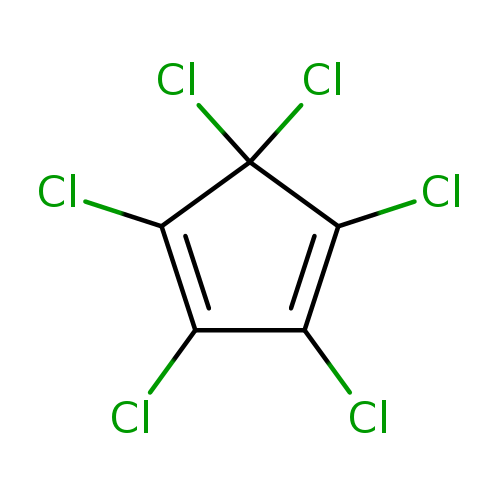 | ||||||||||||||||||||||||||||||||||||||||||||||||||||||
| Synonyms | Not Available | ||||||||||||||||||||||||||||||||||||||||||||||||||||||
| Chemical Formula | C5Cl6 | ||||||||||||||||||||||||||||||||||||||||||||||||||||||
| Average Molecular Mass | 272.772 g/mol | ||||||||||||||||||||||||||||||||||||||||||||||||||||||
| Monoisotopic Mass | 269.813 g/mol | ||||||||||||||||||||||||||||||||||||||||||||||||||||||
| CAS Registry Number | 77-47-4 | ||||||||||||||||||||||||||||||||||||||||||||||||||||||
| IUPAC Name | hexachlorocyclopenta-1,3-diene | ||||||||||||||||||||||||||||||||||||||||||||||||||||||
| Traditional Name | hexachlorocyclopentadiene | ||||||||||||||||||||||||||||||||||||||||||||||||||||||
| SMILES | ClC1=C(Cl)C(Cl)(Cl)C(Cl)=C1Cl | ||||||||||||||||||||||||||||||||||||||||||||||||||||||
| InChI Identifier | InChI=1S/C5Cl6/c6-1-2(7)4(9)5(10,11)3(1)8 | ||||||||||||||||||||||||||||||||||||||||||||||||||||||
| InChI Key | VUNCWTMEJYMOOR-UHFFFAOYSA-N | ||||||||||||||||||||||||||||||||||||||||||||||||||||||
| Chemical Taxonomy | |||||||||||||||||||||||||||||||||||||||||||||||||||||||
| Description | Belongs to the class of organic compounds known as vinyl chlorides. These are vinyl halides in which a chlorine atom is bonded to an sp2-hybridised carbon atom. | ||||||||||||||||||||||||||||||||||||||||||||||||||||||
| Kingdom | Organic compounds | ||||||||||||||||||||||||||||||||||||||||||||||||||||||
| Super Class | Organohalogen compounds | ||||||||||||||||||||||||||||||||||||||||||||||||||||||
| Class | Vinyl halides | ||||||||||||||||||||||||||||||||||||||||||||||||||||||
| Sub Class | Vinyl chlorides | ||||||||||||||||||||||||||||||||||||||||||||||||||||||
| Direct Parent | Vinyl chlorides | ||||||||||||||||||||||||||||||||||||||||||||||||||||||
| Alternative Parents | |||||||||||||||||||||||||||||||||||||||||||||||||||||||
| Substituents |
| ||||||||||||||||||||||||||||||||||||||||||||||||||||||
| Molecular Framework | Aliphatic homomonocyclic compounds | ||||||||||||||||||||||||||||||||||||||||||||||||||||||
| External Descriptors | Not Available | ||||||||||||||||||||||||||||||||||||||||||||||||||||||
| Biological Properties | |||||||||||||||||||||||||||||||||||||||||||||||||||||||
| Status | Detected and Not Quantified | ||||||||||||||||||||||||||||||||||||||||||||||||||||||
| Origin | Exogenous | ||||||||||||||||||||||||||||||||||||||||||||||||||||||
| Cellular Locations |
| ||||||||||||||||||||||||||||||||||||||||||||||||||||||
| Biofluid Locations | Not Available | ||||||||||||||||||||||||||||||||||||||||||||||||||||||
| Tissue Locations | Not Available | ||||||||||||||||||||||||||||||||||||||||||||||||||||||
| Pathways | Not Available | ||||||||||||||||||||||||||||||||||||||||||||||||||||||
| Applications | Not Available | ||||||||||||||||||||||||||||||||||||||||||||||||||||||
| Biological Roles | Not Available | ||||||||||||||||||||||||||||||||||||||||||||||||||||||
| Chemical Roles | Not Available | ||||||||||||||||||||||||||||||||||||||||||||||||||||||
| Physical Properties | |||||||||||||||||||||||||||||||||||||||||||||||||||||||
| State | Liquid | ||||||||||||||||||||||||||||||||||||||||||||||||||||||
| Appearance | Not Available | ||||||||||||||||||||||||||||||||||||||||||||||||||||||
| Experimental Properties |
| ||||||||||||||||||||||||||||||||||||||||||||||||||||||
| Predicted Properties |
| ||||||||||||||||||||||||||||||||||||||||||||||||||||||
| Spectra | |||||||||||||||||||||||||||||||||||||||||||||||||||||||
| Spectra | |||||||||||||||||||||||||||||||||||||||||||||||||||||||
| Toxicity Profile | |||||||||||||||||||||||||||||||||||||||||||||||||||||||
| Route of Exposure | Inhalation (2) ; oral (2) ; dermal (2) ; eye contact (2) | ||||||||||||||||||||||||||||||||||||||||||||||||||||||
| Mechanism of Toxicity | HCCPD may interact with the microsomes that binds to secretory molecules and changes their ability to be transported from the cell. It can be postulated, that some of its toxic properties are a consequence of its reactivity in Diels-Alder reactions where a conjugated diene combines with a substituted or unsubstituted alkene (a dienophile) in a cycloaddition reaction. Biological tissues contain a large number of potential reactants for cycloaddition reactions. HCCPD can also undergo addition and substitution reactions or be oxidized by way of the mixed function oxidase system. Effects of HCCPD on the brain may also be a reflection of the reaction of either HCCPD or a metabolite with brain lipids. The effects of HCCPD on the adrenal glands may be a reflection of its ability to combine with the unsaturated carbons in sterols produced by this gland. The hydroxyl functional group of a sterol is on a carbon adjacent to the double bond and can activate that bond to cycloaddition reactions. Such reactions would require exposure to large doses of HCCPD so that reactive material would reach the adrenal gland. HCCPD is excreted in urine and feces. (1) | ||||||||||||||||||||||||||||||||||||||||||||||||||||||
| Metabolism | HCCPD is rapidly metabolized and distributed to blood, liver, kidneys, and lungs before being distributed to the peripheral tissues. (1) | ||||||||||||||||||||||||||||||||||||||||||||||||||||||
| Toxicity Values | LD50: 471 mg/kg (Oral, Rat) (1) | ||||||||||||||||||||||||||||||||||||||||||||||||||||||
| Lethal Dose | Not Available | ||||||||||||||||||||||||||||||||||||||||||||||||||||||
| Carcinogenicity (IARC Classification) | No indication of carcinogenicity to humans (not listed by IARC). | ||||||||||||||||||||||||||||||||||||||||||||||||||||||
| Uses/Sources | HCCPD is used to make a group of related pesticides (aldrin, chlordane, dieldrin, endosulfan, endrin, heptachlor, isodrin, mirex, and pentac) referred to cyclodienes. Exposure may result from eating contaminated food, drinking contaminated water, and exposing the skin or eye to hexachlorocyclopentadiene. (1) | ||||||||||||||||||||||||||||||||||||||||||||||||||||||
| Minimum Risk Level | Intermediate Inhalation: 0.01 ppm (Rat) (1) Chronic Inhalation 0.2 ppb (Rat) (1) Intermediate Oral: 0.1 mg/kg/day (Rat) (1) | ||||||||||||||||||||||||||||||||||||||||||||||||||||||
| Health Effects | Patients exposed to HCCPD may get a sore throat or have shortness of breath and chest discomfort. Bleeding, swelling, and fluid buildup can occur in the lungs. The linings of the respiratory passages and the lungs are very susceptible to damage from low concentrations of HCCPD following inhalation exposure. Inflammation of the tissues can be followed by necrosis, exfoliation, and hemorrhage. Tissue repair is often fibrous in appearance. Long-term exposure to very low levels of HCCPD can produce granular yellow-brown pigmentation of the epithelium of the nose, trachea, larynx, and lungs. High acute oral doses of HCCPD are associated with liver necrosis and tissue degeneration. The kidneys also appear to be a target tissue for HCCPD toxicity. Degenerative lesions in the tubules can result from small oral doses. (1) | ||||||||||||||||||||||||||||||||||||||||||||||||||||||
| Symptoms | Inhalation of HCCPD can cause cough, sore throat, headache, diarrhoea, dizziness, nausea, vomiting, and laboured breathing. Ingestion of HCCPD can cause abdominal pain,burning sensation, shock or collapse. Dermal exposure can cause redness, pain and skin burns. Eye exposure can cause redness, pain, blurred vision, and severe deep burns. (2) | ||||||||||||||||||||||||||||||||||||||||||||||||||||||
| Treatment | After oral exposure of HCCPD, gastric lavage is recommended. Following inhalation, move patient to fresh air. Monitor for respiratory distress. If cough or difficulty breathing develops, evaluate for respiratory tract irritation, bronchitis, or pneumonitis. Administer oxygen and assist ventilation as required. Treat bronchospasm with inhaled beta2 agonist and oral or parenteral corticosteroids. Irrigate exposed eyes with copious amounts of room temperature water for at least 15 minutes. If the exposure occurs through dermal contact with the toxin, remove contaminated clothing and wash exposed area thoroughly with soap and water. Treat dermal irritation or burns with standard topical therapy. Patients developing dermal hypersensitivity reactions may require treatment with systemic or topical corticosteroids or antihistamines. (3) | ||||||||||||||||||||||||||||||||||||||||||||||||||||||
| Concentrations | |||||||||||||||||||||||||||||||||||||||||||||||||||||||
| Not Available | |||||||||||||||||||||||||||||||||||||||||||||||||||||||
| External Links | |||||||||||||||||||||||||||||||||||||||||||||||||||||||
| DrugBank ID | Not Available | ||||||||||||||||||||||||||||||||||||||||||||||||||||||
| HMDB ID | Not Available | ||||||||||||||||||||||||||||||||||||||||||||||||||||||
| FooDB ID | Not Available | ||||||||||||||||||||||||||||||||||||||||||||||||||||||
| Phenol Explorer ID | Not Available | ||||||||||||||||||||||||||||||||||||||||||||||||||||||
| KNApSAcK ID | Not Available | ||||||||||||||||||||||||||||||||||||||||||||||||||||||
| BiGG ID | Not Available | ||||||||||||||||||||||||||||||||||||||||||||||||||||||
| BioCyc ID | Not Available | ||||||||||||||||||||||||||||||||||||||||||||||||||||||
| METLIN ID | Not Available | ||||||||||||||||||||||||||||||||||||||||||||||||||||||
| PDB ID | Not Available | ||||||||||||||||||||||||||||||||||||||||||||||||||||||
| Wikipedia Link | Hexachlorocyclopentadiene | ||||||||||||||||||||||||||||||||||||||||||||||||||||||
| Chemspider ID | Not Available | ||||||||||||||||||||||||||||||||||||||||||||||||||||||
| ChEBI ID | Not Available | ||||||||||||||||||||||||||||||||||||||||||||||||||||||
| PubChem Compound ID | 6478 | ||||||||||||||||||||||||||||||||||||||||||||||||||||||
| Kegg Compound ID | Not Available | ||||||||||||||||||||||||||||||||||||||||||||||||||||||
| YMDB ID | Not Available | ||||||||||||||||||||||||||||||||||||||||||||||||||||||
| ECMDB ID | Not Available | ||||||||||||||||||||||||||||||||||||||||||||||||||||||
| References | |||||||||||||||||||||||||||||||||||||||||||||||||||||||
| Synthesis Reference | Not Available | ||||||||||||||||||||||||||||||||||||||||||||||||||||||
| MSDS | Not Available | ||||||||||||||||||||||||||||||||||||||||||||||||||||||
| General References | |||||||||||||||||||||||||||||||||||||||||||||||||||||||