Carbon monoxide (CED0000940)

Record Information
Version1.0
Creation Date2009-03-06 18:58:15 UTC
Update Date2026-05-14 19:10:44 UTC
Accession NumberCHEM000170
Identification
Common NameCarbon monoxide
ClassSmall Molecule
Description
Carbon monoxide belongs to the homogeneous other non-metal compounds, a class of homogeneous non-metal compounds within the inorganic compounds. It is an endogenous gas with the chemical formula CO and an average molecular weight of 28.01 g/mol. It is used industrially as a reducing agent (PMC12848130) and in the production of Polyamide. Biologically, it functions as a metabolite, human metabolite, ligand, neurotransmitter (PMC10752435), signalling molecule, neurotoxin, P450 inhibitor, mitochondrial respiratory-chain inhibitor, and antioxidant (PMC12986066). It is also applied as a vasodilator agent, biomarker, and probe. The compound is released from 60 recorded sources, including electrical and electronic equipment, household items, household cleaning and consumer products, food processing and cookware, and building and construction materials. The primary recorded exposure route is respiratory, with literature support for inhalation (PMC10186727, PMC4556249, PMC6414207, PMC7956572, PMC9712077). Carbon monoxide interacts with several protein targets. It binds to hemoglobin subunit alpha (HBA1) and hemoglobin subunit beta (HBB) to form carboxyhemoglobin (HbCO); because it has a higher affinity for hemoglobin than oxygen, this prevents the transport, delivery, and utilization of oxygen, causing anoxemia. It binds to myoglobin (MB), impairing oxygen utilization, and acts as an inhibitor of myoglobin. Additionally, it binds to cytochrome c oxidase (including subunits COX7A1, MT-CO1, MT-CO2, and MT-CO3), which interferes with aerobic metabolism and ATP synthesis, leading to anaerobic metabolism, anoxia, lactic acidosis, and cell death. Health effects associated with carbon monoxide include headache and nausea (PMC7093087), dizziness (PMC11739406), necrosis (PMC8877725), hypertension (PMC12518403), low birth weight (PMC12648132), cancer (PMC8830992, PMC9784116), increased vascular disease and stroke (PMC10946040), and increased COVID-19 (PMC11507386).
Contaminant Type
  • Food Toxin
  • Human Neurotoxin
  • Industrial By-product/Pollutant
  • Industrial/Workplace Toxin
  • Metabolite
  • Natural Compound
  • Organic Compound
  • Pollutant
Chemical Structure
Synonyms
ValueSource
[CO]ChEBI
C#OChEBI
COChEBI
Monoxide, carbonHMDB
Chemical FormulaCO
Average Molecular Mass28.010 g/mol
Monoisotopic Mass27.995 g/mol
CAS Registry Number630-08-0
IUPAC NameNot Available
Traditional NameNot Available
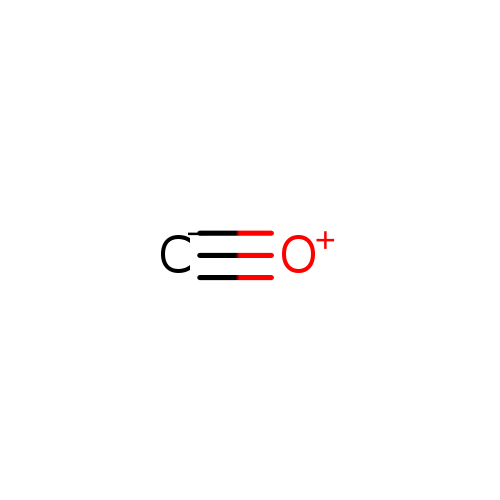
SMILES[C-]#[O+]
InChI IdentifierInChI=1S/CO/c1-2
InChI KeyUGFAIRIUMAVXCW-UHFFFAOYSA-N
Chemical Taxonomy
Description Belongs to the class of inorganic compounds known as homogeneous other non-metal compounds. These are inorganic non-metallic compounds in which the largest atom belongs to the class of 'other non-metals'.
KingdomInorganic compounds
Super ClassHomogeneous non-metal compounds
ClassHomogeneous other non-metal compounds
Sub ClassNot Available
Direct ParentHomogeneous other non-metal compounds
Alternative ParentsNot Available
Substituents
  • Homogeneous other non metal
Molecular FrameworkNot Available
External Descriptors
Biological Properties
StatusDetected and Not Quantified
OriginEndogenous
Cellular Locations
  • Cytoplasm
  • Extracellular
  • Membrane
Biofluid LocationsNot Available
Tissue LocationsNot Available
Applications
Biological Roles
Chemical Roles
Organoleptic EffectsNot Available
Physical Properties
StateGas
AppearanceColorless gas.
Experimental Properties
PropertyValue
Melting Point−205.02 °C
Boiling Point−191.5 °C
Solubility1.48 mg/mL at 25°C
Predicted Properties
PropertyValueSource
Water Solubility6.37 g/LALOGPS
logP-0.06ALOGPS
logS-1.1ALOGPS
Hydrogen Acceptor Count0ChemAxon
Hydrogen Donor Count0ChemAxon
Polar Surface Area0 ŲChemAxon
Rotatable Bond Count0ChemAxon
Refractivity26.23 m³·mol⁻¹ChemAxon
Polarizability1.94 ųChemAxon
Number of Rings0ChemAxon
BioavailabilityYesChemAxon
Rule of FiveNoChemAxon
Ghose FilterNoChemAxon
Veber's RuleYesChemAxon
MDDR-like RuleNoChemAxon
Spectra
Spectra
Spectrum TypeDescriptionSplash KeyDeposition DateView
Predicted LC-MS/MSPredicted LC-MS/MS Spectrumsplash10-004i-9000000000-5ea4ad4bdb0565b737bbNot AvailableView Spectrum
Predicted LC-MS/MSPredicted LC-MS/MS Spectrumsplash10-004i-9000000000-b175ec2a41978516a72eNot AvailableView Spectrum
MSMS Spectrumsplash10-004i-9000000000-dfbb2bd73fc3d527a340Not AvailableView Spectrum
Toxicity Profile
Mechanism of ToxicityCarbon monoxide possesses a higher affinity than oxygen for hemoglobin, leading to the formation of carboxyhemoglobin, this provoking anoxemia. Carbon monoxide also binds to myoglobin, impairing its ability to utilize oxygen. It can also bind to cytochrome c oxidase, though with a lesser affinity than oxygen. This interferes with aerobic metabolism and efficient ATP synthesis. As a result, cells switch to anaerobic metabolism, causing anoxia, lactic acidosis, and eventual cell death. Carbon monoxide also causes endothelial cell and platelet release of nitric oxide, and the formation of oxygen free radicals. This results in lipid peroxidation, leading to edema and necrosis within the brain. (2)
Carcinogenicity (IARC Classification)No indication of carcinogenicity to humans (not listed by IARC).
Minimum Risk LevelNot Available
SymptomsEarly symptoms of acute carbon monoxide poisoning are nonspecific and include headaches, nausea, and fatigue. Symptoms may progress to tachycardia and hypertension. The central nervous system is one of the organ systems most sensitive to poisoning and symptoms displayed include dizziness, ataxia, confusion, convulsions, unconsciousness, respiratory arrest, and even death. (2)
TreatmentCarbon monoxide poisoning is first treated by immediate removal from the source of exposure. High-flow or 100% oxygen should then be administered by a nonrebreather reservoir oxygen mask. Oxygen hastens the dissociation of carbon monoxide from hemoglobin, improving tissue oxygenation by reducing carbon monoxides biological half-life. Hyperbaric oxygen may also be used, as it increases carboxyhemoglobin dissociation to a greater extent than normal oxygen. (2)
Toxicity ValuesNot Available
Health Effects
Health EffectRelationshipDirectionReference
hypertensionassociated_withpositivePMC12518403
cancerassociated_withNot AvailablePMC8830992 , PMC9784116
dizzinessassociated_withNot AvailablePMC11739406
low birth weightassociated_withNot AvailablePMC12648132
strokeassociated_withincreasePMC10946040
headacheassociated_withNot AvailablePMC7093087
necrosisassociated_withNot AvailablePMC8877725
COVID-19associated_withincreasePMC11507386
nauseaassociated_withNot AvailablePMC7093087
vascular diseaseassociated_withincreasePMC10946040
vitiligoassociated_withNot AvailablePMC12800077
Exposure Sources
Source IDSourceSectorReference
10InsecticidesAgriculture & land managementNot Available
233BrushesPersonal care & cosmeticsNot Available
411Unclassified diagnostic agentsHealthcare, pharmaceuticals & veterinary productsNot Available
495CeilingsBuilding & ConstructionNot Available
496FencingBuilding & ConstructionNot Available
497FloorsBuilding & ConstructionNot Available
498LaddersBuilding & ConstructionNot Available
499RoofsBuilding & ConstructionNot Available
503Tents Or CanopiesBuilding & ConstructionNot Available
504Adjustable ResistorsElectrical & Electronic EquipmentNot Available
505AmplifiersElectrical & Electronic EquipmentNot Available
506AntennasElectrical & Electronic EquipmentNot Available
507Auxiliary DevicesElectrical & Electronic EquipmentNot Available
508CoilsElectrical & Electronic EquipmentNot Available
510Communication Cables Or ConductorsElectrical & Electronic EquipmentNot Available
511Conductors Or Conductive Bodies Characterised By The Conductive MaterialsElectrical & Electronic EquipmentNot Available
514Discharge LampsElectrical & Electronic EquipmentNot Available
515Discharge Tubes With Liquid Pool CathodesElectrical & Electronic EquipmentNot Available
516Electric Hearing AidsElectrical & Electronic EquipmentNot Available
517Electric SwitchesElectrical & Electronic EquipmentNot Available
518Electrically Stimulated Smoking DevicesElectrical & Electronic EquipmentNot Available
519ElectrodesElectrical & Electronic EquipmentNot Available
520Emergency Protective DevicesElectrical & Electronic EquipmentNot Available
521Fixed Capacitors And Their ManufactureElectrical & Electronic EquipmentNot Available
523Gas Filled Discharge Tubes With Solid CathodeElectrical & Electronic EquipmentNot Available
524Hybrid CapacitorsElectrical & Electronic EquipmentNot Available
525Line Transmission SystemsElectrical & Electronic EquipmentNot Available
526LoudspeakersElectrical & Electronic EquipmentNot Available
527MagnetsElectrical & Electronic EquipmentNot Available
528MicrophonesElectrical & Electronic EquipmentNot Available
529Power CablesElectrical & Electronic EquipmentNot Available
530Radio Transmission SystemsElectrical & Electronic EquipmentNot Available
531RelaysElectrical & Electronic EquipmentNot Available
533Sparking PlugsElectrical & Electronic EquipmentNot Available
535Superconducting Magnets And Superconducting CoilsElectrical & Electronic EquipmentNot Available
536Superconductive Or Hyperconductive Conductors Cables Or Transmission LinesElectrical & Electronic EquipmentNot Available
537Television SystemsElectrical & Electronic EquipmentNot Available
538Thin Magnetic FilmsElectrical & Electronic EquipmentNot Available
539Video GamesElectrical & Electronic EquipmentNot Available
540X Ray TubesElectrical & Electronic EquipmentNot Available
542Brew KettlesFood, food processing & cookwareNot Available
544Fermentation Processes For BeerFood, food processing & cookwareNot Available
545Food PreservationFood, food processing & cookwareNot Available
547Preparation Of MaltFood, food processing & cookwareNot Available
548Preparation Of VinegarFood, food processing & cookwareNot Available
549Preparation Of Wine Or Sparkling WineFood, food processing & cookwareNot Available
550Preparation Of WortFood, food processing & cookwareNot Available
551Processing FishFood, food processing & cookwareNot Available
552Processing MeatsFood, food processing & cookwareNot Available
554Ash TraysHousehold cleaning & consumer productsNot Available
555Bleaching AgentsHousehold cleaning & consumer productsNot Available
556Cigar CigarettesHousehold cleaning & consumer productsNot Available
559Non Electric Simulated Smoking DevicesHousehold cleaning & consumer productsNot Available
560Other Smoking RequisitesHousehold cleaning & consumer productsNot Available
561Perfumes Within Detergents And SoapsHousehold cleaning & consumer productsNot Available
562Pipe AccessoriesHousehold cleaning & consumer productsNot Available
563Soap DetergentsHousehold cleaning & consumer productsNot Available
564Soap DispensersHousehold cleaning & consumer productsNot Available
566Tobacco PipesHousehold cleaning & consumer productsNot Available
568Tobacco Product Moisture ControlHousehold cleaning & consumer productsNot Available
569Tobacco Smoke FiltersHousehold cleaning & consumer productsNot Available
577Watch ChainsHousehold itemsNot Available
578Making CigarsIndustrial manufacturing & chemical processingNot Available
579Manufacture Of Iron Or SteelIndustrial manufacturing & chemical processingNot Available
580Manufacture Preparation Of Tobacco ProductsIndustrial manufacturing & chemical processingNot Available
581Paper Making MachinesIndustrial manufacturing & chemical processingNot Available
583Anchoring EquipmentMarine, shipping & aquacultureNot Available
584BuoysMarine, shipping & aquacultureNot Available
588Inflatable Life Saving EquipmentMarine, shipping & aquacultureNot Available
589Life BuoysMarine, shipping & aquacultureNot Available
591LifeboatsMarine, shipping & aquacultureNot Available
592Marine Propulsion Or SteeringMarine, shipping & aquacultureNot Available
593Nautical InstrumentsMarine, shipping & aquacultureNot Available
594Ship HullsMarine, shipping & aquacultureNot Available
596AcaricidesAgriculture & land managementNot Available
598Fertiliser DistributorsAgriculture & land managementNot Available
600Herbicides And AlgicidesAgriculture & land managementNot Available
604Pest AttractantsAgriculture & land managementNot Available
606Plant Growth RegulatorsAgriculture & land managementNot Available
609AftershavePersonal care & cosmeticsNot Available
610Aftersun ProductsPersonal care & cosmeticsNot Available
611Anti Perspirants Or Body DeoderantsPersonal care & cosmeticsNot Available
612Body Washing Or Cleaning ImplementsPersonal care & cosmeticsNot Available
614Essential Oils Or PerfumesPersonal care & cosmeticsNot Available
615Eye Makeup ProductsPersonal care & cosmeticsNot Available
617Lip Care ProductsPersonal care & cosmeticsNot Available
618Lip Makeup ProductsPersonal care & cosmeticsNot Available
630ToysRecreation & sports surfacesNot Available
632ApparelTextiles, leather & furnishingsNot Available
634BucklesTextiles, leather & furnishingsNot Available
635ButtonsTextiles, leather & furnishingsNot Available
638Decorating TextilesTextiles, leather & furnishingsNot Available
640Embroidering And TuftingTextiles, leather & furnishingsNot Available
642FootwearTextiles, leather & furnishingsNot Available
643HeadwearTextiles, leather & furnishingsNot Available
647Multicolour DyeingTextiles, leather & furnishingsNot Available
649Pins ClothesTextiles, leather & furnishingsNot Available
650Purses Luggage Hand BagsTextiles, leather & furnishingsNot Available
652RopesTextiles, leather & furnishingsNot Available
653SewingTextiles, leather & furnishingsNot Available
655Slide FastenersTextiles, leather & furnishingsNot Available
657Surface Finishing Of LeatherTextiles, leather & furnishingsNot Available
659Transfer PrintingTextiles, leather & furnishingsNot Available
661UmbrellasTextiles, leather & furnishingsNot Available
662Yarns Or ThreadsTextiles, leather & furnishingsNot Available
Pathways
10 pathways
Targets
StructureProteinUniProt IDOrganismRelationshipDetails
Cytochrome c oxidase subunit 1 structureClick to view 3D structureCytochrome c oxidase subunit 1P00395HumansKnownCarbon monoxide can bind to cytochrome c oxidase, though with a lesser affinity than oxygen. This interferes with aerobic metabolism and efficient ATP synthesis. As a result, cells switch to anaerobic metabolism, causing anoxia, lactic acidosis, and eventual cell death. (L961)
Cytochrome c oxidase subunit 2 structureClick to view 3D structureCytochrome c oxidase subunit 2P00403HumansKnownCarbon monoxide can bind to cytochrome c oxidase, though with a lesser affinity than oxygen. This interferes with aerobic metabolism and efficient ATP synthesis. As a result, cells switch to anaerobic metabolism, causing anoxia, lactic acidosis, and eventual cell death. (L961)
Cytochrome c oxidase subunit 3 structureClick to view 3D structureCytochrome c oxidase subunit 3P00414HumansKnownCarbon monoxide can bind to cytochrome c oxidase, though with a lesser affinity than oxygen. This interferes with aerobic metabolism and efficient ATP synthesis. As a result, cells switch to anaerobic metabolism, causing anoxia, lactic acidosis, and eventual cell death. (L961)
Cytochrome c oxidase subunit 4 isoform 1, mitochondrial structureClick to view 3D structureCytochrome c oxidase subunit 4 isoform 1, mitochondrialP13073HumansKnownCarbon monoxide can bind to cytochrome c oxidase, though with a lesser affinity than oxygen. This interferes with aerobic metabolism and efficient ATP synthesis. As a result, cells switch to anaerobic metabolism, causing anoxia, lactic acidosis, and eventual cell death. (L961)
Cytochrome c oxidase subunit 5A, mitochondrial structureClick to view 3D structureCytochrome c oxidase subunit 5A, mitochondrialP20674HumansKnownCarbon monoxide can bind to cytochrome c oxidase, though with a lesser affinity than oxygen. This interferes with aerobic metabolism and efficient ATP synthesis. As a result, cells switch to anaerobic metabolism, causing anoxia, lactic acidosis, and eventual cell death. (L961)
Cytochrome c oxidase subunit 5B, mitochondrial structureClick to view 3D structureCytochrome c oxidase subunit 5B, mitochondrialP10606HumansKnownCarbon monoxide can bind to cytochrome c oxidase, though with a lesser affinity than oxygen. This interferes with aerobic metabolism and efficient ATP synthesis. As a result, cells switch to anaerobic metabolism, causing anoxia, lactic acidosis, and eventual cell death. (L961)
Click to view 3D structureCytochrome c oxidase subunit 6A2, mitochondrialQ02221HumansKnownCarbon monoxide can bind to cytochrome c oxidase, though with a lesser affinity than oxygen. This interferes with aerobic metabolism and efficient ATP synthesis. As a result, cells switch to anaerobic metabolism, causing anoxia, lactic acidosis, and eventual cell death. (L961)
Cytochrome c oxidase subunit 6B1 structureClick to view 3D structureCytochrome c oxidase subunit 6B1P14854HumansKnownCarbon monoxide can bind to cytochrome c oxidase, though with a lesser affinity than oxygen. This interferes with aerobic metabolism and efficient ATP synthesis. As a result, cells switch to anaerobic metabolism, causing anoxia, lactic acidosis, and eventual cell death. (L961)
Cytochrome c oxidase subunit 6C structureClick to view 3D structureCytochrome c oxidase subunit 6CP09669HumansKnownCarbon monoxide can bind to cytochrome c oxidase, though with a lesser affinity than oxygen. This interferes with aerobic metabolism and efficient ATP synthesis. As a result, cells switch to anaerobic metabolism, causing anoxia, lactic acidosis, and eventual cell death. (L961)
Click to view 3D structureCytochrome c oxidase subunit 7A1, mitochondrialP24310HumansKnownCarbon monoxide can bind to cytochrome c oxidase, though with a lesser affinity than oxygen. This interferes with aerobic metabolism and efficient ATP synthesis. As a result, cells switch to anaerobic metabolism, causing anoxia, lactic acidosis, and eventual cell death. (L961)
Cytochrome c oxidase subunit 7B, mitochondrial structureClick to view 3D structureCytochrome c oxidase subunit 7B, mitochondrialP24311HumansKnownCarbon monoxide can bind to cytochrome c oxidase, though with a lesser affinity than oxygen. This interferes with aerobic metabolism and efficient ATP synthesis. As a result, cells switch to anaerobic metabolism, causing anoxia, lactic acidosis, and eventual cell death. (L961)
Cytochrome c oxidase subunit 7C, mitochondrial structureClick to view 3D structureCytochrome c oxidase subunit 7C, mitochondrialP15954HumansKnownCarbon monoxide can bind to cytochrome c oxidase, though with a lesser affinity than oxygen. This interferes with aerobic metabolism and efficient ATP synthesis. As a result, cells switch to anaerobic metabolism, causing anoxia, lactic acidosis, and eventual cell death. (L961)
Cytochrome c oxidase subunit 8A, mitochondrial structureClick to view 3D structureCytochrome c oxidase subunit 8A, mitochondrialP10176HumansKnownCarbon monoxide can bind to cytochrome c oxidase, though with a lesser affinity than oxygen. This interferes with aerobic metabolism and efficient ATP synthesis. As a result, cells switch to anaerobic metabolism, causing anoxia, lactic acidosis, and eventual cell death. (L961)
Hemoglobin subunit alpha structureClick to view 3D structureHemoglobin subunit alphaP69905HumansKnownCarbon monoxide combines with hemoglobin to form carboxyhemoglobin (HbCO) in the blood. As carbon moxoxide has a higher affinity for hemoglobin than oxygen, this prevents the transport, delivery, and utilization of oxygen, causing anoxemia. (L961)
Hemoglobin subunit beta structureClick to view 3D structureHemoglobin subunit betaP68871HumansKnownCarbon monoxide combines with hemoglobin to form carboxyhemoglobin (HbCO) in the blood. As carbon moxoxide has a higher affinity for hemoglobin than oxygen, this prevents the transport, delivery, and utilization of oxygen, causing anoxemia. (L961)
Myoglobin structureClick to view 3D structureMyoglobinP02144HumansKnownCarbon monoxide binds to myoglobin, impairing its ability to utilize oxygen. (L961)
Myoglobin structureClick to view 3D structureMyoglobinP02144HumansKnownNot Available
Concentrations
Not Available
External Links
DrugBank IDDB11588
HMDB IDHMDB0001361
FooDB IDFDB022578
Phenol Explorer IDNot Available
KNApSAcK IDNot Available
BiGG ID1749973
BioCyc IDCARBON-MONOXIDE
METLIN IDNot Available
PDB IDNot Available
Wikipedia LinkCarbon_monoxide
Chemspider ID275
ChEBI ID17245
PubChem Compound ID281
Kegg Compound IDC00237
YMDB IDYMDB16138
ECMDB IDECMDB23004
References
Synthesis ReferenceIvanova, Svetlana; Pitchon, Veronique; Petit, Corinne. Application of the direct exchange method in the preparation of gold catalysts supported on different oxide materials. Journal of Molecular Catalysis A: Chemical (2006), 256(1-2), 278-283.
MSDSNot Available
General References
1. Ivanova, Svetlana; Pitchon, Veronique; Petit, Corinne. Application of the direct exchange method in the preparation of gold catalysts supported on different oxide materials. Journal of Molecular Catalysis A: Chemical (2006), 256(1-2), 278-283.
2. https://www.ncbi.nlm.nih.gov/pubmed/?term=10085152
3. https://www.ncbi.nlm.nih.gov/pubmed/?term=10679539
4. https://www.ncbi.nlm.nih.gov/pubmed/?term=11572959
5. https://www.ncbi.nlm.nih.gov/pubmed/?term=14527438
6. https://www.ncbi.nlm.nih.gov/pubmed/?term=14563665
7. https://www.ncbi.nlm.nih.gov/pubmed/?term=15127883
8. https://www.ncbi.nlm.nih.gov/pubmed/?term=15598489
9. https://www.ncbi.nlm.nih.gov/pubmed/?term=16371440
10. https://www.ncbi.nlm.nih.gov/pubmed/?term=16520836
11. https://www.ncbi.nlm.nih.gov/pubmed/?term=17041734
12. https://www.ncbi.nlm.nih.gov/pubmed/?term=18094356
13. https://www.ncbi.nlm.nih.gov/pubmed/?term=19909254
14. https://www.ncbi.nlm.nih.gov/pubmed/?term=23762709
15. https://www.ncbi.nlm.nih.gov/pubmed/?term=7022476
16. https://www.ncbi.nlm.nih.gov/pubmed/?term=8240252
17. https://www.ncbi.nlm.nih.gov/pubmed/?term=8620577