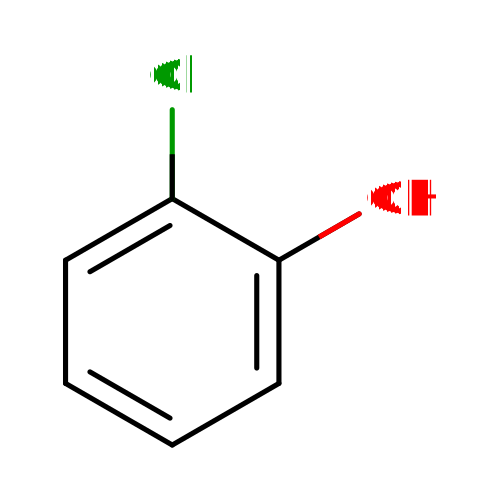
2-Chlorophenol (CED0007817)

Record Information
Version1.0
Creation Date2009-03-06 18:58:21 UTC
Update Date2026-05-14 17:48:07 UTC
SynCED IDCED0007817
Secondary Accession Numbers
  • CHEM000214
  • T3D0245
Identification
Common Name2-Chlorophenol
ClassSmall Molecule
Description
2-Chlorophenol is an exogenous organic compound with the formula C6H5ClO and an average molecular weight of 128.56 g/mol. It exists as a liquid at room temperature. 2-Chlorophenol belongs to the halophenols, a subclass of phenols within the organic compounds. In the chemical hierarchy, it is further classified as a benzenoid. This compound is found in or released from 30 recorded sources. These include household cleaning and consumer products such as soap detergents, bleaching agents, tobacco smoke filters, cigar cigarettes, and perfumes within detergents and soaps. It is associated with food, food processing and cookware, specifically food contact materials, food preservation, processing meats, and fermentation processes for beer, the preparation of wine or sparkling wine. Other sources include drinking water and water supply, as well as building and construction materials such as tents or canopies. Additionally, it is linked to electrical and electronic equipment, including antennas, amplifiers, coils, cores yokes or armatures, and conductors or conductive bodies characterised by the conductive materials. Recorded routes of exposure include touch, oral, and inhalation. 2-Chlorophenol interacts with five recorded protein targets: the nuclear receptor ROR-beta (RORB), peroxisome proliferator-activated receptor alpha (PPARA), mitogen-activated protein kinase 14 (MAPK14), estrogen receptor (ESR1), and estrogen receptor beta (ESR2). By binding to and inhibiting the estrogen receptor, the compound causes endocrine disruption in humans.
Contaminant Type
  • Aromatic Hydrocarbon
  • Disinfectant
  • Household Toxin
  • Organic Compound
  • Organochloride
  • Pollutant
  • Synthetic Compound
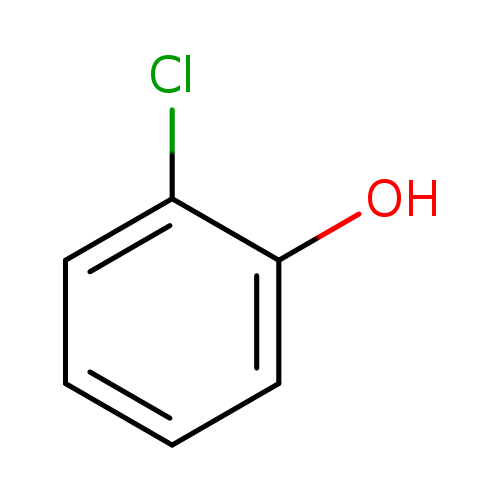
Chemical Structure
Synonyms
ValueSource
2-Chloro-1-hydroxybenzeneChEBI
O-ChlorophenolChEBI
O-MonochlorophenolHMDB
Ortho-chlorophenolHMDB
Ortho-monochlorophenolHMDB
2-MonochlorophenolHMDB
Chemical FormulaC6H5ClO
Average Molecular Mass128.556 g/mol
Monoisotopic Mass128.003 g/mol
CAS Registry Number95-57-8
IUPAC Name2-chlorophenol
Traditional Name2-chlorophenol
SMILESOC1=CC=CC=C1Cl
InChI IdentifierInChI=1S/C6H5ClO/c7-5-3-1-2-4-6(5)8/h1-4,8H
InChI KeyISPYQTSUDJAMAB-UHFFFAOYSA-N
Chemical Taxonomy
Description Belongs to the class of organic compounds known as o-chlorophenols. These are chlorophenols carrying a iodine at the C2 position of the benzene ring.
KingdomOrganic compounds
Super ClassBenzenoids
ClassPhenols
Sub ClassHalophenols
Direct ParentO-chlorophenols
Alternative Parents
Substituents
  • 2-chlorophenol
  • 1-hydroxy-4-unsubstituted benzenoid
  • 1-hydroxy-2-unsubstituted benzenoid
  • Halobenzene
  • Chlorobenzene
  • Monocyclic benzene moiety
  • Aryl halide
  • Aryl chloride
  • Organic oxygen compound
  • Hydrocarbon derivative
  • Organooxygen compound
  • Organochloride
  • Organohalogen compound
  • Aromatic homomonocyclic compound
Molecular FrameworkAromatic homomonocyclic compounds
External Descriptors
Biological Properties
StatusDetected and Not Quantified
OriginExogenous
Cellular Locations
  • Membrane
Biofluid LocationsNot Available
Tissue LocationsNot Available
ApplicationsNot Available
Biological Roles
Chemical RolesNot Available
Organoleptic EffectsNot Available
Physical Properties
StateLiquid
AppearanceNot Available
Experimental Properties
PropertyValue
Melting Point9.8°C
Boiling Point174.9°C
Solubility11.3 mg/mL at 25 °C [BANERJEE,S et al. (1980)]
Predicted Properties
PropertyValueSource
Water Solubility14.8 g/LALOGPS
logP2.4ALOGPS
logP2.27ChemAxon
logS-0.94ALOGPS
pKa (Strongest Acidic)7.97ChemAxon
pKa (Strongest Basic)-6.7ChemAxon
Physiological Charge0ChemAxon
Hydrogen Acceptor Count1ChemAxon
Hydrogen Donor Count1ChemAxon
Polar Surface Area20.23 ŲChemAxon
Rotatable Bond Count0ChemAxon
Refractivity32.84 m³·mol⁻¹ChemAxon
Polarizability11.93 ųChemAxon
Number of Rings1ChemAxon
BioavailabilityYesChemAxon
Rule of FiveYesChemAxon
Ghose FilterNoChemAxon
Veber's RuleYesChemAxon
MDDR-like RuleNoChemAxon
Spectra
Spectra
Spectrum TypeDescriptionSplash KeyDeposition DateView
GC-MSGC-MS Spectrumsplash10-01t9-9600000000-1d4acee3d22a14a5db15Not AvailableView Spectrum
GC-MSGC-MS Spectrumsplash10-01t9-9600000000-edc951b535cd8797ecb0Not AvailableView Spectrum
GC-MSGC-MS Spectrumsplash10-01t9-9600000000-36ba32f2c81fdba5c49cNot AvailableView Spectrum
Predicted GC-MSPredicted GC-MS Spectrumsplash10-004i-8900000000-4d021a73f0445209c69aNot AvailableView Spectrum
Predicted GC-MSPredicted GC-MS SpectrumNot AvailableNot AvailableView Spectrum
Predicted LC-MS/MSPredicted LC-MS/MS Spectrumsplash10-004i-0900000000-d73dd58c0ba338baf362Not AvailableView Spectrum
Predicted LC-MS/MSPredicted LC-MS/MS Spectrumsplash10-004i-1900000000-155e842681907a77ab61Not AvailableView Spectrum
Predicted LC-MS/MSPredicted LC-MS/MS Spectrumsplash10-0f6y-9100000000-16457b8457f8eeeb6213Not AvailableView Spectrum
Predicted LC-MS/MSPredicted LC-MS/MS Spectrumsplash10-004i-0900000000-b09665ff92b1bb84bbf7Not AvailableView Spectrum
Predicted LC-MS/MSPredicted LC-MS/MS Spectrumsplash10-004i-1900000000-4dadf1d813dabfadde62Not AvailableView Spectrum
Predicted LC-MS/MSPredicted LC-MS/MS Spectrumsplash10-0006-9100000000-b5f3263b999878602a26Not AvailableView Spectrum
Predicted LC-MS/MSPredicted LC-MS/MS Spectrumsplash10-004i-0900000000-ce881fa759c28045afdfNot AvailableView Spectrum
Predicted LC-MS/MSPredicted LC-MS/MS Spectrumsplash10-0fb9-4900000000-ab953f2d3060c28bf2c5Not AvailableView Spectrum
Predicted LC-MS/MSPredicted LC-MS/MS Spectrumsplash10-0fy5-9000000000-287cc9cda1f5bf54bc87Not AvailableView Spectrum
Predicted LC-MS/MSPredicted LC-MS/MS Spectrumsplash10-004i-0900000000-340c4b0460e614dc8bd2Not AvailableView Spectrum
Predicted LC-MS/MSPredicted LC-MS/MS Spectrumsplash10-004i-2900000000-a8d1a205a01921994a8dNot AvailableView Spectrum
Predicted LC-MS/MSPredicted LC-MS/MS Spectrumsplash10-00l6-9000000000-bfc9a49bc6ac36e34f89Not AvailableView Spectrum
MSMS Spectrumsplash10-01t9-9500000000-f4ad7c462f1461f5237dNot AvailableView Spectrum
1D NMR13C NMR Spectrum (1D, D2O, predicted)Not AvailableNot AvailableView Spectrum
1D NMR1H NMR Spectrum (1D, D2O, predicted)Not AvailableNot AvailableView Spectrum
Toxicity Profile
Toxicity Values
Toxicity ValueOrganismDose DescriptorRoute of ExposurePredicted or ExperimentalToxicity RatingReference
1000.0 mg/kg [1000:1580]RabbitLD50DermalexperimentalNot Available4
Toxicity / Toxin ClassNot Available
Mechanism of Toxicity2-chlorophenol works as a weak uncoupler of oxidative phosphorylation and inhibitors of cellular respiration. The ability of chlorophenols to uncouple oxidative phosphorylation increases with increasing chlorination. In fact, studies indicate a concentration-dependent triphasic effect of chlorophenols on phosphorylation and cellular respiration. At low concentrations, uncoupling produces stimulation of the resting state respiration as a result of increased adenosine triphosphatase (ATPase) activity in the absence of a phosphate acceptor.Inhibition of active respiration is also observed. At moderate concentrations, resting respiration is neither stimulated nor inhibited. Significant inhibition of respiration, associated with a breakdown of the electron transport process and decreased ATPase activity, occurs at very high concentrations. Uncoupling activity has been attributed to a protonophoric effect (a disruption of the energy gradient across the mitochondrial membrane resulting from distribution of chlorophenols in the phospholipid bilayer of the membrane), whereas inhibition of cellular respiration has been attributed to a direct action on intracellular proteins (2).
Carcinogenicity (IARC Classification)No indication of carcinogenicity (not listed by IARC). (1)
Minimum Risk LevelNot Available
SymptomsCough, shortness of breath and sore throat can result from inhalation of 2-chlorophenol. These symptoms may be delayed. Abdominal pain, drowsiness, weakness, and convulsions can result from ingestion as well as inhalation. Moreover, ingestion of 2-chlorophenol can cause restlessness, tremors, or central nervous system depression to occur. Eye exposure to 2-chlorophenol can lead to redness, pain, and blurred vision, while dermal contact can lead to redness and pain of the skin. Moreover, the substance can be rapidily absorbed after derma exposure (4).
TreatmentAvoid dilution following oral exposure; instead, administer charcoal as a slurry. Following inhalation, move patient to fresh air. Monitor for respiratory distress. If cough or difficulty breathing develops, evaluate for respiratory tract irritation, bronchitis, or pneumonitis. Administer oxygen and assist ventilation as required. Treat bronchospasm with inhaled beta2 agonist and oral or parenteral corticosteroids. In case the exposure occurs through eye contact, irrigate exposed eyes with copious amounts of room temperature water for at least 15 minutes. Following dermal exposure, remove phenol with undiluted polyethylene glycol 300 to 400 or isopropyl alcohol prior to washing, if readily available. Wash exposed areas twice or for at least 10 minutes with large quantities of soapy water. Water alone may be harmful. (5)
Health Effects
Health EffectRelationshipDirectionDescriptionReference
multiple myelomaAssociated With?Not AvailableA myeloid neoplasm that is located in the plasma cells in bone marrow. (DO)PMC1128032
cryptorchidismAssociated With?increaseNot AvailablePMC4583064
Abdominal obesityAssociated With?positiveNot AvailablePMC10022061
Exposure Sources
Source IDSourceSectorReference
CEDs000010Insecticides?Insecticides are synthetic chemicals designed to control or eliminate insect pests that threaten crops and other agricultural products.Agriculture & land managementPubChem
CEDs000013Soil?Soil serves as a critical medium for plant growth and sustains various ecological functions; however, it can become a reservoir for synthetic chemical contamination.Agriculture & land managementPMC10485622 , PMC9273335
CEDs000050Groundwater?Groundwater serves as a vital resource for drinking water and agricultural irrigation but is increasingly susceptible to contamination from synthetic chemicals.Aquatic systems & sedimentsPMC9273335 , PMC12262041
CEDs000070Stormwater runoff?Stormwater runoff refers to the flow of rainwater or melted snow that does not soak into the ground and instead collects pollutants as it travels over impervious surfaces such as roads and parking lots.Automotive & urban infrastructurePubChem
CEDs000115Drinking water?Drinking water can be a medium for synthetic chemical contamination, often originating from various industrial processes and agricultural practices.Drinking water & water supplyNot Available
CEDs000181Ballast water?Ballast water, taken on by ships to maintain stability and balance, often contains a diverse array of microorganisms, including bacteria, viruses, and plankton.Marine, shipping & aquaculturePubChem
CEDs000182Bilge water?Bilge water is a byproduct generated from the accumulation of water in the lowest part of a ship's hull, which may include a mixture of seawater, oil, fuel residues, and various contaminants.Marine, shipping & aquaculturePubChem
CEDs000233Brushes?Brushes used in personal care and cosmetics can be a source of synthetic chemical contamination due to the materials and coatings used in their manufacturing.Personal care & cosmeticsPubChem
CEDs000468Industrial wastewater?Industrial wastewater is a byproduct generated during various manufacturing and processing activities, which often contains a complex mixture of organic and inorganic synthetic chemicals.Wastewater, sanitation & biosolidsPMC10420689 , PMC7829762
CEDs000484Activated sludge?Activated sludge refers to a mixture of microorganisms and organic matter used in the biological treatment of wastewater.Wastewater, sanitation & biosolidsPMC10961449
CEDs000494Food contact materials?Food contact materials refer to substances and products that are intended to come into contact with food during processing, packaging, or preparation.Food, food processing & cookwareNot Available
CEDs000503Tents Or Canopies?Tents and canopies used in various applications can be a source of synthetic chemical contamination primarily due to the materials from which they are made.Building & ConstructionPubChem
CEDs000505Amplifiers?Amplifiers, commonly used in various electronic devices to enhance signal strength, can be a source of synthetic chemical contamination due to the materials and processes involved in their production and disposal.Electrical & Electronic EquipmentPubChem
CEDs000506Antennas?Antennas, commonly used in communication technologies, can be a source of synthetic chemical contamination through the materials and coatings used in their construction.Electrical & Electronic EquipmentPubChem
CEDs000508Coils?Coils are components used in various electrical and electronic applications, such as transformers, inductors, and motors.Electrical & Electronic EquipmentPubChem
CEDs000511Conductors Or Conductive Bodies Characterised By The Conductive Materials?Conductors, or conductive bodies, are materials that allow the flow of electrical current, typically made from metals such as copper, aluminum, or silver.Electrical & Electronic EquipmentPubChem
CEDs000513Cores Yokes Or Armatures?Cores, yokes, or armatures are components commonly found in electrical devices, used to facilitate the magnetic and electrical functions within motors, transformers, and generators.Electrical & Electronic EquipmentPubChem
CEDs000514Discharge Lamps?Discharge lamps, including fluorescent and high-intensity discharge (HID) lamps, are commonly used for lighting applications due to their energy efficiency and brightness.Electrical & Electronic EquipmentPubChem
CEDs000517Electric Switches?Electric switches, integral components in numerous devices, can be a source of synthetic chemical contamination due to the materials and manufacturing processes involved in their production.Electrical & Electronic EquipmentPubChem
CEDs000518Electrically Stimulated Smoking Devices?Electrically stimulated smoking devices, commonly known as e-cigarettes or vape pens, utilize electrical components to heat a liquid solution, often containing nicotine, flavorings, and other additives, to produce an aerosol for inhalation.Electrical & Electronic EquipmentPubChem
CEDs000519Electrodes?Electrodes, used in various electrical and electronic applications, can be a source of synthetic chemical contamination due to the materials from which they are constructed and the processes involved in their manufacturing.Electrical & Electronic EquipmentPubChem
CEDs000520Emergency Protective Devices?Emergency protective devices, such as circuit breakers and surge protectors, are essential components in electrical systems designed to prevent damage from overcurrent and surges.Electrical & Electronic EquipmentPubChem
CEDs000521Fixed Capacitors And Their Manufacture?Fixed capacitors are passive electronic components used to store and release electrical energy, playing a critical role in various circuits.Electrical & Electronic EquipmentPubChem
CEDs000524Hybrid Capacitors?Hybrid capacitors are energy storage devices that combine the properties of electrolytic and supercapacitors, utilizing a combination of electrochemical principles to achieve higher energy density and power density.Electrical & Electronic EquipmentPubChem
CEDs000527Magnets?Magnets, commonly used in various electrical and electronic applications, can be a source of synthetic chemical contamination due to the materials used in their production.Electrical & Electronic EquipmentPubChem
CEDs000530Radio Transmission Systems?Radio transmission systems utilize a variety of synthetic chemicals in their manufacturing and maintenance processes.Electrical & Electronic EquipmentPubChem
CEDs000531Relays?Relays are electromechanical switches used to control circuits and manage electrical loads.Electrical & Electronic EquipmentPubChem
CEDs000537Television Systems?Television systems can be a source of synthetic chemical contamination due to the various materials and components used in their manufacture and operation.Electrical & Electronic EquipmentPubChem
CEDs000538Thin Magnetic Films?Thin magnetic films are layers of magnetic material ranging from a few nanometers to several micrometers in thickness, commonly used in applications such as magnetic sensors, data storage devices, and electronic components.Electrical & Electronic EquipmentPubChem
CEDs000539Video Games?Video games, through their production and disposal processes, can be a source of synthetic chemical contamination.Electrical & Electronic EquipmentPubChem
CEDs000544Fermentation Processes For Beer?Fermentation processes for beer involve the conversion of sugars into alcohol and carbon dioxide by yeast.Food, food processing & cookwarePubChem
CEDs000545Food Preservation?Food preservation often involves the use of synthetic chemicals, such as preservatives, flavor enhancers, and color additives, to extend shelf life and enhance the sensory qualities of food products.Food, food processing & cookwarePubChem
CEDs000549Preparation Of Wine Or Sparkling Wine?The preparation of wine or sparkling wine involves various stages, including fermentation, aging, and bottling, which can introduce potential sources of synthetic chemical contamination.Food, food processing & cookwarePubChem
CEDs000552Processing Meats?Processing meats can lead to synthetic chemical contamination primarily through the use of additives and preservatives.Food, food processing & cookwarePubChem
CEDs000555Bleaching Agents?Bleaching agents are chemical substances used to whiten or lighten materials, often employed in various cleaning products for their stain removal and disinfecting properties.Household cleaning & consumer productsPubChem
CEDs000556Cigar Cigarettes?Cigar cigarettes are a source of synthetic chemical contamination due to the combustion of various tobacco blends and additives.Household cleaning & consumer productsPubChem
CEDs000561Perfumes Within Detergents And Soaps?Perfumes within detergents and soaps are synthetic fragrance compounds added to enhance the sensory experience of cleaning products.Household cleaning & consumer productsPubChem
CEDs000563Soap Detergents?Soap detergents are synthetic surfactants designed to enhance the cleaning efficacy of water by reducing surface tension, allowing for better interaction with dirt and grease.Household cleaning & consumer productsPubChem
CEDs000569Tobacco Smoke Filters?Tobacco smoke filters are designed to reduce the inhalation of harmful substances in cigarette smoke, including tar and other particulate matter.Household cleaning & consumer productsPubChem
CEDs000580Manufacture Preparation Of Tobacco Products?The manufacture and preparation of tobacco products involve various processes that can result in the introduction of synthetic chemicals into the environment.Industrial manufacturing & chemical processingPubChem
CEDs000581Paper Making Machines?Paper making machines utilize various synthetic chemicals throughout the production process, including additives, coatings, and bleaching agents.Industrial manufacturing & chemical processingPubChem
CEDs000592Marine Propulsion Or Steering?Marine propulsion and steering systems often rely on various synthetic chemicals, including lubricants, fuels, and hydraulic fluids.Marine, shipping & aquaculturePubChem
CEDs000596Acaricides?Acaricides are synthetic chemicals specifically designed to target and control mite populations that can damage crops and plants.Agriculture & land managementPubChem
CEDs000597Chemosterilants?Chemosterilants are synthetic chemicals designed to induce sterility in target pest populations, thereby controlling their reproduction and mitigating damage to crops.Agriculture & land managementPubChem
CEDs000598Fertiliser Distributors?Fertiliser distributors play a critical role in the supply of synthetic fertilizers, which are widely used to enhance soil fertility and crop yield.Agriculture & land managementPubChem
CEDs000600Herbicides And Algicides?Herbicides and algicides are synthetic chemicals primarily used to control unwanted plants and algae in various environments.Agriculture & land managementPubChem
CEDs000602Molluscicides?Molluscicides are synthetic chemicals specifically designed to control and eliminate mollusks, such as snails and slugs, which can be detrimental to crops and agricultural productivity.Agriculture & land managementPubChem
CEDs000603Nematocides?Nematocides are synthetic chemicals specifically designed to control nematodes, which are microscopic roundworms that can cause significant damage to crops and plants.Agriculture & land managementPubChem
CEDs000604Pest Attractants?Pest attractants are synthetic chemicals designed to lure specific pests for monitoring or control purposes.Agriculture & land managementPubChem
CEDs000605Pest Repellants?Pest repellents, often formulated from synthetic chemicals, are widely used to protect crops from insect infestations and other pests.Agriculture & land managementPubChem
CEDs000606Plant Growth Regulators?Plant Growth Regulators (PGRs) are synthetic chemicals designed to influence the growth and development of plants.Agriculture & land managementPubChem
CEDs000607Rodenticides(1)?Rodenticides are synthetic chemicals specifically formulated to control rodent populations, serving as a crucial tool in managing pests that can damage crops and spread diseases.Agriculture & land managementPubChem
CEDs000608Rodenticides?Rodenticides are chemical substances specifically designed to control rodent populations by causing death through various mechanisms, including anticoagulation or neurotoxicity.Agriculture & land managementPubChem
CEDs000609Aftershave?Aftershave is a grooming product typically used to soothe and protect the skin following shaving.Personal care & cosmeticsPubChem
CEDs000610Aftersun Products?Aftersun products are designed to soothe and hydrate the skin after sun exposure, often containing various synthetic chemicals such as emollients, preservatives, and fragrances.Personal care & cosmeticsPubChem
CEDs000611Anti Perspirants Or Body Deoderants?Antiperspirants and body deodorants commonly contain synthetic chemicals such as aluminum compounds, parabens, and synthetic fragrances.Personal care & cosmeticsPubChem
CEDs000612Body Washing Or Cleaning Implements?Body washing or cleaning implements, such as synthetic sponges, loofahs, and washcloths, can be sources of synthetic chemical contamination due to the materials used in their production.Personal care & cosmeticsPubChem
CEDs000613Depilatories?Depilatories are products designed to remove unwanted hair through the application of synthetic chemicals that break down the protein structure of hair, facilitating its removal.Personal care & cosmeticsPubChem
CEDs000614Essential Oils Or Perfumes?Essential oils and perfumes are complex mixtures of volatile compounds derived from natural or synthetic sources, commonly used for their aromatic properties.Personal care & cosmeticsPubChem
CEDs000615Eye Makeup Products?Eye makeup products, including mascaras, eyeliners, and eyeshadows, often contain a variety of synthetic chemicals such as pigments, preservatives, and film-forming agents.Personal care & cosmeticsPubChem
CEDs000616Face Mask Cosmetics?Face mask cosmetics often contain a variety of synthetic chemicals, including preservatives, emulsifiers, and fragrances, which can contribute to chemical contamination.Personal care & cosmeticsPubChem
CEDs000617Lip Care Products?Lip care products, including lipsticks, balms, and glosses, often contain a variety of synthetic chemicals such as parabens, phthalates, and synthetic fragrances.Personal care & cosmeticsPubChem
CEDs000618Lip Makeup Products?Lip makeup products, such as lipsticks, lip glosses, and lip liners, often contain a variety of synthetic chemicals, including pigments, preservatives, and emollients.Personal care & cosmeticsPubChem
CEDs000626Rocking Horses?Rocking horses, often made from various synthetic materials such as plastics, foams, and treated woods, can be a source of synthetic chemical contamination due to the presence of additives and coatings used in their production.Recreation & sports surfacesPubChem
CEDs000630Toys?Toys, particularly those made from synthetic materials such as plastics, can be a source of chemical contamination due to the presence of various additives and compounds used in their production.Recreation & sports surfacesPubChem
CEDs000631Anthraquinone Dyes?Anthraquinone dyes are a class of synthetic organic compounds characterized by their vibrant colors and stability, making them widely used in various applications, particularly in coloring textiles and leather.Textiles, leather & furnishingsPubChem
CEDs000632Apparel?Apparel production often involves the use of various synthetic chemicals, including dyes, finishing agents, and preservatives.Textiles, leather & furnishingsPubChem
CEDs000633Azo Dyes?Azo dyes are synthetic organic compounds characterized by the presence of one or more azo groups (-N=N-), which are widely used for coloring textiles, leather, and furnishings.Textiles, leather & furnishingsPubChem
CEDs000638Decorating Textiles?Decorating textiles often involves the use of synthetic chemicals such as dyes, finishes, and coatings.Textiles, leather & furnishingsPubChem
CEDs000640Embroidering And Tufting?Embroidering and tufting processes often involve the use of synthetic chemicals such as dyes, adhesives, and finishing agents.Textiles, leather & furnishingsPubChem
CEDs000642Footwear?Footwear production often involves the use of various synthetic chemicals, such as adhesives, dyes, and treatments, which can contribute to environmental contamination.Textiles, leather & furnishingsPubChem
CEDs000643Headwear?Headwear made from synthetic materials often incorporates chemicals used in the manufacturing and finishing processes, such as dyes, flame retardants, and water repellents.Textiles, leather & furnishingsPubChem
CEDs000647Multicolour Dyeing?Multicolour dyeing involves the application of multiple synthetic dyes to textiles and other materials to achieve vibrant, diverse color patterns.Textiles, leather & furnishingsPubChem
CEDs000648Nitro Dyes?Nitro dyes are synthetic colorants that contain nitro groups (-NO2) in their chemical structure.Textiles, leather & furnishingsPubChem
CEDs000650Purses Luggage Hand Bags?Purses, luggage, and handbags are often manufactured using synthetic materials such as polyvinyl chloride (PVC), polyurethane, and various types of nylon.Textiles, leather & furnishingsPubChem
CEDs000652Ropes?Ropes manufactured from synthetic fibers, such as polypropylene, nylon, and polyester, are widely used in various applications, including marine, construction, and outdoor activities.Textiles, leather & furnishingsPubChem
CEDs000653Sewing?Sewing processes often involve the use of various synthetic chemicals, which can become sources of contamination in the environment.Textiles, leather & furnishingsPubChem
CEDs000655Slide Fasteners?Slide fasteners, commonly known as zippers, are mechanical devices used to join two edges of fabric or other materials.Textiles, leather & furnishingsPubChem
CEDs000657Surface Finishing Of Leather?Surface finishing of leather often involves the use of various synthetic chemicals, including dyes, resins, and finishing agents.Textiles, leather & furnishingsPubChem
CEDs000658Touch Fasteners?Touch fasteners, commonly known as hook-and-loop fasteners, are composed of synthetic materials such as nylon or polyester.Textiles, leather & furnishingsPubChem
CEDs000659Transfer Printing?Transfer printing is a process used to apply designs and patterns onto various substrates, commonly utilizing synthetic dyes and inks that can contain hazardous chemicals.Textiles, leather & furnishingsPubChem
CEDs000662Yarns Or Threads?Yarns or threads used in textiles can be a source of synthetic chemical contamination due to the production processes and treatments they undergo.Textiles, leather & furnishingsPubChem
CEDs000663Sanitary Equipment?Sanitary equipment, including toilets, sinks, and drainage systems, can serve as conduits for synthetic chemical contamination.Wastewater, sanitation & biosolidsPubChem
CEDs000666Flame Traps?Flame traps are devices designed to prevent the propagation of flames and explosions by allowing gases to escape while blocking flames.Fire suppression systems & agentsPubChem
CEDs000670Solid Fire Fighting Substances?Solid fire fighting substances, such as certain types of dry chemical powders, are used in fire suppression applications to extinguish flames and prevent fire spread.Fire suppression systems & agentsPubChem
CEDs000671Airplanes And Helicopters?Airplanes and helicopters are significant sources of synthetic chemical contamination primarily through the use of aviation fuels, lubricants, and de-icing agents.Aviation & AerospacePubChem
CEDs000678Nitrogenous Fertilisers?Nitrogenous fertilizers are synthetic chemical compounds primarily used to enhance plant growth by supplying essential nitrogen, a crucial nutrient for photosynthesis and protein synthesis.Agriculture & land managementPubChem
CEDs000679Phosphatic Fertilisers?Phosphatic fertilizers are synthetic chemical products primarily composed of phosphorus, which is essential for plant growth.Agriculture & land managementPubChem
CEDs000684Cements?Cements are a composite material primarily used as a binding agent in construction applications, formed by the calcination of limestone and clay minerals at high temperatures.Building & ConstructionPubChem
CEDs000685Ceramics?Ceramics can be a source of synthetic chemical contamination through various additives and processing agents used in their production.Building & ConstructionPubChem
CEDs000686Clay Wares?Clay wares are ceramic products made from natural clay, often utilized in various construction applications such as tiles, bricks, and sanitary ware.Building & ConstructionPubChem
CEDs000688Glass Coatings?Glass coatings are synthetic chemical formulations applied to glass surfaces to enhance properties such as durability, UV resistance, and aesthetic appeal.Building & ConstructionPubChem
CEDs000692Silica Free Oxide Glass?Silica Free Oxide Glass is a type of glass that is produced using alternative materials to traditional silica-based formulations.Building & ConstructionPubChem
CEDs000693Silica Glass?Silica glass, primarily composed of silicon dioxide (SiO2), is widely used in various applications, including windows, glass facades, and insulation materials.Building & ConstructionPubChem
CEDs000696Nanotechnology?Nanotechnology involves the manipulation of materials at the molecular or atomic level, typically within the range of 1 to 100 nanometers.Industrial manufacturing & chemical processingPubChem
CEDs000699Mining Or Quarrying?Mining and quarrying operations can lead to synthetic chemical contamination through the release of various pollutants associated with the extraction and processing of minerals.Mining & metal processingPubChem
CEDs000716Erasers?Erasers, commonly used in writing and drawing applications, are often made from synthetic rubber or thermoplastic materials, which can contain various additives such as plasticizers, fillers, and colorants.Paper, pulp & fiber productsPubChem
CEDs000717Fountain Pens?Fountain pens utilize a liquid ink that often contains synthetic chemicals, including dyes, pigments, and solvents, which can contribute to environmental contamination.Paper, pulp & fiber productsPubChem
CEDs000720Ink Reservoir Pens2?Ink reservoir pens are writing instruments that utilize a reservoir to store ink, which is often composed of synthetic dyes, solvents, and additives.Paper, pulp & fiber productsPubChem
CEDs000726Pens?Pens, commonly utilized for writing and marking, can be a source of synthetic chemical contamination primarily due to the materials used in their manufacturing.Paper, pulp & fiber productsPubChem
CEDs000727Printing Machines Or Presses?Printing machines or presses commonly utilize synthetic chemicals such as inks, solvents, and cleaning agents.Paper, pulp & fiber productsPubChem
CEDs000729Stamps?Stamps, particularly those produced using synthetic inks and adhesives, can contribute to chemical contamination when disposed of improperly.Paper, pulp & fiber productsPubChem
CEDs000730Contact Lens Cases?Contact lens cases are small containers designed to store contact lenses in a sterile environment, typically made from various synthetic materials including plastics such as polypropylene or polycarbonate.Healthcare, pharmaceuticals & veterinary productsPubChem
CEDs000734Coating Compositions?Coating compositions, which include paints, sealants, and varnishes, are formulated with a variety of synthetic chemicals such as solvents, resins, pigments, and additives.Building & ConstructionPubChem
CEDs000735Explosives?Explosives are chemical compounds or mixtures designed to undergo rapid decomposition, releasing energy in the form of gas and heat.Defense & military infrastructurePubChem
CEDs000738Cooling Circuit Water?Cooling circuit water is utilized in various industrial processes to absorb and dissipate heat generated during operations.Industrial manufacturing & chemical processingPubChem
CEDs000739Inks?Inks are complex mixtures composed of pigments or dyes, solvents, resins, and additives used primarily for printing and writing applications.Paper, pulp & fiber productsPubChem
CEDs000740Paper?Paper production involves the processing of wood fibers and the use of various chemicals, which can lead to synthetic chemical contamination.Paper, pulp & fiber productsPubChem
CEDs000741Pigment Pastes?Pigment pastes are concentrated dispersions of pigments used to impart color and properties to materials.Paper, pulp & fiber productsPubChem
CEDs000742Leather Tanning?Leather tanning is a process that transforms raw animal hides into durable leather through the application of various chemicals, including chromium salts, aldehydes, and vegetable tannins.Textiles, leather & furnishingsPubChem
CEDs000743Sludge Treatment?Sludge treatment involves the processing of waste materials generated from wastewater treatment plants, which often contain a variety of organic and inorganic substances.Wastewater, sanitation & biosolidsPubChem
CEDs000744Water, Wastewater, & Sewage Treatment?Water, wastewater, and sewage treatment processes are critical for managing and mitigating pollutants in water systems.Wastewater, sanitation & biosolidsPubChem
CEDs00754BiocharAgriculture & land managementPMC12845622
CEDs02255WaterAquatic systems & sedimentsPMC10485622 , PMC13018987
CEDs02264SedimentAquatic systems & sedimentsPMC1253757
CEDs02268Water SamplesAquatic systems & sedimentsPMC6253767 , PMC9101692
CEDs02345Lake SedimentAquatic systems & sedimentsPMC1253757
CEDs03009Waste WaterWastewater, sanitation & biosolidsPMC7829762 , PMC7829762
CEDs03023Effluent SamplesWastewater, sanitation & biosolidsPMC13468172
CEDs03025Industrial EffluentsWastewater, sanitation & biosolidsPMC12262041
CEDs03263Textile IndustryTextiles, leather & furnishingsPMC12262041
Pathways
0 pathwaysPathway Source: PathBank

No pathways found

No metabolic pathways have been associated with this synthetic chemical

Targets
StructureProteinUniProt IDOrganismRelationshipDetails
Carbonic anhydrase 2 structureClick to view 3D structureCarbonic anhydrase 2P00918HumansPredicted (SEA)
Prediction Confidence Score
0.412
Applicability Domain
0.563
Statistical Significance
0.0064
Supporting Reference Compounds
472
E-value
49.6678
Carbonic anhydrase 12 structureClick to view 3D structureCarbonic anhydrase 12O43570HumansPredicted (SEA)
Prediction Confidence Score
0.374
Applicability Domain
0.563
Statistical Significance
0.0082
Supporting Reference Compounds
332
E-value
64.0699
Polyunsaturated fatty acid lipoxygenase ALOX15 structureClick to view 3D structurePolyunsaturated fatty acid lipoxygenase ALOX15P12530Oryctolagus cuniculusPredicted (SEA)
Prediction Confidence Score
0.333
Applicability Domain
0.563
Statistical Significance
5.00e-04
Supporting Reference Compounds
47
E-value
3.89246
Carbonic anhydrase 1 structureClick to view 3D structureCarbonic anhydrase 1P00915HumansPredicted (SEA)
Prediction Confidence Score
0.331
Applicability Domain
0.421
Statistical Significance
0.02
Supporting Reference Compounds
407
E-value
156.088
Indoleamine 2,3-dioxygenase 1 structureClick to view 3D structureIndoleamine 2,3-dioxygenase 1P14902HumansPredicted (SEA)
Prediction Confidence Score
0.32
Applicability Domain
0.4
Statistical Significance
0.0027
Supporting Reference Compounds
108
E-value
21.0193
Click to view 3D structureCarbonic anhydrase 5B, mitochondrialQ9Y2D0HumansPredicted (SEA)
Prediction Confidence Score
0.318
Applicability Domain
0.563
Statistical Significance
0.0089
Supporting Reference Compounds
157
E-value
69.5194
Carbonic anhydrase 2 structureClick to view 3D structureCarbonic anhydrase 2Q3I4V7Cryptococcus neoformansPredicted (SEA)
Prediction Confidence Score
0.303
Applicability Domain
0.333
Statistical Significance
0.0058
Supporting Reference Compounds
60
E-value
44.919
Carbonic anhydrase structureClick to view 3D structureCarbonic anhydraseQ5AJ71Candida albicans (strain SC5314 / ATCC MYA-2876) (Yeast)Predicted (SEA)
Prediction Confidence Score
0.303
Applicability Domain
0.333
Statistical Significance
0.0067
Supporting Reference Compounds
68
E-value
52.3925
Cyclin-dependent kinase 2 structureClick to view 3D structureCyclin-dependent kinase 2P24941HumansPredicted (SEA)
Prediction Confidence Score
0.293
Applicability Domain
0.421
Statistical Significance
0.1294
Supporting Reference Compounds
1029
E-value
1007.37
Cytochrome P450 1A2 structureClick to view 3D structureCytochrome P450 1A2P05177HumansPredicted (SEA)
Prediction Confidence Score
0.29
Applicability Domain
0.391
Statistical Significance
0.0976
Supporting Reference Compounds
793
E-value
759.497
Carbonic anhydrase 6 structureClick to view 3D structureCarbonic anhydrase 6P23280HumansPredicted (SEA)
Prediction Confidence Score
0.289
Applicability Domain
0.421
Statistical Significance
0.0151
Supporting Reference Compounds
151
E-value
117.864
Epidermal growth factor receptor structureClick to view 3D structureEpidermal growth factor receptorP00533HumansPredicted (SEA)
Prediction Confidence Score
0.285
Applicability Domain
0.421
Statistical Significance
0.1862
Supporting Reference Compounds
1301
E-value
1449.94
Click to view 3D structureD(2) dopamine receptorP61169RatPredicted (SEA)
Prediction Confidence Score
0.281
Applicability Domain
0.31
Statistical Significance
0.0803
Supporting Reference Compounds
528
E-value
625.518
Click to view 3D structureD(1A) dopamine receptorP18901Rattus norvegicusPredicted (SEA)
Prediction Confidence Score
0.281
Applicability Domain
0.31
Statistical Significance
0.0339
Supporting Reference Compounds
206
E-value
263.597
D-amino-acid oxidase structureClick to view 3D structureD-amino-acid oxidaseP14920HumansPredicted (SEA)
Prediction Confidence Score
0.28
Applicability Domain
0.333
Statistical Significance
0.0013
Supporting Reference Compounds
32
E-value
10.0426
Click to view 3D structureArachidonate 5-lipoxygenaseQ9BEG3Bos taurusPredicted (SEA)
Prediction Confidence Score
0.279
Applicability Domain
0.421
Statistical Significance
8.00e-05
Supporting Reference Compounds
9
E-value
0.622794
Click to view 3D structureCarbonic anhydraseQ2PCB5Dicentrarchus labraxPredicted (SEA)
Prediction Confidence Score
0.278
Applicability Domain
0.421
Statistical Significance
5.00e-04
Supporting Reference Compounds
9
E-value
3.89246
Click to view 3D structure5-hydroxytryptamine receptor 1AP19327Rattus norvegicusPredicted (SEA)
Prediction Confidence Score
0.275
Applicability Domain
0.31
Statistical Significance
0.0956
Supporting Reference Compounds
541
E-value
744.005
Click to view 3D structureD-alanine--D-alanine ligaseQ47758Enterococcus faecalis (strain ATCC 700802 / V583)Predicted (SEA)
Prediction Confidence Score
0.273
Applicability Domain
0.293 Low confidence
Statistical Significance
0.0016
Supporting Reference Compounds
3
E-value
12.3002
Acetylcholinesterase structureClick to view 3D structureAcetylcholinesteraseP22303HumansPredicted (SEA)
Prediction Confidence Score
0.272
Applicability Domain
0.293 Low confidence
Statistical Significance
0.0867
Supporting Reference Compounds
406
E-value
674.719
Cytochrome P450 3A4 structureClick to view 3D structureCytochrome P450 3A4P08684HumansPredicted (SEA)
Prediction Confidence Score
0.272
Applicability Domain
0.313
Statistical Significance
0.3427
Supporting Reference Compounds
1538
E-value
2668.05
Tyrosine-protein kinase Fyn structureClick to view 3D structureTyrosine-protein kinase FynP06241HumansPredicted (SEA)
Prediction Confidence Score
0.272
Applicability Domain
0.421
Statistical Significance
0.1793
Supporting Reference Compounds
707
E-value
1395.76
Carbonic anhydrase 9 structureClick to view 3D structureCarbonic anhydrase 9Q16790HumansPredicted (SEA)
Prediction Confidence Score
0.271
Applicability Domain
0.368
Statistical Significance
0.0737
Supporting Reference Compounds
372
E-value
573.671
Carbonic anhydrase 4 structureClick to view 3D structureCarbonic anhydrase 4P22748HumansPredicted (SEA)
Prediction Confidence Score
0.271
Applicability Domain
0.368
Statistical Significance
0.029
Supporting Reference Compounds
193
E-value
225.607
Click to view 3D structureStreptokinase AP10520Streptococcus pyogenes serotype M1Predicted (SEA)
Prediction Confidence Score
0.27
Applicability Domain
0.286 Low confidence
Statistical Significance
0.063
Supporting Reference Compounds
425
E-value
490.762
Estrogen receptor structureClick to view 3D structureEstrogen receptorP03372HumansKnownCauses endocrine disruption in humans by binding to and inhibiting the estrogen receptor. (A590)
Estrogen receptor beta structureClick to view 3D structureEstrogen receptor betaQ92731HumansKnownCauses endocrine disruption in humans by binding to and inhibiting the estrogen receptor. (A590)
Mitogen-activated protein kinase 14 structureClick to view 3D structureMitogen-activated protein kinase 14Q16539HumansKnownNot Available
Peroxisome proliferator-activated receptor alpha structureClick to view 3D structurePeroxisome proliferator-activated receptor alphaQ07869HumansKnownNot Available
Click to view 3D structureNuclear receptor ROR-betaQ92753HumansKnownNot Available
Concentrations
Not Available
External Links
DrugBank IDDB03110
HMDB IDHMDB0245077
FooDB IDNot Available
Phenol Explorer IDNot Available
KNApSAcK IDNot Available
BiGG IDNot Available
BioCyc IDNot Available
METLIN IDNot Available
PDB IDNot Available
Wikipedia Link2-Chlorophenol
Chemspider ID13837686
ChEBI ID47083
PubChem Compound ID7245
Kegg Compound IDC14219
YMDB IDNot Available
ECMDB IDNot Available
References
Synthesis ReferenceNot Available
MSDSNot Available
General References
  1. International Agency for Research on Cancer (2014). IARC Monographs on the Evaluation of Carcinogenic Risks to Humans. - http://monographs.iarc.fr/index.php
  2. ATSDR - Agency for Toxic Substances and Disease Registry (1999). Toxicological profile for chlorophenols. U.S. Public Health Service in collaboration with U.S. Environmental Protection Agency (EPA). - http://www.atsdr.cdc.gov/toxprofiles/tp107.html
  3. Wikipedia. 2-Chlorophenol. Last Updated 20 May 2009. - http://en.wikipedia.org/wiki/Chlorophenols
  4. International Programme on Chemical Safety (IPCS) INCHEM (1999). Poison Information Monograph for 2-Chlorophenol. - http://www.inchem.org/documents/icsc/icsc/eics0849.htm
  5. Rumack BH (2009). POISINDEX(R) Information System. Englewood, CO: Micromedex, Inc. CCIS Volume 141, edition expires Aug, 2009.