Lead sulfate (CED0014161)

Record Information
Version1.0
Creation Date2009-03-06 18:58:33 UTC
Update Date2026-04-05 19:23:40 UTC
SynCED IDCED0014161
Secondary Accession Numbers
  • CHEM000284
  • T3D0335
Identification
Common NameLead sulfate
ClassSmall Molecule
Description
Lead sulfate (O4PbS) is an inorganic compound with an average molecular weight of 303.30 g/mol. Lead sulfate belongs to the post-transition metal sulfates, a subclass of post-transition metal oxoanionic compounds within the inorganic compounds. This exogenous solid is a mixed metal/non-metal compound. It is used in plastics such as Polyvinyl Chloride, High-Density Polyethylene, Low-Density Polyethylene, Polypropylene, Polystyrene, Expanded polystyrene, Polyethylene Terephthalate, Polyamide, Polyurethane, Acrylonitrile butadiene styrene, and Polycarbonate, and it is present in High impact polystyrene. It is also used in lead-acid batteries. The compound is found in or released from 34 recorded sources, including electrical and electronic equipment such as antennas, amplifiers, coils, adjustable resistors, and colour television systems. Other sources include household items like watch chains, household cleaning and consumer products including tobacco smoke filters, non electric simulated smoking devices, and cigar cigarettes, as well as building and construction materials such as roofs, ceilings, sunshades awnings or outside screens, and stairs and ramps. It is also associated with food processing and cookware, specifically the preparation of vinegar, wine or sparkling wine, fermentation processes for beer, processing meats, and cellar tools. Lead in this compound interacts with 24 recorded protein targets. It binds to sodium/potassium-transporting ATPases and thymosin beta-4. It competitively inhibits calcium's binding of calmodulin and protein kinase C (including alpha, beta, delta, and epsilon types), which alters cAMP messenger pathways and impairs brain microvascular formation and the blood-brain barrier. It exhibits competitive inhibition at the NMDA receptor (including GRIN2A, GRIN2B, GRIN2C, and GRIN3A), affecting neurotransmitter release. Additionally, lead inhibits ALAD and mitochondrial ferrochelatase, preventing heme biosynthesis, and binds ACBP, which regulates insulin secretion, steroidogenesis, and acyl-CoA metabolism.

Contaminant Type
  • Household Toxin
  • Industrial/Workplace Toxin
  • Inorganic Compound
  • Lead Compound
  • Natural Compound
  • Pollutant
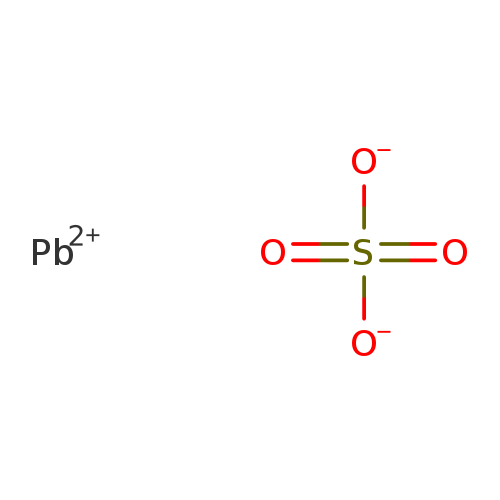
Chemical Structure
Synonyms
ValueSource
Lead sulfuric acidGenerator
Lead sulphateGenerator
Lead sulphuric acidGenerator
Chemical FormulaO4PbS
Average Molecular Mass303.300 g/mol
Monoisotopic Mass303.928 g/mol
CAS Registry Number7446-14-2
IUPAC Nameλ²-lead(2+) ion sulfate
Traditional Nameλ²-lead(2+) ion sulfate
SMILES[Pb++].[O-]S([O-])(=O)=O
InChI IdentifierInChI=1S/H2O4S.Pb/c1-5(2,3)4;/h(H2,1,2,3,4);/q;+2/p-2
InChI KeyKEQXNNJHMWSZHK-UHFFFAOYSA-L
Chemical Taxonomy
Description Belongs to the class of inorganic compounds known as post-transition metal sulfates. These are inorganic compounds in which the largest oxoanion is sulfate, and in which the heaviest atom not in an oxoanion is a post-transition metal.
KingdomInorganic compounds
Super ClassMixed metal/non-metal compounds
ClassPost-transition metal oxoanionic compounds
Sub ClassPost-transition metal sulfates
Direct ParentPost-transition metal sulfates
Alternative Parents
Substituents
  • Post-transition metal sulfate
  • Inorganic lead salt
  • Inorganic post-transition metal salt
  • Inorganic oxide
  • Inorganic salt
Molecular FrameworkNot Available
External DescriptorsNot Available
Biological Properties
StatusDetected and Not Quantified
OriginExogenous
Cellular Locations
  • Cytoplasm
  • Extracellular
Biofluid LocationsNot Available
Tissue LocationsNot Available
ApplicationsNot Available
Biological RolesNot Available
Chemical RolesNot Available
Organoleptic EffectsNot Available
Physical Properties
StateSolid
AppearanceWhite powder.
Experimental Properties
PropertyValue
Melting Point1170°C
Boiling PointNot Available
Solubility0.032 mg/mL at 15°C [MITCHELL,S (1926)]
Predicted Properties
PropertyValueSource
logP-0.84ChemAxon
pKa (Strongest Acidic)-3ChemAxon
Physiological Charge-2ChemAxon
Hydrogen Acceptor Count4ChemAxon
Hydrogen Donor Count0ChemAxon
Polar Surface Area80.26 ŲChemAxon
Rotatable Bond Count0ChemAxon
Refractivity11.53 m³·mol⁻¹ChemAxon
Polarizability5.81 ųChemAxon
Number of Rings0ChemAxon
BioavailabilityYesChemAxon
Rule of FiveYesChemAxon
Ghose FilterNoChemAxon
Veber's RuleNoChemAxon
MDDR-like RuleNoChemAxon
Spectra
Spectra
Spectrum TypeDescriptionSplash KeyDeposition DateView
Predicted LC-MS/MSPredicted LC-MS/MS Spectrumsplash10-03di-0009000000-1e48fe3afac0a283ccf5Not AvailableView Spectrum
Predicted LC-MS/MSPredicted LC-MS/MS Spectrumsplash10-0a4i-0009000000-0a433cb1417376d59801Not AvailableView Spectrum
Toxicity Profile
Toxicity Values
Toxicity ValueOrganismDose DescriptorRoute of ExposurePredicted or ExperimentalToxicity RatingReference
300.0 mg/kg Guinea pigLD50IntraperitonealexperimentalNot Available11
Toxicity / Toxin ClassNot Available
Mechanism of ToxicityLead mimics other biologically important metals, such as zinc, calcium, and iron, competing as cofactors for many of their respective enzymatic reactions. For example, lead has been shown to competitively inhibit calcium's binding of calmodulin, interferring with neurotransmitter release. It exhibits similar competitive inhibition at the NMDA receptor and protein kinase C, which impairs brain microvascular formation and function, as well as alters the blood-brain barrier. Lead also affects the nervous system by impairing regulation of dopamine synthesis and blocking evoked release of acetylcholine. However, it's main mechanism of action occurs by inhibiting delta-aminolevulinic acid dehydratase, an enzyme vital in the biosynthesis of heme, which is a necesssary cofactor of hemoglobin. (9, 2, 3, 7)
Carcinogenicity (IARC Classification)2A, probably carcinogenic to humans. (6)
Minimum Risk LevelChronic Inhalation: 0.05 mg/m3 (5)
SymptomsSymptions of chronic lead poisoning include reduced cognitive abilities, nausea, abdominal pain, irritability, insomnia, metal taste in the mouth, excess lethargy or hyperactivity, chest pain, headache and, in extreme cases, seizures, comas, and death. There are also associated gastrointestinal problems, such as constipation, diarrhea, vomiting, poor appetite, weight loss, which are common in acute poisoning. (1, 4)
TreatmentLead poisoning is usually treated with chelation therapy using DMSA, EDTA, or dimercaprol. (4)
Health Effects
Health EffectRelationshipDirectionDescriptionReference
Exposure Sources
Source IDSourceSectorReference
CEDs000010Insecticides?Insecticides are synthetic chemicals designed to control or eliminate insect pests that threaten crops and other agricultural products.Agriculture & land managementPubChem
CEDs000013Soil?Soil serves as a critical medium for plant growth and sustains various ecological functions; however, it can become a reservoir for synthetic chemical contamination.Agriculture & land managementPMC10181873 , PMC2659775
CEDs000192Slag?Slag is a byproduct generated during the extraction and refining of metals from their ores.Mining & metal processingPMC9517075
CEDs000233Brushes?Brushes used in personal care and cosmetics can be a source of synthetic chemical contamination due to the materials and coatings used in their manufacturing.Personal care & cosmeticsPubChem
CEDs000495Ceilings?Ceilings in built environments can be a source of synthetic chemical contamination due to the materials used in their construction and finishes.Building & ConstructionPubChem
CEDs000499Roofs?Roofs can be a significant source of synthetic chemical contamination due to the materials used in their construction and maintenance.Building & ConstructionPubChem
CEDs000500Stairs And Ramps?Stairs and ramps in construction are often treated with various synthetic chemicals to enhance durability, slip resistance, and weather resistance.Building & ConstructionPubChem
CEDs000501Sunshades Awnings Or Outside Screens?Sunshades, awnings, and outside screens are often constructed using synthetic materials such as polyvinyl chloride (PVC), polyester, or acrylic fabrics.Building & ConstructionPubChem
CEDs000502Sunshades Awnings Or Outside Screens?Sunshades, awnings, and outside screens are commonly used in construction to enhance energy efficiency and provide shade.Building & ConstructionPubChem
CEDs000504Adjustable Resistors?Adjustable resistors, commonly used in various electronic devices, can contribute to synthetic chemical contamination through the materials and substances used in their manufacturing and disposal.Electrical & Electronic EquipmentPubChem
CEDs000505Amplifiers?Amplifiers, commonly used in various electronic devices to enhance signal strength, can be a source of synthetic chemical contamination due to the materials and processes involved in their production and disposal.Electrical & Electronic EquipmentPubChem
CEDs000506Antennas?Antennas, commonly used in communication technologies, can be a source of synthetic chemical contamination through the materials and coatings used in their construction.Electrical & Electronic EquipmentPubChem
CEDs000508Coils?Coils are components used in various electrical and electronic applications, such as transformers, inductors, and motors.Electrical & Electronic EquipmentPubChem
CEDs000509Colour Television Systems?Colour television systems contain various synthetic chemicals that can lead to environmental contamination.Electrical & Electronic EquipmentPubChem
CEDs000510Communication Cables Or Conductors?Communication cables or conductors are essential components in the transmission of data and signals in various applications, including telecommunications and networking.Electrical & Electronic EquipmentPubChem
CEDs000511Conductors Or Conductive Bodies Characterised By The Conductive Materials?Conductors, or conductive bodies, are materials that allow the flow of electrical current, typically made from metals such as copper, aluminum, or silver.Electrical & Electronic EquipmentPubChem
CEDs000514Discharge Lamps?Discharge lamps, including fluorescent and high-intensity discharge (HID) lamps, are commonly used for lighting applications due to their energy efficiency and brightness.Electrical & Electronic EquipmentPubChem
CEDs000516Electric Hearing Aids?Electric hearing aids are small electronic devices designed to amplify sound for individuals with hearing loss.Electrical & Electronic EquipmentPubChem
CEDs000517Electric Switches?Electric switches, integral components in numerous devices, can be a source of synthetic chemical contamination due to the materials and manufacturing processes involved in their production.Electrical & Electronic EquipmentPubChem
CEDs000518Electrically Stimulated Smoking Devices?Electrically stimulated smoking devices, commonly known as e-cigarettes or vape pens, utilize electrical components to heat a liquid solution, often containing nicotine, flavorings, and other additives, to produce an aerosol for inhalation.Electrical & Electronic EquipmentPubChem
CEDs000519Electrodes?Electrodes, used in various electrical and electronic applications, can be a source of synthetic chemical contamination due to the materials from which they are constructed and the processes involved in their manufacturing.Electrical & Electronic EquipmentPubChem
CEDs000520Emergency Protective Devices?Emergency protective devices, such as circuit breakers and surge protectors, are essential components in electrical systems designed to prevent damage from overcurrent and surges.Electrical & Electronic EquipmentPubChem
CEDs000521Fixed Capacitors And Their Manufacture?Fixed capacitors are passive electronic components used to store and release electrical energy, playing a critical role in various circuits.Electrical & Electronic EquipmentPubChem
CEDs000524Hybrid Capacitors?Hybrid capacitors are energy storage devices that combine the properties of electrolytic and supercapacitors, utilizing a combination of electrochemical principles to achieve higher energy density and power density.Electrical & Electronic EquipmentPubChem
CEDs000527Magnets?Magnets, commonly used in various electrical and electronic applications, can be a source of synthetic chemical contamination due to the materials used in their production.Electrical & Electronic EquipmentPubChem
CEDs000529Power Cables?Power cables are used to transmit electrical energy and are typically composed of conductive materials, insulation, and protective coatings.Electrical & Electronic EquipmentPubChem
CEDs000533Sparking Plugs?Spark plugs are critical components in internal combustion engines, facilitating the ignition of fuel-air mixtures by generating a spark.Electrical & Electronic EquipmentPubChem
CEDs000534Still Video Cameras?Still video cameras, which capture images in digital format, can be a source of synthetic chemical contamination due to the materials and components used in their production and operation.Electrical & Electronic EquipmentPubChem
CEDs000536Superconductive Or Hyperconductive Conductors Cables Or Transmission Lines?Superconductive or hyperconductive conductors, including cables and transmission lines, are materials that exhibit zero electrical resistance under specific conditions, typically at low temperatures.Electrical & Electronic EquipmentPubChem
CEDs000537Television Systems?Television systems can be a source of synthetic chemical contamination due to the various materials and components used in their manufacture and operation.Electrical & Electronic EquipmentPubChem
CEDs000539Video Games?Video games, through their production and disposal processes, can be a source of synthetic chemical contamination.Electrical & Electronic EquipmentPubChem
CEDs000543Cellar Tools?Cellar tools, commonly used in wine production and other fermentation processes, may pose a risk of synthetic chemical contamination if not properly maintained or if manufactured from substandard materials.Food, food processing & cookwarePubChem
CEDs000544Fermentation Processes For Beer?Fermentation processes for beer involve the conversion of sugars into alcohol and carbon dioxide by yeast.Food, food processing & cookwarePubChem
CEDs000545Food Preservation?Food preservation often involves the use of synthetic chemicals, such as preservatives, flavor enhancers, and color additives, to extend shelf life and enhance the sensory qualities of food products.Food, food processing & cookwarePubChem
CEDs000548Preparation Of Vinegar?Vinegar is produced through the fermentation of ethanol by acetic acid bacteria, resulting in a solution that typically contains 4-8% acetic acid.Food, food processing & cookwarePubChem
CEDs000549Preparation Of Wine Or Sparkling Wine?The preparation of wine or sparkling wine involves various stages, including fermentation, aging, and bottling, which can introduce potential sources of synthetic chemical contamination.Food, food processing & cookwarePubChem
CEDs000552Processing Meats?Processing meats can lead to synthetic chemical contamination primarily through the use of additives and preservatives.Food, food processing & cookwarePubChem
CEDs000553Treatment Of Hops?Hops, a key ingredient in brewing and food flavoring, can be a source of synthetic chemical contamination due to various agricultural practices.Food, food processing & cookwarePubChem
CEDs000556Cigar Cigarettes?Cigar cigarettes are a source of synthetic chemical contamination due to the combustion of various tobacco blends and additives.Household cleaning & consumer productsPubChem
CEDs000559Non Electric Simulated Smoking Devices?Non-electric simulated smoking devices, often designed to mimic the experience of smoking without combustion, can be sources of synthetic chemical contamination due to the materials and chemicals used in their construction and operation.Household cleaning & consumer productsPubChem
CEDs000561Perfumes Within Detergents And Soaps?Perfumes within detergents and soaps are synthetic fragrance compounds added to enhance the sensory experience of cleaning products.Household cleaning & consumer productsPubChem
CEDs000563Soap Detergents?Soap detergents are synthetic surfactants designed to enhance the cleaning efficacy of water by reducing surface tension, allowing for better interaction with dirt and grease.Household cleaning & consumer productsPubChem
CEDs000569Tobacco Smoke Filters?Tobacco smoke filters are designed to reduce the inhalation of harmful substances in cigarette smoke, including tar and other particulate matter.Household cleaning & consumer productsPubChem
CEDs000577Watch Chains?Watch chains, often made from various metals and synthetic materials, can be a source of chemical contamination due to the presence of coatings, adhesives, and plasticizers used in their manufacturing.Household itemsPubChem
CEDs000579Manufacture Of Iron Or Steel?The manufacture of iron or steel involves various processes, including smelting, refining, and alloying, which can result in the release of synthetic chemicals and contaminants.Industrial manufacturing & chemical processingPubChem
CEDs000580Manufacture Preparation Of Tobacco Products?The manufacture and preparation of tobacco products involve various processes that can result in the introduction of synthetic chemicals into the environment.Industrial manufacturing & chemical processingPubChem
CEDs000581Paper Making Machines?Paper making machines utilize various synthetic chemicals throughout the production process, including additives, coatings, and bleaching agents.Industrial manufacturing & chemical processingPubChem
CEDs000583Anchoring Equipment?Anchoring equipment, commonly used in marine applications, can be a source of synthetic chemical contamination due to the materials and coatings utilized in their manufacturing.Marine, shipping & aquaculturePubChem
CEDs000584Buoys?Buoys, often used for navigation and marine monitoring, can be sources of synthetic chemical contamination due to the materials and coatings employed in their construction.Marine, shipping & aquaculturePubChem
CEDs000585Canoes And Kayaks?Canoes and kayaks, commonly used for recreational and transportation purposes, can contribute to synthetic chemical contamination primarily through the materials used in their construction and maintenance.Marine, shipping & aquaculturePubChem
CEDs000589Life Buoys?Life buoys, commonly used in marine environments for safety and rescue operations, can be a source of synthetic chemical contamination due to the materials used in their production.Marine, shipping & aquaculturePubChem
CEDs000592Marine Propulsion Or Steering?Marine propulsion and steering systems often rely on various synthetic chemicals, including lubricants, fuels, and hydraulic fluids.Marine, shipping & aquaculturePubChem
CEDs000600Herbicides And Algicides?Herbicides and algicides are synthetic chemicals primarily used to control unwanted plants and algae in various environments.Agriculture & land managementPubChem
CEDs000602Molluscicides?Molluscicides are synthetic chemicals specifically designed to control and eliminate mollusks, such as snails and slugs, which can be detrimental to crops and agricultural productivity.Agriculture & land managementPubChem
CEDs000603Nematocides?Nematocides are synthetic chemicals specifically designed to control nematodes, which are microscopic roundworms that can cause significant damage to crops and plants.Agriculture & land managementPubChem
CEDs000606Plant Growth Regulators?Plant Growth Regulators (PGRs) are synthetic chemicals designed to influence the growth and development of plants.Agriculture & land managementPubChem
CEDs000610Aftersun Products?Aftersun products are designed to soothe and hydrate the skin after sun exposure, often containing various synthetic chemicals such as emollients, preservatives, and fragrances.Personal care & cosmeticsPubChem
CEDs000611Anti Perspirants Or Body Deoderants?Antiperspirants and body deodorants commonly contain synthetic chemicals such as aluminum compounds, parabens, and synthetic fragrances.Personal care & cosmeticsPubChem
CEDs000614Essential Oils Or Perfumes?Essential oils and perfumes are complex mixtures of volatile compounds derived from natural or synthetic sources, commonly used for their aromatic properties.Personal care & cosmeticsPubChem
CEDs000615Eye Makeup Products?Eye makeup products, including mascaras, eyeliners, and eyeshadows, often contain a variety of synthetic chemicals such as pigments, preservatives, and film-forming agents.Personal care & cosmeticsPubChem
CEDs000617Lip Care Products?Lip care products, including lipsticks, balms, and glosses, often contain a variety of synthetic chemicals such as parabens, phthalates, and synthetic fragrances.Personal care & cosmeticsPubChem
CEDs000618Lip Makeup Products?Lip makeup products, such as lipsticks, lip glosses, and lip liners, often contain a variety of synthetic chemicals, including pigments, preservatives, and emollients.Personal care & cosmeticsPubChem
CEDs000620Card Games?Card games often utilize synthetic materials for playing cards and associated gaming equipment, which may contain various chemicals such as polyvinyl chloride (PVC), plastics, and dyes.Recreation & sports surfacesPubChem
CEDs000622Game Accessories?Game accessories, such as synthetic turf, athletic shoes, and other sports-related equipment, often incorporate various synthetic chemicals in their production.Recreation & sports surfacesPubChem
CEDs000624Merry Go Rounds?Merry-go-rounds, commonly found in playgrounds and recreational areas, can be a source of synthetic chemical contamination primarily due to the materials used in their construction.Recreation & sports surfacesPubChem
CEDs000630Toys?Toys, particularly those made from synthetic materials such as plastics, can be a source of chemical contamination due to the presence of various additives and compounds used in their production.Recreation & sports surfacesPubChem
CEDs000632Apparel?Apparel production often involves the use of various synthetic chemicals, including dyes, finishing agents, and preservatives.Textiles, leather & furnishingsPubChem
CEDs000638Decorating Textiles?Decorating textiles often involves the use of synthetic chemicals such as dyes, finishes, and coatings.Textiles, leather & furnishingsPubChem
CEDs000642Footwear?Footwear production often involves the use of various synthetic chemicals, such as adhesives, dyes, and treatments, which can contribute to environmental contamination.Textiles, leather & furnishingsPubChem
CEDs000650Purses Luggage Hand Bags?Purses, luggage, and handbags are often manufactured using synthetic materials such as polyvinyl chloride (PVC), polyurethane, and various types of nylon.Textiles, leather & furnishingsPubChem
CEDs000652Ropes?Ropes manufactured from synthetic fibers, such as polypropylene, nylon, and polyester, are widely used in various applications, including marine, construction, and outdoor activities.Textiles, leather & furnishingsPubChem
CEDs000655Slide Fasteners?Slide fasteners, commonly known as zippers, are mechanical devices used to join two edges of fabric or other materials.Textiles, leather & furnishingsPubChem
CEDs000657Surface Finishing Of Leather?Surface finishing of leather often involves the use of various synthetic chemicals, including dyes, resins, and finishing agents.Textiles, leather & furnishingsPubChem
CEDs000658Touch Fasteners?Touch fasteners, commonly known as hook-and-loop fasteners, are composed of synthetic materials such as nylon or polyester.Textiles, leather & furnishingsPubChem
CEDs000659Transfer Printing?Transfer printing is a process used to apply designs and patterns onto various substrates, commonly utilizing synthetic dyes and inks that can contain hazardous chemicals.Textiles, leather & furnishingsPubChem
CEDs000662Yarns Or Threads?Yarns or threads used in textiles can be a source of synthetic chemical contamination due to the production processes and treatments they undergo.Textiles, leather & furnishingsPubChem
CEDs000665Fire Extinguishers?Fire extinguishers contain various synthetic chemicals designed to suppress flames and prevent the spread of fire.Fire suppression systems & agentsPubChem
CEDs000666Flame Traps?Flame traps are devices designed to prevent the propagation of flames and explosions by allowing gases to escape while blocking flames.Fire suppression systems & agentsPubChem
CEDs000678Nitrogenous Fertilisers?Nitrogenous fertilizers are synthetic chemical compounds primarily used to enhance plant growth by supplying essential nitrogen, a crucial nutrient for photosynthesis and protein synthesis.Agriculture & land managementPubChem
CEDs000679Phosphatic Fertilisers?Phosphatic fertilizers are synthetic chemical products primarily composed of phosphorus, which is essential for plant growth.Agriculture & land managementPubChem
CEDs000684Cements?Cements are a composite material primarily used as a binding agent in construction applications, formed by the calcination of limestone and clay minerals at high temperatures.Building & ConstructionPubChem
CEDs000685Ceramics?Ceramics can be a source of synthetic chemical contamination through various additives and processing agents used in their production.Building & ConstructionPubChem
CEDs000686Clay Wares?Clay wares are ceramic products made from natural clay, often utilized in various construction applications such as tiles, bricks, and sanitary ware.Building & ConstructionPubChem
CEDs000687Crystal Glass?Crystal glass, known for its clarity and brilliance, is often produced using lead oxide, which enhances its refractive quality.Building & ConstructionPubChem
CEDs000688Glass Coatings?Glass coatings are synthetic chemical formulations applied to glass surfaces to enhance properties such as durability, UV resistance, and aesthetic appeal.Building & ConstructionPubChem
CEDs000692Silica Free Oxide Glass?Silica Free Oxide Glass is a type of glass that is produced using alternative materials to traditional silica-based formulations.Building & ConstructionPubChem
CEDs000693Silica Glass?Silica glass, primarily composed of silicon dioxide (SiO2), is widely used in various applications, including windows, glass facades, and insulation materials.Building & ConstructionPubChem
CEDs000695Treatment Of Milk Or Cream?The treatment of milk or cream involves various processes such as pasteurization, homogenization, and the addition of preservatives to enhance shelf life and safety.Food, food processing & cookwarePubChem
CEDs000696Nanotechnology?Nanotechnology involves the manipulation of materials at the molecular or atomic level, typically within the range of 1 to 100 nanometers.Industrial manufacturing & chemical processingPubChem
CEDs000697Submarines?Submarines, while essential for military and research purposes, can be a source of synthetic chemical contamination due to their use of various industrial chemicals.Marine, shipping & aquaculturePubChem
CEDs000698Jewellery?Jewellery production often involves the use of various synthetic chemicals during the extraction and processing of metals.Mining & metal processingPubChem
CEDs000699Mining Or Quarrying?Mining and quarrying operations can lead to synthetic chemical contamination through the release of various pollutants associated with the extraction and processing of minerals.Mining & metal processingPubChem
CEDs000701Ventilation Of Mines Or Tunnels?Ventilation in mines or tunnels is essential for maintaining air quality and ensuring the safety of workers.Mining & metal processingPubChem
CEDs000703Blackboards?Blackboards, traditionally made from slate or coated wood, can also be produced using synthetic materials that may contain various chemicals.Paper, pulp & fiber productsPubChem
CEDs000713Drawing Boards?Drawing boards are often used in design and drafting applications, where they may be coated or treated with various synthetic chemicals to enhance durability, smoothness, or water resistance.Paper, pulp & fiber productsPubChem
CEDs000714Embossing Machines?Embossing machines are industrial devices used to create raised patterns or designs on materials, including paper and fiber products.Paper, pulp & fiber productsPubChem
CEDs000716Erasers?Erasers, commonly used in writing and drawing applications, are often made from synthetic rubber or thermoplastic materials, which can contain various additives such as plasticizers, fillers, and colorants.Paper, pulp & fiber productsPubChem
CEDs000726Pens?Pens, commonly utilized for writing and marking, can be a source of synthetic chemical contamination primarily due to the materials used in their manufacturing.Paper, pulp & fiber productsPubChem
CEDs000734Coating Compositions?Coating compositions, which include paints, sealants, and varnishes, are formulated with a variety of synthetic chemicals such as solvents, resins, pigments, and additives.Building & ConstructionPubChem
CEDs000735Explosives?Explosives are chemical compounds or mixtures designed to undergo rapid decomposition, releasing energy in the form of gas and heat.Defense & military infrastructurePubChem
CEDs000738Cooling Circuit Water?Cooling circuit water is utilized in various industrial processes to absorb and dissipate heat generated during operations.Industrial manufacturing & chemical processingPubChem
CEDs000739Inks?Inks are complex mixtures composed of pigments or dyes, solvents, resins, and additives used primarily for printing and writing applications.Paper, pulp & fiber productsPubChem
CEDs000740Paper?Paper production involves the processing of wood fibers and the use of various chemicals, which can lead to synthetic chemical contamination.Paper, pulp & fiber productsPubChem
CEDs000741Pigment Pastes?Pigment pastes are concentrated dispersions of pigments used to impart color and properties to materials.Paper, pulp & fiber productsPubChem
CEDs000742Leather Tanning?Leather tanning is a process that transforms raw animal hides into durable leather through the application of various chemicals, including chromium salts, aldehydes, and vegetable tannins.Textiles, leather & furnishingsPubChem
CEDs000743Sludge Treatment?Sludge treatment involves the processing of waste materials generated from wastewater treatment plants, which often contain a variety of organic and inorganic substances.Wastewater, sanitation & biosolidsPubChem
CEDs000744Water, Wastewater, & Sewage Treatment?Water, wastewater, and sewage treatment processes are critical for managing and mitigating pollutants in water systems.Wastewater, sanitation & biosolidsPubChem
CEDs01143DietFood, food processing & cookwarePMC10181873
CEDs02264SedimentAquatic systems & sedimentsPMC34276
CEDs02738PaintBuilding & ConstructionPMC8666965
CEDs03377Mine TailingMining & metal processingPMC8666965
CEDs03394OresMining & metal processingPMC8666965
Pathways
0 pathwaysPathway Source: PathBank

No pathways found

No metabolic pathways have been associated with this synthetic chemical

Targets
StructureProteinUniProt IDOrganismRelationshipDetails
Carbonic anhydrase 2 structureClick to view 3D structureCarbonic anhydrase 2P00918HumansPredicted (SEA)
Prediction Confidence Score
0.228
Applicability Domain
0.3
Statistical Significance
0.3038
Supporting Reference Compounds
472
E-value
2364.83
Carbonic anhydrase 7 structureClick to view 3D structureCarbonic anhydrase 7P43166HumansPredicted (SEA)
Prediction Confidence Score
0.228
Applicability Domain
0.3
Statistical Significance
0.1771
Supporting Reference Compounds
242
E-value
1378.48
Carbonic anhydrase 1 structureClick to view 3D structureCarbonic anhydrase 1P00915HumansPredicted (SEA)
Prediction Confidence Score
0.228
Applicability Domain
0.3
Statistical Significance
0.2593
Supporting Reference Compounds
407
E-value
2018.4
Carbonic anhydrase 9 structureClick to view 3D structureCarbonic anhydrase 9Q16790HumansPredicted (SEA)
Prediction Confidence Score
0.226
Applicability Domain
0.3
Statistical Significance
0.2665
Supporting Reference Compounds
372
E-value
2074.6
Click to view 3D structureAlpha carbonic anhydraseB5SU02Stylophora pistillataPredicted (SEA)
Prediction Confidence Score
0.224
Applicability Domain
0.3
Statistical Significance
0.0162
Supporting Reference Compounds
43
E-value
125.882
Click to view 3D structureCarbonic anhydraseC0IX24Stylophora pistillataPredicted (SEA)
Prediction Confidence Score
0.224
Applicability Domain
0.3
Statistical Significance
0.0162
Supporting Reference Compounds
41
E-value
125.882
Carbonic anhydrase 6 structureClick to view 3D structureCarbonic anhydrase 6P23280HumansPredicted (SEA)
Prediction Confidence Score
0.223
Applicability Domain
0.3
Statistical Significance
0.1158
Supporting Reference Compounds
151
E-value
901.416
Carbonic anhydrase 4 structureClick to view 3D structureCarbonic anhydrase 4P22748HumansPredicted (SEA)
Prediction Confidence Score
0.22
Applicability Domain
0.3
Statistical Significance
0.1728
Supporting Reference Compounds
193
E-value
1345.08
Carbonic anhydrase structureClick to view 3D structureCarbonic anhydraseP40881Methanosarcina thermophilaPredicted (SEA)
Prediction Confidence Score
0.22
Applicability Domain
0.3
Statistical Significance
0.0106
Supporting Reference Compounds
22
E-value
82.7537
Click to view 3D structureAstrosclerin-3A6YCJ1Astrosclera willeyanaPredicted (SEA)
Prediction Confidence Score
0.208
Applicability Domain
0.3
Statistical Significance
0.0265
Supporting Reference Compounds
44
E-value
206.223
Dual specificity protein phosphatase 5 structureClick to view 3D structureDual specificity protein phosphatase 5Q16690HumansPredicted (SEA)
Prediction Confidence Score
0.2
Applicability Domain
0.2 Low confidence
Statistical Significance
1.00e-03
Supporting Reference Compounds
1
E-value
7.78492
Carbonic anhydrase structureClick to view 3D structureCarbonic anhydraseP53615Saccharomyces cerevisiae S288cPredicted (SEA)
Prediction Confidence Score
0.196
Applicability Domain
0.3
Statistical Significance
0.0313
Supporting Reference Compounds
34
E-value
243.902
Carbonic anhydrase 2 structureClick to view 3D structureCarbonic anhydrase 2P00921Bos taurusPredicted (SEA)
Prediction Confidence Score
0.19
Applicability Domain
0.2 Low confidence
Statistical Significance
0.048
Supporting Reference Compounds
22
E-value
374.066
Carbonic anhydrase 12 structureClick to view 3D structureCarbonic anhydrase 12O43570HumansPredicted (SEA)
Prediction Confidence Score
0.188
Applicability Domain
0.2 Low confidence
Statistical Significance
0.6263
Supporting Reference Compounds
332
E-value
4875.46
Carbonic anhydrase structureClick to view 3D structureCarbonic anhydraseQ5AJ71Candida albicans (strain SC5314 / ATCC MYA-2876) (Yeast)Predicted (SEA)
Prediction Confidence Score
0.187
Applicability Domain
0.2 Low confidence
Statistical Significance
0.2034
Supporting Reference Compounds
68
E-value
1583.76
Beta-carbonic anhydrase 1 structureClick to view 3D structureBeta-carbonic anhydrase 1P9WPJ7Mycobacterium tuberculosisPredicted (SEA)
Prediction Confidence Score
0.186
Applicability Domain
0.2 Low confidence
Statistical Significance
0.1565
Supporting Reference Compounds
55
E-value
1218.11
Carbonic anhydrase 2 structureClick to view 3D structureCarbonic anhydrase 2Q3I4V7Cryptococcus neoformansPredicted (SEA)
Prediction Confidence Score
0.185
Applicability Domain
0.2 Low confidence
Statistical Significance
0.2029
Supporting Reference Compounds
60
E-value
1579.48
Click to view 3D structureDelta carbonic anhydraseQ5U9J1Conticribra weissflogiiPredicted (SEA)
Prediction Confidence Score
0.184
Applicability Domain
0.2 Low confidence
Statistical Significance
0.0472
Supporting Reference Compounds
35
E-value
367.37
Click to view 3D structureCarbonic anhydraseQ6FTL6Candida glabrata CBS 138Predicted (SEA)
Prediction Confidence Score
0.182
Applicability Domain
0.2 Low confidence
Statistical Significance
0.1265
Supporting Reference Compounds
46
E-value
984.87
Click to view 3D structureCarbonate dehydrataseB2V8E3Sulfurihydrogenibium sp. (strain YO3AOP1)Predicted (SEA)
Prediction Confidence Score
0.181
Applicability Domain
0.2 Low confidence
Statistical Significance
0.0571
Supporting Reference Compounds
40
E-value
444.597
Click to view 3D structureCarbonic anhydraseO24855Helicobacter pylori (strain ATCC 700392 / 26695) (Campylobacterpylori)Predicted (SEA)
Prediction Confidence Score
0.181
Applicability Domain
0.2 Low confidence
Statistical Significance
0.0711
Supporting Reference Compounds
38
E-value
553.43
Carbonic anhydrase, alpha family structureClick to view 3D structureCarbonic anhydrase, alpha familyQ31FD6Thiomicrospira crunogenaPredicted (SEA)
Prediction Confidence Score
0.181
Applicability Domain
0.2 Low confidence
Statistical Significance
0.0571
Supporting Reference Compounds
41
E-value
444.675
Click to view 3D structureCarbonic anhydrase 15Q99N23Mus musculusPredicted (SEA)
Prediction Confidence Score
0.181
Applicability Domain
0.2 Low confidence
Statistical Significance
0.3323
Supporting Reference Compounds
78
E-value
2586.85
Click to view 3D structureCarbonic anhydrase 5B, mitochondrialQ9Y2D0HumansPredicted (SEA)
Prediction Confidence Score
0.18
Applicability Domain
0.2 Low confidence
Statistical Significance
0.4753
Supporting Reference Compounds
157
E-value
3700.33
Click to view 3D structureCarbonic anhydrase 4Q95323Bos taurusPredicted (SEA)
Prediction Confidence Score
0.176
Applicability Domain
0.2 Low confidence
Statistical Significance
0.2307
Supporting Reference Compounds
64
E-value
1796.29
Acyl-CoA-binding protein structureClick to view 3D structureAcyl-CoA-binding proteinP07108HumansKnownLead is known to bind ACBP, which is responsible for the regulation of various processes such as acyl-CoA metabolism, GABA-A/benzodiazepine receptor modulation, steroidogenesis, intestinal cholecystokinin release, and insulin secretion. (A21)
Delta-aminolevulinic acid dehydratase structureClick to view 3D structureDelta-aminolevulinic acid dehydrataseP13716HumansKnownLead inhibition of ALAD prevents the biosynthesis of heme, which is a necesssary cofactor of hemoglobin. (L21)
Ferrochelatase, mitochondrial structureClick to view 3D structureFerrochelatase, mitochondrialP22830HumansKnownLead inhibition of ferrochelatase prevents the biosynthesis of heme, which is a necesssary cofactor of hemoglobin. (L21)
Glutamate receptor ionotropic, NMDA 1 structureClick to view 3D structureGlutamate receptor ionotropic, NMDA 1Q05586HumansKnownLead exhibits competitive inhibition at the NMDA receptor, affecting neurotransmitter release. (A22)
Glutamate receptor ionotropic, NMDA 2A structureClick to view 3D structureGlutamate receptor ionotropic, NMDA 2AQ12879HumansKnownLead exhibits competitive inhibition at the NMDA receptor, affecting neurotransmitter release. (A22)
Glutamate receptor ionotropic, NMDA 2B structureClick to view 3D structureGlutamate receptor ionotropic, NMDA 2BQ13224HumansKnownLead exhibits competitive inhibition at the NMDA receptor, affecting neurotransmitter release. (A22)
Glutamate receptor ionotropic, NMDA 2C structureClick to view 3D structureGlutamate receptor ionotropic, NMDA 2CQ14957HumansKnownLead exhibits competitive inhibition at the NMDA receptor, affecting neurotransmitter release. (A22)
Glutamate receptor ionotropic, NMDA 2D structureClick to view 3D structureGlutamate receptor ionotropic, NMDA 2DO15399HumansKnownLead exhibits competitive inhibition at the NMDA receptor, affecting neurotransmitter release. (A22)
Glutamate receptor ionotropic, NMDA 3A structureClick to view 3D structureGlutamate receptor ionotropic, NMDA 3AQ8TCU5HumansKnownLead exhibits competitive inhibition at the NMDA receptor, affecting neurotransmitter release. (A22)
Click to view 3D structureGlutamate receptor ionotropic, NMDA 3BO60391HumansKnownLead exhibits competitive inhibition at the NMDA receptor, affecting neurotransmitter release. (A22)
Protein kinase C alpha type structureClick to view 3D structureProtein kinase C alpha typeP17252HumansKnownLead exhibits competitive inhibition with calcium at protein kinase C, which impairs brain microvascular formation and function, as well as alters the blood-brain barrier. (L136)
Protein kinase C beta type structureClick to view 3D structureProtein kinase C beta typeP05771HumansKnownLead exhibits competitive inhibition with calcium at protein kinase C, which impairs brain microvascular formation and function, as well as alters the blood-brain barrier. (L136)
Protein kinase C delta type structureClick to view 3D structureProtein kinase C delta typeQ05655HumansKnownLead exhibits competitive inhibition with calcium at protein kinase C, which impairs brain microvascular formation and function, as well as alters the blood-brain barrier. (L136)
Protein kinase C epsilon type structureClick to view 3D structureProtein kinase C epsilon typeQ02156HumansKnownLead exhibits competitive inhibition with calcium at protein kinase C, which impairs brain microvascular formation and function, as well as alters the blood-brain barrier. (L136)
Protein kinase C iota type structureClick to view 3D structureProtein kinase C iota typeP41743HumansKnownLead exhibits competitive inhibition with calcium at protein kinase C, which impairs brain microvascular formation and function, as well as alters the blood-brain barrier. (L136)
Protein kinase C theta type structureClick to view 3D structureProtein kinase C theta typeQ04759HumansKnownLead exhibits competitive inhibition with calcium at protein kinase C, which impairs brain microvascular formation and function, as well as alters the blood-brain barrier. (L136)
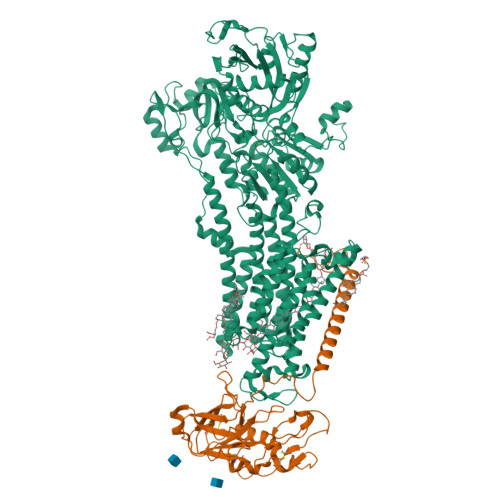
Sodium/potassium-transporting ATPase subunit alpha-1 structureClick to view 3D structureSodium/potassium-transporting ATPase subunit alpha-1P05023HumansKnownLead binds to sodium/potassium-transporting ATPases. (A24)
Click to view 3D structureSodium/potassium-transporting ATPase subunit alpha-2P50993HumansKnownLead binds to sodium/potassium-transporting ATPases. (A24)
Sodium/potassium-transporting ATPase subunit alpha-3 structureClick to view 3D structureSodium/potassium-transporting ATPase subunit alpha-3P13637HumansKnownLead binds to sodium/potassium-transporting ATPases. (A24)
Sodium/potassium-transporting ATPase subunit alpha-4 structureClick to view 3D structureSodium/potassium-transporting ATPase subunit alpha-4Q13733HumansKnownLead binds to sodium/potassium-transporting ATPases. (A24)
Sodium/potassium-transporting ATPase subunit beta-1 structureClick to view 3D structureSodium/potassium-transporting ATPase subunit beta-1P05026HumansKnownLead binds to sodium/potassium-transporting ATPases. (A24)
Click to view 3D structureSodium/potassium-transporting ATPase subunit beta-2P14415HumansKnownLead binds to sodium/potassium-transporting ATPases. (A24)
Click to view 3D structureSodium/potassium-transporting ATPase subunit beta-3P54709HumansKnownLead binds to sodium/potassium-transporting ATPases. (A24)
Sodium/potassium-transporting ATPase subunit gamma structureClick to view 3D structureSodium/potassium-transporting ATPase subunit gammaP54710HumansKnownLead binds to sodium/potassium-transporting ATPases. (A24)
Concentrations
Not Available
External Links
DrugBank IDNot Available
HMDB IDNot Available
FooDB IDNot Available
Phenol Explorer IDNot Available
KNApSAcK IDNot Available
BiGG IDNot Available
BioCyc IDNot Available
METLIN IDNot Available
PDB IDNot Available
Wikipedia LinkLead(II) sulfate
Chemspider IDNot Available
ChEBI IDNot Available
PubChem Compound ID24008
Kegg Compound IDNot Available
YMDB IDNot Available
ECMDB IDNot Available
References
Synthesis ReferenceNot Available
MSDSNot Available
General References
  1. Needleman HL, Schell A, Bellinger D, Leviton A, Allred EN: The long-term effects of exposure to low doses of lead in childhood. An 11-year follow-up report. N Engl J Med. 1990 Jan 11;322(2):83-8. [PubMed: 2294437]
  2. Gill KD, Gupta V, Sandhir R: Ca2+/calmodulin-mediated neurotransmitter release and neurobehavioural deficits following lead exposure. Cell Biochem Funct. 2003 Dec;21(4):345-53. [PubMed: 14624473]
  3. Hashemzadeh-Gargari H, Guilarte TR: Divalent cations modulate N-methyl-D-aspartate receptor function at the glycine site. J Pharmacol Exp Ther. 1999 Sep;290(3):1356-62. [PubMed: 10454514]
  4. Wikipedia. Lead poisoning. Last Updated 3 March 2009. - http://en.wikipedia.org/wiki/Lead_poisoning
  5. ATSDR - Agency for Toxic Substances and Disease Registry (2001). Minimal Risk Levels (MRLs) for Hazardous Substances. U.S. Public Health Service in collaboration with U.S. Environmental Protection Agency (EPA). - http://www.atsdr.cdc.gov/mrls/
  6. International Agency for Research on Cancer (2014). IARC Monographs on the Evaluation of Carcinogenic Risks to Humans. - http://monographs.iarc.fr/index.php
  7. ATSDR - Agency for Toxic Substances and Disease Registry (2007). Toxicological profile for lead. U.S. Public Health Service in collaboration with U.S. Environmental Protection Agency (EPA). - http://www.atsdr.cdc.gov/toxprofiles/tp13.html
  8. Wikipedia. Lead(II) sulfate. Last Updated 21 March 2009. - http://en.wikipedia.org/wiki/Lead_sulfate
  9. Ellenhorn MJ and Barceloux DG (1988). Diagnosis and treatment of human poisoning. Medical Toxicology. New York, New York: Elsevier Science Publishing Company, Inc.
  10. Baselt RC (2000). Disposition of Toxic Drugs and Chemicals in Man, 5th ed. Foster City, CA: Chemical Toxicology Institute.
  11. Venugopal B and Luckey TD (1978). Metal Toxicity in Mammals, 2. New York: Plenum Press.