Some data may have been extracted from scientific literature using a pipeline that uses large language models (LLMs). Source articles are cited where applicable to help verify the extracted relationships.
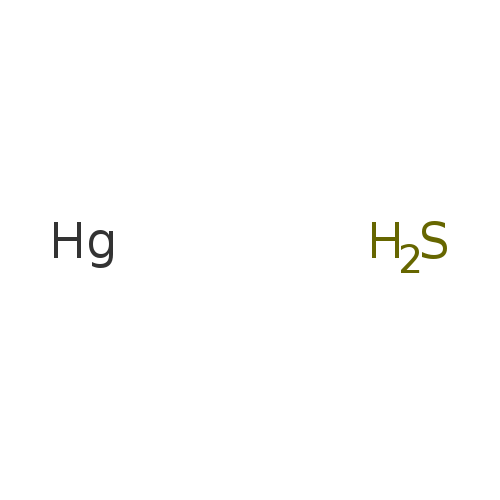
Mercury(II) sulfide is an exogenous solid with the formula H2HgS and an average molecular weight of 234.67 g/mol. Mercury(II) sulfide belongs to the transition metal sulfides, a subclass of transition metal organides within the inorganic compounds. This mixed metal/non-metal compound is found in or released from nine recorded sources, including household cleaning and consumer products such as non-electric simulated smoking devices, food processing of meats, and electrical and electronic equipment including antennas, amplifiers, discharge tubes with liquid pool cathodes, auxiliary devices, and discharge lamps. In the context of plastics, it is present in high impact polystyrene and used in polycarbonate, polyamide, polyurethane, acrylonitrile butadiene styrene, polystyrene, expanded polystyrene, polyvinyl chloride, polyethylene terephthalate, polypropylene, high-density polyethylene, and low-density polyethylene.
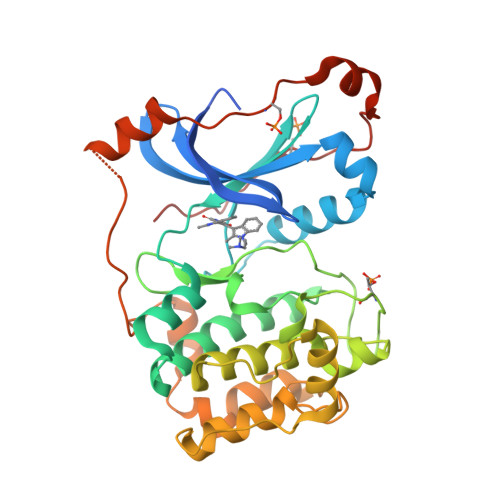
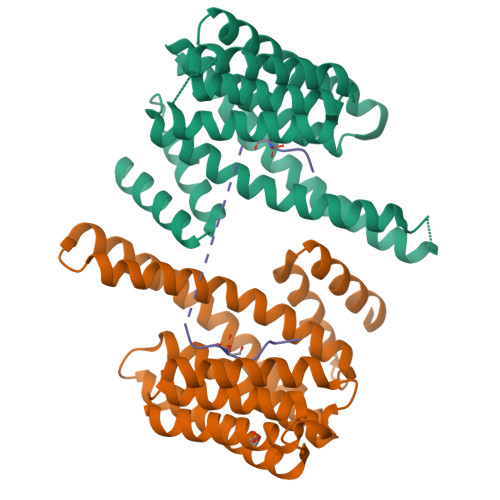
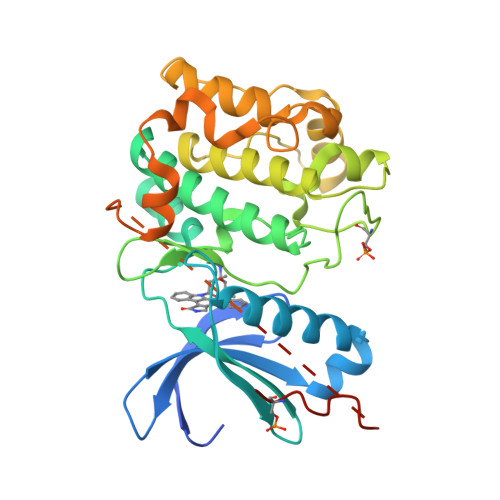
The compound interacts with 28 recorded protein targets. It inhibits the protein tyrosine-protein kinase Lck (LCK), which causes immune system depression and decreased T-cell signalling. Mercury(II) sulfide affects the nervous system by inhibiting alkaline phosphatase, tissue-nonspecific isozyme (ALPL) and protein kinase C (including types alpha, beta, delta, and epsilon), which alters the blood-brain barrier and impairs brain microvascular function and formation. Additionally, it inhibits lens fiber major intrinsic protein (MIP) and aquaporin-1 (AQP1), halting water flow across the cell membrane and resulting in cell death and injury. Finally, organic mercury binds to tubulin (including the delta and epsilon chains, tubulin-like protein alpha-4B, tubulin alpha-1A chain, and 14 other proteins), causing mitotic inhibition and preventing microtubule assembly, which exerts developmental effects.
Belongs to the class of inorganic compounds known as transition metal sulfides. These are inorganic compounds containing a sulfur atom of an oxidation state of -2, in which the heaviest atom bonded to the oxygen is a transition metal.
High-affinity binding of the divalent mercuric ion to thiol or sulfhydryl groups of proteins is believed to be the major mechanism for the activity of mercury. Through alterations in intracellular thiol status, mercury can promote oxidative stress, lipid peroxidation, mitochondrial dysfunction, and changes in heme metabolism. Mercury is known to bind to microsomal and mitochondrial enzymes, resulting in cell injury and death. For example, mercury is known to inhibit aquaporins, halting water flow across the cell membrane. It also inhibits the protein LCK, which causes decreased T-cell signalling and immune system depression. Mercury is also believed to inhibit neuronal excitability by acting on the postsynaptic neuronal membrane. It also affects the nervous system by inhibiting protein kinase C and alkaline phosphatase, which impairs brain microvascular formation and function, as well as alters the blood-brain barrier. Mercury also produces an autoimmune response, likely by modification of major histocompatibility complex (MHC) class II molecules, self peptides, T-cell receptors, or cell-surface adhesion molecules. (8, 4, 5, 6)
Common symptoms include peripheral neuropathy (presenting as paresthesia or itching, burning or pain), skin discoloration (pink cheeks, fingertips and toes), edema (swelling), and desquamation (dead skin peels off in layers). (1)
Treatment
Mercury poisoning is treated by immediate decontamination and chelation therapy using DMSA, DMPS, DPCN, or dimercaprol. (3)
Soil?Soil serves as a critical medium for plant growth and sustains various ecological functions; however, it can become a reservoir for synthetic chemical contamination.
Amplifiers?Amplifiers, commonly used in various electronic devices to enhance signal strength, can be a source of synthetic chemical contamination due to the materials and processes involved in their production and disposal.
Antennas?Antennas, commonly used in communication technologies, can be a source of synthetic chemical contamination through the materials and coatings used in their construction.
Conductors Or Conductive Bodies Characterised By The Conductive Materials?Conductors, or conductive bodies, are materials that allow the flow of electrical current, typically made from metals such as copper, aluminum, or silver.
Discharge Lamps?Discharge lamps, including fluorescent and high-intensity discharge (HID) lamps, are commonly used for lighting applications due to their energy efficiency and brightness.
Discharge Tubes With Liquid Pool Cathodes?Discharge tubes with liquid pool cathodes are devices that utilize a liquid metal as the cathode in gas discharge applications.
Electrically Stimulated Smoking Devices?Electrically stimulated smoking devices, commonly known as e-cigarettes or vape pens, utilize electrical components to heat a liquid solution, often containing nicotine, flavorings, and other additives, to produce an aerosol for inhalation.
Electrodes?Electrodes, used in various electrical and electronic applications, can be a source of synthetic chemical contamination due to the materials from which they are constructed and the processes involved in their manufacturing.
Fixed Capacitors And Their Manufacture?Fixed capacitors are passive electronic components used to store and release electrical energy, playing a critical role in various circuits.
Gas Filled Discharge Tubes With Solid Cathode?Gas Filled Discharge Tubes with Solid Cathodes are electrical components that facilitate the flow of current by ionizing gas within a sealed tube.
Hybrid Capacitors?Hybrid capacitors are energy storage devices that combine the properties of electrolytic and supercapacitors, utilizing a combination of electrochemical principles to achieve higher energy density and power density.
Food Preservation?Food preservation often involves the use of synthetic chemicals, such as preservatives, flavor enhancers, and color additives, to extend shelf life and enhance the sensory qualities of food products.
Non Electric Simulated Smoking Devices?Non-electric simulated smoking devices, often designed to mimic the experience of smoking without combustion, can be sources of synthetic chemical contamination due to the materials and chemicals used in their construction and operation.
Perfumes Within Detergents And Soaps?Perfumes within detergents and soaps are synthetic fragrance compounds added to enhance the sensory experience of cleaning products.
Soap Detergents?Soap detergents are synthetic surfactants designed to enhance the cleaning efficacy of water by reducing surface tension, allowing for better interaction with dirt and grease.
Manufacture Of Iron Or Steel?The manufacture of iron or steel involves various processes, including smelting, refining, and alloying, which can result in the release of synthetic chemicals and contaminants.
Molluscicides?Molluscicides are synthetic chemicals specifically designed to control and eliminate mollusks, such as snails and slugs, which can be detrimental to crops and agricultural productivity.
Nematocides?Nematocides are synthetic chemicals specifically designed to control nematodes, which are microscopic roundworms that can cause significant damage to crops and plants.
Depilatories?Depilatories are products designed to remove unwanted hair through the application of synthetic chemicals that break down the protein structure of hair, facilitating its removal.
Eye Makeup Products?Eye makeup products, including mascaras, eyeliners, and eyeshadows, often contain a variety of synthetic chemicals such as pigments, preservatives, and film-forming agents.
Lip Care Products?Lip care products, including lipsticks, balms, and glosses, often contain a variety of synthetic chemicals such as parabens, phthalates, and synthetic fragrances.
Lip Makeup Products?Lip makeup products, such as lipsticks, lip glosses, and lip liners, often contain a variety of synthetic chemicals, including pigments, preservatives, and emollients.
Toys?Toys, particularly those made from synthetic materials such as plastics, can be a source of chemical contamination due to the presence of various additives and compounds used in their production.
Footwear?Footwear production often involves the use of various synthetic chemicals, such as adhesives, dyes, and treatments, which can contribute to environmental contamination.
Nitrogenous Fertilisers?Nitrogenous fertilizers are synthetic chemical compounds primarily used to enhance plant growth by supplying essential nitrogen, a crucial nutrient for photosynthesis and protein synthesis.
Cements?Cements are a composite material primarily used as a binding agent in construction applications, formed by the calcination of limestone and clay minerals at high temperatures.
Clay Wares?Clay wares are ceramic products made from natural clay, often utilized in various construction applications such as tiles, bricks, and sanitary ware.
Glass Coatings?Glass coatings are synthetic chemical formulations applied to glass surfaces to enhance properties such as durability, UV resistance, and aesthetic appeal.
Lime?Lime, primarily comprised of calcium oxide (CaO) or calcium hydroxide (Ca(OH)₂), is widely used in various applications, including as a key ingredient in mortars, plasters, and cement.
Silica Glass?Silica glass, primarily composed of silicon dioxide (SiO2), is widely used in various applications, including windows, glass facades, and insulation materials.
Nanotechnology?Nanotechnology involves the manipulation of materials at the molecular or atomic level, typically within the range of 1 to 100 nanometers.
Walking Sticks?Walking sticks, while primarily designed for mobility assistance, can be sources of synthetic chemical contamination if not properly manufactured or maintained.
Coating Compositions?Coating compositions, which include paints, sealants, and varnishes, are formulated with a variety of synthetic chemicals such as solvents, resins, pigments, and additives.
Sludge Treatment?Sludge treatment involves the processing of waste materials generated from wastewater treatment plants, which often contain a variety of organic and inorganic substances.
Water, Wastewater, & Sewage Treatment?Water, wastewater, and sewage treatment processes are critical for managing and mitigating pollutants in water systems.
Mercury affects the nervous system by inhibiting alkaline phosphatase, which impairs brain microvascular formation and function, as well as alters the blood-brain barrier. (L7)
Mercury affects the nervous system by inhibiting protein kinase C, which impairs brain microvascular formation and function, as well as alters the blood-brain barrier. (L7)
Mercury affects the nervous system by inhibiting protein kinase C, which impairs brain microvascular formation and function, as well as alters the blood-brain barrier. (L7)
Mercury affects the nervous system by inhibiting protein kinase C, which impairs brain microvascular formation and function, as well as alters the blood-brain barrier. (L7)
Mercury affects the nervous system by inhibiting protein kinase C, which impairs brain microvascular formation and function, as well as alters the blood-brain barrier. (L7)
Mercury affects the nervous system by inhibiting protein kinase C, which impairs brain microvascular formation and function, as well as alters the blood-brain barrier. (L7)
Mercury affects the nervous system by inhibiting protein kinase C, which impairs brain microvascular formation and function, as well as alters the blood-brain barrier. (L7)
Horowitz Y, Greenberg D, Ling G, Lifshitz M: Acrodynia: a case report of two siblings. Arch Dis Child. 2002 Jun;86(6):453. [PubMed: 12023189]
Clarkson TW, Magos L: The toxicology of mercury and its chemical compounds. Crit Rev Toxicol. 2006 Sep;36(8):609-62. [PubMed: 16973445]
Clifton JC 2nd: Mercury exposure and public health. Pediatr Clin North Am. 2007 Apr;54(2):237-69, viii. [PubMed: 17448359]
Madsen KM, Christensen EI: Effects of mercury on lysosomal protein digestion in the kidney proximal tubule. Lab Invest. 1978 Feb;38(2):165-74. [PubMed: 203771]
Ziemba SE, Menard SL, McCabe MJ Jr, Rosenspire AJ: T-cell receptor signaling is mediated by transient Lck activity, which is inhibited by inorganic mercury. FASEB J. 2009 Jun;23(6):1663-71. doi: 10.1096/fj.08-117283. Epub 2009 Jan 23. [PubMed: 19168706]
Yukutake Y, Tsuji S, Hirano Y, Adachi T, Takahashi T, Fujihara K, Agre P, Yasui M, Suematsu M: Mercury chloride decreases the water permeability of aquaporin-4-reconstituted proteoliposomes. Biol Cell. 2008 Jun;100(6):355-63. doi: 10.1042/BC20070132. [PubMed: 18167118]
ATSDR - Agency for Toxic Substances and Disease Registry (2008). Toxicological profile for mercury. U.S. Public Health Service in collaboration with U.S. Environmental Protection Agency (EPA). - http://www.atsdr.cdc.gov/toxprofiles/tp46.html
ATSDR - Agency for Toxic Substances and Disease Registry (2001). Minimal Risk Levels (MRLs) for Hazardous Substances. U.S. Public Health Service in collaboration with U.S. Environmental Protection Agency (EPA). - http://www.atsdr.cdc.gov/mrls/
International Agency for Research on Cancer (2014). IARC Monographs on the Evaluation of Carcinogenic Risks to Humans. - http://monographs.iarc.fr/index.php
ATSDR - Agency for Toxic Substances and Disease Registry (2007). Toxicological profile for lead. U.S. Public Health Service in collaboration with U.S. Environmental Protection Agency (EPA). - http://www.atsdr.cdc.gov/toxprofiles/tp13.html