Biphenyl (CED0001350)

Record Information
Version1.0
Creation Date2009-03-06 18:58:41 UTC
Update Date2026-08-18 15:26:26 UTC
SynCED IDCED0001350
Secondary Accession Numbers
  • CHEM000332
  • T3D0389
Identification
Common NameBiphenyl
ClassSmall Molecule
Description
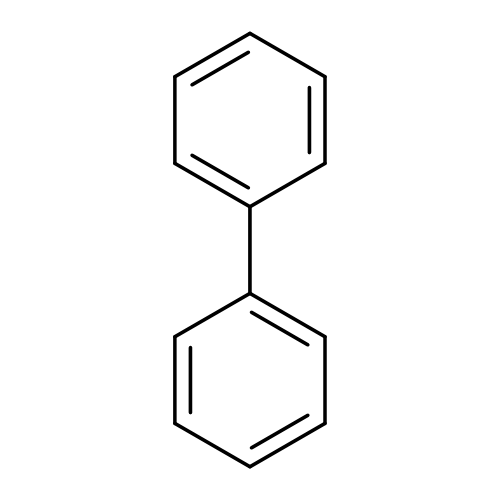
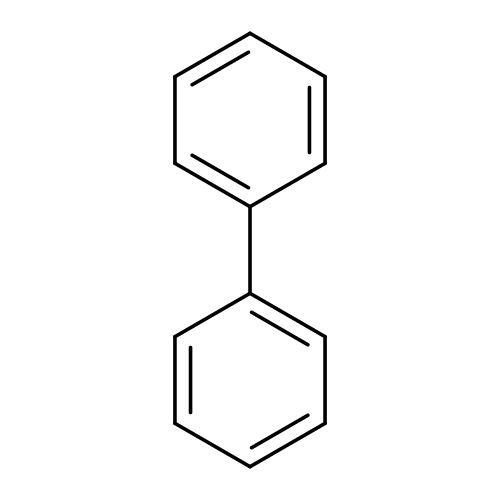
Biphenyl (C12H10) is an exogenous organic compound with an average molecular weight of 154.21 g/mol. It exists as a solid at room temperature. Biphenyl belongs to the biphenyls and derivatives, a subclass of benzene and substituted derivatives within the organic compounds. Industrially, the compound is used as a fragrance, a flavouring and nutrient, and as a biological fungicide. It is present in several plastics, specifically Polyvinyl Chloride and Polyethylene Terephthalate, while results are inconclusive for Polycarbonate and Polypropylene. Biphenyl is found in or released from 43 recorded sources, including drinking water, indoor air, and various building and construction materials such as floors, ceilings, fencing, and stairs and ramps. It is also associated with electrical and electronic equipment, including antennas, coils, communication cables or conductors, and adjustable resistors. Additionally, it is found in household cleaning and consumer products, such as soap detergents, bleaching agents, and perfumes within detergents and soaps. In food, food processing, and cookware, it is utilized in food preservation, the preparation of malt, and fermentation processes for beer, as well as in food contact materials. Exposure routes include touch, oral, and inhalation. Biphenyl targets five proteins, including Cytochrome P450 1A2 (CYP1A2), Cytochrome P450 1B1 (CYP1B1), and the steroid hormone receptor ERR1 (ESRRA). It binds to and inhibits the estrogen receptor (ESR1) and estrogen receptor beta (ESR2), which causes endocrine disruption in humans.
Contaminant Type
  • Aromatic Hydrocarbon
  • Coolant
  • Food Toxin
  • Industrial/Workplace Toxin
  • Metabolite
  • Natural Compound
  • Organic Compound
  • Organochloride
  • Plasticizer
  • Pollutant
  • Polychlorinated Biphenyl
Chemical Structure
Synonyms
ValueSource
1,1'-BiphenylChEBI
1,1'-DiphenylChEBI
e230ChEBI
PhenylbenzeneChEBI
DiphenylMeSH
Diphenyl, 14C-labeledMeSH
1, 1'-DiphenylHMDB
1,1'-Biphenyl, 9ciHMDB
1,1'-Biphenyl, butenylatedHMDB
1,1-BiphenylHMDB
Aromatic hydrocarbons, biphenyl-richHMDB
BibenzeneHMDB
Biphenyl-ul-14CHMDB
BNLHMDB
Butenylated 1,1'-biphenylHMDB
Carolid alHMDB
FEMA 3129HMDB
LemoneneHMDB
Phenador-XHMDB
PHPHHMDB
Tetrosin lyHMDB
XeneneHMDB
Chemical FormulaC12H10
Average Molecular Mass154.208 g/mol
Monoisotopic Mass154.078 g/mol
CAS Registry Number92-52-4
IUPAC Name1,1'-biphenyl
Traditional Namediphenyl
SMILESC1=CC=C(C=C1)C1=CC=CC=C1
InChI IdentifierInChI=1S/C12H10/c1-3-7-11(8-4-1)12-9-5-2-6-10-12/h1-10H
InChI KeyZUOUZKKEUPVFJK-UHFFFAOYSA-N
Chemical Taxonomy
Description Belongs to the class of organic compounds known as biphenyls and derivatives. These are organic compounds containing to benzene rings linked together by a C-C bond.
KingdomOrganic compounds
Super ClassBenzenoids
ClassBenzene and substituted derivatives
Sub ClassBiphenyls and derivatives
Direct ParentBiphenyls and derivatives
Alternative Parents
Substituents
  • Biphenyl
  • Aromatic hydrocarbon
  • Unsaturated hydrocarbon
  • Hydrocarbon
  • Aromatic homomonocyclic compound
Molecular FrameworkAromatic homomonocyclic compounds
External Descriptors
Biological Properties
StatusDetected and Not Quantified
OriginExogenous
Cellular Locations
  • Membrane
Biofluid LocationsNot Available
Tissue LocationsNot Available
Applications
Biological Roles
Chemical RolesNot Available
Organoleptic Effects
  • blue colour ?
  • white colour ?
  • pleasant odor odour ?
Physical Properties
StateSolid
AppearanceWhite scales (2).
Experimental Properties
PropertyValue
Melting Point71°C
Boiling Point254.5°C (490.1°F)
Solubility0.00748 mg/mL at 25°C
Predicted Properties
PropertyValueSource
Water Solubility0.015 g/LALOGPS
logP4.02ALOGPS
logP3.62ChemAxon
logS-4ALOGPS
Physiological Charge0ChemAxon
Hydrogen Acceptor Count0ChemAxon
Hydrogen Donor Count0ChemAxon
Polar Surface Area0 ŲChemAxon
Rotatable Bond Count1ChemAxon
Refractivity51.19 m³·mol⁻¹ChemAxon
Polarizability17.96 ųChemAxon
Number of Rings2ChemAxon
BioavailabilityYesChemAxon
Rule of FiveYesChemAxon
Ghose FilterNoChemAxon
Veber's RuleYesChemAxon
MDDR-like RuleNoChemAxon
Spectra
Spectra
Spectrum TypeDescriptionSplash KeyDeposition DateView
GC-MSGC-MS Spectrumsplash10-0udi-8900000000-e5b4f289ac40ae7f058dNot AvailableView Spectrum
GC-MSGC-MS Spectrumsplash10-0udi-3900000000-11fa850b6e97cb680eddNot AvailableView Spectrum
GC-MSGC-MS Spectrumsplash10-0udi-2900000000-59a470228d72016ea76fNot AvailableView Spectrum
GC-MSGC-MS Spectrumsplash10-0udi-0900000000-01b08aa1cb97e4f8749aNot AvailableView Spectrum
GC-MSGC-MS Spectrumsplash10-0udi-1900000000-4ed186df67a09ce0650fNot AvailableView Spectrum
GC-MSGC-MS Spectrumsplash10-0udi-3900000000-b083707713188a3b56afNot AvailableView Spectrum
GC-MSGC-MS Spectrumsplash10-0udi-2900000000-931304319dd9f132e118Not AvailableView Spectrum
GC-MSGC-MS Spectrumsplash10-0udi-6900000000-f9f4bb759b70237cae7bNot AvailableView Spectrum
GC-MSGC-MS Spectrumsplash10-0a4i-0900000000-5043f3793673c0f94d67Not AvailableView Spectrum
GC-MSGC-MS Spectrumsplash10-0udi-0900000000-77f5c79fcaa35c93a5b8Not AvailableView Spectrum
GC-MSGC-MS Spectrumsplash10-0udi-8900000000-e5b4f289ac40ae7f058dNot AvailableView Spectrum
GC-MSGC-MS Spectrumsplash10-0udi-3900000000-11fa850b6e97cb680eddNot AvailableView Spectrum
GC-MSGC-MS Spectrumsplash10-0udi-2900000000-59a470228d72016ea76fNot AvailableView Spectrum
GC-MSGC-MS Spectrumsplash10-0udi-0900000000-01b08aa1cb97e4f8749aNot AvailableView Spectrum
GC-MSGC-MS Spectrumsplash10-0udi-1900000000-4ed186df67a09ce0650fNot AvailableView Spectrum
GC-MSGC-MS Spectrumsplash10-0udi-3900000000-b083707713188a3b56afNot AvailableView Spectrum
GC-MSGC-MS Spectrumsplash10-0udi-2900000000-931304319dd9f132e118Not AvailableView Spectrum
GC-MSGC-MS Spectrumsplash10-0udi-6900000000-f9f4bb759b70237cae7bNot AvailableView Spectrum
GC-MSGC-MS Spectrumsplash10-0a4i-0900000000-5043f3793673c0f94d67Not AvailableView Spectrum
GC-MSGC-MS Spectrumsplash10-0udi-0900000000-77f5c79fcaa35c93a5b8Not AvailableView Spectrum
Predicted GC-MSPredicted GC-MS Spectrumsplash10-0udi-1900000000-56e5bf47be0405d6836bNot AvailableView Spectrum
Predicted GC-MSPredicted GC-MS SpectrumNot AvailableNot AvailableView Spectrum
Predicted LC-MS/MSPredicted LC-MS/MS Spectrumsplash10-0a4i-0900000000-edde0dcdd8d1f5866932Not AvailableView Spectrum
Predicted LC-MS/MSPredicted LC-MS/MS Spectrumsplash10-0a4i-0900000000-e45b080cc4494ae7ace3Not AvailableView Spectrum
Predicted LC-MS/MSPredicted LC-MS/MS Spectrumsplash10-0pdr-3900000000-eeea5f59ba3188214b77Not AvailableView Spectrum
Predicted LC-MS/MSPredicted LC-MS/MS Spectrumsplash10-0udi-0900000000-f405b638fff04b7f3ea6Not AvailableView Spectrum
Predicted LC-MS/MSPredicted LC-MS/MS Spectrumsplash10-0udi-0900000000-5347e97776fd82473263Not AvailableView Spectrum
Predicted LC-MS/MSPredicted LC-MS/MS Spectrumsplash10-0a4i-0900000000-4be39230312831d721f7Not AvailableView Spectrum
Predicted LC-MS/MSPredicted LC-MS/MS Spectrumsplash10-0a4i-0900000000-49244566d5b6e3ac17e6Not AvailableView Spectrum
Predicted LC-MS/MSPredicted LC-MS/MS Spectrumsplash10-0ufr-0900000000-d41e8809ac37a183033cNot AvailableView Spectrum
Predicted LC-MS/MSPredicted LC-MS/MS Spectrumsplash10-0udi-0900000000-8b214a52c8e78f3210f4Not AvailableView Spectrum
Predicted LC-MS/MSPredicted LC-MS/MS Spectrumsplash10-0udi-0900000000-43cb10c15248f4da21d0Not AvailableView Spectrum
MSMS Spectrumsplash10-0udi-3900000000-92b73f1f35424a0fd73dNot AvailableView Spectrum
Toxicity Profile
Toxicity Values
Toxicity ValueOrganismDose DescriptorRoute of ExposurePredicted or ExperimentalToxicity RatingReference
3280.0 mg/kg RatLD50OralexperimentalNot Available13
2400.0 mg/kg RabbitLD50OralexperimentalNot Available9
2500.0 mg/kg RabbitLD50DermalexperimentalNot Available12
0.5 % RatLOELoralexperimentalNot AvailableECOTOX - EPA ORD
0.5 % diet RatNOELoralexperimentalNot AvailableECOTOX - EPA ORD
0.5 % diet RatLOELoralexperimentalNot AvailableECOTOX - EPA ORD
1.6 % RatLOELoralexperimentalNot AvailableECOTOX - EPA ORD
1.0 % MouseNOELoralexperimentalNot AvailableECOTOX - EPA ORD
0.1 % RatNOELoralexperimentalNot AvailableECOTOX - EPA ORD
1.0 % RatLOELoralexperimentalNot AvailableECOTOX - EPA ORD
300.0 ppm RatNOELoralexperimentalNot AvailableECOTOX - EPA ORD
0.5 % RatLOELoralexperimentalNot AvailableECOTOX - EPA ORD
0.5 % RatNOELoralexperimentalNot AvailableECOTOX - EPA ORD
1.0 % RatNOELoralexperimentalNot AvailableECOTOX - EPA ORD
100.0 mg/kg-day MouseLOELoralexperimentalNot AvailableECOTOX - EPA ORD
10.0 mg/kg-day MouseNOELoralexperimentalNot AvailableECOTOX - EPA ORD
1.0 % MouseNOELoralexperimentalNot AvailableECOTOX - EPA ORD
1.0 % MouseLOELoralexperimentalNot AvailableECOTOX - EPA ORD
1.0 % RatLOELoralexperimentalNot AvailableECOTOX - EPA ORD
0.1 % RatNOELoralexperimentalNot AvailableECOTOX - EPA ORD
2000.0 mg/kg-day MouseLOELoralexperimentalNot AvailableECOTOX - EPA ORD
1.0 % RatNOELoralexperimentalNot AvailableECOTOX - EPA ORD
117.0 mg/kg-day RatLOELoralexperimentalNot AvailableECOTOX - EPA ORD
2.5 mg/kg-day MouseNOELoralexperimentalNot AvailableECOTOX - EPA ORD
Toxicity / Toxin ClassNot Available
Mechanism of ToxicityBiphenyl alters the permeability properties of mitochondrial membranes (1).
Carcinogenicity (IARC Classification)No indication of carcinogenicity (not listed by IARC). (8)
Minimum Risk LevelNot Available
SymptomsSymptoms of diphenyl poisoning include headache, fatigue, abdominal pain with nausea or diarrhea and various symptoms, vomiting and bronchitis (11).
TreatmentConsider gastric lavage, after ingestion of a potentially life-threatening amount of poison if it can be performed soon after ingestion. In case of inhalation exposure, move patient to fresh air and monitor for respiratory distress. If cough or difficulty breathing develops, evaluate for respiratory tract irritation, bronchitis, or pneumonitis. Administer oxygen and assist ventilation as required. Treat bronchospasm with inhaled beta2 agonist and oral or parenteral corticosteroids. In case of eye exposure, irrigate exposed eyes with copious amounts of room temperature water for at least 15 minutes. I f the exposure occurred through dermal contact, remove contaminated clothing and wash exposed area thoroughly with soap and water. (10)
Health Effects
Health EffectRelationshipDirectionDescriptionReference
Exposure Sources
Source IDSourceSectorReference
CEDs000010Insecticides?Insecticides are synthetic chemicals designed to control or eliminate insect pests that threaten crops and other agricultural products.Agriculture & land managementPubChem
CEDs000013Soil?Soil serves as a critical medium for plant growth and sustains various ecological functions; however, it can become a reservoir for synthetic chemical contamination.Agriculture & land managementPMC4395236 , PMC3331830
CEDs000019Indoor air?Indoor air can be a significant reservoir for synthetic chemical contaminants, which often originate from various sources within enclosed environments.Air, dust & atmospheric transportNot Available
CEDs000050Groundwater?Groundwater serves as a vital resource for drinking water and agricultural irrigation but is increasingly susceptible to contamination from synthetic chemicals.Aquatic systems & sedimentsPMC3448134
CEDs000070Stormwater runoff?Stormwater runoff refers to the flow of rainwater or melted snow that does not soak into the ground and instead collects pollutants as it travels over impervious surfaces such as roads and parking lots.Automotive & urban infrastructurePubChem
CEDs000115Drinking water?Drinking water can be a medium for synthetic chemical contamination, often originating from various industrial processes and agricultural practices.Drinking water & water supplyNot Available
CEDs000181Ballast water?Ballast water, taken on by ships to maintain stability and balance, often contains a diverse array of microorganisms, including bacteria, viruses, and plankton.Marine, shipping & aquaculturePubChem
CEDs000182Bilge water?Bilge water is a byproduct generated from the accumulation of water in the lowest part of a ship's hull, which may include a mixture of seawater, oil, fuel residues, and various contaminants.Marine, shipping & aquaculturePubChem
CEDs000233Brushes?Brushes used in personal care and cosmetics can be a source of synthetic chemical contamination due to the materials and coatings used in their manufacturing.Personal care & cosmeticsPubChem
CEDs000464Leachate?Leachate is a liquid that forms when water percolates through waste material, dissolving soluble compounds and carrying various contaminants.Waste management, landfill & incinerationPMC9049632
CEDs000494Food contact materials?Food contact materials refer to substances and products that are intended to come into contact with food during processing, packaging, or preparation.Food, food processing & cookwareNot Available
CEDs000495Ceilings?Ceilings in built environments can be a source of synthetic chemical contamination due to the materials used in their construction and finishes.Building & ConstructionPubChem
CEDs000496Fencing?Fencing materials, particularly those used in construction and landscaping, can be a source of synthetic chemical contamination due to the treatments and coatings applied for durability and weather resistance.Building & ConstructionPubChem
CEDs000497Floors?Floors in built environments can be a significant source of synthetic chemical contamination due to the materials and finishes used in their construction.Building & ConstructionPubChem
CEDs000500Stairs And Ramps?Stairs and ramps in construction are often treated with various synthetic chemicals to enhance durability, slip resistance, and weather resistance.Building & ConstructionPubChem
CEDs000501Sunshades Awnings Or Outside Screens?Sunshades, awnings, and outside screens are often constructed using synthetic materials such as polyvinyl chloride (PVC), polyester, or acrylic fabrics.Building & ConstructionPubChem
CEDs000502Sunshades Awnings Or Outside Screens?Sunshades, awnings, and outside screens are commonly used in construction to enhance energy efficiency and provide shade.Building & ConstructionPubChem
CEDs000503Tents Or Canopies?Tents and canopies used in various applications can be a source of synthetic chemical contamination primarily due to the materials from which they are made.Building & ConstructionPubChem
CEDs000504Adjustable Resistors?Adjustable resistors, commonly used in various electronic devices, can contribute to synthetic chemical contamination through the materials and substances used in their manufacturing and disposal.Electrical & Electronic EquipmentPubChem
CEDs000506Antennas?Antennas, commonly used in communication technologies, can be a source of synthetic chemical contamination through the materials and coatings used in their construction.Electrical & Electronic EquipmentPubChem
CEDs000507Auxiliary Devices?Auxiliary devices, such as capacitors, transformers, and circuit breakers, are integral components in various electronic systems.Electrical & Electronic EquipmentPubChem
CEDs000508Coils?Coils are components used in various electrical and electronic applications, such as transformers, inductors, and motors.Electrical & Electronic EquipmentPubChem
CEDs000510Communication Cables Or Conductors?Communication cables or conductors are essential components in the transmission of data and signals in various applications, including telecommunications and networking.Electrical & Electronic EquipmentPubChem
CEDs000511Conductors Or Conductive Bodies Characterised By The Conductive Materials?Conductors, or conductive bodies, are materials that allow the flow of electrical current, typically made from metals such as copper, aluminum, or silver.Electrical & Electronic EquipmentPubChem
CEDs000512Contacts?Contacts in electrical and electronic equipment are components that facilitate the flow of electricity between circuits.Electrical & Electronic EquipmentPubChem
CEDs000514Discharge Lamps?Discharge lamps, including fluorescent and high-intensity discharge (HID) lamps, are commonly used for lighting applications due to their energy efficiency and brightness.Electrical & Electronic EquipmentPubChem
CEDs000516Electric Hearing Aids?Electric hearing aids are small electronic devices designed to amplify sound for individuals with hearing loss.Electrical & Electronic EquipmentPubChem
CEDs000517Electric Switches?Electric switches, integral components in numerous devices, can be a source of synthetic chemical contamination due to the materials and manufacturing processes involved in their production.Electrical & Electronic EquipmentPubChem
CEDs000518Electrically Stimulated Smoking Devices?Electrically stimulated smoking devices, commonly known as e-cigarettes or vape pens, utilize electrical components to heat a liquid solution, often containing nicotine, flavorings, and other additives, to produce an aerosol for inhalation.Electrical & Electronic EquipmentPubChem
CEDs000519Electrodes?Electrodes, used in various electrical and electronic applications, can be a source of synthetic chemical contamination due to the materials from which they are constructed and the processes involved in their manufacturing.Electrical & Electronic EquipmentPubChem
CEDs000520Emergency Protective Devices?Emergency protective devices, such as circuit breakers and surge protectors, are essential components in electrical systems designed to prevent damage from overcurrent and surges.Electrical & Electronic EquipmentPubChem
CEDs000521Fixed Capacitors And Their Manufacture?Fixed capacitors are passive electronic components used to store and release electrical energy, playing a critical role in various circuits.Electrical & Electronic EquipmentPubChem
CEDs000524Hybrid Capacitors?Hybrid capacitors are energy storage devices that combine the properties of electrolytic and supercapacitors, utilizing a combination of electrochemical principles to achieve higher energy density and power density.Electrical & Electronic EquipmentPubChem
CEDs000527Magnets?Magnets, commonly used in various electrical and electronic applications, can be a source of synthetic chemical contamination due to the materials used in their production.Electrical & Electronic EquipmentPubChem
CEDs000529Power Cables?Power cables are used to transmit electrical energy and are typically composed of conductive materials, insulation, and protective coatings.Electrical & Electronic EquipmentPubChem
CEDs000530Radio Transmission Systems?Radio transmission systems utilize a variety of synthetic chemicals in their manufacturing and maintenance processes.Electrical & Electronic EquipmentPubChem
CEDs000531Relays?Relays are electromechanical switches used to control circuits and manage electrical loads.Electrical & Electronic EquipmentPubChem
CEDs000536Superconductive Or Hyperconductive Conductors Cables Or Transmission Lines?Superconductive or hyperconductive conductors, including cables and transmission lines, are materials that exhibit zero electrical resistance under specific conditions, typically at low temperatures.Electrical & Electronic EquipmentPubChem
CEDs000537Television Systems?Television systems can be a source of synthetic chemical contamination due to the various materials and components used in their manufacture and operation.Electrical & Electronic EquipmentPubChem
CEDs000538Thin Magnetic Films?Thin magnetic films are layers of magnetic material ranging from a few nanometers to several micrometers in thickness, commonly used in applications such as magnetic sensors, data storage devices, and electronic components.Electrical & Electronic EquipmentPubChem
CEDs000540X Ray Tubes?X-ray tubes are devices used to produce X-rays for various applications, including medical imaging and industrial inspections.Electrical & Electronic EquipmentPubChem
CEDs000544Fermentation Processes For Beer?Fermentation processes for beer involve the conversion of sugars into alcohol and carbon dioxide by yeast.Food, food processing & cookwarePubChem
CEDs000545Food Preservation?Food preservation often involves the use of synthetic chemicals, such as preservatives, flavor enhancers, and color additives, to extend shelf life and enhance the sensory qualities of food products.Food, food processing & cookwarePubChem
CEDs000547Preparation Of Malt?Malt preparation involves the germination and drying of cereal grains, primarily barley, to produce malt for brewing and food products.Food, food processing & cookwarePubChem
CEDs000555Bleaching Agents?Bleaching agents are chemical substances used to whiten or lighten materials, often employed in various cleaning products for their stain removal and disinfecting properties.Household cleaning & consumer productsPubChem
CEDs000560Other Smoking Requisites?Other smoking requisites, including items such as lighters, matches, and rolling papers, can introduce synthetic chemical contamination through various components and additives.Household cleaning & consumer productsPubChem
CEDs000561Perfumes Within Detergents And Soaps?Perfumes within detergents and soaps are synthetic fragrance compounds added to enhance the sensory experience of cleaning products.Household cleaning & consumer productsPubChem
CEDs000562Pipe Accessories?Pipe accessories, such as fittings, connectors, and seals, are components used in plumbing systems to facilitate the flow of liquids and gases.Household cleaning & consumer productsPubChem
CEDs000563Soap Detergents?Soap detergents are synthetic surfactants designed to enhance the cleaning efficacy of water by reducing surface tension, allowing for better interaction with dirt and grease.Household cleaning & consumer productsPubChem
CEDs000566Tobacco Pipes?Tobacco pipes, often made from materials such as plastic, wood, or metal, can serve as sources of synthetic chemical contamination due to the residues left by tobacco products.Household cleaning & consumer productsPubChem
CEDs000569Tobacco Smoke Filters?Tobacco smoke filters are designed to reduce the inhalation of harmful substances in cigarette smoke, including tar and other particulate matter.Household cleaning & consumer productsPubChem
CEDs000579Manufacture Of Iron Or Steel?The manufacture of iron or steel involves various processes, including smelting, refining, and alloying, which can result in the release of synthetic chemicals and contaminants.Industrial manufacturing & chemical processingPubChem
CEDs000580Manufacture Preparation Of Tobacco Products?The manufacture and preparation of tobacco products involve various processes that can result in the introduction of synthetic chemicals into the environment.Industrial manufacturing & chemical processingPubChem
CEDs000581Paper Making Machines?Paper making machines utilize various synthetic chemicals throughout the production process, including additives, coatings, and bleaching agents.Industrial manufacturing & chemical processingPubChem
CEDs000583Anchoring Equipment?Anchoring equipment, commonly used in marine applications, can be a source of synthetic chemical contamination due to the materials and coatings utilized in their manufacturing.Marine, shipping & aquaculturePubChem
CEDs000589Life Buoys?Life buoys, commonly used in marine environments for safety and rescue operations, can be a source of synthetic chemical contamination due to the materials used in their production.Marine, shipping & aquaculturePubChem
CEDs000592Marine Propulsion Or Steering?Marine propulsion and steering systems often rely on various synthetic chemicals, including lubricants, fuels, and hydraulic fluids.Marine, shipping & aquaculturePubChem
CEDs000594Ship Hulls?Ship hulls are often treated with various synthetic chemicals to enhance durability, prevent corrosion, and inhibit the growth of marine organisms.Marine, shipping & aquaculturePubChem
CEDs000596Acaricides?Acaricides are synthetic chemicals specifically designed to target and control mite populations that can damage crops and plants.Agriculture & land managementPubChem
CEDs000600Herbicides And Algicides?Herbicides and algicides are synthetic chemicals primarily used to control unwanted plants and algae in various environments.Agriculture & land managementPubChem
CEDs000602Molluscicides?Molluscicides are synthetic chemicals specifically designed to control and eliminate mollusks, such as snails and slugs, which can be detrimental to crops and agricultural productivity.Agriculture & land managementPubChem
CEDs000603Nematocides?Nematocides are synthetic chemicals specifically designed to control nematodes, which are microscopic roundworms that can cause significant damage to crops and plants.Agriculture & land managementPubChem
CEDs000605Pest Repellants?Pest repellents, often formulated from synthetic chemicals, are widely used to protect crops from insect infestations and other pests.Agriculture & land managementPubChem
CEDs000606Plant Growth Regulators?Plant Growth Regulators (PGRs) are synthetic chemicals designed to influence the growth and development of plants.Agriculture & land managementPubChem
CEDs000609Aftershave?Aftershave is a grooming product typically used to soothe and protect the skin following shaving.Personal care & cosmeticsPubChem
CEDs000610Aftersun Products?Aftersun products are designed to soothe and hydrate the skin after sun exposure, often containing various synthetic chemicals such as emollients, preservatives, and fragrances.Personal care & cosmeticsPubChem
CEDs000611Anti Perspirants Or Body Deoderants?Antiperspirants and body deodorants commonly contain synthetic chemicals such as aluminum compounds, parabens, and synthetic fragrances.Personal care & cosmeticsPubChem
CEDs000614Essential Oils Or Perfumes?Essential oils and perfumes are complex mixtures of volatile compounds derived from natural or synthetic sources, commonly used for their aromatic properties.Personal care & cosmeticsPubChem
CEDs000615Eye Makeup Products?Eye makeup products, including mascaras, eyeliners, and eyeshadows, often contain a variety of synthetic chemicals such as pigments, preservatives, and film-forming agents.Personal care & cosmeticsPubChem
CEDs000617Lip Care Products?Lip care products, including lipsticks, balms, and glosses, often contain a variety of synthetic chemicals such as parabens, phthalates, and synthetic fragrances.Personal care & cosmeticsPubChem
CEDs000618Lip Makeup Products?Lip makeup products, such as lipsticks, lip glosses, and lip liners, often contain a variety of synthetic chemicals, including pigments, preservatives, and emollients.Personal care & cosmeticsPubChem
CEDs000619Manicure Pedicure?Manicure and pedicure procedures often involve the use of various synthetic chemicals, including solvents, nail polishes, and nail adhesives.Personal care & cosmeticsPubChem
CEDs000630Toys?Toys, particularly those made from synthetic materials such as plastics, can be a source of chemical contamination due to the presence of various additives and compounds used in their production.Recreation & sports surfacesPubChem
CEDs000631Anthraquinone Dyes?Anthraquinone dyes are a class of synthetic organic compounds characterized by their vibrant colors and stability, making them widely used in various applications, particularly in coloring textiles and leather.Textiles, leather & furnishingsPubChem
CEDs000632Apparel?Apparel production often involves the use of various synthetic chemicals, including dyes, finishing agents, and preservatives.Textiles, leather & furnishingsPubChem
CEDs000633Azo Dyes?Azo dyes are synthetic organic compounds characterized by the presence of one or more azo groups (-N=N-), which are widely used for coloring textiles, leather, and furnishings.Textiles, leather & furnishingsPubChem
CEDs000634Buckles?Buckles, commonly used as fasteners in clothing, accessories, and furniture, can be a source of synthetic chemical contamination due to the materials and coatings employed in their production.Textiles, leather & furnishingsPubChem
CEDs000638Decorating Textiles?Decorating textiles often involves the use of synthetic chemicals such as dyes, finishes, and coatings.Textiles, leather & furnishingsPubChem
CEDs000640Embroidering And Tufting?Embroidering and tufting processes often involve the use of synthetic chemicals such as dyes, adhesives, and finishing agents.Textiles, leather & furnishingsPubChem
CEDs000641Foam Dyeing?Foam dyeing is a textile dyeing technique that utilizes a foaming agent to create a dye solution in a gaseous form, allowing for the application of dyes onto fabrics.Textiles, leather & furnishingsPubChem
CEDs000642Footwear?Footwear production often involves the use of various synthetic chemicals, such as adhesives, dyes, and treatments, which can contribute to environmental contamination.Textiles, leather & furnishingsPubChem
CEDs000643Headwear?Headwear made from synthetic materials often incorporates chemicals used in the manufacturing and finishing processes, such as dyes, flame retardants, and water repellents.Textiles, leather & furnishingsPubChem
CEDs000647Multicolour Dyeing?Multicolour dyeing involves the application of multiple synthetic dyes to textiles and other materials to achieve vibrant, diverse color patterns.Textiles, leather & furnishingsPubChem
CEDs000648Nitro Dyes?Nitro dyes are synthetic colorants that contain nitro groups (-NO2) in their chemical structure.Textiles, leather & furnishingsPubChem
CEDs000650Purses Luggage Hand Bags?Purses, luggage, and handbags are often manufactured using synthetic materials such as polyvinyl chloride (PVC), polyurethane, and various types of nylon.Textiles, leather & furnishingsPubChem
CEDs000652Ropes?Ropes manufactured from synthetic fibers, such as polypropylene, nylon, and polyester, are widely used in various applications, including marine, construction, and outdoor activities.Textiles, leather & furnishingsPubChem
CEDs000655Slide Fasteners?Slide fasteners, commonly known as zippers, are mechanical devices used to join two edges of fabric or other materials.Textiles, leather & furnishingsPubChem
CEDs000657Surface Finishing Of Leather?Surface finishing of leather often involves the use of various synthetic chemicals, including dyes, resins, and finishing agents.Textiles, leather & furnishingsPubChem
CEDs000659Transfer Printing?Transfer printing is a process used to apply designs and patterns onto various substrates, commonly utilizing synthetic dyes and inks that can contain hazardous chemicals.Textiles, leather & furnishingsPubChem
CEDs000661Umbrellas?Umbrellas are commonly manufactured using synthetic materials such as polyester, nylon, and polyvinyl chloride (PVC), which can contribute to synthetic chemical contamination.Textiles, leather & furnishingsPubChem
CEDs000662Yarns Or Threads?Yarns or threads used in textiles can be a source of synthetic chemical contamination due to the production processes and treatments they undergo.Textiles, leather & furnishingsPubChem
CEDs000663Sanitary Equipment?Sanitary equipment, including toilets, sinks, and drainage systems, can serve as conduits for synthetic chemical contamination.Wastewater, sanitation & biosolidsPubChem
CEDs000669PFAS Fire Fighting Foam?PFAS fire fighting foam refers to a class of synthetic foams containing per- and polyfluoroalkyl substances (PFAS), which are designed to suppress flammable liquid fires.Fire suppression systems & agentsPubChem
CEDs000671Airplanes And Helicopters?Airplanes and helicopters are significant sources of synthetic chemical contamination primarily through the use of aviation fuels, lubricants, and de-icing agents.Aviation & AerospacePubChem
CEDs000672Light Than Air Aircraft?Light than air aircraft, such as dirigibles and airships, utilize lifting gases like helium or hydrogen for buoyancy.Aviation & AerospacePubChem
CEDs000678Nitrogenous Fertilisers?Nitrogenous fertilizers are synthetic chemical compounds primarily used to enhance plant growth by supplying essential nitrogen, a crucial nutrient for photosynthesis and protein synthesis.Agriculture & land managementPubChem
CEDs000679Phosphatic Fertilisers?Phosphatic fertilizers are synthetic chemical products primarily composed of phosphorus, which is essential for plant growth.Agriculture & land managementPubChem
CEDs000684Cements?Cements are a composite material primarily used as a binding agent in construction applications, formed by the calcination of limestone and clay minerals at high temperatures.Building & ConstructionPubChem
CEDs000685Ceramics?Ceramics can be a source of synthetic chemical contamination through various additives and processing agents used in their production.Building & ConstructionPubChem
CEDs000686Clay Wares?Clay wares are ceramic products made from natural clay, often utilized in various construction applications such as tiles, bricks, and sanitary ware.Building & ConstructionPubChem
CEDs000688Glass Coatings?Glass coatings are synthetic chemical formulations applied to glass surfaces to enhance properties such as durability, UV resistance, and aesthetic appeal.Building & ConstructionPubChem
CEDs000690Lime?Lime, primarily comprised of calcium oxide (CaO) or calcium hydroxide (Ca(OH)₂), is widely used in various applications, including as a key ingredient in mortars, plasters, and cement.Building & ConstructionPubChem
CEDs000691Non Oxide Glass?Non-oxide glass refers to a category of glasses primarily composed of materials other than silicon dioxide, such as boron oxide or phosphorous oxide.Building & ConstructionPubChem
CEDs000692Silica Free Oxide Glass?Silica Free Oxide Glass is a type of glass that is produced using alternative materials to traditional silica-based formulations.Building & ConstructionPubChem
CEDs000693Silica Glass?Silica glass, primarily composed of silicon dioxide (SiO2), is widely used in various applications, including windows, glass facades, and insulation materials.Building & ConstructionPubChem
CEDs000696Nanotechnology?Nanotechnology involves the manipulation of materials at the molecular or atomic level, typically within the range of 1 to 100 nanometers.Industrial manufacturing & chemical processingPubChem
CEDs000698Jewellery?Jewellery production often involves the use of various synthetic chemicals during the extraction and processing of metals.Mining & metal processingPubChem
CEDs000701Ventilation Of Mines Or Tunnels?Ventilation in mines or tunnels is essential for maintaining air quality and ensuring the safety of workers.Mining & metal processingPubChem
CEDs000702Blackboard Eraser?Blackboard erasers are commonly used tools for removing chalk from blackboards, and they often contain synthetic materials such as rubber, plastics, and adhesives.Paper, pulp & fiber productsPubChem
CEDs000703Blackboards?Blackboards, traditionally made from slate or coated wood, can also be produced using synthetic materials that may contain various chemicals.Paper, pulp & fiber productsPubChem
CEDs000705Bookbinding?Bookbinding involves the use of various synthetic chemicals, including adhesives, inks, and coatings, which can contribute to environmental contamination.Paper, pulp & fiber productsPubChem
CEDs000716Erasers?Erasers, commonly used in writing and drawing applications, are often made from synthetic rubber or thermoplastic materials, which can contain various additives such as plasticizers, fillers, and colorants.Paper, pulp & fiber productsPubChem
CEDs000726Pens?Pens, commonly utilized for writing and marking, can be a source of synthetic chemical contamination primarily due to the materials used in their manufacturing.Paper, pulp & fiber productsPubChem
CEDs000727Printing Machines Or Presses?Printing machines or presses commonly utilize synthetic chemicals such as inks, solvents, and cleaning agents.Paper, pulp & fiber productsPubChem
CEDs000730Contact Lens Cases?Contact lens cases are small containers designed to store contact lenses in a sterile environment, typically made from various synthetic materials including plastics such as polypropylene or polycarbonate.Healthcare, pharmaceuticals & veterinary productsPubChem
CEDs000734Coating Compositions?Coating compositions, which include paints, sealants, and varnishes, are formulated with a variety of synthetic chemicals such as solvents, resins, pigments, and additives.Building & ConstructionPubChem
CEDs000735Explosives?Explosives are chemical compounds or mixtures designed to undergo rapid decomposition, releasing energy in the form of gas and heat.Defense & military infrastructurePubChem
CEDs000736Fuses?Fuses are safety devices designed to protect electrical circuits by breaking the circuit when excessive current flows through.Electrical & Electronic EquipmentPubChem
CEDs000737Chemical Igniters?Chemical igniters are substances or devices designed to initiate combustion in various applications, often found in products like lighters, candles, and certain household cleaning agents.Household itemsPubChem
CEDs000738Cooling Circuit Water?Cooling circuit water is utilized in various industrial processes to absorb and dissipate heat generated during operations.Industrial manufacturing & chemical processingPubChem
CEDs000739Inks?Inks are complex mixtures composed of pigments or dyes, solvents, resins, and additives used primarily for printing and writing applications.Paper, pulp & fiber productsPubChem
CEDs000740Paper?Paper production involves the processing of wood fibers and the use of various chemicals, which can lead to synthetic chemical contamination.Paper, pulp & fiber productsPubChem
CEDs000741Pigment Pastes?Pigment pastes are concentrated dispersions of pigments used to impart color and properties to materials.Paper, pulp & fiber productsPubChem
CEDs000742Leather Tanning?Leather tanning is a process that transforms raw animal hides into durable leather through the application of various chemicals, including chromium salts, aldehydes, and vegetable tannins.Textiles, leather & furnishingsPubChem
CEDs000743Sludge Treatment?Sludge treatment involves the processing of waste materials generated from wastewater treatment plants, which often contain a variety of organic and inorganic substances.Wastewater, sanitation & biosolidsPubChem
CEDs000744Water, Wastewater, & Sewage Treatment?Water, wastewater, and sewage treatment processes are critical for managing and mitigating pollutants in water systems.Wastewater, sanitation & biosolidsPubChem
CEDs00760Contaminated SoilAgriculture & land managementPMC12448294
CEDs01010Upland SoilAgriculture & land managementPMC9649793
CEDs01187RiceFood, food processing & cookwarePMC12072033
CEDs01246Citrus FruitsFood, food processing & cookwarePMC7146634
CEDs01879ResinIndustrial manufacturing & chemical processingPMC8433654 , PMC12728593
CEDs02261Sea WaterAquatic systems & sedimentsPMC4649933
CEDs02264SedimentAquatic systems & sedimentsPMC10673493
CEDs02957Natural GasEnergy, oil & gasPMC12728593
CEDs02959PetroleumEnergy, oil & gasPMC12728593
CEDs02969FuelEnergy, oil & gasPMC9823855
CEDs03009Waste WaterWastewater, sanitation & biosolidsPMC6606873
CEDs03389Stainless Steel ReactorMining & metal processingPMC9173806
Pathways
0 pathwaysPathway Source: PathBank

No pathways found

No metabolic pathways have been associated with this synthetic chemical

Targets
StructureProteinUniProt IDOrganismRelationshipDetails
Cytochrome P450 1B1 structureClick to view 3D structureCytochrome P450 1B1Q16678HumansKnownNot Available
Carbonic anhydrase 2 structureClick to view 3D structureCarbonic anhydrase 2P00918HumansPredicted (SEA)
Prediction Confidence Score
0.391
Applicability Domain
0.5
Statistical Significance
0.0087
Supporting Reference Compounds
472
E-value
67.8067
Carbonic anhydrase 1 structureClick to view 3D structureCarbonic anhydrase 1P00915HumansPredicted (SEA)
Prediction Confidence Score
0.359
Applicability Domain
0.5
Statistical Significance
0.0128
Supporting Reference Compounds
407
E-value
99.4135
Cytochrome P450 3A4 structureClick to view 3D structureCytochrome P450 3A4P08684HumansPredicted (SEA)
Prediction Confidence Score
0.356
Applicability Domain
0.368
Statistical Significance
0.0474
Supporting Reference Compounds
1538
E-value
369.317
Click to view 3D structureAldehyde dehydrogenase 1A1P51647Rattus norvegicusPredicted (SEA)
Prediction Confidence Score
0.353
Applicability Domain
0.353
Statistical Significance
1.00e-05
Supporting Reference Compounds
1
E-value
0.0778492
Cytochrome P450 2C9 structureClick to view 3D structureCytochrome P450 2C9P11712HumansPredicted (SEA)
Prediction Confidence Score
0.344
Applicability Domain
0.368
Statistical Significance
0.0487
Supporting Reference Compounds
1245
E-value
379.437
Carbonic anhydrase 12 structureClick to view 3D structureCarbonic anhydrase 12O43570HumansPredicted (SEA)
Prediction Confidence Score
0.338
Applicability Domain
0.429
Statistical Significance
0.0146
Supporting Reference Compounds
332
E-value
113.971
Carbonic anhydrase 4 structureClick to view 3D structureCarbonic anhydrase 4P22748HumansPredicted (SEA)
Prediction Confidence Score
0.336
Applicability Domain
0.429
Statistical Significance
0.0076
Supporting Reference Compounds
193
E-value
58.9319
Cytochrome P450 2C19 structureClick to view 3D structureCytochrome P450 2C19P33261HumansPredicted (SEA)
Prediction Confidence Score
0.335
Applicability Domain
0.368
Statistical Significance
0.0293
Supporting Reference Compounds
825
E-value
228.254
Cytochrome P450 2A6 structureClick to view 3D structureCytochrome P450 2A6P11509HumansPredicted (SEA)
Prediction Confidence Score
0.334
Applicability Domain
0.353
Statistical Significance
5.80e-04
Supporting Reference Compounds
68
E-value
4.51525
Indoleamine 2,3-dioxygenase 1 structureClick to view 3D structureIndoleamine 2,3-dioxygenase 1P14902HumansPredicted (SEA)
Prediction Confidence Score
0.332
Applicability Domain
0.364
Statistical Significance
0.0022
Supporting Reference Compounds
108
E-value
17.5161
Cytochrome P450 2D6 structureClick to view 3D structureCytochrome P450 2D6P10635HumansPredicted (SEA)
Prediction Confidence Score
0.326
Applicability Domain
0.368
Statistical Significance
0.0551
Supporting Reference Compounds
1130
E-value
429.183
Carbonic anhydrase 9 structureClick to view 3D structureCarbonic anhydrase 9Q16790HumansPredicted (SEA)
Prediction Confidence Score
0.326
Applicability Domain
0.429
Statistical Significance
0.0203
Supporting Reference Compounds
372
E-value
158.267
Cytochrome P450 2B6 structureClick to view 3D structureCytochrome P450 2B6P20813HumansPredicted (SEA)
Prediction Confidence Score
0.321
Applicability Domain
0.368
Statistical Significance
0.003
Supporting Reference Compounds
150
E-value
23.6662
Cytochrome P450 1A2 structureClick to view 3D structureCytochrome P450 1A2P05177HumansPredicted (SEA)
Prediction Confidence Score
0.321
Applicability Domain
0.368
Statistical Significance
0.0421
Supporting Reference Compounds
793
E-value
327.979
Fatty-acid amide hydrolase 1 structureClick to view 3D structureFatty-acid amide hydrolase 1P97612Rattus norvegicusPredicted (SEA)
Prediction Confidence Score
0.32
Applicability Domain
0.5
Statistical Significance
0.0056
Supporting Reference Compounds
102
E-value
43.6734
Polyunsaturated fatty acid lipoxygenase ALOX15 structureClick to view 3D structurePolyunsaturated fatty acid lipoxygenase ALOX15P12530Oryctolagus cuniculusPredicted (SEA)
Prediction Confidence Score
0.313
Applicability Domain
0.375
Statistical Significance
9.40e-04
Supporting Reference Compounds
47
E-value
7.31783
Prostaglandin G/H synthase 1 structureClick to view 3D structureProstaglandin G/H synthase 1P23219HumansPredicted (SEA)
Prediction Confidence Score
0.309
Applicability Domain
0.429
Statistical Significance
0.0081
Supporting Reference Compounds
136
E-value
62.8243
Matrix metalloproteinase-14 structureClick to view 3D structureMatrix metalloproteinase-14P50281HumansPredicted (SEA)
Prediction Confidence Score
0.306
Applicability Domain
0.36
Statistical Significance
0.0263
Supporting Reference Compounds
198
E-value
204.743
Carbonic anhydrase structureClick to view 3D structureCarbonic anhydraseQ5AJ71Candida albicans (strain SC5314 / ATCC MYA-2876) (Yeast)Predicted (SEA)
Prediction Confidence Score
0.301
Applicability Domain
0.5
Statistical Significance
0.0069
Supporting Reference Compounds
68
E-value
53.716
Click to view 3D structureHeat shock factor protein 1P38532Mus musculusPredicted (SEA)
Prediction Confidence Score
0.3
Applicability Domain
0.391
Statistical Significance
0.0078
Supporting Reference Compounds
166
E-value
60.9559
Click to view 3D structureS-sulfocysteine synthaseQ79FV4Mycobacterium tuberculosis (strain ATCC 25618 / H37Rv)Predicted (SEA)
Prediction Confidence Score
0.3
Applicability Domain
0.3
Statistical Significance
0.0038
Supporting Reference Compounds
1
E-value
29.7384
Serine racemase structureClick to view 3D structureSerine racemaseQ9GZT4HumansPredicted (SEA)
Prediction Confidence Score
0.3
Applicability Domain
0.3
Statistical Significance
0.0022
Supporting Reference Compounds
1
E-value
16.8933
Cyclin-dependent kinase 8 structureClick to view 3D structureCyclin-dependent kinase 8P49336HumansPredicted (SEA)
Prediction Confidence Score
0.298
Applicability Domain
0.333
Statistical Significance
0.053
Supporting Reference Compounds
367
E-value
412.912
cAMP-dependent protein kinase catalytic subunit alpha structureClick to view 3D structurecAMP-dependent protein kinase catalytic subunit alphaP17612HumansPredicted (SEA)
Prediction Confidence Score
0.298
Applicability Domain
0.333
Statistical Significance
0.0924
Supporting Reference Compounds
735
E-value
719.405
72 kDa type IV collagenase structureClick to view 3D structure72 kDa type IV collagenaseP08253HumansPredicted (SEA)
Prediction Confidence Score
0.297
Applicability Domain
0.31
Statistical Significance
0.0476
Supporting Reference Compounds
400
E-value
370.64
Estrogen receptor structureClick to view 3D structureEstrogen receptorP03372HumansKnownCauses endocrine disruption in humans by binding to and inhibiting the estrogen receptor. (A590)
Estrogen receptor beta structureClick to view 3D structureEstrogen receptor betaQ92731HumansKnownCauses endocrine disruption in humans by binding to and inhibiting the estrogen receptor. (A590)
Cytochrome P450 1A2 structureClick to view 3D structureCytochrome P450 1A2P05177HumansKnownNot Available
Cytochrome P450 1B1 structureClick to view 3D structureCytochrome P450 1B1Q16678HumansKnownNot Available
Steroid hormone receptor ERR1 structureClick to view 3D structureSteroid hormone receptor ERR1P11474HumansKnownNot Available
Concentrations
Not Available
External Links
DrugBank IDNot Available
HMDB IDHMDB0034437
FooDB IDFDB012838
Phenol Explorer IDNot Available
KNApSAcK IDC00014866
BiGG IDNot Available
BioCyc IDBIPHENYL
METLIN IDNot Available
PDB IDBNL
Wikipedia LinkBiphenyl
Chemspider ID6828
ChEBI ID17097
PubChem Compound ID7095
Kegg Compound IDC06588
YMDB IDYMDB15969
ECMDB IDM2MDB004636
References
Synthesis ReferenceNot Available
MSDSLink
General References
  1. Nishihara Y: Comparative study of the effects of biphenyl and Kanechlor-400 on the respiratory and energy linked activities of rat liver mitochondria. Br J Ind Med. 1985 Feb;42(2):128-32. [PubMed: 3918562]
  2. Maeda A, Maeda T, Imanishi Y, Golczak M, Moise AR, Palczewski K: Aberrant metabolites in mouse models of congenital blinding diseases: formation and storage of retinyl esters. Biochemistry. 2006 Apr 4;45(13):4210-9. [PubMed: 16566595]
  3. Wigg SJ, Tare M, Forbes J, Cooper ME, Thomas MC, Coleman HA, Parkington HC, O'Brien RC: Early vitamin E supplementation attenuates diabetes-associated vascular dysfunction and the rise in protein kinase C-beta in mesenteric artery and ameliorates wall stiffness in femoral artery of Wistar rats. Diabetologia. 2004 Jun;47(6):1038-46. Epub 2004 Jun 8. [PubMed: 15184978]
  4. Huang Y, Ishizuka T, Miura A, Kajita K, Ishizawa M, Kimura M, Yamamoto Y, Kawai Y, Morita H, Uno Y, Yasuda K: Effect of 1 alpha,25-dihydroxy vitamin D3 and vitamin E on insulin-induced glucose uptake in rat adipocytes. Diabetes Res Clin Pract. 2002 Mar;55(3):175-83. [PubMed: 11850093]
  5. Jia ZJ, Wu Y, Huang W, Zhang P, Clizbe LA, Goldman EA, Sinha U, Arfsten AE, Edwards ST, Alphonso M, Hutchaleelaha A, Scarborough RM, Zhu BY: 1-(2-Naphthyl)-1H-pyrazole-5-carboxylamides as potent factor Xa inhibitors. Part 2: A survey of P4 motifs. Bioorg Med Chem Lett. 2004 Mar 8;14(5):1221-7. [PubMed: 14980670]
  6. Kosono S, Maeda M, Fuji F, Arai H, Kudo T: Three of the seven bphC genes of Rhodococcus erythropolis TA421, isolated from a termite ecosystem, are located on an indigenous plasmid associated with biphenyl degradation. Appl Environ Microbiol. 1997 Aug;63(8):3282-5. [PubMed: 9251216]
  7. ATSDR - Agency for Toxic Substances and Disease Registry (2000). Toxicological profile for polychlorinated biphenyls. U.S. Public Health Service in collaboration with U.S. Environmental Protection Agency (EPA). - http://www.atsdr.cdc.gov/toxprofiles/tp17.html
  8. International Agency for Research on Cancer (2014). IARC Monographs on the Evaluation of Carcinogenic Risks to Humans. - http://monographs.iarc.fr/index.php
  9. American Conference of Governmental Industrial Hygienists (2001). Documentation of Threshold Limit Values for Chemical Substances and Physical Agents and Biological Exposure Indices for 2001. Cincinnati, OH: American Conference of Governmental Industrial Hygienists.
  10. Rumack BH (2009). POISINDEX(R) Information System. Englewood, CO: Micromedex, Inc. CCIS Volume 141, edition expires Aug, 2009.
  11. Gosselin RE, Smith RP, and Hodge HC (1984). Clinical Toxicology of Commercial Products. 5th ed. Baltimore: Williams and Wilkins.
  12. Kirk-Othmer Encyclopedia of Chemical Technology (1978-1984). 3rd ed. Volumes 1-26. New York, NY: John Wiley and Sons.
  13. O'Neil MJ (ed) (2001). The Merck Index - An Encyclopedia of Chemicals, Drugs, and Biologicals. 13th ed. Whitehouse Station, NJ: Merck and Co., Inc.
  14. Lewis RJ Sr. (ed) (1997). Hawley's Condensed Chemical Dictionary. 13th ed. New York, NY: Van Nostrand Rheinhold Co.
  15. NIOSH: The National Institute for Occupational Safety and Health (1983). National Occupational Exposure Survey (NOES).
  16. World Health Organization/International Programme on Chemical Safety (1999). Concise International Chemical Assessment Document No. 6. Biphenyl.
  17. Yannai, Shmuel. (2004) Dictionary of food compounds with CD-ROM: Additives, flavors, and ingredients. Boca Raton: Chapman & Hall/CRC.