Record Information
Version1.0
Creation Date2009-05-25 18:36:06 UTC
Update Date2026-08-22 17:40:30 UTC
Accession NumberCHEM000698
Identification
Common NameAllyl isothiocyanate
ClassSmall Molecule
Description
Allyl isothiocyanate is a volatile organic compound. Allyl isothiocyanate (AITC) is a constituent of mustard, horseradish and wasabi and certain vegetables found in the human diet, mostly in cruciferous vegetables. AITC is a colorless to pale yellow liquid that is slightly soluble in water, but well soluble in most organic solvents. AITC possesses numerous biochemical and physiological activities. It is cytotoxic and tumorigenic at high doses and also is a modulator of enzymes involved in metabolism of xenobiotics, including carcinogens. It is plausible that the wide consumption of dietary AITC may have profound effects on human health. oxidative DNA damage may play important roles in carcinogenic processes induced by AITC. Allergic contact dermatitis from AICT is well known but infrequently reported. AITC is occasionally found as a volatile component of normal human biofluids. (1, 2, 3, 4, 5).
Contaminant Sources
  • EAFUS Chemicals
  • FooDB Chemicals
  • HMDB Contaminants - Feces
  • IARC Carcinogens Group 3
  • STOFF IDENT Compounds
  • T3DB toxins
  • ToxCast & Tox21 Chemicals
Contaminant Type
  • Cyanide Compound
  • Food Toxin
  • Household Toxin
  • Industrial/Workplace Toxin
  • Metabolite
  • Organic Compound
  • Pesticide
  • Pollutant
  • Synthetic Compound
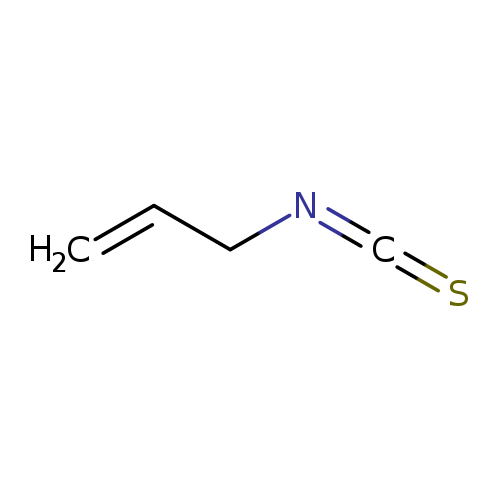
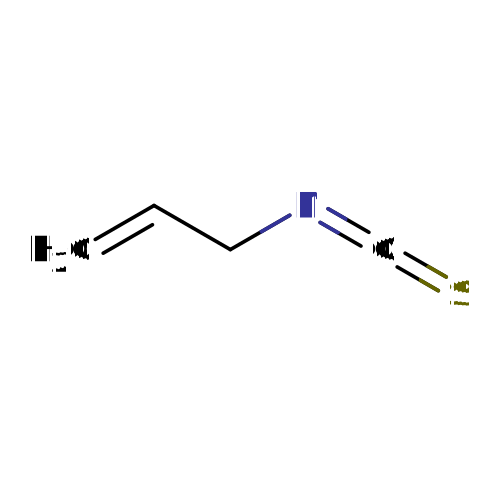
Chemical Structure
Synonyms
ValueSource
2-Propenyl isothiocyanateChEBI
3-Isothiocyanato-1-propeneChEBI
AITChEBI
AITCChEBI
Allyl isosulfocyanateChEBI
Allyl mustard oilChEBI
AllylsenfoelChEBI
Isothiocyanate d'allyleChEBI
Isothiocyanic acid allyl esterChEBI
Mustard oilChEBI
Oil OF mustardChEBI
Oleum sinapisChEBI
Senf oelChEBI
Volatile mustard oilChEBI
Volatile oil OF mustardChEBI
2-Propenyl isothiocyanic acidGenerator
Allyl isosulfocyanic acidGenerator
Allyl isosulphocyanateGenerator
Allyl isosulphocyanic acidGenerator
Isothiocyanic acid d'allyleGenerator
Isothiocyanate allyl esterGenerator
Allyl isothiocyanic acidGenerator
3-iso-Thiocyanatoprop-1-eneHMDB
3-Isothiocyanatoprop-1-eneHMDB
Allyl isothiocyanate (natural)HMDB
Allyl isothiocyanate non-perfume gradeHMDB
Allyl sevenolumHMDB
AllylsenevolHMDB, MeSH
AllylsevenolumHMDB
AllyspolHMDB
Artificial mustard oilHMDB
CarbospolHMDB
Caswell no. 027HMDB
FEMA no. 2034HMDB
IsothiocyansaeureallylesterHMDB
Oleum sinapis volatileHMDB
RedskinHMDB
SenfoelHMDB
Synthetic mustard oilHMDB
Chemical FormulaC4H5NS
Average Molecular Mass99.154 g/mol
Monoisotopic Mass99.014 g/mol
CAS Registry Number57-06-7
IUPAC Name3-isothiocyanatoprop-1-ene
Traditional Nameallyl isothiocyanate
SMILESC=CCN=C=S
InChI IdentifierInChI=1S/C4H5NS/c1-2-3-5-4-6/h2H,1,3H2
InChI KeyZOJBYZNEUISWFT-UHFFFAOYSA-N
Chemical Taxonomy
Description Belongs to the class of organic compounds known as isothiocyanates. These are organic compounds containing the isothiocyanate group, an isocyanate analogue with the general formula RN=C=S.
KingdomOrganic compounds
Super ClassOrganosulfur compounds
ClassIsothiocyanates
Sub ClassNot Available
Direct ParentIsothiocyanates
Alternative Parents
Substituents
  • Isothiocyanate
  • Organic 1,3-dipolar compound
  • Propargyl-type 1,3-dipolar organic compound
  • Organic nitrogen compound
  • Organopnictogen compound
  • Hydrocarbon derivative
  • Organonitrogen compound
  • Aliphatic acyclic compound
Molecular FrameworkAliphatic acyclic compounds
External Descriptors
Biological Properties
StatusDetected and Not Quantified
OriginExogenous
Cellular Locations
  • Cytoplasm
  • Extracellular
Biofluid LocationsNot Available
Tissue LocationsNot Available
PathwaysNot Available
Applications
Biological Roles
Chemical RolesNot Available
Physical Properties
StateLiquid
AppearanceColorless oil.
Experimental Properties
PropertyValue
Melting Point-80°C
Boiling PointNot Available
Solubility2 mg/mL at 20°C
Predicted Properties
PropertyValueSource
Water Solubility0.32 g/LALOGPS
logP1.9ALOGPS
logP1.8ChemAxon
logS-2.5ALOGPS
pKa (Strongest Basic)-3.9ChemAxon
Physiological Charge0ChemAxon
Hydrogen Acceptor Count1ChemAxon
Hydrogen Donor Count0ChemAxon
Polar Surface Area12.36 ŲChemAxon
Rotatable Bond Count2ChemAxon
Refractivity30.49 m³·mol⁻¹ChemAxon
Polarizability10.51 ųChemAxon
Number of Rings0ChemAxon
BioavailabilityYesChemAxon
Rule of FiveYesChemAxon
Ghose FilterNoChemAxon
Veber's RuleYesChemAxon
MDDR-like RuleNoChemAxon
Spectra
Spectra
Toxicity Profile
Route of ExposureInhalation (6) ; oral (6) ; dermal (6)2)
Mechanism of ToxicityCyanide is an inhibitor of cytochrome c oxidase in the fourth complex of the electron transport chain (found in the membrane of the mitochondria of eukaryotic cells). It complexes with the ferric iron atom in this enzyme. The binding of cyanide to this cytochrome prevents transport of electrons from cytochrome c oxidase to oxygen. As a result, the electron transport chain is disrupted and the cell can no longer aerobically produce ATP for energy. Tissues that mainly depend on aerobic respiration, such as the central nervous system and the heart, are particularly affected. Cyanide is also known produce some of its toxic effects by binding to catalase, glutathione peroxidase, methemoglobin, hydroxocobalamin, phosphatase, tyrosinase, ascorbic acid oxidase, xanthine oxidase, succinic dehydrogenase, and Cu/Zn superoxide dismutase. Cyanide binds to the ferric ion of methemoglobin to form inactive cyanmethemoglobin. (7)
MetabolismCyanide is rapidly alsorbed through oral, inhalation, and dermal routes and distributed throughout the body. Cyanide is mainly metabolized into thiocyanate by either rhodanese or 3-mercaptopyruvate sulfur transferase. Cyanide metabolites are excreted in the urine. (6)
Toxicity ValuesLD50: 112 mg/kg (Oral, Rat) (10) LD50: 88 mg/kg (Dermal, Rabbit (10) LD50: 12 mg/kg (Intravenous, Rabbit) (10)
Lethal Dose200 to 300 milligrams for an adult human (cyanide salts). (11)
Carcinogenicity (IARC Classification)3, not classifiable as to its carcinogenicity to humans. (8)
Uses/SourcesSynthetic allyl isothiocyanate is used as an insecticide, bacteriocide, and nematocide, and is used in certain cases for crop protection. (9)
Minimum Risk LevelNot Available
Health EffectsExposure to high levels of cyanide for a short time harms the brain and heart and can even cause coma, seizures, apnea, cardiac arrest and death. Chronic inhalation of cyanide causes breathing difficulties, chest pain, vomiting, blood changes, headaches, and enlargement of the thyroid gland. Skin contact with cyanide salts can irritate and produce sores. (6, 7)
SymptomsCyanide poisoning is identified by rapid, deep breathing and shortness of breath, general weakness, giddiness, headaches, vertigo, confusion, convulsions/seizures and eventually loss of consciousness. (6, 7)
TreatmentEYES: irrigate opened eyes for several minutes under running water. INGESTION: do not induce vomiting. Rinse mouth with water (never give anything by mouth to an unconscious person). Seek immediate medical advice. SKIN: should be treated immediately by rinsing the affected parts in cold running water for at least 15 minutes, followed by thorough washing with soap and water. If necessary, the person should shower and change contaminated clothing and shoes, and then must seek medical attention. INHALATION: supply fresh air. If required provide artificial respiration.

Concentrations
Not Available
External Links
DrugBank IDNot Available
HMDB IDHMDB0005843
FooDB IDFDB012440
Phenol Explorer IDNot Available
KNApSAcK IDNot Available
BiGG IDNot Available
BioCyc IDNot Available
METLIN IDNot Available
PDB IDNot Available
Wikipedia LinkAllyl_isothiocyanate
Chemspider ID21105854
ChEBI ID73224
PubChem Compound ID5971
Kegg Compound IDC19317
YMDB IDNot Available
ECMDB IDNot Available
References
Synthesis ReferenceNot Available
MSDSLink
General References
1. https://www.ncbi.nlm.nih.gov/pubmed/?term=20174640
2. https://www.ncbi.nlm.nih.gov/pubmed/?term=21237300
3. https://www.ncbi.nlm.nih.gov/pubmed/?term=21711355
4. https://www.ncbi.nlm.nih.gov/pubmed/?term=22093285
5. https://www.ncbi.nlm.nih.gov/pubmed/?term=22104119
6. https://www.ncbi.nlm.nih.gov/pubmed/?term=22131350
7. https://www.ncbi.nlm.nih.gov/pubmed/?term=22265303
8. https://www.ncbi.nlm.nih.gov/pubmed/?term=23008020
9. https://www.ncbi.nlm.nih.gov/pubmed/?term=23072699
10. https://www.ncbi.nlm.nih.gov/pubmed/?term=23212023
11. https://www.ncbi.nlm.nih.gov/pubmed/?term=23470258
12. https://www.ncbi.nlm.nih.gov/pubmed/?term=23535540
13. https://www.ncbi.nlm.nih.gov/pubmed/?term=23757176
14. Zlatkis A, Liebich HM: Profile of volatile metabolites in human urine. Clin Chem. 1971 Jul;17(7):592-4.
15. Musk SR, Johnson IT: Allyl isothiocyanate is selectively toxic to transformed cells of the human colorectal tumour line HT29. Carcinogenesis. 1993 Oct;14(10):2079-83.
16. Jiao D, Ho CT, Foiles P, Chung FL: Identification and quantification of the N-acetylcysteine conjugate of allyl isothiocyanate in human urine after ingestion of mustard. Cancer Epidemiol Biomarkers Prev. 1994 Sep;3(6):487-92.
17. Murata M, Yamashita N, Inoue S, Kawanishi S: Mechanism of oxidative DNA damage induced by carcinogenic allyl isothiocyanate. Free Radic Biol Med. 2000 Mar 1;28(5):797-805.
18. Lerbaek A, Rastogi SC, Menne T: Allergic contact dermatitis from allyl isothiocyanate in a Danish cohort of 259 selected patients. Contact Dermatitis. 2004 Aug;51(2):79-83.