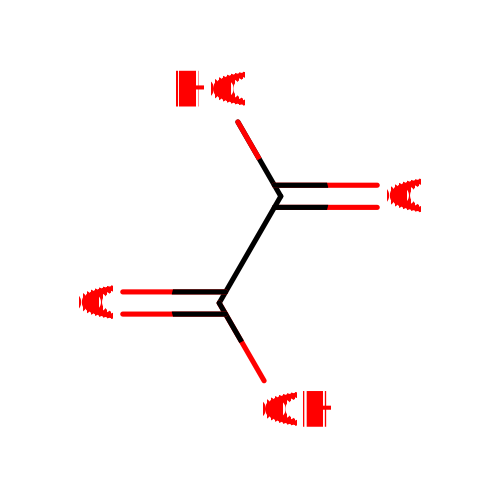
Oxalic acid (CED0001819)

Record Information
Version1.0
Creation Date2009-06-09 20:08:59 UTC
Update Date2026-05-14 17:57:25 UTC
SynCED IDCED0001819
Secondary Accession Numbers
  • CHEM000741
  • T3D0856
Identification
Common NameOxalic acid
ClassSmall Molecule
Description
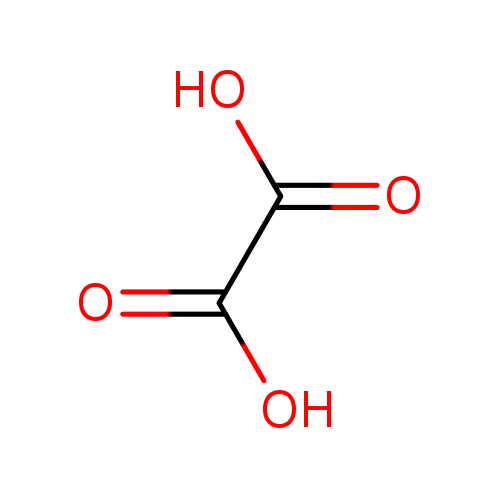
Oxalic acid (C2H2O4) is a solid with an average molecular weight of 90.03 g/mol. Oxalic acid belongs to the dicarboxylic acids and derivatives, a subclass of carboxylic acids and derivatives within the organic compounds. It is an endogenous compound that acts as a human and plant metabolite, as well as a biological virulence factor (PMC10963064 ). In industrial applications, it serves as a chelating agent, cleaning agent, solvent (PMC7941040 ), catalyst (PMC7941040 ), electron donor (PMC6648437 ), foaming agent (PMC13467686 ), fragrance (PMC7941040 ), and a tanning agent not otherwise specified. Environmentally, it functions as a nutrient (PMC9049632 ). The compound is detected in various tissues, including the bladder, epidermis, eye lens, fibroblasts, intestine, kidney, liver, pancreas, and testes. It is recorded in 64 sources, including electrical and electronic equipment such as cell phones, capacitors, wires, cables, batteries, and printed circuit boards; food, food processing and cookware including food packaging, food contact materials, fermentation processes for beer, food preservation, molasses and treatment of molasses; household cleaning and consumer products including bleaching agents, ash trays, cigar cigarettes, other smoking requisites, and perfumes within detergents and soaps; building and construction materials like ceilings, fencing, and floors; synthetic textiles, carpets, and rugs; and household items such as coins and watch chains. Exposure routes include inhalation, oral, and touch. Oxalic acid interacts with six protein targets. It binds to the prothrombin promoter (F2), inhibiting the formation of thromboxane B2 from arachidonic acid. It also acts as a competitive inhibitor of succinate dehydrogenase, targeting the mitochondrial subunits SDHA, SDHB, SDHC, and SDHD. Additionally, it targets the proto-oncogene tyrosine-protein kinase Src (SRC).
Contaminant Type
  • Food Toxin
  • Household Toxin
  • Industrial/Workplace Toxin
  • Metabolite
  • Natural Compound
  • Organic Compound
  • PFAS
  • Phytotoxin
  • Plant Toxin
  • Reducing Agent
Chemical Structure
Synonyms
ValueSource
EthandisaeureChEBI
Ethane-1,2-dioic acidChEBI
Ethanedioic acidChEBI
H2OxChEBI
HOOCCOOHChEBI
OxalsaeureChEBI
Ethane-1,2-dioateGenerator
EthanedioateGenerator
OxalateGenerator
Ammonium oxalateHMDB
Ethanedioic acid dihydrateHMDB
EthanedionateHMDB
Ethanedionic acidHMDB
Kyselina stavelovaHMDB
OxaalzuurHMDB
Oxalic acid 2-hydrateHMDB
Oxalic acid anhydrousHMDB
Oxalic acid diammonium saltHMDB
Oxalic acid dihydrateHMDB
Acid, oxalicHMDB
Aluminum oxalateHMDB
Chromium (3+) oxalate (3:2)HMDB
Dipotassium oxalateHMDB
Iron oxalateHMDB
Magnesium oxalateHMDB
Magnesium oxalate (1:1)HMDB
Oxalate, dilithiumHMDB
Oxalate, disodiumHMDB
Oxalate, monohydrogen monopotassiumHMDB
Oxalate, monopotassiumHMDB
Oxalate, potassiumHMDB
Chromium oxalateHMDB
Dilithium oxalateHMDB
Manganese (2+) oxalate (1:1)HMDB
Monosodium oxalateHMDB
Oxalate, chromiumHMDB
Oxalate, dipotassiumHMDB
Oxalate, magnesiumHMDB
Oxalate, monosodiumHMDB
Oxalate, potassium chromiumHMDB
Oxalate, sodiumHMDB
Potassium oxalateHMDB
Potassium oxalate (2:1)HMDB
Diammonium oxalateHMDB
Disodium oxalateHMDB
Oxalate, aluminumHMDB
Oxalate, diammoniumHMDB
Oxalate, ferricHMDB
Oxalate, monoammoniumHMDB
Potassium chromium oxalateHMDB
Chromium (2+) oxalateHMDB
Ferric oxalateHMDB
Iron (2+) oxalate (1:1)HMDB
Iron (3+) oxalateHMDB
Monoammonium oxalateHMDB
Monohydrogen monopotassium oxalateHMDB
Monopotassium oxalateHMDB
Oxalate, ironHMDB
Sodium oxalateHMDB
Oxalic acidKEGG
Chemical FormulaC2H2O4
Average Molecular Mass90.035 g/mol
Monoisotopic Mass89.995 g/mol
CAS Registry Number144-62-7
IUPAC Nameoxalic acid
Traditional Nameoxalic acid
SMILESOC(=O)C(O)=O
InChI IdentifierInChI=1S/C2H2O4/c3-1(4)2(5)6/h(H,3,4)(H,5,6)
InChI KeyMUBZPKHOEPUJKR-UHFFFAOYSA-N
Chemical Taxonomy
Description Belongs to the class of organic compounds known as dicarboxylic acids and derivatives. These are organic compounds containing exactly two carboxylic acid groups.
KingdomOrganic compounds
Super ClassOrganic acids and derivatives
ClassCarboxylic acids and derivatives
Sub ClassDicarboxylic acids and derivatives
Direct ParentDicarboxylic acids and derivatives
Alternative Parents
Substituents
  • Dicarboxylic acid or derivatives
  • Carboxylic acid
  • Organic oxygen compound
  • Organic oxide
  • Hydrocarbon derivative
  • Organooxygen compound
  • Carbonyl group
  • Aliphatic acyclic compound
Molecular FrameworkAliphatic acyclic compounds
External Descriptors
Biological Properties
StatusDetected and Not Quantified
OriginEndogenous
Cellular Locations
  • Cytoplasm
  • Extracellular
  • Mitochondria
  • Peroxisome
Biofluid LocationsNot Available
Tissue Locations
  • Bladder
  • Epidermis
  • Eye Lens
  • Fibroblasts
  • Intestine
  • Kidney
  • Liver
  • Pancreas
  • Testes
ApplicationsNot Available
Biological Roles
Chemical RolesNot Available
Organoleptic Effects
  • colorless colour ?
  • bitter taste ?
  • yellowish colour ?
Physical Properties
StateSolid
AppearanceWhite crystals
Experimental Properties
PropertyValue
Melting Point189.5°C
Boiling PointNot Available
Solubility220 mg/mL at 25°C
Predicted Properties
PropertyValueSource
Water Solubility65.7 g/LALOGPS
logP-0.51ALOGPS
logP-0.26ChemAxon
logS-0.14ALOGPS
pKa (Strongest Acidic)1.36ChemAxon
Physiological Charge-2ChemAxon
Hydrogen Acceptor Count4ChemAxon
Hydrogen Donor Count2ChemAxon
Polar Surface Area74.6 ŲChemAxon
Rotatable Bond Count1ChemAxon
Refractivity14.44 m³·mol⁻¹ChemAxon
Polarizability6.23 ųChemAxon
Number of Rings0ChemAxon
BioavailabilityYesChemAxon
Rule of FiveYesChemAxon
Ghose FilterNoChemAxon
Veber's RuleNoChemAxon
MDDR-like RuleNoChemAxon
Spectra
Spectra
Spectrum TypeDescriptionSplash KeyDeposition DateView
GC-MSGC-MS Spectrumsplash10-0002-0900000000-eaa92cf80964dd7d345aNot AvailableView Spectrum
GC-MSGC-MS Spectrumsplash10-0002-0900000000-b9206a3a54b5be6f07d9Not AvailableView Spectrum
GC-MSGC-MS Spectrumsplash10-00dj-9500000000-e5db327eab9e8a2f149eNot AvailableView Spectrum
GC-MSGC-MS Spectrumsplash10-00sl-3910000000-75af6e42d4cc12d798f4Not AvailableView Spectrum
GC-MSGC-MS Spectrumsplash10-0006-9000000000-8aef9a64d926571c2de0Not AvailableView Spectrum
GC-MSGC-MS Spectrumsplash10-0002-0900000000-eaa92cf80964dd7d345aNot AvailableView Spectrum
GC-MSGC-MS Spectrumsplash10-0002-0900000000-b9206a3a54b5be6f07d9Not AvailableView Spectrum
GC-MSGC-MS Spectrumsplash10-00dj-9500000000-e5db327eab9e8a2f149eNot AvailableView Spectrum
GC-MSGC-MS Spectrumsplash10-00sl-3910000000-75af6e42d4cc12d798f4Not AvailableView Spectrum
GC-MSGC-MS Spectrumsplash10-0002-0900000000-3cee49bf06349fbe625eNot AvailableView Spectrum
Predicted GC-MSPredicted GC-MS Spectrumsplash10-000f-9000000000-f5e8094c68372ab25a63Not AvailableView Spectrum
Predicted GC-MSPredicted GC-MS Spectrumsplash10-00xr-9510000000-28b0e365a156d2091afdNot AvailableView Spectrum
Predicted GC-MSPredicted GC-MS SpectrumNot AvailableNot AvailableView Spectrum
LC-MS/MSLC-MS/MS Spectrumsplash10-00di-9000000000-cb3d53cc3c40c1cbbba7Not AvailableView Spectrum
LC-MS/MSLC-MS/MS Spectrumsplash10-0uk9-9000000000-53a009b344e3920ffca1Not AvailableView Spectrum
LC-MS/MSLC-MS/MS Spectrumsplash10-000i-9000000000-2bafb6c472ab1030cd0fNot AvailableView Spectrum
LC-MS/MSLC-MS/MS Spectrumsplash10-0006-9000000000-8aef9a64d926571c2de0Not AvailableView Spectrum
Predicted LC-MS/MSPredicted LC-MS/MS Spectrumsplash10-0006-9000000000-d1ff7c94a720b1eecaf2Not AvailableView Spectrum
Predicted LC-MS/MSPredicted LC-MS/MS Spectrumsplash10-0006-9000000000-21d33d1d99d80526ee71Not AvailableView Spectrum
Predicted LC-MS/MSPredicted LC-MS/MS Spectrumsplash10-0006-9000000000-ac27102ff43446c313d3Not AvailableView Spectrum
Predicted LC-MS/MSPredicted LC-MS/MS Spectrumsplash10-000i-9000000000-fe58eaea122c39178fbeNot AvailableView Spectrum
Predicted LC-MS/MSPredicted LC-MS/MS Spectrumsplash10-000i-9000000000-3850c6a7016e2874d55bNot AvailableView Spectrum
Predicted LC-MS/MSPredicted LC-MS/MS Spectrumsplash10-000i-9000000000-32ac4118fe0eb9a5abb2Not AvailableView Spectrum
Predicted LC-MS/MSPredicted LC-MS/MS Spectrumsplash10-000i-9000000000-43de084d66dd1bebdeacNot AvailableView Spectrum
Predicted LC-MS/MSPredicted LC-MS/MS Spectrumsplash10-000i-9000000000-159ed524013577f6f801Not AvailableView Spectrum
Predicted LC-MS/MSPredicted LC-MS/MS Spectrumsplash10-0006-9000000000-d948d5d95ae14e701f57Not AvailableView Spectrum
Predicted LC-MS/MSPredicted LC-MS/MS Spectrumsplash10-00di-9000000000-8e2d2f7a8acc88f00195Not AvailableView Spectrum
Predicted LC-MS/MSPredicted LC-MS/MS Spectrumsplash10-0006-9000000000-d7b47276d03e46ce72a2Not AvailableView Spectrum
Predicted LC-MS/MSPredicted LC-MS/MS Spectrumsplash10-0006-9000000000-a1e091bb1f5fa6e9cbc7Not AvailableView Spectrum
MSMS Spectrumsplash10-0002-9000000000-538465f019815d5e1b4aNot AvailableView Spectrum
1D NMR13C NMR Spectrum (1D, H2O, predicted)Not AvailableNot AvailableView Spectrum
Toxicity Profile
Toxicity Values
Toxicity ValueOrganismDose DescriptorRoute of ExposurePredicted or ExperimentalToxicity RatingReference
5268.0 Log mg/kg [3000:9400]RatLD50oralpredictedNot AvailableNot Available
2.5 % RatLOELoralexperimentalNot AvailableECOTOX - EPA ORD
0.2 % MouseNOELoralexperimentalNot AvailableECOTOX - EPA ORD
2.5 % RatNOELoralexperimentalNot AvailableECOTOX - EPA ORD
5.0 % RatLOELoralexperimentalNot AvailableECOTOX - EPA ORD
80.6 mg/L MouseLOELoralexperimentalNot AvailableECOTOX - EPA ORD
80.6 mg/L MouseNOELoralexperimentalNot AvailableECOTOX - EPA ORD
5.0 % RatLOELoralexperimentalNot AvailableECOTOX - EPA ORD
2.5 % RatNOELoralexperimentalNot AvailableECOTOX - EPA ORD
8.0 % RatLOELoralexperimentalNot AvailableECOTOX - EPA ORD
2.5 % RatLOELoralexperimentalNot AvailableECOTOX - EPA ORD
8.0 % RatLOELoralexperimentalNot AvailableECOTOX - EPA ORD
0.2 % MouseNOELoralexperimentalNot AvailableECOTOX - EPA ORD
1.88 mg/mL MouseLOELoralexperimentalNot AvailableECOTOX - EPA ORD
0.9 mg/mL MouseNOELoralexperimentalNot AvailableECOTOX - EPA ORD
1.88 mg/mL MouseLOELoralexperimentalNot AvailableECOTOX - EPA ORD
1.88 mg/mL MouseNOELoralexperimentalNot AvailableECOTOX - EPA ORD
1.88 mg/mL MouseLOELoralexperimentalNot AvailableECOTOX - EPA ORD
1.88 mg/mL MouseNOELoralexperimentalNot AvailableECOTOX - EPA ORD
1.88 mg/mL MouseLOELoralexperimentalNot AvailableECOTOX - EPA ORD
1.88 mg/mL MouseNOELoralexperimentalNot AvailableECOTOX - EPA ORD
1.88 mg/mL MouseLOELoralexperimentalNot AvailableECOTOX - EPA ORD
1.88 mg/mL MouseNOELoralexperimentalNot AvailableECOTOX - EPA ORD
Toxicity / Toxin ClassNot Available
Mechanism of ToxicityThe affinity of divalent metal ions is sometimes reflected in their tendency to form insoluble precipitates. Thus in the body, oxalic acid also combines with metals ions such as Ca2+, Fe2+, and Mg2+ to deposit crystals of the corresponding oxalates, which irritate the gut and kidneys. (2) Therefore the toxicity of oxalic acid is due to kidney failure caused by precipitation of solid calcium oxalate, the main component of kidney stones. Oxalic acid can also cause joint pain due to the formation of similar precipitates in the joints. Ingestion of ethylene glycol results in oxalic acid as a metabolite that can also cause acute kidney failure.
Carcinogenicity (IARC Classification)No indication of carcinogenicity (not listed by IARC). (21)
Minimum Risk LevelNot Available
SymptomsOxalic acid poisoning symptoms include weakness, burning in the mouth, death from cardiovascular collapse, on the respiratory system, throat – burning in the throat, abdominal pain, nausea, vomiting, diarrhea, convulsions, and coma.
TreatmentAcute Exposure: If oxalic acid is swallowed, immediately give the person water or milk, unless instructed otherwise by a health care provider. DO NOT give water or milk if the person is having symptoms (such as vomiting, convulsions, or a decreased level of alertness) that make it hard to swallow. If acute exposure occurs to the eyes, irrigate opened eyes for several minutes under running water. Chronic exposure: in some patients with primary hyperoxaluria type 1, pyridoxine treatment (vitamin B6) may decrease oxalate excretion and prevent kidney stone formation.
Health Effects
Health EffectRelationshipDirectionDescriptionReference
dermatitisAssociated With?Not AvailableNot AvailablePMC2868883
allergic diseaseAssociated With?Not AvailableAllergic diseases, also known as allergies, are a number of conditions caused by hypersensitivity of the immune system to typically harmless substances in the environment. These diseases include hay fever, food allergies, atopic dermatitis, allergic asthma, and anaphylaxis. Symptoms may include red eyes, an itchy rash, sneezing, a runny nose, shortness of breath, or swelling. Common allergens include pollen and certain foods. Metals and other substances may also cause allergies. Food, insect stings, and medications are common causes of severe allergic reactions. Allergies can be due to both genetic and environmental factors. The underlying mechanism involves immunoglobulin E antibodies (IgE) binding to an allergen and then to a receptor on mast cells or basophils where it triggers the release of inflammatory chemicals such as histamine. Allergies are among the most common conditions in the world. In the developed world, about 20% of people are affected by allergic rhinitis, about 6% of people have at least one food allergy, and about 20% have atopic dermatitis at some point in time.PMC10490380
MycosesAssociated With?Not AvailableNot AvailablePMC5980984
HyperoxaluriaAssociated With?Not AvailableNot AvailablePMC10975307
MalnutritionAssociated With?Not AvailableNot AvailablePMC12103188
Exposure Sources
Source IDSourceSectorReference
CEDs000007Pesticides?Pesticides are synthetic chemicals designed to prevent, destroy, or control pests that threaten crops and agricultural productivity.Agriculture & land managementNot Available
CEDs000010Insecticides?Insecticides are synthetic chemicals designed to control or eliminate insect pests that threaten crops and other agricultural products.Agriculture & land managementPubChem
CEDs000013Soil?Soil serves as a critical medium for plant growth and sustains various ecological functions; however, it can become a reservoir for synthetic chemical contamination.Agriculture & land managementPMC2976553 , PMC7503436
CEDs000050Groundwater?Groundwater serves as a vital resource for drinking water and agricultural irrigation but is increasingly susceptible to contamination from synthetic chemicals.Aquatic systems & sedimentsPMC2976553
CEDs000070Stormwater runoff?Stormwater runoff refers to the flow of rainwater or melted snow that does not soak into the ground and instead collects pollutants as it travels over impervious surfaces such as roads and parking lots.Automotive & urban infrastructurePubChem
CEDs000120Wires and cables?Wires and cables are integral components in the transmission of electrical power and signals.Electrical & Electronic EquipmentNot Available
CEDs000121Printed circuit boards?Printed circuit boards (PCBs) are essential components in the manufacturing of electronic devices, serving as the backbone for electrical connections and circuit pathways.Electrical & Electronic EquipmentNot Available
CEDs000125Batteries?Batteries are devices that store and release electrical energy through electrochemical reactions.Electrical & Electronic EquipmentNot Available
CEDs000130Semiconductors?Semiconductors are materials that possess electrical conductivity between that of conductors and insulators, making them essential for various electronic applications, including transistors, diodes, and integrated circuits.Electrical & Electronic EquipmentNot Available
CEDs000138Lubricants?Lubricants are synthetic or petroleum-derived substances used to reduce friction between surfaces in machinery and equipment, enhancing operational efficiency and longevity.Energy, oil & gasNot Available
CEDs000147Food packaging?Food packaging often utilizes synthetic chemicals, such as plastics and coatings, to enhance durability, moisture resistance, and shelf life.Food, food processing & cookwareNot Available
CEDs000174Lubricants?Lubricants are synthetic or petroleum-based substances used to reduce friction and wear between moving parts in machinery and equipment.Industrial manufacturing & chemical processingNot Available
CEDs000181Ballast water?Ballast water, taken on by ships to maintain stability and balance, often contains a diverse array of microorganisms, including bacteria, viruses, and plankton.Marine, shipping & aquaculturePubChem
CEDs000182Bilge water?Bilge water is a byproduct generated from the accumulation of water in the lowest part of a ship's hull, which may include a mixture of seawater, oil, fuel residues, and various contaminants.Marine, shipping & aquaculturePubChem
CEDs000233Brushes?Brushes used in personal care and cosmetics can be a source of synthetic chemical contamination due to the materials and coatings used in their manufacturing.Personal care & cosmeticsPubChem
CEDs000234Medical devices?Medical devices often incorporate synthetic chemicals in their manufacturing processes, which can contribute to contamination in healthcare settings.Healthcare, pharmaceuticals & veterinary productsNot Available
CEDs000451Carpets and Rugs?Carpets and rugs are commonly manufactured using synthetic fibers such as nylon, polyester, and polypropylene, which can be derived from petrochemical sources.Textiles, leather & furnishingsNot Available
CEDs000454Synthetic textiles?Synthetic textiles are materials derived from man-made fibers, such as polyester, nylon, and acrylic, which are produced through chemical processes involving petrochemicals.Textiles, leather & furnishingsNot Available
CEDs000469Sewage sludge?Sewage sludge is a byproduct generated during the treatment of wastewater in municipal and industrial processes.Wastewater, sanitation & biosolidsPMC8519076
CEDs000479Effluent?Effluent refers to liquid waste or sewage that is discharged into the environment, typically resulting from industrial processes, municipal wastewater treatment, or agricultural runoff.Wastewater, sanitation & biosolidsPMC2976553 , PMC2976553
CEDs000490Personal care & cosmeticsNot Available
CEDs000492Cell phones?Cell phones contain a variety of synthetic chemicals and materials, including plastics, metals, and glass, which can contribute to environmental contamination.Electrical & Electronic EquipmentNot Available
CEDs000493Capacitors?Capacitors are electronic components that store and release electrical energy, often using dielectric materials that can include synthetic chemicals.Electrical & Electronic EquipmentNot Available
CEDs000494Food contact materials?Food contact materials refer to substances and products that are intended to come into contact with food during processing, packaging, or preparation.Food, food processing & cookwareNot Available
CEDs000495Ceilings?Ceilings in built environments can be a source of synthetic chemical contamination due to the materials used in their construction and finishes.Building & ConstructionPubChem
CEDs000496Fencing?Fencing materials, particularly those used in construction and landscaping, can be a source of synthetic chemical contamination due to the treatments and coatings applied for durability and weather resistance.Building & ConstructionPubChem
CEDs000497Floors?Floors in built environments can be a significant source of synthetic chemical contamination due to the materials and finishes used in their construction.Building & ConstructionPubChem
CEDs000504Adjustable Resistors?Adjustable resistors, commonly used in various electronic devices, can contribute to synthetic chemical contamination through the materials and substances used in their manufacturing and disposal.Electrical & Electronic EquipmentPubChem
CEDs000505Amplifiers?Amplifiers, commonly used in various electronic devices to enhance signal strength, can be a source of synthetic chemical contamination due to the materials and processes involved in their production and disposal.Electrical & Electronic EquipmentPubChem
CEDs000506Antennas?Antennas, commonly used in communication technologies, can be a source of synthetic chemical contamination through the materials and coatings used in their construction.Electrical & Electronic EquipmentPubChem
CEDs000507Auxiliary Devices?Auxiliary devices, such as capacitors, transformers, and circuit breakers, are integral components in various electronic systems.Electrical & Electronic EquipmentPubChem
CEDs000508Coils?Coils are components used in various electrical and electronic applications, such as transformers, inductors, and motors.Electrical & Electronic EquipmentPubChem
CEDs000510Communication Cables Or Conductors?Communication cables or conductors are essential components in the transmission of data and signals in various applications, including telecommunications and networking.Electrical & Electronic EquipmentPubChem
CEDs000511Conductors Or Conductive Bodies Characterised By The Conductive Materials?Conductors, or conductive bodies, are materials that allow the flow of electrical current, typically made from metals such as copper, aluminum, or silver.Electrical & Electronic EquipmentPubChem
CEDs000512Contacts?Contacts in electrical and electronic equipment are components that facilitate the flow of electricity between circuits.Electrical & Electronic EquipmentPubChem
CEDs000514Discharge Lamps?Discharge lamps, including fluorescent and high-intensity discharge (HID) lamps, are commonly used for lighting applications due to their energy efficiency and brightness.Electrical & Electronic EquipmentPubChem
CEDs000517Electric Switches?Electric switches, integral components in numerous devices, can be a source of synthetic chemical contamination due to the materials and manufacturing processes involved in their production.Electrical & Electronic EquipmentPubChem
CEDs000518Electrically Stimulated Smoking Devices?Electrically stimulated smoking devices, commonly known as e-cigarettes or vape pens, utilize electrical components to heat a liquid solution, often containing nicotine, flavorings, and other additives, to produce an aerosol for inhalation.Electrical & Electronic EquipmentPubChem
CEDs000519Electrodes?Electrodes, used in various electrical and electronic applications, can be a source of synthetic chemical contamination due to the materials from which they are constructed and the processes involved in their manufacturing.Electrical & Electronic EquipmentPubChem
CEDs000520Emergency Protective Devices?Emergency protective devices, such as circuit breakers and surge protectors, are essential components in electrical systems designed to prevent damage from overcurrent and surges.Electrical & Electronic EquipmentPubChem
CEDs000521Fixed Capacitors And Their Manufacture?Fixed capacitors are passive electronic components used to store and release electrical energy, playing a critical role in various circuits.Electrical & Electronic EquipmentPubChem
CEDs000523Gas Filled Discharge Tubes With Solid Cathode?Gas Filled Discharge Tubes with Solid Cathodes are electrical components that facilitate the flow of current by ionizing gas within a sealed tube.Electrical & Electronic EquipmentPubChem
CEDs000524Hybrid Capacitors?Hybrid capacitors are energy storage devices that combine the properties of electrolytic and supercapacitors, utilizing a combination of electrochemical principles to achieve higher energy density and power density.Electrical & Electronic EquipmentPubChem
CEDs000526Loudspeakers?Loudspeakers, as components in audio systems, can be sources of synthetic chemical contamination primarily due to the materials used in their construction.Electrical & Electronic EquipmentPubChem
CEDs000527Magnets?Magnets, commonly used in various electrical and electronic applications, can be a source of synthetic chemical contamination due to the materials used in their production.Electrical & Electronic EquipmentPubChem
CEDs000528Microphones?Microphones, as components in various electronic devices, can be sources of synthetic chemical contamination due to the materials used in their construction.Electrical & Electronic EquipmentPubChem
CEDs000529Power Cables?Power cables are used to transmit electrical energy and are typically composed of conductive materials, insulation, and protective coatings.Electrical & Electronic EquipmentPubChem
CEDs000530Radio Transmission Systems?Radio transmission systems utilize a variety of synthetic chemicals in their manufacturing and maintenance processes.Electrical & Electronic EquipmentPubChem
CEDs000531Relays?Relays are electromechanical switches used to control circuits and manage electrical loads.Electrical & Electronic EquipmentPubChem
CEDs000533Sparking Plugs?Spark plugs are critical components in internal combustion engines, facilitating the ignition of fuel-air mixtures by generating a spark.Electrical & Electronic EquipmentPubChem
CEDs000535Superconducting Magnets And Superconducting Coils?Superconducting magnets and coils are utilized in various applications that require strong magnetic fields, such as magnetic resonance imaging (MRI) and particle accelerators.Electrical & Electronic EquipmentPubChem
CEDs000536Superconductive Or Hyperconductive Conductors Cables Or Transmission Lines?Superconductive or hyperconductive conductors, including cables and transmission lines, are materials that exhibit zero electrical resistance under specific conditions, typically at low temperatures.Electrical & Electronic EquipmentPubChem
CEDs000538Thin Magnetic Films?Thin magnetic films are layers of magnetic material ranging from a few nanometers to several micrometers in thickness, commonly used in applications such as magnetic sensors, data storage devices, and electronic components.Electrical & Electronic EquipmentPubChem
CEDs000540X Ray Tubes?X-ray tubes are devices used to produce X-rays for various applications, including medical imaging and industrial inspections.Electrical & Electronic EquipmentPubChem
CEDs000544Fermentation Processes For Beer?Fermentation processes for beer involve the conversion of sugars into alcohol and carbon dioxide by yeast.Food, food processing & cookwarePubChem
CEDs000545Food Preservation?Food preservation often involves the use of synthetic chemicals, such as preservatives, flavor enhancers, and color additives, to extend shelf life and enhance the sensory qualities of food products.Food, food processing & cookwarePubChem
CEDs000546Molasses And Treatment Of Molasses?Molasses is a thick, viscous byproduct of sugar production, derived from the extraction of sugar cane or sugar beet juice.Food, food processing & cookwarePubChem
CEDs000548Preparation Of Vinegar?Vinegar is produced through the fermentation of ethanol by acetic acid bacteria, resulting in a solution that typically contains 4-8% acetic acid.Food, food processing & cookwarePubChem
CEDs000549Preparation Of Wine Or Sparkling Wine?The preparation of wine or sparkling wine involves various stages, including fermentation, aging, and bottling, which can introduce potential sources of synthetic chemical contamination.Food, food processing & cookwarePubChem
CEDs000550Preparation Of Wort?The preparation of wort involves the extraction of sugars from malted grains, a crucial step in the brewing process.Food, food processing & cookwarePubChem
CEDs000552Processing Meats?Processing meats can lead to synthetic chemical contamination primarily through the use of additives and preservatives.Food, food processing & cookwarePubChem
CEDs000553Treatment Of Hops?Hops, a key ingredient in brewing and food flavoring, can be a source of synthetic chemical contamination due to various agricultural practices.Food, food processing & cookwarePubChem
CEDs000554Ash Trays?Ash trays, commonly used for the disposal of cigarette butts and ash, can be a source of synthetic chemical contamination due to the presence of various toxic compounds in tobacco smoke.Household cleaning & consumer productsPubChem
CEDs000555Bleaching Agents?Bleaching agents are chemical substances used to whiten or lighten materials, often employed in various cleaning products for their stain removal and disinfecting properties.Household cleaning & consumer productsPubChem
CEDs000556Cigar Cigarettes?Cigar cigarettes are a source of synthetic chemical contamination due to the combustion of various tobacco blends and additives.Household cleaning & consumer productsPubChem
CEDs000560Other Smoking Requisites?Other smoking requisites, including items such as lighters, matches, and rolling papers, can introduce synthetic chemical contamination through various components and additives.Household cleaning & consumer productsPubChem
CEDs000561Perfumes Within Detergents And Soaps?Perfumes within detergents and soaps are synthetic fragrance compounds added to enhance the sensory experience of cleaning products.Household cleaning & consumer productsPubChem
CEDs000562Pipe Accessories?Pipe accessories, such as fittings, connectors, and seals, are components used in plumbing systems to facilitate the flow of liquids and gases.Household cleaning & consumer productsPubChem
CEDs000563Soap Detergents?Soap detergents are synthetic surfactants designed to enhance the cleaning efficacy of water by reducing surface tension, allowing for better interaction with dirt and grease.Household cleaning & consumer productsPubChem
CEDs000566Tobacco Pipes?Tobacco pipes, often made from materials such as plastic, wood, or metal, can serve as sources of synthetic chemical contamination due to the residues left by tobacco products.Household cleaning & consumer productsPubChem
CEDs000567Tobacco Product Cases?Tobacco product cases can serve as a source of synthetic chemical contamination due to the presence of various additives and chemicals used in tobacco processing and product manufacturing.Household cleaning & consumer productsPubChem
CEDs000569Tobacco Smoke Filters?Tobacco smoke filters are designed to reduce the inhalation of harmful substances in cigarette smoke, including tar and other particulate matter.Household cleaning & consumer productsPubChem
CEDs000571Coins?Coins can serve as a source of synthetic chemical contamination due to their production processes and the materials used in their composition.Household itemsPubChem
CEDs000577Watch Chains?Watch chains, often made from various metals and synthetic materials, can be a source of chemical contamination due to the presence of coatings, adhesives, and plasticizers used in their manufacturing.Household itemsPubChem
CEDs000578Making Cigars?The process of making cigars involves several steps, including the cultivation of tobacco, fermentation, and the application of various additives to enhance flavor and preservation.Industrial manufacturing & chemical processingPubChem
CEDs000579Manufacture Of Iron Or Steel?The manufacture of iron or steel involves various processes, including smelting, refining, and alloying, which can result in the release of synthetic chemicals and contaminants.Industrial manufacturing & chemical processingPubChem
CEDs000580Manufacture Preparation Of Tobacco Products?The manufacture and preparation of tobacco products involve various processes that can result in the introduction of synthetic chemicals into the environment.Industrial manufacturing & chemical processingPubChem
CEDs000581Paper Making Machines?Paper making machines utilize various synthetic chemicals throughout the production process, including additives, coatings, and bleaching agents.Industrial manufacturing & chemical processingPubChem
CEDs000584Buoys?Buoys, often used for navigation and marine monitoring, can be sources of synthetic chemical contamination due to the materials and coatings employed in their construction.Marine, shipping & aquaculturePubChem
CEDs000589Life Buoys?Life buoys, commonly used in marine environments for safety and rescue operations, can be a source of synthetic chemical contamination due to the materials used in their production.Marine, shipping & aquaculturePubChem
CEDs000595Ships?Ships, as vehicles for international trade and transportation, can be significant sources of synthetic chemical contamination in marine environments.Marine, shipping & aquaculturePubChem
CEDs000596Acaricides?Acaricides are synthetic chemicals specifically designed to target and control mite populations that can damage crops and plants.Agriculture & land managementPubChem
CEDs000597Chemosterilants?Chemosterilants are synthetic chemicals designed to induce sterility in target pest populations, thereby controlling their reproduction and mitigating damage to crops.Agriculture & land managementPubChem
CEDs000598Fertiliser Distributors?Fertiliser distributors play a critical role in the supply of synthetic fertilizers, which are widely used to enhance soil fertility and crop yield.Agriculture & land managementPubChem
CEDs000600Herbicides And Algicides?Herbicides and algicides are synthetic chemicals primarily used to control unwanted plants and algae in various environments.Agriculture & land managementPubChem
CEDs000603Nematocides?Nematocides are synthetic chemicals specifically designed to control nematodes, which are microscopic roundworms that can cause significant damage to crops and plants.Agriculture & land managementPubChem
CEDs000604Pest Attractants?Pest attractants are synthetic chemicals designed to lure specific pests for monitoring or control purposes.Agriculture & land managementPubChem
CEDs000605Pest Repellants?Pest repellents, often formulated from synthetic chemicals, are widely used to protect crops from insect infestations and other pests.Agriculture & land managementPubChem
CEDs000606Plant Growth Regulators?Plant Growth Regulators (PGRs) are synthetic chemicals designed to influence the growth and development of plants.Agriculture & land managementPubChem
CEDs000607Rodenticides(1)?Rodenticides are synthetic chemicals specifically formulated to control rodent populations, serving as a crucial tool in managing pests that can damage crops and spread diseases.Agriculture & land managementPubChem
CEDs000608Rodenticides?Rodenticides are chemical substances specifically designed to control rodent populations by causing death through various mechanisms, including anticoagulation or neurotoxicity.Agriculture & land managementPubChem
CEDs000609Aftershave?Aftershave is a grooming product typically used to soothe and protect the skin following shaving.Personal care & cosmeticsPubChem
CEDs000610Aftersun Products?Aftersun products are designed to soothe and hydrate the skin after sun exposure, often containing various synthetic chemicals such as emollients, preservatives, and fragrances.Personal care & cosmeticsPubChem
CEDs000611Anti Perspirants Or Body Deoderants?Antiperspirants and body deodorants commonly contain synthetic chemicals such as aluminum compounds, parabens, and synthetic fragrances.Personal care & cosmeticsPubChem
CEDs000612Body Washing Or Cleaning Implements?Body washing or cleaning implements, such as synthetic sponges, loofahs, and washcloths, can be sources of synthetic chemical contamination due to the materials used in their production.Personal care & cosmeticsPubChem
CEDs000613Depilatories?Depilatories are products designed to remove unwanted hair through the application of synthetic chemicals that break down the protein structure of hair, facilitating its removal.Personal care & cosmeticsPubChem
CEDs000614Essential Oils Or Perfumes?Essential oils and perfumes are complex mixtures of volatile compounds derived from natural or synthetic sources, commonly used for their aromatic properties.Personal care & cosmeticsPubChem
CEDs000615Eye Makeup Products?Eye makeup products, including mascaras, eyeliners, and eyeshadows, often contain a variety of synthetic chemicals such as pigments, preservatives, and film-forming agents.Personal care & cosmeticsPubChem
CEDs000616Face Mask Cosmetics?Face mask cosmetics often contain a variety of synthetic chemicals, including preservatives, emulsifiers, and fragrances, which can contribute to chemical contamination.Personal care & cosmeticsPubChem
CEDs000617Lip Care Products?Lip care products, including lipsticks, balms, and glosses, often contain a variety of synthetic chemicals such as parabens, phthalates, and synthetic fragrances.Personal care & cosmeticsPubChem
CEDs000618Lip Makeup Products?Lip makeup products, such as lipsticks, lip glosses, and lip liners, often contain a variety of synthetic chemicals, including pigments, preservatives, and emollients.Personal care & cosmeticsPubChem
CEDs000619Manicure Pedicure?Manicure and pedicure procedures often involve the use of various synthetic chemicals, including solvents, nail polishes, and nail adhesives.Personal care & cosmeticsPubChem
CEDs000630Toys?Toys, particularly those made from synthetic materials such as plastics, can be a source of chemical contamination due to the presence of various additives and compounds used in their production.Recreation & sports surfacesPubChem
CEDs000632Apparel?Apparel production often involves the use of various synthetic chemicals, including dyes, finishing agents, and preservatives.Textiles, leather & furnishingsPubChem
CEDs000633Azo Dyes?Azo dyes are synthetic organic compounds characterized by the presence of one or more azo groups (-N=N-), which are widely used for coloring textiles, leather, and furnishings.Textiles, leather & furnishingsPubChem
CEDs000635Buttons?Buttons, often made from synthetic materials such as polyester, nylon, or polycarbonate, can be a source of synthetic chemical contamination during their production, use, and disposal.Textiles, leather & furnishingsPubChem
CEDs000638Decorating Textiles?Decorating textiles often involves the use of synthetic chemicals such as dyes, finishes, and coatings.Textiles, leather & furnishingsPubChem
CEDs000639Degreasing Leather?Degreasing leather involves the removal of natural fats and oils from animal hides to prepare them for tanning and finishing processes.Textiles, leather & furnishingsPubChem
CEDs000640Embroidering And Tufting?Embroidering and tufting processes often involve the use of synthetic chemicals such as dyes, adhesives, and finishing agents.Textiles, leather & furnishingsPubChem
CEDs000642Footwear?Footwear production often involves the use of various synthetic chemicals, such as adhesives, dyes, and treatments, which can contribute to environmental contamination.Textiles, leather & furnishingsPubChem
CEDs000643Headwear?Headwear made from synthetic materials often incorporates chemicals used in the manufacturing and finishing processes, such as dyes, flame retardants, and water repellents.Textiles, leather & furnishingsPubChem
CEDs000647Multicolour Dyeing?Multicolour dyeing involves the application of multiple synthetic dyes to textiles and other materials to achieve vibrant, diverse color patterns.Textiles, leather & furnishingsPubChem
CEDs000648Nitro Dyes?Nitro dyes are synthetic colorants that contain nitro groups (-NO2) in their chemical structure.Textiles, leather & furnishingsPubChem
CEDs000650Purses Luggage Hand Bags?Purses, luggage, and handbags are often manufactured using synthetic materials such as polyvinyl chloride (PVC), polyurethane, and various types of nylon.Textiles, leather & furnishingsPubChem
CEDs000652Ropes?Ropes manufactured from synthetic fibers, such as polypropylene, nylon, and polyester, are widely used in various applications, including marine, construction, and outdoor activities.Textiles, leather & furnishingsPubChem
CEDs000655Slide Fasteners?Slide fasteners, commonly known as zippers, are mechanical devices used to join two edges of fabric or other materials.Textiles, leather & furnishingsPubChem
CEDs000657Surface Finishing Of Leather?Surface finishing of leather often involves the use of various synthetic chemicals, including dyes, resins, and finishing agents.Textiles, leather & furnishingsPubChem
CEDs000658Touch Fasteners?Touch fasteners, commonly known as hook-and-loop fasteners, are composed of synthetic materials such as nylon or polyester.Textiles, leather & furnishingsPubChem
CEDs000659Transfer Printing?Transfer printing is a process used to apply designs and patterns onto various substrates, commonly utilizing synthetic dyes and inks that can contain hazardous chemicals.Textiles, leather & furnishingsPubChem
CEDs000662Yarns Or Threads?Yarns or threads used in textiles can be a source of synthetic chemical contamination due to the production processes and treatments they undergo.Textiles, leather & furnishingsPubChem
CEDs000664Fire Fighting Gels?Fire fighting gels are synthetic chemical formulations designed to enhance fire suppression effectiveness by creating a protective barrier against heat and flames.Fire suppression systems & agentsPubChem
CEDs000665Fire Extinguishers?Fire extinguishers contain various synthetic chemicals designed to suppress flames and prevent the spread of fire.Fire suppression systems & agentsPubChem
CEDs000667Gaseous Fire Fighting?Gaseous fire fighting systems utilize synthetic chemicals, such as halocarbons and inert gases, to suppress fires through chemical and physical processes.Fire suppression systems & agentsPubChem
CEDs000668Non-PFAS Fire Fighting Foam?Non-PFAS fire fighting foam refers to fire suppression agents that do not contain per- and polyfluoroalkyl substances (PFAS), which are synthetic chemicals known for their water- and grease-resistant properties.Fire suppression systems & agentsPubChem
CEDs000669PFAS Fire Fighting Foam?PFAS fire fighting foam refers to a class of synthetic foams containing per- and polyfluoroalkyl substances (PFAS), which are designed to suppress flammable liquid fires.Fire suppression systems & agentsPubChem
CEDs000670Solid Fire Fighting Substances?Solid fire fighting substances, such as certain types of dry chemical powders, are used in fire suppression applications to extinguish flames and prevent fire spread.Fire suppression systems & agentsPubChem
CEDs000671Airplanes And Helicopters?Airplanes and helicopters are significant sources of synthetic chemical contamination primarily through the use of aviation fuels, lubricants, and de-icing agents.Aviation & AerospacePubChem
CEDs000678Nitrogenous Fertilisers?Nitrogenous fertilizers are synthetic chemical compounds primarily used to enhance plant growth by supplying essential nitrogen, a crucial nutrient for photosynthesis and protein synthesis.Agriculture & land managementPubChem
CEDs000679Phosphatic Fertilisers?Phosphatic fertilizers are synthetic chemical products primarily composed of phosphorus, which is essential for plant growth.Agriculture & land managementPubChem
CEDs000684Cements?Cements are a composite material primarily used as a binding agent in construction applications, formed by the calcination of limestone and clay minerals at high temperatures.Building & ConstructionPubChem
CEDs000685Ceramics?Ceramics can be a source of synthetic chemical contamination through various additives and processing agents used in their production.Building & ConstructionPubChem
CEDs000686Clay Wares?Clay wares are ceramic products made from natural clay, often utilized in various construction applications such as tiles, bricks, and sanitary ware.Building & ConstructionPubChem
CEDs000688Glass Coatings?Glass coatings are synthetic chemical formulations applied to glass surfaces to enhance properties such as durability, UV resistance, and aesthetic appeal.Building & ConstructionPubChem
CEDs000689Glass Fibres?Glass fibres are composed of fine strands of glass, commonly utilized for their tensile strength and lightweight properties.Building & ConstructionPubChem
CEDs000690Lime?Lime, primarily comprised of calcium oxide (CaO) or calcium hydroxide (Ca(OH)₂), is widely used in various applications, including as a key ingredient in mortars, plasters, and cement.Building & ConstructionPubChem
CEDs000691Non Oxide Glass?Non-oxide glass refers to a category of glasses primarily composed of materials other than silicon dioxide, such as boron oxide or phosphorous oxide.Building & ConstructionPubChem
CEDs000692Silica Free Oxide Glass?Silica Free Oxide Glass is a type of glass that is produced using alternative materials to traditional silica-based formulations.Building & ConstructionPubChem
CEDs000693Silica Glass?Silica glass, primarily composed of silicon dioxide (SiO2), is widely used in various applications, including windows, glass facades, and insulation materials.Building & ConstructionPubChem
CEDs000696Nanotechnology?Nanotechnology involves the manipulation of materials at the molecular or atomic level, typically within the range of 1 to 100 nanometers.Industrial manufacturing & chemical processingPubChem
CEDs000697Submarines?Submarines, while essential for military and research purposes, can be a source of synthetic chemical contamination due to their use of various industrial chemicals.Marine, shipping & aquaculturePubChem
CEDs000698Jewellery?Jewellery production often involves the use of various synthetic chemicals during the extraction and processing of metals.Mining & metal processingPubChem
CEDs000699Mining Or Quarrying?Mining and quarrying operations can lead to synthetic chemical contamination through the release of various pollutants associated with the extraction and processing of minerals.Mining & metal processingPubChem
CEDs000712Combination Pens?Combination pens, which typically contain both ink and additional functionalities such as highlighters or stylus tips, may contribute to synthetic chemical contamination primarily through their ink formulations and plastic components.Paper, pulp & fiber productsPubChem
CEDs000714Embossing Machines?Embossing machines are industrial devices used to create raised patterns or designs on materials, including paper and fiber products.Paper, pulp & fiber productsPubChem
CEDs000716Erasers?Erasers, commonly used in writing and drawing applications, are often made from synthetic rubber or thermoplastic materials, which can contain various additives such as plasticizers, fillers, and colorants.Paper, pulp & fiber productsPubChem
CEDs000717Fountain Pens?Fountain pens utilize a liquid ink that often contains synthetic chemicals, including dyes, pigments, and solvents, which can contribute to environmental contamination.Paper, pulp & fiber productsPubChem
CEDs000719Ink Reservoir Pens?Ink reservoir pens are writing instruments that contain a reservoir filled with ink, often made from synthetic dyes and solvents.Paper, pulp & fiber productsPubChem
CEDs000720Ink Reservoir Pens2?Ink reservoir pens are writing instruments that utilize a reservoir to store ink, which is often composed of synthetic dyes, solvents, and additives.Paper, pulp & fiber productsPubChem
CEDs000726Pens?Pens, commonly utilized for writing and marking, can be a source of synthetic chemical contamination primarily due to the materials used in their manufacturing.Paper, pulp & fiber productsPubChem
CEDs000727Printing Machines Or Presses?Printing machines or presses commonly utilize synthetic chemicals such as inks, solvents, and cleaning agents.Paper, pulp & fiber productsPubChem
CEDs000734Coating Compositions?Coating compositions, which include paints, sealants, and varnishes, are formulated with a variety of synthetic chemicals such as solvents, resins, pigments, and additives.Building & ConstructionPubChem
CEDs000735Explosives?Explosives are chemical compounds or mixtures designed to undergo rapid decomposition, releasing energy in the form of gas and heat.Defense & military infrastructurePubChem
CEDs000736Fuses?Fuses are safety devices designed to protect electrical circuits by breaking the circuit when excessive current flows through.Electrical & Electronic EquipmentPubChem
CEDs000737Chemical Igniters?Chemical igniters are substances or devices designed to initiate combustion in various applications, often found in products like lighters, candles, and certain household cleaning agents.Household itemsPubChem
CEDs000738Cooling Circuit Water?Cooling circuit water is utilized in various industrial processes to absorb and dissipate heat generated during operations.Industrial manufacturing & chemical processingPubChem
CEDs000739Inks?Inks are complex mixtures composed of pigments or dyes, solvents, resins, and additives used primarily for printing and writing applications.Paper, pulp & fiber productsPubChem
CEDs000740Paper?Paper production involves the processing of wood fibers and the use of various chemicals, which can lead to synthetic chemical contamination.Paper, pulp & fiber productsPubChem
CEDs000741Pigment Pastes?Pigment pastes are concentrated dispersions of pigments used to impart color and properties to materials.Paper, pulp & fiber productsPubChem
CEDs000742Leather Tanning?Leather tanning is a process that transforms raw animal hides into durable leather through the application of various chemicals, including chromium salts, aldehydes, and vegetable tannins.Textiles, leather & furnishingsPubChem
CEDs000743Sludge Treatment?Sludge treatment involves the processing of waste materials generated from wastewater treatment plants, which often contain a variety of organic and inorganic substances.Wastewater, sanitation & biosolidsPubChem
CEDs000744Water, Wastewater, & Sewage Treatment?Water, wastewater, and sewage treatment processes are critical for managing and mitigating pollutants in water systems.Wastewater, sanitation & biosolidsPubChem
CEDs00748Animal FeedAgriculture & land managementPMC9967272
CEDs00772Soil EnvironmentAgriculture & land managementPMC4294815
CEDs00782RhizosphereAgriculture & land managementPMC10143448 , PMC2265025
CEDs00899Soil SolutionsAgriculture & land managementPMC2976553 , PMC4294815
CEDs01082PharmaceuticalsHealthcare, pharmaceuticals & veterinary productsPMC10383722
CEDs01091Pharmaceutical FormulationsHealthcare, pharmaceuticals & veterinary productsPMC10490380
CEDs01144FoodFood, food processing & cookwarePMC5500298 , PMC10383722
CEDs01147BeerFood, food processing & cookwarePMC10383722
CEDs01151FruitsFood, food processing & cookwarePMC10997830
CEDs01157FoodsFood, food processing & cookwarePMC5615167 , PMC12103188
CEDs01168Food ProductsFood, food processing & cookwarePMC11771606
CEDs01189ChocolateFood, food processing & cookwarePMC12714311
CEDs01198HoneyFood, food processing & cookwarePMC6466162
CEDs01200VegetablesFood, food processing & cookwarePMC8336142
CEDs01208FruitFood, food processing & cookwarePMC10997830
CEDs01239TeaFood, food processing & cookwarePMC8958766
CEDs01302WineFood, food processing & cookwarePMC10383722
CEDs01782Edible FlowersFood, food processing & cookwarePMC12111728
CEDs02070WastesWaste management, landfill & incinerationPMC3917470
CEDs02110Electronic WasteWaste management, landfill & incinerationPMC8519076
CEDs02255WaterAquatic systems & sedimentsPMC6408491 , PMC10567618
CEDs02264SedimentAquatic systems & sedimentsPMC2976553 , PMC4294815
CEDs02285AquiferAquatic systems & sedimentsPMC4294815
CEDs02314Pacific OceanAquatic systems & sedimentsPMC9590422
CEDs02591AtmosphereAir, dust & atmospheric transportPMC5561035
CEDs02592PM2.5Air, dust & atmospheric transportPMC9433442
CEDs02599AerosolAir, dust & atmospheric transportPMC12969938 , PMC9433442
CEDs02620Cloud WaterAir, dust & atmospheric transportPMC12029931
CEDs02629PM10Air, dust & atmospheric transportPMC9590422 , PMC9590422
CEDs02656Atmospheric DepositionAir, dust & atmospheric transportPMC10383331
CEDs02657Organic AerosolsAir, dust & atmospheric transportPMC9590422
CEDs02689Atmospheric AerosolAir, dust & atmospheric transportPMC9512012
CEDs02691Aerosol SamplesAir, dust & atmospheric transportPMC9433442
CEDs02696PM10 filtersAir, dust & atmospheric transportPMC9590422
CEDs03009Waste WaterWastewater, sanitation & biosolidsPMC12697856
CEDs03092Meat EffluentWastewater, sanitation & biosolidsPMC6408491
CEDs03203TextileTextiles, leather & furnishingsPMC10383722
Pathways
3 pathwaysPathway Source: PathBank
Targets
StructureProteinUniProt IDOrganismRelationshipDetails
Carbonic anhydrase 9 structureClick to view 3D structureCarbonic anhydrase 9Q16790HumansPredicted (SEA)
Prediction Confidence Score
0.291
Applicability Domain
0.571
Statistical Significance
0.0438
Supporting Reference Compounds
372
E-value
340.746
Click to view 3D structureFumarate hydratase, mitochondrialP10173Sus scrofaPredicted (SEA)
Prediction Confidence Score
0.286
Applicability Domain
0.286 Low confidence
Statistical Significance
1.00e-05
Supporting Reference Compounds
1
E-value
0.0778492
Egl nine homolog 1 structureClick to view 3D structureEgl nine homolog 1Q9GZT9HumansPredicted (SEA)
Prediction Confidence Score
0.268
Applicability Domain
0.364
Statistical Significance
0.0039
Supporting Reference Compounds
41
E-value
30.5169
Beta-lactamase VIM-1 structureClick to view 3D structureBeta-lactamase VIM-1Q9XAY4Pseudomonas aeruginosaPredicted (SEA)
Prediction Confidence Score
0.25
Applicability Domain
0.25 Low confidence
Statistical Significance
2.20e-04
Supporting Reference Compounds
1
E-value
1.71268
Olfactory receptor 51E2 structureClick to view 3D structureOlfactory receptor 51E2Q9H255HumansPredicted (SEA)
Prediction Confidence Score
0.245
Applicability Domain
0.333
Statistical Significance
1.90e-04
Supporting Reference Compounds
9
E-value
1.47914
Click to view 3D structureAlpha carbonic anhydraseB5SU02Stylophora pistillataPredicted (SEA)
Prediction Confidence Score
0.243
Applicability Domain
0.571
Statistical Significance
0.0106
Supporting Reference Compounds
43
E-value
82.6759
Click to view 3D structureAsc-type amino acid transporter 1P63116RatPredicted (SEA)
Prediction Confidence Score
0.235
Applicability Domain
0.235 Low confidence
Statistical Significance
0.0011
Supporting Reference Compounds
2
E-value
8.25202
Click to view 3D structureSodium- and chloride-dependent GABA transporter 2P31646Rattus norvegicusPredicted (SEA)
Prediction Confidence Score
0.235
Applicability Domain
0.235 Low confidence
Statistical Significance
6.90e-04
Supporting Reference Compounds
1
E-value
5.3716
Click to view 3D structureProlyl 4-hydroxylase subunit alpha-1P54001Rattus norvegicusPredicted (SEA)
Prediction Confidence Score
0.234
Applicability Domain
0.294 Low confidence
Statistical Significance
8.00e-05
Supporting Reference Compounds
2
E-value
0.622794
Carbonic anhydrase 2 structureClick to view 3D structureCarbonic anhydrase 2P00918HumansPredicted (SEA)
Prediction Confidence Score
0.216
Applicability Domain
0.227 Low confidence
Statistical Significance
0.407
Supporting Reference Compounds
472
E-value
3168.7
Carbonic anhydrase 12 structureClick to view 3D structureCarbonic anhydrase 12O43570HumansPredicted (SEA)
Prediction Confidence Score
0.216
Applicability Domain
0.227 Low confidence
Statistical Significance
0.3235
Supporting Reference Compounds
332
E-value
2518.5
Carbonic anhydrase 1 structureClick to view 3D structureCarbonic anhydrase 1P00915HumansPredicted (SEA)
Prediction Confidence Score
0.216
Applicability Domain
0.227 Low confidence
Statistical Significance
0.3559
Supporting Reference Compounds
407
E-value
2770.73
Click to view 3D structureSuccinate receptor 1Q99MT6Mus musculusPredicted (SEA)
Prediction Confidence Score
0.215
Applicability Domain
0.364
Statistical Significance
7.40e-04
Supporting Reference Compounds
2
E-value
5.76084
Lysine-specific demethylase 5C structureClick to view 3D structureLysine-specific demethylase 5CP41229HumansPredicted (SEA)
Prediction Confidence Score
0.215
Applicability Domain
0.294 Low confidence
Statistical Significance
0.0616
Supporting Reference Compounds
45
E-value
479.863
Glutamate receptor ionotropic, kainate 1 structureClick to view 3D structureGlutamate receptor ionotropic, kainate 1P39086HumansPredicted (SEA)
Prediction Confidence Score
0.204
Applicability Domain
0.238 Low confidence
Statistical Significance
0.0087
Supporting Reference Compounds
31
E-value
67.5731
Carbonic anhydrase 7 structureClick to view 3D structureCarbonic anhydrase 7P43166HumansPredicted (SEA)
Prediction Confidence Score
0.204
Applicability Domain
0.222 Low confidence
Statistical Significance
0.377
Supporting Reference Compounds
242
E-value
2934.92
Carbonic anhydrase 14 structureClick to view 3D structureCarbonic anhydrase 14Q9ULX7HumansPredicted (SEA)
Prediction Confidence Score
0.204
Applicability Domain
0.222 Low confidence
Statistical Significance
0.2916
Supporting Reference Compounds
172
E-value
2270.39
Metallo-beta-lactamase type 2 structureClick to view 3D structureMetallo-beta-lactamase type 2C7C422Klebsiella pneumoniaePredicted (SEA)
Prediction Confidence Score
0.199
Applicability Domain
0.25 Low confidence
Statistical Significance
0.0257
Supporting Reference Compounds
26
E-value
199.995
Carbonic anhydrase 6 structureClick to view 3D structureCarbonic anhydrase 6P23280HumansPredicted (SEA)
Prediction Confidence Score
0.196
Applicability Domain
0.222 Low confidence
Statistical Significance
0.3138
Supporting Reference Compounds
151
E-value
2443.22
Tyrosine-protein phosphatase non-receptor type 1 structureClick to view 3D structureTyrosine-protein phosphatase non-receptor type 1P18031HumansPredicted (SEA)
Prediction Confidence Score
0.195
Applicability Domain
0.211 Low confidence
Statistical Significance
0.3491
Supporting Reference Compounds
197
E-value
2717.72
Metabotropic glutamate receptor 2 structureClick to view 3D structureMetabotropic glutamate receptor 2Q14416HumansPredicted (SEA)
Prediction Confidence Score
0.195
Applicability Domain
0.238 Low confidence
Statistical Significance
0.2877
Supporting Reference Compounds
85
E-value
2239.88
Lysine-specific demethylase 2A structureClick to view 3D structureLysine-specific demethylase 2AQ9Y2K7HumansPredicted (SEA)
Prediction Confidence Score
0.195
Applicability Domain
0.222 Low confidence
Statistical Significance
0.1191
Supporting Reference Compounds
35
E-value
927.262
Histone lysine demethylase PHF8 structureClick to view 3D structureHistone lysine demethylase PHF8Q9UPP1HumansPredicted (SEA)
Prediction Confidence Score
0.195
Applicability Domain
0.222 Low confidence
Statistical Significance
0.0081
Supporting Reference Compounds
14
E-value
63.4471
Nicotinate phosphoribosyltransferase structureClick to view 3D structureNicotinate phosphoribosyltransferaseQ6XQN6HumansPredicted (SEA)
Prediction Confidence Score
0.195
Applicability Domain
0.25 Low confidence
Statistical Significance
0.0424
Supporting Reference Compounds
12
E-value
330.003
Carbonic anhydrase 4 structureClick to view 3D structureCarbonic anhydrase 4P22748HumansPredicted (SEA)
Prediction Confidence Score
0.193
Applicability Domain
0.222 Low confidence
Statistical Significance
0.4284
Supporting Reference Compounds
193
E-value
3335.37
Proto-oncogene tyrosine-protein kinase Src structureClick to view 3D structureProto-oncogene tyrosine-protein kinase SrcP12931HumansKnownNot Available
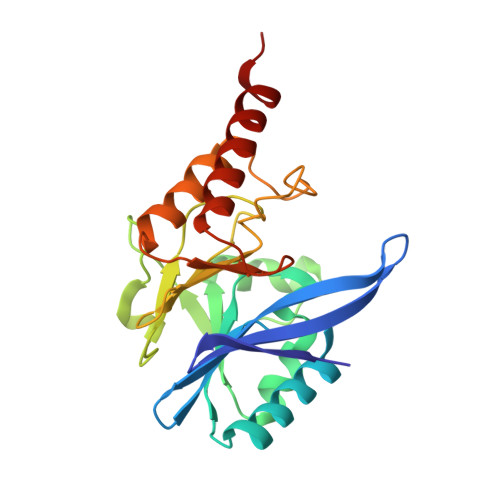
Prothrombin structureClick to view 3D structureProthrombinP00734HumansKnownOxalic acid binds to the prothrombin promoter, inhibiting the formation of thromboxane B2 from arachidonic acid. (A218)(A219)
Succinate dehydrogenase [ubiquinone] cytochrome b small subunit, mitochondrial structureClick to view 3D structureSuccinate dehydrogenase [ubiquinone] cytochrome b small subunit, mitochondrialO14521HumansKnownOxalic acid is a competitive inhibitor of succinate dehydrogenase. (A220)
Succinate dehydrogenase [ubiquinone] flavoprotein subunit, mitochondrial structureClick to view 3D structureSuccinate dehydrogenase [ubiquinone] flavoprotein subunit, mitochondrialP31040HumansKnownOxalic acid is a competitive inhibitor of succinate dehydrogenase. (A220)
Succinate dehydrogenase [ubiquinone] iron-sulfur subunit, mitochondrial structureClick to view 3D structureSuccinate dehydrogenase [ubiquinone] iron-sulfur subunit, mitochondrialP21912HumansKnownOxalic acid is a competitive inhibitor of succinate dehydrogenase. (A220)
Succinate dehydrogenase cytochrome b560 subunit, mitochondrial structureClick to view 3D structureSuccinate dehydrogenase cytochrome b560 subunit, mitochondrialQ99643HumansKnownOxalic acid is a competitive inhibitor of succinate dehydrogenase. (A220)
Concentrations
Not Available
External Links
DrugBank IDDB03902
HMDB IDHMDB0002329
FooDB IDFDB031074
Phenol Explorer IDNot Available
KNApSAcK IDC00001198
BiGG ID34265
BioCyc IDOXALATE
METLIN ID113
PDB IDNot Available
Wikipedia LinkOxalic_acid
Chemspider ID946
ChEBI ID16995
PubChem Compound ID971
Kegg Compound IDC00209
YMDB IDNot Available
ECMDB IDECMDB02329
References
Synthesis Reference

Giuseppe Messina, Giovanni M. Sechi, Loreno Lorenzoni, Giovanni Chessa, “Method of preparation of oxalic acid esters and amides.” U.S. Patent US4981963, issued July, 1971.

MSDSLink
General References
  1. Amoroso A, Pirulli D, Florian F, Puzzer D, Boniotto M, Crovella S, Zezlina S, Spano A, Mazzola G, Savoldi S, Ferrettini C, Berutti S, Petrarulo M, Marangella M: AGXT gene mutations and their influence on clinical heterogeneity of type 1 primary hyperoxaluria. J Am Soc Nephrol. 2001 Oct;12(10):2072-9. [PubMed: 11562405]
  2. de O G Mendonca C, Martini LA, Baxmann AC, Nishiura JL, Cuppari L, Sigulem DM, Heilberg IP: Effects of an oxalate load on urinary oxalate excretion in calcium stone formers. J Ren Nutr. 2003 Jan;13(1):39-46. [PubMed: 12563622]
  3. Singh S, Tai C, Ganz G, Yeung CK, Magil A, Rosenberg F, Applegarth D, Levin A: Steroid-responsive pleuropericarditis and livedo reticularis in an unusual case of adult-onset primary hyperoxaluria. Am J Kidney Dis. 1999 Apr;33(4):e5. [PubMed: 10196036]
  4. Astarcioglu I, Karademir S, Gulay H, Bora S, Astarcioglu H, Kavukcu S, Turkmen M, Soylu A: Primary hyperoxaluria: simultaneous combined liver and kidney transplantation from a living related donor. Liver Transpl. 2003 Apr;9(4):433-6. [PubMed: 12682898]
  5. Selvam R, Kalaiselvi P: A novel basic protein from human kidney which inhibits calcium oxalate crystal growth. BJU Int. 2000 Jul;86(1):7-13. [PubMed: 10886075]
  6. Kwak C, Jeong BC, Kim HK, Kim EC, Chox MS, Kim HH: Molecular epidemiology of fecal Oxalobacter formigenes in healthy adults living in Seoul, Korea. J Endourol. 2003 May;17(4):239-43. [PubMed: 12816588]
  7. Vicanova J, Boelsma E, Mommaas AM, Kempenaar JA, Forslind B, Pallon J, Egelrud T, Koerten HK, Ponec M: Normalization of epidermal calcium distribution profile in reconstructed human epidermis is related to improvement of terminal differentiation and stratum corneum barrier formation. J Invest Dermatol. 1998 Jul;111(1):97-106. [PubMed: 9665394]
  8. Mydlik M, Derzsiova K, Pribylincova V, Reznicek J: [Urinary oxalic acid excretion in chronic kidney failure and after kidney transplantation]. Vnitr Lek. 1996 Dec;42(12):813-7. [PubMed: 9072879]
  9. Mizusawa Y, Parnham AP, Falk MC, Burke JR, Nicol D, Yamanaka J, Lynch SV, Strong RW: Potential for bilateral nephrectomy to reduce oxalate release after combined liver and kidney transplantation for primary hyperoxaluria type 1. Clin Transplant. 1997 Oct;11(5 Pt 1):361-5. [PubMed: 9361924]
  10. Pecorella I, McCartney AC, Lucas S, Michaels L, Ciardi A, Di Tondo U, Garner A: Histological study of oxalosis in the eye and adnexa of AIDS patients. Histopathology. 1995 Nov;27(5):431-8. [PubMed: 8575733]
  11. Huang MY, Chaturvedi LS, Koul S, Koul HK: Oxalate stimulates IL-6 production in HK-2 cells, a line of human renal proximal tubular epithelial cells. Kidney Int. 2005 Aug;68(2):497-503. [PubMed: 16014026]
  12. Shapiro R, Weismann I, Mandel H, Eisenstein B, Ben-Ari Z, Bar-Nathan N, Zehavi I, Dinari G, Mor E: Primary hyperoxaluria type 1: improved outcome with timely liver transplantation: a single-center report of 36 children. Transplantation. 2001 Aug 15;72(3):428-32. [PubMed: 11502971]
  13. Motoyoshil Y, Hattori M, Chikamoto H, Nakakura H, Furue T, Miyakawa S, Kohno M, Ito K, Kai K, Nakajima I, Fuchinoue S, Teraoka S, Akiba T, Kitayama H, Wada N, Ogawa Y: [Sequential combined liver-kidney transplantation for a one-year-old boy with infantile primary hyperoxaluria type 1]. Nihon Jinzo Gakkai Shi. 2006;48(1):22-8. [PubMed: 16480063]
  14. de Water R, Noordermeer C, van der Kwast TH, Nizze H, Boeve ER, Kok DJ, Schroder FH: Calcium oxalate nephrolithiasis: effect of renal crystal deposition on the cellular composition of the renal interstitium. Am J Kidney Dis. 1999 Apr;33(4):761-71. [PubMed: 10196021]
  15. van Woerden CS, Groothof JW, Wanders RJ, Waterham HR, Wijburg FR: [From gene to disease; primary hyperoxaluria type I caused by mutations in the AGXT gene]. Ned Tijdschr Geneeskd. 2006 Jul 29;150(30):1669-72. [PubMed: 16922352]
  16. Pirulli D, Marangella M, Amoroso A: Primary hyperoxaluria: genotype-phenotype correlation. J Nephrol. 2003 Mar-Apr;16(2):297-309. [PubMed: 12768081]
  17. Robertson WG: Renal stones in the tropics. Semin Nephrol. 2003 Jan;23(1):77-87. [PubMed: 12563603]
  18. Nakagawa Y, Abram V, Parks JH, Lau HS, Kawooya JK, Coe FL: Urine glycoprotein crystal growth inhibitors. Evidence for a molecular abnormality in calcium oxalate nephrolithiasis. J Clin Invest. 1985 Oct;76(4):1455-62. [PubMed: 4056037]
  19. Massey LK, Palmer RG, Horner HT: Oxalate content of soybean seeds (Glycine max: Leguminosae), soyfoods, and other edible legumes. J Agric Food Chem. 2001 Sep;49(9):4262-6. [PubMed: 11559120]
  20. Petrarulo M, Vitale C, Facchini P, Marangella M: Biochemical approach to diagnosis and differentiation of primary hyperoxalurias: an update. J Nephrol. 1998 Mar-Apr;11 Suppl 1:23-8. [PubMed: 9604805]
  21. International Agency for Research on Cancer (2014). IARC Monographs on the Evaluation of Carcinogenic Risks to Humans. - http://monographs.iarc.fr/index.php
  22. New Zealand Food Safety Authority (2009). Natural Toxins In Food. - http://www.nzfsa.govt.nz/consumers/chemicals-nutrients-additives-and-toxins/natural-toxins/index.htm
  23. Wikipedia. Oxalic Acid. Last Updated 20 April 2009. - http://en.wikipedia.org/wiki/Oxalic_acid