Antimony trichloride (CED0010540)

Record Information
Version1.0
Creation Date2009-06-16 18:48:55 UTC
Update Date2026-08-17 20:48:02 UTC
SynCED IDCED0010540
Secondary Accession Numbers
  • CHEM000751
  • T3D0874
Identification
Common NameAntimony trichloride
ClassSmall Molecule
Description
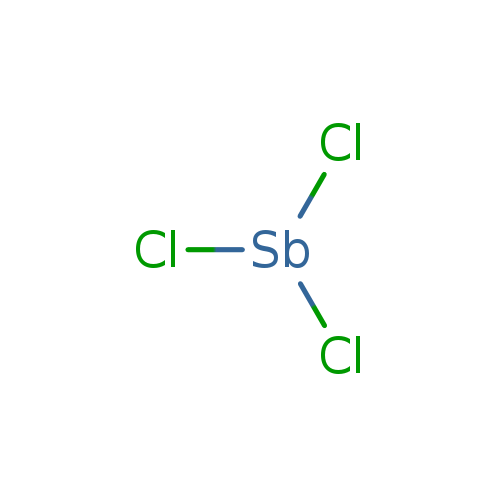
Antimony trichloride is an exogenous inorganic compound with the chemical formula Cl3Sb and an average molecular weight of 228.12 g/mol. It exists as a solid at room temperature. Antimony trichloride belongs to the metalloid chlorides, a subclass of metalloid salts within the inorganic compounds. In chemical and applied contexts, it serves as a Lewis acid and a colorimetric reagent, while biologically it acts as an apoptosis inducer. The compound is released from 18 recorded sources. These include electrical and electronic equipment such as amplifiers, antennas, auxiliary devices, coils, and communication cables or conductors, among eight others. It is also found in building and construction materials like roofs, tents, or canopies, as well as in household cleaning and consumer products including non-electric simulated smoking devices and other smoking requisites. Additionally, it is associated with food, food processing, and cookware, specifically within fermentation processes for beer. Antimony trichloride has 19 recorded protein targets, including glutathione S-transferase A1 (GSTA1), glutathione S-transferase A2 (GSTA2), glutathione S-transferase A3 (GSTA3), and glutathione S-transferase Mu 4 (GSTM4). Trivalent antimony inhibits glutathione-S-transferases from human erythrocytes, which reduces their detoxification ability.
Contaminant Type
  • Antimony Compound
  • Food Toxin
  • Inorganic Compound
  • Pollutant
  • Synthetic Compound
Chemical Structure
Synonyms
ValueSource
AntimontrichloridChEBI
Antimony chlorideChEBI
Antimony(III) chlorideChEBI
Antimony(III) trichlorideChEBI
Chlorure antimonieuxChEBI
SB2CL6ChEBI
SBCL3ChEBI
TrichlorostibineChEBI
Trichlorure d'antimoineChEBI
Chemical FormulaCl3Sb
Average Molecular Mass228.120 g/mol
Monoisotopic Mass225.810 g/mol
CAS Registry Number10025-91-9
IUPAC Nametrichlorostibane
Traditional Nameantimony trichloride
SMILESCl[Sb](Cl)Cl
InChI IdentifierInChI=1S/3ClH.Sb/h3*1H;/q;;;+3/p-3
InChI KeyFAPDDOBMIUGHIN-UHFFFAOYSA-K
Chemical Taxonomy
Description Belongs to the class of inorganic compounds known as metalloid chlorides. These are inorganic compounds in which the largest halogen atom is Chlorine, and the heaviest metal atom is a metalloid.
KingdomInorganic compounds
Super ClassMixed metal/non-metal compounds
ClassMetalloid salts
Sub ClassMetalloid chlorides
Direct ParentMetalloid chlorides
Alternative Parents
Substituents
  • Metalloid chloride
  • Inorganic antimony salt
  • Inorganic chloride salt
  • Inorganic salt
Molecular FrameworkNot Available
External Descriptors
Biological Properties
StatusDetected and Not Quantified
OriginExogenous
Cellular Locations
  • Cytoplasm
  • Extracellular
Biofluid LocationsNot Available
Tissue LocationsNot Available
Applications
Biological Roles
Chemical Roles
Organoleptic EffectsNot Available
Physical Properties
StateSolid
AppearanceWhite powder.
Experimental Properties
PropertyValue
Melting Point73°C
Boiling PointNot Available
SolubilityNot Available
Predicted Properties
PropertyValueSource
logP1.91ChemAxon
Physiological Charge0ChemAxon
Hydrogen Acceptor Count0ChemAxon
Hydrogen Donor Count0ChemAxon
Polar Surface Area0 ŲChemAxon
Rotatable Bond Count0ChemAxon
Refractivity18.41 m³·mol⁻¹ChemAxon
Polarizability9.7 ųChemAxon
Number of Rings0ChemAxon
BioavailabilityYesChemAxon
Rule of FiveYesChemAxon
Ghose FilterNoChemAxon
Veber's RuleYesChemAxon
MDDR-like RuleNoChemAxon
Spectra
Spectra
Spectrum TypeDescriptionSplash KeyDeposition DateView
Predicted LC-MS/MSPredicted LC-MS/MS Spectrumsplash10-001i-0090000000-415dd9b9b72c31bc9dfeNot AvailableView Spectrum
Predicted LC-MS/MSPredicted LC-MS/MS Spectrumsplash10-001i-0090000000-3f6f7d16f8f123b01f56Not AvailableView Spectrum
Toxicity Profile
Toxicity Values
Toxicity ValueOrganismDose DescriptorRoute of ExposurePredicted or ExperimentalToxicity RatingReference
525.0 mg/kg RatLD50OralexperimentalNot Available5
74.0 mg/kg Guinea pigLD50OralexperimentalNot Available5
Toxicity / Toxin ClassNot Available
Mechanism of ToxicityThe inhalation data suggest that the myocardium is a target of antimony toxicity. It is possible that antimony affects circulating glucose by interfering with enzymes of the glycogenolysis and gluconeogenesis pathways. The mechanism of action of antimony remains unclear. However, some studies suggest that antimony combines with sulfhydryl groups including those in several enzymes important for tissue respiration. The antidotal action of BAL depends on its ability to prevent or break the union between antimony and vital enzymes. Moreover, the The cause of death is believed to be essentially the same as that in acute arsenic poisoning. (6, 3, 1)
Carcinogenicity (IARC Classification)No indication of carcinogenicity (not listed by IARC). (2)
Minimum Risk LevelNot Available
SymptomsAbdominal pain, vomiting, diarrhea can result from inhalation of antimony. Dyspnea, headache, vomiting,cough, conjunctivitis, and bloody purulent discharge from nose can result from inhalation exposure. Skin or eye contact can cause pain and redness of the exposed surface. (8, 3)
TreatmentFollowing oral exposure to antimony, administer charcoal as a slurry (240 mL water/30 g charcoal). Following inhalation exposure, move patient to fresh air. Monitor for respiratory distress. If cough or difficulty breathing develops, evaluate for respiratory tract irritation, bronchitis, or pneumonitis. Administer oxygen and assist ventilation as required. Treat bronchospasm with inhaled beta2 agonist and oral or parenteral corticosteroids. In case of eye exposure, irrigate exposed eyes with copious amounts of room temperature water for at least 15 minutes. Following dermal exposure, remove contaminated clothing and wash exposed area thoroughly with soap and water. A physician may need to examine the area if irritation or pain persists. (7)
Health Effects
Health EffectRelationshipDirectionReference
Exposure Sources
Source IDSourceSectorReference
CEDs000181Ballast water?Ballast water, taken on by ships to maintain stability and balance, often contains a diverse array of microorganisms, including bacteria, viruses, and plankton.Marine, shipping & aquacultureNot Available
CEDs000182Bilge water?Bilge water is a byproduct generated from the accumulation of water in the lowest part of a ship's hull, which may include a mixture of seawater, oil, fuel residues, and various contaminants.Marine, shipping & aquacultureNot Available
CEDs000499Roofs?Roofs can be a significant source of synthetic chemical contamination due to the materials used in their construction and maintenance.Building & ConstructionNot Available
CEDs000503Tents Or Canopies?Tents and canopies used in various applications can be a source of synthetic chemical contamination primarily due to the materials from which they are made.Building & ConstructionNot Available
CEDs000505Amplifiers?Amplifiers, commonly used in various electronic devices to enhance signal strength, can be a source of synthetic chemical contamination due to the materials and processes involved in their production and disposal.Electrical & Electronic EquipmentNot Available
CEDs000506Antennas?Antennas, commonly used in communication technologies, can be a source of synthetic chemical contamination through the materials and coatings used in their construction.Electrical & Electronic EquipmentNot Available
CEDs000507Auxiliary Devices?Auxiliary devices, such as capacitors, transformers, and circuit breakers, are integral components in various electronic systems.Electrical & Electronic EquipmentNot Available
CEDs000508Coils?Coils are components used in various electrical and electronic applications, such as transformers, inductors, and motors.Electrical & Electronic EquipmentNot Available
CEDs000510Communication Cables Or Conductors?Communication cables or conductors are essential components in the transmission of data and signals in various applications, including telecommunications and networking.Electrical & Electronic EquipmentNot Available
CEDs000511Conductors Or Conductive Bodies Characterised By The Conductive Materials?Conductors, or conductive bodies, are materials that allow the flow of electrical current, typically made from metals such as copper, aluminum, or silver.Electrical & Electronic EquipmentNot Available
CEDs000513Cores Yokes Or Armatures?Cores, yokes, or armatures are components commonly found in electrical devices, used to facilitate the magnetic and electrical functions within motors, transformers, and generators.Electrical & Electronic EquipmentNot Available
CEDs000514Discharge Lamps?Discharge lamps, including fluorescent and high-intensity discharge (HID) lamps, are commonly used for lighting applications due to their energy efficiency and brightness.Electrical & Electronic EquipmentNot Available
CEDs000517Electric Switches?Electric switches, integral components in numerous devices, can be a source of synthetic chemical contamination due to the materials and manufacturing processes involved in their production.Electrical & Electronic EquipmentNot Available
CEDs000518Electrically Stimulated Smoking Devices?Electrically stimulated smoking devices, commonly known as e-cigarettes or vape pens, utilize electrical components to heat a liquid solution, often containing nicotine, flavorings, and other additives, to produce an aerosol for inhalation.Electrical & Electronic EquipmentNot Available
CEDs000519Electrodes?Electrodes, used in various electrical and electronic applications, can be a source of synthetic chemical contamination due to the materials from which they are constructed and the processes involved in their manufacturing.Electrical & Electronic EquipmentNot Available
CEDs000520Emergency Protective Devices?Emergency protective devices, such as circuit breakers and surge protectors, are essential components in electrical systems designed to prevent damage from overcurrent and surges.Electrical & Electronic EquipmentNot Available
CEDs000521Fixed Capacitors And Their Manufacture?Fixed capacitors are passive electronic components used to store and release electrical energy, playing a critical role in various circuits.Electrical & Electronic EquipmentNot Available
CEDs000523Gas Filled Discharge Tubes With Solid Cathode?Gas Filled Discharge Tubes with Solid Cathodes are electrical components that facilitate the flow of current by ionizing gas within a sealed tube.Electrical & Electronic EquipmentNot Available
CEDs000524Hybrid Capacitors?Hybrid capacitors are energy storage devices that combine the properties of electrolytic and supercapacitors, utilizing a combination of electrochemical principles to achieve higher energy density and power density.Electrical & Electronic EquipmentNot Available
CEDs000529Power Cables?Power cables are used to transmit electrical energy and are typically composed of conductive materials, insulation, and protective coatings.Electrical & Electronic EquipmentNot Available
CEDs000544Fermentation Processes For Beer?Fermentation processes for beer involve the conversion of sugars into alcohol and carbon dioxide by yeast.Food, food processing & cookwareNot Available
CEDs000545Food Preservation?Food preservation often involves the use of synthetic chemicals, such as preservatives, flavor enhancers, and color additives, to extend shelf life and enhance the sensory qualities of food products.Food, food processing & cookwareNot Available
CEDs000559Non Electric Simulated Smoking Devices?Non-electric simulated smoking devices, often designed to mimic the experience of smoking without combustion, can be sources of synthetic chemical contamination due to the materials and chemicals used in their construction and operation.Household cleaning & consumer productsNot Available
CEDs000560Other Smoking Requisites?Other smoking requisites, including items such as lighters, matches, and rolling papers, can introduce synthetic chemical contamination through various components and additives.Household cleaning & consumer productsNot Available
CEDs000561Perfumes Within Detergents And Soaps?Perfumes within detergents and soaps are synthetic fragrance compounds added to enhance the sensory experience of cleaning products.Household cleaning & consumer productsNot Available
CEDs000563Soap Detergents?Soap detergents are synthetic surfactants designed to enhance the cleaning efficacy of water by reducing surface tension, allowing for better interaction with dirt and grease.Household cleaning & consumer productsNot Available
CEDs000579Manufacture Of Iron Or Steel?The manufacture of iron or steel involves various processes, including smelting, refining, and alloying, which can result in the release of synthetic chemicals and contaminants.Industrial manufacturing & chemical processingNot Available
CEDs000581Paper Making Machines?Paper making machines utilize various synthetic chemicals throughout the production process, including additives, coatings, and bleaching agents.Industrial manufacturing & chemical processingNot Available
CEDs000600Herbicides And Algicides?Herbicides and algicides are synthetic chemicals primarily used to control unwanted plants and algae in various environments.Agriculture & land managementNot Available
CEDs000603Nematocides?Nematocides are synthetic chemicals specifically designed to control nematodes, which are microscopic roundworms that can cause significant damage to crops and plants.Agriculture & land managementNot Available
CEDs000606Plant Growth Regulators?Plant Growth Regulators (PGRs) are synthetic chemicals designed to influence the growth and development of plants.Agriculture & land managementNot Available
CEDs000611Anti Perspirants Or Body Deoderants?Antiperspirants and body deodorants commonly contain synthetic chemicals such as aluminum compounds, parabens, and synthetic fragrances.Personal care & cosmeticsNot Available
CEDs000614Essential Oils Or Perfumes?Essential oils and perfumes are complex mixtures of volatile compounds derived from natural or synthetic sources, commonly used for their aromatic properties.Personal care & cosmeticsNot Available
CEDs000615Eye Makeup Products?Eye makeup products, including mascaras, eyeliners, and eyeshadows, often contain a variety of synthetic chemicals such as pigments, preservatives, and film-forming agents.Personal care & cosmeticsNot Available
CEDs000617Lip Care Products?Lip care products, including lipsticks, balms, and glosses, often contain a variety of synthetic chemicals such as parabens, phthalates, and synthetic fragrances.Personal care & cosmeticsNot Available
CEDs000618Lip Makeup Products?Lip makeup products, such as lipsticks, lip glosses, and lip liners, often contain a variety of synthetic chemicals, including pigments, preservatives, and emollients.Personal care & cosmeticsNot Available
CEDs000619Manicure Pedicure?Manicure and pedicure procedures often involve the use of various synthetic chemicals, including solvents, nail polishes, and nail adhesives.Personal care & cosmeticsNot Available
CEDs000632Apparel?Apparel production often involves the use of various synthetic chemicals, including dyes, finishing agents, and preservatives.Textiles, leather & furnishingsNot Available
CEDs000642Footwear?Footwear production often involves the use of various synthetic chemicals, such as adhesives, dyes, and treatments, which can contribute to environmental contamination.Textiles, leather & furnishingsNot Available
CEDs000643Headwear?Headwear made from synthetic materials often incorporates chemicals used in the manufacturing and finishing processes, such as dyes, flame retardants, and water repellents.Textiles, leather & furnishingsNot Available
CEDs000650Purses Luggage Hand Bags?Purses, luggage, and handbags are often manufactured using synthetic materials such as polyvinyl chloride (PVC), polyurethane, and various types of nylon.Textiles, leather & furnishingsNot Available
CEDs000652Ropes?Ropes manufactured from synthetic fibers, such as polypropylene, nylon, and polyester, are widely used in various applications, including marine, construction, and outdoor activities.Textiles, leather & furnishingsNot Available
CEDs000662Yarns Or Threads?Yarns or threads used in textiles can be a source of synthetic chemical contamination due to the production processes and treatments they undergo.Textiles, leather & furnishingsNot Available
CEDs000664Fire Fighting Gels?Fire fighting gels are synthetic chemical formulations designed to enhance fire suppression effectiveness by creating a protective barrier against heat and flames.Fire suppression systems & agentsNot Available
CEDs000667Gaseous Fire Fighting?Gaseous fire fighting systems utilize synthetic chemicals, such as halocarbons and inert gases, to suppress fires through chemical and physical processes.Fire suppression systems & agentsNot Available
CEDs000670Solid Fire Fighting Substances?Solid fire fighting substances, such as certain types of dry chemical powders, are used in fire suppression applications to extinguish flames and prevent fire spread.Fire suppression systems & agentsNot Available
CEDs000678Nitrogenous Fertilisers?Nitrogenous fertilizers are synthetic chemical compounds primarily used to enhance plant growth by supplying essential nitrogen, a crucial nutrient for photosynthesis and protein synthesis.Agriculture & land managementNot Available
CEDs000679Phosphatic Fertilisers?Phosphatic fertilizers are synthetic chemical products primarily composed of phosphorus, which is essential for plant growth.Agriculture & land managementNot Available
CEDs000684Cements?Cements are a composite material primarily used as a binding agent in construction applications, formed by the calcination of limestone and clay minerals at high temperatures.Building & ConstructionNot Available
CEDs000685Ceramics?Ceramics can be a source of synthetic chemical contamination through various additives and processing agents used in their production.Building & ConstructionNot Available
CEDs000686Clay Wares?Clay wares are ceramic products made from natural clay, often utilized in various construction applications such as tiles, bricks, and sanitary ware.Building & ConstructionNot Available
CEDs000688Glass Coatings?Glass coatings are synthetic chemical formulations applied to glass surfaces to enhance properties such as durability, UV resistance, and aesthetic appeal.Building & ConstructionNot Available
CEDs000691Non Oxide Glass?Non-oxide glass refers to a category of glasses primarily composed of materials other than silicon dioxide, such as boron oxide or phosphorous oxide.Building & ConstructionNot Available
CEDs000692Silica Free Oxide Glass?Silica Free Oxide Glass is a type of glass that is produced using alternative materials to traditional silica-based formulations.Building & ConstructionNot Available
CEDs000693Silica Glass?Silica glass, primarily composed of silicon dioxide (SiO2), is widely used in various applications, including windows, glass facades, and insulation materials.Building & ConstructionNot Available
CEDs000696Nanotechnology?Nanotechnology involves the manipulation of materials at the molecular or atomic level, typically within the range of 1 to 100 nanometers.Industrial manufacturing & chemical processingNot Available
CEDs000734Coating Compositions?Coating compositions, which include paints, sealants, and varnishes, are formulated with a variety of synthetic chemicals such as solvents, resins, pigments, and additives.Building & ConstructionNot Available
CEDs000735Explosives?Explosives are chemical compounds or mixtures designed to undergo rapid decomposition, releasing energy in the form of gas and heat.Defense & military infrastructureNot Available
CEDs000736Fuses?Fuses are safety devices designed to protect electrical circuits by breaking the circuit when excessive current flows through.Electrical & Electronic EquipmentNot Available
CEDs000738Cooling Circuit Water?Cooling circuit water is utilized in various industrial processes to absorb and dissipate heat generated during operations.Industrial manufacturing & chemical processingNot Available
CEDs000739Inks?Inks are complex mixtures composed of pigments or dyes, solvents, resins, and additives used primarily for printing and writing applications.Paper, pulp & fiber productsNot Available
CEDs000740Paper?Paper production involves the processing of wood fibers and the use of various chemicals, which can lead to synthetic chemical contamination.Paper, pulp & fiber productsNot Available
CEDs000741Pigment Pastes?Pigment pastes are concentrated dispersions of pigments used to impart color and properties to materials.Paper, pulp & fiber productsNot Available
CEDs000743Sludge Treatment?Sludge treatment involves the processing of waste materials generated from wastewater treatment plants, which often contain a variety of organic and inorganic substances.Wastewater, sanitation & biosolidsNot Available
CEDs000744Water, Wastewater, & Sewage Treatment?Water, wastewater, and sewage treatment processes are critical for managing and mitigating pollutants in water systems.Wastewater, sanitation & biosolidsNot Available
Pathways
0 pathwaysPathway Source: PathBank

No pathways found

No metabolic pathways have been associated with this synthetic chemical

Targets
StructureProteinUniProt IDOrganismRelationshipDetails
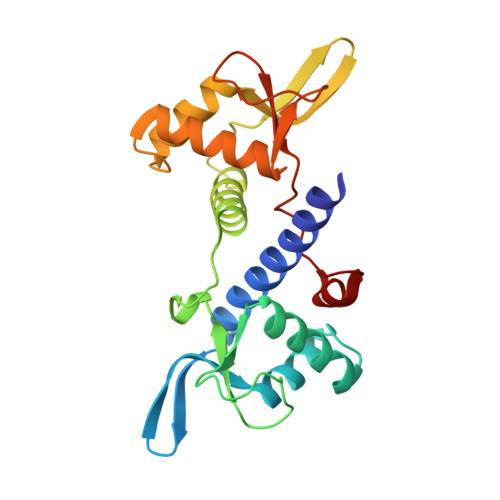
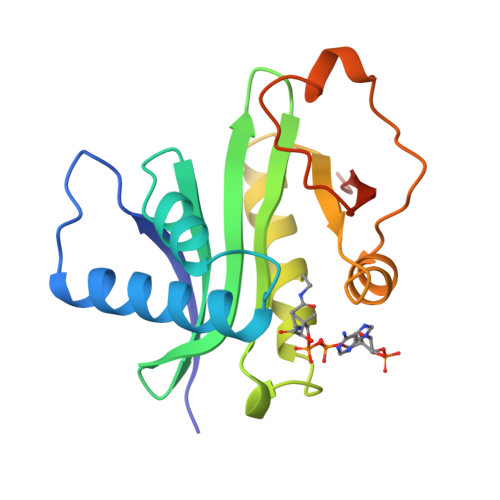
Click to view 3D structureType IV secretion-like conjugative transfer relaxase protein TraIB1LRJ1Escherichia coli (strain SMS-3-5 / SECEC)Predicted (SEA)
Prediction Confidence Score
0.067
Applicability Domain
0.067 Low confidence
Statistical Significance
0.0442
Supporting Reference Compounds
1
E-value
344.094
NADH dehydrogenase [ubiquinone] flavoprotein 1, mitochondrial structureClick to view 3D structureNADH dehydrogenase [ubiquinone] flavoprotein 1, mitochondrialP25708Bos taurusPredicted (SEA)
Prediction Confidence Score
0.067
Applicability Domain
0.067 Low confidence
Statistical Significance
0.958
Supporting Reference Compounds
1
E-value
7457.72
Acetylcholinesterase structureClick to view 3D structureAcetylcholinesteraseP22303HumansPredicted (SEA)
Prediction Confidence Score
0.055
Applicability Domain
0.083 Low confidence
Statistical Significance
1.0
Supporting Reference Compounds
406
E-value
7784.69
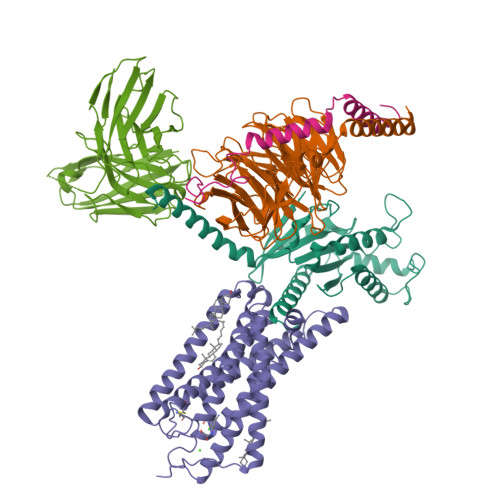
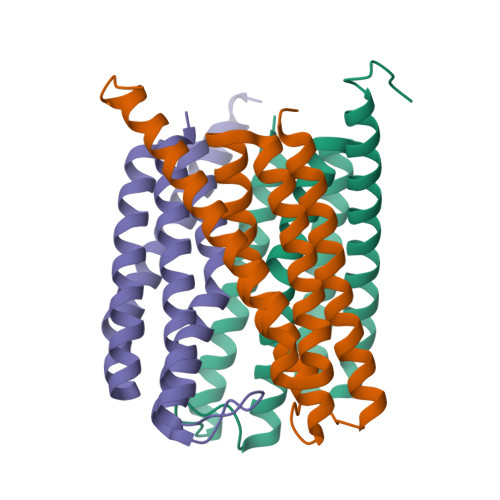
Sphingosine 1-phosphate receptor 4 structureClick to view 3D structureSphingosine 1-phosphate receptor 4O95977HumansPredicted (SEA)
Prediction Confidence Score
0.053
Applicability Domain
0.069 Low confidence
Statistical Significance
1.0
Supporting Reference Compounds
117
E-value
7784.61
2-C-methyl-D-erythritol 4-phosphate cytidylyltransferase, chloroplastic structureClick to view 3D structure2-C-methyl-D-erythritol 4-phosphate cytidylyltransferase, chloroplasticP69834Arabidopsis thalianaPredicted (SEA)
Prediction Confidence Score
0.053
Applicability Domain
0.053 Low confidence
Statistical Significance
0.9744
Supporting Reference Compounds
1
E-value
7585.47
Liver carboxylesterase 1 structureClick to view 3D structureLiver carboxylesterase 1P23141HumansPredicted (SEA)
Prediction Confidence Score
0.052
Applicability Domain
0.083 Low confidence
Statistical Significance
0.9999
Supporting Reference Compounds
55
E-value
7784.22
Cholinesterase structureClick to view 3D structureCholinesteraseP06276HumansPredicted (SEA)
Prediction Confidence Score
0.052
Applicability Domain
0.083 Low confidence
Statistical Significance
1.0
Supporting Reference Compounds
234
E-value
7784.61
DEP domain-containing mTOR-interacting protein structureClick to view 3D structureDEP domain-containing mTOR-interacting proteinQ8TB45HumansPredicted (SEA)
Prediction Confidence Score
0.051
Applicability Domain
0.063 Low confidence
Statistical Significance
0.5215
Supporting Reference Compounds
2
E-value
4059.91
Protein RecA structureClick to view 3D structureProtein RecAP9WHJ3Mycobacterium tuberculosisPredicted (SEA)
Prediction Confidence Score
0.051
Applicability Domain
0.061 Low confidence
Statistical Significance
1.0
Supporting Reference Compounds
296
E-value
7784.69
G-protein coupled receptor 35 structureClick to view 3D structureG-protein coupled receptor 35Q9HC97HumansPredicted (SEA)
Prediction Confidence Score
0.05
Applicability Domain
0.073 Low confidence
Statistical Significance
1.0
Supporting Reference Compounds
115
E-value
7784.69
Click to view 3D structureDNA damage-inducible transcript 3 proteinP35639Mus musculusPredicted (SEA)
Prediction Confidence Score
0.05
Applicability Domain
0.069 Low confidence
Statistical Significance
1.0
Supporting Reference Compounds
226
E-value
7784.61
X-box-binding protein 1 structureClick to view 3D structureX-box-binding protein 1P17861HumansPredicted (SEA)
Prediction Confidence Score
0.05
Applicability Domain
0.069 Low confidence
Statistical Significance
1.0
Supporting Reference Compounds
227
E-value
7784.61
Click to view 3D structureCytochrome P450 14alpha-demethylaseA1XG20Penicillium digitatumPredicted (SEA)
Prediction Confidence Score
0.05
Applicability Domain
0.05 Low confidence
Statistical Significance
0.9946
Supporting Reference Compounds
3
E-value
7742.57
Replicase polyprotein 1ab structureClick to view 3D structureReplicase polyprotein 1abP0DTD1SARS-CoV-2Predicted (SEA)
Prediction Confidence Score
0.049
Applicability Domain
0.083 Low confidence
Statistical Significance
1.0
Supporting Reference Compounds
215
E-value
7784.69
Click to view 3D structureAcetylcholinesteraseQ9DDE3Danio rerioPredicted (SEA)
Prediction Confidence Score
0.049
Applicability Domain
0.049 Low confidence
Statistical Significance
0.9769
Supporting Reference Compounds
1
E-value
7605.01
D(4) dopamine receptor structureClick to view 3D structureD(4) dopamine receptorP21917HumansPredicted (SEA)
Prediction Confidence Score
0.048
Applicability Domain
0.049 Low confidence
Statistical Significance
1.0
Supporting Reference Compounds
524
E-value
7784.61
Click to view 3D structureHeat shock factor protein 1P38532Mus musculusPredicted (SEA)
Prediction Confidence Score
0.048
Applicability Domain
0.069 Low confidence
Statistical Significance
1.0
Supporting Reference Compounds
166
E-value
7784.61
5-hydroxytryptamine receptor 2A structureClick to view 3D structure5-hydroxytryptamine receptor 2AP14842Rattus norvegicusPredicted (SEA)
Prediction Confidence Score
0.047
Applicability Domain
0.049 Low confidence
Statistical Significance
1.0
Supporting Reference Compounds
380
E-value
7784.61
D(3) dopamine receptor structureClick to view 3D structureD(3) dopamine receptorP35462HumansPredicted (SEA)
Prediction Confidence Score
0.047
Applicability Domain
0.049 Low confidence
Statistical Significance
1.0
Supporting Reference Compounds
861
E-value
7784.69
Click to view 3D structureATP-dependent molecular chaperone HSP82C4YTQ8Candida albicans (strain WO-1) (Yeast)Predicted (SEA)
Prediction Confidence Score
0.047
Applicability Domain
0.073 Low confidence
Statistical Significance
1.0
Supporting Reference Compounds
205
E-value
7784.69
Click to view 3D structureD(2) dopamine receptorP61169RatPredicted (SEA)
Prediction Confidence Score
0.047
Applicability Domain
0.049 Low confidence
Statistical Significance
1.0
Supporting Reference Compounds
528
E-value
7784.61
Click to view 3D structure5-hydroxytryptamine receptor 1AP19327Rattus norvegicusPredicted (SEA)
Prediction Confidence Score
0.046
Applicability Domain
0.049 Low confidence
Statistical Significance
1.0
Supporting Reference Compounds
541
E-value
7784.69
Histone acetyltransferase KAT2B structureClick to view 3D structureHistone acetyltransferase KAT2BQ92831HumansPredicted (SEA)
Prediction Confidence Score
0.045
Applicability Domain
0.05 Low confidence
Statistical Significance
0.9999
Supporting Reference Compounds
43
E-value
7784.3
Click to view 3D structureCoenzyme A biosynthesis bifunctional protein CoaBCP9WNZ1Mycobacterium tuberculosis (strain ATCC 25618 / H37Rv)Predicted (SEA)
Prediction Confidence Score
0.044
Applicability Domain
0.044 Low confidence
Statistical Significance
0.9881
Supporting Reference Compounds
1
E-value
7692.28
Tyrosine-protein kinase Lck structureClick to view 3D structureTyrosine-protein kinase LckP06239HumansPredicted (SEA)
Prediction Confidence Score
0.044
Applicability Domain
0.051 Low confidence
Statistical Significance
1.0
Supporting Reference Compounds
1130
E-value
7784.69
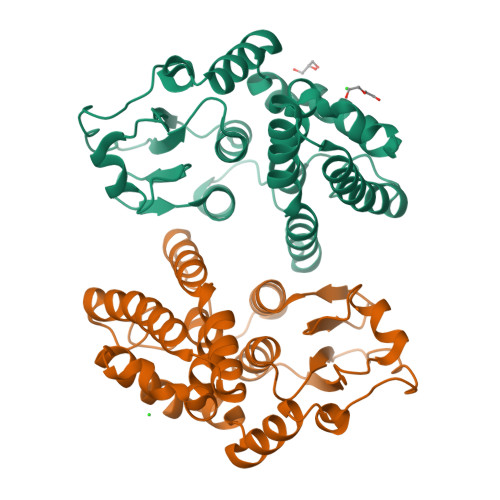
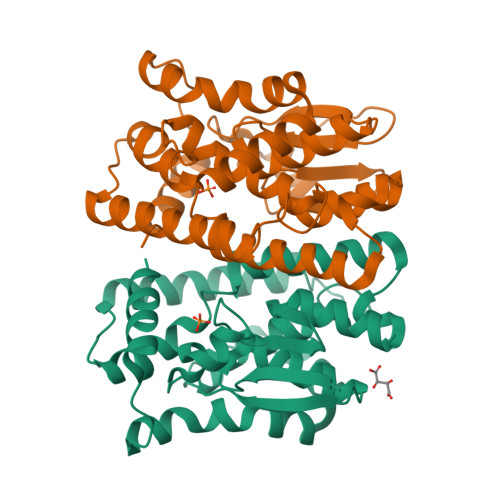
Glutathione S-transferase A1 structureClick to view 3D structureGlutathione S-transferase A1P08263HumansKnownTrivalent antimony inhibits glutathione-S-transferases from human erythrocytes, reducing their detoxification ability. (L137)
Glutathione S-transferase A2 structureClick to view 3D structureGlutathione S-transferase A2P09210HumansKnownTrivalent antimony inhibits glutathione-S-transferases from human erythrocytes, reducing their detoxification ability. (L137)
Glutathione S-transferase A3 structureClick to view 3D structureGlutathione S-transferase A3Q16772HumansKnownTrivalent antimony inhibits glutathione-S-transferases from human erythrocytes, reducing their detoxification ability. (L137)
Click to view 3D structureGlutathione S-transferase A5Q7RTV2HumansKnownTrivalent antimony inhibits glutathione-S-transferases from human erythrocytes, reducing their detoxification ability. (L137)
Glutathione S-transferase Mu 1 structureClick to view 3D structureGlutathione S-transferase Mu 1P09488HumansKnownTrivalent antimony inhibits glutathione-S-transferases from human erythrocytes, reducing their detoxification ability. (L137)
Glutathione S-transferase Mu 2 structureClick to view 3D structureGlutathione S-transferase Mu 2P28161HumansKnownTrivalent antimony inhibits glutathione-S-transferases from human erythrocytes, reducing their detoxification ability. (L137)
Glutathione S-transferase Mu 3 structureClick to view 3D structureGlutathione S-transferase Mu 3P21266HumansKnownTrivalent antimony inhibits glutathione-S-transferases from human erythrocytes, reducing their detoxification ability. (L137)
Glutathione S-transferase Mu 4 structureClick to view 3D structureGlutathione S-transferase Mu 4Q03013HumansKnownTrivalent antimony inhibits glutathione-S-transferases from human erythrocytes, reducing their detoxification ability. (L137)
Click to view 3D structureGlutathione S-transferase Mu 5P46439HumansKnownTrivalent antimony inhibits glutathione-S-transferases from human erythrocytes, reducing their detoxification ability. (L137)
Glutathione S-transferase P structureClick to view 3D structureGlutathione S-transferase PP09211HumansKnownTrivalent antimony inhibits glutathione-S-transferases from human erythrocytes, reducing their detoxification ability. (L137)
Glutathione S-transferase kappa 1 structureClick to view 3D structureGlutathione S-transferase kappa 1Q9Y2Q3HumansKnownTrivalent antimony inhibits glutathione-S-transferases from human erythrocytes, reducing their detoxification ability. (L137)
Glutathione S-transferase omega-1 structureClick to view 3D structureGlutathione S-transferase omega-1P78417HumansKnownTrivalent antimony inhibits glutathione-S-transferases from human erythrocytes, reducing their detoxification ability. (L137)
Glutathione S-transferase omega-2 structureClick to view 3D structureGlutathione S-transferase omega-2Q9H4Y5HumansKnownTrivalent antimony inhibits glutathione-S-transferases from human erythrocytes, reducing their detoxification ability. (L137)
Glutathione S-transferase theta-1 structureClick to view 3D structureGlutathione S-transferase theta-1P30711HumansKnownTrivalent antimony inhibits glutathione-S-transferases from human erythrocytes, reducing their detoxification ability. (L137)
Glutathione S-transferase theta-2 structureClick to view 3D structureGlutathione S-transferase theta-2P0CG29HumansKnownTrivalent antimony inhibits glutathione-S-transferases from human erythrocytes, reducing their detoxification ability. (L137)
Maleylacetoacetate isomerase structureClick to view 3D structureMaleylacetoacetate isomeraseO43708HumansKnownTrivalent antimony inhibits glutathione-S-transferases from human erythrocytes, reducing their detoxification ability. (L137)
Click to view 3D structureMicrosomal glutathione S-transferase 1P10620HumansKnownTrivalent antimony inhibits glutathione-S-transferases from human erythrocytes, reducing their detoxification ability. (L137)
Microsomal glutathione S-transferase 2 structureClick to view 3D structureMicrosomal glutathione S-transferase 2Q99735HumansKnownTrivalent antimony inhibits glutathione-S-transferases from human erythrocytes, reducing their detoxification ability. (L137)
Click to view 3D structureGlutathione S-transferase 3, mitochondrialO14880HumansKnownTrivalent antimony inhibits glutathione-S-transferases from human erythrocytes, reducing their detoxification ability. (L137)
Concentrations
Not Available
External Links
DrugBank IDNot Available
HMDB IDNot Available
FooDB IDNot Available
Phenol Explorer IDNot Available
KNApSAcK IDNot Available
BiGG IDNot Available
BioCyc IDNot Available
METLIN IDNot Available
PDB IDNot Available
Wikipedia LinkAntimony trichloride
Chemspider IDNot Available
ChEBI ID74856
PubChem Compound ID24814
Kegg Compound IDC15235
YMDB IDNot Available
ECMDB IDNot Available
References
Synthesis ReferenceNot Available
MSDSNot Available
General References
  1. Poon R, Chu I, Lecavalier P, Valli VE, Foster W, Gupta S, Thomas B: Effects of antimony on rats following 90-day exposure via drinking water. Food Chem Toxicol. 1998 Jan;36(1):21-35. [PubMed: 9487361]
  2. International Agency for Research on Cancer (2014). IARC Monographs on the Evaluation of Carcinogenic Risks to Humans. - http://monographs.iarc.fr/index.php
  3. ATSDR - Agency for Toxic Substances and Disease Registry (1992). Toxicological profile for antimony. U.S. Public Health Service in collaboration with U.S. Environmental Protection Agency (EPA). - http://www.atsdr.cdc.gov/toxprofiles/tp23.html
  4. Wikipedia. Antimony trichloride. Last Updated 16 June 2009. - http://en.wikipedia.org/wiki/Antimony_trichloride
  5. The Physical and Theoretical Chemistry Laboratory of Oxford University (2005). Material Safety Data Sheet (MSDS) for antimony Tichloride. - http://msds.chem.ox.ac.uk/AN/antimony_III_chloride.html
  6. Hayes WJ Jr. and Laws ER Jr. (eds) (1991). Handbook of Pesticide Toxicology. Volume 3. Classes of Pesticides. New York, NY: Academic Press, Inc.
  7. Rumack BH (2009). POISINDEX(R) Information System. Englewood, CO: Micromedex, Inc. CCIS Volume 141, edition expires Aug, 2009.
  8. Hamilton A and Hardy HL (1974). Industrial Toxicology. 3rd ed. Acton, MA: Publishing Sciences Group, Inc.