Some data may have been extracted from scientific literature using a pipeline that uses large language models (LLMs). Source articles are cited where applicable to help verify the extracted relationships.
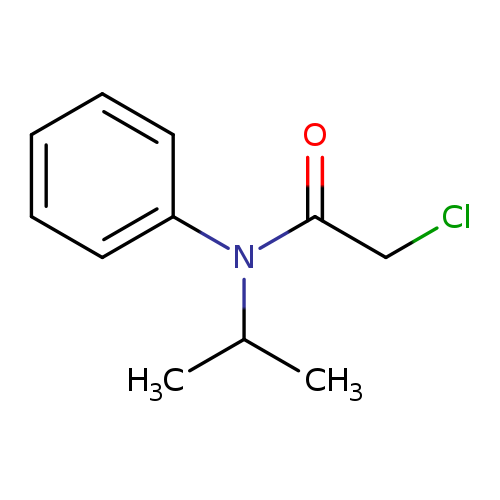
Propachlor is an exogenous organic compound with the formula C11H14ClNO and an average molecular weight of 211.69 g/mol. It exists as a solid at room temperature. Propachlor belongs to the anilides, a subclass of benzene and substituted derivatives within the organic compounds. It is utilized as a herbicide and biocide, and it is also identified as an industrial degradant or impurity.
The compound is released from 22 recorded sources, including drinking water and water supply. Other sources include building and construction materials such as roofs, floors, and fencing; food processing activities including the processing of meats, processing of fish, food preservation, and the treatment of molasses; and household cleaning and consumer products such as soap detergents, perfumes within detergents and soaps, tobacco pipes, tobacco smoke filters, and pipe accessories. It is also found in electrical and electronic equipment, specifically electric switches, coils, antennas, and conductive bodies characterized by conductive materials, as well as cores, yokes, or armatures. The recorded exposure route for propachlor is oral.
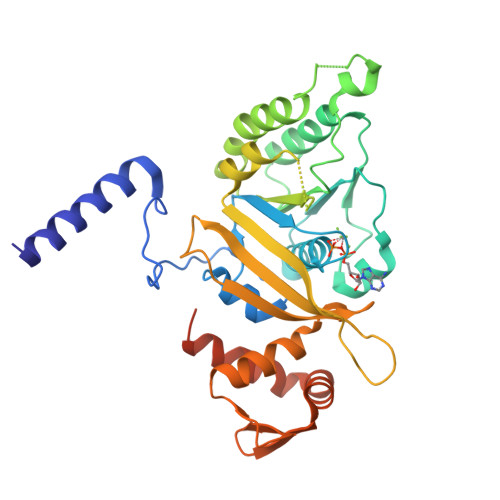
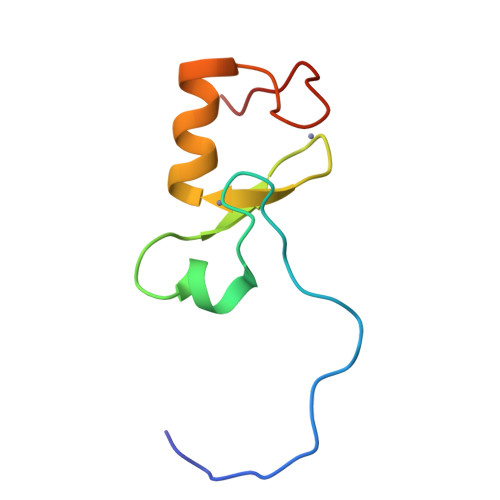
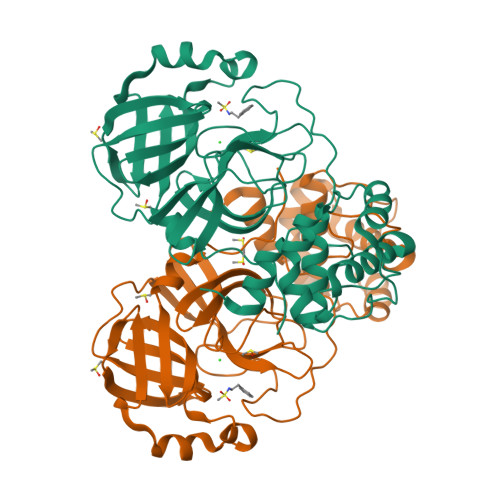
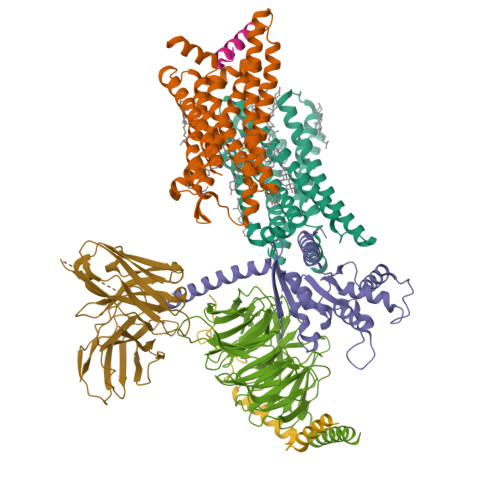
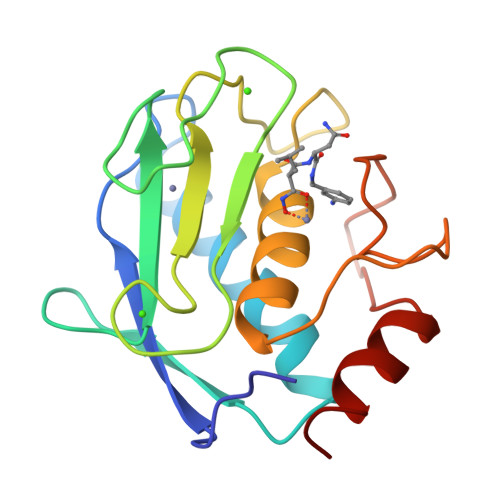
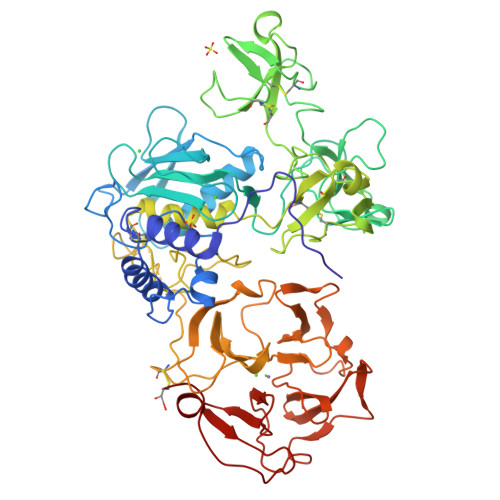
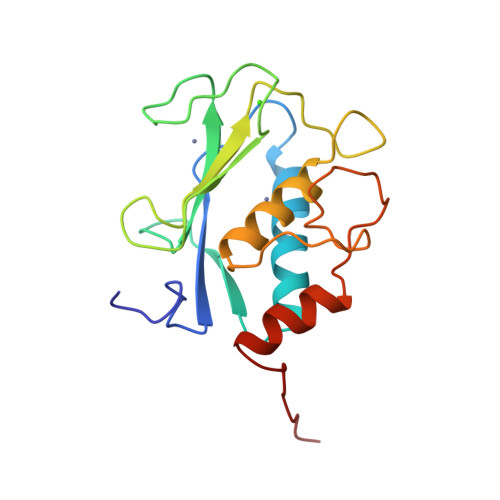
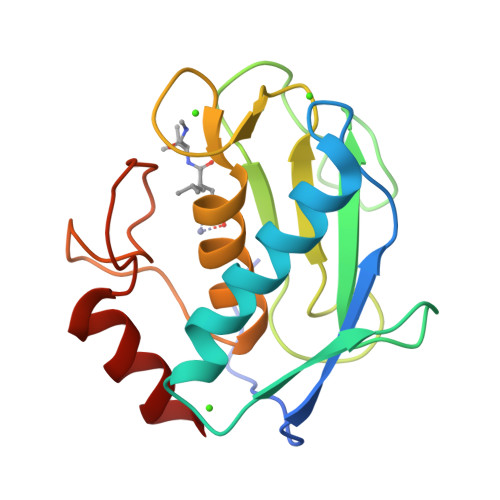
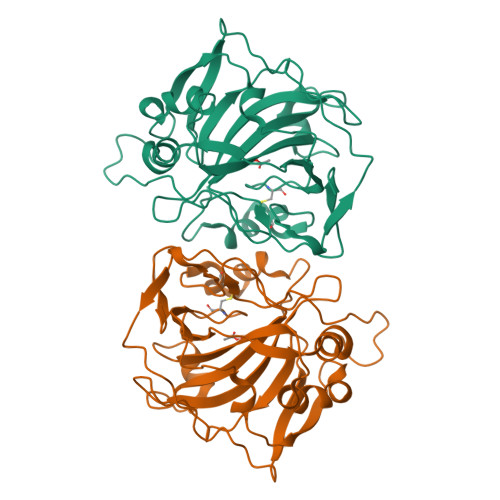
Propachlor interacts with 17 recorded protein targets. It binds to and inhibits the estrogen receptor (ESR1 and ESR2), causing endocrine disruption in humans. Its metabolites bind to neuronal acetylcholine receptors in the nervous system, including subunits alpha-3 (CHRNA3), alpha-4 (CHRNA4), alpha-7 (CHRNA7), and beta-4 (CHRNB4). Other targets include the androgen receptor (AR), aromatase (CYP19A1), peroxisome proliferator-activated receptor gamma (PPARG), and translocator protein (TSPO). Propachlor poisoning induces microsomal hepatic UDPGT activity, which increases the clearance of thyroid hormone T4. This leads to decreased T4 levels and subsequently increased levels of thyroid stimulating hormone (TSH), resulting in a hyperplastic and eventually tumorigenic thyroid response.
Belongs to the class of organic compounds known as anilides. These are organic heterocyclic compounds derived from oxoacids RkE(=O)l(OH)m (l not 0) by replacing an OH group by the NHPh group or derivative formed by ring substitution.
Propachlor poisoning causes an induction of microsomal hepatic UDPGT activity, which produces increased clearance of thyroid hormone, T4. Decreased levels of T4 would result in increased levels of thyroid stimulating hormone (TSH). Increased levels of TSH would result in the hyperplastic and eventually tumorigenic response of the thyroid. Propachlor metabolites also bind to nAChRs in the nervous system and cause endocrine disruption in humans by binding to and inhibiting the estrogen receptor. (6, 2, 10)
Irritation and/or severe burns of the skin, eye, esophagus or gastrointestinal tract, and the respiratory tract, depending on the route of exposure. (7)
Treatment
Consider gastric lavage, as well was dilution with milk or water after ingestion. Administer charcoal as a slurry following ingestion; however, activated charcoal should not be given to patients ingesting strong acidic or basic caustic chemicals. In case of inhalation, move patient to fresh air. Monitor for respiratory distress. If cough or difficulty breathing develops, evaluate for respiratory tract irritation, bronchitis, or pneumonitis. Administer oxygen and assist ventilation as required. Treat bronchospasm with inhaled beta2 agonist and oral or parenteral corticosteroids. Irrigate exposed eyes with copious amounts of room temperature water for at least 15 minutes. Following dermal exposure, remove contaminated clothing and wash exposed area thoroughly with soap and water. Treat dermal irritation or burns with standard topical therapy. Patients developing dermal hypersensitivity reactions may require treatment with systemic or topical corticosteroids or antihistamines. Administer symptomatic treatment as necessary. (7)
Soil?Soil serves as a critical medium for plant growth and sustains various ecological functions; however, it can become a reservoir for synthetic chemical contamination.
Stormwater runoff?Stormwater runoff refers to the flow of rainwater or melted snow that does not soak into the ground and instead collects pollutants as it travels over impervious surfaces such as roads and parking lots.
Drinking water?Drinking water can be a medium for synthetic chemical contamination, often originating from various industrial processes and agricultural practices.
Brushes?Brushes used in personal care and cosmetics can be a source of synthetic chemical contamination due to the materials and coatings used in their manufacturing.
Fencing?Fencing materials, particularly those used in construction and landscaping, can be a source of synthetic chemical contamination due to the treatments and coatings applied for durability and weather resistance.
Floors?Floors in built environments can be a significant source of synthetic chemical contamination due to the materials and finishes used in their construction.
Antennas?Antennas, commonly used in communication technologies, can be a source of synthetic chemical contamination through the materials and coatings used in their construction.
Conductors Or Conductive Bodies Characterised By The Conductive Materials?Conductors, or conductive bodies, are materials that allow the flow of electrical current, typically made from metals such as copper, aluminum, or silver.
Cores Yokes Or Armatures?Cores, yokes, or armatures are components commonly found in electrical devices, used to facilitate the magnetic and electrical functions within motors, transformers, and generators.
Electric Switches?Electric switches, integral components in numerous devices, can be a source of synthetic chemical contamination due to the materials and manufacturing processes involved in their production.
Electrodes?Electrodes, used in various electrical and electronic applications, can be a source of synthetic chemical contamination due to the materials from which they are constructed and the processes involved in their manufacturing.
Magnets?Magnets, commonly used in various electrical and electronic applications, can be a source of synthetic chemical contamination due to the materials used in their production.
Microphones?Microphones, as components in various electronic devices, can be sources of synthetic chemical contamination due to the materials used in their construction.
Television Systems?Television systems can be a source of synthetic chemical contamination due to the various materials and components used in their manufacture and operation.
Food Preservation?Food preservation often involves the use of synthetic chemicals, such as preservatives, flavor enhancers, and color additives, to extend shelf life and enhance the sensory qualities of food products.
Molasses And Treatment Of Molasses?Molasses is a thick, viscous byproduct of sugar production, derived from the extraction of sugar cane or sugar beet juice.
Perfumes Within Detergents And Soaps?Perfumes within detergents and soaps are synthetic fragrance compounds added to enhance the sensory experience of cleaning products.
Pipe Accessories?Pipe accessories, such as fittings, connectors, and seals, are components used in plumbing systems to facilitate the flow of liquids and gases.
Soap Detergents?Soap detergents are synthetic surfactants designed to enhance the cleaning efficacy of water by reducing surface tension, allowing for better interaction with dirt and grease.
Tobacco Pipes?Tobacco pipes, often made from materials such as plastic, wood, or metal, can serve as sources of synthetic chemical contamination due to the residues left by tobacco products.
Tobacco Smoke Filters?Tobacco smoke filters are designed to reduce the inhalation of harmful substances in cigarette smoke, including tar and other particulate matter.
Making Cigars?The process of making cigars involves several steps, including the cultivation of tobacco, fermentation, and the application of various additives to enhance flavor and preservation.
Manufacture Of Iron Or Steel?The manufacture of iron or steel involves various processes, including smelting, refining, and alloying, which can result in the release of synthetic chemicals and contaminants.
Manufacture Preparation Of Tobacco Products?The manufacture and preparation of tobacco products involve various processes that can result in the introduction of synthetic chemicals into the environment.
Anchoring Equipment?Anchoring equipment, commonly used in marine applications, can be a source of synthetic chemical contamination due to the materials and coatings utilized in their manufacturing.
Lifeboat Equipment?Lifeboat equipment typically includes various synthetic materials used in the construction of life rafts, flotation devices, and safety gear.
Marine Propulsion Or Steering?Marine propulsion and steering systems often rely on various synthetic chemicals, including lubricants, fuels, and hydraulic fluids.
Ships?Ships, as vehicles for international trade and transportation, can be significant sources of synthetic chemical contamination in marine environments.
Chemosterilants?Chemosterilants are synthetic chemicals designed to induce sterility in target pest populations, thereby controlling their reproduction and mitigating damage to crops.
Fertiliser Distributors?Fertiliser distributors play a critical role in the supply of synthetic fertilizers, which are widely used to enhance soil fertility and crop yield.
Lawn Mowers?Lawn mowers, particularly those powered by gasoline, can be a source of synthetic chemical contamination due to the combustion of fossil fuels and the use of engine oils.
Molluscicides?Molluscicides are synthetic chemicals specifically designed to control and eliminate mollusks, such as snails and slugs, which can be detrimental to crops and agricultural productivity.
Nematocides?Nematocides are synthetic chemicals specifically designed to control nematodes, which are microscopic roundworms that can cause significant damage to crops and plants.
Rodenticides(1)?Rodenticides are synthetic chemicals specifically formulated to control rodent populations, serving as a crucial tool in managing pests that can damage crops and spread diseases.
Rodenticides?Rodenticides are chemical substances specifically designed to control rodent populations by causing death through various mechanisms, including anticoagulation or neurotoxicity.
Anti Perspirants Or Body Deoderants?Antiperspirants and body deodorants commonly contain synthetic chemicals such as aluminum compounds, parabens, and synthetic fragrances.
Eye Makeup Products?Eye makeup products, including mascaras, eyeliners, and eyeshadows, often contain a variety of synthetic chemicals such as pigments, preservatives, and film-forming agents.
Lip Makeup Products?Lip makeup products, such as lipsticks, lip glosses, and lip liners, often contain a variety of synthetic chemicals, including pigments, preservatives, and emollients.
Toys?Toys, particularly those made from synthetic materials such as plastics, can be a source of chemical contamination due to the presence of various additives and compounds used in their production.
Embroidering And Tufting?Embroidering and tufting processes often involve the use of synthetic chemicals such as dyes, adhesives, and finishing agents.
Footwear?Footwear production often involves the use of various synthetic chemicals, such as adhesives, dyes, and treatments, which can contribute to environmental contamination.
Multicolour Dyeing?Multicolour dyeing involves the application of multiple synthetic dyes to textiles and other materials to achieve vibrant, diverse color patterns.
Ropes?Ropes manufactured from synthetic fibers, such as polypropylene, nylon, and polyester, are widely used in various applications, including marine, construction, and outdoor activities.
Umbrellas?Umbrellas are commonly manufactured using synthetic materials such as polyester, nylon, and polyvinyl chloride (PVC), which can contribute to synthetic chemical contamination.
Yarns Or Threads?Yarns or threads used in textiles can be a source of synthetic chemical contamination due to the production processes and treatments they undergo.
Airplanes And Helicopters?Airplanes and helicopters are significant sources of synthetic chemical contamination primarily through the use of aviation fuels, lubricants, and de-icing agents.
Unmanned Aerial Vehicles?Unmanned Aerial Vehicles (UAVs), commonly known as drones, utilize various synthetic chemicals in their manufacturing, operation, and maintenance processes.
Nitrogenous Fertilisers?Nitrogenous fertilizers are synthetic chemical compounds primarily used to enhance plant growth by supplying essential nitrogen, a crucial nutrient for photosynthesis and protein synthesis.
Traction Harness?Traction harnesses, commonly used in agricultural practices for animals and machinery, can be a source of synthetic chemical contamination through the materials used in their production.
Glass Coatings?Glass coatings are synthetic chemical formulations applied to glass surfaces to enhance properties such as durability, UV resistance, and aesthetic appeal.
Silica Glass?Silica glass, primarily composed of silicon dioxide (SiO2), is widely used in various applications, including windows, glass facades, and insulation materials.
Treatment Of Milk Or Cream?The treatment of milk or cream involves various processes such as pasteurization, homogenization, and the addition of preservatives to enhance shelf life and safety.
Nanotechnology?Nanotechnology involves the manipulation of materials at the molecular or atomic level, typically within the range of 1 to 100 nanometers.
Submarines?Submarines, while essential for military and research purposes, can be a source of synthetic chemical contamination due to their use of various industrial chemicals.
Mining Or Quarrying?Mining and quarrying operations can lead to synthetic chemical contamination through the release of various pollutants associated with the extraction and processing of minerals.
Embossing Machines?Embossing machines are industrial devices used to create raised patterns or designs on materials, including paper and fiber products.
Fountain Pens?Fountain pens utilize a liquid ink that often contains synthetic chemicals, including dyes, pigments, and solvents, which can contribute to environmental contamination.
Ink Reservoir Pens2?Ink reservoir pens are writing instruments that utilize a reservoir to store ink, which is often composed of synthetic dyes, solvents, and additives.
Walking Sticks?Walking sticks, while primarily designed for mobility assistance, can be sources of synthetic chemical contamination if not properly manufactured or maintained.
Sludge Treatment?Sludge treatment involves the processing of waste materials generated from wastewater treatment plants, which often contain a variety of organic and inorganic substances.
Water, Wastewater, & Sewage Treatment?Water, wastewater, and sewage treatment processes are critical for managing and mitigating pollutants in water systems.
Propachlor poisoning causes an induction of microsomal hepatic UDPGT activity, which produces increased clearance of thyroid hormone, T4. Decreased levels of T4 would result in increased levels of thyroid stimulating hormone (TSH). Increased levels of TSH would result in the hyperplastic and eventually tumorigenic response of the thyroid. Propachlor metabolites also bind to nAChRs in the nervous system. (T10, A570).
Propachlor poisoning causes an induction of microsomal hepatic UDPGT activity, which produces increased clearance of thyroid hormone, T4. Decreased levels of T4 would result in increased levels of thyroid stimulating hormone (TSH). Increased levels of TSH would result in the hyperplastic and eventually tumorigenic response of the thyroid. Propachlor metabolites also bind to nAChRs in the nervous system. (T10, A570).
Propachlor poisoning causes an induction of microsomal hepatic UDPGT activity, which produces increased clearance of thyroid hormone, T4. Decreased levels of T4 would result in increased levels of thyroid stimulating hormone (TSH). Increased levels of TSH would result in the hyperplastic and eventually tumorigenic response of the thyroid. Propachlor metabolites also bind to nAChRs in the nervous system. (T10, A570).
Propachlor poisoning causes an induction of microsomal hepatic UDPGT activity, which produces increased clearance of thyroid hormone, T4. Decreased levels of T4 would result in increased levels of thyroid stimulating hormone (TSH). Increased levels of TSH would result in the hyperplastic and eventually tumorigenic response of the thyroid. Propachlor metabolites also bind to nAChRs in the nervous system. (T10, A570).
Propachlor poisoning causes an induction of microsomal hepatic UDPGT activity, which produces increased clearance of thyroid hormone, T4. Decreased levels of T4 would result in increased levels of thyroid stimulating hormone (TSH). Increased levels of TSH would result in the hyperplastic and eventually tumorigenic response of the thyroid. Propachlor metabolites also bind to nAChRs in the nervous system. (T10, A570).
Propachlor poisoning causes an induction of microsomal hepatic UDPGT activity, which produces increased clearance of thyroid hormone, T4. Decreased levels of T4 would result in increased levels of thyroid stimulating hormone (TSH). Increased levels of TSH would result in the hyperplastic and eventually tumorigenic response of the thyroid. Propachlor metabolites also bind to nAChRs in the nervous system. (T10, A570).
Propachlor poisoning causes an induction of microsomal hepatic UDPGT activity, which produces increased clearance of thyroid hormone, T4. Decreased levels of T4 would result in increased levels of thyroid stimulating hormone (TSH). Increased levels of TSH would result in the hyperplastic and eventually tumorigenic response of the thyroid. Propachlor metabolites also bind to nAChRs in the nervous system. (T10, A570).
Propachlor poisoning causes an induction of microsomal hepatic UDPGT activity, which produces increased clearance of thyroid hormone, T4. Decreased levels of T4 would result in increased levels of thyroid stimulating hormone (TSH). Increased levels of TSH would result in the hyperplastic and eventually tumorigenic response of the thyroid. Propachlor metabolites also bind to nAChRs in the nervous system. (T10, A570).
Propachlor poisoning causes an induction of microsomal hepatic UDPGT activity, which produces increased clearance of thyroid hormone, T4. Decreased levels of T4 would result in increased levels of thyroid stimulating hormone (TSH). Increased levels of TSH would result in the hyperplastic and eventually tumorigenic response of the thyroid. Propachlor metabolites also bind to nAChRs in the nervous system. (T10, A570).
Propachlor poisoning causes an induction of microsomal hepatic UDPGT activity, which produces increased clearance of thyroid hormone, T4. Decreased levels of T4 would result in increased levels of thyroid stimulating hormone (TSH). Increased levels of TSH would result in the hyperplastic and eventually tumorigenic response of the thyroid. Propachlor metabolites also bind to nAChRs in the nervous system. (T10, A570).
Osano O, Admiraal W, Klamer HJ, Pastor D, Bleeker EA: Comparative toxic and genotoxic effects of chloroacetanilides, formamidines and their degradation products on Vibrio fischeri and Chironomus riparius. Environ Pollut. 2002;119(2):195-202. [PubMed: 12152826]
Belyaeva OV, Kedishvili NY: Comparative genomic and phylogenetic analysis of short-chain dehydrogenases/reductases with dual retinol/sterol substrate specificity. Genomics. 2006 Dec;88(6):820-30. Epub 2006 Jul 24. [PubMed: 16860536]
International Programme on Chemical Safety (IPCS) (1993). Environmental Health Criteria 147: Propachlor. IPCS under the joint sponsorship of the United Nations Environment Programme, the International Labour Organisation and the World Health Organization. - http://www.inchem.org/documents/ehc/ehc/ehc147.htm
Casarett LJ, Klaassen CD, and Watkins JB (2003). Casarett and Doull's essentials of toxicology. New York: McGraw-Hill/Medical Pub. Div.
Rumack BH (2009). POISINDEX(R) Information System. Englewood, CO: Micromedex, Inc. CCIS Volume 141, edition expires Aug, 2009.
EPA Office of Pesticide Programs (2001). Implementation of the Determinations of a Common Mechanism of Toxicity for N-Methyl Carbamate Pesticides and for Certain Chloroacetaide Pesticides.
Reigart JR, Roberts JR (1999). U.S. Recognition and Management of Pesticide Poisonings. 5th ed. EPA Document No. EPA 735-R-98-003. Washington, DC: Office of Health and Environmental Assessment.
Luft S, Milki E, Glustrom E, Ampiah-Bonney R, O'Hara P. Binding of Organochloride and Pyrethroid Pesticides To Estrogen Receptors α and β: A Fluorescence Polarization Assay. Biophysical Journal 2009;96(3):444a.