Copper(II) oxide (CED0006379)

Record Information
Version1.0
Creation Date2009-06-19 21:58:25 UTC
Update Date2026-05-14 19:07:16 UTC
Accession NumberCHEM001023
Identification
Common NameCopper(II) oxide
ClassSmall Molecule
Description
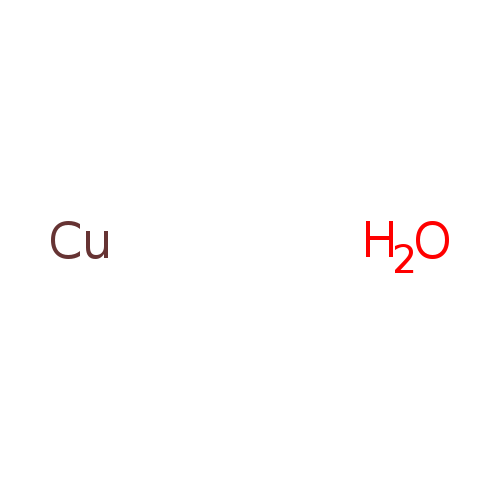
Copper(II) oxide (formula CuH2O) is an exogenous solid with an average molecular weight of 81.56 g/mol. Copper(II) oxide belongs to the transition metal oxides, a subclass of transition metal organides within the inorganic compounds. It is used industrially as a biocide, filler, and catalyst (PMC10254346). This compound is found in or released from 48 recorded sources, including building and construction materials such as ceilings, floors, roofs, and sunshades; food processing activities including meat processing and the preparation of vinegar and beer fermentation; household cleaning and consumer products including bleaching agents and smoking requisites; and electrical and electronic equipment such as amplifiers, antennas, coils, and adjustable resistors. Copper(II) oxide exhibits therapeutic effects on cancer (PMC7361121) and is a treatment for COVID-19 (PMC8406542). It interacts with six recorded protein targets. Copper binds to alpha-synuclein (SNCA), initiating protein aggregation, and to the N-terminal region of amyloid-beta precursor protein (APP), promoting the generation of beta-amyloid; both interactions are believed to contribute to the development of Alzheimer's disease and Parkinson's disease. Additionally, copper inhibits sulfhydryl group enzymes including serum paraoxonase/arylesterase 1 (PON1), serum paraoxonase/lactonase 3 (PON3), mitochondrial glutathione reductase (GSR), and glucose-6-phosphate 1-dehydrogenase (G6PD), which protect the cell from free oxygen. Copper hepatotoxicity is believed to occur when copper accumulates in the nucleus after hepatocyte lysosomes become saturated, potentially causing nuclear damage through oxidative damage and lipid peroxidation.
Contaminant Type
  • Copper Compound
  • Household Toxin
  • Industrial/Workplace Toxin
  • Inorganic Compound
  • Natural Compound
Chemical Structure
Synonyms
ValueSource
Copper hydric acidGenerator
Chemical FormulaCuH2O
Average Molecular Mass81.561 g/mol
Monoisotopic Mass80.940 g/mol
CAS Registry Number1317-38-0
IUPAC Namecopper hydrate
Traditional Namecopper hydrate
SMILESO.[Cu]
InChI IdentifierInChI=1S/Cu.H2O/h;1H2
InChI KeyPTVDYARBVCBHSL-UHFFFAOYSA-N
Chemical Taxonomy
Description Belongs to the class of inorganic compounds known as transition metal oxides. These are inorganic compounds containing an oxygen atom of an oxidation state of -2, in which the heaviest atom bonded to the oxygen is a transition metal.
KingdomInorganic compounds
Super ClassMixed metal/non-metal compounds
ClassTransition metal organides
Sub ClassTransition metal oxides
Direct ParentTransition metal oxides
Alternative Parents
Substituents
  • Transition metal oxide
  • Inorganic oxide
  • Inorganic salt
Molecular FrameworkNot Available
External DescriptorsNot Available
Biological Properties
StatusDetected and Not Quantified
OriginExogenous
Cellular Locations
  • Cytoplasm
  • Extracellular
Biofluid LocationsNot Available
Tissue LocationsNot Available
ApplicationsNot Available
Biological RolesNot Available
Chemical RolesNot Available
Organoleptic EffectsNot Available
Physical Properties
StateSolid
AppearanceReddish-brown solid.
Experimental Properties
PropertyValue
Melting PointNot Available
Boiling PointNot Available
SolubilityNot Available
Predicted Properties
PropertyValueSource
Water Solubility171 g/LALOGPS
logP-1.3ALOGPS
logP0.16ChemAxon
logS0.32ALOGPS
Physiological Charge0ChemAxon
Hydrogen Acceptor Count0ChemAxon
Hydrogen Donor Count0ChemAxon
Polar Surface Area0 ŲChemAxon
Rotatable Bond Count0ChemAxon
Refractivity0 m³·mol⁻¹ChemAxon
Polarizability1.78 ųChemAxon
Number of Rings0ChemAxon
BioavailabilityYesChemAxon
Rule of FiveYesChemAxon
Ghose FilterNoChemAxon
Veber's RuleYesChemAxon
MDDR-like RuleNoChemAxon
Spectra
Spectra
Spectrum TypeDescriptionSplash KeyDeposition DateView
Predicted LC-MS/MSPredicted LC-MS/MS Spectrumsplash10-001i-9000000000-2c9b72758b1d7e01623aNot AvailableView Spectrum
Predicted LC-MS/MSPredicted LC-MS/MS Spectrumsplash10-004i-9000000000-39792218e9a060398c6fNot AvailableView Spectrum
Toxicity Profile
Mechanism of ToxicityExcess copper is sequestered within hepatocyte lysosomes, where it is complexed with metallothionein. Copper hepatotoxicity is believed to occur when the lysosomes become saturated and copper accumulates in the nucleus, causing nuclear damage. This damage is possibly a result of oxidative damage, including lipid peroxidation. Copper inhibits the sulfhydryl group enzymes such as glucose-6-phosphate 1-dehydrogenase, glutathione reductase, and paraoxonases, which protect the cell from free oxygen radicals. It also influences gene expression and is a co-factor for oxidative enzymes such as cytochrome C oxidase and lysyl oxidase. In addition, the oxidative stress induced by copper is thought to activate acid sphingomyelinase, which lead to the production of ceramide, an apoptotic signal, as well as cause hemolytic anemia. Copper-induced emesis results from stimulation of the vagus nerve. (4, 11, 1, 7)
Carcinogenicity (IARC Classification)No indication of carcinogenicity to humans (not listed by IARC).
Minimum Risk LevelAcute Oral: 0.01 mg/kg/day (3) Intermediate Oral: 0.01 mg/kg/day (3)
SymptomsBreathing high levels of copper can cause irritation of the nose and throat. Ingesting high levels of copper can cause nausea, vomiting, diarrhea, headache, dizziness, and respiratory difficulty. (5, 6)
TreatmentEYES: irrigate opened eyes for several minutes under running water. INGESTION: do not induce vomiting. Rinse mouth with water (never give anything by mouth to an unconscious person). Seek immediate medical advice. SKIN: should be treated immediately by rinsing the affected parts in cold running water for at least 15 minutes, followed by thorough washing with soap and water. If necessary, the person should shower and change contaminated clothing and shoes, and then must seek medical attention. INHALATION: supply fresh air. If required provide artificial respiration.
Toxicity Values
Toxicity ValueUnitValue RangeOrganismDose DescriptorRoute of ExposurePredicted or ExperimentalReference
470.0mg/kgNot AvailableRatLD50OralexperimentalL333
273.0mg/kgNot AvailableMouseLD50IntraperitonealexperimentalL333
Health Effects
Health EffectRelationshipDirectionReference
cancerhas_therapeutic_effect_onNot AvailablePMC7361121
COVID-19is_treatment_forNot AvailablePMC8406542
Exposure Sources
Source IDSourceSectorReference
10InsecticidesAgriculture & land managementNot Available
233BrushesPersonal care & cosmeticsNot Available
495CeilingsBuilding & ConstructionNot Available
497FloorsBuilding & ConstructionNot Available
499RoofsBuilding & ConstructionNot Available
501Sunshades Awnings Or Outside ScreensBuilding & ConstructionNot Available
502Sunshades Awnings Or Outside ScreensBuilding & ConstructionNot Available
503Tents Or CanopiesBuilding & ConstructionNot Available
504Adjustable ResistorsElectrical & Electronic EquipmentNot Available
505AmplifiersElectrical & Electronic EquipmentNot Available
506AntennasElectrical & Electronic EquipmentNot Available
507Auxiliary DevicesElectrical & Electronic EquipmentNot Available
508CoilsElectrical & Electronic EquipmentNot Available
510Communication Cables Or ConductorsElectrical & Electronic EquipmentNot Available
512ContactsElectrical & Electronic EquipmentNot Available
513Cores Yokes Or ArmaturesElectrical & Electronic EquipmentNot Available
514Discharge LampsElectrical & Electronic EquipmentNot Available
515Discharge Tubes With Liquid Pool CathodesElectrical & Electronic EquipmentNot Available
516Electric Hearing AidsElectrical & Electronic EquipmentNot Available
517Electric SwitchesElectrical & Electronic EquipmentNot Available
518Electrically Stimulated Smoking DevicesElectrical & Electronic EquipmentNot Available
520Emergency Protective DevicesElectrical & Electronic EquipmentNot Available
521Fixed Capacitors And Their ManufactureElectrical & Electronic EquipmentNot Available
523Gas Filled Discharge Tubes With Solid CathodeElectrical & Electronic EquipmentNot Available
524Hybrid CapacitorsElectrical & Electronic EquipmentNot Available
525Line Transmission SystemsElectrical & Electronic EquipmentNot Available
526LoudspeakersElectrical & Electronic EquipmentNot Available
527MagnetsElectrical & Electronic EquipmentNot Available
529Power CablesElectrical & Electronic EquipmentNot Available
530Radio Transmission SystemsElectrical & Electronic EquipmentNot Available
531RelaysElectrical & Electronic EquipmentNot Available
533Sparking PlugsElectrical & Electronic EquipmentNot Available
534Still Video CamerasElectrical & Electronic EquipmentNot Available
535Superconducting Magnets And Superconducting CoilsElectrical & Electronic EquipmentNot Available
536Superconductive Or Hyperconductive Conductors Cables Or Transmission LinesElectrical & Electronic EquipmentNot Available
537Television SystemsElectrical & Electronic EquipmentNot Available
538Thin Magnetic FilmsElectrical & Electronic EquipmentNot Available
539Video GamesElectrical & Electronic EquipmentNot Available
540X Ray TubesElectrical & Electronic EquipmentNot Available
544Fermentation Processes For BeerFood, food processing & cookwareNot Available
548Preparation Of VinegarFood, food processing & cookwareNot Available
552Processing MeatsFood, food processing & cookwareNot Available
555Bleaching AgentsHousehold cleaning & consumer productsNot Available
556Cigar CigarettesHousehold cleaning & consumer productsNot Available
559Non Electric Simulated Smoking DevicesHousehold cleaning & consumer productsNot Available
560Other Smoking RequisitesHousehold cleaning & consumer productsNot Available
562Pipe AccessoriesHousehold cleaning & consumer productsNot Available
563Soap DetergentsHousehold cleaning & consumer productsNot Available
566Tobacco PipesHousehold cleaning & consumer productsNot Available
569Tobacco Smoke FiltersHousehold cleaning & consumer productsNot Available
578Making CigarsIndustrial manufacturing & chemical processingNot Available
579Manufacture Of Iron Or SteelIndustrial manufacturing & chemical processingNot Available
580Manufacture Preparation Of Tobacco ProductsIndustrial manufacturing & chemical processingNot Available
581Paper Making MachinesIndustrial manufacturing & chemical processingNot Available
583Anchoring EquipmentMarine, shipping & aquacultureNot Available
584BuoysMarine, shipping & aquacultureNot Available
589Life BuoysMarine, shipping & aquacultureNot Available
592Marine Propulsion Or SteeringMarine, shipping & aquacultureNot Available
593Nautical InstrumentsMarine, shipping & aquacultureNot Available
596AcaricidesAgriculture & land managementNot Available
600Herbicides And AlgicidesAgriculture & land managementNot Available
602MolluscicidesAgriculture & land managementNot Available
603NematocidesAgriculture & land managementNot Available
606Plant Growth RegulatorsAgriculture & land managementNot Available
607Rodenticides(1)Agriculture & land managementNot Available
608RodenticidesAgriculture & land managementNot Available
615Eye Makeup ProductsPersonal care & cosmeticsNot Available
618Lip Makeup ProductsPersonal care & cosmeticsNot Available
619Manicure PedicurePersonal care & cosmeticsNot Available
630ToysRecreation & sports surfacesNot Available
631Anthraquinone DyesTextiles, leather & furnishingsNot Available
634BucklesTextiles, leather & furnishingsNot Available
635ButtonsTextiles, leather & furnishingsNot Available
638Decorating TextilesTextiles, leather & furnishingsNot Available
642FootwearTextiles, leather & furnishingsNot Available
643HeadwearTextiles, leather & furnishingsNot Available
650Purses Luggage Hand BagsTextiles, leather & furnishingsNot Available
652RopesTextiles, leather & furnishingsNot Available
655Slide FastenersTextiles, leather & furnishingsNot Available
656Snap FastenersTextiles, leather & furnishingsNot Available
657Surface Finishing Of LeatherTextiles, leather & furnishingsNot Available
659Transfer PrintingTextiles, leather & furnishingsNot Available
661UmbrellasTextiles, leather & furnishingsNot Available
662Yarns Or ThreadsTextiles, leather & furnishingsNot Available
Pathways
1 pathway
Targets
StructureProteinUniProt IDOrganismRelationshipDetails
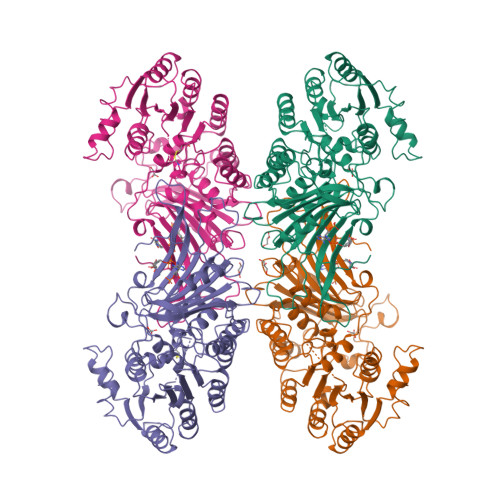
Glucose-6-phosphate 1-dehydrogenase structureClick to view 3D structureGlucose-6-phosphate 1-dehydrogenaseP11413HumansKnownExcess copper is sequestered within hepatocyte lysosomes, where it is complexed with metallothionein. Copper hepatotoxicity is believed to occur when the lysosomes become saturated and copper accumulates in the nucleus, causing nuclear damage. This damage is possibly a result of oxidative damage, including lipid peroxidation. Copper inhibits the sulfhydryl group enzymes such as glucose-6-phosphate 1-dehydrogenase, glutathione reductase, and paraoxonases, which protect the cell from free oxygen radicals. It also influences gene expression and is a co-factor for oxidative enzymes such as cytochrome C oxidase and lysyl oxidase. In addition, the oxidative stress induced by copper is thought to activate acid sphingomyelinase, which lead to the production of ceramide, an apoptotic signal, as well as cause hemolytic anemia. (L277, T49, A174, L280)
Glutathione reductase, mitochondrial structureClick to view 3D structureGlutathione reductase, mitochondrialP00390HumansKnownExcess copper is sequestered within hepatocyte lysosomes, where it is complexed with metallothionein. Copper hepatotoxicity is believed to occur when the lysosomes become saturated and copper accumulates in the nucleus, causing nuclear damage. This damage is possibly a result of oxidative damage, including lipid peroxidation. Copper inhibits the sulfhydryl group enzymes such as glucose-6-phosphate 1-dehydrogenase, glutathione reductase, and paraoxonases, which protect the cell from free oxygen radicals. It also influences gene expression and is a co-factor for oxidative enzymes such as cytochrome C oxidase and lysyl oxidase. In addition, the oxidative stress induced by copper is thought to activate acid sphingomyelinase, which lead to the production of ceramide, an apoptotic signal, as well as cause hemolytic anemia. (L277, T49, A174, L280)
Serum paraoxonase/arylesterase 1 structureClick to view 3D structureSerum paraoxonase/arylesterase 1P27169HumansKnownExcess copper is sequestered within hepatocyte lysosomes, where it is complexed with metallothionein. Copper hepatotoxicity is believed to occur when the lysosomes become saturated and copper accumulates in the nucleus, causing nuclear damage. This damage is possibly a result of oxidative damage, including lipid peroxidation. Copper inhibits the sulfhydryl group enzymes such as glucose-6-phosphate 1-dehydrogenase, glutathione reductase, and paraoxonases, which protect the cell from free oxygen radicals. It also influences gene expression and is a co-factor for oxidative enzymes such as cytochrome C oxidase and lysyl oxidase. In addition, the oxidative stress induced by copper is thought to activate acid sphingomyelinase, which lead to the production of ceramide, an apoptotic signal, as well as cause hemolytic anemia. (L277, T49, A174, L280)
Click to view 3D structureSerum paraoxonase/lactonase 3Q15166HumansKnownExcess copper is sequestered within hepatocyte lysosomes, where it is complexed with metallothionein. Copper hepatotoxicity is believed to occur when the lysosomes become saturated and copper accumulates in the nucleus, causing nuclear damage. This damage is possibly a result of oxidative damage, including lipid peroxidation. Copper inhibits the sulfhydryl group enzymes such as glucose-6-phosphate 1-dehydrogenase, glutathione reductase, and paraoxonases, which protect the cell from free oxygen radicals. It also influences gene expression and is a co-factor for oxidative enzymes such as cytochrome C oxidase and lysyl oxidase. In addition, the oxidative stress induced by copper is thought to activate acid sphingomyelinase, which lead to the production of ceramide, an apoptotic signal, as well as cause hemolytic anemia. (L277, T49, A174, L280)
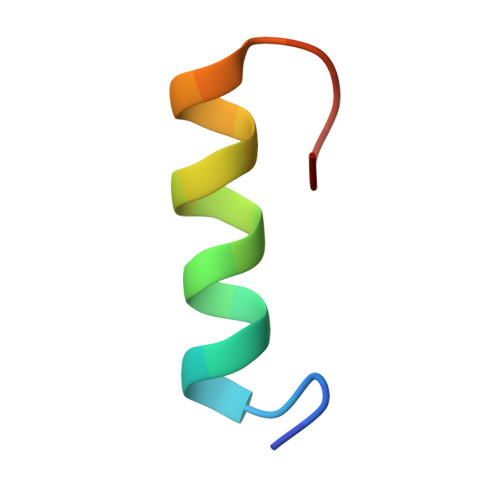
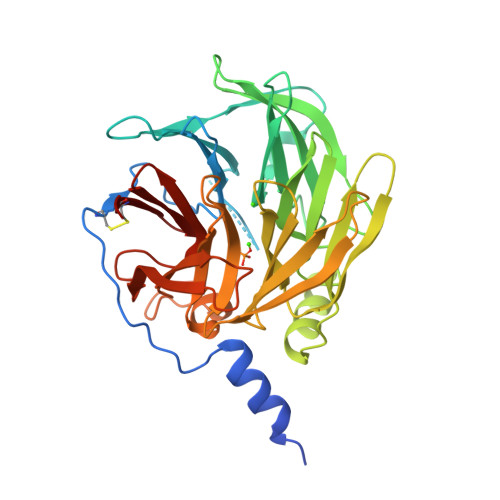
Alpha-synuclein structureClick to view 3D structureAlpha-synucleinP37840HumansKnownCopper binds to alpha-synuclein, initiating protein aggregation and likely contributing to the development of the neurodegenerative disorders Parkinson's disease and Alzheimer's disease. (A173)
Amyloid-beta precursor protein structureClick to view 3D structureAmyloid-beta precursor proteinP05067HumansKnownCopper binds the N-terminal region of amyloid precursor protein, promoting the generation of _-amyloid from the protein. This is believed to contribute to the development of the neurodegenerative disorders Parkinson's disease and Alzheimer's disease. (A173)
Concentrations
Not Available
External Links
DrugBank IDNot Available
HMDB IDNot Available
FooDB IDNot Available
Phenol Explorer IDNot Available
KNApSAcK IDNot Available
BiGG IDNot Available
BioCyc IDNot Available
METLIN IDNot Available
PDB IDNot Available
Wikipedia LinkNot Available
Chemspider IDNot Available
ChEBI IDNot Available
PubChem Compound ID444334
Kegg Compound IDNot Available
YMDB IDNot Available
ECMDB IDNot Available
References
Synthesis ReferenceNot Available
MSDSNot Available
General References