Zinc laurate (CED0010154)

Record Information
Version1.0
Creation Date2009-06-19 21:58:49 UTC
Update Date2026-04-05 14:35:37 UTC
SynCED IDCED0010154
Secondary Accession Numbers
  • CHEM001246
  • T3D1461
Identification
Common NameZinc laurate
ClassSmall Molecule
Description
Zinc laurate is an exogenous solid compound with the formula C14H25NO8 and an average molecular weight of 335.35 g/mol. Zinc laurate belongs to the alcohols and polyols, a subclass of organooxygen compounds within the organic compounds. In industrial applications, it is utilized as a viscosity modifier, opacifer, anti-caking agent, heat stabilizer, and stabilizing agent. Additionally, it is used in Polyvinyl Chloride plastics. The compound has been recorded in two sources: drinking water and water supply, as well as antennas within electrical and electronic equipment. The recorded exposure route for this substance is oral. Regarding protein targets, zinc laurate is associated with Superoxide dismutase [Cu-Zn] (SOD1). Unbalanced levels of copper and zinc binding to Cu,Zn-superoxide dismutase has been linked to amyotrophic lateral sclerosis (ALS).
Contaminant Type
  • Amine
  • Industrial/Workplace Toxin
  • Organic Compound
  • Organometallic
  • Synthetic Compound
  • Zinc Compound
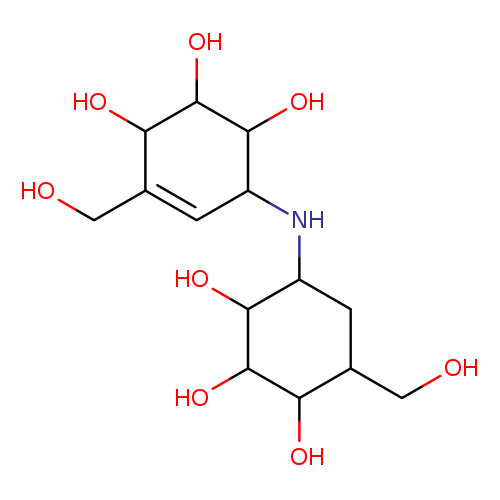
Chemical Structure
Synonyms
ValueSource
Zinc lauric acidGenerator
Validoxylamine aMeSH
Chemical FormulaC14H25NO8
Average Molecular Mass335.350 g/mol
Monoisotopic Mass335.158 g/mol
CAS Registry Number2452-01-9
IUPAC Name4-(hydroxymethyl)-6-{[2,3,4-trihydroxy-5-(hydroxymethyl)cyclohexyl]amino}cyclohex-4-ene-1,2,3-triol
Traditional Name4-(hydroxymethyl)-6-{[2,3,4-trihydroxy-5-(hydroxymethyl)cyclohexyl]amino}cyclohex-4-ene-1,2,3-triol
SMILESOCC1CC(NC2C=C(CO)C(O)C(O)C2O)C(O)C(O)C1O
InChI IdentifierInChI=1S/C14H25NO8/c16-3-5-1-7(11(20)13(22)9(5)18)15-8-2-6(4-17)10(19)14(23)12(8)21/h1,6-23H,2-4H2
InChI KeyYCJYNBLLJHFIIW-UHFFFAOYSA-N
Chemical Taxonomy
Description Belongs to the class of organic compounds known as aminocyclitols. These are cyclitols with at least one hydroxyl group replace by an amino group.
KingdomOrganic compounds
Super ClassOrganic oxygen compounds
ClassOrganooxygen compounds
Sub ClassAlcohols and polyols
Direct ParentAminocyclitols
Alternative Parents
Substituents
  • Aminocyclitol
  • Cyclohexylamine
  • Cyclohexanol
  • Secondary alcohol
  • 1,2-aminoalcohol
  • Secondary amine
  • Polyol
  • Secondary aliphatic amine
  • Organic nitrogen compound
  • Organopnictogen compound
  • Hydrocarbon derivative
  • Primary alcohol
  • Organonitrogen compound
  • Amine
  • Aliphatic homomonocyclic compound
Molecular FrameworkAliphatic homomonocyclic compounds
External Descriptors
Biological Properties
StatusDetected and Not Quantified
OriginExogenous
Cellular Locations
  • Membrane
Biofluid LocationsNot Available
Tissue LocationsNot Available
ApplicationsNot Available
Biological RolesNot Available
Chemical RolesNot Available
Organoleptic EffectsNot Available
Physical Properties
StateSolid
AppearanceWhite powder.
Experimental Properties
PropertyValue
Melting PointNot Available
Boiling PointNot Available
SolubilityNot Available
Predicted Properties
PropertyValueSource
Water Solubility116 g/LALOGPS
logP-2.3ALOGPS
logP-5.2ChemAxon
logS-0.46ALOGPS
pKa (Strongest Acidic)12.59ChemAxon
pKa (Strongest Basic)7.11ChemAxon
Physiological Charge1ChemAxon
Hydrogen Acceptor Count9ChemAxon
Hydrogen Donor Count9ChemAxon
Polar Surface Area173.87 ŲChemAxon
Rotatable Bond Count4ChemAxon
Refractivity78.06 m³·mol⁻¹ChemAxon
Polarizability33.19 ųChemAxon
Number of Rings2ChemAxon
BioavailabilityYesChemAxon
Rule of FiveNoChemAxon
Ghose FilterNoChemAxon
Veber's RuleNoChemAxon
MDDR-like RuleNoChemAxon
Spectra
Spectra
Spectrum TypeDescriptionSplash KeyDeposition DateView
Predicted LC-MS/MSPredicted LC-MS/MS Spectrumsplash10-00kr-0009000000-57c1c13d314805bb3c70Not AvailableView Spectrum
Predicted LC-MS/MSPredicted LC-MS/MS Spectrumsplash10-0uxr-0119000000-dea76b2a22aaa34f5641Not AvailableView Spectrum
Predicted LC-MS/MSPredicted LC-MS/MS Spectrumsplash10-0zfu-4973000000-ec2060b1f4af816de3a9Not AvailableView Spectrum
Predicted LC-MS/MSPredicted LC-MS/MS Spectrumsplash10-001i-0029000000-2f1778ab02d3785f81ecNot AvailableView Spectrum
Predicted LC-MS/MSPredicted LC-MS/MS Spectrumsplash10-0ul9-0089000000-ce4047f70fe76f72ab18Not AvailableView Spectrum
Predicted LC-MS/MSPredicted LC-MS/MS Spectrumsplash10-00fu-2490000000-fe44c6a66f915e45fa68Not AvailableView Spectrum
Toxicity Profile
Toxicity Values
Toxicity ValueOrganismDose DescriptorRoute of ExposurePredicted or ExperimentalToxicity RatingReference
6474.0 Log mg/kg [3600:12000]RatLD50oralpredictedNot AvailableNot Available
Toxicity / Toxin ClassNot Available
Mechanism of ToxicityAnaemia results from the excessive absorption of zinc suppressing copper and iron absorption, most likely through competitive binding of intestinal mucosal cells. Unbalanced levels of copper and zinc binding to Cu,Zn-superoxide dismutase has been linked to amyotrophic lateral sclerosis (ALS). Stomach acid dissolves metallic zinc to give corrosive zinc chloride, which can cause damage to the stomach lining. Metal fume fever is thought to be an immune response to inhaled zinc. (2, 3, 1)
Carcinogenicity (IARC Classification)No indication of carcinogenicity to humans (not listed by IARC).
Minimum Risk LevelIntermediate Oral: 0.3 mg/kg/day (5) Chronic Oral: 0.3 mg/kg/day (5)
SymptomsIngestion of large doses of zinc causes stomach cramps, nausea, and vomiting. Acute inhalation of large amounts of zinc causes metal fume fever, which is characterized by chills, fever, headache, weakness, dryness of the nose and throat, chest pain, and coughing. Dermal contact with zinc results in skin irritation. (3)
TreatmentZinc poisoning is treated symptomatically, often by administering fluids such as water or milk, or with gastric lavage. (3)
Health Effects
Health EffectRelationshipDirectionDescriptionReference
Exposure Sources
Source IDSourceSectorReference
CEDs000115Drinking water?Drinking water can be a medium for synthetic chemical contamination, often originating from various industrial processes and agricultural practices.Drinking water & water supplyNot Available
CEDs000506Antennas?Antennas, commonly used in communication technologies, can be a source of synthetic chemical contamination through the materials and coatings used in their construction.Electrical & Electronic EquipmentPubChem
CEDs000511Conductors Or Conductive Bodies Characterised By The Conductive Materials?Conductors, or conductive bodies, are materials that allow the flow of electrical current, typically made from metals such as copper, aluminum, or silver.Electrical & Electronic EquipmentPubChem
CEDs000519Electrodes?Electrodes, used in various electrical and electronic applications, can be a source of synthetic chemical contamination due to the materials from which they are constructed and the processes involved in their manufacturing.Electrical & Electronic EquipmentPubChem
CEDs000524Hybrid Capacitors?Hybrid capacitors are energy storage devices that combine the properties of electrolytic and supercapacitors, utilizing a combination of electrochemical principles to achieve higher energy density and power density.Electrical & Electronic EquipmentPubChem
CEDs000545Food Preservation?Food preservation often involves the use of synthetic chemicals, such as preservatives, flavor enhancers, and color additives, to extend shelf life and enhance the sensory qualities of food products.Food, food processing & cookwarePubChem
CEDs000561Perfumes Within Detergents And Soaps?Perfumes within detergents and soaps are synthetic fragrance compounds added to enhance the sensory experience of cleaning products.Household cleaning & consumer productsPubChem
CEDs000600Herbicides And Algicides?Herbicides and algicides are synthetic chemicals primarily used to control unwanted plants and algae in various environments.Agriculture & land managementPubChem
CEDs000611Anti Perspirants Or Body Deoderants?Antiperspirants and body deodorants commonly contain synthetic chemicals such as aluminum compounds, parabens, and synthetic fragrances.Personal care & cosmeticsPubChem
CEDs000614Essential Oils Or Perfumes?Essential oils and perfumes are complex mixtures of volatile compounds derived from natural or synthetic sources, commonly used for their aromatic properties.Personal care & cosmeticsPubChem
CEDs000615Eye Makeup Products?Eye makeup products, including mascaras, eyeliners, and eyeshadows, often contain a variety of synthetic chemicals such as pigments, preservatives, and film-forming agents.Personal care & cosmeticsPubChem
CEDs000618Lip Makeup Products?Lip makeup products, such as lipsticks, lip glosses, and lip liners, often contain a variety of synthetic chemicals, including pigments, preservatives, and emollients.Personal care & cosmeticsPubChem
CEDs000632Apparel?Apparel production often involves the use of various synthetic chemicals, including dyes, finishing agents, and preservatives.Textiles, leather & furnishingsPubChem
CEDs000670Solid Fire Fighting Substances?Solid fire fighting substances, such as certain types of dry chemical powders, are used in fire suppression applications to extinguish flames and prevent fire spread.Fire suppression systems & agentsPubChem
CEDs000679Phosphatic Fertilisers?Phosphatic fertilizers are synthetic chemical products primarily composed of phosphorus, which is essential for plant growth.Agriculture & land managementPubChem
CEDs000684Cements?Cements are a composite material primarily used as a binding agent in construction applications, formed by the calcination of limestone and clay minerals at high temperatures.Building & ConstructionPubChem
CEDs000685Ceramics?Ceramics can be a source of synthetic chemical contamination through various additives and processing agents used in their production.Building & ConstructionPubChem
CEDs000688Glass Coatings?Glass coatings are synthetic chemical formulations applied to glass surfaces to enhance properties such as durability, UV resistance, and aesthetic appeal.Building & ConstructionPubChem
CEDs000693Silica Glass?Silica glass, primarily composed of silicon dioxide (SiO2), is widely used in various applications, including windows, glass facades, and insulation materials.Building & ConstructionPubChem
CEDs000696Nanotechnology?Nanotechnology involves the manipulation of materials at the molecular or atomic level, typically within the range of 1 to 100 nanometers.Industrial manufacturing & chemical processingPubChem
CEDs000711Coloured Pencils?Coloured pencils are commonly used tools for artistic expression and education, composed primarily of a wood casing and a core made from a mixture of pigments, binders, and waxes.Paper, pulp & fiber productsPubChem
CEDs000727Printing Machines Or Presses?Printing machines or presses commonly utilize synthetic chemicals such as inks, solvents, and cleaning agents.Paper, pulp & fiber productsPubChem
CEDs000729Stamps?Stamps, particularly those produced using synthetic inks and adhesives, can contribute to chemical contamination when disposed of improperly.Paper, pulp & fiber productsPubChem
CEDs000734Coating Compositions?Coating compositions, which include paints, sealants, and varnishes, are formulated with a variety of synthetic chemicals such as solvents, resins, pigments, and additives.Building & ConstructionPubChem
CEDs000735Explosives?Explosives are chemical compounds or mixtures designed to undergo rapid decomposition, releasing energy in the form of gas and heat.Defense & military infrastructurePubChem
CEDs000738Cooling Circuit Water?Cooling circuit water is utilized in various industrial processes to absorb and dissipate heat generated during operations.Industrial manufacturing & chemical processingPubChem
CEDs000739Inks?Inks are complex mixtures composed of pigments or dyes, solvents, resins, and additives used primarily for printing and writing applications.Paper, pulp & fiber productsPubChem
CEDs000740Paper?Paper production involves the processing of wood fibers and the use of various chemicals, which can lead to synthetic chemical contamination.Paper, pulp & fiber productsPubChem
CEDs000741Pigment Pastes?Pigment pastes are concentrated dispersions of pigments used to impart color and properties to materials.Paper, pulp & fiber productsPubChem
CEDs000744Water, Wastewater, & Sewage Treatment?Water, wastewater, and sewage treatment processes are critical for managing and mitigating pollutants in water systems.Wastewater, sanitation & biosolidsPubChem
Pathways
0 pathwaysPathway Source: PathBank

No pathways found

No metabolic pathways have been associated with this synthetic chemical

Targets
StructureProteinUniProt IDOrganismRelationshipDetails
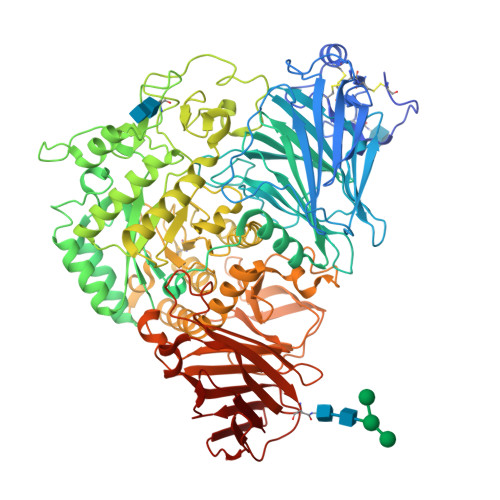
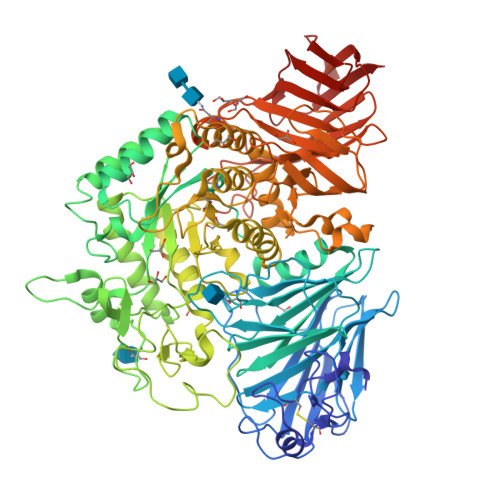
Sucrase-isomaltase, intestinal structureClick to view 3D structureSucrase-isomaltase, intestinalP14410HumansPredicted (SEA)
Prediction Confidence Score
0.209
Applicability Domain
0.25 Low confidence
Statistical Significance
0.001
Supporting Reference Compounds
14
E-value
8.17417
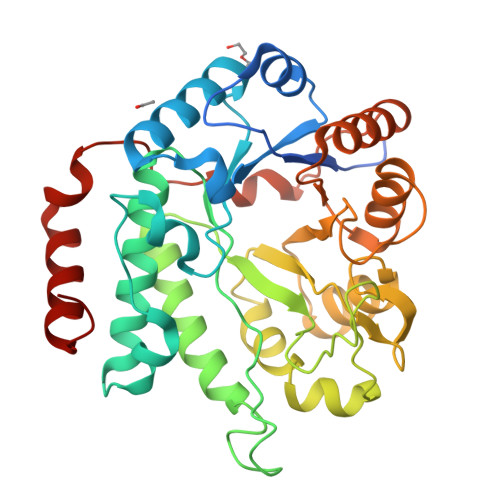
Click to view 3D structureLysosomal acid glucosylceramidaseP17439Mus musculusPredicted (SEA)
Prediction Confidence Score
0.206
Applicability Domain
0.29 Low confidence
Statistical Significance
3.00e-05
Supporting Reference Compounds
2
E-value
0.233548
Beta-hexosaminidase structureClick to view 3D structureBeta-hexosaminidaseQ9HZK0Pseudomonas aeruginosa (strain ATCC 15692 / PAO1 / 1C / PRS 101 / LMG12228)Predicted (SEA)
Prediction Confidence Score
0.204
Applicability Domain
0.204 Low confidence
Statistical Significance
5.20e-04
Supporting Reference Compounds
1
E-value
4.04816
Ubiquitin-conjugating enzyme E2 E1 structureClick to view 3D structureUbiquitin-conjugating enzyme E2 E1P51965HumansPredicted (SEA)
Prediction Confidence Score
0.2
Applicability Domain
0.2 Low confidence
Statistical Significance
0.0151
Supporting Reference Compounds
1
E-value
117.474
Click to view 3D structureAdenosine receptor A1P25099Rattus norvegicusPredicted (SEA)
Prediction Confidence Score
0.195
Applicability Domain
0.254 Low confidence
Statistical Significance
0.4036
Supporting Reference Compounds
221
E-value
3141.76
Beta-mannosidase B structureClick to view 3D structureBeta-mannosidase BQ8AAK6Bacteroides thetaiotaomicron (strain ATCC 29148 / DSM 2079 / NCTC 10582 / E50 / VPI-5482)Predicted (SEA)
Prediction Confidence Score
0.194
Applicability Domain
0.212 Low confidence
Statistical Significance
0.0015
Supporting Reference Compounds
2
E-value
11.5217
Click to view 3D structureVacuolar acid trehalaseP48016Saccharomyces cerevisiae (strain ATCC 204508 / S288c) (Baker's yeast)Predicted (SEA)
Prediction Confidence Score
1.0
Applicability Domain
1.0
Statistical Significance
1.00e-05
Supporting Reference Compounds
1
E-value
0.0778492
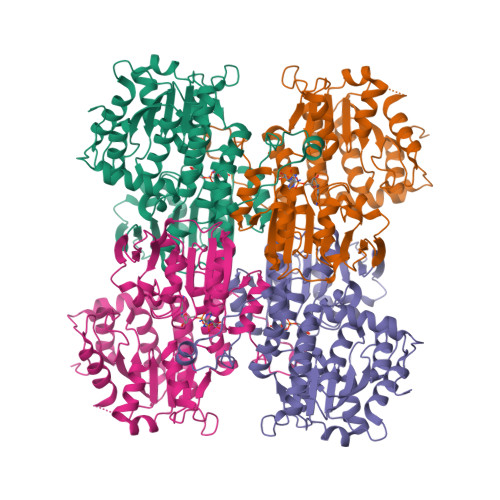
Click to view 3D structureTrehalaseO43280HumansPredicted (SEA)
Prediction Confidence Score
0.6
Applicability Domain
0.6
Statistical Significance
1.00e-05
Supporting Reference Compounds
1
E-value
0.0778492
Click to view 3D structureTrehalaseP32358Bombyx moriPredicted (SEA)
Prediction Confidence Score
0.577
Applicability Domain
1.0
Statistical Significance
1.00e-05
Supporting Reference Compounds
2
E-value
0.0778492
Click to view 3D structureTrehalaseO70282Rattus norvegicusPredicted (SEA)
Prediction Confidence Score
0.561
Applicability Domain
1.0
Statistical Significance
1.00e-05
Supporting Reference Compounds
2
E-value
0.0778492
Click to view 3D structureAlpha-amylaseQ7M328Sus scrofa domesticusPredicted (SEA)
Prediction Confidence Score
0.371
Applicability Domain
0.371
Statistical Significance
4.00e-05
Supporting Reference Compounds
1
E-value
0.311397
Click to view 3D structureBeta-galactosidaseQ58D55Bos taurusPredicted (SEA)
Prediction Confidence Score
0.295
Applicability Domain
0.417
Statistical Significance
2.80e-04
Supporting Reference Compounds
18
E-value
2.17978
Beta-galactosidase structureClick to view 3D structureBeta-galactosidaseP16278HumansPredicted (SEA)
Prediction Confidence Score
0.283
Applicability Domain
0.417
Statistical Significance
4.90e-04
Supporting Reference Compounds
11
E-value
3.81461
Click to view 3D structureAdoHcyase_NAD domain-containing proteinG1SVH0Oryctolagus cuniculusPredicted (SEA)
Prediction Confidence Score
0.274
Applicability Domain
0.276 Low confidence
Statistical Significance
3.90e-04
Supporting Reference Compounds
3
E-value
3.03612
Maltase-glucoamylase structureClick to view 3D structureMaltase-glucoamylaseO43451HumansPredicted (SEA)
Prediction Confidence Score
0.255
Applicability Domain
0.371
Statistical Significance
0.001
Supporting Reference Compounds
30
E-value
7.94062
Lysosomal alpha-glucosidase structureClick to view 3D structureLysosomal alpha-glucosidaseP10253HumansPredicted (SEA)
Prediction Confidence Score
0.245
Applicability Domain
0.371
Statistical Significance
6.90e-04
Supporting Reference Compounds
21
E-value
5.3716
Click to view 3D structureSucrase-isomaltase, intestinalP23739Rattus norvegicusPredicted (SEA)
Prediction Confidence Score
0.24
Applicability Domain
0.371
Statistical Significance
9.50e-04
Supporting Reference Compounds
25
E-value
7.39568
Click to view 3D structureLysosomal alpha-glucosidaseQ6P7A9Rattus norvegicusPredicted (SEA)
Prediction Confidence Score
0.239
Applicability Domain
0.371
Statistical Significance
7.40e-04
Supporting Reference Compounds
21
E-value
5.76084
Click to view 3D structureAlpha-glucosidaseP94451Geobacillus stearothermophilusPredicted (SEA)
Prediction Confidence Score
0.223
Applicability Domain
0.371
Statistical Significance
2.10e-04
Supporting Reference Compounds
3
E-value
1.63483
S-adenosylhomocysteine hydrolase-like protein 1 structureClick to view 3D structureS-adenosylhomocysteine hydrolase-like protein 1O43865HumansPredicted (SEA)
Prediction Confidence Score
0.219
Applicability Domain
0.271 Low confidence
Statistical Significance
0.0013
Supporting Reference Compounds
2
E-value
10.2761
Adenosylhomocysteinase structureClick to view 3D structureAdenosylhomocysteinaseP23526HumansPredicted (SEA)
Prediction Confidence Score
0.217
Applicability Domain
0.276 Low confidence
Statistical Significance
0.0091
Supporting Reference Compounds
19
E-value
71.1542
Click to view 3D structureAlpha-galactosidaseQ42656Coffea arabicaPredicted (SEA)
Prediction Confidence Score
0.215
Applicability Domain
0.408
Statistical Significance
7.50e-04
Supporting Reference Compounds
12
E-value
5.83869
Pancreatic alpha-amylase structureClick to view 3D structurePancreatic alpha-amylaseP00690Sus scrofaPredicted (SEA)
Prediction Confidence Score
0.214
Applicability Domain
0.371
Statistical Significance
1.60e-04
Supporting Reference Compounds
2
E-value
1.24559
Alpha-1,2-mannosidase (BT_3965) structureClick to view 3D structureAlpha-1,2-mannosidase (BT_3965)Q8A0Q6Bacteroides thetaiotaomicronPredicted (SEA)
Prediction Confidence Score
0.212
Applicability Domain
0.212 Low confidence
Statistical Significance
4.50e-04
Supporting Reference Compounds
1
E-value
3.50322
Alpha-1,2-mannosidase, putative (BT_3130) structureClick to view 3D structureAlpha-1,2-mannosidase, putative (BT_3130)Q8A325Bacteroides thetaiotaomicronPredicted (SEA)
Prediction Confidence Score
0.212
Applicability Domain
0.212 Low confidence
Statistical Significance
4.50e-04
Supporting Reference Compounds
1
E-value
3.50322
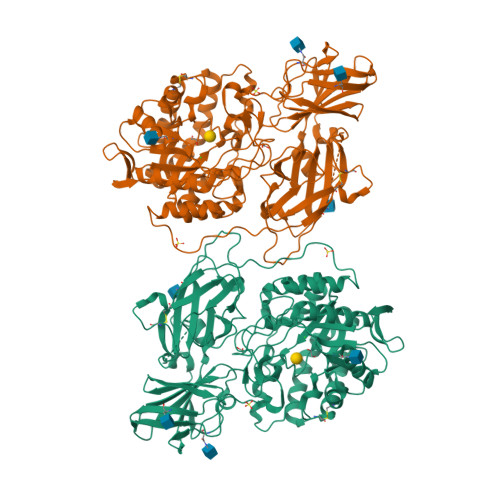
Superoxide dismutase [Cu-Zn] structureClick to view 3D structureSuperoxide dismutase [Cu-Zn]P00441HumansKnownUnbalanced levels of copper and zinc binding to Cu,Zn-superoxide dismutase has been linked to amyotrophic lateral sclerosis (ALS). (A49)
Concentrations
Not Available
External Links
DrugBank IDNot Available
HMDB IDNot Available
FooDB IDNot Available
Phenol Explorer IDNot Available
KNApSAcK IDNot Available
BiGG IDNot Available
BioCyc IDNot Available
METLIN IDNot Available
PDB IDNot Available
Wikipedia LinkNot Available
Chemspider IDNot Available
ChEBI IDNot Available
PubChem Compound ID161975
Kegg Compound IDNot Available
YMDB IDNot Available
ECMDB IDNot Available
References
Synthesis ReferenceNot Available
MSDSNot Available
General References
  1. Vonk WI, Klomp LW: Role of transition metals in the pathogenesis of amyotrophic lateral sclerosis. Biochem Soc Trans. 2008 Dec;36(Pt 6):1322-8. doi: 10.1042/BST0361322. [PubMed: 19021549]
  2. Wikipedia. Zinc. Last Updated 24 March 2009. - http://en.wikipedia.org/wiki/Zinc
  3. ATSDR - Agency for Toxic Substances and Disease Registry (2005). Toxicological profile for zinc. U.S. Public Health Service in collaboration with U.S. Environmental Protection Agency (EPA). - http://www.atsdr.cdc.gov/toxprofiles/tp60.html
  4. Wikipedia. Metallothionein. Last Updated 20 December 2008. - http://en.wikipedia.org/wiki/Metallothionein
  5. ATSDR - Agency for Toxic Substances and Disease Registry (2001). Minimal Risk Levels (MRLs) for Hazardous Substances. U.S. Public Health Service in collaboration with U.S. Environmental Protection Agency (EPA). - http://www.atsdr.cdc.gov/mrls/