Zinc phenolsulfate (CED0067262)

Record Information
Version1.0
Creation Date2009-06-19 21:58:49 UTC
Update Date2026-05-14 19:53:01 UTC
SynCED IDCED0067262
Secondary Accession Numbers
  • CHEM001248
  • T3D1463
Identification
Common NameZinc phenolsulfate
ClassSmall Molecule
Description
Zinc phenolsulfate is an exogenous organic compound with the formula C12H10O8S2Zn and an average molecular weight of 411.74 g/mol. It exists as a solid at room temperature. Zinc phenolsulfate belongs to the benzenesulfonic acids and derivatives, a subclass of benzene and substituted derivatives within the organic compounds. Industrially, the compound is utilized as a biocide, an astringent, and a deodorizer. It has been recorded as being released from two sources: electrically stimulated smoking devices within electrical and electronic equipment, and non-electric simulated smoking devices within household cleaning and consumer products. Regarding its biological interactions, one protein target has been recorded: Cu,Zn-superoxide dismutase (SOD1). Unbalanced levels of copper and zinc binding to this specific superoxide dismutase have been linked to amyotrophic lateral sclerosis (ALS).
Contaminant Type
  • Aromatic Hydrocarbon
  • Household Toxin
  • Industrial/Workplace Toxin
  • Organic Compound
  • Organometallic
  • Synthetic Compound
  • Zinc Compound
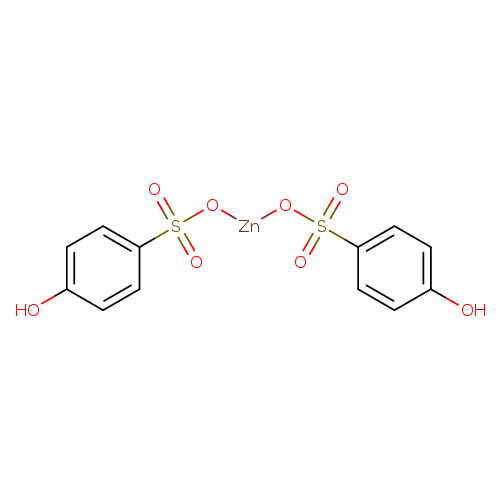
Chemical Structure
Synonyms
ValueSource
Zinc phenolsulfuric acidGenerator
Zinc phenolsulphateGenerator
Zinc phenolsulphuric acidGenerator
Chemical FormulaC12H10O8S2Zn
Average Molecular Mass411.742 g/mol
Monoisotopic Mass409.911 g/mol
CAS Registry Number127-82-2
IUPAC Name[(4-hydroxybenzenesulfonyl)oxy]zincio 4-hydroxybenzene-1-sulfonate
Traditional Name[(4-hydroxybenzenesulfonyl)oxy]zincio 4-hydroxybenzenesulfonate
SMILESOC1=CC=C(C=C1)S(=O)(=O)O[Zn]OS(=O)(=O)C1=CC=C(O)C=C1
InChI IdentifierInChI=1S/2C6H6O4S.Zn/c2*7-5-1-3-6(4-2-5)11(8,9)10;/h2*1-4,7H,(H,8,9,10);/q;;+2/p-2
InChI KeyZNVKGUVDRSSWHV-UHFFFAOYSA-L
Chemical Taxonomy
Description Belongs to the class of organic compounds known as benzenesulfonic acids and derivatives. These are organic compounds containing a sulfonic acid or a derivative thereof that is linked to a benzene ring.
KingdomOrganic compounds
Super ClassBenzenoids
ClassBenzene and substituted derivatives
Sub ClassBenzenesulfonic acids and derivatives
Direct ParentBenzenesulfonic acids and derivatives
Alternative Parents
Substituents
  • Benzenesulfonate
  • Arylsulfonic acid or derivatives
  • 1-sulfo,2-unsubstituted aromatic compound
  • Benzenesulfonyl group
  • 1-hydroxy-2-unsubstituted benzenoid
  • Phenol
  • Sulfonyl
  • Organosulfonic acid
  • Organosulfonic acid or derivatives
  • Organic sulfonic acid or derivatives
  • Organic transition metal salt
  • Organic salt
  • Organic oxide
  • Organic oxygen compound
  • Organosulfur compound
  • Organooxygen compound
  • Hydrocarbon derivative
  • Aromatic homomonocyclic compound
Molecular FrameworkNot Available
External DescriptorsNot Available
Biological Properties
StatusDetected and Not Quantified
OriginExogenous
Cellular Locations
  • Cytoplasm
  • Extracellular
Biofluid LocationsNot Available
Tissue LocationsNot Available
ApplicationsNot Available
Biological RolesNot Available
Chemical RolesNot Available
Organoleptic EffectsNot Available
Physical Properties
StateSolid
AppearanceColorless crystals.
Experimental Properties
PropertyValue
Melting PointNot Available
Boiling PointNot Available
SolubilityNot Available
Predicted Properties
PropertyValueSource
Water Solubility0.27 g/LALOGPS
logP1.35ALOGPS
logP1.99ChemAxon
logS-3.2ALOGPS
pKa (Strongest Acidic)7.74ChemAxon
pKa (Strongest Basic)-6.1ChemAxon
Physiological Charge0ChemAxon
Hydrogen Acceptor Count6ChemAxon
Hydrogen Donor Count2ChemAxon
Polar Surface Area127.2 ŲChemAxon
Rotatable Bond Count6ChemAxon
Refractivity74.89 m³·mol⁻¹ChemAxon
Polarizability32.94 ųChemAxon
Number of Rings2ChemAxon
BioavailabilityYesChemAxon
Rule of FiveYesChemAxon
Ghose FilterYesChemAxon
Veber's RuleNoChemAxon
MDDR-like RuleNoChemAxon
Spectra
Spectra
Spectrum TypeDescriptionSplash KeyDeposition DateView
Predicted LC-MS/MSPredicted LC-MS/MS Spectrumsplash10-03di-0700900000-ff633c7fe1053e04f87bNot AvailableView Spectrum
Predicted LC-MS/MSPredicted LC-MS/MS Spectrumsplash10-03dr-1452900000-2bbb79344a30d789c569Not AvailableView Spectrum
Predicted LC-MS/MSPredicted LC-MS/MS Spectrumsplash10-0059-9100000000-78312a83f09cfd04d82cNot AvailableView Spectrum
Predicted LC-MS/MSPredicted LC-MS/MS Spectrumsplash10-0a4i-0310900000-c2d681741e17b5694c55Not AvailableView Spectrum
Predicted LC-MS/MSPredicted LC-MS/MS Spectrumsplash10-0a4i-1920700000-27eeb10b2cc5b4e3a23dNot AvailableView Spectrum
Predicted LC-MS/MSPredicted LC-MS/MS Spectrumsplash10-052f-9700000000-e12bcec26fcb74e7e1deNot AvailableView Spectrum
Toxicity Profile
Toxicity Values
Toxicity ValueOrganismDose DescriptorRoute of ExposurePredicted or ExperimentalToxicity RatingReference
1800.0 mg/kg RatLD50OralexperimentalNot Available6
225.0 mg/kg MouseLD50IntraperitonealexperimentalNot Available6
Toxicity / Toxin ClassNot Available
Mechanism of ToxicityAnaemia results from the excessive absorption of zinc suppressing copper and iron absorption, most likely through competitive binding of intestinal mucosal cells. Unbalanced levels of copper and zinc binding to Cu,Zn-superoxide dismutase has been linked to amyotrophic lateral sclerosis (ALS). Stomach acid dissolves metallic zinc to give corrosive zinc chloride, which can cause damage to the stomach lining. Metal fume fever is thought to be an immune response to inhaled zinc. (2, 3, 1)
Carcinogenicity (IARC Classification)No indication of carcinogenicity to humans (not listed by IARC).
Minimum Risk LevelIntermediate Oral: 0.3 mg/kg/day (5) Chronic Oral: 0.3 mg/kg/day (5)
SymptomsIngestion of large doses of zinc causes stomach cramps, nausea, and vomiting. Acute inhalation of large amounts of zinc causes metal fume fever, which is characterized by chills, fever, headache, weakness, dryness of the nose and throat, chest pain, and coughing. Dermal contact with zinc results in skin irritation. (3)
TreatmentZinc poisoning is treated symptomatically, often by administering fluids such as water or milk, or with gastric lavage. (3)
Health Effects
Health EffectRelationshipDirectionDescriptionReference
Exposure Sources
Source IDSourceSectorReference
CEDs000010Insecticides?Insecticides are synthetic chemicals designed to control or eliminate insect pests that threaten crops and other agricultural products.Agriculture & land managementPubChem
CEDs000233Brushes?Brushes used in personal care and cosmetics can be a source of synthetic chemical contamination due to the materials and coatings used in their manufacturing.Personal care & cosmeticsPubChem
CEDs000511Conductors Or Conductive Bodies Characterised By The Conductive Materials?Conductors, or conductive bodies, are materials that allow the flow of electrical current, typically made from metals such as copper, aluminum, or silver.Electrical & Electronic EquipmentPubChem
CEDs000518Electrically Stimulated Smoking Devices?Electrically stimulated smoking devices, commonly known as e-cigarettes or vape pens, utilize electrical components to heat a liquid solution, often containing nicotine, flavorings, and other additives, to produce an aerosol for inhalation.Electrical & Electronic EquipmentPubChem
CEDs000519Electrodes?Electrodes, used in various electrical and electronic applications, can be a source of synthetic chemical contamination due to the materials from which they are constructed and the processes involved in their manufacturing.Electrical & Electronic EquipmentPubChem
CEDs000545Food Preservation?Food preservation often involves the use of synthetic chemicals, such as preservatives, flavor enhancers, and color additives, to extend shelf life and enhance the sensory qualities of food products.Food, food processing & cookwarePubChem
CEDs000559Non Electric Simulated Smoking Devices?Non-electric simulated smoking devices, often designed to mimic the experience of smoking without combustion, can be sources of synthetic chemical contamination due to the materials and chemicals used in their construction and operation.Household cleaning & consumer productsPubChem
CEDs000561Perfumes Within Detergents And Soaps?Perfumes within detergents and soaps are synthetic fragrance compounds added to enhance the sensory experience of cleaning products.Household cleaning & consumer productsPubChem
CEDs000563Soap Detergents?Soap detergents are synthetic surfactants designed to enhance the cleaning efficacy of water by reducing surface tension, allowing for better interaction with dirt and grease.Household cleaning & consumer productsPubChem
CEDs000569Tobacco Smoke Filters?Tobacco smoke filters are designed to reduce the inhalation of harmful substances in cigarette smoke, including tar and other particulate matter.Household cleaning & consumer productsPubChem
CEDs000589Life Buoys?Life buoys, commonly used in marine environments for safety and rescue operations, can be a source of synthetic chemical contamination due to the materials used in their production.Marine, shipping & aquaculturePubChem
CEDs000596Acaricides?Acaricides are synthetic chemicals specifically designed to target and control mite populations that can damage crops and plants.Agriculture & land managementPubChem
CEDs000603Nematocides?Nematocides are synthetic chemicals specifically designed to control nematodes, which are microscopic roundworms that can cause significant damage to crops and plants.Agriculture & land managementPubChem
CEDs000605Pest Repellants?Pest repellents, often formulated from synthetic chemicals, are widely used to protect crops from insect infestations and other pests.Agriculture & land managementPubChem
CEDs000607Rodenticides(1)?Rodenticides are synthetic chemicals specifically formulated to control rodent populations, serving as a crucial tool in managing pests that can damage crops and spread diseases.Agriculture & land managementPubChem
CEDs000608Rodenticides?Rodenticides are chemical substances specifically designed to control rodent populations by causing death through various mechanisms, including anticoagulation or neurotoxicity.Agriculture & land managementPubChem
CEDs000609Aftershave?Aftershave is a grooming product typically used to soothe and protect the skin following shaving.Personal care & cosmeticsPubChem
CEDs000610Aftersun Products?Aftersun products are designed to soothe and hydrate the skin after sun exposure, often containing various synthetic chemicals such as emollients, preservatives, and fragrances.Personal care & cosmeticsPubChem
CEDs000611Anti Perspirants Or Body Deoderants?Antiperspirants and body deodorants commonly contain synthetic chemicals such as aluminum compounds, parabens, and synthetic fragrances.Personal care & cosmeticsPubChem
CEDs000612Body Washing Or Cleaning Implements?Body washing or cleaning implements, such as synthetic sponges, loofahs, and washcloths, can be sources of synthetic chemical contamination due to the materials used in their production.Personal care & cosmeticsPubChem
CEDs000613Depilatories?Depilatories are products designed to remove unwanted hair through the application of synthetic chemicals that break down the protein structure of hair, facilitating its removal.Personal care & cosmeticsPubChem
CEDs000614Essential Oils Or Perfumes?Essential oils and perfumes are complex mixtures of volatile compounds derived from natural or synthetic sources, commonly used for their aromatic properties.Personal care & cosmeticsPubChem
CEDs000615Eye Makeup Products?Eye makeup products, including mascaras, eyeliners, and eyeshadows, often contain a variety of synthetic chemicals such as pigments, preservatives, and film-forming agents.Personal care & cosmeticsPubChem
CEDs000617Lip Care Products?Lip care products, including lipsticks, balms, and glosses, often contain a variety of synthetic chemicals such as parabens, phthalates, and synthetic fragrances.Personal care & cosmeticsPubChem
CEDs000618Lip Makeup Products?Lip makeup products, such as lipsticks, lip glosses, and lip liners, often contain a variety of synthetic chemicals, including pigments, preservatives, and emollients.Personal care & cosmeticsPubChem
CEDs000632Apparel?Apparel production often involves the use of various synthetic chemicals, including dyes, finishing agents, and preservatives.Textiles, leather & furnishingsPubChem
CEDs000642Footwear?Footwear production often involves the use of various synthetic chemicals, such as adhesives, dyes, and treatments, which can contribute to environmental contamination.Textiles, leather & furnishingsPubChem
CEDs000653Sewing?Sewing processes often involve the use of various synthetic chemicals, which can become sources of contamination in the environment.Textiles, leather & furnishingsPubChem
CEDs000670Solid Fire Fighting Substances?Solid fire fighting substances, such as certain types of dry chemical powders, are used in fire suppression applications to extinguish flames and prevent fire spread.Fire suppression systems & agentsPubChem
CEDs000678Nitrogenous Fertilisers?Nitrogenous fertilizers are synthetic chemical compounds primarily used to enhance plant growth by supplying essential nitrogen, a crucial nutrient for photosynthesis and protein synthesis.Agriculture & land managementPubChem
CEDs000696Nanotechnology?Nanotechnology involves the manipulation of materials at the molecular or atomic level, typically within the range of 1 to 100 nanometers.Industrial manufacturing & chemical processingPubChem
CEDs000734Coating Compositions?Coating compositions, which include paints, sealants, and varnishes, are formulated with a variety of synthetic chemicals such as solvents, resins, pigments, and additives.Building & ConstructionPubChem
CEDs000739Inks?Inks are complex mixtures composed of pigments or dyes, solvents, resins, and additives used primarily for printing and writing applications.Paper, pulp & fiber productsPubChem
CEDs000740Paper?Paper production involves the processing of wood fibers and the use of various chemicals, which can lead to synthetic chemical contamination.Paper, pulp & fiber productsPubChem
CEDs000744Water, Wastewater, & Sewage Treatment?Water, wastewater, and sewage treatment processes are critical for managing and mitigating pollutants in water systems.Wastewater, sanitation & biosolidsPubChem
Pathways
2 pathwaysPathway Source: PathBank
Targets
StructureProteinUniProt IDOrganismRelationshipDetails
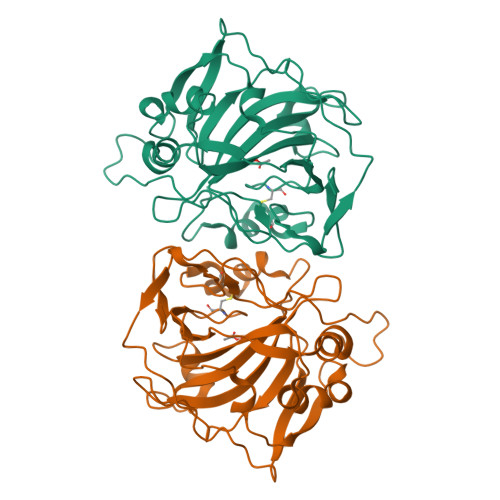
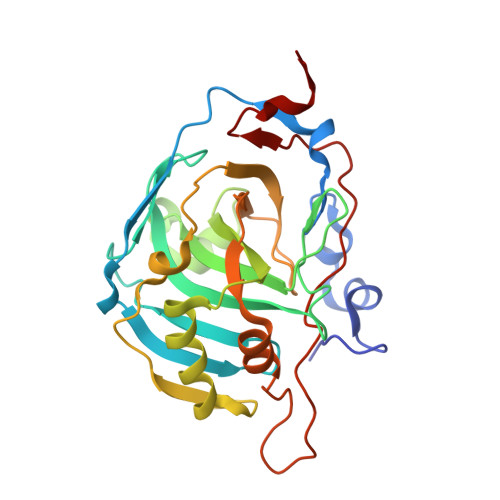
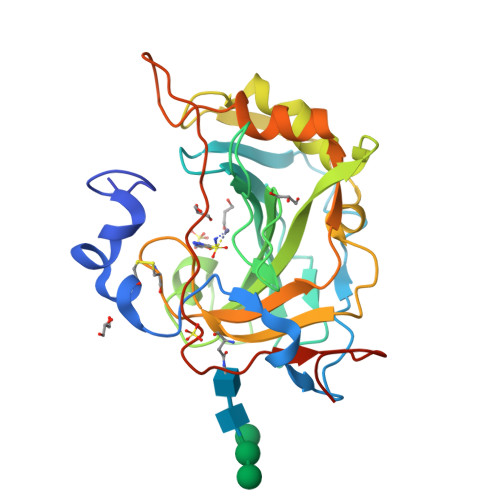
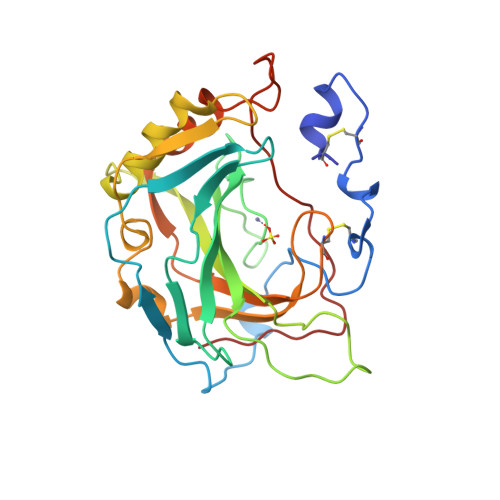
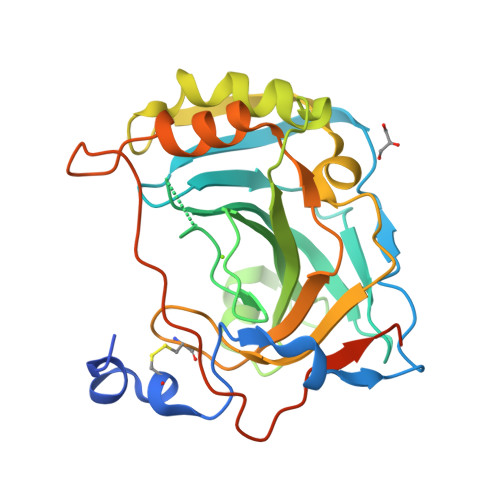
Carbonic anhydrase 2 structureClick to view 3D structureCarbonic anhydrase 2P00918HumansPredicted (SEA)
Prediction Confidence Score
0.374
Applicability Domain
0.481
Statistical Significance
0.0111
Supporting Reference Compounds
472
E-value
86.3348
Carbonic anhydrase 12 structureClick to view 3D structureCarbonic anhydrase 12O43570HumansPredicted (SEA)
Prediction Confidence Score
0.374
Applicability Domain
0.481
Statistical Significance
0.0081
Supporting Reference Compounds
332
E-value
63.4471
Carbonic anhydrase 9 structureClick to view 3D structureCarbonic anhydrase 9Q16790HumansPredicted (SEA)
Prediction Confidence Score
0.359
Applicability Domain
0.481
Statistical Significance
0.0113
Supporting Reference Compounds
372
E-value
88.0475
Carbonic anhydrase 1 structureClick to view 3D structureCarbonic anhydrase 1P00915HumansPredicted (SEA)
Prediction Confidence Score
0.335
Applicability Domain
0.481
Statistical Significance
0.019
Supporting Reference Compounds
407
E-value
147.758
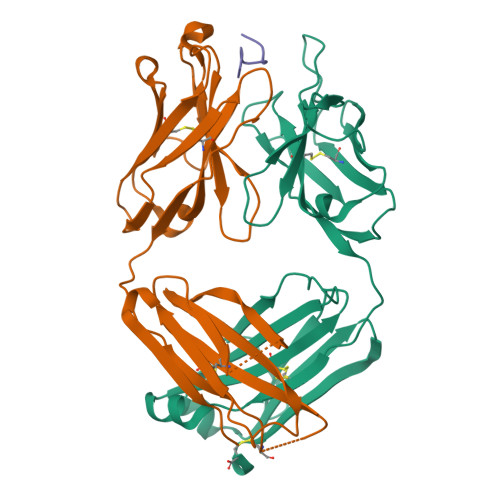
Endolysin structureClick to view 3D structureEndolysinP00720Enterobacteria phage T4Predicted (SEA)
Prediction Confidence Score
0.333
Applicability Domain
0.333
Statistical Significance
4.80e-04
Supporting Reference Compounds
1
E-value
3.73676
Carbonic anhydrase 7 structureClick to view 3D structureCarbonic anhydrase 7P43166HumansPredicted (SEA)
Prediction Confidence Score
0.317
Applicability Domain
0.394
Statistical Significance
0.0145
Supporting Reference Compounds
242
E-value
112.959
Carbonic anhydrase 3 structureClick to view 3D structureCarbonic anhydrase 3P07451HumansPredicted (SEA)
Prediction Confidence Score
0.313
Applicability Domain
0.364
Statistical Significance
0.0034
Supporting Reference Compounds
64
E-value
26.1573
Click to view 3D structureDelta carbonic anhydraseQ5U9J1Conticribra weissflogiiPredicted (SEA)
Prediction Confidence Score
0.301
Applicability Domain
0.481
Statistical Significance
0.0044
Supporting Reference Compounds
35
E-value
33.9423
Carbonic anhydrase 14 structureClick to view 3D structureCarbonic anhydrase 14Q9ULX7HumansPredicted (SEA)
Prediction Confidence Score
0.29
Applicability Domain
0.323
Statistical Significance
0.0201
Supporting Reference Compounds
172
E-value
156.243
Beta-carbonic anhydrase 1 structureClick to view 3D structureBeta-carbonic anhydrase 1P9WPJ7Mycobacterium tuberculosisPredicted (SEA)
Prediction Confidence Score
0.288
Applicability Domain
0.394
Statistical Significance
0.0084
Supporting Reference Compounds
55
E-value
65.2376
Click to view 3D structureCarbonic anhydrase 15Q99N23Mus musculusPredicted (SEA)
Prediction Confidence Score
0.287
Applicability Domain
0.323
Statistical Significance
0.0101
Supporting Reference Compounds
78
E-value
79.017
Carbonic anhydrase 4 structureClick to view 3D structureCarbonic anhydrase 4P22748HumansPredicted (SEA)
Prediction Confidence Score
0.286
Applicability Domain
0.323
Statistical Significance
0.0192
Supporting Reference Compounds
193
E-value
149.315
Carbonic anhydrase 6 structureClick to view 3D structureCarbonic anhydrase 6P23280HumansPredicted (SEA)
Prediction Confidence Score
0.285
Applicability Domain
0.323
Statistical Significance
0.0166
Supporting Reference Compounds
151
E-value
128.918
Click to view 3D structureCarbonic anhydrase 5B, mitochondrialQ9Y2D0HumansPredicted (SEA)
Prediction Confidence Score
0.285
Applicability Domain
0.323
Statistical Significance
0.0174
Supporting Reference Compounds
157
E-value
135.847
Click to view 3D structureCarbonic anhydrase 5A, mitochondrialP35218HumansPredicted (SEA)
Prediction Confidence Score
0.285
Applicability Domain
0.323
Statistical Significance
0.0235
Supporting Reference Compounds
165
E-value
182.712
Cytochrome b-c1 complex subunit 7 structureClick to view 3D structureCytochrome b-c1 complex subunit 7P14927HumansPredicted (SEA)
Prediction Confidence Score
0.285
Applicability Domain
0.342
Statistical Significance
0.0021
Supporting Reference Compounds
2
E-value
16.5819
Estrogen receptor structureClick to view 3D structureEstrogen receptorP03372HumansPredicted (SEA)
Prediction Confidence Score
0.281
Applicability Domain
0.323
Statistical Significance
0.0195
Supporting Reference Compounds
201
E-value
151.495
Estrogen receptor beta structureClick to view 3D structureEstrogen receptor betaQ92731HumansPredicted (SEA)
Prediction Confidence Score
0.275
Applicability Domain
0.29 Low confidence
Statistical Significance
0.024
Supporting Reference Compounds
174
E-value
186.527
Tyrosinase structureClick to view 3D structureTyrosinaseP14679HumansPredicted (SEA)
Prediction Confidence Score
0.275
Applicability Domain
0.323
Statistical Significance
0.0025
Supporting Reference Compounds
29
E-value
19.3845
Amine oxidase [flavin-containing] B structureClick to view 3D structureAmine oxidase [flavin-containing] BP27338HumansPredicted (SEA)
Prediction Confidence Score
0.273
Applicability Domain
0.323
Statistical Significance
0.0685
Supporting Reference Compounds
315
E-value
533.189
Succinate-semialdehyde dehydrogenase, mitochondrial structureClick to view 3D structureSuccinate-semialdehyde dehydrogenase, mitochondrialP51649HumansPredicted (SEA)
Prediction Confidence Score
0.273
Applicability Domain
0.273 Low confidence
Statistical Significance
5.20e-04
Supporting Reference Compounds
1
E-value
4.04816
Prostaglandin G/H synthase 1 structureClick to view 3D structureProstaglandin G/H synthase 1P23219HumansPredicted (SEA)
Prediction Confidence Score
0.269
Applicability Domain
0.323
Statistical Significance
0.0267
Supporting Reference Compounds
136
E-value
207.624
Prostaglandin G/H synthase 2 structureClick to view 3D structureProstaglandin G/H synthase 2P35354HumansPredicted (SEA)
Prediction Confidence Score
0.267
Applicability Domain
0.323
Statistical Significance
0.0465
Supporting Reference Compounds
201
E-value
362.388
Click to view 3D structureSarcoplasmic/endoplasmic reticulum calcium ATPase 2P11507Rattus norvegicusPredicted (SEA)
Prediction Confidence Score
0.267
Applicability Domain
0.267 Low confidence
Statistical Significance
4.00e-04
Supporting Reference Compounds
1
E-value
3.11397
Large T antigen structureClick to view 3D structureLarge T antigenP03070Simian virus 40Predicted (SEA)
Prediction Confidence Score
0.266
Applicability Domain
0.364
Statistical Significance
0.0073
Supporting Reference Compounds
78
E-value
56.6742
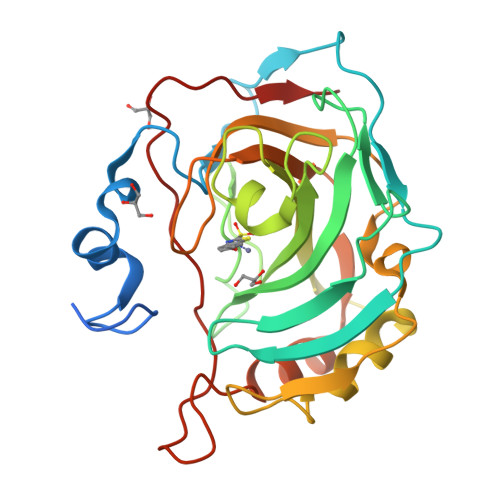
Superoxide dismutase [Cu-Zn] structureClick to view 3D structureSuperoxide dismutase [Cu-Zn]P00441HumansKnownUnbalanced levels of copper and zinc binding to Cu,Zn-superoxide dismutase has been linked to amyotrophic lateral sclerosis (ALS). (A49)
Concentrations
Not Available
External Links
DrugBank IDNot Available
HMDB IDNot Available
FooDB IDNot Available
Phenol Explorer IDNot Available
KNApSAcK IDNot Available
BiGG IDNot Available
BioCyc IDNot Available
METLIN IDNot Available
PDB IDNot Available
Wikipedia LinkNot Available
Chemspider IDNot Available
ChEBI IDNot Available
PubChem Compound ID31391
Kegg Compound IDNot Available
YMDB IDNot Available
ECMDB IDNot Available
References
Synthesis ReferenceNot Available
MSDSNot Available
General References
  1. Vonk WI, Klomp LW: Role of transition metals in the pathogenesis of amyotrophic lateral sclerosis. Biochem Soc Trans. 2008 Dec;36(Pt 6):1322-8. doi: 10.1042/BST0361322. [PubMed: 19021549]
  2. Wikipedia. Zinc. Last Updated 24 March 2009. - http://en.wikipedia.org/wiki/Zinc
  3. ATSDR - Agency for Toxic Substances and Disease Registry (2005). Toxicological profile for zinc. U.S. Public Health Service in collaboration with U.S. Environmental Protection Agency (EPA). - http://www.atsdr.cdc.gov/toxprofiles/tp60.html
  4. Wikipedia. Metallothionein. Last Updated 20 December 2008. - http://en.wikipedia.org/wiki/Metallothionein
  5. ATSDR - Agency for Toxic Substances and Disease Registry (2001). Minimal Risk Levels (MRLs) for Hazardous Substances. U.S. Public Health Service in collaboration with U.S. Environmental Protection Agency (EPA). - http://www.atsdr.cdc.gov/mrls/
  6. Lewis RJ (1996). Sax's Dangerous Properties of Industrial Materials. 9th ed. Volumes 1-3. New York, NY: Van Nostrand Reinhold.