2,4'-Dibromobiphenyl (CED0150375)

Record Information
Version1.0
Creation Date2009-06-24 17:05:45 UTC
Update Date2026-08-18 21:32:42 UTC
SynCED IDCED0150375
Secondary Accession Numbers
  • CHEM001702
  • T3D1955
Identification
Common Name2,4'-Dibromobiphenyl
ClassSmall Molecule
Description
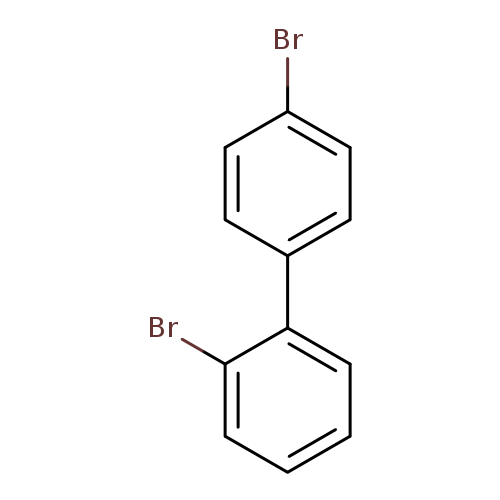
2,4'-Dibromobiphenyl is an exogenous organic compound with the formula C12H8Br2 and an average molecular weight of 312.00 g/mol. It exists as a solid at room temperature. 2,4'-Dibromobiphenyl belongs to the biphenyls and derivatives, a subclass of benzene and substituted derivatives within the organic compounds. This compound is recorded as being found in or released from electrical and electronic equipment, specifically selectors and communication cables or conductors. As a polybrominated biphenyl (PBB), 2,4'-Dibromobiphenyl is part of a group of 209 synthetic organic compounds featuring 1-10 bromine atoms attached to biphenyl. PBBs have been used as flame retardants in textiles, plastic foams, and plastics for products such as televisions and computer monitors, though their use is restricted or banned in most areas because of their environmental persistence and toxicity. The compound targets the aryl hydrocarbon receptor (AHR). Binding and activation of the AhR initiates the transcriptional upregulation of genes, including the cytochrome P-450-dependent monooxygenases CYP1A1 and CYP1A2, affecting endocrine pathways, morphogenesis, oxidative stress response, and cell cycle regulation.
Contaminant Type
  • Aromatic Hydrocarbon
  • Bromide Compound
  • Industrial/Workplace Toxin
  • Organic Compound
  • Organobromide
  • Polybrominated Biphenyl
  • Synthetic Compound
Chemical Structure
SynonymsNot Available
Chemical FormulaC12H8Br2
Average Molecular Mass312.000 g/mol
Monoisotopic Mass309.899 g/mol
CAS Registry Number49602-91-7
IUPAC Name1-bromo-4-(2-bromophenyl)benzene
Traditional Name1-bromo-4-(2-bromophenyl)benzene
SMILESBrC1=CC=C(C=C1)C1=CC=CC=C1Br
InChI IdentifierInChI=1S/C12H8Br2/c13-10-7-5-9(6-8-10)11-3-1-2-4-12(11)14/h1-8H
InChI KeyFPYGQQPAMXFHJF-UHFFFAOYSA-N
Chemical Taxonomy
Description Belongs to the class of organic compounds known as polybrominated biphenyls. These are organic aromatic compounds containing a biphenyl moiety, which is substituted at two or more ring positions by a bromine atom.
KingdomOrganic compounds
Super ClassBenzenoids
ClassBenzene and substituted derivatives
Sub ClassBiphenyls and derivatives
Direct ParentPolybrominated biphenyls
Alternative Parents
Substituents
  • Polybrominated biphenyl
  • Halobenzene
  • Bromobenzene
  • Aryl halide
  • Aryl bromide
  • Hydrocarbon derivative
  • Organobromide
  • Organohalogen compound
  • Aromatic homomonocyclic compound
Molecular FrameworkAromatic homomonocyclic compounds
External DescriptorsNot Available
Biological Properties
StatusDetected and Not Quantified
OriginExogenous
Cellular Locations
  • Membrane
Biofluid LocationsNot Available
Tissue LocationsNot Available
ApplicationsNot Available
Biological RolesNot Available
Chemical RolesNot Available
Organoleptic EffectsNot Available
Physical Properties
StateSolid
AppearanceColorless to white powder.
Experimental Properties
PropertyValue
Melting PointNot Available
Boiling PointNot Available
SolubilityNot Available
Predicted Properties
PropertyValueSource
Water Solubility0.00049 g/LALOGPS
logP5.48ALOGPS
logP5.16ChemAxon
logS-5.8ALOGPS
Physiological Charge0ChemAxon
Hydrogen Acceptor Count0ChemAxon
Hydrogen Donor Count0ChemAxon
Polar Surface Area0 ŲChemAxon
Rotatable Bond Count1ChemAxon
Refractivity66.44 m³·mol⁻¹ChemAxon
Polarizability24.62 ųChemAxon
Number of Rings2ChemAxon
BioavailabilityYesChemAxon
Rule of FiveNoChemAxon
Ghose FilterYesChemAxon
Veber's RuleYesChemAxon
MDDR-like RuleNoChemAxon
Spectra
Spectra
Spectrum TypeDescriptionSplash KeyDeposition DateView
Predicted LC-MS/MSPredicted LC-MS/MS Spectrumsplash10-03di-0009000000-9a8b2766075397a5befcNot AvailableView Spectrum
Predicted LC-MS/MSPredicted LC-MS/MS Spectrumsplash10-03di-0009000000-9ebc8fcf393797e954d5Not AvailableView Spectrum
Predicted LC-MS/MSPredicted LC-MS/MS Spectrumsplash10-03di-2469000000-4b084d9f46a32cce9fbfNot AvailableView Spectrum
Predicted LC-MS/MSPredicted LC-MS/MS Spectrumsplash10-0a4i-0009000000-aab542bec2b5c00589ceNot AvailableView Spectrum
Predicted LC-MS/MSPredicted LC-MS/MS Spectrumsplash10-0a4i-0249000000-fb9e39362ead44317cabNot AvailableView Spectrum
Toxicity Profile
Toxicity ValuesNot Available
Toxicity / Toxin ClassNot Available
Mechanism of ToxicityThe exact mechanism of toxicty of PBBs varies depending on the specific congener. The predominant interaction is believed to involve the aryl hydrocarbon receptor (AhR). PBBs bind to and activate the AhR, which in turn initiates the transcriptional upregulation of a number of genes, affecting biochemical and endocrine pathways, cell cycle regulation, morphogenesis, oxidative stress response, and various other processes. This results in the numerous toxic responses characteristic of PBBs. Some of the known induced genes include the cytochrome P-450-dependent monooxygenases CYP1A1 and CYP1A2. (3)
Carcinogenicity (IARC Classification)2A, probably carcinogenic to humans. (2)
Minimum Risk LevelAcute Oral: 0.01 mg/kg/day (1)
SymptomsSymptoms of PBB exposure may include nausea, abdominal pain, loss of appetite, joint pain, fatigue, and weakness. (4)
TreatmentEYES: irrigate opened eyes for several minutes under running water. INGESTION: do not induce vomiting. Rinse mouth with water (never give anything by mouth to an unconscious person). Seek immediate medical advice. SKIN: should be treated immediately by rinsing the affected parts in cold running water for at least 15 minutes, followed by thorough washing with soap and water. If necessary, the person should shower and change contaminated clothing and shoes, and then must seek medical attention. INHALATION: supply fresh air. If required provide artificial respiration.
Health Effects
Health EffectRelationshipDirectionDescriptionReference
Exposure Sources
Source IDSourceSectorReference
CEDs000510Communication Cables Or Conductors?Communication cables or conductors are essential components in the transmission of data and signals in various applications, including telecommunications and networking.Electrical & Electronic EquipmentPubChem
CEDs000511Conductors Or Conductive Bodies Characterised By The Conductive Materials?Conductors, or conductive bodies, are materials that allow the flow of electrical current, typically made from metals such as copper, aluminum, or silver.Electrical & Electronic EquipmentPubChem
CEDs000532Selectors?Selectors are components used in various electronic devices to control the flow of electrical signals.Electrical & Electronic EquipmentPubChem
CEDs000671Airplanes And Helicopters?Airplanes and helicopters are significant sources of synthetic chemical contamination primarily through the use of aviation fuels, lubricants, and de-icing agents.Aviation & AerospacePubChem
CEDs000696Nanotechnology?Nanotechnology involves the manipulation of materials at the molecular or atomic level, typically within the range of 1 to 100 nanometers.Industrial manufacturing & chemical processingPubChem
Pathways
0 pathwaysPathway Source: PathBank

No pathways found

No metabolic pathways have been associated with this synthetic chemical

Targets
StructureProteinUniProt IDOrganismRelationshipDetails
Peptidoglycan-N-acetylglucosamine deacetylase BC_1974 structureClick to view 3D structurePeptidoglycan-N-acetylglucosamine deacetylase BC_1974Q81EJ6Bacillus cereus (strain ATCC 14579 / DSM 31 / JCM 2152 / NBRC 15305 /NCIMB 9373 / NRRL B-3711)Predicted (SEA)
Prediction Confidence Score
0.289
Applicability Domain
0.289 Low confidence
Statistical Significance
0.002
Supporting Reference Compounds
1
E-value
15.2584
Click to view 3D structureHydroxyacid oxidase 1I3LVF1Sus scrofaPredicted (SEA)
Prediction Confidence Score
0.286
Applicability Domain
0.286 Low confidence
Statistical Significance
1.20e-04
Supporting Reference Compounds
1
E-value
0.934191
Click to view 3D structureStreptokinase AP10520Streptococcus pyogenes serotype M1Predicted (SEA)
Prediction Confidence Score
0.283
Applicability Domain
0.389
Statistical Significance
0.0389
Supporting Reference Compounds
425
E-value
302.678
Serine/threonine-protein kinase pim-1 structureClick to view 3D structureSerine/threonine-protein kinase pim-1P11309HumansPredicted (SEA)
Prediction Confidence Score
0.281
Applicability Domain
0.389
Statistical Significance
0.1683
Supporting Reference Compounds
967
E-value
1310.36
Mitogen-activated protein kinase 9 structureClick to view 3D structureMitogen-activated protein kinase 9P45984HumansPredicted (SEA)
Prediction Confidence Score
0.273
Applicability Domain
0.389
Statistical Significance
0.1872
Supporting Reference Compounds
758
E-value
1457.65
Protein RecA structureClick to view 3D structureProtein RecAP9WHJ3Mycobacterium tuberculosisPredicted (SEA)
Prediction Confidence Score
0.272
Applicability Domain
0.389
Statistical Significance
0.038
Supporting Reference Compounds
296
E-value
295.827
Carbonic anhydrase 2 structureClick to view 3D structureCarbonic anhydrase 2P00918HumansPredicted (SEA)
Prediction Confidence Score
0.272
Applicability Domain
0.321
Statistical Significance
0.0912
Supporting Reference Compounds
472
E-value
710.296
Aurora kinase B structureClick to view 3D structureAurora kinase BQ96GD4HumansPredicted (SEA)
Prediction Confidence Score
0.272
Applicability Domain
0.389
Statistical Significance
0.22
Supporting Reference Compounds
1017
E-value
1712.37
Glycogen synthase kinase-3 beta structureClick to view 3D structureGlycogen synthase kinase-3 betaP49841HumansPredicted (SEA)
Prediction Confidence Score
0.271
Applicability Domain
0.389
Statistical Significance
0.2483
Supporting Reference Compounds
1157
E-value
1933.31
Aurora kinase A structureClick to view 3D structureAurora kinase AO14965HumansPredicted (SEA)
Prediction Confidence Score
0.271
Applicability Domain
0.389
Statistical Significance
0.22
Supporting Reference Compounds
996
E-value
1713.07
Casein kinase II subunit alpha structureClick to view 3D structureCasein kinase II subunit alphaP68400HumansPredicted (SEA)
Prediction Confidence Score
0.269
Applicability Domain
0.389
Statistical Significance
0.1611
Supporting Reference Compounds
593
E-value
1254.38
Click to view 3D structureDNA damage-inducible transcript 3 proteinP35639Mus musculusPredicted (SEA)
Prediction Confidence Score
0.269
Applicability Domain
0.389
Statistical Significance
0.0322
Supporting Reference Compounds
226
E-value
250.363
X-box-binding protein 1 structureClick to view 3D structureX-box-binding protein 1P17861HumansPredicted (SEA)
Prediction Confidence Score
0.269
Applicability Domain
0.389
Statistical Significance
0.0322
Supporting Reference Compounds
227
E-value
250.363
Glycogen synthase kinase-3 alpha structureClick to view 3D structureGlycogen synthase kinase-3 alphaP49840HumansPredicted (SEA)
Prediction Confidence Score
0.268
Applicability Domain
0.389
Statistical Significance
0.2051
Supporting Reference Compounds
754
E-value
1597.08
Cyclin-dependent kinase 1 structureClick to view 3D structureCyclin-dependent kinase 1P06493HumansPredicted (SEA)
Prediction Confidence Score
0.268
Applicability Domain
0.389
Statistical Significance
0.1844
Supporting Reference Compounds
715
E-value
1435.54
Non-receptor tyrosine-protein kinase TYK2 structureClick to view 3D structureNon-receptor tyrosine-protein kinase TYK2P29597HumansPredicted (SEA)
Prediction Confidence Score
0.268
Applicability Domain
0.389
Statistical Significance
0.1893
Supporting Reference Compounds
657
E-value
1473.84
Tyrosine-protein kinase JAK2 structureClick to view 3D structureTyrosine-protein kinase JAK2O60674HumansPredicted (SEA)
Prediction Confidence Score
0.268
Applicability Domain
0.389
Statistical Significance
0.2498
Supporting Reference Compounds
1022
E-value
1944.67
Epidermal growth factor receptor structureClick to view 3D structureEpidermal growth factor receptorP00533HumansPredicted (SEA)
Prediction Confidence Score
0.268
Applicability Domain
0.389
Statistical Significance
0.2723
Supporting Reference Compounds
1301
E-value
2119.52
Tyrosine-protein kinase Lck structureClick to view 3D structureTyrosine-protein kinase LckP06239HumansPredicted (SEA)
Prediction Confidence Score
0.268
Applicability Domain
0.389
Statistical Significance
0.2685
Supporting Reference Compounds
1130
E-value
2090.17
Mitogen-activated protein kinase 1 structureClick to view 3D structureMitogen-activated protein kinase 1P28482HumansPredicted (SEA)
Prediction Confidence Score
0.268
Applicability Domain
0.389
Statistical Significance
0.1995
Supporting Reference Compounds
763
E-value
1553.25
Receptor tyrosine-protein kinase erbB-2 structureClick to view 3D structureReceptor tyrosine-protein kinase erbB-2P04626HumansPredicted (SEA)
Prediction Confidence Score
0.267
Applicability Domain
0.389
Statistical Significance
0.1852
Supporting Reference Compounds
674
E-value
1442.16
cAMP-dependent protein kinase catalytic subunit alpha structureClick to view 3D structurecAMP-dependent protein kinase catalytic subunit alphaP17612HumansPredicted (SEA)
Prediction Confidence Score
0.267
Applicability Domain
0.389
Statistical Significance
0.2007
Supporting Reference Compounds
735
E-value
1562.2
Macrophage colony-stimulating factor 1 receptor structureClick to view 3D structureMacrophage colony-stimulating factor 1 receptorP07333HumansPredicted (SEA)
Prediction Confidence Score
0.267
Applicability Domain
0.389
Statistical Significance
0.2267
Supporting Reference Compounds
833
E-value
1764.92
Rho-associated protein kinase 1 structureClick to view 3D structureRho-associated protein kinase 1Q13464HumansPredicted (SEA)
Prediction Confidence Score
0.267
Applicability Domain
0.389
Statistical Significance
0.2256
Supporting Reference Compounds
834
E-value
1756.28
Serine/threonine-protein kinase PAK 4 structureClick to view 3D structureSerine/threonine-protein kinase PAK 4O96013HumansPredicted (SEA)
Prediction Confidence Score
0.266
Applicability Domain
0.389
Statistical Significance
0.2031
Supporting Reference Compounds
728
E-value
1581.2
Aryl hydrocarbon receptor structureClick to view 3D structureAryl hydrocarbon receptorP35869HumansKnownPBBs bind to and activate the aryl hydrocarbon receptor (AhR), which in turn initiates the transcriptional upregulation of a number of genes, affecting biochemical and endocrine pathways, cell cycle regulation, morphogenesis, oxidative stress response, and various other processes. This results in the numerous toxic responses characteristic of PBBs. Some of the known induced genes include the cytochrome P-450-dependent monooxygenases CYP1A1 and CYP1A2. (L628)
Concentrations
Not Available
External Links
DrugBank IDNot Available
HMDB IDNot Available
FooDB IDNot Available
Phenol Explorer IDNot Available
KNApSAcK IDNot Available
BiGG IDNot Available
BioCyc IDNot Available
METLIN IDNot Available
PDB IDNot Available
Wikipedia LinkNot Available
Chemspider IDNot Available
ChEBI IDNot Available
PubChem Compound IDNot Available
Kegg Compound IDNot Available
YMDB IDNot Available
ECMDB IDNot Available
References
Synthesis ReferenceNot Available
MSDSNot Available
General References
  1. ATSDR - Agency for Toxic Substances and Disease Registry (2001). Minimal Risk Levels (MRLs) for Hazardous Substances. U.S. Public Health Service in collaboration with U.S. Environmental Protection Agency (EPA). http://www.atsdr.cdc.gov/mrls/
  2. International Agency for Research on Cancer (2014). IARC Monographs on the Evaluation of Carcinogenic Risks to Humans. http://monographs.iarc.fr/index.php
  3. ATSDR - Agency for Toxic Substances and Disease Registry (2004). Toxicological profile for polybrominated biphenyls and polybrominated diphenyl ethers (PBBs and PBDEs). U.S. Public Health Service in collaboration with U.S. Environmental Protection Agency (EPA). http://www.atsdr.cdc.gov/toxprofiles/tp68.html
  4. Wikipedia. Polybrominated biphenyl. Last Updated 9 June 2009. http://en.wikipedia.org/wiki/Polybrominated_biphenyls