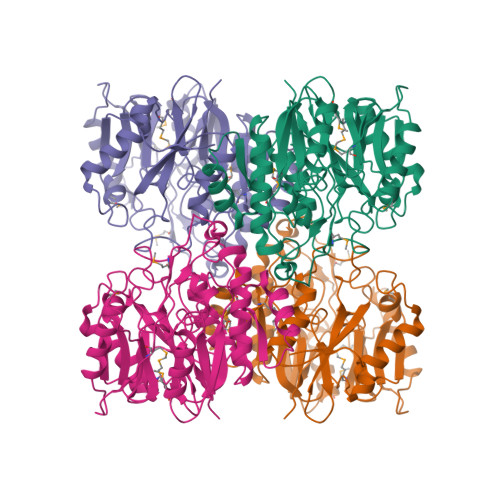
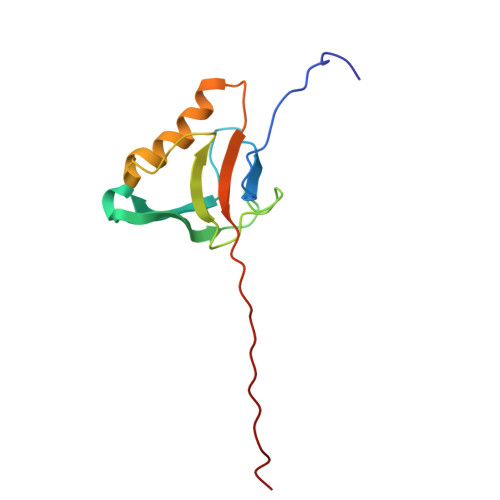
Alendronic acid (CED0002504)

Record Information
Version1.0
Creation Date2009-07-15 20:43:20 UTC
Update Date2026-05-14 16:44:34 UTC
SynCED IDCED0002504
Secondary Accession Numbers
  • CHEM002111
  • T3D2666
Identification
Common NameAlendronic acid
ClassSmall Molecule
Description
Alendronic acid belongs to the bisphosphonates, a subclass of organic phosphonic acids and derivatives within the organic compounds. It is an exogenous solid with the formula C4H13NO7P2 and an average molecular weight of 249.10 g/mol. This compound is used as a drug (PMC8713161) and a bone density conservation agent (PMC8713161). It acts as an inhibitor of EC 2.5.1.1 (dimethylallyltranstransferase) (PMC8713161). Its protein targets include farnesyl pyrophosphate synthase (FDPS), tyrosine-protein phosphatase non-receptor type 4 (PTPN4), receptor-type tyrosine-protein phosphatase S (PTPRS), receptor-type tyrosine-protein phosphatase epsilon (PTPRE), V-type proton ATPase catalytic subunit A (ATP6V1A), and geranylgeranyl pyrophosphate synthase (GGPS1). The action of alendronic acid on bone tissue is based partly on its affinity for hydroxyapatite, which is part of the mineral matrix of bone. It also targets farnesyl pyrophosphate (FPP) synthase, acting as an analogue of isoprenoid diphosphate lipids to inhibit this enzyme in the mevalonate pathway. Alendronic acid is found in healthcare, pharmaceuticals, and veterinary products as a drug for the treatment of bone diseases, and it has been detected in the prostate and intestine. The recorded exposure route is oral. It is used for the treatment of osteoporosis (PMC10516574, PMC10547673, PMC10889292, PMC11012270, PMC11036926, PMC12025247, PMC12896522, PMC2686344, PMC2971711), multiple myeloma (PMC4293349, PMC4684366, PMC6924235), hypercalcemia (PMC6924235), glucocorticoid-induced osteoporosis (PMC5114204), breast cancer (PMC7829671), and prostate cancer (PMC7829671). It has therapeutic effects on prostate cancer (PMC3932719), ovarian cancer (PMC1828067, PMC7192836), osteoporosis (PMC10425235), pain (PMC4257480), heart failure (PMC6452576), and breast cancer (PMC6607035). Associated health effects include an increase in arthritis (PMC10560398), hypophosphatemia (PMC2686344), nausea (PMC9738991), fever (PMC2971711), and a decrease in lung cancer (PMC7793382).
Contaminant Type
  • Amine
  • Antihypocalcemic Agent
  • Antiresorptive
  • Bisphosphonate
  • Bone Density Conservation Agent
  • Drug
  • Food Toxin
  • Human Neurotoxin
  • Metabolite
  • Organic Compound
  • Synthetic Compound
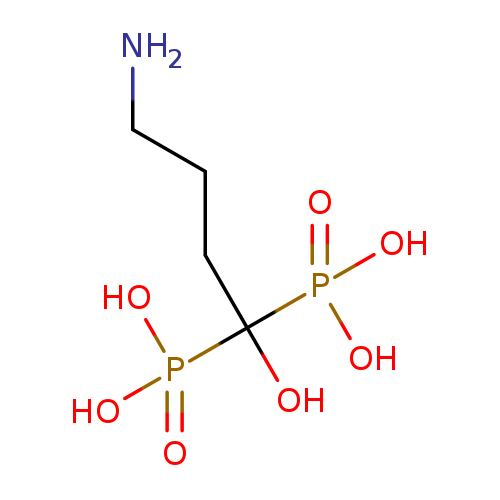
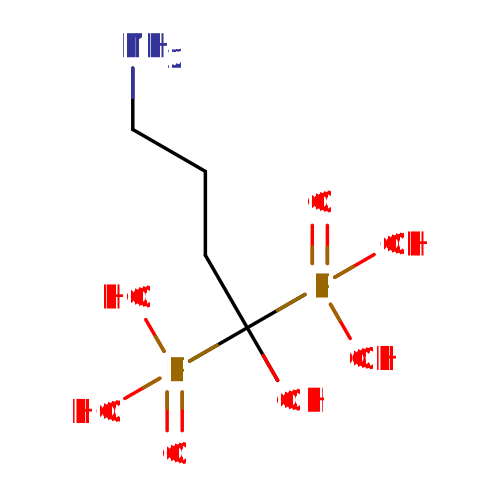
Chemical Structure
Synonyms
ValueSource
(4-Amino-1-hydroxybutylidene)bisphosphonic acidChEBI
Acide alendroniqueChEBI
Acido alendronicoChEBI
Acidum alendronicumChEBI
AlendronateChEBI
(4-Amino-1-hydroxybutylidene)bisphosphonateGenerator
4-Amino-1-hydroxybutylidene 1,1-biphosphonateMeSH
Alendronate monosodium salt, trihydrateMeSH
Alendronate sodiumMeSH
Aminohydroxybutane bisphosphonateMeSH
FosamaxMeSH
Alendronate sodium hydrateHMDB
Sodium, alendronateMeSH, HMDB
4 amino 1 Hydroxybutylidene 1,1 biphosphonateMeSH, HMDB
Bisphosphonate, aminohydroxybutaneMeSH, HMDB
Chemical FormulaC4H13NO7P2
Average Molecular Mass249.096 g/mol
Monoisotopic Mass249.017 g/mol
CAS Registry Number66376-36-1
IUPAC Name(4-amino-1-hydroxy-1-phosphonobutyl)phosphonic acid
Traditional Namealendronate
SMILESNCCCC(O)(P(O)(O)=O)P(O)(O)=O
InChI IdentifierInChI=1S/C4H13NO7P2/c5-3-1-2-4(6,13(7,8)9)14(10,11)12/h6H,1-3,5H2,(H2,7,8,9)(H2,10,11,12)
InChI KeyOGSPWJRAVKPPFI-UHFFFAOYSA-N
Chemical Taxonomy
Description Belongs to the class of organic compounds known as bisphosphonates. These are organic compounds containing two phosphonate groups linked together through a carbon atoms.
KingdomOrganic compounds
Super ClassOrganic acids and derivatives
ClassOrganic phosphonic acids and derivatives
Sub ClassBisphosphonates
Direct ParentBisphosphonates
Alternative Parents
Substituents
  • Bisphosphonate
  • Organophosphonic acid
  • Organic nitrogen compound
  • Organic oxygen compound
  • Organopnictogen compound
  • Organic oxide
  • Hydrocarbon derivative
  • Primary amine
  • Organophosphorus compound
  • Organooxygen compound
  • Organonitrogen compound
  • Primary aliphatic amine
  • Amine
  • Aliphatic acyclic compound
Molecular FrameworkAliphatic acyclic compounds
External Descriptors
Biological Properties
StatusDetected and Not Quantified
OriginExogenous
Cellular Locations
  • Cytoplasm
  • Membrane
Biofluid LocationsNot Available
Tissue Locations
  • Intestine
  • Prostate
Applications
Biological Roles
Chemical Roles
Organoleptic EffectsNot Available
Physical Properties
StateSolid
AppearanceWhite powder.
Experimental Properties
PropertyValue
Melting Point234 dec°C
Boiling PointNot Available
Solubility1mg/L
Predicted Properties
PropertyValueSource
Water Solubility16.9 g/LALOGPS
logP-1.3ALOGPS
logP-4.2ChemAxon
logS-1.2ALOGPS
pKa (Strongest Acidic)0.69ChemAxon
pKa (Strongest Basic)9.91ChemAxon
Physiological Charge-1ChemAxon
Hydrogen Acceptor Count8ChemAxon
Hydrogen Donor Count6ChemAxon
Polar Surface Area161.31 ŲChemAxon
Rotatable Bond Count5ChemAxon
Refractivity47.37 m³·mol⁻¹ChemAxon
Polarizability19.4 ųChemAxon
Number of Rings0ChemAxon
BioavailabilityYesChemAxon
Rule of FiveNoChemAxon
Ghose FilterNoChemAxon
Veber's RuleNoChemAxon
MDDR-like RuleNoChemAxon
Spectra
Spectra
Spectrum TypeDescriptionSplash KeyDeposition DateView
Predicted GC-MSPredicted GC-MS Spectrumsplash10-001i-9010000000-6b540b3cfe12455ee047Not AvailableView Spectrum
Predicted GC-MSPredicted GC-MS Spectrumsplash10-001i-9020000000-f4a0f6418448b2108371Not AvailableView Spectrum
Predicted GC-MSPredicted GC-MS SpectrumNot AvailableNot AvailableView Spectrum
LC-MS/MSLC-MS/MS Spectrumsplash10-014i-2930000000-99692afb4ed253251947Not AvailableView Spectrum
LC-MS/MSLC-MS/MS Spectrumsplash10-001i-0900000000-d2c07307d66e1c7d52e8Not AvailableView Spectrum
LC-MS/MSLC-MS/MS Spectrumsplash10-0kdl-9500000000-c82a6e6e898154627c7dNot AvailableView Spectrum
Predicted LC-MS/MSPredicted LC-MS/MS Spectrumsplash10-0ue9-0590000000-ed1b4585584330309b42Not AvailableView Spectrum
Predicted LC-MS/MSPredicted LC-MS/MS Spectrumsplash10-0uyi-4900000000-42101c55bda7e112b2afNot AvailableView Spectrum
Predicted LC-MS/MSPredicted LC-MS/MS Spectrumsplash10-001i-9330000000-8ac66f69531027a0950fNot AvailableView Spectrum
Predicted LC-MS/MSPredicted LC-MS/MS Spectrumsplash10-00kb-2590000000-2c9bde6c398541c5cb71Not AvailableView Spectrum
Predicted LC-MS/MSPredicted LC-MS/MS Spectrumsplash10-017i-6950000000-d1f8822b01485883083dNot AvailableView Spectrum
Predicted LC-MS/MSPredicted LC-MS/MS Spectrumsplash10-003r-9000000000-7b5e5c1f9b218640040bNot AvailableView Spectrum
Predicted LC-MS/MSPredicted LC-MS/MS Spectrumsplash10-0002-0090000000-0b08500c08babf97a735Not AvailableView Spectrum
Predicted LC-MS/MSPredicted LC-MS/MS Spectrumsplash10-005a-9050000000-04116055e92ba5f8a66fNot AvailableView Spectrum
Predicted LC-MS/MSPredicted LC-MS/MS Spectrumsplash10-03gi-9000000000-8274f2b488ab919859ffNot AvailableView Spectrum
Predicted LC-MS/MSPredicted LC-MS/MS Spectrumsplash10-0udi-0090000000-eb3a6c3bae79932540c8Not AvailableView Spectrum
Predicted LC-MS/MSPredicted LC-MS/MS Spectrumsplash10-0udi-0190000000-7b88a34c07f93b4e4779Not AvailableView Spectrum
Predicted LC-MS/MSPredicted LC-MS/MS Spectrumsplash10-0a4i-9100000000-12b406fbd4d8f99b2d4dNot AvailableView Spectrum
1D NMR13C NMR Spectrum (1D, D2O, predicted)Not AvailableNot AvailableView Spectrum
1D NMR1H NMR Spectrum (1D, D2O, predicted)Not AvailableNot AvailableView Spectrum
Toxicity Profile
Toxicity Values
Toxicity ValueOrganismDose DescriptorRoute of ExposurePredicted or ExperimentalToxicity RatingReference
2132.0 Log mg/kg [1200:3800]RatLD50oralpredictedNot AvailableNot Available
Toxicity / Toxin ClassNot Available
Mechanism of ToxicityThe action of Alendronate on bone tissue is based partly on its affinity for hydroxyapatite, which is part of the mineral matrix of bone. Alendronate also targets farnesyl pyrophosphate (FPP) synthase. Nitrogen-containing bisphosphonates (such as pamidronate, alendronate, risedronate, ibandronate and zoledronate) appear to act as analogues of isoprenoid diphosphate lipids, thereby inhibiting FPP synthase, an enzyme in the mevalonate pathway. Inhibition of this enzyme in osteoclasts prevents the biosynthesis of isoprenoid lipids (FPP and GGPP) that are essential for the post-translational farnesylation and geranylgeranylation of small GTPase signalling proteins. This activity inhibits osteoclast activity and reduces bone resorption and turnover. In postmenopausal women, it reduces the elevated rate of bone turnover, leading to, on average, a net gain in bone mass.
Carcinogenicity (IARC Classification)No indication of carcinogenicity to humans (not listed by IARC).
Minimum Risk LevelNot Available
SymptomsAlendronate can damage the esophagus both by toxicity from the medication itself and by nonspecific irritation secondary to contact between the pill and the esophageal mucosa, similar to other cases of "pill esophagitis."
TreatmentNot Available
Health Effects
Health EffectRelationshipDirectionReference
arthritis?A disorder characterized by inflammation involving a joint. (NCI CTCAE)associated_withincreasePMC10560398
lung cancer?A respiratory system cancer that is located in the lung. (DO)associated_withdecreasePMC7793382
breast cancer?A breast cancer that has material basis in abnormally proliferating cells derives from epithelial cells. (DO)has_therapeutic_effect_onNot AvailablePMC6607035
breast cancer?A breast cancer that has material basis in abnormally proliferating cells derives from epithelial cells. (DO)is_treatment_forNot AvailablePMC7829671
osteoporosis?A disorder characterized by reduced bone mass, with a decrease in cortical thickness and in the number and size of the trabeculae of cancellous bone (but normal chemical composition), resulting in increased fracture incidence. (NCI CTCAE)is_treatment_forNot AvailablePMC10516574 , PMC10547673 , PMC10889292 , PMC11012270 , PMC11036926 , PMC12025247 , PMC12896522 , PMC2686344 , PMC2686344 , PMC2971711
osteoporosis?A disorder characterized by reduced bone mass, with a decrease in cortical thickness and in the number and size of the trabeculae of cancellous bone (but normal chemical composition), resulting in increased fracture incidence. (NCI CTCAE)has_therapeutic_effect_onNot AvailablePMC10425235
multiple myeloma?A myeloid neoplasm that is located in the plasma cells in bone marrow. (DO)is_treatment_forNot AvailablePMC4293349 , PMC4684366 , PMC6924235
fever?A disorder characterized by an abnormally high body temperature.associated_withNot AvailablePMC2971711
pain?A disorder characterized by the sensation of marked discomfort, distress or agony. (NCI CTCAE)has_therapeutic_effect_onNot AvailablePMC4257480 , PMC4257480 , PMC4257480 , PMC4257480
Prostate cancer?A male reproductive organ cancer that is located in the prostate. (DO)has_therapeutic_effect_onNot AvailablePMC3932719
Prostate cancer?A male reproductive organ cancer that is located in the prostate. (DO)is_treatment_forNot AvailablePMC7829671
hypercalcemia?A disorder characterized by laboratory test results that indicate an elevation in the concentration of calcium (corrected for albumin) in blood. (NCI CTCAE)is_treatment_forNot AvailablePMC6924235
nausea?A disorder characterized by a queasy sensation and/or the urge to vomit. (NCI CTCAE)associated_withNot AvailablePMC9738991
heart failure?A disorder characterized by the inability of the heart to pump blood at an adequate volume to meet tissue metabolic requirements, or, the ability to do so only at an elevation in the filling pressure. (NCI CTCAE)has_therapeutic_effect_onNot AvailablePMC6452576
ovarian cancer?A female reproductive organ cancer that is located in the ovary. (DO)has_therapeutic_effect_onNot AvailablePMC1828067 , PMC7192836
glucocorticoid-induced osteoporosis?is_treatment_forNot AvailablePMC5114204
hypophosphatemia?A disorder characterized by laboratory test results that indicate a low concentration of phosphates in the blood. (NCI CTCAE)associated_withNot AvailablePMC2686344
hyperparathyroidism?A disorder characterized by an increase in production of parathyroid hormone by the parathyroid glands. This results in hypercalcemia (abnormally high levels of calcium in the blood). (NCI CTCAE)associated_withincreasePMC2686344
osteonecrosis?A disorder characterized by necrotic changes in the bone tissue due to interruption of blood supply. Most often affecting the epiphysis of the long bones, the necrotic changes result in the collapse and the destruction of the bone structure. (NCI CTCAE)associated_withNot AvailablePMC3656696 , PMC4015053
esophagitis?associated_withNot AvailablePMC7793382
Osteogenesis Imperfecta?Osteogenesis imperfecta (OI), also known as brittle bone disease, is a group of genetic disorders that mainly affect the bones. It results in bones that break easily. The severity may be mild to severe. Other symptoms may include a blue tinge to the whites of the eye, short height, loose joints, hearing loss, breathing problems and problems with the teeth. Complications may include cervical artery dissection and aortic dissection. There are at least nine different types of OI. Type I is the most common. Symptoms vary from person to person. Osteogenesis imperfecta is a genetic disorder commonly caused by mutations in the COL1A1 and COL1A2 genes which are responsible for the production of collagen type 1. Approximately 90% of people with OI are heterozygous for mutations in both the COL1A1 and COL1A2 genes. In the United States, the incidence of osteogenesis imperfecta is estimated to be one per 20,000 live births. An estimated 20,000 to 50,000 people are affected by OI in the United States. The most common types are I - IV. (Wikipedia)has_therapeutic_effect_onNot AvailablePMC12545228
Osteogenesis Imperfecta?Osteogenesis imperfecta (OI), also known as brittle bone disease, is a group of genetic disorders that mainly affect the bones. It results in bones that break easily. The severity may be mild to severe. Other symptoms may include a blue tinge to the whites of the eye, short height, loose joints, hearing loss, breathing problems and problems with the teeth. Complications may include cervical artery dissection and aortic dissection. There are at least nine different types of OI. Type I is the most common. Symptoms vary from person to person. Osteogenesis imperfecta is a genetic disorder commonly caused by mutations in the COL1A1 and COL1A2 genes which are responsible for the production of collagen type 1. Approximately 90% of people with OI are heterozygous for mutations in both the COL1A1 and COL1A2 genes. In the United States, the incidence of osteogenesis imperfecta is estimated to be one per 20,000 live births. An estimated 20,000 to 50,000 people are affected by OI in the United States. The most common types are I - IV. (Wikipedia)is_treatment_forNot AvailablePMC8435630
Exposure Sources
Source IDSourceSectorReference
CEDs000367Drugs for treatment of bone diseases?Drugs for the treatment of bone diseases, such as bisphosphonates and calcitonin, are synthetic chemicals designed to prevent bone loss and promote bone health.Healthcare, pharmaceuticals & veterinary productsNot Available
CEDs000505Amplifiers?Amplifiers, commonly used in various electronic devices to enhance signal strength, can be a source of synthetic chemical contamination due to the materials and processes involved in their production and disposal.Electrical & Electronic EquipmentNot Available
CEDs000506Antennas?Antennas, commonly used in communication technologies, can be a source of synthetic chemical contamination through the materials and coatings used in their construction.Electrical & Electronic EquipmentNot Available
CEDs000511Conductors Or Conductive Bodies Characterised By The Conductive Materials?Conductors, or conductive bodies, are materials that allow the flow of electrical current, typically made from metals such as copper, aluminum, or silver.Electrical & Electronic EquipmentNot Available
CEDs000517Electric Switches?Electric switches, integral components in numerous devices, can be a source of synthetic chemical contamination due to the materials and manufacturing processes involved in their production.Electrical & Electronic EquipmentNot Available
CEDs000518Electrically Stimulated Smoking Devices?Electrically stimulated smoking devices, commonly known as e-cigarettes or vape pens, utilize electrical components to heat a liquid solution, often containing nicotine, flavorings, and other additives, to produce an aerosol for inhalation.Electrical & Electronic EquipmentNot Available
CEDs000519Electrodes?Electrodes, used in various electrical and electronic applications, can be a source of synthetic chemical contamination due to the materials from which they are constructed and the processes involved in their manufacturing.Electrical & Electronic EquipmentNot Available
CEDs000521Fixed Capacitors And Their Manufacture?Fixed capacitors are passive electronic components used to store and release electrical energy, playing a critical role in various circuits.Electrical & Electronic EquipmentNot Available
CEDs000524Hybrid Capacitors?Hybrid capacitors are energy storage devices that combine the properties of electrolytic and supercapacitors, utilizing a combination of electrochemical principles to achieve higher energy density and power density.Electrical & Electronic EquipmentNot Available
CEDs000530Radio Transmission Systems?Radio transmission systems utilize a variety of synthetic chemicals in their manufacturing and maintenance processes.Electrical & Electronic EquipmentNot Available
CEDs000537Television Systems?Television systems can be a source of synthetic chemical contamination due to the various materials and components used in their manufacture and operation.Electrical & Electronic EquipmentNot Available
CEDs000545Food Preservation?Food preservation often involves the use of synthetic chemicals, such as preservatives, flavor enhancers, and color additives, to extend shelf life and enhance the sensory qualities of food products.Food, food processing & cookwareNot Available
CEDs000551Processing Fish?Processing fish can lead to synthetic chemical contamination through various stages of production and preservation.Food, food processing & cookwareNot Available
CEDs000555Bleaching Agents?Bleaching agents are chemical substances used to whiten or lighten materials, often employed in various cleaning products for their stain removal and disinfecting properties.Household cleaning & consumer productsNot Available
CEDs000556Cigar Cigarettes?Cigar cigarettes are a source of synthetic chemical contamination due to the combustion of various tobacco blends and additives.Household cleaning & consumer productsNot Available
CEDs000559Non Electric Simulated Smoking Devices?Non-electric simulated smoking devices, often designed to mimic the experience of smoking without combustion, can be sources of synthetic chemical contamination due to the materials and chemicals used in their construction and operation.Household cleaning & consumer productsNot Available
CEDs000560Other Smoking Requisites?Other smoking requisites, including items such as lighters, matches, and rolling papers, can introduce synthetic chemical contamination through various components and additives.Household cleaning & consumer productsNot Available
CEDs000561Perfumes Within Detergents And Soaps?Perfumes within detergents and soaps are synthetic fragrance compounds added to enhance the sensory experience of cleaning products.Household cleaning & consumer productsNot Available
CEDs000563Soap Detergents?Soap detergents are synthetic surfactants designed to enhance the cleaning efficacy of water by reducing surface tension, allowing for better interaction with dirt and grease.Household cleaning & consumer productsNot Available
CEDs000569Tobacco Smoke Filters?Tobacco smoke filters are designed to reduce the inhalation of harmful substances in cigarette smoke, including tar and other particulate matter.Household cleaning & consumer productsNot Available
CEDs000578Making Cigars?The process of making cigars involves several steps, including the cultivation of tobacco, fermentation, and the application of various additives to enhance flavor and preservation.Industrial manufacturing & chemical processingNot Available
CEDs000580Manufacture Preparation Of Tobacco Products?The manufacture and preparation of tobacco products involve various processes that can result in the introduction of synthetic chemicals into the environment.Industrial manufacturing & chemical processingNot Available
CEDs000583Anchoring Equipment?Anchoring equipment, commonly used in marine applications, can be a source of synthetic chemical contamination due to the materials and coatings utilized in their manufacturing.Marine, shipping & aquacultureNot Available
CEDs000584Buoys?Buoys, often used for navigation and marine monitoring, can be sources of synthetic chemical contamination due to the materials and coatings employed in their construction.Marine, shipping & aquacultureNot Available
CEDs000592Marine Propulsion Or Steering?Marine propulsion and steering systems often rely on various synthetic chemicals, including lubricants, fuels, and hydraulic fluids.Marine, shipping & aquacultureNot Available
CEDs000595Ships?Ships, as vehicles for international trade and transportation, can be significant sources of synthetic chemical contamination in marine environments.Marine, shipping & aquacultureNot Available
CEDs000600Herbicides And Algicides?Herbicides and algicides are synthetic chemicals primarily used to control unwanted plants and algae in various environments.Agriculture & land managementNot Available
CEDs000605Pest Repellants?Pest repellents, often formulated from synthetic chemicals, are widely used to protect crops from insect infestations and other pests.Agriculture & land managementNot Available
CEDs000611Anti Perspirants Or Body Deoderants?Antiperspirants and body deodorants commonly contain synthetic chemicals such as aluminum compounds, parabens, and synthetic fragrances.Personal care & cosmeticsNot Available
CEDs000614Essential Oils Or Perfumes?Essential oils and perfumes are complex mixtures of volatile compounds derived from natural or synthetic sources, commonly used for their aromatic properties.Personal care & cosmeticsNot Available
CEDs000632Apparel?Apparel production often involves the use of various synthetic chemicals, including dyes, finishing agents, and preservatives.Textiles, leather & furnishingsNot Available
CEDs000635Buttons?Buttons, often made from synthetic materials such as polyester, nylon, or polycarbonate, can be a source of synthetic chemical contamination during their production, use, and disposal.Textiles, leather & furnishingsNot Available
CEDs000642Footwear?Footwear production often involves the use of various synthetic chemicals, such as adhesives, dyes, and treatments, which can contribute to environmental contamination.Textiles, leather & furnishingsNot Available
CEDs000650Purses Luggage Hand Bags?Purses, luggage, and handbags are often manufactured using synthetic materials such as polyvinyl chloride (PVC), polyurethane, and various types of nylon.Textiles, leather & furnishingsNot Available
CEDs000679Phosphatic Fertilisers?Phosphatic fertilizers are synthetic chemical products primarily composed of phosphorus, which is essential for plant growth.Agriculture & land managementNot Available
CEDs000684Cements?Cements are a composite material primarily used as a binding agent in construction applications, formed by the calcination of limestone and clay minerals at high temperatures.Building & ConstructionNot Available
CEDs000685Ceramics?Ceramics can be a source of synthetic chemical contamination through various additives and processing agents used in their production.Building & ConstructionNot Available
CEDs000688Glass Coatings?Glass coatings are synthetic chemical formulations applied to glass surfaces to enhance properties such as durability, UV resistance, and aesthetic appeal.Building & ConstructionNot Available
CEDs000693Silica Glass?Silica glass, primarily composed of silicon dioxide (SiO2), is widely used in various applications, including windows, glass facades, and insulation materials.Building & ConstructionNot Available
CEDs000696Nanotechnology?Nanotechnology involves the manipulation of materials at the molecular or atomic level, typically within the range of 1 to 100 nanometers.Industrial manufacturing & chemical processingNot Available
CEDs000697Submarines?Submarines, while essential for military and research purposes, can be a source of synthetic chemical contamination due to their use of various industrial chemicals.Marine, shipping & aquacultureNot Available
CEDs000727Printing Machines Or Presses?Printing machines or presses commonly utilize synthetic chemicals such as inks, solvents, and cleaning agents.Paper, pulp & fiber productsNot Available
CEDs000735Explosives?Explosives are chemical compounds or mixtures designed to undergo rapid decomposition, releasing energy in the form of gas and heat.Defense & military infrastructureNot Available
CEDs000738Cooling Circuit Water?Cooling circuit water is utilized in various industrial processes to absorb and dissipate heat generated during operations.Industrial manufacturing & chemical processingNot Available
CEDs000739Inks?Inks are complex mixtures composed of pigments or dyes, solvents, resins, and additives used primarily for printing and writing applications.Paper, pulp & fiber productsNot Available
CEDs000740Paper?Paper production involves the processing of wood fibers and the use of various chemicals, which can lead to synthetic chemical contamination.Paper, pulp & fiber productsNot Available
CEDs000741Pigment Pastes?Pigment pastes are concentrated dispersions of pigments used to impart color and properties to materials.Paper, pulp & fiber productsNot Available
CEDs000744Water, Wastewater, & Sewage Treatment?Water, wastewater, and sewage treatment processes are critical for managing and mitigating pollutants in water systems.Wastewater, sanitation & biosolidsNot Available
Pathways
3 pathwaysPathway Source: PathBank
Targets
StructureProteinUniProt IDOrganismRelationshipDetails
Click to view 3D structureIsopentenyl-diphosphate Delta-isomerase 1O35760Rattus norvegicusPredicted (SEA)
Prediction Confidence Score
0.731
Applicability Domain
0.731
Statistical Significance
1.00e-05
Supporting Reference Compounds
1
E-value
0.0778492
Click to view 3D structureFarnesyl pyrophosphate synthaseP05369Rattus norvegicusPredicted (SEA)
Prediction Confidence Score
0.731
Applicability Domain
0.731
Statistical Significance
1.00e-05
Supporting Reference Compounds
1
E-value
0.0778492
Farnesyl pyrophosphate synthase structureClick to view 3D structureFarnesyl pyrophosphate synthaseP14324HumansPredicted (SEA)
Prediction Confidence Score
0.591
Applicability Domain
0.731
Statistical Significance
3.00e-05
Supporting Reference Compounds
22
E-value
0.233548
Click to view 3D structureFarnesyl pyrophosphate synthaseQ0GKD7Leishmania donovaniPredicted (SEA)
Prediction Confidence Score
0.517
Applicability Domain
0.556
Statistical Significance
4.00e-05
Supporting Reference Compounds
14
E-value
0.311397
Geranylgeranyl pyrophosphate synthase structureClick to view 3D structureGeranylgeranyl pyrophosphate synthaseO95749HumansPredicted (SEA)
Prediction Confidence Score
0.511
Applicability Domain
0.556
Statistical Significance
5.00e-05
Supporting Reference Compounds
15
E-value
0.389246
Farnesyl pyrophosphate synthase structureClick to view 3D structureFarnesyl pyrophosphate synthaseQ4QBL1Leishmania majorPredicted (SEA)
Prediction Confidence Score
0.308
Applicability Domain
0.556
Statistical Significance
4.00e-05
Supporting Reference Compounds
5
E-value
0.311397
Click to view 3D structureSodium- and chloride-dependent GABA transporter 2P31646Rattus norvegicusPredicted (SEA)
Prediction Confidence Score
0.296
Applicability Domain
0.296 Low confidence
Statistical Significance
2.20e-04
Supporting Reference Compounds
1
E-value
1.71268
Click to view 3D structureType IV secretion-like conjugative transfer relaxase protein TraIB1LRJ1Escherichia coli (strain SMS-3-5 / SECEC)Predicted (SEA)
Prediction Confidence Score
0.28
Applicability Domain
0.28 Low confidence
Statistical Significance
1.00e-05
Supporting Reference Compounds
1
E-value
0.0778492
Farnesyl diphosphate synthase structureClick to view 3D structureFarnesyl diphosphate synthaseQ8WS26Trypanosoma cruziPredicted (SEA)
Prediction Confidence Score
0.27
Applicability Domain
0.556
Statistical Significance
2.10e-04
Supporting Reference Compounds
5
E-value
1.63483
Geranylgeranyl pyrophosphate synthase BTS1 structureClick to view 3D structureGeranylgeranyl pyrophosphate synthase BTS1Q12051Saccharomyces cerevisiae S288cPredicted (SEA)
Prediction Confidence Score
0.262
Applicability Domain
0.297 Low confidence
Statistical Significance
1.00e-04
Supporting Reference Compounds
4
E-value
0.778492
Click to view 3D structureHexokinaseQ8ST54Trypanosoma cruziPredicted (SEA)
Prediction Confidence Score
0.257
Applicability Domain
0.556
Statistical Significance
3.70e-04
Supporting Reference Compounds
7
E-value
2.88042
Farnesyl diphosphate synthase structureClick to view 3D structureFarnesyl diphosphate synthaseP22939Escherichia coli (strain K12)Predicted (SEA)
Prediction Confidence Score
0.254
Applicability Domain
0.333
Statistical Significance
7.00e-05
Supporting Reference Compounds
4
E-value
0.544945
Click to view 3D structureFarnesyl diphosphate synthaseQ197X6Toxoplasma gondiiPredicted (SEA)
Prediction Confidence Score
0.248
Applicability Domain
0.343
Statistical Significance
3.50e-04
Supporting Reference Compounds
4
E-value
2.72472
Phosphoglycerate kinase structureClick to view 3D structurePhosphoglycerate kinaseP00560Saccharomyces cerevisiae S288cPredicted (SEA)
Prediction Confidence Score
0.235
Applicability Domain
0.235 Low confidence
Statistical Significance
1.10e-04
Supporting Reference Compounds
1
E-value
0.856341
Carbonic anhydrase 14 structureClick to view 3D structureCarbonic anhydrase 14Q9ULX7HumansPredicted (SEA)
Prediction Confidence Score
0.233
Applicability Domain
0.297 Low confidence
Statistical Significance
0.113
Supporting Reference Compounds
172
E-value
879.696
Acetylpolyamine amidohydrolase structureClick to view 3D structureAcetylpolyamine amidohydrolaseQ48935Mycoplana ramosaPredicted (SEA)
Prediction Confidence Score
0.231
Applicability Domain
0.231 Low confidence
Statistical Significance
5.10e-04
Supporting Reference Compounds
1
E-value
3.97031
Carbonic anhydrase 9 structureClick to view 3D structureCarbonic anhydrase 9Q16790HumansPredicted (SEA)
Prediction Confidence Score
0.23
Applicability Domain
0.297 Low confidence
Statistical Significance
0.2394
Supporting Reference Compounds
372
E-value
1863.94
Butyrophilin subfamily 3 member A1 structureClick to view 3D structureButyrophilin subfamily 3 member A1O00481HumansPredicted (SEA)
Prediction Confidence Score
0.223
Applicability Domain
0.297 Low confidence
Statistical Significance
1.00e-04
Supporting Reference Compounds
3
E-value
0.778492
Click to view 3D structureSpermine synthaseQ3SZA5Bos taurusPredicted (SEA)
Prediction Confidence Score
0.222
Applicability Domain
0.222 Low confidence
Statistical Significance
7.00e-05
Supporting Reference Compounds
1
E-value
0.544945
Click to view 3D structureMitochondrial 2-oxodicarboxylate carrierQ8BZ09Mus musculusPredicted (SEA)
Prediction Confidence Score
0.222
Applicability Domain
0.222 Low confidence
Statistical Significance
7.00e-05
Supporting Reference Compounds
1
E-value
0.544945
Ditrans,polycis-undecaprenyl-diphosphate synthase ((2E,6E)-farnesyl-diphosphate specific) structureClick to view 3D structureDitrans,polycis-undecaprenyl-diphosphate synthase ((2E,6E)-farnesyl-diphosphate specific)P60472Escherichia coli (strain K12)Predicted (SEA)
Prediction Confidence Score
0.216
Applicability Domain
0.216 Low confidence
Statistical Significance
0.0034
Supporting Reference Compounds
1
E-value
26.7023
Carbonic anhydrase 4 structureClick to view 3D structureCarbonic anhydrase 4P22748HumansPredicted (SEA)
Prediction Confidence Score
0.213
Applicability Domain
0.273 Low confidence
Statistical Significance
0.2207
Supporting Reference Compounds
193
E-value
1717.9
Click to view 3D structureDeoxyhypusine synthaseQ9GSW0Plasmodium falciparumPredicted (SEA)
Prediction Confidence Score
0.212
Applicability Domain
0.212 Low confidence
Statistical Significance
0.0023
Supporting Reference Compounds
1
E-value
18.2946
Carbonic anhydrase 12 structureClick to view 3D structureCarbonic anhydrase 12O43570HumansPredicted (SEA)
Prediction Confidence Score
0.21
Applicability Domain
0.297 Low confidence
Statistical Significance
0.3796
Supporting Reference Compounds
332
E-value
2955.16
Putative agmatine deiminase structureClick to view 3D structurePutative agmatine deiminaseQ8DW17Streptococcus mutans serotype c (strain ATCC 700610 / UA159)Predicted (SEA)
Prediction Confidence Score
0.206
Applicability Domain
0.206 Low confidence
Statistical Significance
7.40e-04
Supporting Reference Compounds
1
E-value
5.76084
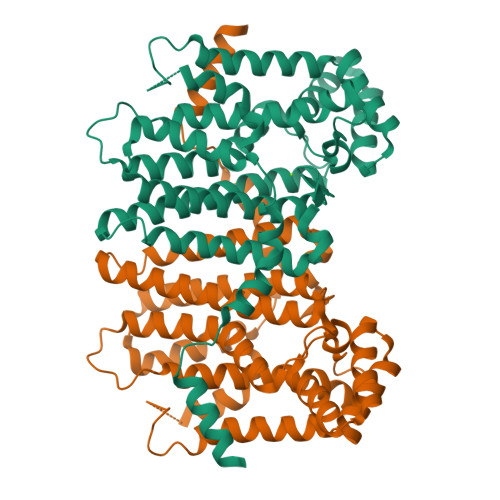
Farnesyl pyrophosphate synthase structureClick to view 3D structureFarnesyl pyrophosphate synthaseP14324HumansKnownThe action of Alendronate on bone tissue is based partly on its affinity for hydroxyapatite, which is part of the mineral matrix of bone. Alendronate also targets farnesyl pyrophosphate (FPP) synthase. Nitrogen-containing bisphosphonates (such as pamidronate, alendronate, risedronate, ibandronate and zoledronate) appear to act as analogues of isoprenoid diphosphate lipids, thereby inhibiting FPP synthase, an enzyme in the mevalonate pathway. Inhibition of this enzyme in osteoclasts prevents the biosynthesis of isoprenoid lipids (FPP and GGPP) that are essential for the post-translational farnesylation and geranylgeranylation of small GTPase signalling proteins. This activity inhibits osteoclast activity and reduces bone resorption and turnover. In postmenopausal women, it reduces the elevated rate of bone turnover, leading to, on average, a net gain in bone mass.
Receptor-type tyrosine-protein phosphatase S structureClick to view 3D structureReceptor-type tyrosine-protein phosphatase SQ13332HumansKnownNot Available
Geranylgeranyl pyrophosphate synthase structureClick to view 3D structureGeranylgeranyl pyrophosphate synthaseO95749HumansKnownNot Available
Receptor-type tyrosine-protein phosphatase epsilon structureClick to view 3D structureReceptor-type tyrosine-protein phosphatase epsilonP23469HumansKnownNot Available
Tyrosine-protein phosphatase non-receptor type 4 structureClick to view 3D structureTyrosine-protein phosphatase non-receptor type 4P29074HumansKnownThe action of Alendronate on bone tissue is based partly on its affinity for hydroxyapatite, which is part of the mineral matrix of bone. Alendronate also targets farnesyl pyrophosphate (FPP) synthase. Nitrogen-containing bisphosphonates (such as pamidronate, alendronate, risedronate, ibandronate and zoledronate) appear to act as analogues of isoprenoid diphosphate lipids, thereby inhibiting FPP synthase, an enzyme in the mevalonate pathway. Inhibition of this enzyme in osteoclasts prevents the biosynthesis of isoprenoid lipids (FPP and GGPP) that are essential for the post-translational farnesylation and geranylgeranylation of small GTPase signalling proteins. This activity inhibits osteoclast activity and reduces bone resorption and turnover. In postmenopausal women, it reduces the elevated rate of bone turnover, leading to, on average, a net gain in bone mass.
V-type proton ATPase catalytic subunit A structureClick to view 3D structureV-type proton ATPase catalytic subunit AP38606HumansKnownNot Available
Concentrations
Not Available
External Links
DrugBank IDDB00630
HMDB IDHMDB0001915
FooDB IDFDB022734
Phenol Explorer IDNot Available
KNApSAcK IDNot Available
BiGG IDNot Available
BioCyc IDALENDRONATE
METLIN ID818
PDB IDNot Available
Wikipedia LinkAlendronic_acid
Chemspider ID2004
ChEBI ID2567
PubChem Compound ID2088
Kegg Compound IDC07752
YMDB IDNot Available
ECMDB IDNot Available
References
Synthesis Reference

Masahiko Dohi, Yuji Makino, Takao Hujii, “Sodium alendronate preparation for local administration.” U.S. Patent US5958908, issued September, 1997.

MSDSLink
General References
  1. Wishart DS, Knox C, Guo AC, Cheng D, Shrivastava S, Tzur D, Gautam B, Hassanali M: DrugBank: a knowledgebase for drugs, drug actions and drug targets. Nucleic Acids Res. 2008 Jan;36(Database issue):D901-6. Epub 2007 Nov 29. [PubMed: 18048412]
  2. Russell RG, Watts NB, Ebetino FH, Rogers MJ: Mechanisms of action of bisphosphonates: similarities and differences and their potential influence on clinical efficacy. Osteoporos Int. 2008 Jun;19(6):733-59. doi: 10.1007/s00198-007-0540-8. [PubMed: 18214569]
  3. Virtanen SS, Vaananen HK, Harkonen PL, Lakkakorpi PT: Alendronate inhibits invasion of PC-3 prostate cancer cells by affecting the mevalonate pathway. Cancer Res. 2002 May 1;62(9):2708-14. [PubMed: 11980672]
  4. Ezra A, Hoffman A, Breuer E, Alferiev IS, Monkkonen J, El Hanany-Rozen N, Weiss G, Stepensky D, Gati I, Cohen H, Tormalehto S, Amidon GL, Golomb G: A peptide prodrug approach for improving bisphosphonate oral absorption. J Med Chem. 2000 Oct 5;43(20):3641-52. [PubMed: 11020278]
  5. Cremers SC, van Hogezand R, Banffer D, den Hartigh J, Vermeij P, Papapoulos SE, Hamdy NA: Absorption of the oral bisphosphonate alendronate in osteoporotic patients with Crohn's disease. Osteoporos Int. 2005 Dec;16(12):1727-30. Epub 2005 Jun 15. [PubMed: 15959617]
  6. Sarno M, Sarno L, Baylink D, Drinkwater B, Farley S, Kleerekoper M, Lang R, Lappe J, Licata A, McClung M, Miller P, Nattrass S, Recker R, Schwartz EN, Tucci JR, Wolf S, Powell H, Tjersland G, Warnick GR: Excretion of sweat and urine pyridinoline crosslinks in healthy controls and subjects with established metabolic bone disease. Clin Chem Lab Med. 2001 Mar;39(3):223-8. [PubMed: 11350019]
  7. Rossini M, Gatti D, Isaia G, Sartori L, Braga V, Adami S: Effects of oral alendronate in elderly patients with osteoporosis and mild primary hyperparathyroidism. J Bone Miner Res. 2001 Jan;16(1):113-9. [PubMed: 11149474]
  8. Makowski GS, Ramsby ML: Autoactivation profiles of calcium-dependent matrix metalloproteinase-2 and -9 in inflammatory synovial fluid: effect of pyrophosphate and bisphosphonates. Clin Chim Acta. 2005 Aug;358(1-2):182-91. [PubMed: 15921672]
  9. Yalcin F, Gurgan S, Gurgan T: The effect of menopause, hormone replacement therapy (HRT), alendronate (ALN), and calcium supplements on saliva. J Contemp Dent Pract. 2005 May 15;6(2):10-7. [PubMed: 15915200]
  10. Rudge S, Hailwood S, Horne A, Lucas J, Wu F, Cundy T: Effects of once-weekly oral alendronate on bone in children on glucocorticoid treatment. Rheumatology (Oxford). 2005 Jun;44(6):813-8. Epub 2005 Feb 3. [PubMed: 15695300]
  11. Ravn P, Thompson DE, Ross PD, Christiansen C: Biochemical markers for prediction of 4-year response in bone mass during bisphosphonate treatment for prevention of postmenopausal osteoporosis. Bone. 2003 Jul;33(1):150-8. [PubMed: 12919710]
  12. Chesnut CH 3rd, Harris ST: Short-term effect of alendronate on bone mass and bone remodeling in postmenopausal women. Osteoporos Int. 1993;3 Suppl 3:S17-9. [PubMed: 8298198]
  13. Yun MH, Kwon KI: High-performance liquid chromatography method for determining alendronate sodium in human plasma by detecting fluorescence: application to a pharmacokinetic study in humans. J Pharm Biomed Anal. 2006 Jan 23;40(1):168-72. Epub 2005 Aug 10. [PubMed: 16095861]
  14. Drugs.com - http://www.drugs.com/cons/Alendronate.html