Click to view 3D structure Click to view 3D structure | Pyridoxine-5'-phosphate oxidase | Q9NVS9 | Humans | Predicted (SEA) | 0.0778492 |
 Click to view 3D structure Click to view 3D structure | Aromatic-L-amino-acid decarboxylase | O88533 | Mus musculus | Predicted (SEA) | 0.544945 |
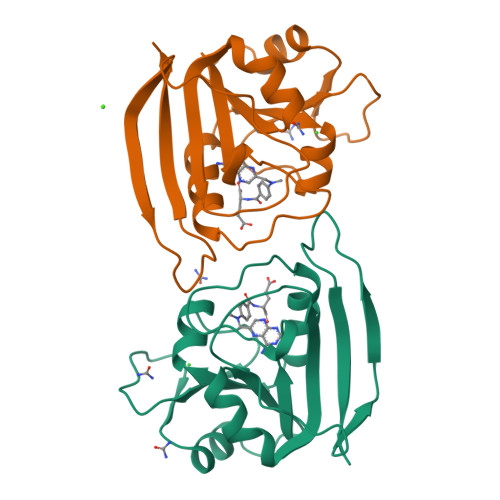 Click to view 3D structure Click to view 3D structure | Dihydrofolate reductase | P0ABQ4 | Escherichia coli (strain K12) | Predicted (SEA) | 64.6149 |
| Click to view 3D structure | Thiamine transporter ThiT | A2RI47 | Lactococcus lactis subsp. cremoris (strain MG1363) | Predicted (SEA) | 3.19182 |
| Click to view 3D structure | Thioredoxin reductase 2, mitochondrial | Q9Z0J5 | Rattus norvegicus | Predicted (SEA) | 0.622794 |
| Click to view 3D structure | Dihydrofolate reductase | Q920D2 | Rattus norvegicus | Predicted (SEA) | 80.2626 |
| Click to view 3D structure | Dihydrofolate reductase | P04174 | Neisseria gonorrhoeae | Predicted (SEA) | 11.2881 |
| Click to view 3D structure | Bifunctional dihydrofolate reductase-thymidylate synthase | Q27713 | Plasmodium berghei str. ANKA | Predicted (SEA) | 15.5698 |
| Click to view 3D structure | Dihydrofolate reductase | Q59487 | Lactococcus lactis subsp. lactis (strain IL1403) (Streptococcuslactis) | Predicted (SEA) | 11.9109 |
 Click to view 3D structure Click to view 3D structure | Dihydrofolate reductase | P00374 | Humans | Predicted (SEA) | 246.626 |
| Click to view 3D structure | Dihydrofolate reductase | Q8Z9J9 | Salmonella enterica subsp. enterica serovar Typhi | Predicted (SEA) | 76.8372 |
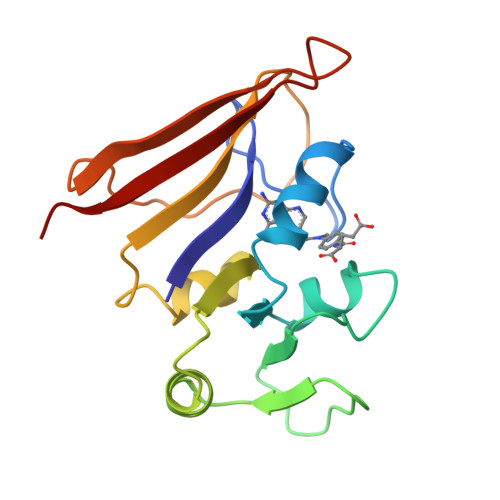 Click to view 3D structure Click to view 3D structure | Dihydrofolate reductase | P00381 | Lactobacillus casei | Predicted (SEA) | 257.214 |
| Click to view 3D structure | Mannose-6-phosphate isomerase | P34949 | Humans | Predicted (SEA) | 173.604 |
| Click to view 3D structure | P2X purinoceptor 1 | P47824 | Rattus norvegicus | Predicted (SEA) | 59.0097 |
| Click to view 3D structure | Cytosolic carboxypeptidase 2 | Q5U5Z8 | Humans | Predicted (SEA) | 72.3998 |
| Click to view 3D structure | Glutathione reductase | P41921 | Saccharomyces cerevisiae S288c | Predicted (SEA) | 7.23998 |
| Click to view 3D structure | Pyruvate dehydrogenase E1 component subunit alpha, somatic form, mitochondrial | P29804 | Sus scrofa | Predicted (SEA) | 12.0666 |
 Click to view 3D structure Click to view 3D structure | Dihydrofolate reductase | P00378 | Gallus gallus | Predicted (SEA) | 249.974 |
 Click to view 3D structure Click to view 3D structure | Dihydrofolate reductase | P16184 | Pneumocystis carinii | Predicted (SEA) | 747.041 |
| Click to view 3D structure | Bifunctional dihydrofolate reductase-thymidylate synthase | Q07422 | Toxoplasma gondii | Predicted (SEA) | 1001.69 |
| Click to view 3D structure | Large T antigen | P03070 | Simian virus 40 | Predicted (SEA) | 860.779 |
| Click to view 3D structure | Dihydrofolate reductase | O30463 | Mycobacterium avium | Predicted (SEA) | 407.151 |
 Click to view 3D structure Click to view 3D structure | Bifunctional dihydrofolate reductase-thymidylate synthase | P13922 | Plasmodium falciparum (isolate K1 / Thailand) | Predicted (SEA) | 518.32 |
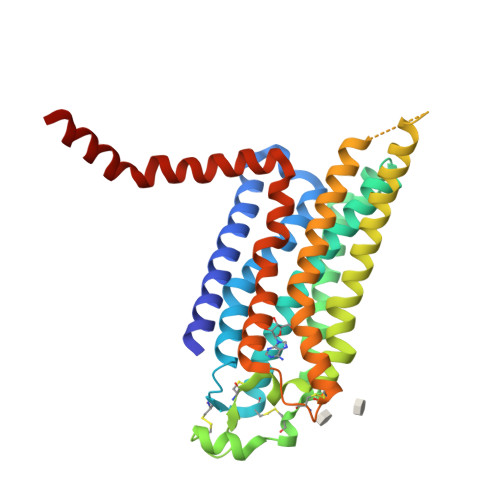 Click to view 3D structure Click to view 3D structure | Adenosine receptor A2a | P29274 | Humans | Predicted (SEA) | 5326.44 |
 Click to view 3D structure Click to view 3D structure | Alpha-2A adrenergic receptor | P08913 | Humans | Predicted (SEA) | 6389.01 |
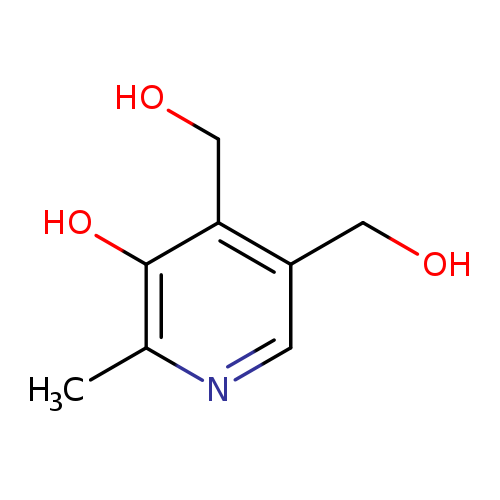
 Click to view 3D structure Click to view 3D structure | Alpha-aminoadipic semialdehyde dehydrogenase | P49419 | Humans | Known | Vitamin B6 is the collective term for a group of three related compounds, pyridoxine (PN), pyridoxal (PL) and pyridoxamine (PM), and their phosphorylated derivatives, pyridoxine 5'-phosphate (PNP), pyridoxal 5'-phosphate (PLP) and pyridoxamine 5'-phosphate (PMP). Although all six of these compounds should technically be referred to as vitamin B6, the term vitamin B6 is commonly used interchangeably with just one of them, pyridoxine. Vitamin B6, principally in the form of the coenzyme pyridoxal 5'-phosphate, is involved in a wide range of biochemical reactions, including the metabolism of amino acids and glycogen, the synthesis of nucleic acids, hemogloblin, sphingomyelin and other sphingolipids, and the synthesis of the neurotransmitters serotonin, dopamine, norepinephrine and gamma-aminobutyric acid (GABA). |
 Click to view 3D structure Click to view 3D structure | Cystathionine beta-synthase | P35520 | Humans | Known | Vitamin B6 is the collective term for a group of three related compounds, pyridoxine (PN), pyridoxal (PL) and pyridoxamine (PM), and their phosphorylated derivatives, pyridoxine 5'-phosphate (PNP), pyridoxal 5'-phosphate (PLP) and pyridoxamine 5'-phosphate (PMP). Although all six of these compounds should technically be referred to as vitamin B6, the term vitamin B6 is commonly used interchangeably with just one of them, pyridoxine. Vitamin B6, principally in the form of the coenzyme pyridoxal 5'-phosphate, is involved in a wide range of biochemical reactions, including the metabolism of amino acids and glycogen, the synthesis of nucleic acids, hemogloblin, sphingomyelin and other sphingolipids, and the synthesis of the neurotransmitters serotonin, dopamine, norepinephrine and gamma-aminobutyric acid (GABA). |
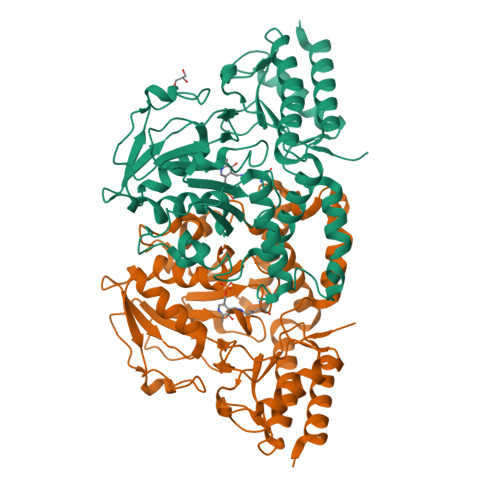 Click to view 3D structure Click to view 3D structure | Phosphoserine aminotransferase | Q9Y617 | Humans | Known | Vitamin B6 is the collective term for a group of three related compounds, pyridoxine (PN), pyridoxal (PL) and pyridoxamine (PM), and their phosphorylated derivatives, pyridoxine 5'-phosphate (PNP), pyridoxal 5'-phosphate (PLP) and pyridoxamine 5'-phosphate (PMP). Although all six of these compounds should technically be referred to as vitamin B6, the term vitamin B6 is commonly used interchangeably with just one of them, pyridoxine. Vitamin B6, principally in the form of the coenzyme pyridoxal 5'-phosphate, is involved in a wide range of biochemical reactions, including the metabolism of amino acids and glycogen, the synthesis of nucleic acids, hemogloblin, sphingomyelin and other sphingolipids, and the synthesis of the neurotransmitters serotonin, dopamine, norepinephrine and gamma-aminobutyric acid (GABA). |
 Click to view 3D structure Click to view 3D structure | Pyridoxal kinase | O00764 | Humans | Known | Vitamin B6 is the collective term for a group of three related compounds, pyridoxine (PN), pyridoxal (PL) and pyridoxamine (PM), and their phosphorylated derivatives, pyridoxine 5'-phosphate (PNP), pyridoxal 5'-phosphate (PLP) and pyridoxamine 5'-phosphate (PMP). Although all six of these compounds should technically be referred to as vitamin B6, the term vitamin B6 is commonly used interchangeably with just one of them, pyridoxine. Vitamin B6, principally in the form of the coenzyme pyridoxal 5'-phosphate, is involved in a wide range of biochemical reactions, including the metabolism of amino acids and glycogen, the synthesis of nucleic acids, hemogloblin, sphingomyelin and other sphingolipids, and the synthesis of the neurotransmitters serotonin, dopamine, norepinephrine and gamma-aminobutyric acid (GABA). |
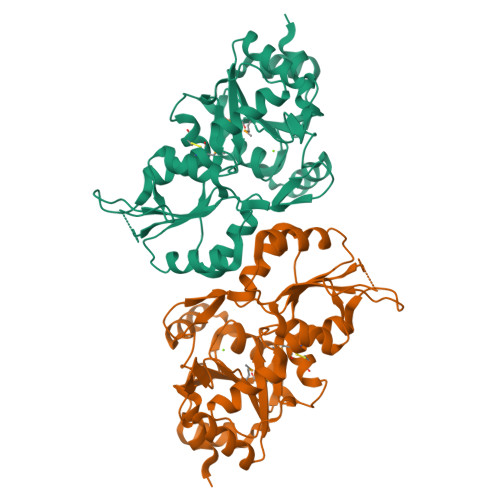 Click to view 3D structure Click to view 3D structure | Chronophin | Q96GD0 | Humans | Known | Vitamin B6 is the collective term for a group of three related compounds, pyridoxine (PN), pyridoxal (PL) and pyridoxamine (PM), and their phosphorylated derivatives, pyridoxine 5'-phosphate (PNP), pyridoxal 5'-phosphate (PLP) and pyridoxamine 5'-phosphate (PMP). Although all six of these compounds should technically be referred to as vitamin B6, the term vitamin B6 is commonly used interchangeably with just one of them, pyridoxine. Vitamin B6, principally in the form of the coenzyme pyridoxal 5'-phosphate, is involved in a wide range of biochemical reactions, including the metabolism of amino acids and glycogen, the synthesis of nucleic acids, hemogloblin, sphingomyelin and other sphingolipids, and the synthesis of the neurotransmitters serotonin, dopamine, norepinephrine and gamma-aminobutyric acid (GABA). |
 Click to view 3D structure Click to view 3D structure | Albumin | P02768 | Humans | Known | Vitamin B6 is the collective term for a group of three related compounds, pyridoxine (PN), pyridoxal (PL) and pyridoxamine (PM), and their phosphorylated derivatives, pyridoxine 5'-phosphate (PNP), pyridoxal 5'-phosphate (PLP) and pyridoxamine 5'-phosphate (PMP). Although all six of these compounds should technically be referred to as vitamin B6, the term vitamin B6 is commonly used interchangeably with just one of them, pyridoxine. Vitamin B6, principally in the form of the coenzyme pyridoxal 5'-phosphate, is involved in a wide range of biochemical reactions, including the metabolism of amino acids and glycogen, the synthesis of nucleic acids, hemogloblin, sphingomyelin and other sphingolipids, and the synthesis of the neurotransmitters serotonin, dopamine, norepinephrine and gamma-aminobutyric acid (GABA). |