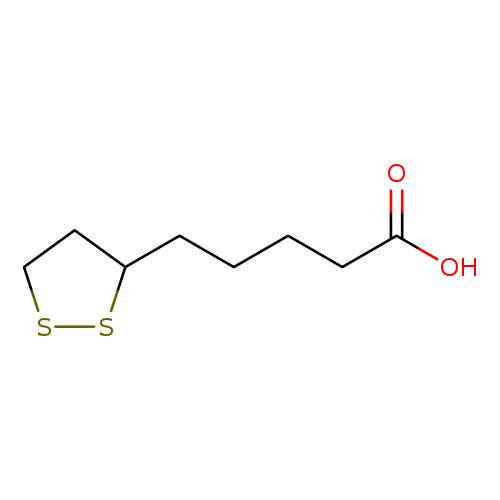
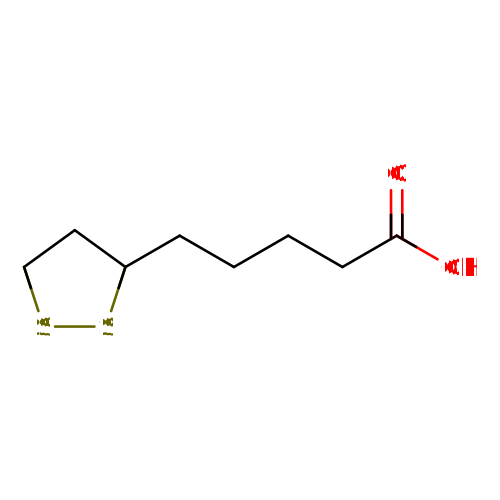
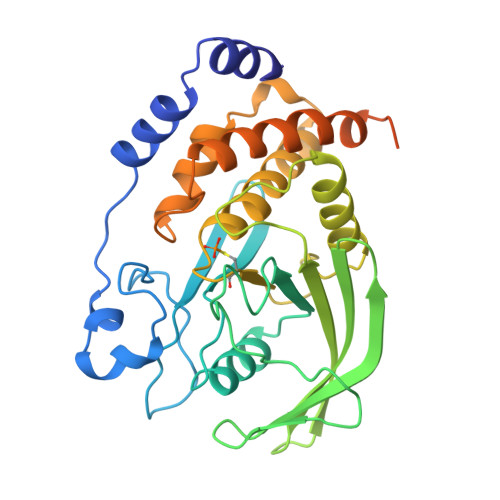
(R)-lipoic acid (CED0016424)

Record Information
Version1.0
Creation Date2009-07-21 20:26:12 UTC
Update Date2026-05-14 16:24:24 UTC
Accession NumberCHEM002134
Identification
Common Name(R)-lipoic acid
ClassSmall Molecule
Description
(R)-lipoic acid belongs to the lipoic acids and derivatives, a subclass of dithiolanes within the organic compounds. This endogenous compound has the formula C8H14O2S2, an average molecular weight of 206.33 g/mol, and exists as a solid at room temperature. It is classified as an organoheterocyclic compound. Biologically, (R)-lipoic acid serves as a cofactor (PMC7765667), prosthetic group, and antioxidant (PMC5832356, PMC7932781). It has been shown to have a therapeutic effect on inflammation (PMC5832356) and is used as a nutraceutical. The compound is detected in various tissues, including the liver, kidney, placenta, muscle, skeletal muscle, and nerve cells. Its recorded protein targets include the mitochondrial lipoyl synthase (LIAS), mitochondrial lipoyl amidotransferase LIPT1, the sodium-dependent multivitamin transporter (SLC5A6), prostaglandin G/H synthase 2 (PTGS2), and acetylcholinesterase (ACHE), for which it acts as an inhibitor. (R)-lipoic acid is one of two enantiomers; while the R-enantiomer is generally the biologically active form, the S-enantiomer can assist in the reduction of the R-enantiomer when a racemic mixture is provided, though some studies suggest the S-enantiomer may have an inhibiting effect on the R-enantiomer. The compound is found in several recorded sources, including alimentary tract and metabolism products, household cleaning and consumer products such as soap detergents and perfumes within detergents and soaps, and food processing activities including the preparation of vinegar, wine, sparkling wine, and fermentation processes for beer. It is also associated with electrical and electronic equipment, including electrodes, amplifiers, and electric hearing aids. Recorded exposure routes include topical and oral administration.
Contaminant Type
  • Animal Toxin
  • Antioxidant
  • Dietary Supplement
  • Drug
  • Household Toxin
  • Metabolite
  • Micronutrient
  • Natural Compound
  • Nutraceutical
  • Organic Compound
  • Plant Toxin
  • Supplement
  • Vitamin B Complex
Chemical Structure
Synonyms
ValueSource
1,2-Dithiolane-3-pentanoic acidChEBI
1,2-Dithiolane-3-valeric acidChEBI
5-(1,2-Dithiolan-3-yl)valeric acidChEBI
5-(Dithiolan-3-yl)valeric acidChEBI
5-[3-(1,2-Dithiolanyl)]pentanoic acidChEBI
6,8-Thioctic acidChEBI
6,8-Thiotic acidChEBI
6-Thioctic acidChEBI
6-Thiotic acidChEBI
Acetate-replacing factorChEBI
alpha-Lipoic acidChEBI
alpha-LiponsaeureChEBI
BiletanChEBI
Liponic acidChEBI
ThioctansaeureChEBI
Thioctic acidChEBI
ThioctsaeureChEBI
ThioktsaeureChEBI
ThiotominKegg
Lipoic acidKegg
DL-alpha-Lipoic acidKegg
DL-Thioctic acidKegg
1,2-Dithiolane-3-pentanoateGenerator
1,2-Dithiolane-3-valerateGenerator
5-(1,2-Dithiolan-3-yl)valerateGenerator
5-(Dithiolan-3-yl)valerateGenerator
5-[3-(1,2-Dithiolanyl)]pentanoateGenerator
6,8-ThioctateGenerator
6,8-ThiotateGenerator
6-ThioctateGenerator
6-ThiotateGenerator
Acetic acid-replacing factorGenerator
a-LipoateGenerator
a-Lipoic acidGenerator
alpha-LipoateGenerator
Α-lipoateGenerator
Α-lipoic acidGenerator
a-LiponsaeureGenerator
Α-liponsaeureGenerator
LiponateGenerator
ThioctateGenerator
DL-a-LipoateGenerator
DL-a-Lipoic acidGenerator
DL-alpha-LipoateGenerator
DL-Α-lipoateGenerator
DL-Α-lipoic acidGenerator
DL-ThioctateGenerator
Acid, alpha-lipoicMeSH
Alpha LipogammaMeSH
Alpha Lipon stadaMeSH
Alpha Liponsaure sofotecMeSH
Alpha Lippon alMeSH
Alpha-LipogammaMeSH
Alpha-Lipon stadaMeSH
Alpha-Liponsaure sofotecMeSH
Alpha-Lippon alMeSH
AlphaLipogammaMeSH
AlphaLipon stadaMeSH
AlphaLiponsaure sofotecMeSH
AlphaLippon alMeSH
AlphaflamMeSH
AzulipontMeSH
FenintMeSH
Injekt, thiogammaMeSH
JuthiacMeSH
Liponsaure ratiopharmMeSH
Liponsaure-ratiopharmMeSH
LiponsaureratiopharmMeSH
MTW AlphaliponsaureMeSH
MTW-AlphaliponsaureMeSH
MTWAlphaliponsaureMeSH
NeuriumMeSH
Pleomix AlphaMeSH
Pleomix Alpha NMeSH
Pleomix-AlphaMeSH
Pleomix-Alpha NMeSH
PleomixAlphaMeSH
PleomixAlpha NMeSH
ThioctacidMeSH
Thioctacide TMeSH
Thiogamma injektMeSH
Thiogamma oralMeSH
TromliponMeSH
Verla liponMeSH
Verla-liponMeSH
VerlaLiponMeSH
alpha Lipoic acidMeSH
alpha Liponaure heumannMeSH
alpha Liponsaure von CTMeSH
alpha VibolexMeSH
alpha-Liponaure heumannMeSH
alpha-Liponsaure von CTMeSH
alpha-VibolexMeSH
AlphaLiponaure heumannMeSH
AlphaLiponsaure von CTMeSH
AlphaVibolexMeSH
Biomo liponMeSH
Biomo-liponMeSH
BiomoliponMeSH
DuraliponMeSH
Espa liponMeSH
Espa-liponMeSH
EspaliponMeSH
(R)-LipoateGenerator
Generosan brand OF thioctic acidMeSH
Merck dura brand OF thioctic acidMeSH
Rosen brand OF thioctic acidMeSH
Trommsdorgg brand OF thioctic acidMeSH
Viatris brand OF thioctic acid tromethamineMeSH
Esparma brand OF thioctic acidMeSH
Hexal brand OF thioctic acidMeSH
Stadapharm brand OF thioctic acidMeSH
Viatris brand OF thioctic acidMeSH
Ratiopharm brand OF thioctic acidMeSH
Aliud brand OF thioctic acidMeSH
Illa brand OF thioctic acidMeSH
Illa brand OF thioctic acid tromethamineMeSH
MTW Brand OF thioctic acidMeSH
Pharmacia brand OF thioctic acidMeSH
Q Pharm brand OF thioctic acidMeSH
Q-Pharm brand OF thioctic acidMeSH
Azupharma brand OF thioctic acidMeSH
Heumann brand OF thioctic acidMeSH
Juta brand OF thioctic acidMeSH
Lichtenstein brand OF thioctic acidMeSH
Sofotec brand OF thioctic acidMeSH
Verla brand OF thioctic acidMeSH
Worwag brand OF thioctic acidMeSH
Worwag brand OF thioctic acid meglumineMeSH
biomo Brand OF thioctic acidMeSH
CT Arzneimittel brand OF thioctic acidMeSH
CT-Arzneimittel brand OF thioctic acidMeSH
Chemical FormulaC8H14O2S2
Average Molecular Mass206.326 g/mol
Monoisotopic Mass206.044 g/mol
CAS Registry Number62-46-4
IUPAC Name5-(1,2-dithiolan-3-yl)pentanoic acid
Traditional Name6,8-thioctic acid
SMILESOC(=O)CCCCC1CCSS1
InChI IdentifierInChI=1S/C8H14O2S2/c9-8(10)4-2-1-3-7-5-6-11-12-7/h7H,1-6H2,(H,9,10)
InChI KeyAGBQKNBQESQNJD-UHFFFAOYSA-N
Chemical Taxonomy
Description Belongs to the class of organic compounds known as lipoic acids and derivatives. Lipoic acids and derivatives are compounds containing a lipoic acid moiety (or a derivative thereof), which consists of a pentanoic acid (or derivative) attached to the C3 carbon atom of a 1,2-dithiolane ring.
KingdomOrganic compounds
Super ClassOrganoheterocyclic compounds
ClassDithiolanes
Sub ClassLipoic acids and derivatives
Direct ParentLipoic acids and derivatives
Alternative Parents
Substituents
  • Lipoic_acid_derivative
  • Medium-chain fatty acid
  • Heterocyclic fatty acid
  • Thia fatty acid
  • Fatty acyl
  • Fatty acid
  • 1,2-dithiolane
  • Organic disulfide
  • Monocarboxylic acid or derivatives
  • Carboxylic acid
  • Carboxylic acid derivative
  • Hydrocarbon derivative
  • Organooxygen compound
  • Organic oxide
  • Organic oxygen compound
  • Carbonyl group
  • Aliphatic heteromonocyclic compound
Molecular FrameworkAliphatic heteromonocyclic compounds
External Descriptors
Biological Properties
StatusDetected and Not Quantified
OriginEndogenous
Cellular Locations
  • Cytoplasm
  • Extracellular
  • Membrane
Biofluid LocationsNot Available
Tissue Locations
  • Kidney
  • Liver
  • Muscle
  • Nerve Cells
  • Placenta
  • Skeletal Muscle
Applications
Biological Roles
Chemical RolesNot Available
Organoleptic EffectsNot Available
Physical Properties
StateSolid
AppearanceWhite powder.
Experimental Properties
PropertyValue
Melting Point60.5°C
Boiling Point162.5°C
SolubilityInsoluble
Predicted Properties
PropertyValueSource
Water Solubility0.22 g/LALOGPS
logP2.75ALOGPS
logP2.11ChemAxon
logS-3ALOGPS
pKa (Strongest Acidic)4.52ChemAxon
Physiological Charge-1ChemAxon
Hydrogen Acceptor Count2ChemAxon
Hydrogen Donor Count1ChemAxon
Polar Surface Area37.3 ŲChemAxon
Rotatable Bond Count5ChemAxon
Refractivity54.37 m³·mol⁻¹ChemAxon
Polarizability22 ųChemAxon
Number of Rings1ChemAxon
BioavailabilityYesChemAxon
Rule of FiveYesChemAxon
Ghose FilterYesChemAxon
Veber's RuleYesChemAxon
MDDR-like RuleNoChemAxon
Spectra
Spectra
Spectrum TypeDescriptionSplash KeyDeposition DateView
Predicted GC-MSPredicted GC-MS Spectrumsplash10-0udi-4900000000-59fc063b5aa5a8b5db19Not AvailableView Spectrum
Predicted GC-MSPredicted GC-MS SpectrumNot AvailableNot AvailableView Spectrum
LC-MS/MSLC-MS/MS Spectrumsplash10-00di-0900000000-50da42c94591e9a60c0fNot AvailableView Spectrum
LC-MS/MSLC-MS/MS Spectrumsplash10-004i-0900000000-1346e3a528dca0514cf7Not AvailableView Spectrum
LC-MS/MSLC-MS/MS Spectrumsplash10-03di-9000000000-420a38a26d85b4091edbNot AvailableView Spectrum
LC-MS/MSLC-MS/MS Spectrumsplash10-03di-9000000000-24b63eebe2fd067ce4b8Not AvailableView Spectrum
LC-MS/MSLC-MS/MS Spectrumsplash10-0229-6900000000-44bcc93e18aeabd9ee16Not AvailableView Spectrum
LC-MS/MSLC-MS/MS Spectrumsplash10-03k9-9600000000-4f680dfeae7fa1ece57aNot AvailableView Spectrum
LC-MS/MSLC-MS/MS Spectrumsplash10-03di-9000000000-6f0b91016a33e202e49bNot AvailableView Spectrum
LC-MS/MSLC-MS/MS Spectrumsplash10-03di-9000000000-e3d4a7fe022cf20db036Not AvailableView Spectrum
Predicted LC-MS/MSPredicted LC-MS/MS Spectrumsplash10-052r-0920000000-cf913d1d1afc04e5450cNot AvailableView Spectrum
Predicted LC-MS/MSPredicted LC-MS/MS Spectrumsplash10-0bti-5910000000-294c510229247ef63f20Not AvailableView Spectrum
Predicted LC-MS/MSPredicted LC-MS/MS Spectrumsplash10-0bvi-9600000000-f8f54eb79c5d4d5bef48Not AvailableView Spectrum
Predicted LC-MS/MSPredicted LC-MS/MS Spectrumsplash10-0a4i-0920000000-5a823a30dd1fb434e5b1Not AvailableView Spectrum
Predicted LC-MS/MSPredicted LC-MS/MS Spectrumsplash10-0kmu-1910000000-6f491a68afd82922e71bNot AvailableView Spectrum
Predicted LC-MS/MSPredicted LC-MS/MS Spectrumsplash10-0a4i-9200000000-330e4766f82ed571497bNot AvailableView Spectrum
Predicted LC-MS/MSPredicted LC-MS/MS Spectrumsplash10-0a4r-0970000000-0ae5b11a032d11c1ba6dNot AvailableView Spectrum
Predicted LC-MS/MSPredicted LC-MS/MS Spectrumsplash10-03di-1900000000-decf255617c1bbd69bfbNot AvailableView Spectrum
Predicted LC-MS/MSPredicted LC-MS/MS Spectrumsplash10-000i-6900000000-eb58a3d8135ba85d4283Not AvailableView Spectrum
Predicted LC-MS/MSPredicted LC-MS/MS Spectrumsplash10-0a4i-0190000000-014d2ea36cfae0726a9eNot AvailableView Spectrum
Predicted LC-MS/MSPredicted LC-MS/MS Spectrumsplash10-0a4i-5950000000-4e2dd5ccdcd5b0a936a0Not AvailableView Spectrum
Predicted LC-MS/MSPredicted LC-MS/MS Spectrumsplash10-0a59-9500000000-9bbbd7b252fb9a0b438dNot AvailableView Spectrum
Toxicity Profile
Mechanism of Toxicity(R)-lipoic acid is a cholinesterase or acetylcholinesterase (AChE) inhibitor. A cholinesterase inhibitor (or 'anticholinesterase') suppresses the action of acetylcholinesterase. Because of its essential function, chemicals that interfere with the action of acetylcholinesterase are potent neurotoxins, causing excessive salivation and eye-watering in low doses, followed by muscle spasms and ultimately death. Nerve gases and many substances used in insecticides have been shown to act by binding a serine in the active site of acetylcholine esterase, inhibiting the enzyme completely. Acetylcholine esterase breaks down the neurotransmitter acetylcholine, which is released at nerve and muscle junctions, in order to allow the muscle or organ to relax. The result of acetylcholine esterase inhibition is that acetylcholine builds up and continues to act so that any nerve impulses are continually transmitted and muscle contractions do not stop. Among the most common acetylcholinesterase inhibitors are phosphorus-based compounds, which are designed to bind to the active site of the enzyme. The structural requirements are a phosphorus atom bearing two lipophilic groups, a leaving group (such as a halide or thiocyanate), and a terminal oxygen.
Carcinogenicity (IARC Classification)No indication of carcinogenicity to humans (not listed by IARC).
Minimum Risk LevelNot Available
SymptomsSymptoms of low dose exposure include excessive salivation and eye-watering. Acute dose symptoms include severe nausea/vomiting, salivation, sweating, bradycardia, hypotension, collapse, and convulsions. Increasing muscle weakness is a possibility and may result in death if respiratory muscles are involved. Hypertension, hypoglycemia, anxiety, headache, tremor and ataxia may also result.
TreatmentIf the compound has been ingested, rapid gastric lavage should be performed using 5% sodium bicarbonate. For skin contact, the skin should be washed with soap and water. If the compound has entered the eyes, they should be washed with large quantities of isotonic saline or water. In serious cases, atropine and/or pralidoxime should be administered. Anti-cholinergic drugs work to counteract the effects of excess acetylcholine and reactivate AChE. Atropine can be used as an antidote in conjunction with pralidoxime or other pyridinium oximes (such as trimedoxime or obidoxime), though the use of '-oximes' has been found to be of no benefit, or possibly harmful, in at least two meta-analyses. Atropine is a muscarinic antagonist, and thus blocks the action of acetylcholine peripherally.
Toxicity Values
Toxicity ValueUnitValue RangeOrganismDose DescriptorRoute of ExposurePredicted or ExperimentalReference
1163.0Log mg/kg[650:2100]RatLD50oralpredictedNot Available
Health Effects
Health EffectRelationshipDirectionReference
inflammationhas_therapeutic_effect_onNot AvailablePMC5832356
Exposure Sources
Source IDSourceSectorReference
10InsecticidesAgriculture & land managementNot Available
233BrushesPersonal care & cosmeticsNot Available
272Alimentary tract and metabolism productsHealthcare, pharmaceuticals & veterinary productsNot Available
505AmplifiersElectrical & Electronic EquipmentNot Available
511Conductors Or Conductive Bodies Characterised By The Conductive MaterialsElectrical & Electronic EquipmentNot Available
516Electric Hearing AidsElectrical & Electronic EquipmentNot Available
518Electrically Stimulated Smoking DevicesElectrical & Electronic EquipmentNot Available
519ElectrodesElectrical & Electronic EquipmentNot Available
521Fixed Capacitors And Their ManufactureElectrical & Electronic EquipmentNot Available
524Hybrid CapacitorsElectrical & Electronic EquipmentNot Available
530Radio Transmission SystemsElectrical & Electronic EquipmentNot Available
538Thin Magnetic FilmsElectrical & Electronic EquipmentNot Available
544Fermentation Processes For BeerFood, food processing & cookwareNot Available
545Food PreservationFood, food processing & cookwareNot Available
548Preparation Of VinegarFood, food processing & cookwareNot Available
549Preparation Of Wine Or Sparkling WineFood, food processing & cookwareNot Available
555Bleaching AgentsHousehold cleaning & consumer productsNot Available
556Cigar CigarettesHousehold cleaning & consumer productsNot Available
559Non Electric Simulated Smoking DevicesHousehold cleaning & consumer productsNot Available
561Perfumes Within Detergents And SoapsHousehold cleaning & consumer productsNot Available
563Soap DetergentsHousehold cleaning & consumer productsNot Available
564Soap DispensersHousehold cleaning & consumer productsNot Available
569Tobacco Smoke FiltersHousehold cleaning & consumer productsNot Available
578Making CigarsIndustrial manufacturing & chemical processingNot Available
580Manufacture Preparation Of Tobacco ProductsIndustrial manufacturing & chemical processingNot Available
592Marine Propulsion Or SteeringMarine, shipping & aquacultureNot Available
596AcaricidesAgriculture & land managementNot Available
600Herbicides And AlgicidesAgriculture & land managementNot Available
603NematocidesAgriculture & land managementNot Available
604Pest AttractantsAgriculture & land managementNot Available
605Pest RepellantsAgriculture & land managementNot Available
606Plant Growth RegulatorsAgriculture & land managementNot Available
609AftershavePersonal care & cosmeticsNot Available
610Aftersun ProductsPersonal care & cosmeticsNot Available
611Anti Perspirants Or Body DeoderantsPersonal care & cosmeticsNot Available
612Body Washing Or Cleaning ImplementsPersonal care & cosmeticsNot Available
613DepilatoriesPersonal care & cosmeticsNot Available
614Essential Oils Or PerfumesPersonal care & cosmeticsNot Available
615Eye Makeup ProductsPersonal care & cosmeticsNot Available
616Face Mask CosmeticsPersonal care & cosmeticsNot Available
617Lip Care ProductsPersonal care & cosmeticsNot Available
618Lip Makeup ProductsPersonal care & cosmeticsNot Available
619Manicure PedicurePersonal care & cosmeticsNot Available
632ApparelTextiles, leather & furnishingsNot Available
638Decorating TextilesTextiles, leather & furnishingsNot Available
642FootwearTextiles, leather & furnishingsNot Available
643HeadwearTextiles, leather & furnishingsNot Available
650Purses Luggage Hand BagsTextiles, leather & furnishingsNot Available
658Touch FastenersTextiles, leather & furnishingsNot Available
661UmbrellasTextiles, leather & furnishingsNot Available
662Yarns Or ThreadsTextiles, leather & furnishingsNot Available
Pathways
16 pathways
Targets
StructureProteinUniProt IDOrganismRelationshipDetails
Click to view 3D structureAlpha-1D adrenergic receptorP23944Rattus norvegicusPredicted (SEA)75.2023
Prostaglandin E2 receptor EP2 subtype structureClick to view 3D structureProstaglandin E2 receptor EP2 subtypeP43116HumansPredicted (SEA)34.098
Click to view 3D structureTransient receptor potential cation channel subfamily V member 2Q9WUD2Rattus norvegicusPredicted (SEA)21.2528
Click to view 3D structureBifunctional protein GlmUP9WMN3Mycobacterium tuberculosisPredicted (SEA)0.0778492
Click to view 3D structureProstaglandin E2 receptor EP1 subtypeP34995HumansPredicted (SEA)53.0932
Thromboxane A2 receptor structureClick to view 3D structureThromboxane A2 receptorP21731HumansPredicted (SEA)77.6157
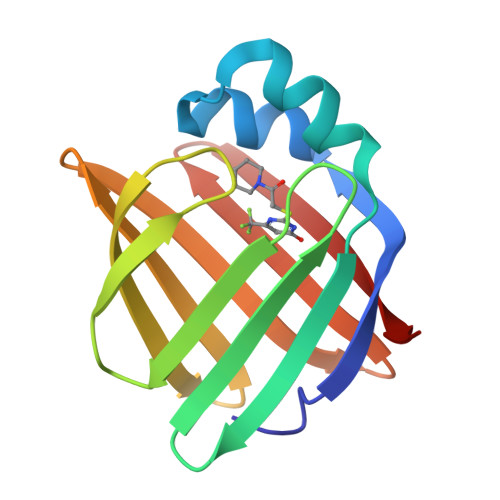
Fatty acid-binding protein, adipocyte structureClick to view 3D structureFatty acid-binding protein, adipocyteP15090HumansPredicted (SEA)16.8933
Click to view 3D structureHistone deacetylase 11Q96DB2HumansPredicted (SEA)341.68
Prostacyclin receptor structureClick to view 3D structureProstacyclin receptorP43119HumansPredicted (SEA)57.842
Prostaglandin E2 receptor EP3 subtype structureClick to view 3D structureProstaglandin E2 receptor EP3 subtypeP43115HumansPredicted (SEA)143.632
Free fatty acid receptor 1 structureClick to view 3D structureFree fatty acid receptor 1O14842HumansPredicted (SEA)171.969
Free fatty acid receptor 4 structureClick to view 3D structureFree fatty acid receptor 4Q5NUL3HumansPredicted (SEA)162.627
Click to view 3D structureCytochrome P450 4A4P10611Oryctolagus cuniculusPredicted (SEA)2.02408
Betaine--homocysteine S-methyltransferase 1 structureClick to view 3D structureBetaine--homocysteine S-methyltransferase 1Q93088HumansPredicted (SEA)4.7488
Tyrosine-protein phosphatase non-receptor type 1 structureClick to view 3D structureTyrosine-protein phosphatase non-receptor type 1P18031HumansPredicted (SEA)27.9479
Nuclear receptor subfamily 1 group I member 2 structureClick to view 3D structureNuclear receptor subfamily 1 group I member 2O75469HumansPredicted (SEA)21.9535
Prostaglandin G/H synthase 2 structureClick to view 3D structureProstaglandin G/H synthase 2P35354HumansPredicted (SEA)58.4648
Click to view 3D structureProtein TatP04608Human immunodeficiency virus type 1 group M subtype B (isolate HXB2)(HIV-1)Predicted (SEA)8.09632
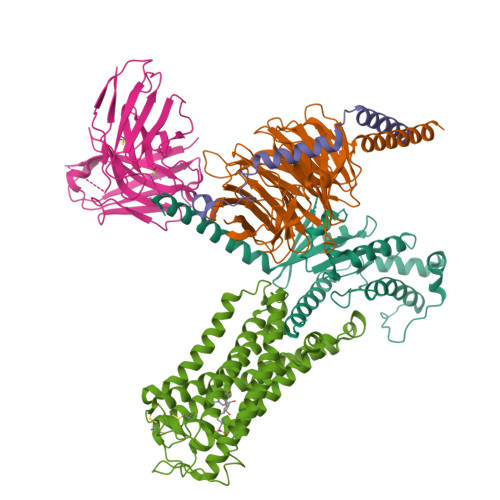
Acetylcholinesterase structureClick to view 3D structureAcetylcholinesteraseP22303HumansPredicted (SEA)175.55
Peroxisome proliferator-activated receptor alpha structureClick to view 3D structurePeroxisome proliferator-activated receptor alphaQ07869HumansPredicted (SEA)58.3091
Peroxisome proliferator-activated receptor delta structureClick to view 3D structurePeroxisome proliferator-activated receptor deltaQ03181HumansPredicted (SEA)50.4463
Click to view 3D structureSodium- and chloride-dependent GABA transporter 2P31646Rattus norvegicusPredicted (SEA)1.24559
Peroxisome proliferator-activated receptor gamma structureClick to view 3D structurePeroxisome proliferator-activated receptor gammaP37231HumansPredicted (SEA)109.767
Click to view 3D structureAlpha-1A adrenergic receptorP43140Rattus norvegicusPredicted (SEA)160.759
Click to view 3D structureAlpha-1B adrenergic receptorP15823Rattus norvegicusPredicted (SEA)92.1735
Click to view 3D structureLipoyl synthase, mitochondrialO43766HumansKnownLipoic Acid is generally involved in oxidative decarboxylations of keto acids and is presented as a growth factor for some organisms. Lipoic acid exists as two enantiomers, the R-enantiomer and the S-enantiomer. Normally only the R-enantiomer of an amino acid is biologically active, but for lipoic acid the S-enantiomer assists in the reduction of the R-enantiomer when a racemic mixture is given. Some recent studies have suggested that the S-enantiomer in fact has an inhibiting effect on the R-enantiomer, reducing its biological activity substantially and actually adding to oxidative stress rather than reducing it. Furthermore, the S-enantiomer has been found to reduce the expression of GLUT-4s in cells, responsible for glucose uptake, and hence reduce insulin sensitivity.
Click to view 3D structureLipoyl amidotransferase LIPT1, mitochondrialQ9Y234HumansKnownLipoic Acid is generally involved in oxidative decarboxylations of keto acids and is presented as a growth factor for some organisms. Lipoic acid exists as two enantiomers, the R-enantiomer and the S-enantiomer. Normally only the R-enantiomer of an amino acid is biologically active, but for lipoic acid the S-enantiomer assists in the reduction of the R-enantiomer when a racemic mixture is given. Some recent studies have suggested that the S-enantiomer in fact has an inhibiting effect on the R-enantiomer, reducing its biological activity substantially and actually adding to oxidative stress rather than reducing it. Furthermore, the S-enantiomer has been found to reduce the expression of GLUT-4s in cells, responsible for glucose uptake, and hence reduce insulin sensitivity.
Click to view 3D structureSodium-dependent multivitamin transporterQ9Y289HumansKnownLipoic Acid is generally involved in oxidative decarboxylations of keto acids and is presented as a growth factor for some organisms. Lipoic acid exists as two enantiomers, the R-enantiomer and the S-enantiomer. Normally only the R-enantiomer of an amino acid is biologically active, but for lipoic acid the S-enantiomer assists in the reduction of the R-enantiomer when a racemic mixture is given. Some recent studies have suggested that the S-enantiomer in fact has an inhibiting effect on the R-enantiomer, reducing its biological activity substantially and actually adding to oxidative stress rather than reducing it. Furthermore, the S-enantiomer has been found to reduce the expression of GLUT-4s in cells, responsible for glucose uptake, and hence reduce insulin sensitivity.
Acetylcholinesterase structureClick to view 3D structureAcetylcholinesteraseP22303HumansKnownNot Available
Concentrations
Not Available
External Links
DrugBank IDNot Available
HMDB IDHMDB0251530
FooDB IDFDB004339
Phenol Explorer IDNot Available
KNApSAcK IDC00041416
BiGG IDNot Available
BioCyc IDNot Available
METLIN IDNot Available
PDB IDNot Available
Wikipedia LinkLipoic_acid
Chemspider ID841
ChEBI ID16494
PubChem Compound ID864
Kegg Compound IDC00725
YMDB IDNot Available
ECMDB IDECMDB23028
References
Synthesis Reference

Joachim Paust, Peter Eckes, Wolfgang Siegel, Friedhelm Balkenhohl, Walter Dobler, Michael Hullmann, “Preparation of R/S-.gamma.-lipoic acid or R/S-.alpha.-lipoic acid.” U.S. Patent US5489694, issued July, 1961.

MSDSLink
General References
1. https://www.ncbi.nlm.nih.gov/pubmed/?term=7519986
2. https://www.ncbi.nlm.nih.gov/pubmed/?term=7548757