 Click to view 3D structure Click to view 3D structure | Carbonic anhydrase 2 | P27139 | Rattus norvegicus | Predicted (SEA) | 0.0778492 |
 Click to view 3D structure Click to view 3D structure | Carbonic anhydrase 9 | Q16790 | Humans | Predicted (SEA) | 1.63483 |
 Click to view 3D structure Click to view 3D structure | Carbonic anhydrase 2 | P00918 | Humans | Predicted (SEA) | 2.02408 |
 Click to view 3D structure Click to view 3D structure | Carbonic anhydrase 7 | P43166 | Humans | Predicted (SEA) | 0.622794 |
 Click to view 3D structure Click to view 3D structure | Carbonic anhydrase 14 | Q9ULX7 | Humans | Predicted (SEA) | 0.544945 |
| Click to view 3D structure | Carbonic anhydrase 5A, mitochondrial | P35218 | Humans | Predicted (SEA) | 0.467095 |
 Click to view 3D structure Click to view 3D structure | Carbonic anhydrase 4 | P22748 | Humans | Predicted (SEA) | 0.778492 |
 Click to view 3D structure Click to view 3D structure | Carbonic anhydrase 1 | P00915 | Humans | Predicted (SEA) | 10.1204 |
| Click to view 3D structure | Carbonic anhydrase 5B, mitochondrial | Q9Y2D0 | Humans | Predicted (SEA) | 5.44945 |
 Click to view 3D structure Click to view 3D structure | Carbonic anhydrase 12 | O43570 | Humans | Predicted (SEA) | 15.5698 |
| Click to view 3D structure | Carbonic anhydrase 13 | Q9D6N1 | Mus musculus | Predicted (SEA) | 3.11397 |
 Click to view 3D structure Click to view 3D structure | Carbonic anhydrase 6 | P23280 | Humans | Predicted (SEA) | 30.8283 |
 Click to view 3D structure Click to view 3D structure | Carbonic anhydrase 13 | Q8N1Q1 | Humans | Predicted (SEA) | 31.5289 |
| Click to view 3D structure | Carbonic anhydrase 15 | Q99N23 | Mus musculus | Predicted (SEA) | 53.0932 |
| Click to view 3D structure | Carbonic anhydrase | Q5AJ71 | Candida albicans (strain SC5314 / ATCC MYA-2876) (Yeast) | Predicted (SEA) | 49.3564 |
| Click to view 3D structure | Carbonic anhydrase | Q6FTL6 | Candida glabrata CBS 138 | Predicted (SEA) | 52.3147 |
| Click to view 3D structure | Carbonic anhydrase 2 | Q3I4V7 | Cryptococcus neoformans | Predicted (SEA) | 44.2962 |
| Click to view 3D structure | Astrosclerin-3 | A6YCJ1 | Astrosclera willeyana | Predicted (SEA) | 36.0442 |
| Click to view 3D structure | Alpha carbonic anhydrase | B5SU02 | Stylophora pistillata | Predicted (SEA) | 33.3973 |
| Click to view 3D structure | Carbonic anhydrase | P53615 | Saccharomyces cerevisiae S288c | Predicted (SEA) | 28.8042 |
| Click to view 3D structure | Carbonic anhydrase | C0IX24 | Stylophora pistillata | Predicted (SEA) | 33.3195 |
| Click to view 3D structure | Carbonic anhydrase 4 | Q95323 | Bos taurus | Predicted (SEA) | 69.1301 |
| Click to view 3D structure | Carbonate dehydratase | B2V8E3 | Sulfurihydrogenibium sp. (strain YO3AOP1) | Predicted (SEA) | 34.9543 |
| Click to view 3D structure | Carbonic anhydrase | O24855 | Helicobacter pylori (strain ATCC 700392 / 26695) (Campylobacterpylori) | Predicted (SEA) | 34.7208 |
| Click to view 3D structure | Delta carbonic anhydrase | Q5U9J1 | Conticribra weissflogii | Predicted (SEA) | 33.553 |
| Click to view 3D structure | Carbonic anhydrase 2 | P00918 | Humans | Known | The precise mechanism of action of topiramate is not known. However, studies have shown that topiramate blocks the action potentials elicited repetitively by a sustained depolarization of the neurons in a time-dependent manner, suggesting a state-dependent sodium channel blocking action. Topiramate also augments the activity of the neurotransmitter gamma-aminobutyrate (GABA) at some subtypes of the GABAA receptor (controls an integral chloride channel), indicating a possible mechanism through potentiation of the activity of GABA. Topiramate also demonstrates antagonism of the AMPA/kainate subtype of the glutamat excitatory amino acid receptor. It also inhibits carbonic anhydrase (particularly isozymes II and IV), but this action is weak and unlikely to be related to its anticonvulsant actions. |
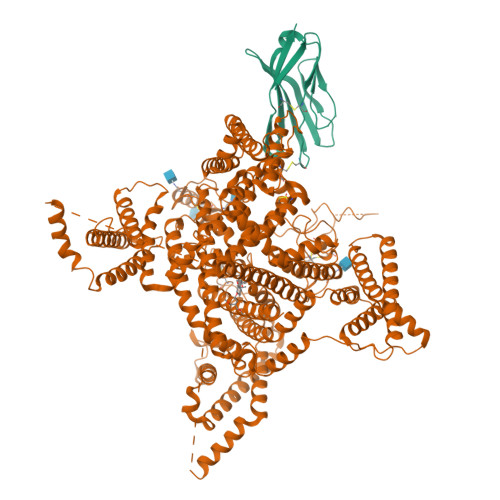 Click to view 3D structure Click to view 3D structure | Sodium channel protein type 1 subunit alpha | P35498 | Humans | Known | The precise mechanism of action of topiramate is not known. However, studies have shown that topiramate blocks the action potentials elicited repetitively by a sustained depolarization of the neurons in a time-dependent manner, suggesting a state-dependent sodium channel blocking action. Topiramate also augments the activity of the neurotransmitter gamma-aminobutyrate (GABA) at some subtypes of the GABAA receptor (controls an integral chloride channel), indicating a possible mechanism through potentiation of the activity of GABA. Topiramate also demonstrates antagonism of the AMPA/kainate subtype of the glutamat excitatory amino acid receptor. It also inhibits carbonic anhydrase (particularly isozymes II and IV), but this action is weak and unlikely to be related to its anticonvulsant actions. |
| Click to view 3D structure | Carbonic anhydrase 4 | P22748 | Humans | Known | The precise mechanism of action of topiramate is not known. However, studies have shown that topiramate blocks the action potentials elicited repetitively by a sustained depolarization of the neurons in a time-dependent manner, suggesting a state-dependent sodium channel blocking action. Topiramate also augments the activity of the neurotransmitter gamma-aminobutyrate (GABA) at some subtypes of the GABAA receptor (controls an integral chloride channel), indicating a possible mechanism through potentiation of the activity of GABA. Topiramate also demonstrates antagonism of the AMPA/kainate subtype of the glutamat excitatory amino acid receptor. It also inhibits carbonic anhydrase (particularly isozymes II and IV), but this action is weak and unlikely to be related to its anticonvulsant actions. |
 Click to view 3D structure Click to view 3D structure | Glutamate receptor ionotropic, kainate 1 | P39086 | Humans | Known | The precise mechanism of action of topiramate is not known. However, studies have shown that topiramate blocks the action potentials elicited repetitively by a sustained depolarization of the neurons in a time-dependent manner, suggesting a state-dependent sodium channel blocking action. Topiramate also augments the activity of the neurotransmitter gamma-aminobutyrate (GABA) at some subtypes of the GABAA receptor (controls an integral chloride channel), indicating a possible mechanism through potentiation of the activity of GABA. Topiramate also demonstrates antagonism of the AMPA/kainate subtype of the glutamat excitatory amino acid receptor. It also inhibits carbonic anhydrase (particularly isozymes II and IV), but this action is weak and unlikely to be related to its anticonvulsant actions. |
| Click to view 3D structure | Carbonic anhydrase 1 | P00915 | Humans | Known | Not Available |
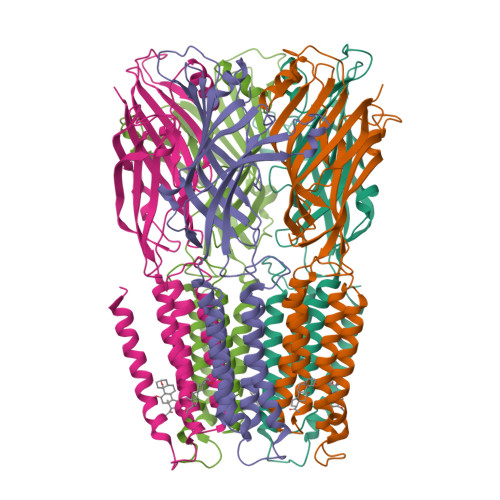 Click to view 3D structure Click to view 3D structure | Gamma-aminobutyric acid receptor subunit alpha-1 | P14867 | Humans | Known | The precise mechanism of action of topiramate is not known. However, studies have shown that topiramate blocks the action potentials elicited repetitively by a sustained depolarization of the neurons in a time-dependent manner, suggesting a state-dependent sodium channel blocking action. Topiramate also augments the activity of the neurotransmitter gamma-aminobutyrate (GABA) at some subtypes of the GABAA receptor (controls an integral chloride channel), indicating a possible mechanism through potentiation of the activity of GABA. Topiramate also demonstrates antagonism of the AMPA/kainate subtype of the glutamat excitatory amino acid receptor. It also inhibits carbonic anhydrase (particularly isozymes II and IV), but this action is weak and unlikely to be related to its anticonvulsant actions. |
 Click to view 3D structure Click to view 3D structure | Carbonic anhydrase 3 | P07451 | Humans | Known | Not Available |
| Click to view 3D structure | Carbonic anhydrase 5A, mitochondrial | P35218 | Humans | Known | Not Available |

