Zolmitriptan (CED0006350)

Record Information
Version1.0
Creation Date2009-07-21 20:26:34 UTC
Update Date2026-05-14 16:25:22 UTC
SynCED IDCED0006350
Secondary Accession Numbers
  • CHEM002167
  • T3D2748
Identification
Common NameZolmitriptan
ClassSmall Molecule
Description
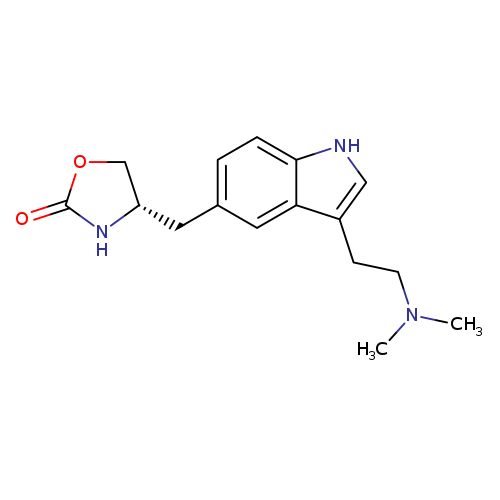
Zolmitriptan is an exogenous organic compound with the formula C16H21N3O2 and an average molecular weight of 287.36 g/mol. It exists as a solid at room temperature. Zolmitriptan belongs to the tryptamines and derivatives, a subclass of indoles and derivatives within the organic compounds. This compound is used as a serotonergic agonist, a vasoconstrictor agent, and an anti-inflammatory drug. It is found in healthcare, pharmaceuticals, and veterinary products as an analgesic, as well as in electrical and electronic equipment including electric hearing aids and electrically stimulated smoking devices, and household cleaning and consumer products such as tobacco pipes, cigar cigarettes, non electric simulated smoking devices, and other smoking requisites. Recorded exposure routes include nasal and oral administration. The compound interacts with several protein targets, acting as an agonist of 5-hydroxytryptamine receptor 1A (HTR1A), 5-hydroxytryptamine receptor 2A (HTR2A), 5-hydroxytryptamine receptor 2B (HTR2B), and 5-hydroxytryptamine receptor 7 (HTR7). It also targets 5-hydroxytryptamine receptor 4 (HTR4), 5-hydroxytryptamine receptor 1F (HTR1F), 5-hydroxytryptamine receptor 1B (HTR1B), 5-hydroxytryptamine receptor 1D (HTR1D), and one other protein. Zolmitriptan binds with high affinity to human 5-HT1B and 5-HT1D receptors leading to cranial blood vessel constriction. Current theories proposed to explain the etiology of migraine headache suggest that symptoms are due to local cranial vasodilatation and/or to the release of sensory neuropeptides (vasoactive intestinal peptide, substance P and calcitonin gene-related peptide) through nerve endings in the trigeminal system. The therapeutic activity of zolmitriptan for the treatment of migraine is most likely attributed to the agonist effects at the 5HT1B/1D receptors on intracranial blood vessels and sensory nerves of the trigeminal system.
Contaminant Type
  • Amine
  • Anti-Inflammatory Agent
  • Anti-Migraine Agent
  • Drug
  • Ester
  • Ether
  • Metabolite
  • Organic Compound
  • Selective Serotonin Agonist
  • Serotonin 5-HT1 Receptor Agonist
  • Serotonin Agonist
  • Serotonin Antagonist
  • Serotonin Receptor Agonist
  • Synthetic Compound
  • Vasoconstrictor Agent
Chemical Structure
Synonyms
ValueSource
311c90ChEBI
4-[[3-(2-Dimethylaminoethyl)-1H-indol-5-yl]methyl]oxazolidin-2-oneChEBI
ZiptonChEBI
ZolmitriptanumChEBI
ZomigChEBI
ZomigoroChEBI
ZominatChEBI
ZMTHMDB
Ferrer brand OF zolmitriptanHMDB
AscoTopHMDB
Zeneca brand OF zolmitriptanHMDB
4-((3-(2-(Dimethylamino)ethyl)-1H-indol-5-yl)methyl)-2-oxazolidinoneHMDB
AstraZeneca brand OF zolmitriptanHMDB
FlezolHMDB
Astra brand OF zolmitriptanHMDB
Chemical FormulaC16H21N3O2
Average Molecular Mass287.357 g/mol
Monoisotopic Mass287.163 g/mol
CAS Registry Number139264-17-8
IUPAC Name(4S)-4-({3-[2-(dimethylamino)ethyl]-1H-indol-5-yl}methyl)-1,3-oxazolidin-2-one
Traditional Namezomig
SMILESCN(C)CCC1=CNC2=CC=C(C[C@H]3COC(=O)N3)C=C12
InChI IdentifierInChI=1S/C16H21N3O2/c1-19(2)6-5-12-9-17-15-4-3-11(8-14(12)15)7-13-10-21-16(20)18-13/h3-4,8-9,13,17H,5-7,10H2,1-2H3,(H,18,20)/t13-/m0/s1
InChI KeyULSDMUVEXKOYBU-ZDUSSCGKSA-N
Chemical Taxonomy
Description Belongs to the class of organic compounds known as tryptamines and derivatives. Tryptamines and derivatives are compounds containing the tryptamine backbone, which is structurally characterized by an indole ring substituted at the 3-position by an ethanamine.
KingdomOrganic compounds
Super ClassOrganoheterocyclic compounds
ClassIndoles and derivatives
Sub ClassTryptamines and derivatives
Direct ParentTryptamines and derivatives
Alternative Parents
Substituents
  • Tryptamine
  • 3-alkylindole
  • Indole
  • Aralkylamine
  • Oxazolidinone
  • Substituted pyrrole
  • Benzenoid
  • Oxazolidine
  • Pyrrole
  • Heteroaromatic compound
  • Carbamic acid ester
  • Carbonic acid derivative
  • Tertiary amine
  • Tertiary aliphatic amine
  • Oxacycle
  • Azacycle
  • Hydrocarbon derivative
  • Organic oxide
  • Organopnictogen compound
  • Organooxygen compound
  • Organonitrogen compound
  • Organic oxygen compound
  • Organic nitrogen compound
  • Carbonyl group
  • Amine
  • Aromatic heteropolycyclic compound
Molecular FrameworkAromatic heteropolycyclic compounds
External Descriptors
Biological Properties
StatusDetected and Not Quantified
OriginExogenous
Cellular Locations
  • Cytoplasm
  • Extracellular
  • Membrane
Biofluid LocationsNot Available
Tissue LocationsNot Available
Applications
Biological Roles
Chemical RolesNot Available
Organoleptic EffectsNot Available
Physical Properties
StateSolid
AppearanceWhite powder.
Experimental Properties
PropertyValue
Melting PointNot Available
Boiling PointNot Available
Solubility1.90e-01 g/L
Predicted Properties
PropertyValueSource
Water Solubility0.19 g/LALOGPS
logP2.25ALOGPS
logP2.04ChemAxon
logS-3.2ALOGPS
pKa (Strongest Acidic)13ChemAxon
pKa (Strongest Basic)9.55ChemAxon
Physiological Charge1ChemAxon
Hydrogen Acceptor Count2ChemAxon
Hydrogen Donor Count2ChemAxon
Polar Surface Area57.36 ŲChemAxon
Rotatable Bond Count5ChemAxon
Refractivity82.44 m³·mol⁻¹ChemAxon
Polarizability31.65 ųChemAxon
Number of Rings3ChemAxon
BioavailabilityYesChemAxon
Rule of FiveYesChemAxon
Ghose FilterYesChemAxon
Veber's RuleNoChemAxon
MDDR-like RuleNoChemAxon
Spectra
Spectra
Spectrum TypeDescriptionSplash KeyDeposition DateView
Predicted GC-MSPredicted GC-MS Spectrumsplash10-0a4i-9140000000-8d3d0029a006c9f3ba49Not AvailableView Spectrum
Predicted GC-MSPredicted GC-MS SpectrumNot AvailableNot AvailableView Spectrum
LC-MS/MSLC-MS/MS Spectrumsplash10-000i-1390000000-5eb2470575d7a40b35ddNot AvailableView Spectrum
LC-MS/MSLC-MS/MS Spectrumsplash10-000i-0390000000-d91f1c70da42e9043a7bNot AvailableView Spectrum
LC-MS/MSLC-MS/MS Spectrumsplash10-0a5l-4970000000-d6feef1af8c3d273bbe4Not AvailableView Spectrum
LC-MS/MSLC-MS/MS Spectrumsplash10-000i-0090000000-c74574aba82b34fbcfc1Not AvailableView Spectrum
Predicted LC-MS/MSPredicted LC-MS/MS Spectrumsplash10-000i-0090000000-2eab59f442a95263f917Not AvailableView Spectrum
Predicted LC-MS/MSPredicted LC-MS/MS Spectrumsplash10-000l-1290000000-4b3bf33424e3bd5259dcNot AvailableView Spectrum
Predicted LC-MS/MSPredicted LC-MS/MS Spectrumsplash10-00du-2910000000-46170261887fb6bb2a86Not AvailableView Spectrum
Predicted LC-MS/MSPredicted LC-MS/MS Spectrumsplash10-000i-2090000000-33a4ce8acdaace7f51cbNot AvailableView Spectrum
Predicted LC-MS/MSPredicted LC-MS/MS Spectrumsplash10-0006-9060000000-dc863874d2aa1113bab8Not AvailableView Spectrum
Predicted LC-MS/MSPredicted LC-MS/MS Spectrumsplash10-0006-9100000000-ee342e011f9a483f3bedNot AvailableView Spectrum
Predicted LC-MS/MSPredicted LC-MS/MS Spectrumsplash10-000i-2090000000-59447660b4ff1ee0d5a8Not AvailableView Spectrum
Predicted LC-MS/MSPredicted LC-MS/MS Spectrumsplash10-0a4i-9170000000-ae1576ef07f3ffa1d131Not AvailableView Spectrum
Predicted LC-MS/MSPredicted LC-MS/MS Spectrumsplash10-0a4i-9320000000-d3b22cc0b99199c251b7Not AvailableView Spectrum
Predicted LC-MS/MSPredicted LC-MS/MS Spectrumsplash10-000i-0090000000-85a896e022373a149d53Not AvailableView Spectrum
Predicted LC-MS/MSPredicted LC-MS/MS Spectrumsplash10-000l-0090000000-78d6b93aa92bfd05a777Not AvailableView Spectrum
Predicted LC-MS/MSPredicted LC-MS/MS Spectrumsplash10-0006-5970000000-3b90408e256cd6d8ae19Not AvailableView Spectrum
Toxicity Profile
Toxicity Values
Toxicity ValueOrganismDose DescriptorRoute of ExposurePredicted or ExperimentalToxicity RatingReference
510.0 Log mg/kg [290:910]RatLD50oralpredictedNot AvailableNot Available
Toxicity / Toxin ClassNot Available
Mechanism of ToxicityZolmitriptan binds with high affinity to human 5-HT1B and 5-HT1D receptors leading to cranial blood vessel constriction. Current theories proposed to explain the etiology of migraine headache suggest that symptoms are due to local cranial vasodilatation and/or to the release of sensory neuropeptides (vasoactive intestinal peptide, substance P and calcitonin gene-related peptide) through nerve endings in the trigeminal system. The therapeutic activity of zolmitriptan for the treatment of migraine headache can most likely be attributed to the agonist effects at the 5HT1B/1D receptors on intracranial blood vessels (including the arterio-venous anastomoses) and sensory nerves of the trigeminal system which result in cranial vessel constriction and inhibition of pro-inflammatory neuropeptide release.
Carcinogenicity (IARC Classification)No indication of carcinogenicity to humans (not listed by IARC).
Minimum Risk LevelNot Available
SymptomsNot Available
TreatmentThere is no specific antidote to zolmitriptan. In cases of severe intoxication, intensive care procedures are recommended, including establishing and maintaining a patent airway, ensuring adequate oxygenation and ventilation, and monitoring and support of the cardiovascular system. (4)
Health Effects
Health EffectRelationshipDirectionDescriptionReference
migraineNot AvailableNot AvailableA brain disease that is characterized by moderate to severe headaches, nausea, extreme sensitivity to light and sound and intense unilaterial throbbing or pulsing. (DO)PMC12709874 , PMC8459588
Exposure Sources
Source IDSourceSectorReference
CEDs000370Analgesics?Analgesics are a class of synthetic chemicals designed to alleviate pain.Healthcare, pharmaceuticals & veterinary productsNot Available
CEDs000516Electric Hearing Aids?Electric hearing aids are small electronic devices designed to amplify sound for individuals with hearing loss.Electrical & Electronic EquipmentPubChem
CEDs000518Electrically Stimulated Smoking Devices?Electrically stimulated smoking devices, commonly known as e-cigarettes or vape pens, utilize electrical components to heat a liquid solution, often containing nicotine, flavorings, and other additives, to produce an aerosol for inhalation.Electrical & Electronic EquipmentPubChem
CEDs000545Food Preservation?Food preservation often involves the use of synthetic chemicals, such as preservatives, flavor enhancers, and color additives, to extend shelf life and enhance the sensory qualities of food products.Food, food processing & cookwarePubChem
CEDs000556Cigar Cigarettes?Cigar cigarettes are a source of synthetic chemical contamination due to the combustion of various tobacco blends and additives.Household cleaning & consumer productsPubChem
CEDs000559Non Electric Simulated Smoking Devices?Non-electric simulated smoking devices, often designed to mimic the experience of smoking without combustion, can be sources of synthetic chemical contamination due to the materials and chemicals used in their construction and operation.Household cleaning & consumer productsPubChem
CEDs000560Other Smoking Requisites?Other smoking requisites, including items such as lighters, matches, and rolling papers, can introduce synthetic chemical contamination through various components and additives.Household cleaning & consumer productsPubChem
CEDs000566Tobacco Pipes?Tobacco pipes, often made from materials such as plastic, wood, or metal, can serve as sources of synthetic chemical contamination due to the residues left by tobacco products.Household cleaning & consumer productsPubChem
CEDs000569Tobacco Smoke Filters?Tobacco smoke filters are designed to reduce the inhalation of harmful substances in cigarette smoke, including tar and other particulate matter.Household cleaning & consumer productsPubChem
CEDs000580Manufacture Preparation Of Tobacco Products?The manufacture and preparation of tobacco products involve various processes that can result in the introduction of synthetic chemicals into the environment.Industrial manufacturing & chemical processingPubChem
CEDs000611Anti Perspirants Or Body Deoderants?Antiperspirants and body deodorants commonly contain synthetic chemicals such as aluminum compounds, parabens, and synthetic fragrances.Personal care & cosmeticsPubChem
CEDs000617Lip Care Products?Lip care products, including lipsticks, balms, and glosses, often contain a variety of synthetic chemicals such as parabens, phthalates, and synthetic fragrances.Personal care & cosmeticsPubChem
CEDs000632Apparel?Apparel production often involves the use of various synthetic chemicals, including dyes, finishing agents, and preservatives.Textiles, leather & furnishingsPubChem
CEDs000650Purses Luggage Hand Bags?Purses, luggage, and handbags are often manufactured using synthetic materials such as polyvinyl chloride (PVC), polyurethane, and various types of nylon.Textiles, leather & furnishingsPubChem
CEDs000651Purses Money Bags Wallets?Purses, money bags, and wallets are often manufactured using synthetic materials, including plastics, polyurethanes, and various treated fabrics.Textiles, leather & furnishingsPubChem
CEDs000671Airplanes And Helicopters?Airplanes and helicopters are significant sources of synthetic chemical contamination primarily through the use of aviation fuels, lubricants, and de-icing agents.Aviation & AerospacePubChem
CEDs000685Ceramics?Ceramics can be a source of synthetic chemical contamination through various additives and processing agents used in their production.Building & ConstructionPubChem
CEDs000696Nanotechnology?Nanotechnology involves the manipulation of materials at the molecular or atomic level, typically within the range of 1 to 100 nanometers.Industrial manufacturing & chemical processingPubChem
CEDs000735Explosives?Explosives are chemical compounds or mixtures designed to undergo rapid decomposition, releasing energy in the form of gas and heat.Defense & military infrastructurePubChem
CEDs000741Pigment Pastes?Pigment pastes are concentrated dispersions of pigments used to impart color and properties to materials.Paper, pulp & fiber productsPubChem
CEDs000744Water, Wastewater, & Sewage Treatment?Water, wastewater, and sewage treatment processes are critical for managing and mitigating pollutants in water systems.Wastewater, sanitation & biosolidsPubChem
Pathways
2 pathwaysPathway Source: PathBank
Targets
StructureProteinUniProt IDOrganismRelationshipDetails
5-hydroxytryptamine receptor 1A structureClick to view 3D structure5-hydroxytryptamine receptor 1AP08908HumansPredicted (SEA)
Prediction Confidence Score
0.639
Applicability Domain
1.0
Statistical Significance
0.0011
Supporting Reference Compounds
953
E-value
8.32987
5-hydroxytryptamine receptor 1D structureClick to view 3D structure5-hydroxytryptamine receptor 1DP28221HumansPredicted (SEA)
Prediction Confidence Score
0.636
Applicability Domain
1.0
Statistical Significance
3.10e-04
Supporting Reference Compounds
365
E-value
2.41333
5-hydroxytryptamine receptor 1B structureClick to view 3D structure5-hydroxytryptamine receptor 1BP28222HumansPredicted (SEA)
Prediction Confidence Score
0.636
Applicability Domain
1.0
Statistical Significance
2.50e-04
Supporting Reference Compounds
337
E-value
1.94623
5-hydroxytryptamine receptor 2A structureClick to view 3D structure5-hydroxytryptamine receptor 2AP28223HumansPredicted (SEA)
Prediction Confidence Score
0.534
Applicability Domain
0.627
Statistical Significance
0.0032
Supporting Reference Compounds
955
E-value
24.6004
5-hydroxytryptamine receptor 2C structureClick to view 3D structure5-hydroxytryptamine receptor 2CP28335HumansPredicted (SEA)
Prediction Confidence Score
0.52
Applicability Domain
0.627
Statistical Significance
0.0025
Supporting Reference Compounds
823
E-value
19.8516
Click to view 3D structureD(2) dopamine receptorP61169RatPredicted (SEA)
Prediction Confidence Score
0.497
Applicability Domain
1.0
Statistical Significance
0.0053
Supporting Reference Compounds
528
E-value
41.2601
5-hydroxytryptamine receptor 2A structureClick to view 3D structure5-hydroxytryptamine receptor 2AP14842Rattus norvegicusPredicted (SEA)
Prediction Confidence Score
0.489
Applicability Domain
0.544
Statistical Significance
0.0026
Supporting Reference Compounds
380
E-value
20.1629
Click to view 3D structure5-hydroxytryptamine receptor 1DP79400Sus scrofaPredicted (SEA)
Prediction Confidence Score
0.486
Applicability Domain
0.544
Statistical Significance
8.00e-05
Supporting Reference Compounds
18
E-value
0.622794
Click to view 3D structure5-hydroxytryptamine receptor 1AP19327Rattus norvegicusPredicted (SEA)
Prediction Confidence Score
0.475
Applicability Domain
0.544
Statistical Significance
0.006
Supporting Reference Compounds
541
E-value
46.476
5-hydroxytryptamine receptor 5A structureClick to view 3D structure5-hydroxytryptamine receptor 5AP47898HumansPredicted (SEA)
Prediction Confidence Score
0.447
Applicability Domain
0.544
Statistical Significance
0.001
Supporting Reference Compounds
225
E-value
8.01847
5-hydroxytryptamine receptor 7 structureClick to view 3D structure5-hydroxytryptamine receptor 7P34969HumansPredicted (SEA)
Prediction Confidence Score
0.443
Applicability Domain
0.544
Statistical Significance
0.0067
Supporting Reference Compounds
565
E-value
52.159
Click to view 3D structure5-hydroxytryptamine receptor 1BP28564Rattus norvegicusPredicted (SEA)
Prediction Confidence Score
0.438
Applicability Domain
0.544
Statistical Significance
0.0017
Supporting Reference Compounds
154
E-value
13.0787
5-hydroxytryptamine receptor 2B structureClick to view 3D structure5-hydroxytryptamine receptor 2BP41595HumansPredicted (SEA)
Prediction Confidence Score
0.407
Applicability Domain
0.473
Statistical Significance
0.0075
Supporting Reference Compounds
686
E-value
58.6983
5-hydroxytryptamine receptor 1F structureClick to view 3D structure5-hydroxytryptamine receptor 1FP30939HumansPredicted (SEA)
Prediction Confidence Score
0.406
Applicability Domain
0.627
Statistical Significance
2.40e-04
Supporting Reference Compounds
45
E-value
1.86838
5-hydroxytryptamine receptor 6 structureClick to view 3D structure5-hydroxytryptamine receptor 6P50406HumansPredicted (SEA)
Prediction Confidence Score
0.402
Applicability Domain
0.473
Statistical Significance
0.0085
Supporting Reference Compounds
536
E-value
66.5611
5-hydroxytryptamine receptor 2C structureClick to view 3D structure5-hydroxytryptamine receptor 2CP08909RatPredicted (SEA)
Prediction Confidence Score
0.4
Applicability Domain
0.544
Statistical Significance
0.0045
Supporting Reference Compounds
185
E-value
35.4214
D(2) dopamine receptor structureClick to view 3D structureD(2) dopamine receptorP14416HumansPredicted (SEA)
Prediction Confidence Score
0.39
Applicability Domain
0.544
Statistical Significance
0.0236
Supporting Reference Compounds
1103
E-value
183.88
Click to view 3D structureD(1A) dopamine receptorP18901Rattus norvegicusPredicted (SEA)
Prediction Confidence Score
0.385
Applicability Domain
1.0
Statistical Significance
0.0063
Supporting Reference Compounds
206
E-value
49.4343
Click to view 3D structure5-hydroxytryptamine receptor 7P32305Rattus norvegicusPredicted (SEA)
Prediction Confidence Score
0.38
Applicability Domain
0.491
Statistical Significance
0.0053
Supporting Reference Compounds
115
E-value
41.4158
5-hydroxytryptamine receptor 1E structureClick to view 3D structure5-hydroxytryptamine receptor 1EP28566HumansPredicted (SEA)
Prediction Confidence Score
0.373
Applicability Domain
0.544
Statistical Significance
0.0015
Supporting Reference Compounds
139
E-value
11.7552
Sodium-dependent serotonin transporter structureClick to view 3D structureSodium-dependent serotonin transporterP31645HumansPredicted (SEA)
Prediction Confidence Score
0.355
Applicability Domain
0.491
Statistical Significance
0.0192
Supporting Reference Compounds
593
E-value
149.315
Click to view 3D structure5-hydroxytryptamine receptor 2BP30994Rattus norvegicusPredicted (SEA)
Prediction Confidence Score
0.354
Applicability Domain
0.473
Statistical Significance
0.001
Supporting Reference Compounds
40
E-value
8.09632
Click to view 3D structure5-hydroxytryptamine 1D receptorQ8MI13Bos taurusPredicted (SEA)
Prediction Confidence Score
0.347
Applicability Domain
0.544
Statistical Significance
5.00e-05
Supporting Reference Compounds
5
E-value
0.389246
5-hydroxytryptamine receptor 3A structureClick to view 3D structure5-hydroxytryptamine receptor 3AP46098HumansPredicted (SEA)
Prediction Confidence Score
0.34
Applicability Domain
0.544
Statistical Significance
0.0082
Supporting Reference Compounds
228
E-value
63.8364
Click to view 3D structure5-hydroxytryptamine receptor 1DQ60484Cavia porcellusPredicted (SEA)
Prediction Confidence Score
0.328
Applicability Domain
0.473
Statistical Significance
3.20e-04
Supporting Reference Compounds
10
E-value
2.49118
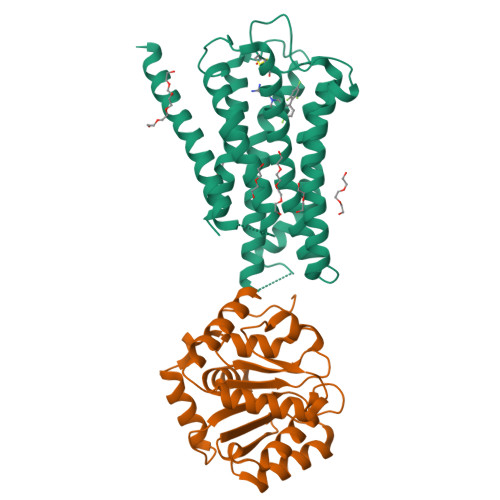
5-hydroxytryptamine receptor 1B structureClick to view 3D structure5-hydroxytryptamine receptor 1BP28222HumansKnownZolmitriptan binds with high affinity to human 5-HT1B and 5-HT1D receptors leading to cranial blood vessel constriction. Current theories proposed to explain the etiology of migraine headache suggest that symptoms are due to local cranial vasodilatation and/or to the release of sensory neuropeptides (vasoactive intestinal peptide, substance P and calcitonin gene-related peptide) through nerve endings in the trigeminal system. The therapeutic activity of zolmitriptan for the treatment of migraine headache can most likely be attributed to the agonist effects at the 5HT1B/1D receptors on intracranial blood vessels (including the arterio-venous anastomoses) and sensory nerves of the trigeminal system which result in cranial vessel constriction and inhibition of pro-inflammatory neuropeptide release.
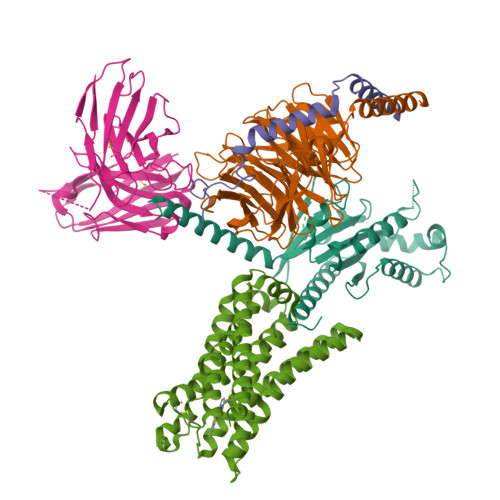
5-hydroxytryptamine receptor 1D structureClick to view 3D structure5-hydroxytryptamine receptor 1DP28221HumansKnownZolmitriptan binds with high affinity to human 5-HT1B and 5-HT1D receptors leading to cranial blood vessel constriction. Current theories proposed to explain the etiology of migraine headache suggest that symptoms are due to local cranial vasodilatation and/or to the release of sensory neuropeptides (vasoactive intestinal peptide, substance P and calcitonin gene-related peptide) through nerve endings in the trigeminal system. The therapeutic activity of zolmitriptan for the treatment of migraine headache can most likely be attributed to the agonist effects at the 5HT1B/1D receptors on intracranial blood vessels (including the arterio-venous anastomoses) and sensory nerves of the trigeminal system which result in cranial vessel constriction and inhibition of pro-inflammatory neuropeptide release.
5-hydroxytryptamine receptor 1A structureClick to view 3D structure5-hydroxytryptamine receptor 1AP08908HumansKnownNot Available
5-hydroxytryptamine receptor 1F structureClick to view 3D structure5-hydroxytryptamine receptor 1FP30939HumansKnownZolmitriptan binds with high affinity to human 5-HT1B and 5-HT1D receptors leading to cranial blood vessel constriction. Current theories proposed to explain the etiology of migraine headache suggest that symptoms are due to local cranial vasodilatation and/or to the release of sensory neuropeptides (vasoactive intestinal peptide, substance P and calcitonin gene-related peptide) through nerve endings in the trigeminal system. The therapeutic activity of zolmitriptan for the treatment of migraine headache can most likely be attributed to the agonist effects at the 5HT1B/1D receptors on intracranial blood vessels (including the arterio-venous anastomoses) and sensory nerves of the trigeminal system which result in cranial vessel constriction and inhibition of pro-inflammatory neuropeptide release.
5-hydroxytryptamine receptor 4 structureClick to view 3D structure5-hydroxytryptamine receptor 4Q13639HumansKnownZolmitriptan binds with high affinity to human 5-HT1B and 5-HT1D receptors leading to cranial blood vessel constriction. Current theories proposed to explain the etiology of migraine headache suggest that symptoms are due to local cranial vasodilatation and/or to the release of sensory neuropeptides (vasoactive intestinal peptide, substance P and calcitonin gene-related peptide) through nerve endings in the trigeminal system. The therapeutic activity of zolmitriptan for the treatment of migraine headache can most likely be attributed to the agonist effects at the 5HT1B/1D receptors on intracranial blood vessels (including the arterio-venous anastomoses) and sensory nerves of the trigeminal system which result in cranial vessel constriction and inhibition of pro-inflammatory neuropeptide release.
Concentrations
Not Available
External Links
DrugBank IDDB00315
HMDB IDHMDB0014460
FooDB IDNot Available
Phenol Explorer IDNot Available
KNApSAcK IDNot Available
BiGG IDNot Available
BioCyc IDNot Available
METLIN IDNot Available
PDB IDNot Available
Wikipedia LinkZolmitriptan
Chemspider ID54844
ChEBI ID10124
PubChem Compound ID60857
Kegg Compound IDC07218
YMDB IDNot Available
ECMDB IDNot Available
References
Synthesis Reference

Islam Aminul, Bhar Chandan, Katam Sahadev, “Process for preparing optically pure zolmitriptan.” U.S. Patent US20050245585, issued November 03, 2005.

MSDSNot Available
General References
  1. Pascual J: [Mechanism of action of zolmitriptan]. Neurologia. 1998 Oct;13 Suppl 2:9-15. [PubMed: 9859690]
  2. Martin GR: Pre-clinical pharmacology of zolmitriptan (Zomig; formerly 311C90), a centrally and peripherally acting 5HT1B/1D agonist for migraine. Cephalalgia. 1997 Oct;17 Suppl 18:4-14. [PubMed: 9399012]
  3. Drugs.com - http://www.drugs.com/cons/Zolmitriptan.html
  4. RxList: The Internet Drug Index (2009). - http://www.rxlist.com/