Clozapine (CED0001728)

Record Information
Version1.0
Creation Date2009-07-21 20:26:42 UTC
Update Date2026-05-14 16:36:36 UTC
SynCED IDCED0001728
Secondary Accession Numbers
  • CHEM002181
  • T3D2764
Identification
Common NameClozapine
ClassSmall Molecule
Description
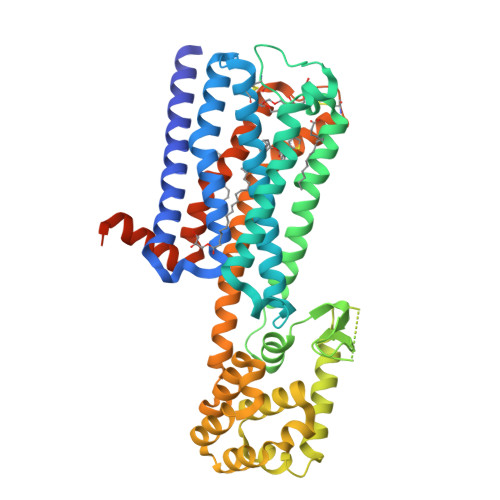
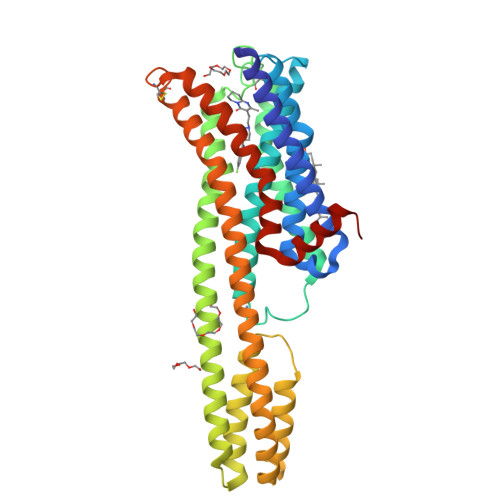
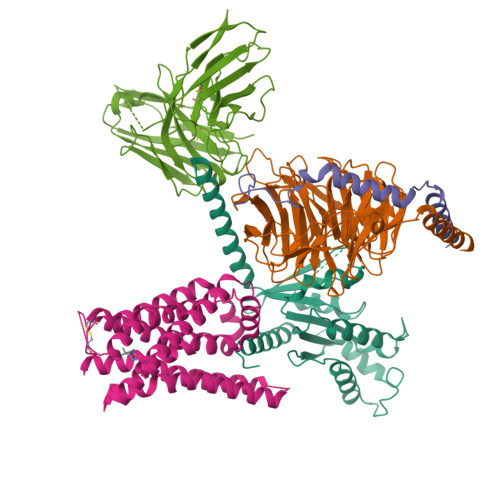
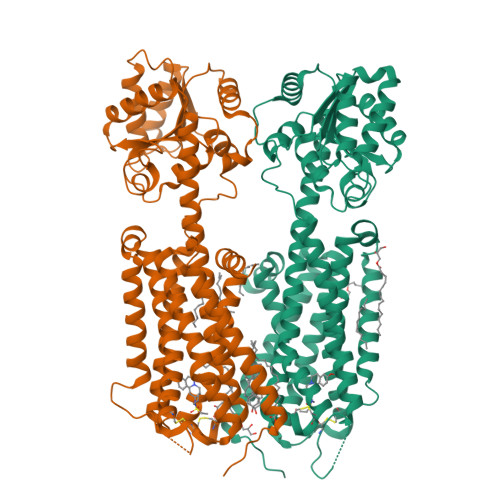
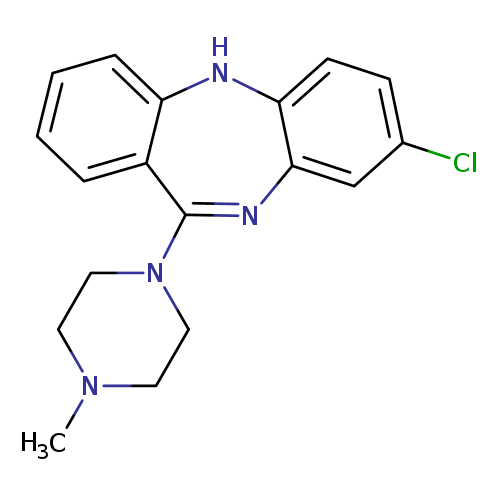
Clozapine belongs to the dibenzodiazepines, a subclass of benzodiazepines within the organic compounds. This exogenous organoheterocyclic compound has the formula C18H19ClN4 and an average molecular weight of 326.82 g/mol. At room temperature, it exists as a solid. It is found in healthcare, pharmaceuticals and veterinary products as an antipsychotic, and is also recorded in electrical and electronic equipment specifically in amplifiers. The recorded exposure route for this compound is oral. Clozapine is utilized as a second generation antipsychotic and functions as a biological application for several roles, acting as a serotonergic, dopaminergic, adrenergic, histamine, muscarinic, and GABA antagonist. Additionally, it serves as a chemical and biological inhibitor of EC 3.4.21.26 (prolyl oligopeptidase). The compound interacts with 35 recorded protein targets, including the D(4) dopamine receptor (DRD4), the D(2) dopamine receptor (DRD2), the Histamine H1 receptor (HRH1), and Neuron-specific vesicular protein calcyon (CALY). It also acts as an antagonist or positive modulator of Muscarinic acetylcholine receptors M2 (CHRM2), M3 (CHRM3), M4 (CHRM4), and M5 (CHRM5), among 14 other proteins. While the mechanism of action of Clozapine is unknown, it has been proposed that its therapeutic activity in schizophrenia is mediated through a combination of serotonin Type 2 (5HT2) and dopamine Type 2 (D2) receptor antagonism.
Contaminant Type
  • Amine
  • Antipsychotic Agent
  • Drug
  • GABA Antagonist
  • Human Neurotoxin
  • Metabolite
  • Organic Compound
  • Organochloride
  • Serotonin Antagonist
  • Synthetic Compound
Chemical Structure
Synonyms
ValueSource
ClozapinChEBI
ClozapinaChEBI
ClozapinumChEBI
ClozarilKegg
LeponexHMDB
Chemical FormulaC18H19ClN4
Average Molecular Mass326.823 g/mol
Monoisotopic Mass326.130 g/mol
CAS Registry Number5786-21-0
IUPAC Name6-chloro-10-(4-methylpiperazin-1-yl)-2,9-diazatricyclo[9.4.0.0³,⁸]pentadeca-1(15),3,5,7,9,11,13-heptaene
Traditional Nameclozapine
SMILESCN1CCN(CC1)C1=NC2=CC(Cl)=CC=C2NC2=CC=CC=C12
InChI IdentifierInChI=1S/C18H19ClN4/c1-22-8-10-23(11-9-22)18-14-4-2-3-5-15(14)20-16-7-6-13(19)12-17(16)21-18/h2-7,12,20H,8-11H2,1H3
InChI KeyQZUDBNBUXVUHMW-UHFFFAOYSA-N
Chemical Taxonomy
Description Belongs to the class of organic compounds known as dibenzodiazepines. Dibenzodiazepines are compounds containing a dibenzodiazepine moiety, which consists of two benzene connected by diazepine ring.
KingdomOrganic compounds
Super ClassOrganoheterocyclic compounds
ClassBenzodiazepines
Sub ClassDibenzodiazepines
Direct ParentDibenzodiazepines
Alternative Parents
Substituents
  • Dibenzodiazepine
  • 1,4-benzodiazepine
  • N-methylpiperazine
  • N-alkylpiperazine
  • Aryl chloride
  • Aryl halide
  • 1,4-diazinane
  • Imidolactam
  • Piperazine
  • Benzenoid
  • Tertiary amine
  • Tertiary aliphatic amine
  • Amidine
  • Secondary amine
  • Organic 1,3-dipolar compound
  • Azacycle
  • Carboxylic acid amidine
  • Propargyl-type 1,3-dipolar organic compound
  • Organonitrogen compound
  • Organochloride
  • Organohalogen compound
  • Hydrocarbon derivative
  • Organopnictogen compound
  • Organic nitrogen compound
  • Amine
  • Aromatic heteropolycyclic compound
Molecular FrameworkAromatic heteropolycyclic compounds
External Descriptors
Biological Properties
StatusDetected and Not Quantified
OriginExogenous
Cellular Locations
  • Membrane
Biofluid LocationsNot Available
Tissue LocationsNot Available
Applications
Biological Roles
Chemical Roles
Organoleptic EffectsNot Available
Physical Properties
StateSolid
AppearanceWhite powder.
Experimental Properties
PropertyValue
Melting Point183-184°C
Boiling PointNot Available
Solubility11.8 mg/L
Predicted Properties
PropertyValueSource
Water Solubility0.19 g/LALOGPS
logP3.67ALOGPS
logP3.4ChemAxon
logS-3.2ALOGPS
pKa (Strongest Acidic)15.9ChemAxon
pKa (Strongest Basic)7.35ChemAxon
Physiological Charge1ChemAxon
Hydrogen Acceptor Count4ChemAxon
Hydrogen Donor Count1ChemAxon
Polar Surface Area30.87 ŲChemAxon
Rotatable Bond Count0ChemAxon
Refractivity97.36 m³·mol⁻¹ChemAxon
Polarizability35.77 ųChemAxon
Number of Rings4ChemAxon
BioavailabilityYesChemAxon
Rule of FiveYesChemAxon
Ghose FilterYesChemAxon
Veber's RuleYesChemAxon
MDDR-like RuleNoChemAxon
Spectra
Spectra
Spectrum TypeDescriptionSplash KeyDeposition DateView
Predicted GC-MSPredicted GC-MS Spectrumsplash10-06r5-9064000000-0f31b1de88be42ac8381Not AvailableView Spectrum
Predicted GC-MSPredicted GC-MS SpectrumNot AvailableNot AvailableView Spectrum
LC-MS/MSLC-MS/MS Spectrumsplash10-00b9-0298000000-50d2ee0b52827fd1aee3Not AvailableView Spectrum
LC-MS/MSLC-MS/MS Spectrumsplash10-00di-2690000000-daaa74a4f85f5e8b5926Not AvailableView Spectrum
LC-MS/MSLC-MS/MS Spectrumsplash10-00di-0090000000-bc2ca4d5a76a5facf897Not AvailableView Spectrum
LC-MS/MSLC-MS/MS Spectrumsplash10-004i-0009000000-986bc19f7e7e8602d005Not AvailableView Spectrum
LC-MS/MSLC-MS/MS Spectrumsplash10-00b9-0049000000-d6315d4aeb74c251e939Not AvailableView Spectrum
LC-MS/MSLC-MS/MS Spectrumsplash10-00di-0090000000-27fd28450826291cc8c6Not AvailableView Spectrum
LC-MS/MSLC-MS/MS Spectrumsplash10-00di-0290000000-474b25ea27690471db0fNot AvailableView Spectrum
LC-MS/MSLC-MS/MS Spectrumsplash10-0006-0970000000-a58015260aaddb4245bdNot AvailableView Spectrum
LC-MS/MSLC-MS/MS Spectrumsplash10-0006-0930000000-3ccfd048a34fdb4f594fNot AvailableView Spectrum
LC-MS/MSLC-MS/MS Spectrumsplash10-004i-0009000000-7df53c42e3b1618bfdecNot AvailableView Spectrum
LC-MS/MSLC-MS/MS Spectrumsplash10-004i-0049000000-7522cc8ebf988effc792Not AvailableView Spectrum
LC-MS/MSLC-MS/MS Spectrumsplash10-00di-0090000000-bd138be4ae488c201ed3Not AvailableView Spectrum
LC-MS/MSLC-MS/MS Spectrumsplash10-00di-0190000000-68c8b78f304c38b7b7b5Not AvailableView Spectrum
LC-MS/MSLC-MS/MS Spectrumsplash10-0006-0980000000-a9dd724f32c02059c510Not AvailableView Spectrum
LC-MS/MSLC-MS/MS Spectrumsplash10-0006-0930000000-61c0f65f163824ddd594Not AvailableView Spectrum
LC-MS/MSLC-MS/MS Spectrumsplash10-00di-0090000000-da747a0572aa2c21683fNot AvailableView Spectrum
LC-MS/MSLC-MS/MS Spectrumsplash10-002f-0930000000-614883dbe075268cf23aNot AvailableView Spectrum
LC-MS/MSLC-MS/MS Spectrumsplash10-00b9-0298000000-50d2ee0b52827fd1aee3Not AvailableView Spectrum
LC-MS/MSLC-MS/MS Spectrumsplash10-00di-2690000000-daaa74a4f85f5e8b5926Not AvailableView Spectrum
LC-MS/MSLC-MS/MS Spectrumsplash10-004i-0009000000-6a5cb517440c1592abf6Not AvailableView Spectrum
LC-MS/MSLC-MS/MS Spectrumsplash10-00b9-0049000000-91d037447eeb7ddec7f0Not AvailableView Spectrum
LC-MS/MSLC-MS/MS Spectrumsplash10-00di-0290000000-328730ac69c0a187556dNot AvailableView Spectrum
LC-MS/MSLC-MS/MS Spectrumsplash10-00di-0090000000-8b7f0b002676cde2b82eNot AvailableView Spectrum
LC-MS/MSLC-MS/MS Spectrumsplash10-00di-0090000000-5a9b3cf28962f0ee8a47Not AvailableView Spectrum
LC-MS/MSLC-MS/MS Spectrumsplash10-004i-0009000000-77845dce7dc9986039b2Not AvailableView Spectrum
LC-MS/MSLC-MS/MS Spectrumsplash10-004i-0049000000-6381b0842b2c00cf838aNot AvailableView Spectrum
LC-MS/MSLC-MS/MS Spectrumsplash10-00di-0090000000-86dc1ea7be8412b9608cNot AvailableView Spectrum
LC-MS/MSLC-MS/MS Spectrumsplash10-0006-0920000000-7fbe9dedf784d23d08abNot AvailableView Spectrum
LC-MS/MSLC-MS/MS Spectrumsplash10-0006-0920000000-342eb736c8147b04099eNot AvailableView Spectrum
LC-MS/MSLC-MS/MS Spectrumsplash10-0006-0970000000-61de277ac639907ae4a0Not AvailableView Spectrum
LC-MS/MSLC-MS/MS Spectrumsplash10-0006-0960000000-925d09c355fc3be275a2Not AvailableView Spectrum
LC-MS/MSLC-MS/MS Spectrumsplash10-00di-0290000000-bbc7b75ce75e354f5b3cNot AvailableView Spectrum
LC-MS/MSLC-MS/MS Spectrumsplash10-00di-0090000000-a0ee4af55f94da3b26f2Not AvailableView Spectrum
Predicted LC-MS/MSPredicted LC-MS/MS Spectrumsplash10-004i-0009000000-b771968b218f574a2031Not AvailableView Spectrum
Predicted LC-MS/MSPredicted LC-MS/MS Spectrumsplash10-004i-1049000000-24dab1e16fa5778e3f05Not AvailableView Spectrum
Predicted LC-MS/MSPredicted LC-MS/MS Spectrumsplash10-004i-2190000000-6b669cd26b101d106f1cNot AvailableView Spectrum
Predicted LC-MS/MSPredicted LC-MS/MS Spectrumsplash10-004i-0009000000-178d40f752b4d092a8a6Not AvailableView Spectrum
Predicted LC-MS/MSPredicted LC-MS/MS Spectrumsplash10-004i-0029000000-5b7197f427b8cfdcdac2Not AvailableView Spectrum
Predicted LC-MS/MSPredicted LC-MS/MS Spectrumsplash10-0006-4290000000-33f870d86d2adcc8f049Not AvailableView Spectrum
Predicted LC-MS/MSPredicted LC-MS/MS Spectrumsplash10-004i-0009000000-1fb75fb697641f932264Not AvailableView Spectrum
Predicted LC-MS/MSPredicted LC-MS/MS Spectrumsplash10-004i-0039000000-42c6b413e853bd1fe862Not AvailableView Spectrum
Predicted LC-MS/MSPredicted LC-MS/MS Spectrumsplash10-00fu-0191000000-96b60ea49fe3e61ab787Not AvailableView Spectrum
Predicted LC-MS/MSPredicted LC-MS/MS Spectrumsplash10-004i-0009000000-4dd2a7daa08a9642d73bNot AvailableView Spectrum
Predicted LC-MS/MSPredicted LC-MS/MS Spectrumsplash10-004i-0059000000-1c82c8e60557dceb9924Not AvailableView Spectrum
Predicted LC-MS/MSPredicted LC-MS/MS Spectrumsplash10-0fc3-2090000000-e076d7de031202c4d9a7Not AvailableView Spectrum
Toxicity Profile
Toxicity Values
Toxicity ValueOrganismDose DescriptorRoute of ExposurePredicted or ExperimentalToxicity RatingReference
229.0 Log mg/kg [130:410]RatLD50oralpredictedNot AvailableNot Available
Toxicity / Toxin ClassNot Available
Mechanism of ToxicityThe mechanism of action of Clozapine, as with other drugs used to treat schizophrenia, is unknown. However, it has been proposed that the drug's therapeutic activity in schizophrenia is mediated through a combination of dopamine type 2 (D2) and serotonin type 2 (5HT2) receptor antagonism. Atypical antipsychotic drugs such as clozapine have been proposed to block the 5HT2 and D2 receptors at therapeutic doses as evidenced by blockage in accelerating levels of growth hormone and cortisol secretion. The antipsychotic activity of clozapine is assumed to be the cause of D2 blockade while interacting with other receptors as well. With regards to mode of action in blocking dopaminergic receptors, clozapine exhibits higher affinity for D4 compared to the D2 receptor subtype. In addition, D1 antagonistic activity of clozapine enhances dopaminergic activity by increased extracellular brain dopamine concentrations specifically in the prefrontal cortex which is believed to explain its efficacy against negative symptoms generally observed in schizophrenia when using other drugs. Interestingly, clozapine has not been able to block arousal behavior which is the case when using other dopamine agonists after prolonged treatment. Interaction of clozapine with the immune system has also been found important when using this drug. Neutrophil apoptosis otherwise known as agranulocytosis was detected after administration of clopazine alone and bioactived clozapine to nitrenium ion at supratherapeutic and therapeutic levels, respectively. At supratherapeutic concentrations, clozapine can be toxic due to the drug itself or its stable metabolite products. At therapeutic levels however, the chemically reactive nitrenium ion is believed to bound to cellular protein, deplete intracellular GSH, and lead to final polymorphonuclear (PMN) and mononuclear leukocyte cytotoxicity in vitro. Agranulocytosis induced by bioactived clozapine can be inhibited by using antioxidants and genistein. PMN apoptosis is believed to be achieved by decelerating the life span of circulating cells after clozapine administration. Clozapine has also shown to interact with GABA receptors. Clozapine is able to induce release of glutamate and D-serine and decrease expression of glutamate transporters in astrocytic cell cultures with no neurons.
Carcinogenicity (IARC Classification)No indication of carcinogenicity to humans (not listed by IARC).
Minimum Risk LevelNot Available
SymptomsNot Available
TreatmentEstablish and maintain an airway; ensure adequate oxygenation and ventilation. Activated charcoal, which may be used with sorbitol, may be as or more effective than emesis or lavage, and should be considered in treating overdosage. Cardiac and vital signs monitoring is recommended along with general symptomatic and supportive measures. Additional surveillance should be continued for several days because of the risk of delayed effects. Avoid epinephrine and derivatives when treating hypotension, and quinidine and procainamide when treating cardiac arrhythmia. There are no specific antidotes for Clozapine. (13)
Health Effects
Health EffectRelationshipDirectionDescriptionReference
anemiaAssociated With?Not AvailableA disorder characterized by a reduction in the amount of hemoglobin in 100 ml of blood. Signs and symptoms of anemia may include pallor of the skin and mucous membranes, shortness of breath, palpitations of the heart, soft systolic murmurs, lethargy, and fatigability. (NCI CTCAE)PMC11505606 , PMC11505606
type 2 diabetes mellitusAssociated With?increaseNot AvailablePMC11505606
type 2 diabetes mellitusAssociated With?Not AvailableNot AvailablePMC11505606 , PMC12733404
diabetes mellitusAssociated With?Not AvailableA glucose metabolism disease characterized by chronic hyperglycaemia with disturbances of carbohydrate, fat and protein metabolism resulting from defects in insulin secretion, insulin action, or both. (DO)PMC11505606
diabetes mellitusAssociated With?increaseA glucose metabolism disease characterized by chronic hyperglycaemia with disturbances of carbohydrate, fat and protein metabolism resulting from defects in insulin secretion, insulin action, or both. (DO)PMC11505606
neutropeniaAssociated With?Not AvailableA disorder characterized by an abnormally low level of neutrophils.PMC12264089 , PMC10724599
weight gainAssociated With?decreaseA finding characterized by an increase in overall body weight; for pediatrics, greater than the baseline growth curve. (NCI CTCAE)PMC11505606
weight gainAssociated With?Not AvailableA finding characterized by an increase in overall body weight; for pediatrics, greater than the baseline growth curve. (NCI CTCAE)PMC11505606
schizophreniaNot AvailableNot AvailableA psychotic disorder that is characterized by a disintegration of thought processes and of emotional responsiveness. (DO)PMC11505606 , PMC3622807
obesityAssociated With?Not AvailableA disorder characterized by having a high amount of body fat. (NCI CTCAE)PMC7326440
seizureAssociated With?Not AvailableNot AvailablePMC12264089 , PMC10724599
Toxic encephalopathyAssociated With?Not AvailableNot AvailablePMC12473886
myocarditisAssociated With?Not AvailableA disorder characterized by inflammation of the muscle tissue of the heart. (NCI CTCAE)PMC12264089
anxiety disorderNot AvailableNot AvailableNot AvailablePMC9143978
agranulocytosisAssociated With?Not AvailableNot AvailablePMC11505606 , PMC12264089
agranulocytosisAssociated With?decreaseNot AvailablePMC5997408
agranulocytosisAssociated With?increaseNot AvailablePMC13118352
abdominal obesity-metabolic syndromeAssociated With?Not AvailableNot AvailablePMC10724599
Abnormality of mitochondrial metabolismAssociated With?decreaseNot AvailablePMC13118352
Oxidative StressAssociated With?Not AvailableNot AvailablePMC12473886
Abdominal obesityAssociated With?increaseNot AvailablePMC11505606
depressive disorderNot AvailableNot AvailableNot AvailablePMC9143978
constipation disorderAssociated With?Not AvailableNot AvailablePMC10724599
CardiotoxicityAssociated With?Not AvailableNot AvailablePMC10724599
hypotensive disorderAssociated With?Not AvailableNot AvailablePMC10724599
hematopoietic system diseaseAssociated With?Not AvailableNot AvailablePMC10724599
Immunosuppression TherapyAssociated With?increaseNot AvailablePMC11505606
Body TemperatureAssociated With?decreaseNot AvailablePMC11505606
Schizophrenia, Treatment-ResistantNot AvailableNot AvailableNot AvailablePMC11505606 , PMC8366481
ImpulsivityHas Therapeutic Effect OnNot AvailableNot AvailablePMC4308438
Excessive salivationAssociated With?Not AvailableNot AvailablePMC10724599
antisocial personality disorderNot AvailableNot AvailableNot AvailablePMC7456777
psychotic disorderNot AvailableNot AvailableNot AvailablePMC9143978 , PMC3429117
Central Nervous System DiseasesNot AvailableNot AvailableNot AvailablePMC5748027
Mental DisordersNot AvailableNot AvailableNot AvailablePMC9943555
Mental DisordersAssociated With?Not AvailableNot AvailablePMC9943555
Exposure Sources
Source IDSourceSectorReference
CEDs000010Insecticides?Insecticides are synthetic chemicals designed to control or eliminate insect pests that threaten crops and other agricultural products.Agriculture & land managementPubChem
CEDs000013Soil?Soil serves as a critical medium for plant growth and sustains various ecological functions; however, it can become a reservoir for synthetic chemical contamination.Agriculture & land managementPMC12473886 , PMC12473886
CEDs000374Antipsychotics?Antipsychotics are a class of synthetic chemicals used primarily for the treatment of psychiatric disorders, including schizophrenia and bipolar disorder.Healthcare, pharmaceuticals & veterinary productsNot Available
CEDs000479Effluent?Effluent refers to liquid waste or sewage that is discharged into the environment, typically resulting from industrial processes, municipal wastewater treatment, or agricultural runoff.Wastewater, sanitation & biosolidsPMC9304188 , PMC9943555
CEDs000483WWTP effluent?Wastewater treatment plant (WWTP) effluent can serve as a significant source of synthetic chemical contamination in the environment.Wastewater, sanitation & biosolidsPMC9943555
CEDs000505Amplifiers?Amplifiers, commonly used in various electronic devices to enhance signal strength, can be a source of synthetic chemical contamination due to the materials and processes involved in their production and disposal.Electrical & Electronic EquipmentPubChem
CEDs000518Electrically Stimulated Smoking Devices?Electrically stimulated smoking devices, commonly known as e-cigarettes or vape pens, utilize electrical components to heat a liquid solution, often containing nicotine, flavorings, and other additives, to produce an aerosol for inhalation.Electrical & Electronic EquipmentPubChem
CEDs000530Radio Transmission Systems?Radio transmission systems utilize a variety of synthetic chemicals in their manufacturing and maintenance processes.Electrical & Electronic EquipmentPubChem
CEDs000545Food Preservation?Food preservation often involves the use of synthetic chemicals, such as preservatives, flavor enhancers, and color additives, to extend shelf life and enhance the sensory qualities of food products.Food, food processing & cookwarePubChem
CEDs000556Cigar Cigarettes?Cigar cigarettes are a source of synthetic chemical contamination due to the combustion of various tobacco blends and additives.Household cleaning & consumer productsPubChem
CEDs000559Non Electric Simulated Smoking Devices?Non-electric simulated smoking devices, often designed to mimic the experience of smoking without combustion, can be sources of synthetic chemical contamination due to the materials and chemicals used in their construction and operation.Household cleaning & consumer productsPubChem
CEDs000560Other Smoking Requisites?Other smoking requisites, including items such as lighters, matches, and rolling papers, can introduce synthetic chemical contamination through various components and additives.Household cleaning & consumer productsPubChem
CEDs000561Perfumes Within Detergents And Soaps?Perfumes within detergents and soaps are synthetic fragrance compounds added to enhance the sensory experience of cleaning products.Household cleaning & consumer productsPubChem
CEDs000569Tobacco Smoke Filters?Tobacco smoke filters are designed to reduce the inhalation of harmful substances in cigarette smoke, including tar and other particulate matter.Household cleaning & consumer productsPubChem
CEDs000580Manufacture Preparation Of Tobacco Products?The manufacture and preparation of tobacco products involve various processes that can result in the introduction of synthetic chemicals into the environment.Industrial manufacturing & chemical processingPubChem
CEDs000596Acaricides?Acaricides are synthetic chemicals specifically designed to target and control mite populations that can damage crops and plants.Agriculture & land managementPubChem
CEDs000600Herbicides And Algicides?Herbicides and algicides are synthetic chemicals primarily used to control unwanted plants and algae in various environments.Agriculture & land managementPubChem
CEDs000610Aftersun Products?Aftersun products are designed to soothe and hydrate the skin after sun exposure, often containing various synthetic chemicals such as emollients, preservatives, and fragrances.Personal care & cosmeticsPubChem
CEDs000611Anti Perspirants Or Body Deoderants?Antiperspirants and body deodorants commonly contain synthetic chemicals such as aluminum compounds, parabens, and synthetic fragrances.Personal care & cosmeticsPubChem
CEDs000615Eye Makeup Products?Eye makeup products, including mascaras, eyeliners, and eyeshadows, often contain a variety of synthetic chemicals such as pigments, preservatives, and film-forming agents.Personal care & cosmeticsPubChem
CEDs000632Apparel?Apparel production often involves the use of various synthetic chemicals, including dyes, finishing agents, and preservatives.Textiles, leather & furnishingsPubChem
CEDs000642Footwear?Footwear production often involves the use of various synthetic chemicals, such as adhesives, dyes, and treatments, which can contribute to environmental contamination.Textiles, leather & furnishingsPubChem
CEDs000650Purses Luggage Hand Bags?Purses, luggage, and handbags are often manufactured using synthetic materials such as polyvinyl chloride (PVC), polyurethane, and various types of nylon.Textiles, leather & furnishingsPubChem
CEDs000671Airplanes And Helicopters?Airplanes and helicopters are significant sources of synthetic chemical contamination primarily through the use of aviation fuels, lubricants, and de-icing agents.Aviation & AerospacePubChem
CEDs000678Nitrogenous Fertilisers?Nitrogenous fertilizers are synthetic chemical compounds primarily used to enhance plant growth by supplying essential nitrogen, a crucial nutrient for photosynthesis and protein synthesis.Agriculture & land managementPubChem
CEDs000679Phosphatic Fertilisers?Phosphatic fertilizers are synthetic chemical products primarily composed of phosphorus, which is essential for plant growth.Agriculture & land managementPubChem
CEDs000685Ceramics?Ceramics can be a source of synthetic chemical contamination through various additives and processing agents used in their production.Building & ConstructionPubChem
CEDs000693Silica Glass?Silica glass, primarily composed of silicon dioxide (SiO2), is widely used in various applications, including windows, glass facades, and insulation materials.Building & ConstructionPubChem
CEDs000696Nanotechnology?Nanotechnology involves the manipulation of materials at the molecular or atomic level, typically within the range of 1 to 100 nanometers.Industrial manufacturing & chemical processingPubChem
CEDs000717Fountain Pens?Fountain pens utilize a liquid ink that often contains synthetic chemicals, including dyes, pigments, and solvents, which can contribute to environmental contamination.Paper, pulp & fiber productsPubChem
CEDs000720Ink Reservoir Pens2?Ink reservoir pens are writing instruments that utilize a reservoir to store ink, which is often composed of synthetic dyes, solvents, and additives.Paper, pulp & fiber productsPubChem
CEDs000730Contact Lens Cases?Contact lens cases are small containers designed to store contact lenses in a sterile environment, typically made from various synthetic materials including plastics such as polypropylene or polycarbonate.Healthcare, pharmaceuticals & veterinary productsPubChem
CEDs000734Coating Compositions?Coating compositions, which include paints, sealants, and varnishes, are formulated with a variety of synthetic chemicals such as solvents, resins, pigments, and additives.Building & ConstructionPubChem
CEDs000735Explosives?Explosives are chemical compounds or mixtures designed to undergo rapid decomposition, releasing energy in the form of gas and heat.Defense & military infrastructurePubChem
CEDs000739Inks?Inks are complex mixtures composed of pigments or dyes, solvents, resins, and additives used primarily for printing and writing applications.Paper, pulp & fiber productsPubChem
CEDs000741Pigment Pastes?Pigment pastes are concentrated dispersions of pigments used to impart color and properties to materials.Paper, pulp & fiber productsPubChem
CEDs000744Water, Wastewater, & Sewage Treatment?Water, wastewater, and sewage treatment processes are critical for managing and mitigating pollutants in water systems.Wastewater, sanitation & biosolidsPubChem
CEDs01425Food CommoditiesFood, food processing & cookwarePMC12473886
CEDs02293Fresh WaterAquatic systems & sedimentsPMC12407060
CEDs02340Water BodyAquatic systems & sedimentsPMC12473886
CEDs03009Waste WaterWastewater, sanitation & biosolidsPMC7456777
CEDs03061WWTPWastewater, sanitation & biosolidsPMC9304188
CEDs03157Municipal EffluentWastewater, sanitation & biosolidsPMC12407060
Pathways
7 pathwaysPathway Source: PathBank
Targets
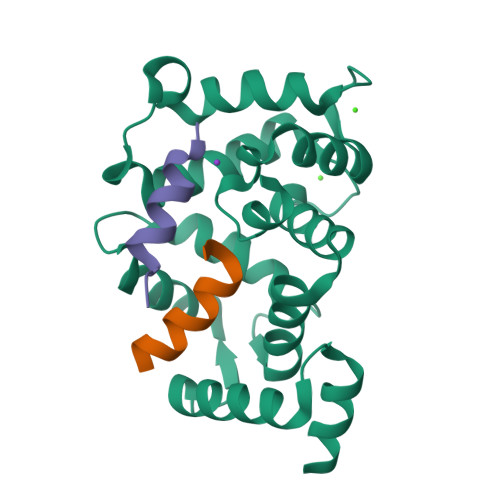
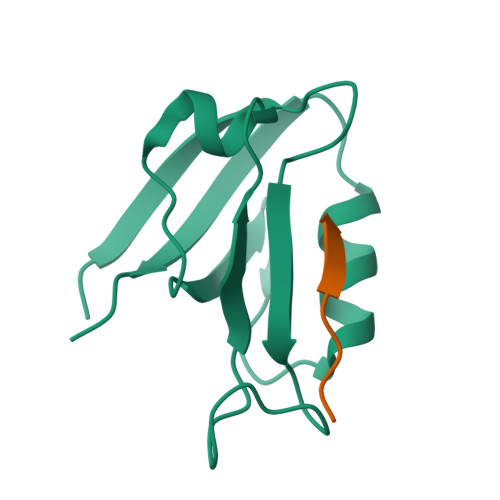
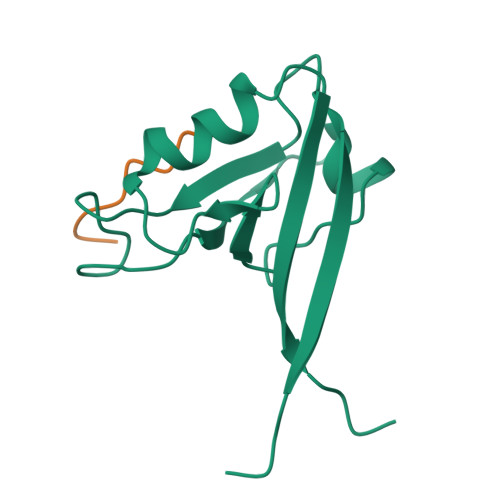
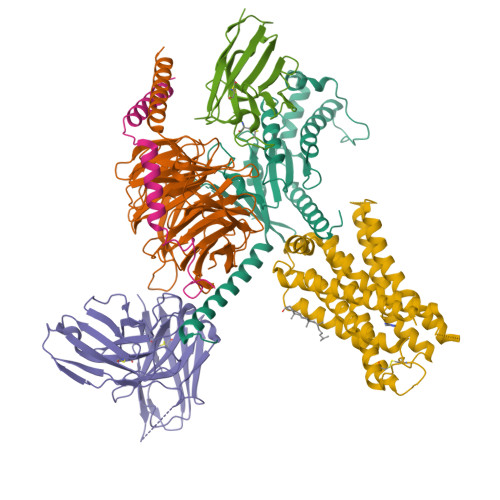
StructureProteinUniProt IDOrganismRelationshipDetails
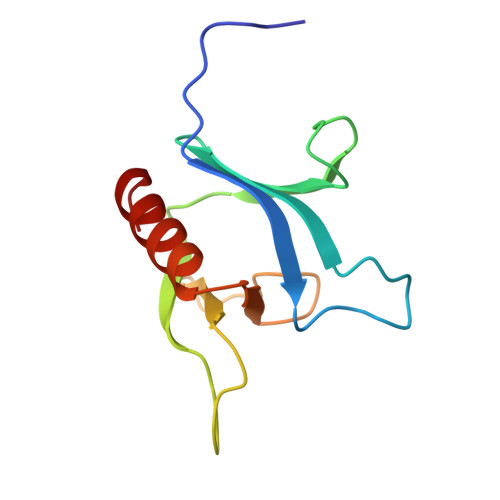
Mitogen-activated protein kinase structureClick to view 3D structureMitogen-activated protein kinaseA3FQ79Cryptosporidium parvum (strain Iowa II)KnownNot Available
Catalase structureClick to view 3D structureCatalaseP04040HumansKnownNot Available
Acetylcholinesterase structureClick to view 3D structureAcetylcholinesteraseP22303HumansKnownNot Available
Heat shock 70 kDa protein 1A structureClick to view 3D structureHeat shock 70 kDa protein 1AP0DMV8HumansKnownNot Available
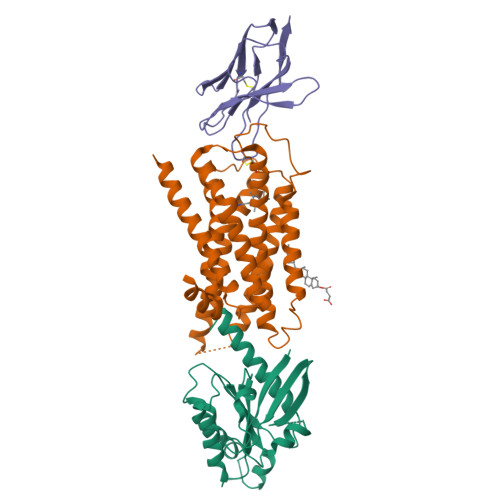
Muscarinic acetylcholine receptor M1 structureClick to view 3D structureMuscarinic acetylcholine receptor M1P11229HumansPredicted (SEA)
Prediction Confidence Score
0.736
Applicability Domain
1.0
Statistical Significance
6.00e-05
Supporting Reference Compounds
385
E-value
0.467095
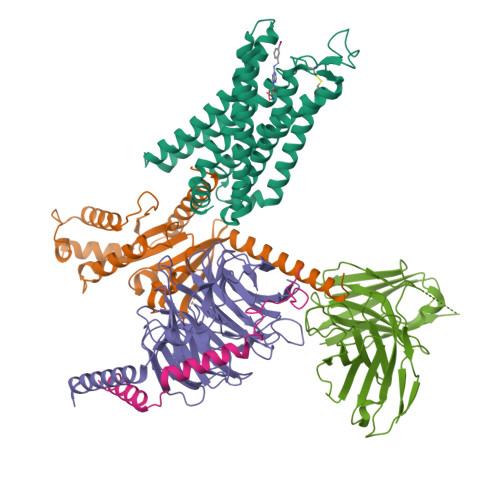
D(2) dopamine receptor structureClick to view 3D structureD(2) dopamine receptorP14416HumansPredicted (SEA)
Prediction Confidence Score
0.727
Applicability Domain
1.0
Statistical Significance
4.10e-04
Supporting Reference Compounds
1103
E-value
3.19182
5-hydroxytryptamine receptor 2A structureClick to view 3D structure5-hydroxytryptamine receptor 2AP14842Rattus norvegicusPredicted (SEA)
Prediction Confidence Score
0.708
Applicability Domain
1.0
Statistical Significance
1.90e-04
Supporting Reference Compounds
380
E-value
1.47914
5-hydroxytryptamine receptor 2C structureClick to view 3D structure5-hydroxytryptamine receptor 2CP08909RatPredicted (SEA)
Prediction Confidence Score
0.707
Applicability Domain
1.0
Statistical Significance
1.40e-04
Supporting Reference Compounds
185
E-value
1.08989
Click to view 3D structureD(2) dopamine receptorP61169RatPredicted (SEA)
Prediction Confidence Score
0.7
Applicability Domain
1.0
Statistical Significance
4.00e-04
Supporting Reference Compounds
528
E-value
3.11397
Click to view 3D structureD(1A) dopamine receptorP18901Rattus norvegicusPredicted (SEA)
Prediction Confidence Score
0.699
Applicability Domain
1.0
Statistical Significance
1.20e-04
Supporting Reference Compounds
206
E-value
0.934191
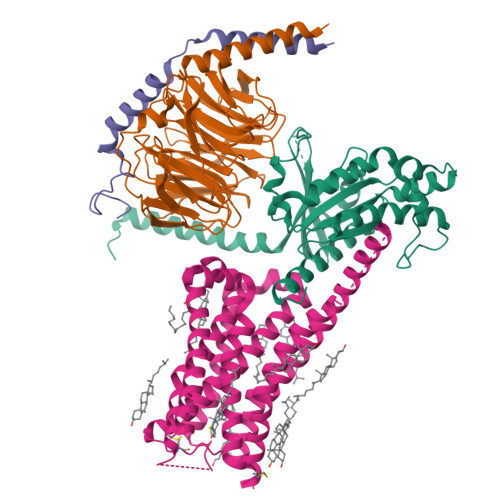
D(4) dopamine receptor structureClick to view 3D structureD(4) dopamine receptorP21917HumansPredicted (SEA)
Prediction Confidence Score
0.686
Applicability Domain
1.0
Statistical Significance
2.80e-04
Supporting Reference Compounds
524
E-value
2.17978
Histamine H4 receptor structureClick to view 3D structureHistamine H4 receptorQ9H3N8HumansPredicted (SEA)
Prediction Confidence Score
0.655
Applicability Domain
1.0
Statistical Significance
7.00e-05
Supporting Reference Compounds
150
E-value
0.544945
D(1A) dopamine receptor structureClick to view 3D structureD(1A) dopamine receptorP21728HumansPredicted (SEA)
Prediction Confidence Score
0.655
Applicability Domain
1.0
Statistical Significance
4.10e-04
Supporting Reference Compounds
425
E-value
3.19182
D(3) dopamine receptor structureClick to view 3D structureD(3) dopamine receptorP35462HumansPredicted (SEA)
Prediction Confidence Score
0.654
Applicability Domain
1.0
Statistical Significance
0.001
Supporting Reference Compounds
861
E-value
8.17417
Click to view 3D structureHistamine H1 receptorP31390Rattus norvegicusPredicted (SEA)
Prediction Confidence Score
0.652
Applicability Domain
1.0
Statistical Significance
2.00e-05
Supporting Reference Compounds
63
E-value
0.155698
Muscarinic acetylcholine receptor M4 structureClick to view 3D structureMuscarinic acetylcholine receptor M4P08173HumansPredicted (SEA)
Prediction Confidence Score
0.638
Applicability Domain
1.0
Statistical Significance
1.30e-04
Supporting Reference Compounds
297
E-value
1.01204
Gap junction alpha-1 protein structureClick to view 3D structureGap junction alpha-1 proteinP17302HumansKnownNot Available
Muscarinic acetylcholine receptor M2 structureClick to view 3D structureMuscarinic acetylcholine receptor M2P08172HumansPredicted (SEA)
Prediction Confidence Score
0.636
Applicability Domain
1.0
Statistical Significance
1.90e-04
Supporting Reference Compounds
373
E-value
1.47914
Muscarinic acetylcholine receptor M3 structureClick to view 3D structureMuscarinic acetylcholine receptor M3P20309HumansPredicted (SEA)
Prediction Confidence Score
0.636
Applicability Domain
1.0
Statistical Significance
2.30e-04
Supporting Reference Compounds
310
E-value
1.79053
Voltage-gated inwardly rectifying potassium channel KCNH2 structureClick to view 3D structureVoltage-gated inwardly rectifying potassium channel KCNH2Q12809HumansPredicted (SEA)
Prediction Confidence Score
0.635
Applicability Domain
1.0
Statistical Significance
7.40e-04
Supporting Reference Compounds
1498
E-value
5.76084
Muscarinic acetylcholine receptor M5 structureClick to view 3D structureMuscarinic acetylcholine receptor M5P08912HumansPredicted (SEA)
Prediction Confidence Score
0.617
Applicability Domain
1.0
Statistical Significance
1.50e-04
Supporting Reference Compounds
266
E-value
1.16774
5-hydroxytryptamine receptor 2A structureClick to view 3D structure5-hydroxytryptamine receptor 2AP28223HumansPredicted (SEA)
Prediction Confidence Score
0.614
Applicability Domain
1.0
Statistical Significance
9.40e-04
Supporting Reference Compounds
955
E-value
7.31783
Alpha-2A adrenergic receptor structureClick to view 3D structureAlpha-2A adrenergic receptorP08913HumansPredicted (SEA)
Prediction Confidence Score
0.581
Applicability Domain
1.0
Statistical Significance
5.70e-04
Supporting Reference Compounds
487
E-value
4.43741
5-hydroxytryptamine receptor 6 structureClick to view 3D structure5-hydroxytryptamine receptor 6P50406HumansPredicted (SEA)
Prediction Confidence Score
0.576
Applicability Domain
1.0
Statistical Significance
6.50e-04
Supporting Reference Compounds
536
E-value
5.0602
5-hydroxytryptamine receptor 1A structureClick to view 3D structure5-hydroxytryptamine receptor 1AP08908HumansPredicted (SEA)
Prediction Confidence Score
0.561
Applicability Domain
1.0
Statistical Significance
0.0032
Supporting Reference Compounds
953
E-value
24.9118
Histamine H1 receptor structureClick to view 3D structureHistamine H1 receptorP35367HumansPredicted (SEA)
Prediction Confidence Score
0.546
Applicability Domain
1.0
Statistical Significance
0.0012
Supporting Reference Compounds
507
E-value
9.26406
5-hydroxytryptamine receptor 2C structureClick to view 3D structure5-hydroxytryptamine receptor 2CP28335HumansPredicted (SEA)
Prediction Confidence Score
0.532
Applicability Domain
1.0
Statistical Significance
0.0022
Supporting Reference Compounds
823
E-value
17.5161
Sodium-dependent serotonin transporter structureClick to view 3D structureSodium-dependent serotonin transporterP31645HumansPredicted (SEA)
Prediction Confidence Score
0.53
Applicability Domain
1.0
Statistical Significance
0.0017
Supporting Reference Compounds
593
E-value
13.3901
Alpha-2B adrenergic receptor structureClick to view 3D structureAlpha-2B adrenergic receptorP18089HumansPredicted (SEA)
Prediction Confidence Score
0.53
Applicability Domain
1.0
Statistical Significance
5.40e-04
Supporting Reference Compounds
340
E-value
4.20386
Alpha-2C adrenergic receptor structureClick to view 3D structureAlpha-2C adrenergic receptorP18825HumansPredicted (SEA)
Prediction Confidence Score
0.53
Applicability Domain
1.0
Statistical Significance
6.40e-04
Supporting Reference Compounds
386
E-value
4.98235
Cytochrome P450 1A2 structureClick to view 3D structureCytochrome P450 1A2P05177HumansKnownNot Available
Dynamin-2 structureClick to view 3D structureDynamin-2P50570HumansKnownNot Available
Dynamin-1 structureClick to view 3D structureDynamin-1Q05193HumansKnownNot Available
D(2) dopamine receptor structureClick to view 3D structureD(2) dopamine receptorP14416HumansKnownThe mechanism of action of Clozapine, as with other drugs used to treat schizophrenia, is unknown. However, it has been proposed that the drug's therapeutic activity in schizophrenia is mediated through a combination of dopamine Type 2 (D2) and serotonin Type 2 (5HT2) receptor antagonism.
D(4) dopamine receptor structureClick to view 3D structureD(4) dopamine receptorP21917HumansKnownThe mechanism of action of Clozapine, as with other drugs used to treat schizophrenia, is unknown. However, it has been proposed that the drug's therapeutic activity in schizophrenia is mediated through a combination of dopamine Type 2 (D2) and serotonin Type 2 (5HT2) receptor antagonism.
5-hydroxytryptamine receptor 2A structureClick to view 3D structure5-hydroxytryptamine receptor 2AP28223HumansKnownThe mechanism of action of Clozapine, as with other drugs used to treat schizophrenia, is unknown. However, it has been proposed that the drug's therapeutic activity in schizophrenia is mediated through a combination of dopamine Type 2 (D2) and serotonin Type 2 (5HT2) receptor antagonism.
5-hydroxytryptamine receptor 1A structureClick to view 3D structure5-hydroxytryptamine receptor 1AP08908HumansKnownThe mechanism of action of Clozapine, as with other drugs used to treat schizophrenia, is unknown. However, it has been proposed that the drug's therapeutic activity in schizophrenia is mediated through a combination of dopamine Type 2 (D2) and serotonin Type 2 (5HT2) receptor antagonism.
Voltage-gated inwardly rectifying potassium channel KCNH2 structureClick to view 3D structureVoltage-gated inwardly rectifying potassium channel KCNH2Q12809HumansKnownNot Available
5-hydroxytryptamine receptor 2C structureClick to view 3D structure5-hydroxytryptamine receptor 2CP28335HumansKnownThe mechanism of action of Clozapine, as with other drugs used to treat schizophrenia, is unknown. However, it has been proposed that the drug's therapeutic activity in schizophrenia is mediated through a combination of dopamine Type 2 (D2) and serotonin Type 2 (5HT2) receptor antagonism.
Histamine H1 receptor structureClick to view 3D structureHistamine H1 receptorP35367HumansKnownThe mechanism of action of Clozapine, as with other drugs used to treat schizophrenia, is unknown. However, it has been proposed that the drug's therapeutic activity in schizophrenia is mediated through a combination of dopamine Type 2 (D2) and serotonin Type 2 (5HT2) receptor antagonism.
Histamine H4 receptor structureClick to view 3D structureHistamine H4 receptorQ9H3N8HumansKnownThe mechanism of action of Clozapine, as with other drugs used to treat schizophrenia, is unknown. However, it has been proposed that the drug's therapeutic activity in schizophrenia is mediated through a combination of dopamine Type 2 (D2) and serotonin Type 2 (5HT2) receptor antagonism.
D(1A) dopamine receptor structureClick to view 3D structureD(1A) dopamine receptorP21728HumansKnownThe mechanism of action of Clozapine, as with other drugs used to treat schizophrenia, is unknown. However, it has been proposed that the drug's therapeutic activity in schizophrenia is mediated through a combination of dopamine Type 2 (D2) and serotonin Type 2 (5HT2) receptor antagonism.
Muscarinic acetylcholine receptor M1 structureClick to view 3D structureMuscarinic acetylcholine receptor M1P11229HumansKnownThe mechanism of action of Clozapine, as with other drugs used to treat schizophrenia, is unknown. However, it has been proposed that the drug's therapeutic activity in schizophrenia is mediated through a combination of dopamine Type 2 (D2) and serotonin Type 2 (5HT2) receptor antagonism.
5-hydroxytryptamine receptor 1B structureClick to view 3D structure5-hydroxytryptamine receptor 1BP28222HumansKnownNot Available
5-hydroxytryptamine receptor 1D structureClick to view 3D structure5-hydroxytryptamine receptor 1DP28221HumansKnownNot Available
5-hydroxytryptamine receptor 1E structureClick to view 3D structure5-hydroxytryptamine receptor 1EP28566HumansKnownNot Available
5-hydroxytryptamine receptor 3A structureClick to view 3D structure5-hydroxytryptamine receptor 3AP46098HumansKnownThe mechanism of action of Clozapine, as with other drugs used to treat schizophrenia, is unknown. However, it has been proposed that the drug's therapeutic activity in schizophrenia is mediated through a combination of dopamine Type 2 (D2) and serotonin Type 2 (5HT2) receptor antagonism.
5-hydroxytryptamine receptor 6 structureClick to view 3D structure5-hydroxytryptamine receptor 6P50406HumansKnownThe mechanism of action of Clozapine, as with other drugs used to treat schizophrenia, is unknown. However, it has been proposed that the drug's therapeutic activity in schizophrenia is mediated through a combination of dopamine Type 2 (D2) and serotonin Type 2 (5HT2) receptor antagonism.
5-hydroxytryptamine receptor 7 structureClick to view 3D structure5-hydroxytryptamine receptor 7P34969HumansKnownThe mechanism of action of Clozapine, as with other drugs used to treat schizophrenia, is unknown. However, it has been proposed that the drug's therapeutic activity in schizophrenia is mediated through a combination of dopamine Type 2 (D2) and serotonin Type 2 (5HT2) receptor antagonism.
Adenosine receptor A3 structureClick to view 3D structureAdenosine receptor A3P0DMS8HumansKnownNot Available
Click to view 3D structureAlpha-1B adrenergic receptorP35368HumansKnownNot Available
Alpha-2B adrenergic receptor structureClick to view 3D structureAlpha-2B adrenergic receptorP18089HumansKnownNot Available
Alpha-2C adrenergic receptor structureClick to view 3D structureAlpha-2C adrenergic receptorP18825HumansKnownNot Available
D(3) dopamine receptor structureClick to view 3D structureD(3) dopamine receptorP35462HumansKnownThe mechanism of action of Clozapine, as with other drugs used to treat schizophrenia, is unknown. However, it has been proposed that the drug's therapeutic activity in schizophrenia is mediated through a combination of dopamine Type 2 (D2) and serotonin Type 2 (5HT2) receptor antagonism.
Muscarinic acetylcholine receptor M2 structureClick to view 3D structureMuscarinic acetylcholine receptor M2P08172HumansKnownNot Available
Muscarinic acetylcholine receptor M3 structureClick to view 3D structureMuscarinic acetylcholine receptor M3P20309HumansKnownNot Available
Muscarinic acetylcholine receptor M4 structureClick to view 3D structureMuscarinic acetylcholine receptor M4P08173HumansKnownNot Available
Muscarinic acetylcholine receptor M5 structureClick to view 3D structureMuscarinic acetylcholine receptor M5P08912HumansKnownNot Available
Click to view 3D structureNeuron-specific vesicular protein calcyonQ9NYX4HumansKnownThe mechanism of action of Clozapine, as with other drugs used to treat schizophrenia, is unknown. However, it has been proposed that the drug's therapeutic activity in schizophrenia is mediated through a combination of dopamine Type 2 (D2) and serotonin Type 2 (5HT2) receptor antagonism.
Alpha-1A adrenergic receptor structureClick to view 3D structureAlpha-1A adrenergic receptorP35348HumansKnownThe mechanism of action of Clozapine, as with other drugs used to treat schizophrenia, is unknown. However, it has been proposed that the drug's therapeutic activity in schizophrenia is mediated through a combination of dopamine Type 2 (D2) and serotonin Type 2 (5HT2) receptor antagonism.
Alpha-2A adrenergic receptor structureClick to view 3D structureAlpha-2A adrenergic receptorP08913HumansKnownThe mechanism of action of Clozapine, as with other drugs used to treat schizophrenia, is unknown. However, it has been proposed that the drug's therapeutic activity in schizophrenia is mediated through a combination of dopamine Type 2 (D2) and serotonin Type 2 (5HT2) receptor antagonism.
D(1B) dopamine receptor structureClick to view 3D structureD(1B) dopamine receptorP21918HumansKnownThe mechanism of action of Clozapine, as with other drugs used to treat schizophrenia, is unknown. However, it has been proposed that the drug's therapeutic activity in schizophrenia is mediated through a combination of dopamine Type 2 (D2) and serotonin Type 2 (5HT2) receptor antagonism.
Concentrations
Not Available
External Links
DrugBank IDDB00363
HMDB IDHMDB0014507
FooDB IDNot Available
Phenol Explorer IDNot Available
KNApSAcK IDNot Available
BiGG IDNot Available
BioCyc IDNot Available
METLIN IDNot Available
PDB IDNot Available
Wikipedia LinkClozapine
Chemspider ID10442628
ChEBI ID3766
PubChem Compound IDNot Available
Kegg Compound IDC06924
YMDB IDNot Available
ECMDB IDNot Available
References
Synthesis Reference

Schmutz, J. and Hunziker, F.; US. Patent 3,539,573; November 10, 1970 .

MSDSNot Available
General References
  1. Seeman P: Atypical antipsychotics: mechanism of action. Can J Psychiatry. 2002 Feb;47(1):27-38. [PubMed: 11873706]
  2. Alvir JM, Lieberman JA, Safferman AZ, Schwimmer JL, Schaaf JA: Clozapine-induced agranulocytosis. Incidence and risk factors in the United States. N Engl J Med. 1993 Jul 15;329(3):162-7. [PubMed: 8515788]
  3. Vaddadi KS, Soosai E, Vaddadi G: Low blood selenium concentrations in schizophrenic patients on clozapine. Br J Clin Pharmacol. 2003 Mar;55(3):307-9. [PubMed: 12630982]
  4. Naheed M, Green B: Focus on clozapine. Curr Med Res Opin. 2001;17(3):223-9. [PubMed: 11900316]
  5. Lane HY, Chang YC, Chang WH, Lin SK, Tseng YT, Jann MW: Effects of gender and age on plasma levels of clozapine and its metabolites: analyzed by critical statistics. J Clin Psychiatry. 1999 Jan;60(1):36-40. [PubMed: 10074876]
  6. Brunello N, Masotto C, Steardo L, Markstein R, Racagni G, New insights into the biology of schizophrenia through the mechanism of action of clozapine, Neuropsychopharmacology, 1995;13(3):177–213. [PubMed: 8602893]
  7. Baldessarini RJ, Frankenburg FR, Clozapine – A novel antipsychotic agent, The new England journal of medicine, 1991;324(11):746-54. [PubMed: 1671793]
  8. Meltzer, H. Y., Clinical studies on the mechanism of action of clozapine: the dopamine-serotonin hypothesis of schizophrenia, Psychopharmacology, 1989;99:S18-S27. [PubMed: 2682729]
  9. Tanahashi S, Yamamura S, Nakagawa M, Motomura E, Okada M, Clozapine, but not haloperidol, enhances glial D-serine and L-glutamate release in rat frontal cortex and primary cultured astrocytes, Br J Pharmacol, 2012;165(5):1543-55. [PubMed: 21880034]
  10. Williams DP, Pirmohamed M, Naisbitt DJ, Uetrecht JP, Park BK, Induction of Metabolism-Dependent and –Independent Neutrophil Apoptosis by Clozapine, Molecular Pharmacology, 2000;58:207–216. [PubMed: 10860943]
  11. Wu Y, Blichowski M, Daskalakis ZJ, Wu Z, Liu CC, Cortez MA, Snead OC 3rd, Evidence that clozapine directly interacts on the GABAb receptor, Neuroreport, 2011;22(13):637-641. [PubMed: 21753741]
  12. Drugs.com - http://www.drugs.com/cons/Clozapine.html
  13. RxList: The Internet Drug Index (2009). - http://www.rxlist.com/