Pyridostigmine (CED0003854)

Record Information
Version1.0
Creation Date2009-07-21 20:27:07 UTC
Update Date2026-05-14 16:41:50 UTC
SynCED IDCED0003854
Secondary Accession Numbers
  • CHEM002218
  • T3D2820
Identification
Common NamePyridostigmine
ClassSmall Molecule
Description
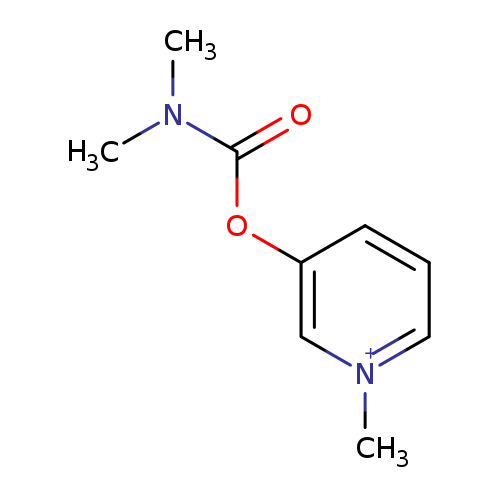
Pyridostigmine is an exogenous organic compound with the formula C9H13N2O2 and an average molecular weight of 181.21 g/mol. It exists as a solid at room temperature. Pyridostigmine belongs to the methylpyridines, a subclass of pyridines and derivatives within the organic compounds. This compound is detected in the liver and kidney tissues. Exposure routes include oral, intravenous, intramuscular, and parenteral administration. Pyridostigmine is found in or released from 15 recorded sources. These include healthcare, pharmaceuticals, and veterinary products as parasympathomimetics, as well as food preservation within food, food processing, and cookware. It is also associated with electrical and electronic equipment, such as electrodes, fixed capacitors and their manufacture, hybrid capacitors, conductive bodies characterised by the conductive materials, and electrically stimulated smoking devices. Additionally, it is found in household cleaning and consumer products, including bleaching agents, perfumes within detergents and soaps, pipe accessories, non electric simulated smoking devices, other smoking requisites, and two other sources. The compound interacts with three recorded protein targets. It acts as an inhibitor of cholinesterase (BCHE) and coagulation factor X (F10). As an inhibitor of acetylcholinesterase (ACHE), pyridostigmine inhibits acetylcholinesterase in the synaptic cleft by competing with acetylcholine for attachment to acetylcholinesterase, thus slowing down the hydrolysis of acetylcholine, and thereby increases efficiency of cholinergic transmission in the neuromuscular junction and prolonges the effects of acetylcholine.
Contaminant Type
  • Amine
  • Antimyasthenic Agent
  • Cholinesterase Inhibitor
  • Drug
  • Ester
  • Human Neurotoxin
  • Metabolite
  • Organic Compound
  • Parasympathomimetic
  • Synthetic Compound
Chemical Structure
Synonyms
ValueSource
MestinonHMDB
RegonolHMDB
Pyridine N-oxideHMDB
Pyridostigmine bromideHMDB
Pyridostigmine bromineHMDB
PyridostigminumHMDB
Bromide, pyridostigmineHMDB
Chemical FormulaC9H13N2O2
Average Molecular Mass181.212 g/mol
Monoisotopic Mass181.098 g/mol
CAS Registry Number155-97-5
IUPAC Name3-[(dimethylcarbamoyl)oxy]-1-methylpyridin-1-ium
Traditional Namepyridostigmine
SMILESCN(C)C(=O)OC1=C[N+](C)=CC=C1
InChI IdentifierInChI=1S/C9H13N2O2/c1-10(2)9(12)13-8-5-4-6-11(3)7-8/h4-7H,1-3H3/q+1
InChI KeyRVOLLAQWKVFTGE-UHFFFAOYSA-N
Chemical Taxonomy
Description Belongs to the class of organic compounds known as n-methylpyridinium compounds. These are methylpyridines that carry a methyl group at the 1-position.
KingdomOrganic compounds
Super ClassOrganoheterocyclic compounds
ClassPyridines and derivatives
Sub ClassMethylpyridines
Direct ParentN-methylpyridinium compounds
Alternative Parents
Substituents
  • N-methylpyridinium
  • Pyridinium
  • Carbamic acid ester
  • Heteroaromatic compound
  • Carbonic acid derivative
  • Azacycle
  • Organic oxide
  • Organopnictogen compound
  • Organic oxygen compound
  • Organooxygen compound
  • Organonitrogen compound
  • Organic nitrogen compound
  • Carbonyl group
  • Hydrocarbon derivative
  • Organic cation
  • Aromatic heteromonocyclic compound
Molecular FrameworkAromatic heteromonocyclic compounds
External Descriptors
Biological Properties
StatusDetected and Not Quantified
OriginExogenous
Cellular Locations
  • Cytoplasm
  • Membrane
Biofluid LocationsNot Available
Tissue Locations
  • Kidney
  • Liver
ApplicationsNot Available
Biological Roles
Chemical RolesNot Available
Organoleptic EffectsNot Available
Physical Properties
StateSolid
AppearanceWhite powder.
Experimental Properties
PropertyValue
Melting Point153°C
Boiling PointNot Available
Solubility1.04e+00 g/L
Predicted Properties
PropertyValueSource
Water Solubility1.04 g/LALOGPS
logP-3.1ALOGPS
logP-3.5ChemAxon
logS-2.3ALOGPS
pKa (Strongest Acidic)19.53ChemAxon
Physiological Charge1ChemAxon
Hydrogen Acceptor Count1ChemAxon
Hydrogen Donor Count0ChemAxon
Polar Surface Area33.42 ŲChemAxon
Rotatable Bond Count2ChemAxon
Refractivity49.66 m³·mol⁻¹ChemAxon
Polarizability19.38 ųChemAxon
Number of Rings1ChemAxon
BioavailabilityYesChemAxon
Rule of FiveYesChemAxon
Ghose FilterNoChemAxon
Veber's RuleYesChemAxon
MDDR-like RuleNoChemAxon
Spectra
Spectra
Spectrum TypeDescriptionSplash KeyDeposition DateView
Predicted GC-MSPredicted GC-MS Spectrumsplash10-0006-9700000000-144f11d8d4fca931e26fNot AvailableView Spectrum
Predicted GC-MSPredicted GC-MS SpectrumNot AvailableNot AvailableView Spectrum
Predicted LC-MS/MSPredicted LC-MS/MS Spectrumsplash10-001i-4900000000-505a3902a67894832786Not AvailableView Spectrum
Predicted LC-MS/MSPredicted LC-MS/MS Spectrumsplash10-001j-7900000000-f2fb1dbcea23a916a60dNot AvailableView Spectrum
Predicted LC-MS/MSPredicted LC-MS/MS Spectrumsplash10-0005-9100000000-5851c472c0f98c9da49eNot AvailableView Spectrum
Predicted LC-MS/MSPredicted LC-MS/MS Spectrumsplash10-001i-1900000000-4020266c0445cc9e4d81Not AvailableView Spectrum
Predicted LC-MS/MSPredicted LC-MS/MS Spectrumsplash10-00lr-9700000000-76c2110cb7085d434fd7Not AvailableView Spectrum
Predicted LC-MS/MSPredicted LC-MS/MS Spectrumsplash10-007c-9000000000-bf72b6b775960258441eNot AvailableView Spectrum
Predicted LC-MS/MSPredicted LC-MS/MS Spectrumsplash10-03di-0900000000-7a79dd4b3f240ec6c301Not AvailableView Spectrum
Predicted LC-MS/MSPredicted LC-MS/MS Spectrumsplash10-03ec-3900000000-f5675587ab409b8f06deNot AvailableView Spectrum
Predicted LC-MS/MSPredicted LC-MS/MS Spectrumsplash10-0006-9000000000-d30ae42d6c1e66ffefe8Not AvailableView Spectrum
1D NMR1H NMR Spectrum (1D, D2O, predicted)Not AvailableNot AvailableView Spectrum
1D NMR13C NMR Spectrum (1D, D2O, predicted)Not AvailableNot AvailableView Spectrum
Toxicity Profile
Toxicity Values
Toxicity ValueOrganismDose DescriptorRoute of ExposurePredicted or ExperimentalToxicity RatingReference
39.0 Log mg/kg [20:70]RatLD50oralpredictedNot AvailableNot Available
Toxicity / Toxin ClassNot Available
Mechanism of ToxicityPyridostigmine is a cholinesterase or acetylcholinesterase (AChE) inhibitor. A cholinesterase inhibitor (or 'anticholinesterase') suppresses the action of acetylcholinesterase. Because of its essential function, chemicals that interfere with the action of acetylcholinesterase are potent neurotoxins, causing excessive salivation and eye-watering in low doses, followed by muscle spasms and ultimately death. Nerve gases and many substances used in insecticides have been shown to act by binding a serine in the active site of acetylcholine esterase, inhibiting the enzyme completely. Acetylcholine esterase breaks down the neurotransmitter acetylcholine, which is released at nerve and muscle junctions, in order to allow the muscle or organ to relax. The result of acetylcholine esterase inhibition is that acetylcholine builds up and continues to act so that any nerve impulses are continually transmitted and muscle contractions do not stop. Among the most common acetylcholinesterase inhibitors are phosphorus-based compounds, which are designed to bind to the active site of the enzyme. The structural requirements are a phosphorus atom bearing two lipophilic groups, a leaving group (such as a halide or thiocyanate), and a terminal oxygen.
Carcinogenicity (IARC Classification)No indication of carcinogenicity to humans (not listed by IARC).
Minimum Risk LevelNot Available
SymptomsSymptoms of low dose exposure include excessive salivation and eye-watering. Acute dose symptoms include severe nausea/vomiting, salivation, sweating, bradycardia, hypotension, collapse, and convulsions. Increasing muscle weakness is a possibility and may result in death if respiratory muscles are involved. Hypertension, hypoglycemia, anxiety, headache, tremor and ataxia may also result.
TreatmentIf the compound has been ingested, rapid gastric lavage should be performed using 5% sodium bicarbonate. For skin contact, the skin should be washed with soap and water. If the compound has entered the eyes, they should be washed with large quantities of isotonic saline or water. In serious cases, atropine and/or pralidoxime should be administered. Anti-cholinergic drugs work to counteract the effects of excess acetylcholine and reactivate AChE. Atropine can be used as an antidote in conjunction with pralidoxime or other pyridinium oximes (such as trimedoxime or obidoxime), though the use of '-oximes' has been found to be of no benefit, or possibly harmful, in at least two meta-analyses. Atropine is a muscarinic antagonist, and thus blocks the action of acetylcholine peripherally.
Health Effects
Health EffectRelationshipDirectionDescriptionReference
panic disorderAssociated With?Not AvailableAn anxiety disorder that is characterized by unexpected and repeated episodes of intense fear accompanied by physical symptoms that may include chest pain, heart palpitations, shortness of breath, dizziness, or abdominal distress. (DO)PMC8773480
Exposure Sources
Source IDSourceSectorReference
CEDs000010Insecticides?Insecticides are synthetic chemicals designed to control or eliminate insect pests that threaten crops and other agricultural products.Agriculture & land managementPubChem
CEDs000381Parasympathomimetics?Parasympathomimetics are synthetic chemicals that mimic the action of the neurotransmitter acetylcholine, stimulating the parasympathetic nervous system.Healthcare, pharmaceuticals & veterinary productsNot Available
CEDs000511Conductors Or Conductive Bodies Characterised By The Conductive Materials?Conductors, or conductive bodies, are materials that allow the flow of electrical current, typically made from metals such as copper, aluminum, or silver.Electrical & Electronic EquipmentPubChem
CEDs000518Electrically Stimulated Smoking Devices?Electrically stimulated smoking devices, commonly known as e-cigarettes or vape pens, utilize electrical components to heat a liquid solution, often containing nicotine, flavorings, and other additives, to produce an aerosol for inhalation.Electrical & Electronic EquipmentPubChem
CEDs000519Electrodes?Electrodes, used in various electrical and electronic applications, can be a source of synthetic chemical contamination due to the materials from which they are constructed and the processes involved in their manufacturing.Electrical & Electronic EquipmentPubChem
CEDs000521Fixed Capacitors And Their Manufacture?Fixed capacitors are passive electronic components used to store and release electrical energy, playing a critical role in various circuits.Electrical & Electronic EquipmentPubChem
CEDs000524Hybrid Capacitors?Hybrid capacitors are energy storage devices that combine the properties of electrolytic and supercapacitors, utilizing a combination of electrochemical principles to achieve higher energy density and power density.Electrical & Electronic EquipmentPubChem
CEDs000537Television Systems?Television systems can be a source of synthetic chemical contamination due to the various materials and components used in their manufacture and operation.Electrical & Electronic EquipmentPubChem
CEDs000545Food Preservation?Food preservation often involves the use of synthetic chemicals, such as preservatives, flavor enhancers, and color additives, to extend shelf life and enhance the sensory qualities of food products.Food, food processing & cookwarePubChem
CEDs000555Bleaching Agents?Bleaching agents are chemical substances used to whiten or lighten materials, often employed in various cleaning products for their stain removal and disinfecting properties.Household cleaning & consumer productsPubChem
CEDs000559Non Electric Simulated Smoking Devices?Non-electric simulated smoking devices, often designed to mimic the experience of smoking without combustion, can be sources of synthetic chemical contamination due to the materials and chemicals used in their construction and operation.Household cleaning & consumer productsPubChem
CEDs000560Other Smoking Requisites?Other smoking requisites, including items such as lighters, matches, and rolling papers, can introduce synthetic chemical contamination through various components and additives.Household cleaning & consumer productsPubChem
CEDs000561Perfumes Within Detergents And Soaps?Perfumes within detergents and soaps are synthetic fragrance compounds added to enhance the sensory experience of cleaning products.Household cleaning & consumer productsPubChem
CEDs000562Pipe Accessories?Pipe accessories, such as fittings, connectors, and seals, are components used in plumbing systems to facilitate the flow of liquids and gases.Household cleaning & consumer productsPubChem
CEDs000563Soap Detergents?Soap detergents are synthetic surfactants designed to enhance the cleaning efficacy of water by reducing surface tension, allowing for better interaction with dirt and grease.Household cleaning & consumer productsPubChem
CEDs000569Tobacco Smoke Filters?Tobacco smoke filters are designed to reduce the inhalation of harmful substances in cigarette smoke, including tar and other particulate matter.Household cleaning & consumer productsPubChem
CEDs000579Manufacture Of Iron Or Steel?The manufacture of iron or steel involves various processes, including smelting, refining, and alloying, which can result in the release of synthetic chemicals and contaminants.Industrial manufacturing & chemical processingPubChem
CEDs000580Manufacture Preparation Of Tobacco Products?The manufacture and preparation of tobacco products involve various processes that can result in the introduction of synthetic chemicals into the environment.Industrial manufacturing & chemical processingPubChem
CEDs000596Acaricides?Acaricides are synthetic chemicals specifically designed to target and control mite populations that can damage crops and plants.Agriculture & land managementPubChem
CEDs000600Herbicides And Algicides?Herbicides and algicides are synthetic chemicals primarily used to control unwanted plants and algae in various environments.Agriculture & land managementPubChem
CEDs000602Molluscicides?Molluscicides are synthetic chemicals specifically designed to control and eliminate mollusks, such as snails and slugs, which can be detrimental to crops and agricultural productivity.Agriculture & land managementPubChem
CEDs000603Nematocides?Nematocides are synthetic chemicals specifically designed to control nematodes, which are microscopic roundworms that can cause significant damage to crops and plants.Agriculture & land managementPubChem
CEDs000605Pest Repellants?Pest repellents, often formulated from synthetic chemicals, are widely used to protect crops from insect infestations and other pests.Agriculture & land managementPubChem
CEDs000610Aftersun Products?Aftersun products are designed to soothe and hydrate the skin after sun exposure, often containing various synthetic chemicals such as emollients, preservatives, and fragrances.Personal care & cosmeticsPubChem
CEDs000611Anti Perspirants Or Body Deoderants?Antiperspirants and body deodorants commonly contain synthetic chemicals such as aluminum compounds, parabens, and synthetic fragrances.Personal care & cosmeticsPubChem
CEDs000615Eye Makeup Products?Eye makeup products, including mascaras, eyeliners, and eyeshadows, often contain a variety of synthetic chemicals such as pigments, preservatives, and film-forming agents.Personal care & cosmeticsPubChem
CEDs000617Lip Care Products?Lip care products, including lipsticks, balms, and glosses, often contain a variety of synthetic chemicals such as parabens, phthalates, and synthetic fragrances.Personal care & cosmeticsPubChem
CEDs000618Lip Makeup Products?Lip makeup products, such as lipsticks, lip glosses, and lip liners, often contain a variety of synthetic chemicals, including pigments, preservatives, and emollients.Personal care & cosmeticsPubChem
CEDs000631Anthraquinone Dyes?Anthraquinone dyes are a class of synthetic organic compounds characterized by their vibrant colors and stability, making them widely used in various applications, particularly in coloring textiles and leather.Textiles, leather & furnishingsPubChem
CEDs000632Apparel?Apparel production often involves the use of various synthetic chemicals, including dyes, finishing agents, and preservatives.Textiles, leather & furnishingsPubChem
CEDs000633Azo Dyes?Azo dyes are synthetic organic compounds characterized by the presence of one or more azo groups (-N=N-), which are widely used for coloring textiles, leather, and furnishings.Textiles, leather & furnishingsPubChem
CEDs000642Footwear?Footwear production often involves the use of various synthetic chemicals, such as adhesives, dyes, and treatments, which can contribute to environmental contamination.Textiles, leather & furnishingsPubChem
CEDs000662Yarns Or Threads?Yarns or threads used in textiles can be a source of synthetic chemical contamination due to the production processes and treatments they undergo.Textiles, leather & furnishingsPubChem
CEDs000678Nitrogenous Fertilisers?Nitrogenous fertilizers are synthetic chemical compounds primarily used to enhance plant growth by supplying essential nitrogen, a crucial nutrient for photosynthesis and protein synthesis.Agriculture & land managementPubChem
CEDs000679Phosphatic Fertilisers?Phosphatic fertilizers are synthetic chemical products primarily composed of phosphorus, which is essential for plant growth.Agriculture & land managementPubChem
CEDs000685Ceramics?Ceramics can be a source of synthetic chemical contamination through various additives and processing agents used in their production.Building & ConstructionPubChem
CEDs000688Glass Coatings?Glass coatings are synthetic chemical formulations applied to glass surfaces to enhance properties such as durability, UV resistance, and aesthetic appeal.Building & ConstructionPubChem
CEDs000696Nanotechnology?Nanotechnology involves the manipulation of materials at the molecular or atomic level, typically within the range of 1 to 100 nanometers.Industrial manufacturing & chemical processingPubChem
CEDs000698Jewellery?Jewellery production often involves the use of various synthetic chemicals during the extraction and processing of metals.Mining & metal processingPubChem
CEDs000727Printing Machines Or Presses?Printing machines or presses commonly utilize synthetic chemicals such as inks, solvents, and cleaning agents.Paper, pulp & fiber productsPubChem
CEDs000734Coating Compositions?Coating compositions, which include paints, sealants, and varnishes, are formulated with a variety of synthetic chemicals such as solvents, resins, pigments, and additives.Building & ConstructionPubChem
CEDs000735Explosives?Explosives are chemical compounds or mixtures designed to undergo rapid decomposition, releasing energy in the form of gas and heat.Defense & military infrastructurePubChem
CEDs000739Inks?Inks are complex mixtures composed of pigments or dyes, solvents, resins, and additives used primarily for printing and writing applications.Paper, pulp & fiber productsPubChem
CEDs000740Paper?Paper production involves the processing of wood fibers and the use of various chemicals, which can lead to synthetic chemical contamination.Paper, pulp & fiber productsPubChem
CEDs000741Pigment Pastes?Pigment pastes are concentrated dispersions of pigments used to impart color and properties to materials.Paper, pulp & fiber productsPubChem
CEDs000744Water, Wastewater, & Sewage Treatment?Water, wastewater, and sewage treatment processes are critical for managing and mitigating pollutants in water systems.Wastewater, sanitation & biosolidsPubChem
Pathways
2 pathwaysPathway Source: PathBank
Targets
StructureProteinUniProt IDOrganismRelationshipDetails
Cholinesterase structureClick to view 3D structureCholinesteraseP06276HumansPredicted (SEA)
Prediction Confidence Score
0.482
Applicability Domain
1.0
Statistical Significance
0.0021
Supporting Reference Compounds
234
E-value
16.6597
Click to view 3D structureAcetylcholinesteraseP23795Bos taurusPredicted (SEA)
Prediction Confidence Score
0.377
Applicability Domain
1.0
Statistical Significance
0.002
Supporting Reference Compounds
50
E-value
15.6477
Acetylcholinesterase structureClick to view 3D structureAcetylcholinesteraseP22303HumansPredicted (SEA)
Prediction Confidence Score
0.348
Applicability Domain
0.426
Statistical Significance
0.0161
Supporting Reference Compounds
406
E-value
125.104
Click to view 3D structureCholinesteraseP81908Equus caballusPredicted (SEA)
Prediction Confidence Score
0.325
Applicability Domain
0.373
Statistical Significance
0.0153
Supporting Reference Compounds
201
E-value
118.798
Acetylcholinesterase structureClick to view 3D structureAcetylcholinesteraseP04058Torpedo californicaPredicted (SEA)
Prediction Confidence Score
0.323
Applicability Domain
1.0
Statistical Significance
0.0028
Supporting Reference Compounds
30
E-value
22.187
Click to view 3D structureButyrylcholinesteraseQ9N1N9Equus caballusPredicted (SEA)
Prediction Confidence Score
0.31
Applicability Domain
0.365
Statistical Significance
0.0038
Supporting Reference Compounds
44
E-value
29.6606
Click to view 3D structureAcetylcholinesteraseP37136Rattus norvegicusPredicted (SEA)
Prediction Confidence Score
0.304
Applicability Domain
0.426
Statistical Significance
0.012
Supporting Reference Compounds
95
E-value
93.1077
Amine oxidase [flavin-containing] A structureClick to view 3D structureAmine oxidase [flavin-containing] AP21396Rattus norvegicusPredicted (SEA)
Prediction Confidence Score
0.296
Applicability Domain
0.365
Statistical Significance
0.0063
Supporting Reference Compounds
66
E-value
48.8893
Click to view 3D structureAmine oxidase [flavin-containing] BP19643Rattus norvegicusPredicted (SEA)
Prediction Confidence Score
0.293
Applicability Domain
0.365
Statistical Significance
0.0083
Supporting Reference Compounds
77
E-value
64.9263
Amine oxidase [flavin-containing] B structureClick to view 3D structureAmine oxidase [flavin-containing] BP27338HumansPredicted (SEA)
Prediction Confidence Score
0.28
Applicability Domain
0.373
Statistical Significance
0.0564
Supporting Reference Compounds
315
E-value
438.836
Click to view 3D structureAcetylcholinesteraseO42275Electrophorus electricusPredicted (SEA)
Prediction Confidence Score
0.271
Applicability Domain
0.426
Statistical Significance
0.0523
Supporting Reference Compounds
206
E-value
406.996
Click to view 3D structureSodium-dependent serotonin transporterP31652Rattus norvegicusPredicted (SEA)
Prediction Confidence Score
0.26
Applicability Domain
0.327
Statistical Significance
0.0756
Supporting Reference Compounds
297
E-value
588.696
Click to view 3D structureButyrylcholinesteraseQ9JKC1Rattus norvegicusPredicted (SEA)
Prediction Confidence Score
0.26
Applicability Domain
0.327
Statistical Significance
0.0112
Supporting Reference Compounds
32
E-value
87.5804
Acetylcholinesterase structureClick to view 3D structureAcetylcholinesteraseP21836Mus musculusPredicted (SEA)
Prediction Confidence Score
0.255
Applicability Domain
0.327
Statistical Significance
0.0273
Supporting Reference Compounds
58
E-value
212.295
Sodium-dependent serotonin transporter structureClick to view 3D structureSodium-dependent serotonin transporterP31645HumansPredicted (SEA)
Prediction Confidence Score
0.235
Applicability Domain
0.327
Statistical Significance
0.3171
Supporting Reference Compounds
593
E-value
2468.75
LIM domain kinase 2 structureClick to view 3D structureLIM domain kinase 2P53671HumansPredicted (SEA)
Prediction Confidence Score
0.234
Applicability Domain
0.253 Low confidence
Statistical Significance
0.1347
Supporting Reference Compounds
124
E-value
1048.86
Click to view 3D structureObtusifoliol 14-alpha demethylaseP93846Sorghum bicolorPredicted (SEA)
Prediction Confidence Score
0.226
Applicability Domain
0.226 Low confidence
Statistical Significance
0.0051
Supporting Reference Compounds
1
E-value
39.4696
Rho-associated protein kinase 1 structureClick to view 3D structureRho-associated protein kinase 1Q13464HumansPredicted (SEA)
Prediction Confidence Score
0.226
Applicability Domain
0.253 Low confidence
Statistical Significance
0.5802
Supporting Reference Compounds
834
E-value
4516.58
Muscarinic acetylcholine receptor M2 structureClick to view 3D structureMuscarinic acetylcholine receptor M2P08172HumansPredicted (SEA)
Prediction Confidence Score
0.225
Applicability Domain
0.333
Statistical Significance
0.3384
Supporting Reference Compounds
373
E-value
2634.81
LIM domain kinase 1 structureClick to view 3D structureLIM domain kinase 1P53667HumansPredicted (SEA)
Prediction Confidence Score
0.225
Applicability Domain
0.253 Low confidence
Statistical Significance
0.5093
Supporting Reference Compounds
565
E-value
3964.78
Click to view 3D structurePhotosystem II protein D1P06402Marchantia polymorphaPredicted (SEA)
Prediction Confidence Score
0.225
Applicability Domain
0.233 Low confidence
Statistical Significance
0.0107
Supporting Reference Compounds
2
E-value
83.2987
Dual specificity mitogen-activated protein kinase kinase 1 structureClick to view 3D structureDual specificity mitogen-activated protein kinase kinase 1Q02750HumansPredicted (SEA)
Prediction Confidence Score
0.224
Applicability Domain
0.279 Low confidence
Statistical Significance
0.4314
Supporting Reference Compounds
391
E-value
3358.49
Click to view 3D structureMuscarinic acetylcholine receptor M2P10980Rattus norvegicusPredicted (SEA)
Prediction Confidence Score
0.223
Applicability Domain
0.333
Statistical Significance
0.0752
Supporting Reference Compounds
98
E-value
585.66
Cytochrome P450 2D6 structureClick to view 3D structureCytochrome P450 2D6P10635HumansPredicted (SEA)
Prediction Confidence Score
0.222
Applicability Domain
0.327
Statistical Significance
0.771
Supporting Reference Compounds
1130
E-value
6001.94
RAF proto-oncogene serine/threonine-protein kinase structureClick to view 3D structureRAF proto-oncogene serine/threonine-protein kinaseP04049HumansPredicted (SEA)
Prediction Confidence Score
0.221
Applicability Domain
0.279 Low confidence
Statistical Significance
0.3497
Supporting Reference Compounds
263
E-value
2722.78
Acetylcholinesterase structureClick to view 3D structureAcetylcholinesteraseP22303HumansKnownNot Available
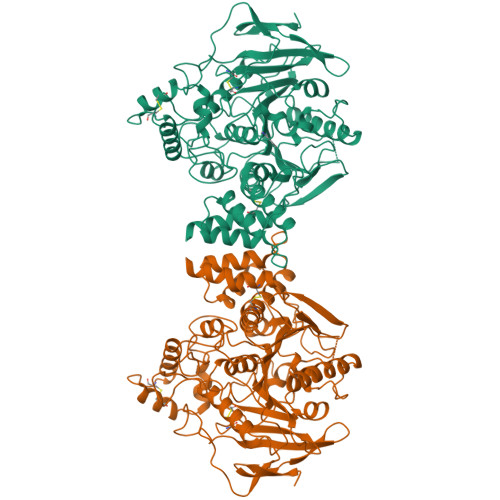
Acetylcholinesterase structureClick to view 3D structureAcetylcholinesteraseP22303HumansKnownPyridostigmine inhibits acetylcholinesterase in the synaptic cleft by competing with acetylcholine for attachment to acetylcholinesterase, thus slowing down the hydrolysis of acetylcholine, and thereby increases efficiency of cholinergic transmission in the neuromuscular junction and prolonges the effects of acetylcholine.
Cholinesterase structureClick to view 3D structureCholinesteraseP06276HumansKnownNot Available
Concentrations
Not Available
External Links
DrugBank IDDB00545
HMDB IDHMDB0014685
FooDB IDNot Available
Phenol Explorer IDNot Available
KNApSAcK IDNot Available
BiGG IDNot Available
BioCyc IDNot Available
METLIN IDNot Available
PDB IDNot Available
Wikipedia LinkPyridostigmine
Chemspider ID4817
ChEBI ID257330
PubChem Compound ID4991
Kegg Compound IDC07410
YMDB IDNot Available
ECMDB IDNot Available
References
Synthesis Reference

Thomas Zich, “Preparation of substituted pyridine N-oxide compounds.” U.S. Patent US20040063957, issued April 01, 2004.

MSDSLink
General References
  1. Singer W, Opfer-Gehrking TL, McPhee BR, Hilz MJ, Bharucha AE, Low PA: Acetylcholinesterase inhibition: a novel approach in the treatment of neurogenic orthostatic hypotension. J Neurol Neurosurg Psychiatry. 2003 Sep;74(9):1294-8. [PubMed: 12933939]
  2. Drugs.com - http://www.drugs.com/cons/Pyridostigmine.html