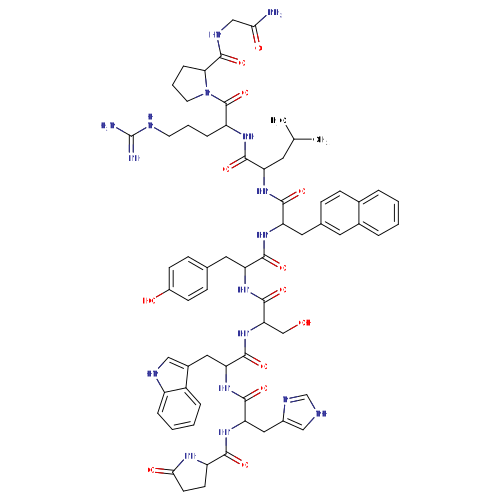
Nafarelin (CED0009905)

Record Information
Version1.0
Creation Date2009-07-21 20:27:23 UTC
Update Date2026-05-14 16:45:32 UTC
Accession NumberCHEM002243
Identification
Common NameNafarelin
ClassSmall Molecule
Description
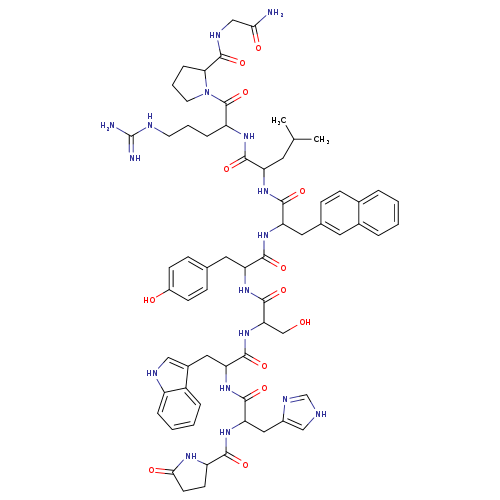
Nafarelin is an exogenous solid with the formula C66H83N17O13. Nafarelin belongs to the polypeptides, a class of organic polymers within the organic compounds. With an average molecular weight of 1,322 g/mol, Nafarelin is a heavy molecule. It is sourced from healthcare, pharmaceuticals, and veterinary products as a hypothalamic hormone and is administered via the nasal route. The compound targets the gonadotropin-releasing hormone receptor (GNRHR) and the putative gonadotropin-releasing hormone II receptor (GNRHR2). Similar to GnRH, initial or intermittent administration of nafarelin stimulates the pituitary gland to release the gonadotropins follicle-stimulating hormone (FSH) and luteinizing hormone (LH), which transiently increases testosterone in both sexes and estradiol in females. Conversely, continuous daily administration results in the continuous occupation of the GnRH receptor, leading to a desensitization of the pituitary gonadotropes and a reversible down-regulation of the GnRH receptors in the pituitary gland.
Contaminant Type
  • Amide
  • Amine
  • Antiendometriotic Agent
  • Drug
  • Fertility Agent, Female
  • Gonadotropin-Releasing Hormone
  • Gonadotropin-releasing hormone agonist
  • Metabolite
  • Organic Compound
  • Synthetic Compound
Chemical Structure
Synonyms
ValueSource
Nafarelin acetateHMDB
Nafarelin acetate, hydrateHMDB
SynarelHMDB
Nafarelin monoacetateHMDB
Chemical FormulaC66H83N17O13
Average Molecular Mass1322.471 g/mol
Monoisotopic Mass1321.636 g/mol
CAS Registry Number76932-56-4
IUPAC NameN-(5-carbamimidamido-1-{2-[(carbamoylmethyl)carbamoyl]pyrrolidin-1-yl}-1-oxopentan-2-yl)-2-{2-[2-(3-hydroxy-2-{2-[3-(1H-imidazol-4-yl)-2-[(5-oxopyrrolidin-2-yl)formamido]propanamido]-3-(1H-indol-3-yl)propanamido}propanamido)-3-(4-hydroxyphenyl)propanamido]-3-(naphthalen-2-yl)propanamido}-4-methylpentanamide
Traditional Namenafarelin
SMILESCC(C)CC(NC(=O)C(CC1=CC2=CC=CC=C2C=C1)NC(=O)C(CC1=CC=C(O)C=C1)NC(=O)C(CO)NC(=O)C(CC1=CNC2=CC=CC=C12)NC(=O)C(CC1=CNC=N1)NC(=O)C1CCC(=O)N1)C(=O)NC(CCCNC(N)=N)C(=O)N1CCCC1C(=O)NCC(N)=O
InChI IdentifierInChI=1S/C66H83N17O13/c1-36(2)25-48(58(89)76-47(13-7-23-71-66(68)69)65(96)83-24-8-14-54(83)64(95)73-33-55(67)86)77-60(91)50(28-38-15-18-39-9-3-4-10-40(39)26-38)78-59(90)49(27-37-16-19-43(85)20-17-37)79-63(94)53(34-84)82-61(92)51(29-41-31-72-45-12-6-5-11-44(41)45)80-62(93)52(30-42-32-70-35-74-42)81-57(88)46-21-22-56(87)75-46/h3-6,9-12,15-20,26,31-32,35-36,46-54,72,84-85H,7-8,13-14,21-25,27-30,33-34H2,1-2H3,(H2,67,86)(H,70,74)(H,73,95)(H,75,87)(H,76,89)(H,77,91)(H,78,90)(H,79,94)(H,80,93)(H,81,88)(H,82,92)(H4,68,69,71)
InChI KeyRWHUEXWOYVBUCI-UHFFFAOYSA-N
Chemical Taxonomy
Description Belongs to the class of organic compounds known as polypeptides. These are peptides containing ten or more amino acid residues.
KingdomOrganic compounds
Super ClassOrganic Polymers
ClassPolypeptides
Sub ClassNot Available
Direct ParentPolypeptides
Alternative Parents
Substituents
  • Polypeptide
  • Alpha peptide
  • Tyrosine or derivatives
  • Phenylalanine or derivatives
  • Histidine or derivatives
  • Leucine or derivatives
  • N-acyl-alpha amino acid or derivatives
  • Proline or derivatives
  • Alpha-amino acid amide
  • Triptan
  • Serine or derivatives
  • N-substituted-alpha-amino acid
  • 3-alkylindole
  • Alpha-amino acid or derivatives
  • Naphthalene
  • Amphetamine or derivatives
  • Indole or derivatives
  • Indole
  • Pyrrolidine carboxylic acid or derivatives
  • N-acylpyrrolidine
  • Pyrrolidine-2-carboxamide
  • 1-hydroxy-2-unsubstituted benzenoid
  • Phenol
  • Monocyclic benzene moiety
  • Fatty amide
  • N-acyl-amine
  • Fatty acyl
  • Benzenoid
  • Substituted pyrrole
  • Pyrrolidone
  • 2-pyrrolidone
  • Azole
  • Pyrrolidine
  • Tertiary carboxylic acid amide
  • Pyrrole
  • Imidazole
  • Heteroaromatic compound
  • Primary carboxylic acid amide
  • Carboxamide group
  • Guanidine
  • Lactam
  • Secondary carboxylic acid amide
  • Carboximidamide
  • Organoheterocyclic compound
  • Azacycle
  • Carboxylic acid derivative
  • Organic nitrogen compound
  • Organooxygen compound
  • Organic oxide
  • Carbonyl group
  • Organopnictogen compound
  • Alcohol
  • Primary alcohol
  • Organonitrogen compound
  • Organic oxygen compound
  • Imine
  • Hydrocarbon derivative
  • Aromatic heteropolycyclic compound
Molecular FrameworkAromatic heteropolycyclic compounds
External Descriptors
Biological Properties
StatusDetected and Not Quantified
OriginExogenous
Cellular Locations
  • Membrane
Biofluid LocationsNot Available
Tissue LocationsNot Available
ApplicationsNot Available
Biological RolesNot Available
Chemical RolesNot Available
Organoleptic EffectsNot Available
Physical Properties
StateSolid
AppearanceWhite powder.
Experimental Properties
PropertyValue
Melting PointNot Available
Boiling PointNot Available
Solubility1.66e-02 g/L
Predicted Properties
PropertyValueSource
Water Solubility0.017 g/LALOGPS
logP1.21ALOGPS
logP-2.7ChemAxon
logS-4.9ALOGPS
pKa (Strongest Acidic)9.49ChemAxon
pKa (Strongest Basic)11.92ChemAxon
Physiological Charge1ChemAxon
Hydrogen Acceptor Count17ChemAxon
Hydrogen Donor Count17ChemAxon
Polar Surface Area472.13 ŲChemAxon
Rotatable Bond Count33ChemAxon
Refractivity357.8 m³·mol⁻¹ChemAxon
Polarizability137.29 ųChemAxon
Number of Rings8ChemAxon
BioavailabilityNoChemAxon
Rule of FiveNoChemAxon
Ghose FilterNoChemAxon
Veber's RuleNoChemAxon
MDDR-like RuleYesChemAxon
Spectra
Spectra
Spectrum TypeDescriptionSplash KeyDeposition DateView
Predicted LC-MS/MSPredicted LC-MS/MS Spectrumsplash10-00dr-9037302120-f0facb1967d30439597dNot AvailableView Spectrum
Predicted LC-MS/MSPredicted LC-MS/MS Spectrumsplash10-00di-9011200000-e32adcd953ac1c721212Not AvailableView Spectrum
Predicted LC-MS/MSPredicted LC-MS/MS Spectrumsplash10-00e9-9011100000-0e896538a04b95abd857Not AvailableView Spectrum
Predicted LC-MS/MSPredicted LC-MS/MS Spectrumsplash10-0ukc-2194100000-e5cb37d2eafc7e73ef96Not AvailableView Spectrum
Predicted LC-MS/MSPredicted LC-MS/MS Spectrumsplash10-11b9-6595010100-3cfda325f415bde10f61Not AvailableView Spectrum
Predicted LC-MS/MSPredicted LC-MS/MS Spectrumsplash10-052f-9410011130-eb97257a1937988394bcNot AvailableView Spectrum
Predicted LC-MS/MSPredicted LC-MS/MS Spectrumsplash10-0kg9-0017900031-0ad2341a5a6f67386398Not AvailableView Spectrum
Predicted LC-MS/MSPredicted LC-MS/MS Spectrumsplash10-0abd-1133910111-a355010b703bbfdcb57fNot AvailableView Spectrum
Predicted LC-MS/MSPredicted LC-MS/MS Spectrumsplash10-0pbl-1611920110-b8ca31d70aed9fbf9a0eNot AvailableView Spectrum
Predicted LC-MS/MSPredicted LC-MS/MS Spectrumsplash10-00dl-1109300000-0c7604e46e8e28bdf55fNot AvailableView Spectrum
Predicted LC-MS/MSPredicted LC-MS/MS Spectrumsplash10-0fkl-3829202140-80a733fe94b1819e25e8Not AvailableView Spectrum
Predicted LC-MS/MSPredicted LC-MS/MS Spectrumsplash10-0096-5911304005-08b37dbd696b4e3af318Not AvailableView Spectrum
1D NMR1H NMR Spectrum (1D, D2O, predicted)Not AvailableNot AvailableView Spectrum
1D NMR13C NMR Spectrum (1D, D2O, predicted)Not AvailableNot AvailableView Spectrum
Toxicity Profile
Mechanism of ToxicityLike GnRH, initial or intermittent administration of nafarelin stimulates release of the gonadotropins luteinizing hormone (LH) and follicle-stimulating hormone (FSH) from the pituitary gland, which in turn transiently increases production of estradiol in females and testosterone in both sexes. However, with continuous daily administration, nafarelin continuously occupies the GnRH receptor, leading to a reversible down-regulation of the GnRH receptors in the pituitary gland and desensitization of the pituitary gonadotropes. This causes a significant and sustained decline in the production of LH and FSH. A decline in gonadotropin production and release causes a dramatic reversible decrease in synthesis of estradiol, progesterone, and testosterone by the ovaries or testes. Like normal endometrium, endometriotic implants contain estrogen receptors. Estrogen stimulates the growth of endometrium. Use of nafarelin induces anovulation and amenorrhea and decreases serum concentrations of estradiol to the postmenopausal range, which induces atrophy of endometriotic implants. However, nafarelin does not abolish the underlying pathophysiology of endometriosis. In children with central precocious puberty receiving nafarelin, serum LH, testosterone, and estradiol concentrations return to prepubertal levels. This results in the supression of secondary sexual characteristics and decrased rate of linear growth and skeletal maturation. Following disconinuation of nafarelin, the effects of the drug is reversed, meaning FSH and LH concentrations usually return to pretreatment levels.
Carcinogenicity (IARC Classification)No indication of carcinogenicity to humans (not listed by IARC).
Minimum Risk LevelNot Available
SymptomsIn experimental animals, a single subcutaneous administration of up to 60 times the recommended human dose (on a µg/kg basis, not adjusted for bioavailability) had no adverse effects. At present, there is no clinical evidence of adverse effects following overdosage of GnRH analogs.
TreatmentNot Available
Toxicity ValuesNot Available
Health Effects
Health EffectRelationshipDirectionReference
Exposure Sources
Source IDSourceSectorReference
330Hypothalamic hormonesHealthcare, pharmaceuticals & veterinary productsNot Available
Pathways
1 pathway
Targets
StructureProteinUniProt IDOrganismRelationshipDetails
Click to view 3D structureNeuromedin-U receptor 2Q8BZ39Mus musculusPredicted (SEA)4.67095
Prolactin-releasing peptide structureClick to view 3D structureProlactin-releasing peptideP81277HumansPredicted (SEA)20.0851
Melanocortin receptor 4 structureClick to view 3D structureMelanocortin receptor 4P32245HumansPredicted (SEA)30.5169
Click to view 3D structureGlucagon-1O42143Xenopus laevisPredicted (SEA)24.2111
Melanocyte-stimulating hormone receptor structureClick to view 3D structureMelanocyte-stimulating hormone receptorQ01726HumansPredicted (SEA)22.6541
Click to view 3D structureKappa-type opioid receptorP41144Cavia porcellusPredicted (SEA)62.5908
Click to view 3D structureMu-type opioid receptorP97266Cavia porcellusPredicted (SEA)70.6092
Melanocortin receptor 5 structureClick to view 3D structureMelanocortin receptor 5P33032HumansPredicted (SEA)22.187
Kappa-type opioid receptor structureClick to view 3D structureKappa-type opioid receptorP41145HumansPredicted (SEA)81.9752
Delta-type opioid receptor structureClick to view 3D structureDelta-type opioid receptorP41143HumansPredicted (SEA)92.407
Click to view 3D structureMelanocortin receptor 3P33033Mus musculusPredicted (SEA)19.4623
Click to view 3D structureNeuromedin-U receptor 1O55040Mus musculusPredicted (SEA)11.8331
Melanocortin receptor 3 structureClick to view 3D structureMelanocortin receptor 3P41968HumansPredicted (SEA)24.3668
Mu-type opioid receptor structureClick to view 3D structureMu-type opioid receptorP35372HumansPredicted (SEA)88.7481
Click to view 3D structureMu-type opioid receptorP33535Rattus norvegicusPredicted (SEA)84.155
Click to view 3D structureMelanocyte-stimulating hormone receptorQ01727Mus musculusPredicted (SEA)28.1036
Click to view 3D structureDelta-type opioid receptorP33533Rattus norvegicusPredicted (SEA)59.6325
Click to view 3D structureMelanocortin receptor 5P41149Mus musculusPredicted (SEA)28.1036
Click to view 3D structureDickkopf WNT-signaling pathway inhibitor 1A6I0Z0Rattus norvegicusPredicted (SEA)37.679
Click to view 3D structureDelta-type opioid receptorP32300Mus musculusPredicted (SEA)78.3942
Click to view 3D structureNeuropeptide FF receptor 2Q9Y5X5HumansPredicted (SEA)37.2898
Click to view 3D structureMelanocortin receptor 4P56450Mus musculusPredicted (SEA)28.0257
Click to view 3D structureG-protein coupled receptor MthO97148Drosophila melanogasterPredicted (SEA)33.6309
Click to view 3D structureNeuropeptide FF receptor 1Q9GZQ6HumansPredicted (SEA)31.9182
Substance-P receptor structureClick to view 3D structureSubstance-P receptorP25103HumansPredicted (SEA)30.5947
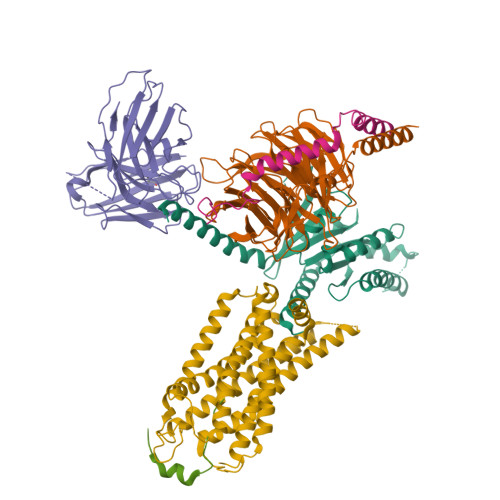
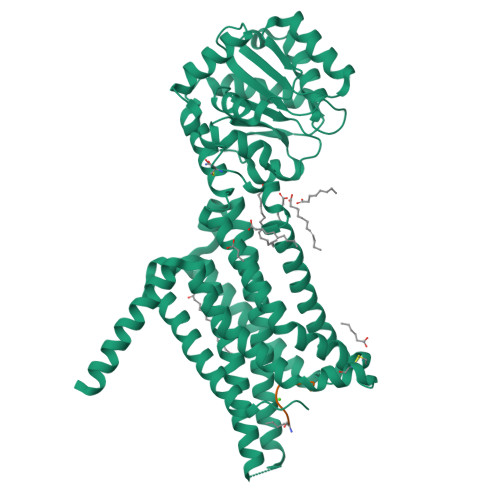
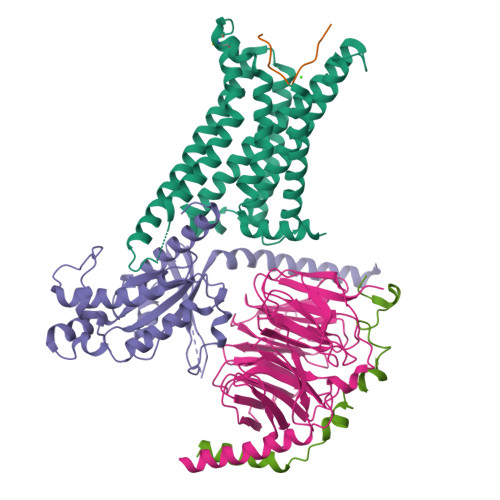
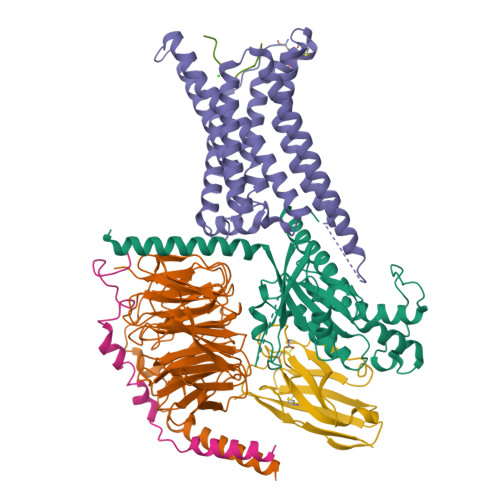
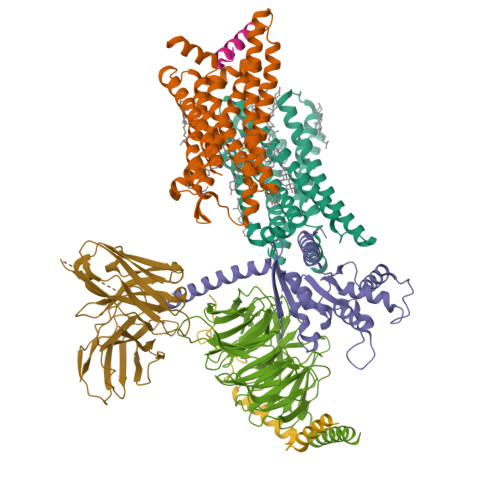
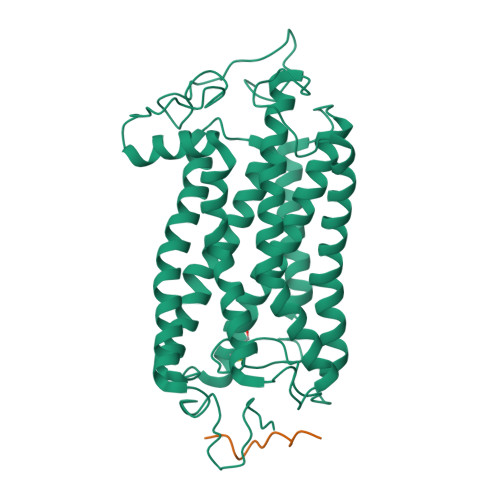
Gonadotropin-releasing hormone receptor structureClick to view 3D structureGonadotropin-releasing hormone receptorP30968HumansKnownLike GnRH, initial or intermittent administration of nafarelin stimulates release of the gonadotropins luteinizing hormone (LH) and follicle-stimulating hormone (FSH) from the pituitary gland, which in turn transiently increases production of estradiol in females and testosterone in both sexes. However, with continuous daily administration, nafarelin continuously occupies the GnRH receptor. A reversible down-regulation of the GnRH receptors in the pituitary gland and desensitization of the pituitary gonadotropes occur. This causes a significant and sustained decline in the production of LH and FSH. A decline in gonadotropin production and release causes a dramatic reversible decrease in synthesis of estradiol, progesterone, and testosterone by the ovaries or testes. Like normal endometrium, endometriotic implants contain estrogen receptors. Estrogen stimulates the growth of endometrium. Use of nafarelin induces anovulation and amenorrhea and decreases serum concentrations of estradiol to the postmenopausal range, which induces atrophy of endometriotic implants. Nafarelin does not abolish the underlying pathophysiology of endometriosis, however.
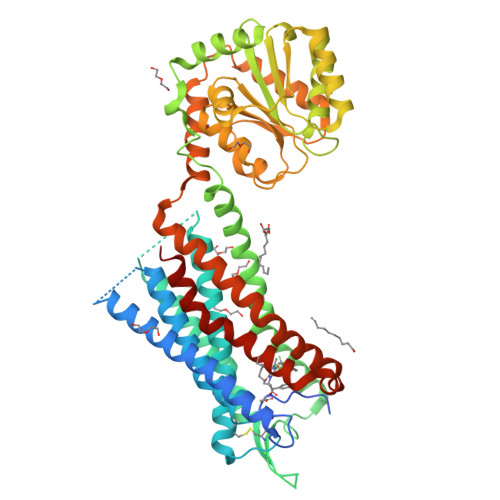
Click to view 3D structurePutative gonadotropin-releasing hormone II receptorQ96P88HumansKnownLike GnRH, initial or intermittent administration of nafarelin stimulates release of the gonadotropins luteinizing hormone (LH) and follicle-stimulating hormone (FSH) from the pituitary gland, which in turn transiently increases production of estradiol in females and testosterone in both sexes. However, with continuous daily administration, nafarelin continuously occupies the GnRH receptor. A reversible down-regulation of the GnRH receptors in the pituitary gland and desensitization of the pituitary gonadotropes occur. This causes a significant and sustained decline in the production of LH and FSH. A decline in gonadotropin production and release causes a dramatic reversible decrease in synthesis of estradiol, progesterone, and testosterone by the ovaries or testes. Like normal endometrium, endometriotic implants contain estrogen receptors. Estrogen stimulates the growth of endometrium. Use of nafarelin induces anovulation and amenorrhea and decreases serum concentrations of estradiol to the postmenopausal range, which induces atrophy of endometriotic implants. Nafarelin does not abolish the underlying pathophysiology of endometriosis, however.
Concentrations
Not Available
External Links
DrugBank IDNot Available
HMDB IDHMDB0014804
FooDB IDNot Available
Phenol Explorer IDNot Available
KNApSAcK IDNot Available
BiGG IDNot Available
BioCyc IDNot Available
METLIN IDNot Available
PDB IDNot Available
Wikipedia LinkNafarelin
Chemspider ID10605761
ChEBI ID7445
PubChem Compound ID25077649
Kegg Compound IDC07613
YMDB IDNot Available
ECMDB IDNot Available
References
Synthesis ReferenceNot Available
MSDSLink
General References
1. Burry KA: Nafarelin in the management of endometriosis: quality of life assessment. Am J Obstet Gynecol. 1992 Feb;166(2):735-9.
2. Henzl MR: Gonadotropin-releasing hormone analogs: update on new findings. Am J Obstet Gynecol. 1992 Feb;166(2):757-61.
3. Saltiel E, Garabedian-Ruffalo SM: Pharmacologic management of endometriosis. Clin Pharm. 1991 Jul;10(7):518-31.
4. Chrisp P, Goa KL: Nafarelin. A review of its pharmacodynamic and pharmacokinetic properties, and clinical potential in sex hormone-related conditions. Drugs. 1990 Apr;39(4):523-51.
5. Letassy NA, Thompson DF, Britton ML, Suda RR Sr: Nafarelin acetate: a gonadotropin-releasing hormone agonist for the treatment of endometriosis. DICP. 1990 Dec;24(12):1204-9.
6. Garner C: Uses of GnRH agonists. J Obstet Gynecol Neonatal Nurs. 1994 Sep;23(7):563-70.
7. Hugues JN, Cedrin Durnerin IC: Revisiting gonadotrophin-releasing hormone agonist protocols and management of poor ovarian responses to gonadotrophins. Hum Reprod Update. 1998 Jan-Feb;4(1):83-101.