Ketoconazole (CED0002023)

Record Information
Version1.0
Creation Date2009-07-21 20:28:11 UTC
Update Date2026-05-14 16:56:11 UTC
SynCED IDCED0002023
Secondary Accession Numbers
  • CHEM002324
  • T3D2961
Identification
Common NameKetoconazole
ClassSmall Molecule
Description
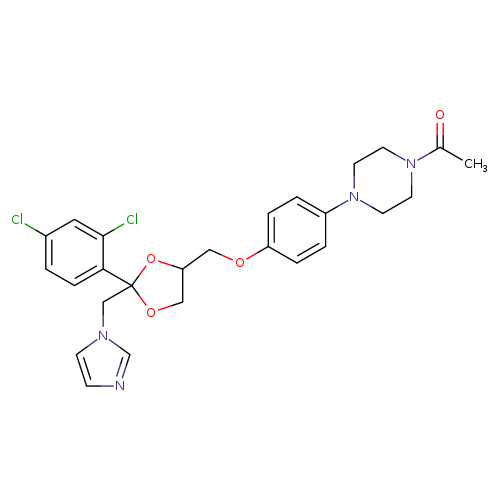
Ketoconazole is an exogenous solid with the chemical formula C26H28Cl2N4O4. Ketoconazole belongs to the piperazines, a subclass of diazinanes within the organic compounds. With an average molecular weight of 531.43 g/mol, Ketoconazole is a heavy molecule. It functions as an antifungal agent and is used industrially as an anti-dandruff agent. Recorded exposure routes include topical, oral, and inhalation. The compound is found in 26 recorded sources, including drinking water and water supply. It is present in healthcare, pharmaceuticals and veterinary products such as antibiotics, antimycotics, gynecologicals, antiadrenal preparations, and antifungals for dermatological use. Other sources include food preservation and meat processing, as well as household cleaning and consumer products such as bleaching agents, perfumes within detergents and soaps, cigar cigarettes, other smoking requisites, and non electric simulated smoking devices. It is also found in electrical and electronic equipment, including antennas, communication cables or conductors, conductors or conductive bodies characterised by the conductive materials, and electrically stimulated smoking devices or electric hearing aids. Ketoconazole targets 23 recorded proteins. It interacts with 14-α demethylase, a cytochrome P-450 enzyme necessary for the conversion of lanosterol to ergosterol, which results in inhibition of ergosterol synthesis and increased fungal cellular permeability. Other mechanisms may involve the inhibition of endogenous respiration, interaction with membrane phospholipids, inhibition of purine uptake, inhibition of yeast transformation to mycelial forms, and impairment of triglyceride and/or phospholipid biosynthesis. Additionally, it is an inhibitor of the Androgen receptor (AR), Aromatase (CYP19A1), Steroid 21-hydroxylase (CYP21A2), Aryl hydrocarbon receptor (AHR), and 18 other proteins.
Contaminant Type
  • 14-alpha Demethylase Inhibitor
  • Amide
  • Amine
  • Antifungal Agent
  • Cosmetic Toxin
  • Drug
  • Ether
  • Food Toxin
  • Household Toxin
  • Human Neurotoxin
  • Metabolite
  • Organic Compound
  • Organochloride
  • Synthetic Compound
Chemical Structure
Synonyms
ValueSource
Janssen brand OF ketoconazoleMeSH
Ketoconazole janssen brandMeSH
NizoralMeSH
Chemical FormulaC26H28Cl2N4O4
Average Molecular Mass531.431 g/mol
Monoisotopic Mass530.149 g/mol
CAS Registry Number65277-42-1
IUPAC Name1-[4-(4-{[2-(2,4-dichlorophenyl)-2-(1H-imidazol-1-ylmethyl)-1,3-dioxolan-4-yl]methoxy}phenyl)piperazin-1-yl]ethan-1-one
Traditional Nameketoconazole
SMILESCC(=O)N1CCN(CC1)C1=CC=C(OCC2COC(CN3C=CN=C3)(O2)C2=CC=C(Cl)C=C2Cl)C=C1
InChI IdentifierInChI=1S/C26H28Cl2N4O4/c1-19(33)31-10-12-32(13-11-31)21-3-5-22(6-4-21)34-15-23-16-35-26(36-23,17-30-9-8-29-18-30)24-7-2-20(27)14-25(24)28/h2-9,14,18,23H,10-13,15-17H2,1H3
InChI KeyXMAYWYJOQHXEEK-UHFFFAOYSA-N
Chemical Taxonomy
Description Belongs to the class of organic compounds known as phenylpiperazines. Phenylpiperazines are compounds containing a phenylpiperazine skeleton, which consists of a piperazine bound to a phenyl group.
KingdomOrganic compounds
Super ClassOrganoheterocyclic compounds
ClassDiazinanes
Sub ClassPiperazines
Direct ParentPhenylpiperazines
Alternative Parents
Substituents
  • Phenylpiperazine
  • N-arylpiperazine
  • Aminophenyl ether
  • 1,3-dichlorobenzene
  • Phenol ether
  • Tertiary aliphatic/aromatic amine
  • Phenoxy compound
  • Dialkylarylamine
  • Aniline or substituted anilines
  • Alkyl aryl ether
  • Ketal
  • Halobenzene
  • Chlorobenzene
  • Monocyclic benzene moiety
  • Aryl chloride
  • Aryl halide
  • N-substituted imidazole
  • Benzenoid
  • Meta-dioxolane
  • Heteroaromatic compound
  • Tertiary carboxylic acid amide
  • Imidazole
  • Azole
  • Acetamide
  • Carboxamide group
  • Amino acid or derivatives
  • Tertiary amine
  • Acetal
  • Oxacycle
  • Azacycle
  • Carboxylic acid derivative
  • Ether
  • Organooxygen compound
  • Carbonyl group
  • Organic oxygen compound
  • Organic nitrogen compound
  • Hydrocarbon derivative
  • Organic oxide
  • Amine
  • Organonitrogen compound
  • Organochloride
  • Organopnictogen compound
  • Organohalogen compound
  • Aromatic heteromonocyclic compound
Molecular FrameworkAromatic heteromonocyclic compounds
External Descriptors
Biological Properties
StatusDetected and Not Quantified
OriginExogenous
Cellular Locations
  • Cytoplasm
  • Membrane
Biofluid LocationsNot Available
Tissue LocationsNot Available
Applications
Biological Roles
Chemical RolesNot Available
Organoleptic EffectsNot Available
Physical Properties
StateSolid
AppearanceWhite powder.
Experimental Properties
PropertyValue
Melting Point146°C
Boiling PointNot Available
Solubility0.0866 mg/L
Predicted Properties
PropertyValueSource
Water Solubility0.0093 g/LALOGPS
logP4.3ALOGPS
logP4.19ChemAxon
logS-4.8ALOGPS
pKa (Strongest Basic)6.75ChemAxon
Physiological Charge0ChemAxon
Hydrogen Acceptor Count6ChemAxon
Hydrogen Donor Count0ChemAxon
Polar Surface Area69.06 ŲChemAxon
Rotatable Bond Count7ChemAxon
Refractivity138.07 m³·mol⁻¹ChemAxon
Polarizability54.83 ųChemAxon
Number of Rings5ChemAxon
BioavailabilityYesChemAxon
Rule of FiveNoChemAxon
Ghose FilterNoChemAxon
Veber's RuleNoChemAxon
MDDR-like RuleYesChemAxon
Spectra
Spectra
Spectrum TypeDescriptionSplash KeyDeposition DateView
Predicted LC-MS/MSPredicted LC-MS/MS Spectrumsplash10-001i-0031490000-58a475e5974da2dfdc18Not AvailableView Spectrum
Predicted LC-MS/MSPredicted LC-MS/MS Spectrumsplash10-0ik9-5395740000-08c010ea5c947e1a62f5Not AvailableView Spectrum
Predicted LC-MS/MSPredicted LC-MS/MS Spectrumsplash10-014i-9520100000-76672a88c60da8324f81Not AvailableView Spectrum
Predicted LC-MS/MSPredicted LC-MS/MS Spectrumsplash10-00or-2090150000-e4d86d7a4af384399254Not AvailableView Spectrum
Predicted LC-MS/MSPredicted LC-MS/MS Spectrumsplash10-014i-9240000000-92849351dd004ec26239Not AvailableView Spectrum
Predicted LC-MS/MSPredicted LC-MS/MS Spectrumsplash10-00or-5940000000-e2a0f55e6d356bbc9c0eNot AvailableView Spectrum
Predicted LC-MS/MSPredicted LC-MS/MS Spectrumsplash10-001i-0000090000-081787cba0594aced901Not AvailableView Spectrum
Predicted LC-MS/MSPredicted LC-MS/MS Spectrumsplash10-001i-0011980000-f9fa0eaf2d1b6889e098Not AvailableView Spectrum
Predicted LC-MS/MSPredicted LC-MS/MS Spectrumsplash10-066v-3140900000-ae27808322ff5c503bcfNot AvailableView Spectrum
Predicted LC-MS/MSPredicted LC-MS/MS Spectrumsplash10-004i-0010390000-0eb582e7b11176ec640cNot AvailableView Spectrum
Predicted LC-MS/MSPredicted LC-MS/MS Spectrumsplash10-014i-9030210000-9ea18251d96dd5cc657eNot AvailableView Spectrum
Predicted LC-MS/MSPredicted LC-MS/MS Spectrumsplash10-00o0-4930100000-6819285e7904a4b66c66Not AvailableView Spectrum
Toxicity Profile
Toxicity Values
Toxicity ValueOrganismDose DescriptorRoute of ExposurePredicted or ExperimentalToxicity RatingReference
44.0 mg/kg MouseLD50IntravenousexperimentalNot Available9
702.0 mg/kg MouseLD50OralexperimentalNot Available9
231.0 Log mg/kg [130:410]RatLD50oralpredictedNot AvailableNot Available
100.0 mg/kg/org RatNOELoralexperimentalNot AvailableECOTOX - EPA ORD
30.0 mg/kg-day MouseNOECoralexperimentalNot AvailableECOTOX - EPA ORD
Toxicity / Toxin ClassNot Available
Mechanism of ToxicityKetoconazole interacts with 14-α demethylase, a cytochrome P-450 enzyme necessary for the conversion of lanosterol to ergosterol. This results in inhibition of ergosterol synthesis and increased fungal cellular permeability. Other mechanisms may involve the inhibition of endogenous respiration, interaction with membrane phospholipids, inhibition of yeast transformation to mycelial forms, inhibition of purine uptake, and impairment of triglyceride and/or phospholipid biosynthesis. Ketoconazole can also inhibit the synthesis of thromboxane and sterols such as aldosterone, cortisol, and testosterone. (2, 3, 4, 5) Hepatotoxicity, LD50=86 mg/kg (orally in rat)
Carcinogenicity (IARC Classification)No indication of carcinogenicity to humans (not listed by IARC).
Minimum Risk LevelNot Available
SymptomsSide effects of the potential hepatotoxicity of Ketoconazole include abdominal pain or tenderness, clay-colored stools, dark urine, decreased appetite, fever, headache, itching, loss of appetite, nausea and vomiting, skin rash, swelling of the feet or lower legs, unusual tiredness or weakness, and yellow eyes or skin. (6)
TreatmentIn the event of accidental overdosage, supportive measures, including gastric lavage with sodium bicarbonate, should be employed. (7)
Health Effects
Health EffectRelationshipDirectionDescriptionReference
Exposure Sources
Source IDSourceSectorReference
CEDs000010Insecticides?Insecticides are synthetic chemicals designed to control or eliminate insect pests that threaten crops and other agricultural products.Agriculture & land managementPubChem
CEDs000115Drinking water?Drinking water can be a medium for synthetic chemical contamination, often originating from various industrial processes and agricultural practices.Drinking water & water supplyNot Available
CEDs000233Brushes?Brushes used in personal care and cosmetics can be a source of synthetic chemical contamination due to the materials and coatings used in their manufacturing.Personal care & cosmeticsPubChem
CEDs000299Antifungals for dermatological use?Antifungals for dermatological use are synthetic chemicals developed to treat fungal infections affecting the skin, hair, and nails.Healthcare, pharmaceuticals & veterinary productsNot Available
CEDs000306Antibiotics?Antibiotics are synthetic or semi-synthetic compounds used to treat bacterial infections in humans and animals.Healthcare, pharmaceuticals & veterinary productsNot Available
CEDs000316Gynecologicals?Gynecologicals encompass a range of synthetic chemicals used in the treatment of various women's health issues, including hormonal therapies, contraceptives, and antifungal agents.Healthcare, pharmaceuticals & veterinary productsNot Available
CEDs000331Antiadrenal preparations?Antiadrenal preparations are synthetic chemicals designed to inhibit adrenal hormone production, primarily used in therapeutic settings to manage conditions such as Cushing's syndrome and certain cancers.Healthcare, pharmaceuticals & veterinary productsNot Available
CEDs000348Antimycotics?Antimycotics are synthetic chemicals used to prevent or treat fungal infections.Healthcare, pharmaceuticals & veterinary productsNot Available
CEDs000506Antennas?Antennas, commonly used in communication technologies, can be a source of synthetic chemical contamination through the materials and coatings used in their construction.Electrical & Electronic EquipmentPubChem
CEDs000510Communication Cables Or Conductors?Communication cables or conductors are essential components in the transmission of data and signals in various applications, including telecommunications and networking.Electrical & Electronic EquipmentPubChem
CEDs000511Conductors Or Conductive Bodies Characterised By The Conductive Materials?Conductors, or conductive bodies, are materials that allow the flow of electrical current, typically made from metals such as copper, aluminum, or silver.Electrical & Electronic EquipmentPubChem
CEDs000516Electric Hearing Aids?Electric hearing aids are small electronic devices designed to amplify sound for individuals with hearing loss.Electrical & Electronic EquipmentPubChem
CEDs000518Electrically Stimulated Smoking Devices?Electrically stimulated smoking devices, commonly known as e-cigarettes or vape pens, utilize electrical components to heat a liquid solution, often containing nicotine, flavorings, and other additives, to produce an aerosol for inhalation.Electrical & Electronic EquipmentPubChem
CEDs000519Electrodes?Electrodes, used in various electrical and electronic applications, can be a source of synthetic chemical contamination due to the materials from which they are constructed and the processes involved in their manufacturing.Electrical & Electronic EquipmentPubChem
CEDs000524Hybrid Capacitors?Hybrid capacitors are energy storage devices that combine the properties of electrolytic and supercapacitors, utilizing a combination of electrochemical principles to achieve higher energy density and power density.Electrical & Electronic EquipmentPubChem
CEDs000527Magnets?Magnets, commonly used in various electrical and electronic applications, can be a source of synthetic chemical contamination due to the materials used in their production.Electrical & Electronic EquipmentPubChem
CEDs000529Power Cables?Power cables are used to transmit electrical energy and are typically composed of conductive materials, insulation, and protective coatings.Electrical & Electronic EquipmentPubChem
CEDs000531Relays?Relays are electromechanical switches used to control circuits and manage electrical loads.Electrical & Electronic EquipmentPubChem
CEDs000545Food Preservation?Food preservation often involves the use of synthetic chemicals, such as preservatives, flavor enhancers, and color additives, to extend shelf life and enhance the sensory qualities of food products.Food, food processing & cookwarePubChem
CEDs000552Processing Meats?Processing meats can lead to synthetic chemical contamination primarily through the use of additives and preservatives.Food, food processing & cookwarePubChem
CEDs000555Bleaching Agents?Bleaching agents are chemical substances used to whiten or lighten materials, often employed in various cleaning products for their stain removal and disinfecting properties.Household cleaning & consumer productsPubChem
CEDs000556Cigar Cigarettes?Cigar cigarettes are a source of synthetic chemical contamination due to the combustion of various tobacco blends and additives.Household cleaning & consumer productsPubChem
CEDs000559Non Electric Simulated Smoking Devices?Non-electric simulated smoking devices, often designed to mimic the experience of smoking without combustion, can be sources of synthetic chemical contamination due to the materials and chemicals used in their construction and operation.Household cleaning & consumer productsPubChem
CEDs000560Other Smoking Requisites?Other smoking requisites, including items such as lighters, matches, and rolling papers, can introduce synthetic chemical contamination through various components and additives.Household cleaning & consumer productsPubChem
CEDs000561Perfumes Within Detergents And Soaps?Perfumes within detergents and soaps are synthetic fragrance compounds added to enhance the sensory experience of cleaning products.Household cleaning & consumer productsPubChem
CEDs000563Soap Detergents?Soap detergents are synthetic surfactants designed to enhance the cleaning efficacy of water by reducing surface tension, allowing for better interaction with dirt and grease.Household cleaning & consumer productsPubChem
CEDs000564Soap Dispensers?Soap dispensers, commonly used for dispensing liquid soaps and sanitizers, can become a source of synthetic chemical contamination due to the materials used in their construction and the products they dispense.Household cleaning & consumer productsPubChem
CEDs000569Tobacco Smoke Filters?Tobacco smoke filters are designed to reduce the inhalation of harmful substances in cigarette smoke, including tar and other particulate matter.Household cleaning & consumer productsPubChem
CEDs000580Manufacture Preparation Of Tobacco Products?The manufacture and preparation of tobacco products involve various processes that can result in the introduction of synthetic chemicals into the environment.Industrial manufacturing & chemical processingPubChem
CEDs000596Acaricides?Acaricides are synthetic chemicals specifically designed to target and control mite populations that can damage crops and plants.Agriculture & land managementPubChem
CEDs000600Herbicides And Algicides?Herbicides and algicides are synthetic chemicals primarily used to control unwanted plants and algae in various environments.Agriculture & land managementPubChem
CEDs000603Nematocides?Nematocides are synthetic chemicals specifically designed to control nematodes, which are microscopic roundworms that can cause significant damage to crops and plants.Agriculture & land managementPubChem
CEDs000605Pest Repellants?Pest repellents, often formulated from synthetic chemicals, are widely used to protect crops from insect infestations and other pests.Agriculture & land managementPubChem
CEDs000606Plant Growth Regulators?Plant Growth Regulators (PGRs) are synthetic chemicals designed to influence the growth and development of plants.Agriculture & land managementPubChem
CEDs000607Rodenticides(1)?Rodenticides are synthetic chemicals specifically formulated to control rodent populations, serving as a crucial tool in managing pests that can damage crops and spread diseases.Agriculture & land managementPubChem
CEDs000608Rodenticides?Rodenticides are chemical substances specifically designed to control rodent populations by causing death through various mechanisms, including anticoagulation or neurotoxicity.Agriculture & land managementPubChem
CEDs000609Aftershave?Aftershave is a grooming product typically used to soothe and protect the skin following shaving.Personal care & cosmeticsPubChem
CEDs000610Aftersun Products?Aftersun products are designed to soothe and hydrate the skin after sun exposure, often containing various synthetic chemicals such as emollients, preservatives, and fragrances.Personal care & cosmeticsPubChem
CEDs000611Anti Perspirants Or Body Deoderants?Antiperspirants and body deodorants commonly contain synthetic chemicals such as aluminum compounds, parabens, and synthetic fragrances.Personal care & cosmeticsPubChem
CEDs000612Body Washing Or Cleaning Implements?Body washing or cleaning implements, such as synthetic sponges, loofahs, and washcloths, can be sources of synthetic chemical contamination due to the materials used in their production.Personal care & cosmeticsPubChem
CEDs000613Depilatories?Depilatories are products designed to remove unwanted hair through the application of synthetic chemicals that break down the protein structure of hair, facilitating its removal.Personal care & cosmeticsPubChem
CEDs000614Essential Oils Or Perfumes?Essential oils and perfumes are complex mixtures of volatile compounds derived from natural or synthetic sources, commonly used for their aromatic properties.Personal care & cosmeticsPubChem
CEDs000615Eye Makeup Products?Eye makeup products, including mascaras, eyeliners, and eyeshadows, often contain a variety of synthetic chemicals such as pigments, preservatives, and film-forming agents.Personal care & cosmeticsPubChem
CEDs000616Face Mask Cosmetics?Face mask cosmetics often contain a variety of synthetic chemicals, including preservatives, emulsifiers, and fragrances, which can contribute to chemical contamination.Personal care & cosmeticsPubChem
CEDs000617Lip Care Products?Lip care products, including lipsticks, balms, and glosses, often contain a variety of synthetic chemicals such as parabens, phthalates, and synthetic fragrances.Personal care & cosmeticsPubChem
CEDs000618Lip Makeup Products?Lip makeup products, such as lipsticks, lip glosses, and lip liners, often contain a variety of synthetic chemicals, including pigments, preservatives, and emollients.Personal care & cosmeticsPubChem
CEDs000619Manicure Pedicure?Manicure and pedicure procedures often involve the use of various synthetic chemicals, including solvents, nail polishes, and nail adhesives.Personal care & cosmeticsPubChem
CEDs000632Apparel?Apparel production often involves the use of various synthetic chemicals, including dyes, finishing agents, and preservatives.Textiles, leather & furnishingsPubChem
CEDs000642Footwear?Footwear production often involves the use of various synthetic chemicals, such as adhesives, dyes, and treatments, which can contribute to environmental contamination.Textiles, leather & furnishingsPubChem
CEDs000643Headwear?Headwear made from synthetic materials often incorporates chemicals used in the manufacturing and finishing processes, such as dyes, flame retardants, and water repellents.Textiles, leather & furnishingsPubChem
CEDs000650Purses Luggage Hand Bags?Purses, luggage, and handbags are often manufactured using synthetic materials such as polyvinyl chloride (PVC), polyurethane, and various types of nylon.Textiles, leather & furnishingsPubChem
CEDs000652Ropes?Ropes manufactured from synthetic fibers, such as polypropylene, nylon, and polyester, are widely used in various applications, including marine, construction, and outdoor activities.Textiles, leather & furnishingsPubChem
CEDs000657Surface Finishing Of Leather?Surface finishing of leather often involves the use of various synthetic chemicals, including dyes, resins, and finishing agents.Textiles, leather & furnishingsPubChem
CEDs000662Yarns Or Threads?Yarns or threads used in textiles can be a source of synthetic chemical contamination due to the production processes and treatments they undergo.Textiles, leather & furnishingsPubChem
CEDs000665Fire Extinguishers?Fire extinguishers contain various synthetic chemicals designed to suppress flames and prevent the spread of fire.Fire suppression systems & agentsPubChem
CEDs000671Airplanes And Helicopters?Airplanes and helicopters are significant sources of synthetic chemical contamination primarily through the use of aviation fuels, lubricants, and de-icing agents.Aviation & AerospacePubChem
CEDs000673Unmanned Aerial Vehicles?Unmanned Aerial Vehicles (UAVs), commonly known as drones, utilize various synthetic chemicals in their manufacturing, operation, and maintenance processes.Aviation & AerospacePubChem
CEDs000678Nitrogenous Fertilisers?Nitrogenous fertilizers are synthetic chemical compounds primarily used to enhance plant growth by supplying essential nitrogen, a crucial nutrient for photosynthesis and protein synthesis.Agriculture & land managementPubChem
CEDs000679Phosphatic Fertilisers?Phosphatic fertilizers are synthetic chemical products primarily composed of phosphorus, which is essential for plant growth.Agriculture & land managementPubChem
CEDs000685Ceramics?Ceramics can be a source of synthetic chemical contamination through various additives and processing agents used in their production.Building & ConstructionPubChem
CEDs000692Silica Free Oxide Glass?Silica Free Oxide Glass is a type of glass that is produced using alternative materials to traditional silica-based formulations.Building & ConstructionPubChem
CEDs000693Silica Glass?Silica glass, primarily composed of silicon dioxide (SiO2), is widely used in various applications, including windows, glass facades, and insulation materials.Building & ConstructionPubChem
CEDs000696Nanotechnology?Nanotechnology involves the manipulation of materials at the molecular or atomic level, typically within the range of 1 to 100 nanometers.Industrial manufacturing & chemical processingPubChem
CEDs000698Jewellery?Jewellery production often involves the use of various synthetic chemicals during the extraction and processing of metals.Mining & metal processingPubChem
CEDs000727Printing Machines Or Presses?Printing machines or presses commonly utilize synthetic chemicals such as inks, solvents, and cleaning agents.Paper, pulp & fiber productsPubChem
CEDs000730Contact Lens Cases?Contact lens cases are small containers designed to store contact lenses in a sterile environment, typically made from various synthetic materials including plastics such as polypropylene or polycarbonate.Healthcare, pharmaceuticals & veterinary productsPubChem
CEDs000732Spectacle Cases?Spectacle cases can serve as a source of synthetic chemical contamination due to the materials used in their production, such as polycarbonate, PVC, and various plastics, which may leach harmful substances over time.Healthcare, pharmaceuticals & veterinary productsPubChem
CEDs000734Coating Compositions?Coating compositions, which include paints, sealants, and varnishes, are formulated with a variety of synthetic chemicals such as solvents, resins, pigments, and additives.Building & ConstructionPubChem
CEDs000738Cooling Circuit Water?Cooling circuit water is utilized in various industrial processes to absorb and dissipate heat generated during operations.Industrial manufacturing & chemical processingPubChem
CEDs000739Inks?Inks are complex mixtures composed of pigments or dyes, solvents, resins, and additives used primarily for printing and writing applications.Paper, pulp & fiber productsPubChem
CEDs000740Paper?Paper production involves the processing of wood fibers and the use of various chemicals, which can lead to synthetic chemical contamination.Paper, pulp & fiber productsPubChem
CEDs000741Pigment Pastes?Pigment pastes are concentrated dispersions of pigments used to impart color and properties to materials.Paper, pulp & fiber productsPubChem
CEDs000743Sludge Treatment?Sludge treatment involves the processing of waste materials generated from wastewater treatment plants, which often contain a variety of organic and inorganic substances.Wastewater, sanitation & biosolidsPubChem
CEDs000744Water, Wastewater, & Sewage Treatment?Water, wastewater, and sewage treatment processes are critical for managing and mitigating pollutants in water systems.Wastewater, sanitation & biosolidsPubChem
Pathways
3 pathwaysPathway Source: PathBank
Targets
StructureProteinUniProt IDOrganismRelationshipDetails
Click to view 3D structureCytochrome P450 2A2P15149RatPredicted (SEA)
Prediction Confidence Score
1.0
Applicability Domain
1.0
Statistical Significance
2.00e-05
Supporting Reference Compounds
3
E-value
0.155698
Click to view 3D structureLanosterol 14-alpha demethylaseQ4PJW3Bos taurusPredicted (SEA)
Prediction Confidence Score
1.0
Applicability Domain
1.0
Statistical Significance
1.00e-05
Supporting Reference Compounds
1
E-value
0.0778492
Click to view 3D structureCholesterol side-chain cleavage enzyme, mitochondrialP14137Rattus norvegicusPredicted (SEA)
Prediction Confidence Score
1.0
Applicability Domain
1.0
Statistical Significance
2.00e-05
Supporting Reference Compounds
3
E-value
0.155698
Click to view 3D structureCytochrome P450 7A1P18125Rattus norvegicusPredicted (SEA)
Prediction Confidence Score
1.0
Applicability Domain
1.0
Statistical Significance
2.00e-05
Supporting Reference Compounds
3
E-value
0.155698
Cytochrome P450 3A4 structureClick to view 3D structureCytochrome P450 3A4P08684HumansPredicted (SEA)
Prediction Confidence Score
0.871
Applicability Domain
1.0
Statistical Significance
1.00e-05
Supporting Reference Compounds
1538
E-value
0.0778492
Steroid 21-hydroxylase structureClick to view 3D structureSteroid 21-hydroxylaseP08686HumansPredicted (SEA)
Prediction Confidence Score
0.83
Applicability Domain
1.0
Statistical Significance
1.00e-05
Supporting Reference Compounds
26
E-value
0.0778492
Click to view 3D structureLanosterol 14-alpha demethylaseQ64654Rattus norvegicusPredicted (SEA)
Prediction Confidence Score
0.739
Applicability Domain
1.0
Statistical Significance
1.00e-05
Supporting Reference Compounds
7
E-value
0.0778492
Aromatase structureClick to view 3D structureAromataseP11511HumansPredicted (SEA)
Prediction Confidence Score
0.7
Applicability Domain
1.0
Statistical Significance
3.00e-05
Supporting Reference Compounds
127
E-value
0.233548
Click to view 3D structureCytochrome P450 11B1, mitochondrialP15150Bos taurusPredicted (SEA)
Prediction Confidence Score
0.641
Applicability Domain
1.0
Statistical Significance
1.00e-05
Supporting Reference Compounds
5
E-value
0.0778492
Click to view 3D structure25-hydroxyvitamin D-1 alpha hydroxylase, mitochondrialO35084Mus musculusPredicted (SEA)
Prediction Confidence Score
0.591
Applicability Domain
1.0
Statistical Significance
1.00e-05
Supporting Reference Compounds
2
E-value
0.0778492
Cytochrome P450 11B1, mitochondrial structureClick to view 3D structureCytochrome P450 11B1, mitochondrialP15538HumansPredicted (SEA)
Prediction Confidence Score
0.588
Applicability Domain
1.0
Statistical Significance
6.00e-05
Supporting Reference Compounds
66
E-value
0.467095
Steroid 17-alpha-hydroxylase/17,20 lyase structureClick to view 3D structureSteroid 17-alpha-hydroxylase/17,20 lyaseP05093HumansPredicted (SEA)
Prediction Confidence Score
0.588
Applicability Domain
1.0
Statistical Significance
3.00e-05
Supporting Reference Compounds
69
E-value
0.233548
Heme oxygenase 1 structureClick to view 3D structureHeme oxygenase 1P06762Rattus norvegicusPredicted (SEA)
Prediction Confidence Score
0.565
Applicability Domain
1.0
Statistical Significance
6.00e-05
Supporting Reference Compounds
15
E-value
0.467095
Click to view 3D structureHeme oxygenase 2P23711Rattus norvegicusPredicted (SEA)
Prediction Confidence Score
0.562
Applicability Domain
1.0
Statistical Significance
1.00e-05
Supporting Reference Compounds
9
E-value
0.0778492
Lanosterol 14-alpha demethylase structureClick to view 3D structureLanosterol 14-alpha demethylaseQ16850HumansPredicted (SEA)
Prediction Confidence Score
0.56
Applicability Domain
1.0
Statistical Significance
1.00e-05
Supporting Reference Compounds
12
E-value
0.0778492
Click to view 3D structureLanosterol 14-alpha demethylaseP10613YeastPredicted (SEA)
Prediction Confidence Score
0.521
Applicability Domain
1.0
Statistical Significance
1.00e-05
Supporting Reference Compounds
11
E-value
0.0778492
Sodium-dependent serotonin transporter structureClick to view 3D structureSodium-dependent serotonin transporterP31645HumansPredicted (SEA)
Prediction Confidence Score
0.493
Applicability Domain
1.0
Statistical Significance
0.0027
Supporting Reference Compounds
593
E-value
21.4085
Alpha-2B adrenergic receptor structureClick to view 3D structureAlpha-2B adrenergic receptorP18089HumansPredicted (SEA)
Prediction Confidence Score
0.493
Applicability Domain
1.0
Statistical Significance
9.00e-04
Supporting Reference Compounds
340
E-value
7.00643
Alpha-2A adrenergic receptor structureClick to view 3D structureAlpha-2A adrenergic receptorP08913HumansPredicted (SEA)
Prediction Confidence Score
0.493
Applicability Domain
1.0
Statistical Significance
0.0016
Supporting Reference Compounds
487
E-value
12.3002
7-alpha-hydroxycholest-4-en-3-one 12-alpha-hydroxylase structureClick to view 3D structure7-alpha-hydroxycholest-4-en-3-one 12-alpha-hydroxylaseQ9UNU6HumansPredicted (SEA)
Prediction Confidence Score
0.487
Applicability Domain
1.0
Statistical Significance
1.00e-05
Supporting Reference Compounds
8
E-value
0.0778492
Muscarinic acetylcholine receptor M2 structureClick to view 3D structureMuscarinic acetylcholine receptor M2P08172HumansPredicted (SEA)
Prediction Confidence Score
0.483
Applicability Domain
1.0
Statistical Significance
7.30e-04
Supporting Reference Compounds
373
E-value
5.68299
ATP-dependent translocase ABCB1 structureClick to view 3D structureATP-dependent translocase ABCB1P08183HumansPredicted (SEA)
Prediction Confidence Score
0.456
Applicability Domain
1.0
Statistical Significance
7.00e-04
Supporting Reference Compounds
139
E-value
5.44945
Cytochrome P450 2C9 structureClick to view 3D structureCytochrome P450 2C9P11712HumansPredicted (SEA)
Prediction Confidence Score
0.434
Applicability Domain
1.0
Statistical Significance
0.0109
Supporting Reference Compounds
1245
E-value
84.6221
Cytochrome P450 2D6 structureClick to view 3D structureCytochrome P450 2D6P10635HumansPredicted (SEA)
Prediction Confidence Score
0.43
Applicability Domain
1.0
Statistical Significance
0.0084
Supporting Reference Compounds
1130
E-value
65.0819
ATP-dependent translocase ABCB1 structureClick to view 3D structureATP-dependent translocase ABCB1P21447Mus musculusPredicted (SEA)
Prediction Confidence Score
0.43
Applicability Domain
1.0
Statistical Significance
8.00e-05
Supporting Reference Compounds
23
E-value
0.622794
Steroid 17-alpha-hydroxylase/17,20 lyase structureClick to view 3D structureSteroid 17-alpha-hydroxylase/17,20 lyaseP05093HumansKnownNot Available
Aromatase structureClick to view 3D structureAromataseP11511HumansKnownNot Available
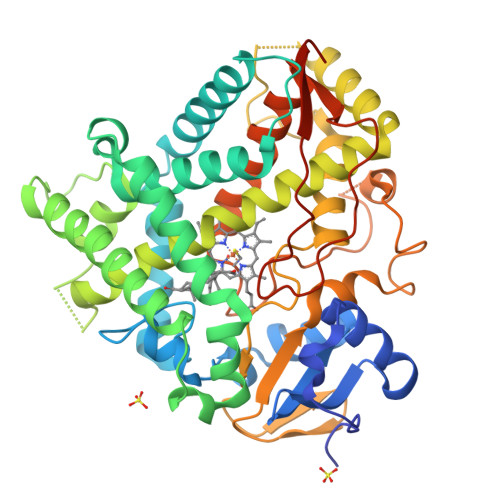
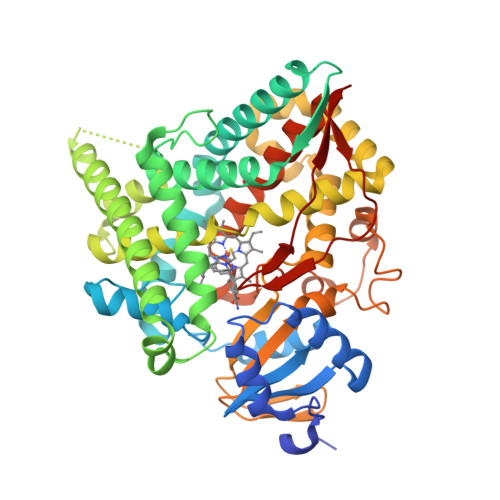
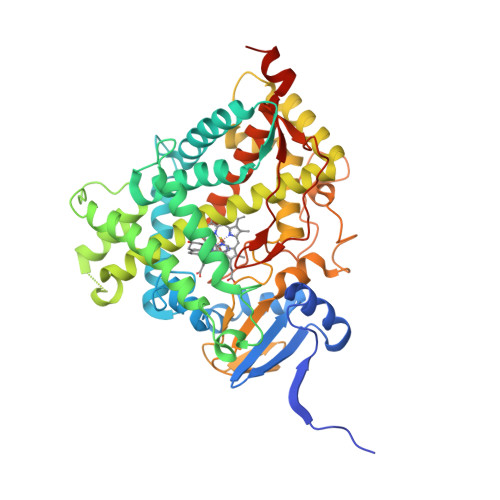
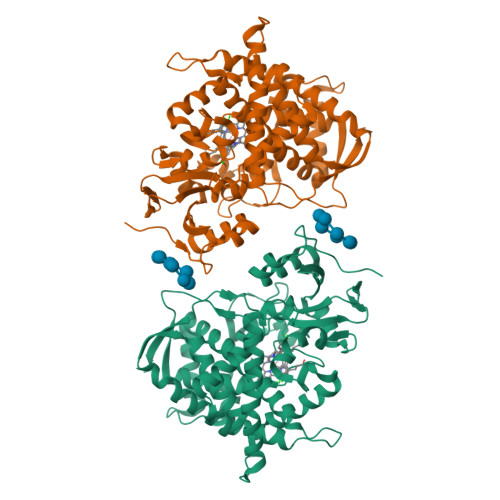
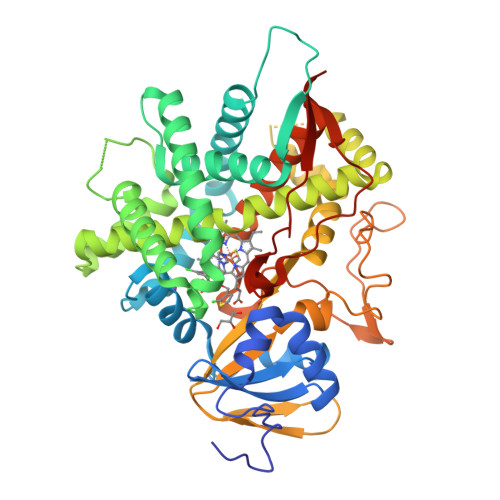
Lanosterol 14-alpha demethylase structureClick to view 3D structureLanosterol 14-alpha demethylaseQ16850HumansKnownKetoconazole interacts with 14-α demethylase, a cytochrome P-450 enzyme necessary for the conversion of lanosterol to ergosterol. This results in inhibition of ergosterol synthesis and increased fungal cellular permeability. Other mechanisms may involve the inhibition of endogenous respiration, interaction with membrane phospholipids, inhibition of yeast transformation to mycelial forms, inhibition of purine uptake, and impairment of triglyceride and/or phospholipid biosynthesis. Ketoconazole can also inhibit the synthesis of thromboxane and sterols such as aldosterone, cortisol, and testosterone. (A365)
ATP-dependent translocase ABCB1 structureClick to view 3D structureATP-dependent translocase ABCB1P08183HumansKnownNot Available
Click to view 3D structure1,25-dihydroxyvitamin D(3) 24-hydroxylase, mitochondrialQ07973HumansKnownNot Available
Cytochrome P450 11B2, mitochondrial structureClick to view 3D structureCytochrome P450 11B2, mitochondrialP19099HumansKnownNot Available
Cytochrome P450 11B1, mitochondrial structureClick to view 3D structureCytochrome P450 11B1, mitochondrialP15538HumansKnownNot Available
Cytochrome P450 3A4 structureClick to view 3D structureCytochrome P450 3A4P08684HumansKnownNot Available
Steroid 21-hydroxylase structureClick to view 3D structureSteroid 21-hydroxylaseP08686HumansKnownNot Available
Click to view 3D structure25-hydroxyvitamin D-1 alpha hydroxylase, mitochondrialO15528HumansKnownNot Available
Androgen receptor structureClick to view 3D structureAndrogen receptorP10275HumansKnownNot Available
Bile salt export pump structureClick to view 3D structureBile salt export pumpO95342HumansKnownNot Available
Malate dehydrogenase, cytoplasmic structureClick to view 3D structureMalate dehydrogenase, cytoplasmicP40925HumansKnownNot Available
Nuclear receptor subfamily 1 group I member 3 structureClick to view 3D structureNuclear receptor subfamily 1 group I member 3Q14994HumansKnownNot Available
Voltage-gated inwardly rectifying potassium channel KCNH2 structureClick to view 3D structureVoltage-gated inwardly rectifying potassium channel KCNH2Q12809HumansKnownNot Available
Hepatic sodium/bile acid cotransporter structureClick to view 3D structureHepatic sodium/bile acid cotransporterQ14973HumansKnownNot Available
Sodium-dependent serotonin transporter structureClick to view 3D structureSodium-dependent serotonin transporterP31645HumansKnownNot Available
Aryl hydrocarbon receptor structureClick to view 3D structureAryl hydrocarbon receptorP35869HumansKnownNot Available
Nuclear receptor subfamily 1 group I member 2 structureClick to view 3D structureNuclear receptor subfamily 1 group I member 2O75469HumansKnownNot Available
Bile acid receptor structureClick to view 3D structureBile acid receptorQ96RI1HumansKnownNot Available
Vitamin D3 receptor structureClick to view 3D structureVitamin D3 receptorP11473HumansKnownNot Available
Sterol regulatory element-binding protein 1 structureClick to view 3D structureSterol regulatory element-binding protein 1P36956HumansKnownNot Available
Concentrations
Not Available
External Links
DrugBank IDNot Available
HMDB IDNot Available
FooDB IDNot Available
Phenol Explorer IDNot Available
KNApSAcK IDNot Available
BiGG IDNot Available
BioCyc IDNot Available
METLIN IDNot Available
PDB IDNot Available
Wikipedia LinkNot Available
Chemspider ID3691
ChEBI ID48339
PubChem Compound IDNot Available
Kegg Compound IDNot Available
YMDB IDNot Available
ECMDB IDNot Available
References
Synthesis Reference

U.S. Patent 4,144,346.

MSDSLink
General References
  1. Kojima T, Matsumoto M, Togashi H, Tachibana K, Kemmotsu O, Yoshioka M: Fluvoxamine suppresses the long-term potentiation in the hippocampal CA1 field of anesthetized rats: an effect mediated via 5-HT1A receptors. Brain Res. 2003 Jan 3;959(1):165-8. [PubMed: 12480170]
  2. Goeders NE, Peltier RL, Guerin GF: Ketoconazole reduces low dose cocaine self-administration in rats. Drug Alcohol Depend. 1998 Dec 1;53(1):67-77. [PubMed: 10933341]
  3. Berwaerts J, Verhelst J, Mahler C, Abs R: Cushing's syndrome in pregnancy treated by ketoconazole: case report and review of the literature. Gynecol Endocrinol. 1999 Jun;13(3):175-82. [PubMed: 10451809]
  4. Kazy Z, Puho E, Czeizel AE: Population-based case-control study of oral ketoconazole treatment for birth outcomes. Congenit Anom (Kyoto). 2005 Mar;45(1):5-8. [PubMed: 15737124]
  5. Pierard-Franchimont C, Goffin V, Decroix J, Pierard GE: A multicenter randomized trial of ketoconazole 2% and zinc pyrithione 1% shampoos in severe dandruff and seborrheic dermatitis. Skin Pharmacol Appl Skin Physiol. 2002 Nov-Dec;15(6):434-41. [PubMed: 12476017]
  6. Drugs.com - http://www.drugs.com/cons/Ketoconazole.html
  7. RxList: The Internet Drug Index (2009). - http://www.rxlist.com/
  8. Wikipedia. Ketoconazole. Last Updated 7 December 2009. - http://en.wikipedia.org/wiki/Ketoconazole
  9. O'Neil MJ (ed) (2001). The Merck Index - An Encyclopedia of Chemicals, Drugs, and Biologicals. 13th ed. Whitehouse Station, NJ: Merck and Co., Inc.
  10. McEvoy GK (ed) (2006). American Hospital Formulary Service - Drug Information 2006. Bethesda, MD: American Society of Health-System Pharmacists.