Diphenoxylate (CED0006919)

Record Information
Version1.0
Creation Date2009-07-21 20:28:19 UTC
Update Date2026-05-14 16:57:39 UTC
SynCED IDCED0006919
Secondary Accession Numbers
  • CHEM002340
  • T3D2978
Identification
Common NameDiphenoxylate
ClassSmall Molecule
Description
Diphenoxylate is an exogenous organic compound with the formula C30H32N2O2 and an average molecular weight of 452.59 g/mol. It exists as a solid at room temperature. Diphenoxylate belongs to the diphenylacetonitriles, a subclass of benzene and substituted derivatives within the organic compounds. This compound is used as an antidiarrhoeal drug and is administered via the oral exposure route. It is recorded as being found in or released from several sources, including healthcare, pharmaceuticals and veterinary products as an antipropulsive; food, food processing and cookware, specifically in the preparation of vinegar and the preparation of wine or sparkling wine; household cleaning and consumer products, including other smoking requisites, tobacco smoke filters and non electric simulated smoking devices; and electrical and electronic equipment, including antennas, auxiliary devices, electrically stimulated smoking devices, radio transmission systems and hybrid capacitors. The compound acts on three recorded protein targets: the delta-type opioid receptor (OPRD1), the potassium voltage-gated channel subfamily A member 3 (KCNA3), and the mu-type opioid receptor (OPRM1). As an opiate receptor agonist, diphenoxylate stimulates mu receptors in the gastrointestinal tract to constrict the sphincters and decrease peristalsis. It also exerts a direct effect on the circular smooth muscle of the bowel, which may result in segmentation and the prolongation of gastrointestinal transit time. The clinical antidiarrheal action of diphenoxylate may be a consequence of this enhanced segmentation, which allows for increased contact of the intraluminal contents with the intestinal mucosa.
Contaminant Type
  • Amine
  • Analgesic, Opioid
  • Antidiarrheal
  • Antiperistaltic Agent
  • Drug
  • Ester
  • Ether
  • Food Toxin
  • Metabolite
  • Narcotic
  • Nitrile
  • Organic Compound
  • Synthetic Compound
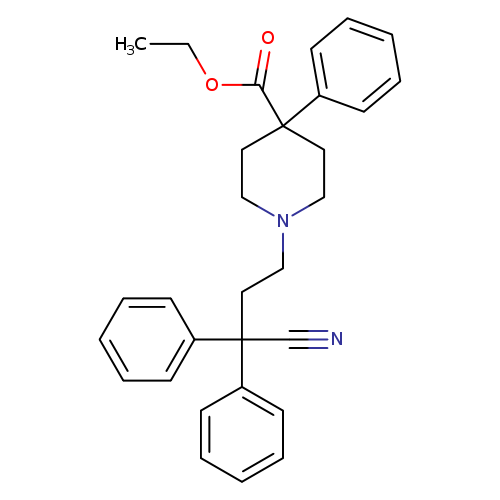
Chemical Structure
Synonyms
ValueSource
1-(3-Cyano-3,3-diphenylpropyl)-4-phenyl-isonipecotic acid ethyl esterChEBI
2,2-Diphenyl-4-(4-carbethoxy-4-phenylpiperidino)butyronitrileChEBI
4-Ethoxycarbonyl-alpha,alpha,4-triphenyl-1-piperidinebutyronitrileChEBI
DifenoxilatoChEBI
DiphenoxylatumChEBI
Ethyl 1-(3-cyano-3,3-diphenylpropyl)-4-phenyl-4-piperidinecarboxylateChEBI
Ethyl 1-(3-cyano-3,3-diphenylpropyl)-4-phenylisonipecotateChEBI
1-(3-Cyano-3,3-diphenylpropyl)-4-phenyl-isonipecotate ethyl esterGenerator
4-Ethoxycarbonyl-a,a,4-triphenyl-1-piperidinebutyronitrileGenerator
4-Ethoxycarbonyl-α,α,4-triphenyl-1-piperidinebutyronitrileGenerator
Ethyl 1-(3-cyano-3,3-diphenylpropyl)-4-phenyl-4-piperidinecarboxylic acidGenerator
Ethyl 1-(3-cyano-3,3-diphenylpropyl)-4-phenylisonipecotic acidGenerator
Diphenoxylic acidGenerator
Dea no. 9170HMDB
DifenossilatoHMDB
DiphenoxalateHMDB
Diphenoxylate monohydrochlorideHMDB
Monohydrochloride, diphenoxylateHMDB
Hydrochloride, diphenoxylateHMDB
Diphenoxylate hydrochlorideHMDB
Chemical FormulaC30H32N2O2
Average Molecular Mass452.587 g/mol
Monoisotopic Mass452.246 g/mol
CAS Registry Number915-30-0
IUPAC Nameethyl 1-(3-cyano-3,3-diphenylpropyl)-4-phenylpiperidine-4-carboxylate
Traditional Namediphenoxylate
SMILESCCOC(=O)C1(CCN(CCC(C#N)(C2=CC=CC=C2)C2=CC=CC=C2)CC1)C1=CC=CC=C1
InChI IdentifierInChI=1S/C30H32N2O2/c1-2-34-28(33)29(25-12-6-3-7-13-25)18-21-32(22-19-29)23-20-30(24-31,26-14-8-4-9-15-26)27-16-10-5-11-17-27/h3-17H,2,18-23H2,1H3
InChI KeyHYPPXZBJBPSRLK-UHFFFAOYSA-N
Chemical Taxonomy
Description Belongs to the class of organic compounds known as diphenylacetonitriles. These are cyclic aromatic compounds containing a diphenylacetonitrile moiety, which consists of a diphenylmethane linked to and acetonitrile to form 2,2-diphenylacetonitrile.
KingdomOrganic compounds
Super ClassBenzenoids
ClassBenzene and substituted derivatives
Sub ClassDiphenylacetonitriles
Direct ParentDiphenylacetonitriles
Alternative Parents
Substituents
  • Diphenylacetonitrile
  • Diphenylmethane
  • Phenylpiperidine
  • Piperidinecarboxylic acid
  • Aralkylamine
  • Piperidine
  • Amino acid or derivatives
  • Carboxylic acid ester
  • Tertiary amine
  • Tertiary aliphatic amine
  • Nitrile
  • Carbonitrile
  • Monocarboxylic acid or derivatives
  • Carboxylic acid derivative
  • Organoheterocyclic compound
  • Azacycle
  • Hydrocarbon derivative
  • Organic oxide
  • Amine
  • Organooxygen compound
  • Organonitrogen compound
  • Organic oxygen compound
  • Organic nitrogen compound
  • Organopnictogen compound
  • Carbonyl group
  • Aromatic heteromonocyclic compound
Molecular FrameworkAromatic heteromonocyclic compounds
External Descriptors
Biological Properties
StatusDetected and Not Quantified
OriginExogenous
Cellular Locations
  • Membrane
Biofluid LocationsNot Available
Tissue LocationsNot Available
Applications
Biological RolesNot Available
Chemical RolesNot Available
Organoleptic EffectsNot Available
Physical Properties
StateSolid
AppearanceWhite powder.
Experimental Properties
PropertyValue
Melting Point220.5-222°C
Boiling PointNot Available
Solubility800 mg/L (at 25°C)
Predicted Properties
PropertyValueSource
Water Solubility0.0015 g/LALOGPS
logP5.74ALOGPS
logP5.88ChemAxon
logS-5.5ALOGPS
pKa (Strongest Basic)8.5ChemAxon
Physiological Charge1ChemAxon
Hydrogen Acceptor Count3ChemAxon
Hydrogen Donor Count0ChemAxon
Polar Surface Area53.33 ŲChemAxon
Rotatable Bond Count9ChemAxon
Refractivity146.76 m³·mol⁻¹ChemAxon
Polarizability51.58 ųChemAxon
Number of Rings4ChemAxon
BioavailabilityYesChemAxon
Rule of FiveNoChemAxon
Ghose FilterNoChemAxon
Veber's RuleNoChemAxon
MDDR-like RuleYesChemAxon
Spectra
Spectra
Spectrum TypeDescriptionSplash KeyDeposition DateView
GC-MSGC-MS Spectrumsplash10-0002-6591000000-e04da61bbde263b104e3Not AvailableView Spectrum
Predicted GC-MSPredicted GC-MS Spectrumsplash10-004i-1129000000-033454565afde0495c58Not AvailableView Spectrum
Predicted GC-MSPredicted GC-MS SpectrumNot AvailableNot AvailableView Spectrum
LC-MS/MSLC-MS/MS Spectrumsplash10-0udi-0000900000-e2841fe11576faaa404eNot AvailableView Spectrum
LC-MS/MSLC-MS/MS Spectrumsplash10-0udi-0000900000-f16aa8a859221ed0173cNot AvailableView Spectrum
LC-MS/MSLC-MS/MS Spectrumsplash10-0udi-0220900000-38d21080081c6d144498Not AvailableView Spectrum
LC-MS/MSLC-MS/MS Spectrumsplash10-0ap0-2920000000-ed4957b090e4b3a6f38dNot AvailableView Spectrum
LC-MS/MSLC-MS/MS Spectrumsplash10-0aor-2900000000-becb90ead622a0131fdbNot AvailableView Spectrum
LC-MS/MSLC-MS/MS Spectrumsplash10-0udi-0210900000-f33819852c9168d0f8a0Not AvailableView Spectrum
LC-MS/MSLC-MS/MS Spectrumsplash10-0ap0-2930000000-27b1d68dee5988eaa135Not AvailableView Spectrum
LC-MS/MSLC-MS/MS Spectrumsplash10-0udi-0220900000-eb48236d047d8482c9dbNot AvailableView Spectrum
LC-MS/MSLC-MS/MS Spectrumsplash10-0udi-0000900000-e2841fe11576faaa404eNot AvailableView Spectrum
LC-MS/MSLC-MS/MS Spectrumsplash10-0udi-0000900000-f16aa8a859221ed0173cNot AvailableView Spectrum
LC-MS/MSLC-MS/MS Spectrumsplash10-0ufr-1222900000-c125937f2ff362112070Not AvailableView Spectrum
LC-MS/MSLC-MS/MS Spectrumsplash10-0aor-2900000000-b973c5ffabd9b4d287caNot AvailableView Spectrum
LC-MS/MSLC-MS/MS Spectrumsplash10-0aor-2900000000-5fa40194a7aea2fbeaffNot AvailableView Spectrum
LC-MS/MSLC-MS/MS Spectrumsplash10-0udi-0220900000-38d21080081c6d144498Not AvailableView Spectrum
LC-MS/MSLC-MS/MS Spectrumsplash10-0ap0-2920000000-ed4957b090e4b3a6f38dNot AvailableView Spectrum
LC-MS/MSLC-MS/MS Spectrumsplash10-0aor-2900000000-becb90ead622a0131fdbNot AvailableView Spectrum
LC-MS/MSLC-MS/MS Spectrumsplash10-0ap0-2930000000-315293eb975bc2a18e68Not AvailableView Spectrum
Predicted LC-MS/MSPredicted LC-MS/MS Spectrumsplash10-0udi-0011900000-4f997e63c9c65b9c3cf3Not AvailableView Spectrum
Predicted LC-MS/MSPredicted LC-MS/MS Spectrumsplash10-05g0-0344900000-56fc8f46c973ef960e51Not AvailableView Spectrum
Predicted LC-MS/MSPredicted LC-MS/MS Spectrumsplash10-00di-0971000000-b83c6e7e52cb3ee497b0Not AvailableView Spectrum
Predicted LC-MS/MSPredicted LC-MS/MS Spectrumsplash10-0udi-0000900000-ec078fed32982bfba96eNot AvailableView Spectrum
Predicted LC-MS/MSPredicted LC-MS/MS Spectrumsplash10-0ufr-2343900000-eaa7ee09954f3184115dNot AvailableView Spectrum
Predicted LC-MS/MSPredicted LC-MS/MS Spectrumsplash10-116u-3941000000-217be57f7c4a4f20f18aNot AvailableView Spectrum
Predicted LC-MS/MSPredicted LC-MS/MS Spectrumsplash10-0udi-0003900000-ed80455eb1b0d171468dNot AvailableView Spectrum
Predicted LC-MS/MSPredicted LC-MS/MS Spectrumsplash10-0ugi-0009100000-945c8f0ee309cb0cc7dfNot AvailableView Spectrum
Predicted LC-MS/MSPredicted LC-MS/MS Spectrumsplash10-0fc3-0649200000-7f0e90bee00ee80d77f4Not AvailableView Spectrum
Predicted LC-MS/MSPredicted LC-MS/MS Spectrumsplash10-0udi-0000900000-1c02c22b314763f70e51Not AvailableView Spectrum
Predicted LC-MS/MSPredicted LC-MS/MS Spectrumsplash10-0uk9-1004900000-e703dc1aa283dd4ff469Not AvailableView Spectrum
Predicted LC-MS/MSPredicted LC-MS/MS Spectrumsplash10-002e-1119100000-17c21210828e5cd8020fNot AvailableView Spectrum
MSMS Spectrumsplash10-0002-2390000000-0d133bb29f340639db02Not AvailableView Spectrum
Toxicity Profile
Toxicity Values
Toxicity ValueOrganismDose DescriptorRoute of ExposurePredicted or ExperimentalToxicity RatingReference
267.0 Log mg/kg [150:470]RatLD50oralpredictedNot AvailableNot Available
Toxicity / Toxin ClassNot Available
Mechanism of ToxicityDiphenoxylate is an opiate receptor agonists that stimulate mu receptors in GI to decrease the peristalsis and constrict the sphincters. Diphenoxylate has a direct effect on circular smooth muscle of the bowel, that conceivably results in segmentation and prolongation of gastrointestinal transit time. The clinical antidiarrheal action of diphenoxylate may thus be a consequence of enhanced segmentation that allows increased contact of the intraluminal contents with the intestinal mucosa.
Carcinogenicity (IARC Classification)No indication of carcinogenicity to humans (not listed by IARC).
Minimum Risk LevelNot Available
SymptomsComa, dry skin and mucous membranes, enlarged pupils of the eyes, extremely high body temperature, flushing, involuntary eyeball movement, lower than normal muscle tone, pinpoint pupils, rapid heartbeat, restlessness, sluggishness, suppressed breathing
TreatmentIn the event of overdose, induction of vomiting, gastric lavage, establishment of a patent airway, and possibly mechanically assisted respiration are advised. in vitro and animal studies indicate that activated charcoal may significantly decrease the bioavailability of diphenoxylate. In noncomatose patients, a slurry of 100 g of activated charcoal can be administered immediately after the induction of vomiting or gastric lavage. A pure narcotic antagonist (eg, naloxone) should be used in the treatment of respiratory depression caused by Lomotil. When a narcotic antagonist is administered intravenously, the onset of action is generally apparent within two minutes. It may also be administered subcutaneously or intramuscularly, providing a slightly less rapid onset of action but a more prolonged effect. (2)
Health Effects
Health EffectRelationshipDirectionDescriptionReference
Exposure Sources
Source IDSourceSectorReference
CEDs000010Insecticides?Insecticides are synthetic chemicals designed to control or eliminate insect pests that threaten crops and other agricultural products.Agriculture & land managementPubChem
CEDs000257Antipropulsives?Antipropulsives are synthetic chemicals used to inhibit or reduce unwanted muscle contractions, particularly in the gastrointestinal tract.Healthcare, pharmaceuticals & veterinary productsNot Available
CEDs000506Antennas?Antennas, commonly used in communication technologies, can be a source of synthetic chemical contamination through the materials and coatings used in their construction.Electrical & Electronic EquipmentPubChem
CEDs000507Auxiliary Devices?Auxiliary devices, such as capacitors, transformers, and circuit breakers, are integral components in various electronic systems.Electrical & Electronic EquipmentPubChem
CEDs000511Conductors Or Conductive Bodies Characterised By The Conductive Materials?Conductors, or conductive bodies, are materials that allow the flow of electrical current, typically made from metals such as copper, aluminum, or silver.Electrical & Electronic EquipmentPubChem
CEDs000518Electrically Stimulated Smoking Devices?Electrically stimulated smoking devices, commonly known as e-cigarettes or vape pens, utilize electrical components to heat a liquid solution, often containing nicotine, flavorings, and other additives, to produce an aerosol for inhalation.Electrical & Electronic EquipmentPubChem
CEDs000519Electrodes?Electrodes, used in various electrical and electronic applications, can be a source of synthetic chemical contamination due to the materials from which they are constructed and the processes involved in their manufacturing.Electrical & Electronic EquipmentPubChem
CEDs000524Hybrid Capacitors?Hybrid capacitors are energy storage devices that combine the properties of electrolytic and supercapacitors, utilizing a combination of electrochemical principles to achieve higher energy density and power density.Electrical & Electronic EquipmentPubChem
CEDs000530Radio Transmission Systems?Radio transmission systems utilize a variety of synthetic chemicals in their manufacturing and maintenance processes.Electrical & Electronic EquipmentPubChem
CEDs000545Food Preservation?Food preservation often involves the use of synthetic chemicals, such as preservatives, flavor enhancers, and color additives, to extend shelf life and enhance the sensory qualities of food products.Food, food processing & cookwarePubChem
CEDs000548Preparation Of Vinegar?Vinegar is produced through the fermentation of ethanol by acetic acid bacteria, resulting in a solution that typically contains 4-8% acetic acid.Food, food processing & cookwarePubChem
CEDs000549Preparation Of Wine Or Sparkling Wine?The preparation of wine or sparkling wine involves various stages, including fermentation, aging, and bottling, which can introduce potential sources of synthetic chemical contamination.Food, food processing & cookwarePubChem
CEDs000559Non Electric Simulated Smoking Devices?Non-electric simulated smoking devices, often designed to mimic the experience of smoking without combustion, can be sources of synthetic chemical contamination due to the materials and chemicals used in their construction and operation.Household cleaning & consumer productsPubChem
CEDs000560Other Smoking Requisites?Other smoking requisites, including items such as lighters, matches, and rolling papers, can introduce synthetic chemical contamination through various components and additives.Household cleaning & consumer productsPubChem
CEDs000569Tobacco Smoke Filters?Tobacco smoke filters are designed to reduce the inhalation of harmful substances in cigarette smoke, including tar and other particulate matter.Household cleaning & consumer productsPubChem
CEDs000580Manufacture Preparation Of Tobacco Products?The manufacture and preparation of tobacco products involve various processes that can result in the introduction of synthetic chemicals into the environment.Industrial manufacturing & chemical processingPubChem
CEDs000596Acaricides?Acaricides are synthetic chemicals specifically designed to target and control mite populations that can damage crops and plants.Agriculture & land managementPubChem
CEDs000600Herbicides And Algicides?Herbicides and algicides are synthetic chemicals primarily used to control unwanted plants and algae in various environments.Agriculture & land managementPubChem
CEDs000602Molluscicides?Molluscicides are synthetic chemicals specifically designed to control and eliminate mollusks, such as snails and slugs, which can be detrimental to crops and agricultural productivity.Agriculture & land managementPubChem
CEDs000603Nematocides?Nematocides are synthetic chemicals specifically designed to control nematodes, which are microscopic roundworms that can cause significant damage to crops and plants.Agriculture & land managementPubChem
CEDs000604Pest Attractants?Pest attractants are synthetic chemicals designed to lure specific pests for monitoring or control purposes.Agriculture & land managementPubChem
CEDs000606Plant Growth Regulators?Plant Growth Regulators (PGRs) are synthetic chemicals designed to influence the growth and development of plants.Agriculture & land managementPubChem
CEDs000607Rodenticides(1)?Rodenticides are synthetic chemicals specifically formulated to control rodent populations, serving as a crucial tool in managing pests that can damage crops and spread diseases.Agriculture & land managementPubChem
CEDs000608Rodenticides?Rodenticides are chemical substances specifically designed to control rodent populations by causing death through various mechanisms, including anticoagulation or neurotoxicity.Agriculture & land managementPubChem
CEDs000610Aftersun Products?Aftersun products are designed to soothe and hydrate the skin after sun exposure, often containing various synthetic chemicals such as emollients, preservatives, and fragrances.Personal care & cosmeticsPubChem
CEDs000611Anti Perspirants Or Body Deoderants?Antiperspirants and body deodorants commonly contain synthetic chemicals such as aluminum compounds, parabens, and synthetic fragrances.Personal care & cosmeticsPubChem
CEDs000614Essential Oils Or Perfumes?Essential oils and perfumes are complex mixtures of volatile compounds derived from natural or synthetic sources, commonly used for their aromatic properties.Personal care & cosmeticsPubChem
CEDs000618Lip Makeup Products?Lip makeup products, such as lipsticks, lip glosses, and lip liners, often contain a variety of synthetic chemicals, including pigments, preservatives, and emollients.Personal care & cosmeticsPubChem
CEDs000632Apparel?Apparel production often involves the use of various synthetic chemicals, including dyes, finishing agents, and preservatives.Textiles, leather & furnishingsPubChem
CEDs000642Footwear?Footwear production often involves the use of various synthetic chemicals, such as adhesives, dyes, and treatments, which can contribute to environmental contamination.Textiles, leather & furnishingsPubChem
CEDs000650Purses Luggage Hand Bags?Purses, luggage, and handbags are often manufactured using synthetic materials such as polyvinyl chloride (PVC), polyurethane, and various types of nylon.Textiles, leather & furnishingsPubChem
CEDs000651Purses Money Bags Wallets?Purses, money bags, and wallets are often manufactured using synthetic materials, including plastics, polyurethanes, and various treated fabrics.Textiles, leather & furnishingsPubChem
CEDs000671Airplanes And Helicopters?Airplanes and helicopters are significant sources of synthetic chemical contamination primarily through the use of aviation fuels, lubricants, and de-icing agents.Aviation & AerospacePubChem
CEDs000678Nitrogenous Fertilisers?Nitrogenous fertilizers are synthetic chemical compounds primarily used to enhance plant growth by supplying essential nitrogen, a crucial nutrient for photosynthesis and protein synthesis.Agriculture & land managementPubChem
CEDs000679Phosphatic Fertilisers?Phosphatic fertilizers are synthetic chemical products primarily composed of phosphorus, which is essential for plant growth.Agriculture & land managementPubChem
CEDs000685Ceramics?Ceramics can be a source of synthetic chemical contamination through various additives and processing agents used in their production.Building & ConstructionPubChem
CEDs000696Nanotechnology?Nanotechnology involves the manipulation of materials at the molecular or atomic level, typically within the range of 1 to 100 nanometers.Industrial manufacturing & chemical processingPubChem
CEDs000727Printing Machines Or Presses?Printing machines or presses commonly utilize synthetic chemicals such as inks, solvents, and cleaning agents.Paper, pulp & fiber productsPubChem
CEDs000734Coating Compositions?Coating compositions, which include paints, sealants, and varnishes, are formulated with a variety of synthetic chemicals such as solvents, resins, pigments, and additives.Building & ConstructionPubChem
CEDs000735Explosives?Explosives are chemical compounds or mixtures designed to undergo rapid decomposition, releasing energy in the form of gas and heat.Defense & military infrastructurePubChem
CEDs000739Inks?Inks are complex mixtures composed of pigments or dyes, solvents, resins, and additives used primarily for printing and writing applications.Paper, pulp & fiber productsPubChem
CEDs000741Pigment Pastes?Pigment pastes are concentrated dispersions of pigments used to impart color and properties to materials.Paper, pulp & fiber productsPubChem
CEDs000744Water, Wastewater, & Sewage Treatment?Water, wastewater, and sewage treatment processes are critical for managing and mitigating pollutants in water systems.Wastewater, sanitation & biosolidsPubChem
Pathways
3 pathwaysPathway Source: PathBank
Targets
StructureProteinUniProt IDOrganismRelationshipDetails
Mu-type opioid receptor structureClick to view 3D structureMu-type opioid receptorP35372HumansPredicted (SEA)
Prediction Confidence Score
0.621
Applicability Domain
1.0
Statistical Significance
0.002
Supporting Reference Compounds
527
E-value
15.8034
Click to view 3D structureSodium-dependent serotonin transporterP31652Rattus norvegicusPredicted (SEA)
Prediction Confidence Score
0.489
Applicability Domain
0.608
Statistical Significance
0.0027
Supporting Reference Compounds
297
E-value
20.7079
Click to view 3D structureSodium-dependent dopamine transporterP23977Rattus norvegicusPredicted (SEA)
Prediction Confidence Score
0.443
Applicability Domain
0.596
Statistical Significance
0.0024
Supporting Reference Compounds
203
E-value
19.0731
Kappa-type opioid receptor structureClick to view 3D structureKappa-type opioid receptorP41145HumansPredicted (SEA)
Prediction Confidence Score
0.415
Applicability Domain
0.608
Statistical Significance
0.0183
Supporting Reference Compounds
532
E-value
142.62
Delta-type opioid receptor structureClick to view 3D structureDelta-type opioid receptorP41143HumansPredicted (SEA)
Prediction Confidence Score
0.415
Applicability Domain
0.608
Statistical Significance
0.0202
Supporting Reference Compounds
427
E-value
157.411
Sigma non-opioid intracellular receptor 1 structureClick to view 3D structureSigma non-opioid intracellular receptor 1Q99720HumansPredicted (SEA)
Prediction Confidence Score
0.405
Applicability Domain
0.435
Statistical Significance
0.0111
Supporting Reference Compounds
562
E-value
86.1791
Voltage-gated inwardly rectifying potassium channel KCNH2 structureClick to view 3D structureVoltage-gated inwardly rectifying potassium channel KCNH2Q12809HumansPredicted (SEA)
Prediction Confidence Score
0.384
Applicability Domain
0.608
Statistical Significance
0.0378
Supporting Reference Compounds
1498
E-value
294.426
Click to view 3D structureSigma non-opioid intracellular receptor 1Q9R0C9Rattus norvegicusPredicted (SEA)
Prediction Confidence Score
0.368
Applicability Domain
0.435
Statistical Significance
0.0055
Supporting Reference Compounds
207
E-value
43.1285
Click to view 3D structureMuscarinic acetylcholine receptor M1P08482Rattus norvegicusPredicted (SEA)
Prediction Confidence Score
0.365
Applicability Domain
0.415
Statistical Significance
0.0018
Supporting Reference Compounds
109
E-value
13.8572
Click to view 3D structureMu-type opioid receptorP97266Cavia porcellusPredicted (SEA)
Prediction Confidence Score
0.359
Applicability Domain
0.608
Statistical Significance
0.0258
Supporting Reference Compounds
186
E-value
200.929
Alpha-1A adrenergic receptor structureClick to view 3D structureAlpha-1A adrenergic receptorP35348HumansPredicted (SEA)
Prediction Confidence Score
0.357
Applicability Domain
0.415
Statistical Significance
0.0133
Supporting Reference Compounds
376
E-value
103.539
Click to view 3D structureAlpha-1B adrenergic receptorP35368HumansPredicted (SEA)
Prediction Confidence Score
0.356
Applicability Domain
0.415
Statistical Significance
0.0095
Supporting Reference Compounds
298
E-value
73.6454
5-hydroxytryptamine receptor 1D structureClick to view 3D structure5-hydroxytryptamine receptor 1DP28221HumansPredicted (SEA)
Prediction Confidence Score
0.345
Applicability Domain
0.415
Statistical Significance
0.0114
Supporting Reference Compounds
365
E-value
88.5924
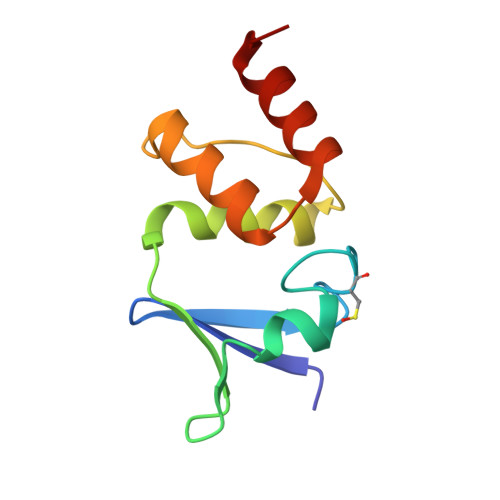
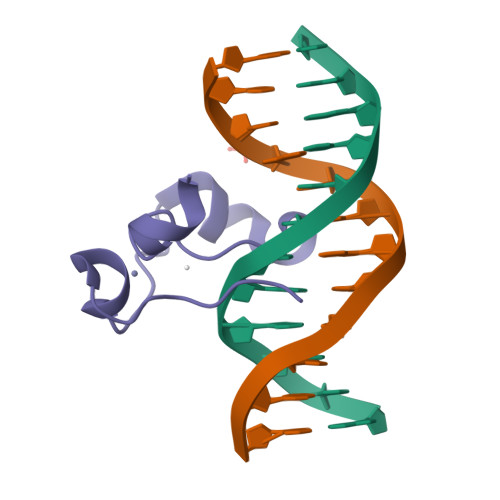
Potassium voltage-gated channel subfamily A member 3 structureClick to view 3D structurePotassium voltage-gated channel subfamily A member 3P22001HumansPredicted (SEA)
Prediction Confidence Score
0.342
Applicability Domain
1.0
Statistical Significance
2.60e-04
Supporting Reference Compounds
19
E-value
2.02408
Click to view 3D structureSigma non-opioid intracellular receptor 1Q60492Cavia porcellusPredicted (SEA)
Prediction Confidence Score
0.342
Applicability Domain
0.429
Statistical Significance
0.0173
Supporting Reference Compounds
229
E-value
134.913
Histamine H2 receptor structureClick to view 3D structureHistamine H2 receptorP25021HumansPredicted (SEA)
Prediction Confidence Score
0.341
Applicability Domain
0.377
Statistical Significance
0.0086
Supporting Reference Compounds
256
E-value
66.6389
Click to view 3D structureD(2) dopamine receptorP61169RatPredicted (SEA)
Prediction Confidence Score
0.34
Applicability Domain
0.393
Statistical Significance
0.0281
Supporting Reference Compounds
528
E-value
219.068
D(4) dopamine receptor structureClick to view 3D structureD(4) dopamine receptorP21917HumansPredicted (SEA)
Prediction Confidence Score
0.338
Applicability Domain
0.377
Statistical Significance
0.0274
Supporting Reference Compounds
524
E-value
213.151
Sodium-dependent serotonin transporter structureClick to view 3D structureSodium-dependent serotonin transporterP31645HumansPredicted (SEA)
Prediction Confidence Score
0.337
Applicability Domain
0.377
Statistical Significance
0.0251
Supporting Reference Compounds
593
E-value
195.557
Click to view 3D structureMuscarinic acetylcholine receptor M2P10980Rattus norvegicusPredicted (SEA)
Prediction Confidence Score
0.335
Applicability Domain
0.403
Statistical Significance
0.0024
Supporting Reference Compounds
98
E-value
18.9174
Alpha-2A adrenergic receptor structureClick to view 3D structureAlpha-2A adrenergic receptorP08913HumansPredicted (SEA)
Prediction Confidence Score
0.334
Applicability Domain
0.377
Statistical Significance
0.0189
Supporting Reference Compounds
487
E-value
146.979
CXXC-type zinc finger protein 5 structureClick to view 3D structureCXXC-type zinc finger protein 5Q7LFL8HumansPredicted (SEA)
Prediction Confidence Score
0.333
Applicability Domain
0.333
Statistical Significance
1.20e-04
Supporting Reference Compounds
1
E-value
0.934191
Click to view 3D structureSigma intracellular receptor 2Q5BJF2HumansPredicted (SEA)
Prediction Confidence Score
0.329
Applicability Domain
0.371
Statistical Significance
0.018
Supporting Reference Compounds
308
E-value
139.817
Histamine H1 receptor structureClick to view 3D structureHistamine H1 receptorP35367HumansPredicted (SEA)
Prediction Confidence Score
0.326
Applicability Domain
0.377
Statistical Significance
0.0288
Supporting Reference Compounds
507
E-value
224.517
Muscarinic acetylcholine receptor M1 structureClick to view 3D structureMuscarinic acetylcholine receptor M1P11229HumansPredicted (SEA)
Prediction Confidence Score
0.324
Applicability Domain
0.369
Statistical Significance
0.0158
Supporting Reference Compounds
385
E-value
123.235
Delta-type opioid receptor structureClick to view 3D structureDelta-type opioid receptorP41143HumansKnownNot Available
Mu-type opioid receptor structureClick to view 3D structureMu-type opioid receptorP35372HumansKnownDiphenoxylate is an opiate receptor agonists that stimulate mu receptors in GI to decrease the peristalsis and constrict the sphincters. Diphenoxylate has a direct effect on circular smooth muscle of the bowel, that conceivably results in segmentation and prolongation of gastrointestinal transit time. The clinical antidiarrheal action of diphenoxylate may thus be a consequence of enhanced segmentation that allows increased contact of the intraluminal contents with the intestinal mucosa.
Potassium voltage-gated channel subfamily A member 3 structureClick to view 3D structurePotassium voltage-gated channel subfamily A member 3P22001HumansKnownNot Available
Concentrations
Not Available
External Links
DrugBank IDDB01081
HMDB IDHMDB0015213
FooDB IDNot Available
Phenol Explorer IDNot Available
KNApSAcK IDNot Available
BiGG IDNot Available
BioCyc IDNot Available
METLIN IDNot Available
PDB IDNot Available
Wikipedia LinkDiphenoxylate
Chemspider ID12919
ChEBI ID4639
PubChem Compound ID13505
Kegg Compound IDC07872
YMDB IDNot Available
ECMDB IDNot Available
References
Synthesis Reference

Janssen, P.A.J.; U.S.Patent 2,898,340; August 4,1959.
Dryden, H.L. Jr. and Erickson, R.A.; U.S. Patent 4,086,234; April 25,1978; assigned to
G.D.Searle & Co.

MSDSLink
General References
  1. Wishart DS, Knox C, Guo AC, Cheng D, Shrivastava S, Tzur D, Gautam B, Hassanali M: DrugBank: a knowledgebase for drugs, drug actions and drug targets. Nucleic Acids Res. 2008 Jan;36(Database issue):D901-6. Epub 2007 Nov 29. [PubMed: 18048412]
  2. RxList: The Internet Drug Index (2009). - http://www.rxlist.com/