Ambenonium (CED0015355)

Record Information
Version1.0
Creation Date2009-07-21 20:28:25 UTC
Update Date2026-05-14 16:58:01 UTC
SynCED IDCED0015355
Secondary Accession Numbers
  • CHEM002352
  • T3D2991
Identification
Common NameAmbenonium
ClassSmall Molecule
Description
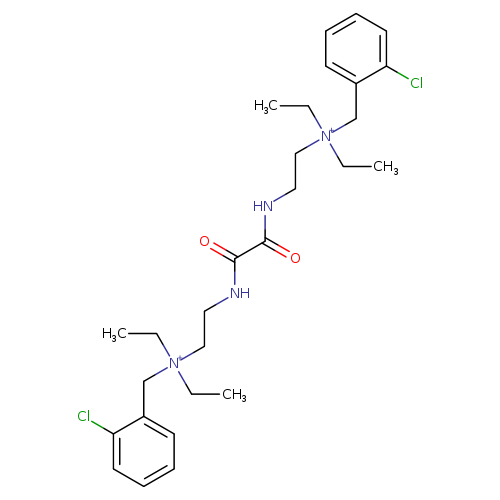
Ambenonium is an exogenous solid with the chemical formula C28H42Cl2N4O2. Ambenonium belongs to the amino acids, peptides, and analogues, a subclass of carboxylic acids and derivatives within the organic compounds. With an average molecular weight of 537.57 g/mol, Ambenonium is a heavy molecule. It is recorded as being found in healthcare, pharmaceuticals and veterinary products as a parasympathomimetic, as well as in hybrid capacitors within electrical and electronic equipment. The recorded route of exposure for this compound is oral. Ambenonium functions as a biological and chemical inhibitor of cholinesterase (EC 3.1.1.8). Its primary protein target is acetylcholinesterase. Ambenonium exerts its actions against myasthenia gravis by competitive, reversible inhibition of acetylcholinesterase. Myasthenia gravis occurs when the body inappropriately produces antibodies against acetylcholine receptors, inhibiting proper acetylcholine signal transmission. Ambenonium reversibly binds acetylcholinesterase, which helps manage the condition.
Contaminant Type
  • Amide
  • Amine
  • Anti-Arrhythmia Agent
  • Antimyasthenic Agent
  • Drug
  • Metabolite
  • Organic Compound
  • Organochloride
  • Synthetic Compound
Chemical Structure
Synonyms
ValueSource
Ambenonium baseChEBI
AmbenonumChEBI
MytelaseHMDB
Ambenonium chlorideHMDB
Chloride, ambenoniumHMDB
Sanofi winthrop brand OF ambenonium chlorideHMDB
Chemical FormulaC28H42Cl2N4O2
Average Molecular Mass537.565 g/mol
Monoisotopic Mass536.268 g/mol
CAS Registry Number7648-98-8
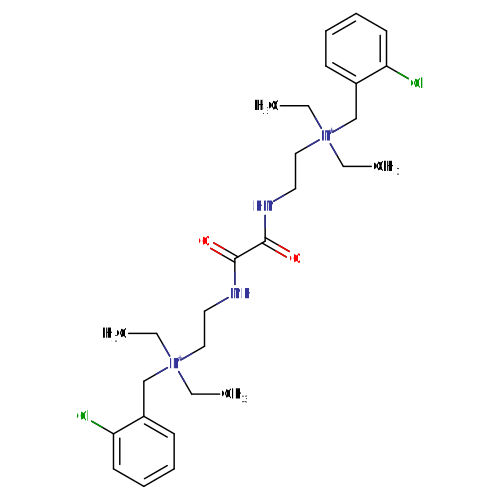
IUPAC Name[(2-chlorophenyl)methyl](2-{[(2-{[(2-chlorophenyl)methyl]diethylazaniumyl}ethyl)carbamoyl]formamido}ethyl)diethylazanium
Traditional Nameambenonium
SMILESCC[N+](CC)(CCNC(=O)C(=O)NCC[N+](CC)(CC)CC1=CC=CC=C1Cl)CC1=CC=CC=C1Cl
InChI IdentifierInChI=1S/C28H40Cl2N4O2/c1-5-33(6-2,21-23-13-9-11-15-25(23)29)19-17-31-27(35)28(36)32-18-20-34(7-3,8-4)22-24-14-10-12-16-26(24)30/h9-16H,5-8,17-22H2,1-4H3/p+2
InChI KeyOMHBPUNFVFNHJK-UHFFFAOYSA-P
Chemical Taxonomy
Description Belongs to the class of organic compounds known as alpha amino acid amides. These are amide derivatives of alpha amino acids.
KingdomOrganic compounds
Super ClassOrganic acids and derivatives
ClassCarboxylic acids and derivatives
Sub ClassAmino acids, peptides, and analogues
Direct ParentAlpha amino acid amides
Alternative Parents
Substituents
  • Alpha-amino acid amide
  • Benzylamine
  • Phenylmethylamine
  • Aralkylamine
  • Chlorobenzene
  • Halobenzene
  • Aryl chloride
  • Aryl halide
  • Monocyclic benzene moiety
  • Benzenoid
  • Tetraalkylammonium salt
  • Quaternary ammonium salt
  • Carboxamide group
  • Secondary carboxylic acid amide
  • Organic nitrogen compound
  • Amine
  • Organonitrogen compound
  • Organochloride
  • Organohalogen compound
  • Organooxygen compound
  • Organic salt
  • Carbonyl group
  • Hydrocarbon derivative
  • Organic oxide
  • Organopnictogen compound
  • Organic oxygen compound
  • Organic cation
  • Aromatic homomonocyclic compound
Molecular FrameworkAromatic homomonocyclic compounds
External Descriptors
Biological Properties
StatusDetected and Not Quantified
OriginExogenous
Cellular Locations
  • Cytoplasm
  • Extracellular
Biofluid LocationsNot Available
Tissue LocationsNot Available
ApplicationsNot Available
Biological Roles
Chemical Roles
Organoleptic EffectsNot Available
Physical Properties
StateSolid
AppearanceWhite powder.
Experimental Properties
PropertyValue
Melting Point196-199°C
Boiling PointNot Available
SolubilitySoluble
Predicted Properties
PropertyValueSource
Water Solubility9.4e-07 g/LALOGPS
logP2.27ALOGPS
logP-3.6ChemAxon
logS-8.8ALOGPS
pKa (Strongest Acidic)10.78ChemAxon
pKa (Strongest Basic)-3.6ChemAxon
Physiological Charge2ChemAxon
Hydrogen Acceptor Count2ChemAxon
Hydrogen Donor Count2ChemAxon
Polar Surface Area58.2 ŲChemAxon
Rotatable Bond Count15ChemAxon
Refractivity173.57 m³·mol⁻¹ChemAxon
Polarizability59.98 ųChemAxon
Number of Rings2ChemAxon
BioavailabilityNoChemAxon
Rule of FiveNoChemAxon
Ghose FilterNoChemAxon
Veber's RuleNoChemAxon
MDDR-like RuleNoChemAxon
Spectra
Spectra
Spectrum TypeDescriptionSplash KeyDeposition DateView
1D NMR1H NMR Spectrum (1D, D2O, predicted)Not AvailableNot AvailableView Spectrum
1D NMR13C NMR Spectrum (1D, D2O, predicted)Not AvailableNot AvailableView Spectrum
Toxicity Profile
Toxicity Values
Toxicity ValueOrganismDose DescriptorRoute of ExposurePredicted or ExperimentalToxicity RatingReference
48.0 Log mg/kg [30:86]RatLD50oralpredictedNot AvailableNot Available
Toxicity / Toxin ClassNot Available
Mechanism of ToxicityAmbenonium is a cholinesterase or acetylcholinesterase (AChE) inhibitor. A cholinesterase inhibitor (or 'anticholinesterase') suppresses the action of acetylcholinesterase. Because of its essential function, chemicals that interfere with the action of acetylcholinesterase are potent neurotoxins, causing excessive salivation and eye-watering in low doses, followed by muscle spasms and ultimately death. Nerve gases and many substances used in insecticides have been shown to act by binding a serine in the active site of acetylcholine esterase, inhibiting the enzyme completely. Acetylcholine esterase breaks down the neurotransmitter acetylcholine, which is released at nerve and muscle junctions, in order to allow the muscle or organ to relax. The result of acetylcholine esterase inhibition is that acetylcholine builds up and continues to act so that any nerve impulses are continually transmitted and muscle contractions do not stop. Among the most common acetylcholinesterase inhibitors are phosphorus-based compounds, which are designed to bind to the active site of the enzyme. The structural requirements are a phosphorus atom bearing two lipophilic groups, a leaving group (such as a halide or thiocyanate), and a terminal oxygen. LD50=150±44 mg/kg (orally in mice).
Carcinogenicity (IARC Classification)No indication of carcinogenicity to humans (not listed by IARC).
Minimum Risk LevelNot Available
SymptomsSymptoms of overdose include muscle twitching, weakness and paralysis of voluntary muscles including the tongue, shoulders, neck and arms, blood pressure increase (with or without a slowing of heart rate), a sensation of internal trembling, severe anxiety, and panic. Death may occur rapidly if untreated.
TreatmentIf the compound has been ingested, rapid gastric lavage should be performed using 5% sodium bicarbonate. For skin contact, the skin should be washed with soap and water. If the compound has entered the eyes, they should be washed with large quantities of isotonic saline or water. In serious cases, atropine and/or pralidoxime should be administered. Anti-cholinergic drugs work to counteract the effects of excess acetylcholine and reactivate AChE. Atropine can be used as an antidote in conjunction with pralidoxime or other pyridinium oximes (such as trimedoxime or obidoxime), though the use of '-oximes' has been found to be of no benefit, or possibly harmful, in at least two meta-analyses. Atropine is a muscarinic antagonist, and thus blocks the action of acetylcholine peripherally.
Health Effects
Health EffectRelationshipDirectionDescriptionReference
Exposure Sources
Source IDSourceSectorReference
CEDs000381Parasympathomimetics?Parasympathomimetics are synthetic chemicals that mimic the action of the neurotransmitter acetylcholine, stimulating the parasympathetic nervous system.Healthcare, pharmaceuticals & veterinary productsNot Available
CEDs000524Hybrid Capacitors?Hybrid capacitors are energy storage devices that combine the properties of electrolytic and supercapacitors, utilizing a combination of electrochemical principles to achieve higher energy density and power density.Electrical & Electronic EquipmentPubChem
CEDs000632Apparel?Apparel production often involves the use of various synthetic chemicals, including dyes, finishing agents, and preservatives.Textiles, leather & furnishingsPubChem
CEDs000671Airplanes And Helicopters?Airplanes and helicopters are significant sources of synthetic chemical contamination primarily through the use of aviation fuels, lubricants, and de-icing agents.Aviation & AerospacePubChem
CEDs000696Nanotechnology?Nanotechnology involves the manipulation of materials at the molecular or atomic level, typically within the range of 1 to 100 nanometers.Industrial manufacturing & chemical processingPubChem
CEDs000740Paper?Paper production involves the processing of wood fibers and the use of various chemicals, which can lead to synthetic chemical contamination.Paper, pulp & fiber productsPubChem
Pathways
2 pathwaysPathway Source: PathBank
Targets
StructureProteinUniProt IDOrganismRelationshipDetails
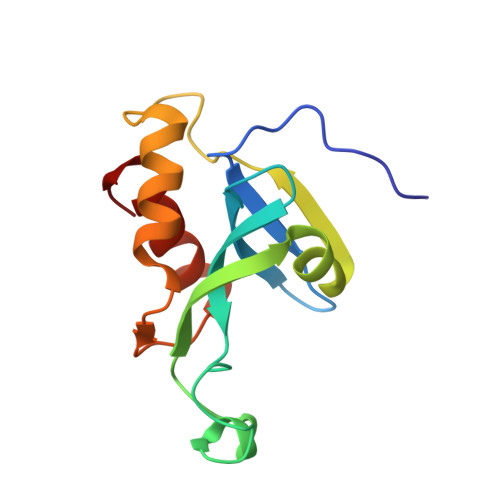
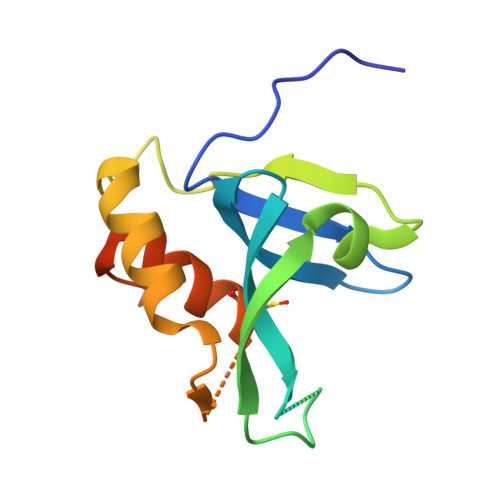
Click to view 3D structure1-deoxy-D-xylulose-5-phosphate synthaseQ4QKG6Haemophilus influenzae (strain 86-028NP)Predicted (SEA)
Prediction Confidence Score
0.333
Applicability Domain
0.34
Statistical Significance
6.00e-05
Supporting Reference Compounds
2
E-value
0.467095
Phospholipase A and acyltransferase 4 structureClick to view 3D structurePhospholipase A and acyltransferase 4Q9UL19HumansPredicted (SEA)
Prediction Confidence Score
0.314
Applicability Domain
0.314
Statistical Significance
0.0017
Supporting Reference Compounds
1
E-value
12.923
Click to view 3D structurePhospholipase A and acyltransferase 5Q96KN8HumansPredicted (SEA)
Prediction Confidence Score
0.314
Applicability Domain
0.314
Statistical Significance
0.0017
Supporting Reference Compounds
1
E-value
12.923
Phospholipase A and acyltransferase 3 structureClick to view 3D structurePhospholipase A and acyltransferase 3P53816HumansPredicted (SEA)
Prediction Confidence Score
0.314
Applicability Domain
0.314
Statistical Significance
0.0017
Supporting Reference Compounds
1
E-value
12.923
Phospholipase A and acyltransferase 2 structureClick to view 3D structurePhospholipase A and acyltransferase 2Q9NWW9HumansPredicted (SEA)
Prediction Confidence Score
0.314
Applicability Domain
0.314
Statistical Significance
0.0017
Supporting Reference Compounds
1
E-value
12.923
Prostaglandin G/H synthase 2 structureClick to view 3D structureProstaglandin G/H synthase 2P35354HumansPredicted (SEA)
Prediction Confidence Score
0.294
Applicability Domain
0.327
Statistical Significance
0.0193
Supporting Reference Compounds
201
E-value
150.171
Chloride intracellular channel protein 1 structureClick to view 3D structureChloride intracellular channel protein 1O00299HumansPredicted (SEA)
Prediction Confidence Score
0.291
Applicability Domain
0.291 Low confidence
Statistical Significance
4.40e-04
Supporting Reference Compounds
1
E-value
3.42537
1-deoxy-D-xylulose-5-phosphate synthase, chloroplastic structureClick to view 3D structure1-deoxy-D-xylulose-5-phosphate synthase, chloroplasticQ38854Arabidopsis thalianaPredicted (SEA)
Prediction Confidence Score
0.288
Applicability Domain
0.288 Low confidence
Statistical Significance
2.40e-04
Supporting Reference Compounds
1
E-value
1.86838
Prostaglandin G/H synthase 1 structureClick to view 3D structureProstaglandin G/H synthase 1P05979Ovis ariesPredicted (SEA)
Prediction Confidence Score
0.282
Applicability Domain
0.327
Statistical Significance
0.0122
Supporting Reference Compounds
106
E-value
94.6646
Protein arginine N-methyltransferase 1 structureClick to view 3D structureProtein arginine N-methyltransferase 1Q63009Rattus norvegicusPredicted (SEA)
Prediction Confidence Score
0.281
Applicability Domain
0.296 Low confidence
Statistical Significance
2.30e-04
Supporting Reference Compounds
3
E-value
1.79053
Click to view 3D structureChaperone protein dnaKC3TRK2Escherichia coliPredicted (SEA)
Prediction Confidence Score
0.278
Applicability Domain
0.278 Low confidence
Statistical Significance
0.0022
Supporting Reference Compounds
1
E-value
17.4382
Carbonic anhydrase 1 structureClick to view 3D structureCarbonic anhydrase 1P00915HumansPredicted (SEA)
Prediction Confidence Score
0.265
Applicability Domain
0.292 Low confidence
Statistical Significance
0.0926
Supporting Reference Compounds
407
E-value
720.962
Carbonic anhydrase 2 structureClick to view 3D structureCarbonic anhydrase 2P00918HumansPredicted (SEA)
Prediction Confidence Score
0.262
Applicability Domain
0.292 Low confidence
Statistical Significance
0.1204
Supporting Reference Compounds
472
E-value
937.305
Interleukin-8 structureClick to view 3D structureInterleukin-8P10145HumansPredicted (SEA)
Prediction Confidence Score
0.262
Applicability Domain
0.327
Statistical Significance
0.0024
Supporting Reference Compounds
26
E-value
19.0731
Prostaglandin G/H synthase 1 structureClick to view 3D structureProstaglandin G/H synthase 1P23219HumansPredicted (SEA)
Prediction Confidence Score
0.262
Applicability Domain
0.327
Statistical Significance
0.0347
Supporting Reference Compounds
136
E-value
269.825
Click to view 3D structureStreptokinase AP10520Streptococcus pyogenes serotype M1Predicted (SEA)
Prediction Confidence Score
0.262
Applicability Domain
0.333
Statistical Significance
0.0873
Supporting Reference Compounds
425
E-value
679.779
Transthyretin structureClick to view 3D structureTransthyretinP02766HumansPredicted (SEA)
Prediction Confidence Score
0.261
Applicability Domain
0.327
Statistical Significance
0.0099
Supporting Reference Compounds
55
E-value
77.46
Cytochrome P450 2C9 structureClick to view 3D structureCytochrome P450 2C9P11712HumansPredicted (SEA)
Prediction Confidence Score
0.261
Applicability Domain
0.283 Low confidence
Statistical Significance
0.3876
Supporting Reference Compounds
1245
E-value
3017.83
Protein RecA structureClick to view 3D structureProtein RecAP9WHJ3Mycobacterium tuberculosisPredicted (SEA)
Prediction Confidence Score
0.26
Applicability Domain
0.278 Low confidence
Statistical Significance
0.0659
Supporting Reference Compounds
296
E-value
513.182
Prostaglandin G/H synthase 2 structureClick to view 3D structureProstaglandin G/H synthase 2Q05769Mus musculusPredicted (SEA)
Prediction Confidence Score
0.257
Applicability Domain
0.327
Statistical Significance
0.0093
Supporting Reference Compounds
43
E-value
72.789
Cytochrome P450 1A2 structureClick to view 3D structureCytochrome P450 1A2P05177HumansPredicted (SEA)
Prediction Confidence Score
0.257
Applicability Domain
0.297 Low confidence
Statistical Significance
0.2872
Supporting Reference Compounds
793
E-value
2236.22
Click to view 3D structureGABA transporter 2P31651Mus musculusPredicted (SEA)
Prediction Confidence Score
0.256
Applicability Domain
0.288 Low confidence
Statistical Significance
0.002
Supporting Reference Compounds
13
E-value
15.8812
Mitogen-activated protein kinase 1 structureClick to view 3D structureMitogen-activated protein kinase 1P28482HumansPredicted (SEA)
Prediction Confidence Score
0.255
Applicability Domain
0.288 Low confidence
Statistical Significance
0.2768
Supporting Reference Compounds
763
E-value
2154.79
Click to view 3D structureDNA damage-inducible transcript 3 proteinP35639Mus musculusPredicted (SEA)
Prediction Confidence Score
0.255
Applicability Domain
0.292 Low confidence
Statistical Significance
0.0639
Supporting Reference Compounds
226
E-value
497.379
X-box-binding protein 1 structureClick to view 3D structureX-box-binding protein 1P17861HumansPredicted (SEA)
Prediction Confidence Score
0.255
Applicability Domain
0.292 Low confidence
Statistical Significance
0.0639
Supporting Reference Compounds
227
E-value
497.534
Acetylcholinesterase structureClick to view 3D structureAcetylcholinesteraseP22303HumansKnownAmbenonium exerts its actions against myasthenia gravis by competitive, reversible inhibition of acetylcholinesterase. The disease myasthenia gravis occurs when the body inappropriately produces antibodies against acetylcholine receptors, and thus inhibits proper acetylcholine signal transmission (when acetylcholine binds to acetylcholine receptors of striated muscle fibers, it stimulates those fibers to contract). Ambenonium reversibly binds acetylcholinesterase, and as acetylcholinesterase is responsible for the hydrolysis of acetylcholine, this inhibition increases levels of acetylcholine. In turn this facilitates transmission of impulses across the myoneural junction and effectively treats the disease.
Concentrations
Not Available
External Links
DrugBank IDDB01122
HMDB IDHMDB0015254
FooDB IDNot Available
Phenol Explorer IDNot Available
KNApSAcK IDNot Available
BiGG IDNot Available
BioCyc IDNot Available
METLIN IDNot Available
PDB IDNot Available
Wikipedia LinkAmbenonium
Chemspider ID2046
ChEBI ID2627
PubChem Compound ID2131
Kegg Compound IDC07773
YMDB IDNot Available
ECMDB IDNot Available
References
Synthesis Reference

Kirchner, F.K.; U.S. Patent 3,096,373; July 2,1963; assigned to Sterling Drug Inc.

MSDSLink
General References
  1. Drugs.com http://www.drugs.com/cons/Ambenonium.html