Oxymorphone (CED0005172)

Record Information
Version1.0
Creation Date2009-07-21 20:28:36 UTC
Update Date2026-05-14 16:58:37 UTC
SynCED IDCED0005172
Secondary Accession Numbers
  • CHEM002372
  • T3D3015
Identification
Common NameOxymorphone
ClassSmall Molecule
Description
Oxymorphone belongs to the phenanthrenes and derivatives, a class of benzenoids within the organic compounds. This exogenous solid has the chemical formula C17H19NO4 and an average molecular weight of 301.34 g/mol. It is utilized as an analgesic for the treatment of moderate to severe pain, including obstetric pain, and may serve as an adjunct to anesthesia. Its actions and uses are similar to morphine, although it lacks cough suppressant activity. The compound interacts with three recorded protein targets: the delta-type opioid receptor (OPRD1), the kappa-type opioid receptor (OPRK1), and predominantly the mu-type opioid receptor (OPRM1). These mu-binding sites are found in the human brain—specifically in the thalamus, hypothalamus, posterior amygdala, putamen, nucleus caudatus, and certain cortical areas—as well as in the spinal nucleus of the trigeminal nerve and on the terminal axons of primary afferents within laminae I and II (substantia gelatinosa) of the spinal cord. Oxymorphone is found in healthcare, pharmaceuticals, and veterinary products as an analgesic, as well as in antennas and household cleaning and consumer products such as pipe accessories and non-electric simulated smoking devices. Recorded exposure routes include oral, intravenous, intramuscular, subcutaneous, rectal, and parenteral administration.
Contaminant Type
  • Adjuvant
  • Adjuvant, Anesthesia
  • Amine
  • Analgesic
  • Analgesic, Opioid
  • Drug
  • Ether
  • Metabolite
  • Narcotic
  • Opiate Agonist
  • Organic Compound
  • Synthetic Compound
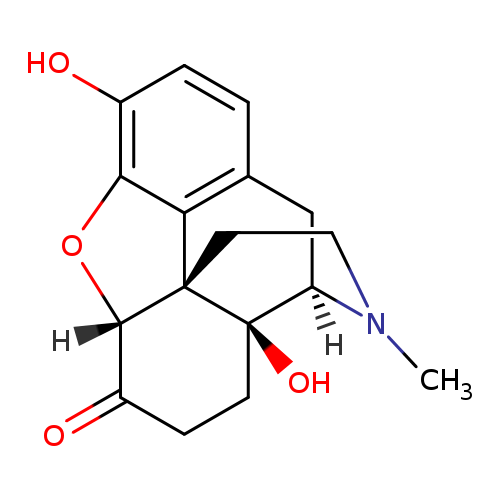
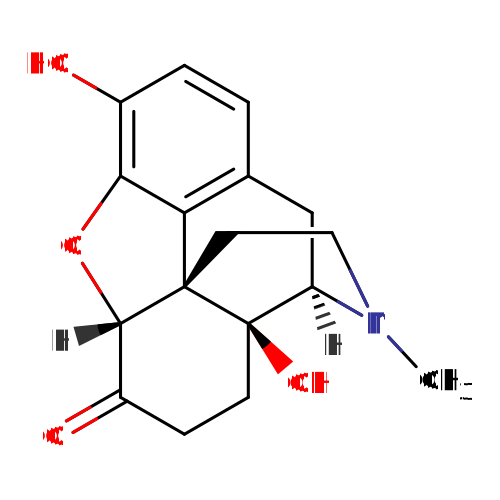
Chemical Structure
Synonyms
ValueSource
NumorphanHMDB
OpanaHMDB
14-HydroxydihydromorphinoneHMDB
DihydrohydroxymorphinoneHMDB
DihydroxymorphinoneHMDB
EN3202HMDB
OximorphonumHMDB
OxymorphineHMDB
Bristol-myers squibb brand OF oxymorphone hydrochlorideHMDB
Oxymorphone HCLHMDB
endo Brand OF oxymorphone hydrochlorideHMDB
Oxymorphone hydrochlorideHMDB
endo Brand OF oxymorphine HCLHMDB
Chemical FormulaC17H19NO4
Average Molecular Mass301.337 g/mol
Monoisotopic Mass301.131 g/mol
CAS Registry Number76-41-5
IUPAC Name(1S,5R,13R,17S)-10,17-dihydroxy-4-methyl-12-oxa-4-azapentacyclo[9.6.1.0¹,¹³.0⁵,¹⁷.0⁷,¹⁸]octadeca-7(18),8,10-trien-14-one
Traditional Nameoxymorphone
SMILES[H][C@@]12OC3=C(O)C=CC4=C3[C@@]11CCN(C)[C@]([H])(C4)[C@]1(O)CCC2=O
InChI IdentifierInChI=1S/C17H19NO4/c1-18-7-6-16-13-9-2-3-10(19)14(13)22-15(16)11(20)4-5-17(16,21)12(18)8-9/h2-3,12,15,19,21H,4-8H2,1H3/t12-,15+,16+,17-/m1/s1
InChI KeyUQCNKQCJZOAFTQ-ISWURRPUSA-N
Chemical Taxonomy
Description Belongs to the class of organic compounds known as phenanthrenes and derivatives. These are polycyclic compounds containing a phenanthrene moiety, which is a tricyclic aromatic compound with three non-linearly fused benzene.
KingdomOrganic compounds
Super ClassBenzenoids
ClassPhenanthrenes and derivatives
Sub ClassNot Available
Direct ParentPhenanthrenes and derivatives
Alternative Parents
Substituents
  • Phenanthrene
  • Isoquinolone
  • Tetralin
  • Coumaran
  • 1-hydroxy-2-unsubstituted benzenoid
  • Alkyl aryl ether
  • Aralkylamine
  • Piperidine
  • Cyclic alcohol
  • Tertiary alcohol
  • 1,2-aminoalcohol
  • Ketone
  • Tertiary aliphatic amine
  • Tertiary amine
  • Ether
  • Oxacycle
  • Azacycle
  • Organoheterocyclic compound
  • Organonitrogen compound
  • Hydrocarbon derivative
  • Organic oxide
  • Organic nitrogen compound
  • Organopnictogen compound
  • Carbonyl group
  • Organooxygen compound
  • Alcohol
  • Organic oxygen compound
  • Amine
  • Aromatic heteropolycyclic compound
Molecular FrameworkAromatic heteropolycyclic compounds
External Descriptors
Biological Properties
StatusDetected and Not Quantified
OriginExogenous
Cellular Locations
  • Cytoplasm
  • Extracellular
  • Membrane
Biofluid LocationsNot Available
Tissue LocationsNot Available
ApplicationsNot Available
Biological RolesNot Available
Chemical RolesNot Available
Organoleptic EffectsNot Available
Physical Properties
StateSolid
AppearanceWhite powder.
Experimental Properties
PropertyValue
Melting Point248-249°C
Boiling PointNot Available
Solubility2.4E+004 mg/L
Predicted Properties
PropertyValueSource
Water Solubility25.6 g/LALOGPS
logP1.26ALOGPS
logP0.78ChemAxon
logS-1.1ALOGPS
pKa (Strongest Acidic)7.34ChemAxon
pKa (Strongest Basic)10.93ChemAxon
Physiological Charge1ChemAxon
Hydrogen Acceptor Count5ChemAxon
Hydrogen Donor Count2ChemAxon
Polar Surface Area70 ŲChemAxon
Rotatable Bond Count0ChemAxon
Refractivity79.56 m³·mol⁻¹ChemAxon
Polarizability30.77 ųChemAxon
Number of Rings5ChemAxon
BioavailabilityYesChemAxon
Rule of FiveYesChemAxon
Ghose FilterYesChemAxon
Veber's RuleNoChemAxon
MDDR-like RuleNoChemAxon
Spectra
Spectra
Spectrum TypeDescriptionSplash KeyDeposition DateView
Predicted GC-MSPredicted GC-MS Spectrumsplash10-0a4l-9050000000-d955cbd739d3bad18756Not AvailableView Spectrum
Predicted GC-MSPredicted GC-MS Spectrumsplash10-00c0-6907600000-2e98fd21eb80cd8204b3Not AvailableView Spectrum
Predicted GC-MSPredicted GC-MS SpectrumNot AvailableNot AvailableView Spectrum
LC-MS/MSLC-MS/MS Spectrumsplash10-0f89-0093000000-d20c48538ad6696fd83bNot AvailableView Spectrum
Predicted LC-MS/MSPredicted LC-MS/MS Spectrumsplash10-0f89-0095000000-3fa32e9f5773ea0cc992Not AvailableView Spectrum
Predicted LC-MS/MSPredicted LC-MS/MS Spectrumsplash10-001i-0091000000-4c5b42673e83312d1305Not AvailableView Spectrum
Predicted LC-MS/MSPredicted LC-MS/MS Spectrumsplash10-069u-3090000000-b1a88d98c02d968d1332Not AvailableView Spectrum
Predicted LC-MS/MSPredicted LC-MS/MS Spectrumsplash10-0udi-0029000000-0f9dac6d2c5bb246b565Not AvailableView Spectrum
Predicted LC-MS/MSPredicted LC-MS/MS Spectrumsplash10-0ue9-0097000000-2bab2cfd5aabe92e0abeNot AvailableView Spectrum
Predicted LC-MS/MSPredicted LC-MS/MS Spectrumsplash10-000x-2090000000-7d02b1358307dc0ce4d2Not AvailableView Spectrum
Predicted LC-MS/MSPredicted LC-MS/MS Spectrumsplash10-0udi-0009000000-ab6f6c1d45a17ba966cdNot AvailableView Spectrum
Predicted LC-MS/MSPredicted LC-MS/MS Spectrumsplash10-0ue9-0049000000-68376f76c73135dac7e3Not AvailableView Spectrum
Predicted LC-MS/MSPredicted LC-MS/MS Spectrumsplash10-0uk9-0093000000-3e6504da4a5c1b25ff70Not AvailableView Spectrum
Predicted LC-MS/MSPredicted LC-MS/MS Spectrumsplash10-0udi-0009000000-867b26b8e9b8bd5f9273Not AvailableView Spectrum
Predicted LC-MS/MSPredicted LC-MS/MS Spectrumsplash10-0udi-0097000000-9087b236d7dbdab76ba5Not AvailableView Spectrum
MSMS Spectrumsplash10-0udl-7932000000-89141254d526ca629dacNot AvailableView Spectrum
1D NMR1H NMR Spectrum (1D, D2O, predicted)Not AvailableNot AvailableView Spectrum
1D NMR13C NMR Spectrum (1D, D2O, predicted)Not AvailableNot AvailableView Spectrum
Toxicity Profile
Toxicity Values
Toxicity ValueOrganismDose DescriptorRoute of ExposurePredicted or ExperimentalToxicity RatingReference
250.0 Log mg/kg [140:440]RatLD50oralpredictedNot AvailableNot Available
Toxicity / Toxin ClassNot Available
Mechanism of ToxicityOxymorphone interacts predominantly with the opioid mu-receptor. These mu-binding sites are discretely distributed in the human brain, with high densities in the posterior amygdala, hypothalamus, thalamus, nucleus caudatus, putamen, and certain cortical areas. They are also found on the terminal axons of primary afferents within laminae I and II (substantia gelatinosa) of the spinal cord and in the spinal nucleus of the trigeminal nerve. Also, it has been shown that oxymorphone binds to and inhibits GABA inhibitory interneurons via mu-receptors. These interneurons normally inhibit the descending pain inhibition pathway. So, without the inhibitory signals, pain modulation can proceed downstream. Intravenous mouse LD50 is 172 mg/kg.
Carcinogenicity (IARC Classification)No indication of carcinogenicity to humans (not listed by IARC).
Minimum Risk LevelNot Available
SymptomsOxymorphone overdosage is characterized by respiratory depression, extreme somnolence progressing to stupor or coma, skeletal muscle flaccidity, cold and clammy skin, and sometimes bradycardia and hypotension. In a severe case of overdose, apnea, circulatory collapse, cardiac arrest, and death may occur.
TreatmentPrimary attention should be given to the reestablishment of adequate respiratory exchange through provision of a patent airway and the institution of assisted or controlled ventilation. The opioid antagonist naloxone hydrochloride is a specific antidote against respiratory depression which may result from overdosage or unusual sensitivity to opioids including oxymorphone. Therefore, an appropriate dose of naloxone hydrochloride should be administered (usual initial adult dose 0.4 mg-2 mg) preferably by the intravenous route and simultaneously with efforts at respiratory resuscitation. Since the duration of action of oxymorphone may exceed that of the antagonist, the patient should be kept under continued surveillance and repeated doses of the antagonist should be administered as needed to maintain adequate respiration. Naloxone hydrochloride should not be administered in the absence of clinically significant respiratory or cardiovascular depression. In addition, it should be considered that the use of an opioid antagonist in patients physically dependent on opioids may precipitate an acute withdrawal syndrome that cannot be readily suppressed while the action of the antagonist persists. If respiratory depression is associated with muscular rigidity, administration of a neuromuscular blocking agent may be necessary to facilitate assisted or controlled ventilation. Muscular rigidity may also respond to opioid antagonist therapy. Oxygen, intravenous fluids, vasopressors and other supportive measures should be employed as indicated. (3)
Health Effects
Health EffectRelationshipDirectionDescriptionReference
Exposure Sources
Source IDSourceSectorReference
CEDs000010Insecticides?Insecticides are synthetic chemicals designed to control or eliminate insect pests that threaten crops and other agricultural products.Agriculture & land managementPubChem
CEDs000233Brushes?Brushes used in personal care and cosmetics can be a source of synthetic chemical contamination due to the materials and coatings used in their manufacturing.Personal care & cosmeticsPubChem
CEDs000370Analgesics?Analgesics are a class of synthetic chemicals designed to alleviate pain.Healthcare, pharmaceuticals & veterinary productsNot Available
CEDs000506Antennas?Antennas, commonly used in communication technologies, can be a source of synthetic chemical contamination through the materials and coatings used in their construction.Electrical & Electronic EquipmentPubChem
CEDs000511Conductors Or Conductive Bodies Characterised By The Conductive Materials?Conductors, or conductive bodies, are materials that allow the flow of electrical current, typically made from metals such as copper, aluminum, or silver.Electrical & Electronic EquipmentPubChem
CEDs000517Electric Switches?Electric switches, integral components in numerous devices, can be a source of synthetic chemical contamination due to the materials and manufacturing processes involved in their production.Electrical & Electronic EquipmentPubChem
CEDs000518Electrically Stimulated Smoking Devices?Electrically stimulated smoking devices, commonly known as e-cigarettes or vape pens, utilize electrical components to heat a liquid solution, often containing nicotine, flavorings, and other additives, to produce an aerosol for inhalation.Electrical & Electronic EquipmentPubChem
CEDs000537Television Systems?Television systems can be a source of synthetic chemical contamination due to the various materials and components used in their manufacture and operation.Electrical & Electronic EquipmentPubChem
CEDs000545Food Preservation?Food preservation often involves the use of synthetic chemicals, such as preservatives, flavor enhancers, and color additives, to extend shelf life and enhance the sensory qualities of food products.Food, food processing & cookwarePubChem
CEDs000555Bleaching Agents?Bleaching agents are chemical substances used to whiten or lighten materials, often employed in various cleaning products for their stain removal and disinfecting properties.Household cleaning & consumer productsPubChem
CEDs000559Non Electric Simulated Smoking Devices?Non-electric simulated smoking devices, often designed to mimic the experience of smoking without combustion, can be sources of synthetic chemical contamination due to the materials and chemicals used in their construction and operation.Household cleaning & consumer productsPubChem
CEDs000562Pipe Accessories?Pipe accessories, such as fittings, connectors, and seals, are components used in plumbing systems to facilitate the flow of liquids and gases.Household cleaning & consumer productsPubChem
CEDs000569Tobacco Smoke Filters?Tobacco smoke filters are designed to reduce the inhalation of harmful substances in cigarette smoke, including tar and other particulate matter.Household cleaning & consumer productsPubChem
CEDs000580Manufacture Preparation Of Tobacco Products?The manufacture and preparation of tobacco products involve various processes that can result in the introduction of synthetic chemicals into the environment.Industrial manufacturing & chemical processingPubChem
CEDs000581Paper Making Machines?Paper making machines utilize various synthetic chemicals throughout the production process, including additives, coatings, and bleaching agents.Industrial manufacturing & chemical processingPubChem
CEDs000586Fishing Boats?Fishing boats can be significant sources of synthetic chemical contamination in marine environments.Marine, shipping & aquaculturePubChem
CEDs000596Acaricides?Acaricides are synthetic chemicals specifically designed to target and control mite populations that can damage crops and plants.Agriculture & land managementPubChem
CEDs000605Pest Repellants?Pest repellents, often formulated from synthetic chemicals, are widely used to protect crops from insect infestations and other pests.Agriculture & land managementPubChem
CEDs000610Aftersun Products?Aftersun products are designed to soothe and hydrate the skin after sun exposure, often containing various synthetic chemicals such as emollients, preservatives, and fragrances.Personal care & cosmeticsPubChem
CEDs000611Anti Perspirants Or Body Deoderants?Antiperspirants and body deodorants commonly contain synthetic chemicals such as aluminum compounds, parabens, and synthetic fragrances.Personal care & cosmeticsPubChem
CEDs000617Lip Care Products?Lip care products, including lipsticks, balms, and glosses, often contain a variety of synthetic chemicals such as parabens, phthalates, and synthetic fragrances.Personal care & cosmeticsPubChem
CEDs000632Apparel?Apparel production often involves the use of various synthetic chemicals, including dyes, finishing agents, and preservatives.Textiles, leather & furnishingsPubChem
CEDs000642Footwear?Footwear production often involves the use of various synthetic chemicals, such as adhesives, dyes, and treatments, which can contribute to environmental contamination.Textiles, leather & furnishingsPubChem
CEDs000653Sewing?Sewing processes often involve the use of various synthetic chemicals, which can become sources of contamination in the environment.Textiles, leather & furnishingsPubChem
CEDs000671Airplanes And Helicopters?Airplanes and helicopters are significant sources of synthetic chemical contamination primarily through the use of aviation fuels, lubricants, and de-icing agents.Aviation & AerospacePubChem
CEDs000685Ceramics?Ceramics can be a source of synthetic chemical contamination through various additives and processing agents used in their production.Building & ConstructionPubChem
CEDs000696Nanotechnology?Nanotechnology involves the manipulation of materials at the molecular or atomic level, typically within the range of 1 to 100 nanometers.Industrial manufacturing & chemical processingPubChem
CEDs000698Jewellery?Jewellery production often involves the use of various synthetic chemicals during the extraction and processing of metals.Mining & metal processingPubChem
CEDs000717Fountain Pens?Fountain pens utilize a liquid ink that often contains synthetic chemicals, including dyes, pigments, and solvents, which can contribute to environmental contamination.Paper, pulp & fiber productsPubChem
CEDs000720Ink Reservoir Pens2?Ink reservoir pens are writing instruments that utilize a reservoir to store ink, which is often composed of synthetic dyes, solvents, and additives.Paper, pulp & fiber productsPubChem
CEDs000738Cooling Circuit Water?Cooling circuit water is utilized in various industrial processes to absorb and dissipate heat generated during operations.Industrial manufacturing & chemical processingPubChem
CEDs000740Paper?Paper production involves the processing of wood fibers and the use of various chemicals, which can lead to synthetic chemical contamination.Paper, pulp & fiber productsPubChem
CEDs000744Water, Wastewater, & Sewage Treatment?Water, wastewater, and sewage treatment processes are critical for managing and mitigating pollutants in water systems.Wastewater, sanitation & biosolidsPubChem
Pathways
3 pathwaysPathway Source: PathBank
Targets
StructureProteinUniProt IDOrganismRelationshipDetails
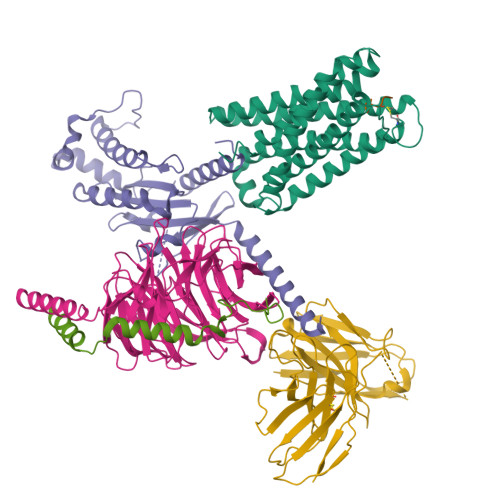
Mu-type opioid receptor structureClick to view 3D structureMu-type opioid receptorP35372HumansPredicted (SEA)
Prediction Confidence Score
0.776
Applicability Domain
1.0
Statistical Significance
8.00e-05
Supporting Reference Compounds
527
E-value
0.622794
Click to view 3D structureMu-type opioid receptorP33535Rattus norvegicusPredicted (SEA)
Prediction Confidence Score
0.776
Applicability Domain
1.0
Statistical Significance
2.70e-04
Supporting Reference Compounds
229
E-value
2.10193
Click to view 3D structureDelta-type opioid receptorP33533Rattus norvegicusPredicted (SEA)
Prediction Confidence Score
0.776
Applicability Domain
1.0
Statistical Significance
1.40e-04
Supporting Reference Compounds
164
E-value
1.08989
Delta-type opioid receptor structureClick to view 3D structureDelta-type opioid receptorP41143HumansPredicted (SEA)
Prediction Confidence Score
0.776
Applicability Domain
1.0
Statistical Significance
2.40e-04
Supporting Reference Compounds
427
E-value
1.86838
Click to view 3D structureKappa-type opioid receptorP41144Cavia porcellusPredicted (SEA)
Prediction Confidence Score
0.776
Applicability Domain
1.0
Statistical Significance
1.70e-04
Supporting Reference Compounds
199
E-value
1.32344
Click to view 3D structureKappa-type opioid receptorP34975Rattus norvegicusPredicted (SEA)
Prediction Confidence Score
0.776
Applicability Domain
1.0
Statistical Significance
1.10e-04
Supporting Reference Compounds
66
E-value
0.856341
Mu-type opioid receptor structureClick to view 3D structureMu-type opioid receptorP42866Mus musculusPredicted (SEA)
Prediction Confidence Score
0.776
Applicability Domain
1.0
Statistical Significance
3.00e-05
Supporting Reference Compounds
107
E-value
0.233548
Kappa-type opioid receptor structureClick to view 3D structureKappa-type opioid receptorP41145HumansPredicted (SEA)
Prediction Confidence Score
0.757
Applicability Domain
1.0
Statistical Significance
3.30e-04
Supporting Reference Compounds
532
E-value
2.56902
Delta-type opioid receptor structureClick to view 3D structureDelta-type opioid receptorP32300Mus musculusPredicted (SEA)
Prediction Confidence Score
0.757
Applicability Domain
1.0
Statistical Significance
2.90e-04
Supporting Reference Compounds
166
E-value
2.25763
Click to view 3D structureMu-type opioid receptorP97266Cavia porcellusPredicted (SEA)
Prediction Confidence Score
0.754
Applicability Domain
1.0
Statistical Significance
2.80e-04
Supporting Reference Compounds
186
E-value
2.17978
Click to view 3D structureKappa-type opioid receptorP33534Mus musculusPredicted (SEA)
Prediction Confidence Score
0.623
Applicability Domain
0.729
Statistical Significance
4.80e-04
Supporting Reference Compounds
61
E-value
3.73676
Click to view 3D structureMu-type opioid receptorP79350Bos taurusPredicted (SEA)
Prediction Confidence Score
0.511
Applicability Domain
0.729
Statistical Significance
2.00e-05
Supporting Reference Compounds
17
E-value
0.155698
Voltage-gated inwardly rectifying potassium channel KCNH2 structureClick to view 3D structureVoltage-gated inwardly rectifying potassium channel KCNH2Q12809HumansPredicted (SEA)
Prediction Confidence Score
0.455
Applicability Domain
0.768
Statistical Significance
0.0121
Supporting Reference Compounds
1498
E-value
94.5868
Nociceptin receptor structureClick to view 3D structureNociceptin receptorP41146HumansPredicted (SEA)
Prediction Confidence Score
0.453
Applicability Domain
0.712
Statistical Significance
0.0039
Supporting Reference Compounds
73
E-value
30.6726
Sigma non-opioid intracellular receptor 1 structureClick to view 3D structureSigma non-opioid intracellular receptor 1Q99720HumansPredicted (SEA)
Prediction Confidence Score
0.422
Applicability Domain
0.768
Statistical Significance
0.0084
Supporting Reference Compounds
562
E-value
65.4712
Cytochrome P450 2D6 structureClick to view 3D structureCytochrome P450 2D6P10635HumansPredicted (SEA)
Prediction Confidence Score
0.411
Applicability Domain
0.729
Statistical Significance
0.0111
Supporting Reference Compounds
1130
E-value
86.3348
Click to view 3D structureSigma non-opioid intracellular receptor 1Q9R0C9Rattus norvegicusPredicted (SEA)
Prediction Confidence Score
0.337
Applicability Domain
0.729
Statistical Significance
0.0101
Supporting Reference Compounds
207
E-value
79.017
Orexin/Hypocretin receptor type 1 structureClick to view 3D structureOrexin/Hypocretin receptor type 1O43613HumansPredicted (SEA)
Prediction Confidence Score
0.336
Applicability Domain
0.375
Statistical Significance
0.0037
Supporting Reference Compounds
70
E-value
28.7264
Mas-related G-protein coupled receptor member X2 structureClick to view 3D structureMas-related G-protein coupled receptor member X2Q96LB1HumansPredicted (SEA)
Prediction Confidence Score
0.297
Applicability Domain
0.403
Statistical Significance
0.0163
Supporting Reference Compounds
16
E-value
126.583
Click to view 3D structureSigma non-opioid intracellular receptor 1O55242Mus musculusPredicted (SEA)
Prediction Confidence Score
0.293
Applicability Domain
0.591
Statistical Significance
0.0012
Supporting Reference Compounds
16
E-value
9.49761
Click to view 3D structureD(2) dopamine receptorP61169RatPredicted (SEA)
Prediction Confidence Score
0.269
Applicability Domain
0.279 Low confidence
Statistical Significance
0.1062
Supporting Reference Compounds
528
E-value
826.759
Click to view 3D structureC-C chemokine receptor type 5P51682Mus musculusPredicted (SEA)
Prediction Confidence Score
0.269
Applicability Domain
0.729
Statistical Significance
5.10e-04
Supporting Reference Compounds
11
E-value
3.97031
Click to view 3D structureD(1A) dopamine receptorP18901Rattus norvegicusPredicted (SEA)
Prediction Confidence Score
0.268
Applicability Domain
0.279 Low confidence
Statistical Significance
0.0465
Supporting Reference Compounds
206
E-value
362.31
C-C chemokine receptor type 5 structureClick to view 3D structureC-C chemokine receptor type 5P51681HumansPredicted (SEA)
Prediction Confidence Score
0.268
Applicability Domain
0.269 Low confidence
Statistical Significance
0.0095
Supporting Reference Compounds
71
E-value
73.8011
D(2) dopamine receptor structureClick to view 3D structureD(2) dopamine receptorP14416HumansPredicted (SEA)
Prediction Confidence Score
0.259
Applicability Domain
0.279 Low confidence
Statistical Significance
0.2405
Supporting Reference Compounds
1103
E-value
1872.35
Mu-type opioid receptor structureClick to view 3D structureMu-type opioid receptorP35372HumansKnownOxymorphone interacts predominantly with the opioid mu-receptor. These mu-binding sites are discretely distributed in the human brain, with high densities in the posterior amygdala, hypothalamus, thalamus, nucleus caudatus, putamen, and certain cortical areas. They are also found on the terminal axons of primary afferents within laminae I and II (substantia gelatinosa) of the spinal cord and in the spinal nucleus of the trigeminal nerve.
Delta-type opioid receptor structureClick to view 3D structureDelta-type opioid receptorP41143HumansKnownNot Available
Kappa-type opioid receptor structureClick to view 3D structureKappa-type opioid receptorP41145HumansKnownNot Available
Concentrations
Not Available
External Links
DrugBank IDDB01192
HMDB IDHMDB0015323
FooDB IDNot Available
Phenol Explorer IDNot Available
KNApSAcK IDNot Available
BiGG IDNot Available
BioCyc IDNot Available
METLIN IDNot Available
PDB IDNot Available
Wikipedia LinkOxymorphone
Chemspider ID4447650
ChEBI ID194484
PubChem Compound ID5284604
Kegg Compound IDC08019
YMDB IDNot Available
ECMDB IDNot Available
References
Synthesis Reference

Bao-Shan Huang, Yansong Lu, Ben-Yi Ji, Aris P Christodoulou, “Preparation of oxymorphone from morphine.” U.S. Patent US5922876, issued May, 1992.

MSDSLink
General References
  1. Drugs.com - http://www.drugs.com/cons/Tramadol.html
  2. Drugs.com - http://www.drugs.com/cons/Oxymorphone.html
  3. RxList: The Internet Drug Index (2009). - http://www.rxlist.com/
  4. Martindale. The Extra Pharmacopoeia, 30th ed.