Some data may have been extracted from scientific literature using a pipeline that uses large language models (LLMs). Source articles are cited where applicable to help verify the extracted relationships.
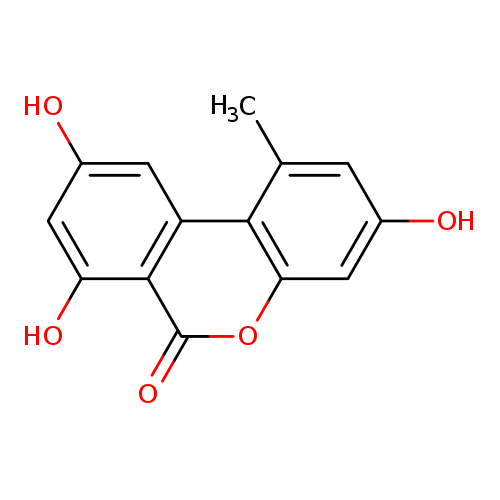
Alternariol (C14H10O5) is a solid organic compound with an average molecular weight of 258.23 g/mol. Alternariol belongs to the coumarins and derivatives, a class of phenylpropanoids and polyketides within the organic compounds. Of exogenous origin, it is a biological metabolite and mycotoxin (PMC6539399 ) that acts as an endocrine disruptor (PMC6539399 ). It occurs in the mycelium of Alternaria tenuis, which is responsible for fruit spot on Passiflora species and papaya (Carica papaya), as well as alternaria cone disorder in hops. It is an important contaminant in fruits and cereals and is found in mushrooms.
The compound serves as a biological and chemical inhibitor of cholinesterase (EC 3.1.1.8). Specifically, alternariol competitively inhibits acetylcholinesterase. It also acts as an agonist at estrogen receptor beta (ESR2) and estrogen receptor (ESR1). Furthermore, alternariol inhibits the activity of DNA-acting enzymes such as topoisomerase 1 (TOP1), DNA topoisomerase 2-alpha (TOP2A), and DNA topoisomerase 2-beta (TOP2B). These effects are attributed to its high affinity for binding to the DNA minor groove, which results in DNA-intercalating, DNA cross-linking, the induction of DNA repair synthesis, the inhibition of DNA replication, and DNA-damaging activities including single-strand and double-strand DNA breaks.
Exposure routes include oral, inhalation, and touch. It has been recorded in various sources, including lubricants, medical devices, food packaging, synthetic textiles, carpets and rugs, and electrical and electronic equipment such as batteries, cell phones, printed circuit boards, capacitors, and wires and cables. It is also associated with the preparation of wort and the preparation of wine or sparkling wine. Regarding health effects, alternariol is associated with an increase in esophageal cancer (PMC6539399 ) and has a therapeutic effect on endometrial cancer (PMC8657677 ).
Belongs to the class of organic compounds known as coumarins and derivatives. These are polycyclic aromatic compounds containing a 1-benzopyran moiety with a ketone group at the C2 carbon atom (1-benzopyran-2-one).
poison (PMC12734068 , PMC7248376 )?A chemical substance, naturally occurring or synthetic, that is harmful to an organism exposed to it in sufficient amounts
metabolite ?A chemical produced during metabolism process, as an intermediate or end-product
EC 3.1.1.8 (cholinesterase) inhibitor ?An EC 3.1.1.* (carboxylic ester hydrolase) inhibitor that interferes with the action of cholinesterase (EC 3.1.1.8).
toxin (PMC11769159 , PMC9786207 )?A chemical substance naturally produced by an organism and poisonous to other organisms
Alternariol is a cholinesterase or acetylcholinesterase (AChE) inhibitor. A cholinesterase inhibitor (or 'anticholinesterase') suppresses the action of acetylcholinesterase. Because of its essential function, chemicals that interfere with the action of acetylcholinesterase are potent neurotoxins, causing excessive salivation and eye-watering in low doses, followed by muscle spasms and ultimately death. Nerve gases and many substances used in insecticides have been shown to act by binding a serine in the active site of acetylcholine esterase, inhibiting the enzyme completely. Acetylcholine esterase breaks down the neurotransmitter acetylcholine, which is released at nerve and muscle junctions, in order to allow the muscle or organ to relax. The result of acetylcholine esterase inhibition is that acetylcholine builds up and continues to act so that any nerve impulses are continually transmitted and muscle contractions do not stop. Among the most common acetylcholinesterase inhibitors are phosphorus-based compounds, which are designed to bind to the active site of the enzyme. The structural requirements are a phosphorus atom bearing two lipophilic groups, a leaving group (such as a halide or thiocyanate), and a terminal oxygen.
No indication of carcinogenicity to humans (not listed by IARC).
Minimum Risk Level
Not Available
Symptoms
Symptoms of low dose exposure include excessive salivation and eye-watering. Acute dose symptoms include severe nausea/vomiting, salivation, sweating, bradycardia, hypotension, collapse, and convulsions. Increasing muscle weakness is a possibility and may result in death if respiratory muscles are involved. Hypertension, hypoglycemia, anxiety, headache, tremor and ataxia may also result.
Treatment
If the compound has been ingested, rapid gastric lavage should be performed using 5% sodium bicarbonate. For skin contact, the skin should be washed with soap and water. If the compound has entered the eyes, they should be washed with large quantities of isotonic saline or water. In serious cases, atropine and/or pralidoxime should be administered. Anti-cholinergic drugs work to counteract the effects of excess acetylcholine and reactivate AChE. Atropine can be used as an antidote in conjunction with pralidoxime or other pyridinium oximes (such as trimedoxime or obidoxime), though the use of '-oximes' has been found to be of no benefit, or possibly harmful, in at least two meta-analyses. Atropine is a muscarinic antagonist, and thus blocks the action of acetylcholine peripherally.
Esophageal cancer is cancer that occurs in the esophagus — a long, hollow tube that runs from the throat to the stomach. Esophageal cancer usually begins in the cells that line the inside of the esophagus. Esophageal cancer is the sixth most common cause of cancer deaths worldwide. Incidence rates vary within different geographic locations. In some regions, higher rates of esophageal cancer may be attributed to tobacco and alcohol use or particular nutritional habits and obesity. Signs and symptoms of esophageal cancer are weight loss and painful or difficult swallowing.
Esophageal cancer is cancer that occurs in the esophagus — a long, hollow tube that runs from the throat to the stomach. Esophageal cancer usually begins in the cells that line the inside of the esophagus. Esophageal cancer is the sixth most common cause of cancer deaths worldwide. Incidence rates vary within different geographic locations. In some regions, higher rates of esophageal cancer may be attributed to tobacco and alcohol use or particular nutritional habits and obesity. Signs and symptoms of esophageal cancer are weight loss and painful or difficult swallowing.
Printed circuit boards?Printed circuit boards (PCBs) are essential components in the manufacturing of electronic devices, serving as the backbone for electrical connections and circuit pathways.
Semiconductors?Semiconductors are materials that possess electrical conductivity between that of conductors and insulators, making them essential for various electronic applications, including transistors, diodes, and integrated circuits.
Lubricants?Lubricants are synthetic or petroleum-derived substances used to reduce friction between surfaces in machinery and equipment, enhancing operational efficiency and longevity.
Food packaging?Food packaging often utilizes synthetic chemicals, such as plastics and coatings, to enhance durability, moisture resistance, and shelf life.
Medical devices?Medical devices often incorporate synthetic chemicals in their manufacturing processes, which can contribute to contamination in healthcare settings.
Carpets and Rugs?Carpets and rugs are commonly manufactured using synthetic fibers such as nylon, polyester, and polypropylene, which can be derived from petrochemical sources.
Synthetic textiles?Synthetic textiles are materials derived from man-made fibers, such as polyester, nylon, and acrylic, which are produced through chemical processes involving petrochemicals.
Cell phones?Cell phones contain a variety of synthetic chemicals and materials, including plastics, metals, and glass, which can contribute to environmental contamination.
Capacitors?Capacitors are electronic components that store and release electrical energy, often using dielectric materials that can include synthetic chemicals.
Food Preservation?Food preservation often involves the use of synthetic chemicals, such as preservatives, flavor enhancers, and color additives, to extend shelf life and enhance the sensory qualities of food products.
Preparation Of Wine Or Sparkling Wine?The preparation of wine or sparkling wine involves various stages, including fermentation, aging, and bottling, which can introduce potential sources of synthetic chemical contamination.
Nanotechnology?Nanotechnology involves the manipulation of materials at the molecular or atomic level, typically within the range of 1 to 100 nanometers.
Water, Wastewater, & Sewage Treatment?Water, wastewater, and sewage treatment processes are critical for managing and mitigating pollutants in water systems.
Alternariol has demonstrated DNA-damaging activities such as single-strand and double-strand DNA breaks, DNA-intercalating, and DNA cross-linking, as well as induction of DNA repair synthesis and inhibition of DNA replication. These effects are thought to be at least partially due to its ability to bind to the DNA minor groove with high affinity, which inhibits the activity of DNA-acting enzymes such as topoisomerase. (A2977, A2978, A2979)
Alternariol has demonstrated DNA-damaging activities such as single-strand and double-strand DNA breaks, DNA-intercalating, and DNA cross-linking, as well as induction of DNA repair synthesis and inhibition of DNA replication. These effects are thought to be at least partially due to its ability to bind to the DNA minor groove with high affinity, which inhibits the activity of DNA-acting enzymes such as topoisomerase. (A2977, A2978, A2979)
Alternariol has demonstrated DNA-damaging activities such as single-strand and double-strand DNA breaks, DNA-intercalating, and DNA cross-linking, as well as induction of DNA repair synthesis and inhibition of DNA replication. These effects are thought to be at least partially due to its ability to bind to the DNA minor groove with high affinity, which inhibits the activity of DNA-acting enzymes such as topoisomerase. (A2977, A2978, A2979)
Fehr M, Pahlke G, Fritz J, Christensen MO, Boege F, Altemoller M, Podlech J, Marko D: Alternariol acts as a topoisomerase poison, preferentially affecting the IIalpha isoform. Mol Nutr Food Res. 2009 Apr;53(4):441-51. doi: 10.1002/mnfr.200700379. [PubMed: 18727009]
Brugger EM, Wagner J, Schumacher DM, Koch K, Podlech J, Metzler M, Lehmann L: Mutagenicity of the mycotoxin alternariol in cultured mammalian cells. Toxicol Lett. 2006 Jul 14;164(3):221-30. Epub 2006 Feb 7. [PubMed: 16464542]
Lehmann L, Wagner J, Metzler M: Estrogenic and clastogenic potential of the mycotoxin alternariol in cultured mammalian cells. Food Chem Toxicol. 2006 Mar;44(3):398-408. Epub 2005 Sep 27. [PubMed: 16194592]
Pfeiffer E, Schebb NH, Podlech J, Metzler M: Novel oxidative in vitro metabolites of the mycotoxins alternariol and alternariol methyl ether. Mol Nutr Food Res. 2007 Mar;51(3):307-16. [PubMed: 17340575]
Peraica M, Domijan AM: Contamination of food with mycotoxins and human health. Arh Hig Rada Toksikol. 2001 Mar;52(1):23-35. [PubMed: 11370295]








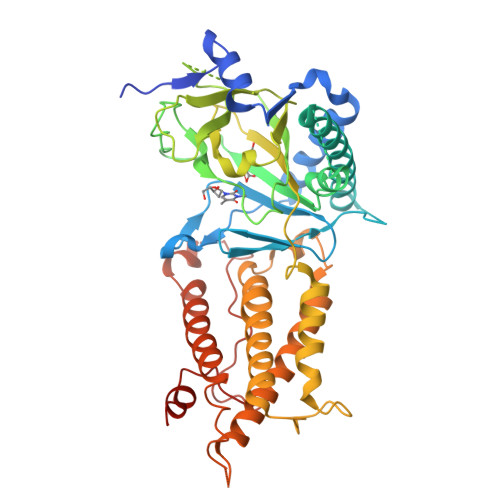



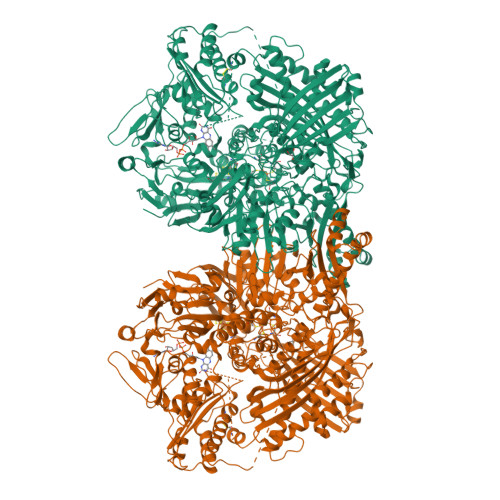
![Amine oxidase [flavin-containing] A structure](https://cdn.rcsb.org/images/structures/2bxr_assembly-1.jpeg)