Fusaric Acid (CED0006548)

Record Information
Version1.0
Creation Date2010-05-07 21:39:01 UTC
Update Date2026-08-18 00:29:59 UTC
SynCED IDCED0006548
Secondary Accession Numbers
  • CHEM002709
  • T3D3741
Identification
Common NameFusaric Acid
ClassSmall Molecule
Description
Fusaric Acid (C10H13NO2) is a solid organic compound with an average molecular weight of 179.22 g/mol. Fusaric Acid belongs to the pyridinecarboxylic acids and derivatives, a subclass of pyridines and derivatives within the organic compounds. This exogenous substance is found in or released from 17 recorded sources across multiple sectors. These include electrical and electronic equipment such as capacitors, batteries, cell phones, wires and cables, and printed circuit boards; food, food processing and cookware, specifically food packaging, food preservation, and the preparation of malt, wine, or sparkling wine; healthcare, pharmaceuticals and veterinary products including medical devices and antibiotics; lubricants in the energy, oil and gas and industrial manufacturing and chemical processing sectors; and textiles, leather and furnishings such as carpets, rugs, and synthetic textiles. Recorded exposure routes include touch, inhalation, and oral intake. The compound interacts with three recorded protein targets: transmembrane prolyl 4-hydroxylase (P4HTM), tyrosine 3-monooxygenase (TH), and dopamine beta-hydroxylase (DBH). Fusaric acid affects neurotransmitter levels by acting as an inhibitor on dopamine-beta-hydroxylase and a partial inhibitor on tyrosine-hydroxylase. These actions result in decreased norepinephrine levels and elevated levels of dopamine, tyrosine, 5-hydroxyindoleacetic acid, and serotonin in the brain. Such changes in neurotransmitter levels may be responsible for developmental problems, neurological disorders, hypotension, and altered locomotive activity and behavior.
Contaminant Type
  • Ester
  • Fungal Toxin
  • Mycotoxin
  • Natural Compound
  • Organic Compound
  • PFAS
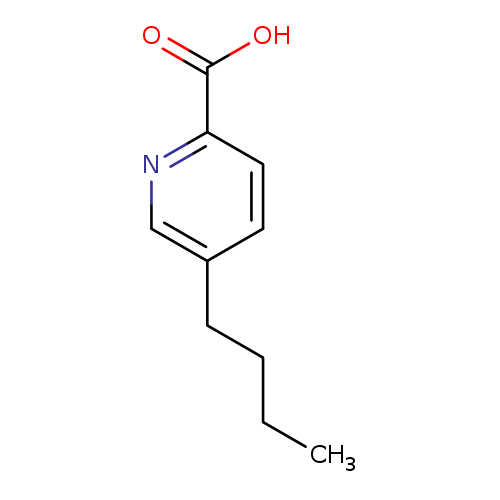
Chemical Structure
Synonyms
ValueSource
FusarateGenerator
5-Butylpicolinic acidChEMBL
5-ButylpicolinateGenerator
5-Butyl-2-pyridinedicarboxylic acidMeSH
Calcium fusarateMeSH
Acid, 5-butyl-2-pyridinedicarboxylicMeSH
Acid, fusaricMeSH
Fusarate, calciumMeSH
5 Butyl 2 pyridinedicarboxylic acidMeSH
Chemical FormulaC10H13NO2
Average Molecular Mass179.216 g/mol
Monoisotopic Mass179.095 g/mol
CAS Registry Number536-69-6
IUPAC Name5-butylpyridine-2-carboxylic acid
Traditional Namefusaric acid
SMILESCCCCC1=CN=C(C=C1)C(O)=O
InChI IdentifierInChI=1S/C10H13NO2/c1-2-3-4-8-5-6-9(10(12)13)11-7-8/h5-7H,2-4H2,1H3,(H,12,13)
InChI KeyDGMPVYSXXIOGJY-UHFFFAOYSA-N
Chemical Taxonomy
Description Belongs to the class of organic compounds known as 5-alkyl-2-carboxypyrimidines. These are pyrimidine-2-carboxylic acids that carry an alkyl group at the 5-position of the pyridine ring.
KingdomOrganic compounds
Super ClassOrganoheterocyclic compounds
ClassPyridines and derivatives
Sub ClassPyridinecarboxylic acids and derivatives
Direct Parent5-alkyl-2-carboxypyrimidines
Alternative Parents
Substituents
  • 5-alkyl-2-carboxypyrimidine
  • Heteroaromatic compound
  • Azacycle
  • Monocarboxylic acid or derivatives
  • Carboxylic acid
  • Carboxylic acid derivative
  • Organic nitrogen compound
  • Organic oxygen compound
  • Organopnictogen compound
  • Organic oxide
  • Hydrocarbon derivative
  • Organooxygen compound
  • Organonitrogen compound
  • Aromatic heteromonocyclic compound
Molecular FrameworkAromatic heteromonocyclic compounds
External Descriptors
Biological Properties
StatusDetected and Not Quantified
OriginExogenous
Cellular Locations
  • Cytoplasm
  • Extracellular
Biofluid LocationsNot Available
Tissue LocationsNot Available
ApplicationsNot Available
Biological Roles
Chemical RolesNot Available
Organoleptic EffectsNot Available
Physical Properties
StateSolid
AppearanceWhite powder.
Experimental Properties
PropertyValue
Melting PointNot Available
Boiling PointNot Available
SolubilityNot Available
Predicted Properties
PropertyValueSource
Water Solubility4.73 g/LALOGPS
logP1.99ALOGPS
logP1.1ChemAxon
logS-1.6ALOGPS
pKa (Strongest Acidic)1.13ChemAxon
pKa (Strongest Basic)5.86ChemAxon
Physiological Charge-1ChemAxon
Hydrogen Acceptor Count3ChemAxon
Hydrogen Donor Count1ChemAxon
Polar Surface Area50.19 ŲChemAxon
Rotatable Bond Count4ChemAxon
Refractivity49.63 m³·mol⁻¹ChemAxon
Polarizability19.67 ųChemAxon
Number of Rings1ChemAxon
BioavailabilityYesChemAxon
Rule of FiveYesChemAxon
Ghose FilterYesChemAxon
Veber's RuleNoChemAxon
MDDR-like RuleNoChemAxon
Spectra
Spectra
Spectrum TypeDescriptionSplash KeyDeposition DateView
Predicted GC-MSPredicted GC-MS Spectrumsplash10-002o-5900000000-777718fdc4544fca8492Not AvailableView Spectrum
Predicted GC-MSPredicted GC-MS SpectrumNot AvailableNot AvailableView Spectrum
LC-MS/MSLC-MS/MS Spectrumsplash10-001i-1900000000-e1a5b78275bfaac6fb40Not AvailableView Spectrum
LC-MS/MSLC-MS/MS Spectrumsplash10-001i-1900000000-09b739415eb4cb96a431Not AvailableView Spectrum
LC-MS/MSLC-MS/MS Spectrumsplash10-001i-0900000000-f0d106fd9bf1d434f23cNot AvailableView Spectrum
LC-MS/MSLC-MS/MS Spectrumsplash10-001i-0900000000-2ce774606349e653f3d9Not AvailableView Spectrum
LC-MS/MSLC-MS/MS Spectrumsplash10-014i-0900000000-50d68a61b14e617c08f1Not AvailableView Spectrum
Predicted LC-MS/MSPredicted LC-MS/MS Spectrumsplash10-001i-0900000000-35db4e9da777c3b5075eNot AvailableView Spectrum
Predicted LC-MS/MSPredicted LC-MS/MS Spectrumsplash10-001i-1900000000-cafa852fe8be3fd4f93cNot AvailableView Spectrum
Predicted LC-MS/MSPredicted LC-MS/MS Spectrumsplash10-0f6x-9300000000-cefdd55be23668bf4319Not AvailableView Spectrum
Predicted LC-MS/MSPredicted LC-MS/MS Spectrumsplash10-004i-0900000000-8a63fef0531b3fc5a15bNot AvailableView Spectrum
Predicted LC-MS/MSPredicted LC-MS/MS Spectrumsplash10-003r-0900000000-f69fac621a74bd89a815Not AvailableView Spectrum
Predicted LC-MS/MSPredicted LC-MS/MS Spectrumsplash10-001l-4900000000-1c37bf3cd6b4fc7d114eNot AvailableView Spectrum
Predicted LC-MS/MSPredicted LC-MS/MS Spectrumsplash10-001i-0900000000-0417a01f6b57ca90489fNot AvailableView Spectrum
Predicted LC-MS/MSPredicted LC-MS/MS Spectrumsplash10-000x-9800000000-51ee66f3ec8d1b448190Not AvailableView Spectrum
Predicted LC-MS/MSPredicted LC-MS/MS Spectrumsplash10-0006-9100000000-3a36838d6d1d894af158Not AvailableView Spectrum
Predicted LC-MS/MSPredicted LC-MS/MS Spectrumsplash10-004i-0900000000-e9e4d0ba83478e578c42Not AvailableView Spectrum
Predicted LC-MS/MSPredicted LC-MS/MS Spectrumsplash10-003r-0900000000-7b0f82ed39313b957e89Not AvailableView Spectrum
Predicted LC-MS/MSPredicted LC-MS/MS Spectrumsplash10-002f-9300000000-3a765909f3e0e86772e5Not AvailableView Spectrum
MSMS Spectrumsplash10-000l-9700000000-405767e6fd1d1ffcd255Not AvailableView Spectrum
1D NMR1H NMR Spectrum (1D, D2O, predicted)Not AvailableNot AvailableView Spectrum
1D NMR13C NMR Spectrum (1D, D2O, predicted)Not AvailableNot AvailableView Spectrum
Toxicity Profile
Toxicity Values
Toxicity ValueOrganismDose DescriptorRoute of ExposurePredicted or ExperimentalToxicity RatingReference
960.0 Log mg/kg [540:1700]RatLD50oralpredictedNot AvailableNot Available
Toxicity / Toxin ClassNot Available
Mechanism of ToxicityFusaric acid affects neurotransmitter levels by acting as a partial inhibitor on tyrosine-hydroxylase and an inhibitor on dopamine-beta-hydroxylase. This has been shown to cause elevated serotonin, 5-hydroxyindoleacetic acid, tyrosine, and dopamine levels in the brain, as well as decreased norepinephrine levels. These changes in neurotransmitter levels may be responsible for effects such as hypotension, altered behavior and locomotive activity, neurological disorders, and developmental problems. (1, 2, 3, 4)
Carcinogenicity (IARC Classification)No indication of carcinogenicity to humans (not listed by IARC).
Minimum Risk LevelNot Available
SymptomsFusaric acid can cause vomiting, hypotension, and alterations in behavioral and locomotive activity. (1, 3, 4)
TreatmentNatamycin ophthalmic suspension is the drug of choice for filamentous fungal infections such as mycotic keratitis. (7)
Health Effects
Health EffectRelationshipDirectionDescriptionReference
hypotensive disorderAssociated With?Not AvailableNot AvailablePMC10620813
Exposure Sources
Source IDSourceSectorReference
CEDs000007Pesticides?Pesticides are synthetic chemicals designed to prevent, destroy, or control pests that threaten crops and agricultural productivity.Agriculture & land managementNot Available
CEDs000013Soil?Soil serves as a critical medium for plant growth and sustains various ecological functions; however, it can become a reservoir for synthetic chemical contamination.Agriculture & land managementPMC11858688
CEDs000120Wires and cables?Wires and cables are integral components in the transmission of electrical power and signals.Electrical & Electronic EquipmentNot Available
CEDs000121Printed circuit boards?Printed circuit boards (PCBs) are essential components in the manufacturing of electronic devices, serving as the backbone for electrical connections and circuit pathways.Electrical & Electronic EquipmentNot Available
CEDs000125Batteries?Batteries are devices that store and release electrical energy through electrochemical reactions.Electrical & Electronic EquipmentNot Available
CEDs000130Semiconductors?Semiconductors are materials that possess electrical conductivity between that of conductors and insulators, making them essential for various electronic applications, including transistors, diodes, and integrated circuits.Electrical & Electronic EquipmentNot Available
CEDs000138Lubricants?Lubricants are synthetic or petroleum-derived substances used to reduce friction between surfaces in machinery and equipment, enhancing operational efficiency and longevity.Energy, oil & gasNot Available
CEDs000147Food packaging?Food packaging often utilizes synthetic chemicals, such as plastics and coatings, to enhance durability, moisture resistance, and shelf life.Food, food processing & cookwareNot Available
CEDs000174Lubricants?Lubricants are synthetic or petroleum-based substances used to reduce friction and wear between moving parts in machinery and equipment.Industrial manufacturing & chemical processingNot Available
CEDs000234Medical devices?Medical devices often incorporate synthetic chemicals in their manufacturing processes, which can contribute to contamination in healthcare settings.Healthcare, pharmaceuticals & veterinary productsNot Available
CEDs000306Antibiotics?Antibiotics are synthetic or semi-synthetic compounds used to treat bacterial infections in humans and animals.Healthcare, pharmaceuticals & veterinary productsNot Available
CEDs000451Carpets and Rugs?Carpets and rugs are commonly manufactured using synthetic fibers such as nylon, polyester, and polypropylene, which can be derived from petrochemical sources.Textiles, leather & furnishingsNot Available
CEDs000454Synthetic textiles?Synthetic textiles are materials derived from man-made fibers, such as polyester, nylon, and acrylic, which are produced through chemical processes involving petrochemicals.Textiles, leather & furnishingsNot Available
CEDs000490Personal care & cosmeticsNot Available
CEDs000492Cell phones?Cell phones contain a variety of synthetic chemicals and materials, including plastics, metals, and glass, which can contribute to environmental contamination.Electrical & Electronic EquipmentNot Available
CEDs000493Capacitors?Capacitors are electronic components that store and release electrical energy, often using dielectric materials that can include synthetic chemicals.Electrical & Electronic EquipmentNot Available
CEDs000545Food Preservation?Food preservation often involves the use of synthetic chemicals, such as preservatives, flavor enhancers, and color additives, to extend shelf life and enhance the sensory qualities of food products.Food, food processing & cookwarePubChem
CEDs000547Preparation Of Malt?Malt preparation involves the germination and drying of cereal grains, primarily barley, to produce malt for brewing and food products.Food, food processing & cookwarePubChem
CEDs000549Preparation Of Wine Or Sparkling Wine?The preparation of wine or sparkling wine involves various stages, including fermentation, aging, and bottling, which can introduce potential sources of synthetic chemical contamination.Food, food processing & cookwarePubChem
CEDs000600Herbicides And Algicides?Herbicides and algicides are synthetic chemicals primarily used to control unwanted plants and algae in various environments.Agriculture & land managementPubChem
CEDs000603Nematocides?Nematocides are synthetic chemicals specifically designed to control nematodes, which are microscopic roundworms that can cause significant damage to crops and plants.Agriculture & land managementPubChem
CEDs000606Plant Growth Regulators?Plant Growth Regulators (PGRs) are synthetic chemicals designed to influence the growth and development of plants.Agriculture & land managementPubChem
CEDs000610Aftersun Products?Aftersun products are designed to soothe and hydrate the skin after sun exposure, often containing various synthetic chemicals such as emollients, preservatives, and fragrances.Personal care & cosmeticsPubChem
CEDs000679Phosphatic Fertilisers?Phosphatic fertilizers are synthetic chemical products primarily composed of phosphorus, which is essential for plant growth.Agriculture & land managementPubChem
CEDs000684Cements?Cements are a composite material primarily used as a binding agent in construction applications, formed by the calcination of limestone and clay minerals at high temperatures.Building & ConstructionPubChem
CEDs000685Ceramics?Ceramics can be a source of synthetic chemical contamination through various additives and processing agents used in their production.Building & ConstructionPubChem
CEDs000696Nanotechnology?Nanotechnology involves the manipulation of materials at the molecular or atomic level, typically within the range of 1 to 100 nanometers.Industrial manufacturing & chemical processingPubChem
CEDs000734Coating Compositions?Coating compositions, which include paints, sealants, and varnishes, are formulated with a variety of synthetic chemicals such as solvents, resins, pigments, and additives.Building & ConstructionPubChem
CEDs000739Inks?Inks are complex mixtures composed of pigments or dyes, solvents, resins, and additives used primarily for printing and writing applications.Paper, pulp & fiber productsPubChem
CEDs000740Paper?Paper production involves the processing of wood fibers and the use of various chemicals, which can lead to synthetic chemical contamination.Paper, pulp & fiber productsPubChem
Pathways
0 pathwaysPathway Source: PathBank

No pathways found

No metabolic pathways have been associated with this synthetic chemical

Targets
StructureProteinUniProt IDOrganismRelationshipDetails
Dopamine beta-hydroxylase structureClick to view 3D structureDopamine beta-hydroxylaseQ05754Rattus norvegicusPredicted (SEA)
Prediction Confidence Score
0.546
Applicability Domain
1.0
Statistical Significance
1.00e-05
Supporting Reference Compounds
2
E-value
0.0778492
Click to view 3D structureDopamine beta-hydroxylaseP15101Bos taurusPredicted (SEA)
Prediction Confidence Score
0.422
Applicability Domain
1.0
Statistical Significance
1.00e-05
Supporting Reference Compounds
3
E-value
0.0778492
Click to view 3D structureSarcoplasmic/endoplasmic reticulum calcium ATPase 3Q64518Mus musculusPredicted (SEA)
Prediction Confidence Score
0.378
Applicability Domain
0.378
Statistical Significance
5.20e-04
Supporting Reference Compounds
1
E-value
4.04816
UDP-3-O-acyl-N-acetylglucosamine deacetylase structureClick to view 3D structureUDP-3-O-acyl-N-acetylglucosamine deacetylaseO67648Aquifex aeolicus (strain VF5)Predicted (SEA)
Prediction Confidence Score
0.357
Applicability Domain
0.357
Statistical Significance
0.0013
Supporting Reference Compounds
1
E-value
10.5096
Click to view 3D structureBeta-lactamaseQ44079Aeromonas hydrophilaPredicted (SEA)
Prediction Confidence Score
0.334
Applicability Domain
0.361
Statistical Significance
2.40e-04
Supporting Reference Compounds
2
E-value
1.86838
Fatty-acid amide hydrolase 1 structureClick to view 3D structureFatty-acid amide hydrolase 1P97612Rattus norvegicusPredicted (SEA)
Prediction Confidence Score
0.32
Applicability Domain
0.385
Statistical Significance
0.0056
Supporting Reference Compounds
102
E-value
43.4399
Receptor-type tyrosine-protein phosphatase O structureClick to view 3D structureReceptor-type tyrosine-protein phosphatase OQ16827HumansPredicted (SEA)
Prediction Confidence Score
0.319
Applicability Domain
0.322
Statistical Significance
2.80e-04
Supporting Reference Compounds
2
E-value
2.17978
Troponin C, slow skeletal and cardiac muscles structureClick to view 3D structureTroponin C, slow skeletal and cardiac musclesP63316HumansPredicted (SEA)
Prediction Confidence Score
0.318
Applicability Domain
0.318
Statistical Significance
5.80e-04
Supporting Reference Compounds
2
E-value
4.51525
Click to view 3D structureType-1 angiotensin II receptor BP29089Rattus norvegicusPredicted (SEA)
Prediction Confidence Score
0.316
Applicability Domain
0.328
Statistical Significance
0.0053
Supporting Reference Compounds
29
E-value
41.3379
Carbonic anhydrase 2 structureClick to view 3D structureCarbonic anhydrase 2P00918HumansPredicted (SEA)
Prediction Confidence Score
0.306
Applicability Domain
0.444
Statistical Significance
0.0404
Supporting Reference Compounds
472
E-value
314.9
Click to view 3D structureCytochrome P450 4F12Q9HCS2HumansPredicted (SEA)
Prediction Confidence Score
0.302
Applicability Domain
0.34
Statistical Significance
3.00e-05
Supporting Reference Compounds
2
E-value
0.233548
Click to view 3D structureCytochrome P450 4F11Q9HBI6HumansPredicted (SEA)
Prediction Confidence Score
0.302
Applicability Domain
0.34
Statistical Significance
3.00e-05
Supporting Reference Compounds
2
E-value
0.233548
Carbonic anhydrase 1 structureClick to view 3D structureCarbonic anhydrase 1P00915HumansPredicted (SEA)
Prediction Confidence Score
0.302
Applicability Domain
0.444
Statistical Significance
0.0365
Supporting Reference Compounds
407
E-value
284.539
Click to view 3D structureType-2 angiotensin II receptorP35351Rattus norvegicusPredicted (SEA)
Prediction Confidence Score
0.301
Applicability Domain
0.323
Statistical Significance
0.0033
Supporting Reference Compounds
27
E-value
26.0795
Aspartyl/asparaginyl beta-hydroxylase structureClick to view 3D structureAspartyl/asparaginyl beta-hydroxylaseQ12797HumansPredicted (SEA)
Prediction Confidence Score
0.299
Applicability Domain
0.34
Statistical Significance
0.0019
Supporting Reference Compounds
17
E-value
14.6357
Click to view 3D structureProlyl 4-hydroxylase subunit alpha-1P54001Rattus norvegicusPredicted (SEA)
Prediction Confidence Score
0.298
Applicability Domain
0.471
Statistical Significance
1.00e-05
Supporting Reference Compounds
2
E-value
0.0778492
Adenosine receptor A3 structureClick to view 3D structureAdenosine receptor A3P0DMS8HumansPredicted (SEA)
Prediction Confidence Score
0.297
Applicability Domain
0.378
Statistical Significance
0.0283
Supporting Reference Compounds
391
E-value
220.703
Sodium-dependent serotonin transporter structureClick to view 3D structureSodium-dependent serotonin transporterP31645HumansPredicted (SEA)
Prediction Confidence Score
0.297
Applicability Domain
0.378
Statistical Significance
0.0542
Supporting Reference Compounds
593
E-value
421.709
Sphingosine 1-phosphate receptor 1 structureClick to view 3D structureSphingosine 1-phosphate receptor 1P21453HumansPredicted (SEA)
Prediction Confidence Score
0.296
Applicability Domain
0.333
Statistical Significance
0.0098
Supporting Reference Compounds
126
E-value
76.1365
Sodium-dependent dopamine transporter structureClick to view 3D structureSodium-dependent dopamine transporterQ01959HumansPredicted (SEA)
Prediction Confidence Score
0.293
Applicability Domain
0.378
Statistical Significance
0.0489
Supporting Reference Compounds
506
E-value
380.371
Click to view 3D structureDiacylglycerol lipase-alphaQ9Y4D2HumansPredicted (SEA)
Prediction Confidence Score
0.292
Applicability Domain
0.34
Statistical Significance
0.0025
Supporting Reference Compounds
35
E-value
19.5402
Click to view 3D structureComplement component 3a receptor 1, isoform CRA_aA8K2H7Homo sapiensPredicted (SEA)
Prediction Confidence Score
0.292
Applicability Domain
0.292 Low confidence
Statistical Significance
0.0022
Supporting Reference Compounds
1
E-value
17.2825
Click to view 3D structureFatty-acid amide hydrolase 1O00519HumansPredicted (SEA)
Prediction Confidence Score
0.292
Applicability Domain
0.34
Statistical Significance
0.0188
Supporting Reference Compounds
106
E-value
146.201
Transient receptor potential cation channel subfamily V member 1 structureClick to view 3D structureTransient receptor potential cation channel subfamily V member 1Q8NER1HumansPredicted (SEA)
Prediction Confidence Score
0.291
Applicability Domain
0.385
Statistical Significance
0.0117
Supporting Reference Compounds
104
E-value
91.0836
Click to view 3D structureLeukotriene B4 receptor 2Q9JJL9Mus musculusPredicted (SEA)
Prediction Confidence Score
0.291
Applicability Domain
0.291 Low confidence
Statistical Significance
0.0013
Supporting Reference Compounds
1
E-value
10.1982
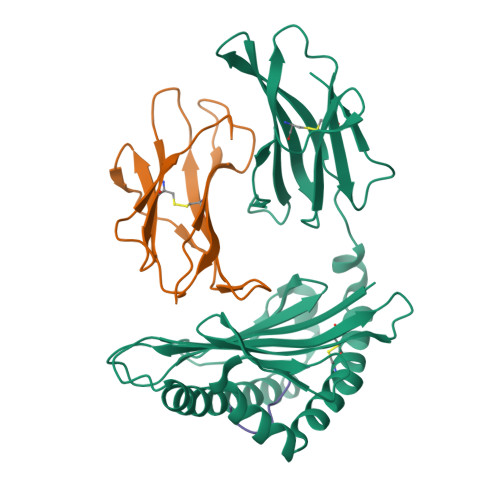
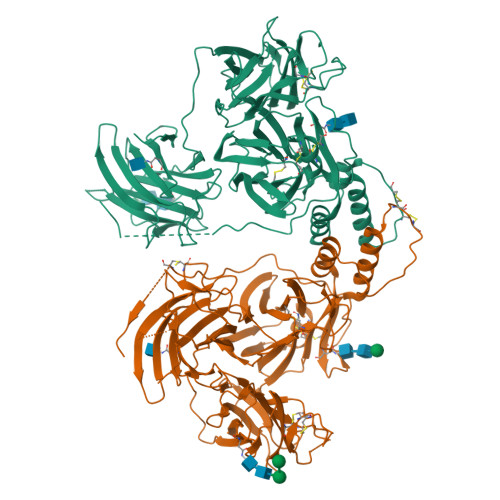
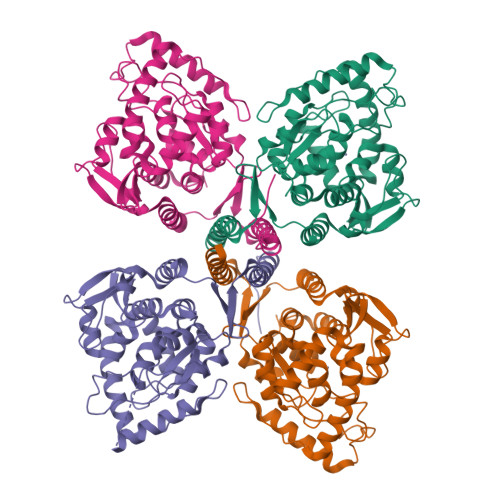
Dopamine beta-hydroxylase structureClick to view 3D structureDopamine beta-hydroxylaseP09172HumansKnownFusaric acid affects neurotransmitter levels by acting as a partial inhibitor on tyrosine-hydroxylase and an inhibitor on dopamine-beta-hydroxylase. This has been shown to cause elevated serotonin, 5-hydroxyindoleacetic acid, tyrosine, and dopamine levels in the brain, as well as decreased norepinephrine levels. These changes in neurotransmitter levels may be responsible for effects such as hypotension, altered behavior and locomotive activity, neurological disorders, and developmental problems. (A3020, A3021, A3022, A3023)
Tyrosine 3-monooxygenase structureClick to view 3D structureTyrosine 3-monooxygenaseP07101HumansKnownFusaric acid affects neurotransmitter levels by acting as a partial inhibitor on tyrosine-hydroxylase and an inhibitor on dopamine-beta-hydroxylase. This has been shown to cause elevated serotonin, 5-hydroxyindoleacetic acid, tyrosine, and dopamine levels in the brain, as well as decreased norepinephrine levels. These changes in neurotransmitter levels may be responsible for effects such as hypotension, altered behavior and locomotive activity, neurological disorders, and developmental problems. (A3020, A3021, A3022, A3023)
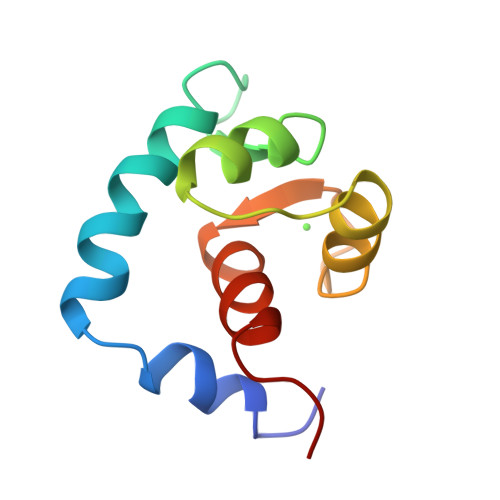
Transmembrane prolyl 4-hydroxylase structureClick to view 3D structureTransmembrane prolyl 4-hydroxylaseQ9NXG6HumansKnownNot Available
Concentrations
Not Available
External Links
DrugBank IDNot Available
HMDB IDHMDB0252556
FooDB IDNot Available
Phenol Explorer IDNot Available
KNApSAcK IDC00002040
BiGG IDNot Available
BioCyc IDNot Available
METLIN IDNot Available
PDB IDNot Available
Wikipedia LinkNot Available
Chemspider ID3324
ChEBI IDNot Available
PubChem Compound IDNot Available
Kegg Compound IDC10146
YMDB IDNot Available
ECMDB IDNot Available
References
Synthesis ReferenceNot Available
MSDSNot Available
General References
  1. Wang H, Ng TB: Pharmacological activities of fusaric acid (5-butylpicolinic acid). Life Sci. 1999;65(9):849-56. [PubMed: 10465344]
  2. Naiker S, Odhav B: Mycotic keratitis: profile of Fusarium species and their mycotoxins. Mycoses. 2004 Feb;47(1-2):50-6. [PubMed: 14998400]
  3. Porter JK, Bacon CW, Wray EM, Hagler WM Jr: Fusaric acid in Fusarium moniliforme cultures, corn, and feeds toxic to livestock and the neurochemical effects in the brain and pineal gland of rats. Nat Toxins. 1995;3(2):91-100. [PubMed: 7542129]
  4. Reddy RV, Larson CA, Brimer GE, Frappier BL, Reddy CS: Developmental toxic effects of fusaric acid in CD1 mice. Bull Environ Contam Toxicol. 1996 Sep;57(3):354-60. [PubMed: 8672059]
  5. Peraica M, Domijan AM: Contamination of food with mycotoxins and human health. Arh Hig Rada Toksikol. 2001 Mar;52(1):23-35. [PubMed: 11370295]
  6. Wikipedia. Fusaric Acid. Last Updated 12 March 2010. - http://en.wikipedia.org/wiki/Fusaric_acid
  7. Wikipedia. Fungal Keratitis. Last Updated 26 March 2010. - http://en.wikipedia.org/wiki/Fungal_keratitis