Oxyfluorfen (CED0010758)

Record Information
Version1.0
Creation Date2013-04-25 07:56:53 UTC
Update Date2026-08-19 08:53:33 UTC
SynCED IDCED0010758
Secondary Accession Numbers
  • CHEM002857
  • T3D3896
Identification
Common NameOxyfluorfen
ClassSmall Molecule
Description
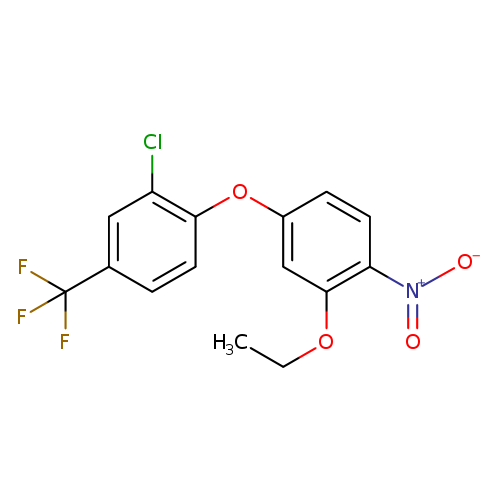
Oxyfluorfen is an exogenous organic compound with the formula C15H11ClF3NO4 and an average molecular weight of 361.70 g/mol. It exists as a solid at room temperature. Oxyfluorfen belongs to the diphenylethers, a subclass of benzene and substituted derivatives within the organic compounds. This compound is utilized as an industrial biocide. It is found in or released from ten recorded sources, including building and construction materials such as floors, and food, food processing and cookware, specifically molasses and the treatment of molasses. It is also associated with household cleaning and consumer products, specifically cigar cigarettes, and various electrical and electronic equipment, including colour television systems, discharge lamps, electric switches, radio transmission systems, and still video cameras, among two others. Oxyfluorfen interacts with thirteen recorded protein targets. These include the broad substrate specificity ATP-binding cassette transporter ABCG2, the ATP-dependent translocase ABCB1, the ADP-ribosyl cyclase/cyclic ADP-ribose hydrolase 1 (CD38), and cytochrome P450 1A1 (CYP1A1), along with nine other proteins.
Contaminant Type
  • Ether
  • Herbicide
  • Household Toxin
  • Organic Compound
  • Organochloride
  • Organofluoride
  • Synthetic Compound
Chemical Structure
Synonyms
ValueSource
OxyfluorofenMeSH
Chemical FormulaC15H11ClF3NO4
Average Molecular Mass361.700 g/mol
Monoisotopic Mass361.033 g/mol
CAS Registry Number42874-03-3
IUPAC Name4-[2-chloro-4-(trifluoromethyl)phenoxy]-2-ethoxy-1-nitrobenzene
Traditional Nameoxyfluorfen
SMILESCCOC1=C(C=CC(OC2=C(Cl)C=C(C=C2)C(F)(F)F)=C1)[N+]([O-])=O
InChI IdentifierInChI=1S/C15H11ClF3NO4/c1-2-23-14-8-10(4-5-12(14)20(21)22)24-13-6-3-9(7-11(13)16)15(17,18)19/h3-8H,2H2,1H3
InChI KeyOQMBBFQZGJFLBU-UHFFFAOYSA-N
Chemical Taxonomy
Description Belongs to the class of organic compounds known as diphenylethers. These are aromatic compounds containing two benzene rings linked to each other through an ether group.
KingdomOrganic compounds
Super ClassBenzenoids
ClassBenzene and substituted derivatives
Sub ClassDiphenylethers
Direct ParentDiphenylethers
Alternative Parents
Substituents
  • Diphenylether
  • Nitrophenyl ether
  • Diaryl ether
  • Trifluoromethylbenzene
  • Nitrobenzene
  • Phenoxy compound
  • Nitroaromatic compound
  • Phenol ether
  • Alkyl aryl ether
  • Chlorobenzene
  • Halobenzene
  • Aryl chloride
  • Aryl halide
  • Organic nitro compound
  • C-nitro compound
  • Ether
  • Organic 1,3-dipolar compound
  • Propargyl-type 1,3-dipolar organic compound
  • Allyl-type 1,3-dipolar organic compound
  • Organic oxoazanium
  • Organohalogen compound
  • Alkyl halide
  • Alkyl fluoride
  • Organic nitrogen compound
  • Hydrocarbon derivative
  • Organic oxide
  • Organopnictogen compound
  • Organic oxygen compound
  • Organochloride
  • Organofluoride
  • Organonitrogen compound
  • Organooxygen compound
  • Aromatic homomonocyclic compound
Molecular FrameworkAromatic homomonocyclic compounds
External Descriptors
Biological Properties
StatusDetected and Not Quantified
OriginExogenous
Cellular Locations
  • Membrane
Biofluid LocationsNot Available
Tissue LocationsNot Available
ApplicationsNot Available
Biological Roles
Chemical RolesNot Available
Organoleptic EffectsNot Available
Physical Properties
StateSolid
AppearanceWhite powder.
Experimental Properties
PropertyValue
Melting PointNot Available
Boiling PointNot Available
SolubilityNot Available
Predicted Properties
PropertyValueSource
Water Solubility0.00078 g/LALOGPS
logP4.6ALOGPS
logP5.09ChemAxon
logS-5.7ALOGPS
pKa (Strongest Basic)-5ChemAxon
Physiological Charge0ChemAxon
Hydrogen Acceptor Count3ChemAxon
Hydrogen Donor Count0ChemAxon
Polar Surface Area64.28 ŲChemAxon
Rotatable Bond Count6ChemAxon
Refractivity81.61 m³·mol⁻¹ChemAxon
Polarizability30.34 ųChemAxon
Number of Rings2ChemAxon
BioavailabilityYesChemAxon
Rule of FiveNoChemAxon
Ghose FilterYesChemAxon
Veber's RuleNoChemAxon
MDDR-like RuleNoChemAxon
Spectra
Spectra
Spectrum TypeDescriptionSplash KeyDeposition DateView
Predicted GC-MSPredicted GC-MS Spectrumsplash10-003r-1769000000-df977b3ebe5088cb8b0bNot AvailableView Spectrum
Predicted GC-MSPredicted GC-MS SpectrumNot AvailableNot AvailableView Spectrum
LC-MS/MSLC-MS/MS Spectrumsplash10-01ql-0940000000-b695f029454204c9d39fNot AvailableView Spectrum
LC-MS/MSLC-MS/MS Spectrumsplash10-000i-0690000000-1e8071fd6881b97d3362Not AvailableView Spectrum
LC-MS/MSLC-MS/MS Spectrumsplash10-0f79-0190000000-01510ce51e7f0a0a6d96Not AvailableView Spectrum
LC-MS/MSLC-MS/MS Spectrumsplash10-0fri-0093000000-788cecb0eb84ed3961b8Not AvailableView Spectrum
LC-MS/MSLC-MS/MS Spectrumsplash10-03di-0009000000-488df719a013b26bbc89Not AvailableView Spectrum
Predicted LC-MS/MSPredicted LC-MS/MS Spectrumsplash10-03di-0009000000-ab5b7890aae942f41d8fNot AvailableView Spectrum
Predicted LC-MS/MSPredicted LC-MS/MS Spectrumsplash10-0a4i-0009000000-ebd8ec6f39e9a5bc8e98Not AvailableView Spectrum
Predicted LC-MS/MSPredicted LC-MS/MS Spectrumsplash10-005i-1906000000-837b5a3e9656688912abNot AvailableView Spectrum
Predicted LC-MS/MSPredicted LC-MS/MS Spectrumsplash10-03di-0009000000-42248a28f4761c28acb3Not AvailableView Spectrum
Predicted LC-MS/MSPredicted LC-MS/MS Spectrumsplash10-03di-0009000000-79e99a0e9a4180518bfdNot AvailableView Spectrum
Predicted LC-MS/MSPredicted LC-MS/MS Spectrumsplash10-0005-7915000000-6cc60a27948c0897f634Not AvailableView Spectrum
MSMS Spectrumsplash10-0w29-5198000000-e217309804cf3e3d7968Not AvailableView Spectrum
Toxicity Profile
Toxicity Values
Toxicity ValueOrganismDose DescriptorRoute of ExposurePredicted or ExperimentalToxicity RatingReference
2515.0 Log mg/kg [1400:4500]RatLD50oralpredictedNot AvailableNot Available
200.0 ppm MouseLOELoralexperimentalNot AvailableECOTOX - EPA ORD
0.2 % MouseNOELoralexperimentalNot AvailableECOTOX - EPA ORD
0.2 % MouseLOELoralexperimentalNot AvailableECOTOX - EPA ORD
40.0 ppm MouseNOELoralexperimentalNot AvailableECOTOX - EPA ORD
1600.0 ppm MouseNOELoralexperimentalNot AvailableECOTOX - EPA ORD
200.0 ppm MouseNOELoralexperimentalNot AvailableECOTOX - EPA ORD
200.0 ppm MouseLOELoralexperimentalNot AvailableECOTOX - EPA ORD
1600.0 ppm MouseLOELoralexperimentalNot AvailableECOTOX - EPA ORD
800.0 ppm MouseLOELoralexperimentalNot AvailableECOTOX - EPA ORD
800.0 ppm MouseNOELoralexperimentalNot AvailableECOTOX - EPA ORD
0.25 % diet MouseLOELoralexperimentalNot AvailableECOTOX - EPA ORD
800.0 ppm MouseNOELoralexperimentalNot AvailableECOTOX - EPA ORD
800.0 ppm MouseLOELoralexperimentalNot AvailableECOTOX - EPA ORD
200.0 ppm MouseNOELoralexperimentalNot AvailableECOTOX - EPA ORD
Toxicity / Toxin ClassNot Available
Mechanism of ToxicityNot Available
Carcinogenicity (IARC Classification)No indication of carcinogenicity to humans (not listed by IARC).
Minimum Risk LevelNot Available
SymptomsNot Available
TreatmentNot Available
Health Effects
Health EffectRelationshipDirectionDescriptionReference
Exposure Sources
Source IDSourceSectorReference
CEDs000010Insecticides?Insecticides are synthetic chemicals designed to control or eliminate insect pests that threaten crops and other agricultural products.Agriculture & land managementPubChem
CEDs000013Soil?Soil serves as a critical medium for plant growth and sustains various ecological functions; however, it can become a reservoir for synthetic chemical contamination.Agriculture & land managementPMC11209214 , PMC11209214
CEDs000050Groundwater?Groundwater serves as a vital resource for drinking water and agricultural irrigation but is increasingly susceptible to contamination from synthetic chemicals.Aquatic systems & sedimentsPMC11143778 , PMC11209214
CEDs000181Ballast water?Ballast water, taken on by ships to maintain stability and balance, often contains a diverse array of microorganisms, including bacteria, viruses, and plankton.Marine, shipping & aquaculturePubChem
CEDs000182Bilge water?Bilge water is a byproduct generated from the accumulation of water in the lowest part of a ship's hull, which may include a mixture of seawater, oil, fuel residues, and various contaminants.Marine, shipping & aquaculturePubChem
CEDs000497Floors?Floors in built environments can be a significant source of synthetic chemical contamination due to the materials and finishes used in their construction.Building & ConstructionPubChem
CEDs000509Colour Television Systems?Colour television systems contain various synthetic chemicals that can lead to environmental contamination.Electrical & Electronic EquipmentPubChem
CEDs000511Conductors Or Conductive Bodies Characterised By The Conductive Materials?Conductors, or conductive bodies, are materials that allow the flow of electrical current, typically made from metals such as copper, aluminum, or silver.Electrical & Electronic EquipmentPubChem
CEDs000514Discharge Lamps?Discharge lamps, including fluorescent and high-intensity discharge (HID) lamps, are commonly used for lighting applications due to their energy efficiency and brightness.Electrical & Electronic EquipmentPubChem
CEDs000517Electric Switches?Electric switches, integral components in numerous devices, can be a source of synthetic chemical contamination due to the materials and manufacturing processes involved in their production.Electrical & Electronic EquipmentPubChem
CEDs000524Hybrid Capacitors?Hybrid capacitors are energy storage devices that combine the properties of electrolytic and supercapacitors, utilizing a combination of electrochemical principles to achieve higher energy density and power density.Electrical & Electronic EquipmentPubChem
CEDs000530Radio Transmission Systems?Radio transmission systems utilize a variety of synthetic chemicals in their manufacturing and maintenance processes.Electrical & Electronic EquipmentPubChem
CEDs000534Still Video Cameras?Still video cameras, which capture images in digital format, can be a source of synthetic chemical contamination due to the materials and components used in their production and operation.Electrical & Electronic EquipmentPubChem
CEDs000537Television Systems?Television systems can be a source of synthetic chemical contamination due to the various materials and components used in their manufacture and operation.Electrical & Electronic EquipmentPubChem
CEDs000539Video Games?Video games, through their production and disposal processes, can be a source of synthetic chemical contamination.Electrical & Electronic EquipmentPubChem
CEDs000545Food Preservation?Food preservation often involves the use of synthetic chemicals, such as preservatives, flavor enhancers, and color additives, to extend shelf life and enhance the sensory qualities of food products.Food, food processing & cookwarePubChem
CEDs000546Molasses And Treatment Of Molasses?Molasses is a thick, viscous byproduct of sugar production, derived from the extraction of sugar cane or sugar beet juice.Food, food processing & cookwarePubChem
CEDs000556Cigar Cigarettes?Cigar cigarettes are a source of synthetic chemical contamination due to the combustion of various tobacco blends and additives.Household cleaning & consumer productsPubChem
CEDs000561Perfumes Within Detergents And Soaps?Perfumes within detergents and soaps are synthetic fragrance compounds added to enhance the sensory experience of cleaning products.Household cleaning & consumer productsPubChem
CEDs000563Soap Detergents?Soap detergents are synthetic surfactants designed to enhance the cleaning efficacy of water by reducing surface tension, allowing for better interaction with dirt and grease.Household cleaning & consumer productsPubChem
CEDs000579Manufacture Of Iron Or Steel?The manufacture of iron or steel involves various processes, including smelting, refining, and alloying, which can result in the release of synthetic chemicals and contaminants.Industrial manufacturing & chemical processingPubChem
CEDs000581Paper Making Machines?Paper making machines utilize various synthetic chemicals throughout the production process, including additives, coatings, and bleaching agents.Industrial manufacturing & chemical processingPubChem
CEDs000583Anchoring Equipment?Anchoring equipment, commonly used in marine applications, can be a source of synthetic chemical contamination due to the materials and coatings utilized in their manufacturing.Marine, shipping & aquaculturePubChem
CEDs000596Acaricides?Acaricides are synthetic chemicals specifically designed to target and control mite populations that can damage crops and plants.Agriculture & land managementPubChem
CEDs000597Chemosterilants?Chemosterilants are synthetic chemicals designed to induce sterility in target pest populations, thereby controlling their reproduction and mitigating damage to crops.Agriculture & land managementPubChem
CEDs000598Fertiliser Distributors?Fertiliser distributors play a critical role in the supply of synthetic fertilizers, which are widely used to enhance soil fertility and crop yield.Agriculture & land managementPubChem
CEDs000600Herbicides And Algicides?Herbicides and algicides are synthetic chemicals primarily used to control unwanted plants and algae in various environments.Agriculture & land managementPubChem
CEDs000602Molluscicides?Molluscicides are synthetic chemicals specifically designed to control and eliminate mollusks, such as snails and slugs, which can be detrimental to crops and agricultural productivity.Agriculture & land managementPubChem
CEDs000603Nematocides?Nematocides are synthetic chemicals specifically designed to control nematodes, which are microscopic roundworms that can cause significant damage to crops and plants.Agriculture & land managementPubChem
CEDs000604Pest Attractants?Pest attractants are synthetic chemicals designed to lure specific pests for monitoring or control purposes.Agriculture & land managementPubChem
CEDs000605Pest Repellants?Pest repellents, often formulated from synthetic chemicals, are widely used to protect crops from insect infestations and other pests.Agriculture & land managementPubChem
CEDs000606Plant Growth Regulators?Plant Growth Regulators (PGRs) are synthetic chemicals designed to influence the growth and development of plants.Agriculture & land managementPubChem
CEDs000607Rodenticides(1)?Rodenticides are synthetic chemicals specifically formulated to control rodent populations, serving as a crucial tool in managing pests that can damage crops and spread diseases.Agriculture & land managementPubChem
CEDs000608Rodenticides?Rodenticides are chemical substances specifically designed to control rodent populations by causing death through various mechanisms, including anticoagulation or neurotoxicity.Agriculture & land managementPubChem
CEDs000609Aftershave?Aftershave is a grooming product typically used to soothe and protect the skin following shaving.Personal care & cosmeticsPubChem
CEDs000611Anti Perspirants Or Body Deoderants?Antiperspirants and body deodorants commonly contain synthetic chemicals such as aluminum compounds, parabens, and synthetic fragrances.Personal care & cosmeticsPubChem
CEDs000614Essential Oils Or Perfumes?Essential oils and perfumes are complex mixtures of volatile compounds derived from natural or synthetic sources, commonly used for their aromatic properties.Personal care & cosmeticsPubChem
CEDs000615Eye Makeup Products?Eye makeup products, including mascaras, eyeliners, and eyeshadows, often contain a variety of synthetic chemicals such as pigments, preservatives, and film-forming agents.Personal care & cosmeticsPubChem
CEDs000617Lip Care Products?Lip care products, including lipsticks, balms, and glosses, often contain a variety of synthetic chemicals such as parabens, phthalates, and synthetic fragrances.Personal care & cosmeticsPubChem
CEDs000618Lip Makeup Products?Lip makeup products, such as lipsticks, lip glosses, and lip liners, often contain a variety of synthetic chemicals, including pigments, preservatives, and emollients.Personal care & cosmeticsPubChem
CEDs000629Swings?Swings, commonly found in playgrounds and recreational areas, are often constructed using synthetic materials such as plastics and rubber composites.Recreation & sports surfacesPubChem
CEDs000632Apparel?Apparel production often involves the use of various synthetic chemicals, including dyes, finishing agents, and preservatives.Textiles, leather & furnishingsPubChem
CEDs000650Purses Luggage Hand Bags?Purses, luggage, and handbags are often manufactured using synthetic materials such as polyvinyl chloride (PVC), polyurethane, and various types of nylon.Textiles, leather & furnishingsPubChem
CEDs000671Airplanes And Helicopters?Airplanes and helicopters are significant sources of synthetic chemical contamination primarily through the use of aviation fuels, lubricants, and de-icing agents.Aviation & AerospacePubChem
CEDs000673Unmanned Aerial Vehicles?Unmanned Aerial Vehicles (UAVs), commonly known as drones, utilize various synthetic chemicals in their manufacturing, operation, and maintenance processes.Aviation & AerospacePubChem
CEDs000678Nitrogenous Fertilisers?Nitrogenous fertilizers are synthetic chemical compounds primarily used to enhance plant growth by supplying essential nitrogen, a crucial nutrient for photosynthesis and protein synthesis.Agriculture & land managementPubChem
CEDs000679Phosphatic Fertilisers?Phosphatic fertilizers are synthetic chemical products primarily composed of phosphorus, which is essential for plant growth.Agriculture & land managementPubChem
CEDs000685Ceramics?Ceramics can be a source of synthetic chemical contamination through various additives and processing agents used in their production.Building & ConstructionPubChem
CEDs000696Nanotechnology?Nanotechnology involves the manipulation of materials at the molecular or atomic level, typically within the range of 1 to 100 nanometers.Industrial manufacturing & chemical processingPubChem
CEDs000738Cooling Circuit Water?Cooling circuit water is utilized in various industrial processes to absorb and dissipate heat generated during operations.Industrial manufacturing & chemical processingPubChem
CEDs000739Inks?Inks are complex mixtures composed of pigments or dyes, solvents, resins, and additives used primarily for printing and writing applications.Paper, pulp & fiber productsPubChem
CEDs000740Paper?Paper production involves the processing of wood fibers and the use of various chemicals, which can lead to synthetic chemical contamination.Paper, pulp & fiber productsPubChem
CEDs000741Pigment Pastes?Pigment pastes are concentrated dispersions of pigments used to impart color and properties to materials.Paper, pulp & fiber productsPubChem
CEDs000743Sludge Treatment?Sludge treatment involves the processing of waste materials generated from wastewater treatment plants, which often contain a variety of organic and inorganic substances.Wastewater, sanitation & biosolidsPubChem
CEDs000744Water, Wastewater, & Sewage Treatment?Water, wastewater, and sewage treatment processes are critical for managing and mitigating pollutants in water systems.Wastewater, sanitation & biosolidsPubChem
CEDs02264SedimentAquatic systems & sedimentsPMC3114098 , PMC3114098
CEDs02265River WaterAquatic systems & sedimentsPMC11143778
CEDs03009Waste WaterWastewater, sanitation & biosolidsPMC11209214
CEDs03017SludgeWastewater, sanitation & biosolidsPMC11209214 , PMC11209214
Pathways
0 pathwaysPathway Source: PathBank

No pathways found

No metabolic pathways have been associated with this synthetic chemical

Targets
StructureProteinUniProt IDOrganismRelationshipDetails
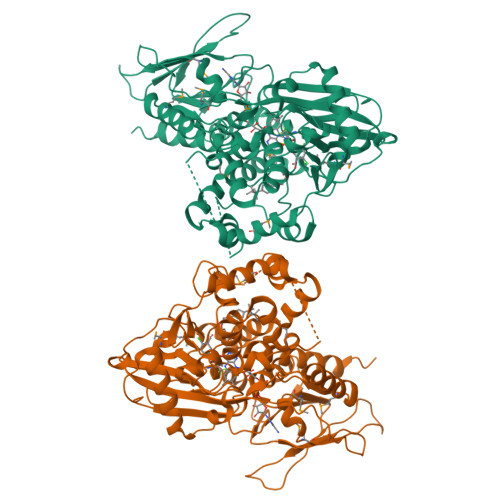
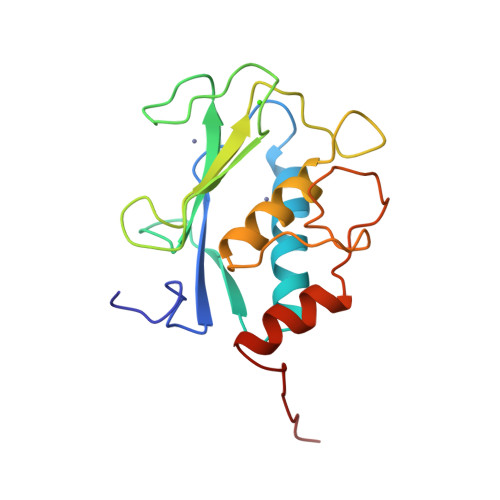
Protoporphyrinogen oxidase, mitochondrial structureClick to view 3D structureProtoporphyrinogen oxidase, mitochondrialO24164Nicotiana tabacumPredicted (SEA)
Prediction Confidence Score
0.648
Applicability Domain
0.648
Statistical Significance
1.00e-05
Supporting Reference Compounds
1
E-value
0.0778492
Click to view 3D structureACCaseH9BT73Alopecurus japonicusPredicted (SEA)
Prediction Confidence Score
0.313
Applicability Domain
0.313
Statistical Significance
4.30e-04
Supporting Reference Compounds
1
E-value
3.34752
Click to view 3D structureCarboxylesteraseB3TNN2Loxostege sticticalisPredicted (SEA)
Prediction Confidence Score
0.279
Applicability Domain
0.279 Low confidence
Statistical Significance
1.10e-04
Supporting Reference Compounds
1
E-value
0.856341
Prostaglandin G/H synthase 1 structureClick to view 3D structureProstaglandin G/H synthase 1P05979Ovis ariesPredicted (SEA)
Prediction Confidence Score
0.274
Applicability Domain
0.353
Statistical Significance
0.0159
Supporting Reference Compounds
106
E-value
124.014
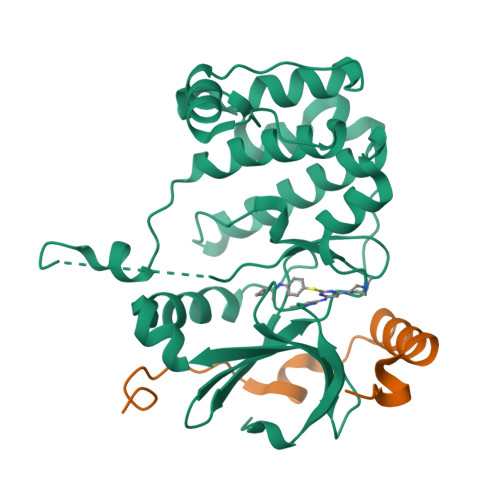
Mitogen-activated protein kinase 14 structureClick to view 3D structureMitogen-activated protein kinase 14Q16539HumansPredicted (SEA)
Prediction Confidence Score
0.268
Applicability Domain
0.303
Statistical Significance
0.1931
Supporting Reference Compounds
668
E-value
1503.66
Vascular endothelial growth factor receptor 2 structureClick to view 3D structureVascular endothelial growth factor receptor 2P35968HumansPredicted (SEA)
Prediction Confidence Score
0.268
Applicability Domain
0.303
Statistical Significance
0.3029
Supporting Reference Compounds
1660
E-value
2358.21
Serine/threonine-protein kinase B-raf structureClick to view 3D structureSerine/threonine-protein kinase B-rafP15056HumansPredicted (SEA)
Prediction Confidence Score
0.265
Applicability Domain
0.303
Statistical Significance
0.1078
Supporting Reference Compounds
337
E-value
839.137
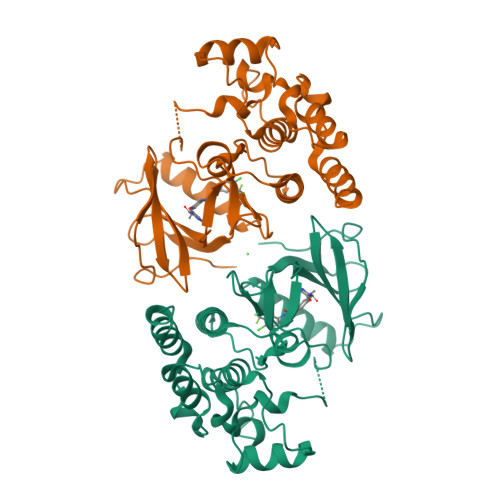
Protoporphyrinogen oxidase structureClick to view 3D structureProtoporphyrinogen oxidaseP50336HumansPredicted (SEA)
Prediction Confidence Score
0.264
Applicability Domain
0.648
Statistical Significance
6.00e-05
Supporting Reference Compounds
4
E-value
0.467095
Click to view 3D structureStreptokinase AP10520Streptococcus pyogenes serotype M1Predicted (SEA)
Prediction Confidence Score
0.264
Applicability Domain
0.297 Low confidence
Statistical Significance
0.08
Supporting Reference Compounds
425
E-value
623.183
Aurora kinase B structureClick to view 3D structureAurora kinase BQ96GD4HumansPredicted (SEA)
Prediction Confidence Score
0.264
Applicability Domain
0.303
Statistical Significance
0.2703
Supporting Reference Compounds
1017
E-value
2104.34
Peroxisome proliferator-activated receptor gamma structureClick to view 3D structurePeroxisome proliferator-activated receptor gammaP37231HumansPredicted (SEA)
Prediction Confidence Score
0.264
Applicability Domain
0.27 Low confidence
Statistical Significance
0.0598
Supporting Reference Compounds
192
E-value
465.538
Fibroblast growth factor receptor 1 structureClick to view 3D structureFibroblast growth factor receptor 1P11362HumansPredicted (SEA)
Prediction Confidence Score
0.262
Applicability Domain
0.303
Statistical Significance
0.2729
Supporting Reference Compounds
1010
E-value
2124.51
Platelet-derived growth factor receptor alpha structureClick to view 3D structurePlatelet-derived growth factor receptor alphaP16234HumansPredicted (SEA)
Prediction Confidence Score
0.262
Applicability Domain
0.303
Statistical Significance
0.1843
Supporting Reference Compounds
519
E-value
1434.92
Prostaglandin E synthase structureClick to view 3D structureProstaglandin E synthaseO14684HumansPredicted (SEA)
Prediction Confidence Score
0.262
Applicability Domain
0.353
Statistical Significance
0.0123
Supporting Reference Compounds
69
E-value
95.7545
Peroxisome proliferator-activated receptor alpha structureClick to view 3D structurePeroxisome proliferator-activated receptor alphaQ07869HumansPredicted (SEA)
Prediction Confidence Score
0.261
Applicability Domain
0.27 Low confidence
Statistical Significance
0.0497
Supporting Reference Compounds
127
E-value
387.3
Focal adhesion kinase 1 structureClick to view 3D structureFocal adhesion kinase 1Q05397HumansPredicted (SEA)
Prediction Confidence Score
0.261
Applicability Domain
0.303
Statistical Significance
0.2125
Supporting Reference Compounds
615
E-value
1654.69
Mitogen-activated protein kinase 8 structureClick to view 3D structureMitogen-activated protein kinase 8P45983HumansPredicted (SEA)
Prediction Confidence Score
0.261
Applicability Domain
0.303
Statistical Significance
0.2573
Supporting Reference Compounds
782
E-value
2003.06
Tyrosine-protein kinase Lck structureClick to view 3D structureTyrosine-protein kinase LckP06239HumansPredicted (SEA)
Prediction Confidence Score
0.261
Applicability Domain
0.303
Statistical Significance
0.3108
Supporting Reference Compounds
1130
E-value
2419.79
Platelet-derived growth factor receptor beta structureClick to view 3D structurePlatelet-derived growth factor receptor betaP09619HumansPredicted (SEA)
Prediction Confidence Score
0.261
Applicability Domain
0.303
Statistical Significance
0.2068
Supporting Reference Compounds
597
E-value
1609.92
Click to view 3D structureSerine/threonine-protein kinase TNNI3KQ5GIG6Mus musculusPredicted (SEA)
Prediction Confidence Score
0.26
Applicability Domain
0.26 Low confidence
Statistical Significance
0.0063
Supporting Reference Compounds
1
E-value
49.3564
Sodium channel protein type 8 subunit alpha structureClick to view 3D structureSodium channel protein type 8 subunit alphaQ9UQD0HumansPredicted (SEA)
Prediction Confidence Score
0.26
Applicability Domain
0.286 Low confidence
Statistical Significance
0.0265
Supporting Reference Compounds
65
E-value
206.456
Glycogen synthase kinase-3 beta structureClick to view 3D structureGlycogen synthase kinase-3 betaP49841HumansPredicted (SEA)
Prediction Confidence Score
0.258
Applicability Domain
0.303
Statistical Significance
0.3371
Supporting Reference Compounds
1157
E-value
2624.61
Voltage-gated inwardly rectifying potassium channel KCNH2 structureClick to view 3D structureVoltage-gated inwardly rectifying potassium channel KCNH2Q12809HumansPredicted (SEA)
Prediction Confidence Score
0.258
Applicability Domain
0.263 Low confidence
Statistical Significance
0.456
Supporting Reference Compounds
1498
E-value
3549.77
Insulin-like growth factor 1 receptor structureClick to view 3D structureInsulin-like growth factor 1 receptorP08069HumansPredicted (SEA)
Prediction Confidence Score
0.257
Applicability Domain
0.303
Statistical Significance
0.2698
Supporting Reference Compounds
785
E-value
2100.06
Dual specificity mitogen-activated protein kinase kinase 1 structureClick to view 3D structureDual specificity mitogen-activated protein kinase kinase 1Q02750HumansPredicted (SEA)
Prediction Confidence Score
0.257
Applicability Domain
0.303
Statistical Significance
0.1707
Supporting Reference Compounds
391
E-value
1328.81
Acetylcholinesterase structureClick to view 3D structureAcetylcholinesteraseP22303HumansKnownNot Available
Cytochrome P450 1A2 structureClick to view 3D structureCytochrome P450 1A2P05177HumansKnownNot Available
Interstitial collagenase structureClick to view 3D structureInterstitial collagenaseP03956HumansKnownNot Available
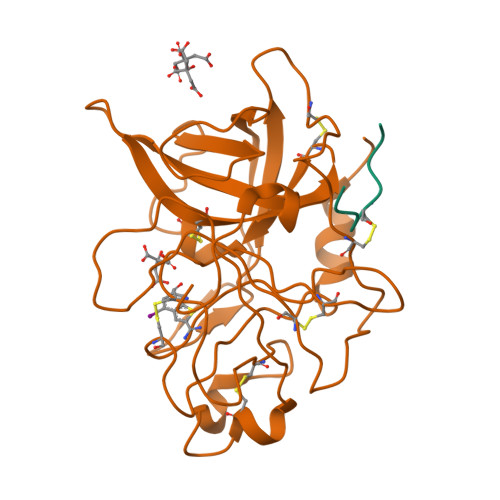
Urokinase-type plasminogen activator structureClick to view 3D structureUrokinase-type plasminogen activatorP00749HumansKnownNot Available
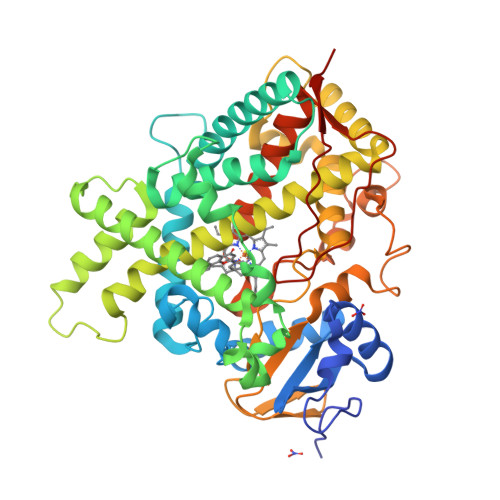
Cytochrome P450 1A1 structureClick to view 3D structureCytochrome P450 1A1P04798HumansKnownNot Available
Click to view 3D structureUDP-glucuronosyltransferase 1A1P22309HumansKnownNot Available
Cytochrome P450 2B6 structureClick to view 3D structureCytochrome P450 2B6P20813HumansKnownNot Available
Sulfotransferase 2A1 structureClick to view 3D structureSulfotransferase 2A1Q06520HumansKnownNot Available
ADP-ribosyl cyclase/cyclic ADP-ribose hydrolase 1 structureClick to view 3D structureADP-ribosyl cyclase/cyclic ADP-ribose hydrolase 1P28907HumansKnownNot Available
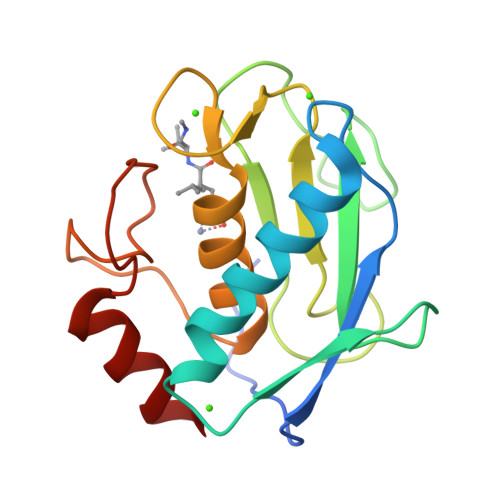
Matrix metalloproteinase-9 structureClick to view 3D structureMatrix metalloproteinase-9P14780HumansKnownNot Available
Broad substrate specificity ATP-binding cassette transporter ABCG2 structureClick to view 3D structureBroad substrate specificity ATP-binding cassette transporter ABCG2Q9UNQ0HumansKnownNot Available
ATP-dependent translocase ABCB1 structureClick to view 3D structureATP-dependent translocase ABCB1P08183HumansKnownNot Available
Estrogen receptor structureClick to view 3D structureEstrogen receptorP03372HumansKnownNot Available
Cytochrome P450 3A4 structureClick to view 3D structureCytochrome P450 3A4P08684HumansKnownNot Available
Concentrations
Not Available
External Links
DrugBank IDNot Available
HMDB IDHMDB0256013
FooDB IDNot Available
Phenol Explorer IDNot Available
KNApSAcK IDNot Available
BiGG IDNot Available
BioCyc IDNot Available
METLIN IDNot Available
PDB IDNot Available
Wikipedia LinkNot Available
Chemspider ID35974
ChEBI IDNot Available
PubChem Compound IDNot Available
Kegg Compound IDC18881
YMDB IDNot Available
ECMDB IDNot Available
References
Synthesis ReferenceNot Available
MSDSNot Available
General ReferencesNot Available