Matrine (CED0004216)

Record Information
Version1.0
Creation Date2014-08-29 05:04:05 UTC
Update Date2026-08-19 12:35:59 UTC
SynCED IDCED0004216
Secondary Accession Numbers
  • CHEM003041
  • T3D4081
Identification
Common NameMatrine
ClassSmall Molecule
Description
Matrine is an exogenous organic compound with the formula C15H24N2O and an average molecular weight of 248.36 g/mol. It exists as a solid at room temperature. Matrine belongs to the matrine alkaloids, a subclass of lupin alkaloids within the organic compounds. In industrial applications, the compound is used as an antioxidant, as well as a softener and conditioner. Matrine has been identified in 21 recorded sources across multiple sectors. These include electrical and electronic equipment, specifically in batteries, capacitors, printed circuit boards, wires and cables, and cell phones, among five other items. It is found in the healthcare, pharmaceuticals and veterinary products sector within medical devices, and in the energy, oil and gas sector as part of lubricants. Other sources include drinking water and water supply, synthetic textiles, carpets and rugs, and food, food processing and cookware, specifically in food packaging and the preparation of vinegar, wine, or sparkling wine. There are three additional sectors where the compound is recorded. Exposure to matrine can occur through inhalation, oral ingestion, and touch.
Contaminant Type
  • Amide
  • Amine
  • Natural Compound
  • Organic Compound
  • PFAS
  • Phytotoxin
  • Plant Toxin
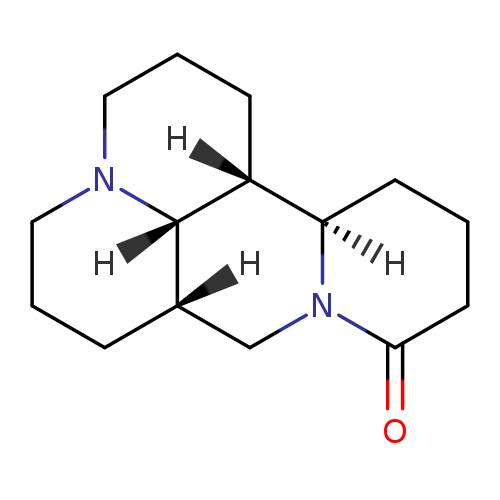
Chemical Structure
Synonyms
ValueSource
SophoridineMeSH
Matrine, (5beta)-isomerMeSH
Chemical FormulaC15H24N2O
Average Molecular Mass248.364 g/mol
Monoisotopic Mass248.189 g/mol
CAS Registry Number519-02-8
IUPAC Name(1R,2R,9S,17S)-7,13-diazatetracyclo[7.7.1.0²,⁷.0¹³,¹⁷]heptadecan-6-one
Traditional Namematrine
SMILES[H][C@]12CCCN3CCC[C@]([H])([C@@]4([H])CCCC(=O)N4C1)[C@]23[H]
InChI IdentifierInChI=1S/C15H24N2O/c18-14-7-1-6-13-12-5-3-9-16-8-2-4-11(15(12)16)10-17(13)14/h11-13,15H,1-10H2/t11-,12+,13+,15-/m0/s1
InChI KeyZSBXGIUJOOQZMP-JLNYLFASSA-N
Chemical Taxonomy
Description Belongs to the class of organic compounds known as matrine alkaloids. These are lupin alkaloids with a structure based on the matrine skeleton, a four-ring skeleton that based on a saturated dipyrido[2,1-f:3',2',1'-Ij][1,6]naphthyridin-10-one skeleton.
KingdomOrganic compounds
Super ClassAlkaloids and derivatives
ClassLupin alkaloids
Sub ClassMatrine alkaloids
Direct ParentMatrine alkaloids
Alternative Parents
Substituents
  • Matrine
  • Quinolizidinone
  • Diazanaphthalene
  • Naphthyridine
  • Quinolizidine
  • Delta-lactam
  • Piperidinone
  • Piperidine
  • Tertiary carboxylic acid amide
  • Tertiary aliphatic amine
  • Tertiary amine
  • Amino acid or derivatives
  • Carboxamide group
  • Lactam
  • Organoheterocyclic compound
  • Azacycle
  • Carboxylic acid derivative
  • Hydrocarbon derivative
  • Organic oxygen compound
  • Organic nitrogen compound
  • Organonitrogen compound
  • Organooxygen compound
  • Amine
  • Carbonyl group
  • Organopnictogen compound
  • Organic oxide
  • Aliphatic heteropolycyclic compound
Molecular FrameworkAliphatic heteropolycyclic compounds
External Descriptors
Biological Properties
StatusDetected and Not Quantified
OriginExogenous
Cellular Locations
  • Cell surface
  • Cytoplasm
  • Cytosol
  • Endoplasmic reticulum
  • Extracellular
  • Extracellular matrix
  • Lysosome
  • Mitochondrion
  • Plasma Membrane
Biofluid LocationsNot Available
Tissue LocationsNot Available
ApplicationsNot Available
Biological Roles
Chemical RolesNot Available
Organoleptic EffectsNot Available
Physical Properties
StateSolid
AppearanceWhite powder.
Experimental Properties
PropertyValue
Melting PointNot Available
Boiling PointNot Available
SolubilityNot Available
Predicted Properties
PropertyValueSource
Water Solubility6.24 g/LALOGPS
logP1.92ALOGPS
logP1.08ChemAxon
logS-1.6ALOGPS
pKa (Strongest Basic)9.75ChemAxon
Physiological Charge1ChemAxon
Hydrogen Acceptor Count2ChemAxon
Hydrogen Donor Count0ChemAxon
Polar Surface Area23.55 ŲChemAxon
Rotatable Bond Count0ChemAxon
Refractivity71.45 m³·mol⁻¹ChemAxon
Polarizability28.69 ųChemAxon
Number of Rings4ChemAxon
BioavailabilityYesChemAxon
Rule of FiveYesChemAxon
Ghose FilterYesChemAxon
Veber's RuleYesChemAxon
MDDR-like RuleNoChemAxon
Spectra
Spectra
Spectrum TypeDescriptionSplash KeyDeposition DateView
Predicted LC-MS/MSPredicted LC-MS/MS Spectrumsplash10-0002-0090000000-8ee63c2a1c35de3fff22Not AvailableView Spectrum
Predicted LC-MS/MSPredicted LC-MS/MS Spectrumsplash10-0002-0090000000-4f7ecba727c2ca8097caNot AvailableView Spectrum
Predicted LC-MS/MSPredicted LC-MS/MS Spectrumsplash10-0fbc-2930000000-b8e4ecbc12721437841bNot AvailableView Spectrum
Predicted LC-MS/MSPredicted LC-MS/MS Spectrumsplash10-0002-0090000000-274cc1f6bff7ae2cfb7cNot AvailableView Spectrum
Predicted LC-MS/MSPredicted LC-MS/MS Spectrumsplash10-0002-0090000000-dc7aab170fe29e23e17aNot AvailableView Spectrum
Predicted LC-MS/MSPredicted LC-MS/MS Spectrumsplash10-0036-5970000000-88a546869c5bb0c632d9Not AvailableView Spectrum
MSMS Spectrumsplash10-052b-9630000000-eed96cedc2334a0b0d1eNot AvailableView Spectrum
Toxicity Profile
Toxicity Values
Toxicity ValueOrganismDose DescriptorRoute of ExposurePredicted or ExperimentalToxicity RatingReference
227.0 Log mg/kg [130:400]RatLD50oralpredictedNot AvailableNot Available
Toxicity / Toxin ClassNot Available
Mechanism of ToxicityThe nervous system is the main target organ by the toxicity of matrine. Morphological observation revealed degenerative changes of the nerve cells in the brain tissue of the mice. (1) Matrine has a variety of pharmacological effects, including anti-cancer effects, and action as a kappa opioid receptor and µ-receptor agonist. Matrine possesses strong antitumor activities in vitro and in vivo. Inhibition of cell proliferation and induction of apoptosis are the likely mechanisms responsible for matrine's antitumor activities. (Wikipedia)
Carcinogenicity (IARC Classification)No indication of carcinogenicity to humans (not listed by IARC).
Minimum Risk LevelNot Available
SymptomsNot Available
TreatmentNot Available
Health Effects
Health EffectRelationshipDirectionDescriptionReference
Alzheimer's diseaseHas Therapeutic Effect OnNot AvailableA neurodegenerative disease which causes neural atrophy, leading to dementia and memory loss.PMC13144357
Abnormality of mitochondrial metabolismHas Therapeutic Effect OnNot AvailableNot AvailablePMC11591075
Oxidative StressHas Therapeutic Effect OnNot AvailableNot AvailablePMC6241346
Follicular AtresiaAssociated With?decreaseNot AvailablePMC9138882
Adverse drug responseAssociated With?Not AvailableNot AvailablePMC10052194
heavy metal poisoningNot AvailableNot AvailableNot AvailablePMC6241346
Exposure Sources
Source IDSourceSectorReference
CEDs000007Pesticides?Pesticides are synthetic chemicals designed to prevent, destroy, or control pests that threaten crops and agricultural productivity.Agriculture & land managementNot Available
CEDs000010Insecticides?Insecticides are synthetic chemicals designed to control or eliminate insect pests that threaten crops and other agricultural products.Agriculture & land managementPubChem
CEDs000115Drinking water?Drinking water can be a medium for synthetic chemical contamination, often originating from various industrial processes and agricultural practices.Drinking water & water supplyNot Available
CEDs000120Wires and cables?Wires and cables are integral components in the transmission of electrical power and signals.Electrical & Electronic EquipmentNot Available
CEDs000121Printed circuit boards?Printed circuit boards (PCBs) are essential components in the manufacturing of electronic devices, serving as the backbone for electrical connections and circuit pathways.Electrical & Electronic EquipmentNot Available
CEDs000125Batteries?Batteries are devices that store and release electrical energy through electrochemical reactions.Electrical & Electronic EquipmentNot Available
CEDs000130Semiconductors?Semiconductors are materials that possess electrical conductivity between that of conductors and insulators, making them essential for various electronic applications, including transistors, diodes, and integrated circuits.Electrical & Electronic EquipmentNot Available
CEDs000138Lubricants?Lubricants are synthetic or petroleum-derived substances used to reduce friction between surfaces in machinery and equipment, enhancing operational efficiency and longevity.Energy, oil & gasNot Available
CEDs000147Food packaging?Food packaging often utilizes synthetic chemicals, such as plastics and coatings, to enhance durability, moisture resistance, and shelf life.Food, food processing & cookwareNot Available
CEDs000174Lubricants?Lubricants are synthetic or petroleum-based substances used to reduce friction and wear between moving parts in machinery and equipment.Industrial manufacturing & chemical processingNot Available
CEDs000234Medical devices?Medical devices often incorporate synthetic chemicals in their manufacturing processes, which can contribute to contamination in healthcare settings.Healthcare, pharmaceuticals & veterinary productsNot Available
CEDs000451Carpets and Rugs?Carpets and rugs are commonly manufactured using synthetic fibers such as nylon, polyester, and polypropylene, which can be derived from petrochemical sources.Textiles, leather & furnishingsNot Available
CEDs000454Synthetic textiles?Synthetic textiles are materials derived from man-made fibers, such as polyester, nylon, and acrylic, which are produced through chemical processes involving petrochemicals.Textiles, leather & furnishingsNot Available
CEDs000490Personal care & cosmeticsNot Available
CEDs000492Cell phones?Cell phones contain a variety of synthetic chemicals and materials, including plastics, metals, and glass, which can contribute to environmental contamination.Electrical & Electronic EquipmentNot Available
CEDs000493Capacitors?Capacitors are electronic components that store and release electrical energy, often using dielectric materials that can include synthetic chemicals.Electrical & Electronic EquipmentNot Available
CEDs000511Conductors Or Conductive Bodies Characterised By The Conductive Materials?Conductors, or conductive bodies, are materials that allow the flow of electrical current, typically made from metals such as copper, aluminum, or silver.Electrical & Electronic EquipmentPubChem
CEDs000517Electric Switches?Electric switches, integral components in numerous devices, can be a source of synthetic chemical contamination due to the materials and manufacturing processes involved in their production.Electrical & Electronic EquipmentPubChem
CEDs000518Electrically Stimulated Smoking Devices?Electrically stimulated smoking devices, commonly known as e-cigarettes or vape pens, utilize electrical components to heat a liquid solution, often containing nicotine, flavorings, and other additives, to produce an aerosol for inhalation.Electrical & Electronic EquipmentPubChem
CEDs000519Electrodes?Electrodes, used in various electrical and electronic applications, can be a source of synthetic chemical contamination due to the materials from which they are constructed and the processes involved in their manufacturing.Electrical & Electronic EquipmentPubChem
CEDs000521Fixed Capacitors And Their Manufacture?Fixed capacitors are passive electronic components used to store and release electrical energy, playing a critical role in various circuits.Electrical & Electronic EquipmentPubChem
CEDs000524Hybrid Capacitors?Hybrid capacitors are energy storage devices that combine the properties of electrolytic and supercapacitors, utilizing a combination of electrochemical principles to achieve higher energy density and power density.Electrical & Electronic EquipmentPubChem
CEDs000529Power Cables?Power cables are used to transmit electrical energy and are typically composed of conductive materials, insulation, and protective coatings.Electrical & Electronic EquipmentPubChem
CEDs000531Relays?Relays are electromechanical switches used to control circuits and manage electrical loads.Electrical & Electronic EquipmentPubChem
CEDs000537Television Systems?Television systems can be a source of synthetic chemical contamination due to the various materials and components used in their manufacture and operation.Electrical & Electronic EquipmentPubChem
CEDs000538Thin Magnetic Films?Thin magnetic films are layers of magnetic material ranging from a few nanometers to several micrometers in thickness, commonly used in applications such as magnetic sensors, data storage devices, and electronic components.Electrical & Electronic EquipmentPubChem
CEDs000545Food Preservation?Food preservation often involves the use of synthetic chemicals, such as preservatives, flavor enhancers, and color additives, to extend shelf life and enhance the sensory qualities of food products.Food, food processing & cookwarePubChem
CEDs000548Preparation Of Vinegar?Vinegar is produced through the fermentation of ethanol by acetic acid bacteria, resulting in a solution that typically contains 4-8% acetic acid.Food, food processing & cookwarePubChem
CEDs000549Preparation Of Wine Or Sparkling Wine?The preparation of wine or sparkling wine involves various stages, including fermentation, aging, and bottling, which can introduce potential sources of synthetic chemical contamination.Food, food processing & cookwarePubChem
CEDs000556Cigar Cigarettes?Cigar cigarettes are a source of synthetic chemical contamination due to the combustion of various tobacco blends and additives.Household cleaning & consumer productsPubChem
CEDs000559Non Electric Simulated Smoking Devices?Non-electric simulated smoking devices, often designed to mimic the experience of smoking without combustion, can be sources of synthetic chemical contamination due to the materials and chemicals used in their construction and operation.Household cleaning & consumer productsPubChem
CEDs000561Perfumes Within Detergents And Soaps?Perfumes within detergents and soaps are synthetic fragrance compounds added to enhance the sensory experience of cleaning products.Household cleaning & consumer productsPubChem
CEDs000563Soap Detergents?Soap detergents are synthetic surfactants designed to enhance the cleaning efficacy of water by reducing surface tension, allowing for better interaction with dirt and grease.Household cleaning & consumer productsPubChem
CEDs000569Tobacco Smoke Filters?Tobacco smoke filters are designed to reduce the inhalation of harmful substances in cigarette smoke, including tar and other particulate matter.Household cleaning & consumer productsPubChem
CEDs000578Making Cigars?The process of making cigars involves several steps, including the cultivation of tobacco, fermentation, and the application of various additives to enhance flavor and preservation.Industrial manufacturing & chemical processingPubChem
CEDs000580Manufacture Preparation Of Tobacco Products?The manufacture and preparation of tobacco products involve various processes that can result in the introduction of synthetic chemicals into the environment.Industrial manufacturing & chemical processingPubChem
CEDs000581Paper Making Machines?Paper making machines utilize various synthetic chemicals throughout the production process, including additives, coatings, and bleaching agents.Industrial manufacturing & chemical processingPubChem
CEDs000596Acaricides?Acaricides are synthetic chemicals specifically designed to target and control mite populations that can damage crops and plants.Agriculture & land managementPubChem
CEDs000598Fertiliser Distributors?Fertiliser distributors play a critical role in the supply of synthetic fertilizers, which are widely used to enhance soil fertility and crop yield.Agriculture & land managementPubChem
CEDs000600Herbicides And Algicides?Herbicides and algicides are synthetic chemicals primarily used to control unwanted plants and algae in various environments.Agriculture & land managementPubChem
CEDs000602Molluscicides?Molluscicides are synthetic chemicals specifically designed to control and eliminate mollusks, such as snails and slugs, which can be detrimental to crops and agricultural productivity.Agriculture & land managementPubChem
CEDs000603Nematocides?Nematocides are synthetic chemicals specifically designed to control nematodes, which are microscopic roundworms that can cause significant damage to crops and plants.Agriculture & land managementPubChem
CEDs000604Pest Attractants?Pest attractants are synthetic chemicals designed to lure specific pests for monitoring or control purposes.Agriculture & land managementPubChem
CEDs000605Pest Repellants?Pest repellents, often formulated from synthetic chemicals, are widely used to protect crops from insect infestations and other pests.Agriculture & land managementPubChem
CEDs000606Plant Growth Regulators?Plant Growth Regulators (PGRs) are synthetic chemicals designed to influence the growth and development of plants.Agriculture & land managementPubChem
CEDs000610Aftersun Products?Aftersun products are designed to soothe and hydrate the skin after sun exposure, often containing various synthetic chemicals such as emollients, preservatives, and fragrances.Personal care & cosmeticsPubChem
CEDs000611Anti Perspirants Or Body Deoderants?Antiperspirants and body deodorants commonly contain synthetic chemicals such as aluminum compounds, parabens, and synthetic fragrances.Personal care & cosmeticsPubChem
CEDs000613Depilatories?Depilatories are products designed to remove unwanted hair through the application of synthetic chemicals that break down the protein structure of hair, facilitating its removal.Personal care & cosmeticsPubChem
CEDs000614Essential Oils Or Perfumes?Essential oils and perfumes are complex mixtures of volatile compounds derived from natural or synthetic sources, commonly used for their aromatic properties.Personal care & cosmeticsPubChem
CEDs000615Eye Makeup Products?Eye makeup products, including mascaras, eyeliners, and eyeshadows, often contain a variety of synthetic chemicals such as pigments, preservatives, and film-forming agents.Personal care & cosmeticsPubChem
CEDs000632Apparel?Apparel production often involves the use of various synthetic chemicals, including dyes, finishing agents, and preservatives.Textiles, leather & furnishingsPubChem
CEDs000642Footwear?Footwear production often involves the use of various synthetic chemicals, such as adhesives, dyes, and treatments, which can contribute to environmental contamination.Textiles, leather & furnishingsPubChem
CEDs000657Surface Finishing Of Leather?Surface finishing of leather often involves the use of various synthetic chemicals, including dyes, resins, and finishing agents.Textiles, leather & furnishingsPubChem
CEDs000673Unmanned Aerial Vehicles?Unmanned Aerial Vehicles (UAVs), commonly known as drones, utilize various synthetic chemicals in their manufacturing, operation, and maintenance processes.Aviation & AerospacePubChem
CEDs000678Nitrogenous Fertilisers?Nitrogenous fertilizers are synthetic chemical compounds primarily used to enhance plant growth by supplying essential nitrogen, a crucial nutrient for photosynthesis and protein synthesis.Agriculture & land managementPubChem
CEDs000679Phosphatic Fertilisers?Phosphatic fertilizers are synthetic chemical products primarily composed of phosphorus, which is essential for plant growth.Agriculture & land managementPubChem
CEDs000685Ceramics?Ceramics can be a source of synthetic chemical contamination through various additives and processing agents used in their production.Building & ConstructionPubChem
CEDs000688Glass Coatings?Glass coatings are synthetic chemical formulations applied to glass surfaces to enhance properties such as durability, UV resistance, and aesthetic appeal.Building & ConstructionPubChem
CEDs000693Silica Glass?Silica glass, primarily composed of silicon dioxide (SiO2), is widely used in various applications, including windows, glass facades, and insulation materials.Building & ConstructionPubChem
CEDs000696Nanotechnology?Nanotechnology involves the manipulation of materials at the molecular or atomic level, typically within the range of 1 to 100 nanometers.Industrial manufacturing & chemical processingPubChem
CEDs000727Printing Machines Or Presses?Printing machines or presses commonly utilize synthetic chemicals such as inks, solvents, and cleaning agents.Paper, pulp & fiber productsPubChem
CEDs000738Cooling Circuit Water?Cooling circuit water is utilized in various industrial processes to absorb and dissipate heat generated during operations.Industrial manufacturing & chemical processingPubChem
CEDs000739Inks?Inks are complex mixtures composed of pigments or dyes, solvents, resins, and additives used primarily for printing and writing applications.Paper, pulp & fiber productsPubChem
CEDs000740Paper?Paper production involves the processing of wood fibers and the use of various chemicals, which can lead to synthetic chemical contamination.Paper, pulp & fiber productsPubChem
CEDs000742Leather Tanning?Leather tanning is a process that transforms raw animal hides into durable leather through the application of various chemicals, including chromium salts, aldehydes, and vegetable tannins.Textiles, leather & furnishingsPubChem
CEDs000743Sludge Treatment?Sludge treatment involves the processing of waste materials generated from wastewater treatment plants, which often contain a variety of organic and inorganic substances.Wastewater, sanitation & biosolidsPubChem
CEDs000744Water, Wastewater, & Sewage Treatment?Water, wastewater, and sewage treatment processes are critical for managing and mitigating pollutants in water systems.Wastewater, sanitation & biosolidsPubChem
CEDs00751FeedAgriculture & land managementPMC9138882
CEDs01080CapsuleHealthcare, pharmaceuticals & veterinary productsPMC10052194
CEDs01081TabletsHealthcare, pharmaceuticals & veterinary productsPMC10052194
CEDs01143DietFood, food processing & cookwarePMC9138882 , PMC9138882
CEDs01168Food ProductsFood, food processing & cookwarePMC7731202
CEDs01198HoneyFood, food processing & cookwarePMC13245035
CEDs01210Food SupplementsFood, food processing & cookwarePMC10052194
Pathways
4 pathwaysPathway Source: PathBank
Targets
StructureProteinUniProt IDOrganismRelationshipDetails
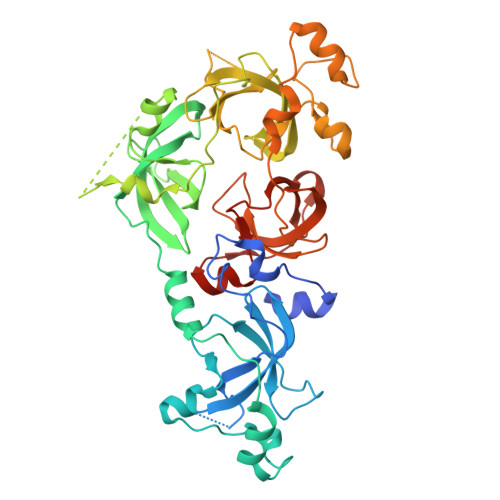
TP53-binding protein 1 structureClick to view 3D structureTP53-binding protein 1Q12888HumansPredicted (SEA)
Prediction Confidence Score
0.201
Applicability Domain
0.319
Statistical Significance
0.0276
Supporting Reference Compounds
4
E-value
214.552
Click to view 3D structureD(2) dopamine receptorP61169RatPredicted (SEA)
Prediction Confidence Score
0.2
Applicability Domain
0.216 Low confidence
Statistical Significance
0.6029
Supporting Reference Compounds
528
E-value
4693.22
Click to view 3D structureSodium-dependent serotonin transporterP31652Rattus norvegicusPredicted (SEA)
Prediction Confidence Score
0.2
Applicability Domain
0.216 Low confidence
Statistical Significance
0.4697
Supporting Reference Compounds
297
E-value
3656.42
Lysine-specific demethylase 5A structureClick to view 3D structureLysine-specific demethylase 5AP29375HumansPredicted (SEA)
Prediction Confidence Score
0.199
Applicability Domain
0.319
Statistical Significance
0.1412
Supporting Reference Compounds
38
E-value
1099.62
Muscarinic acetylcholine receptor M1 structureClick to view 3D structureMuscarinic acetylcholine receptor M1P11229HumansPredicted (SEA)
Prediction Confidence Score
0.199
Applicability Domain
0.208 Low confidence
Statistical Significance
0.6944
Supporting Reference Compounds
385
E-value
5406.08
Voltage-gated inwardly rectifying potassium channel KCNH2 structureClick to view 3D structureVoltage-gated inwardly rectifying potassium channel KCNH2Q12809HumansPredicted (SEA)
Prediction Confidence Score
0.199
Applicability Domain
0.276 Low confidence
Statistical Significance
0.9476
Supporting Reference Compounds
1498
E-value
7377.15
Muscarinic acetylcholine receptor M2 structureClick to view 3D structureMuscarinic acetylcholine receptor M2P08172HumansPredicted (SEA)
Prediction Confidence Score
0.196
Applicability Domain
0.208 Low confidence
Statistical Significance
0.7182
Supporting Reference Compounds
373
E-value
5591.44
Click to view 3D structureSodium-dependent dopamine transporterP23977Rattus norvegicusPredicted (SEA)
Prediction Confidence Score
0.195
Applicability Domain
0.216 Low confidence
Statistical Significance
0.3705
Supporting Reference Compounds
203
E-value
2884.47
Click to view 3D structureMuscarinic acetylcholine receptor M1P08482Rattus norvegicusPredicted (SEA)
Prediction Confidence Score
0.194
Applicability Domain
0.208 Low confidence
Statistical Significance
0.3569
Supporting Reference Compounds
109
E-value
2778.75
Kappa-type opioid receptor structureClick to view 3D structureKappa-type opioid receptorP41145HumansPredicted (SEA)
Prediction Confidence Score
0.193
Applicability Domain
0.228 Low confidence
Statistical Significance
0.8066
Supporting Reference Compounds
532
E-value
6279.01
Click to view 3D structureNorepinephrine transporterQ9WTR4Rattus norvegicusPredicted (SEA)
Prediction Confidence Score
0.193
Applicability Domain
0.216 Low confidence
Statistical Significance
0.2603
Supporting Reference Compounds
112
E-value
2026.57
Click to view 3D structureMuscarinic acetylcholine receptor M2P10980Rattus norvegicusPredicted (SEA)
Prediction Confidence Score
0.191
Applicability Domain
0.208 Low confidence
Statistical Significance
0.2763
Supporting Reference Compounds
98
E-value
2151.36
5-hydroxytryptamine receptor 1A structureClick to view 3D structure5-hydroxytryptamine receptor 1AP08908HumansPredicted (SEA)
Prediction Confidence Score
0.191
Applicability Domain
0.228 Low confidence
Statistical Significance
0.8757
Supporting Reference Compounds
953
E-value
6817.26
Click to view 3D structureSodium-dependent serotonin transporterQ60857Mus musculusPredicted (SEA)
Prediction Confidence Score
0.191
Applicability Domain
0.216 Low confidence
Statistical Significance
0.0634
Supporting Reference Compounds
20
E-value
493.331
Mu-type opioid receptor structureClick to view 3D structureMu-type opioid receptorP35372HumansPredicted (SEA)
Prediction Confidence Score
0.191
Applicability Domain
0.228 Low confidence
Statistical Significance
0.8009
Supporting Reference Compounds
527
E-value
6234.87
Collagen alpha-1(I) chain structureClick to view 3D structureCollagen alpha-1(I) chainP02452HumansPredicted (SEA)
Prediction Confidence Score
0.282
Applicability Domain
0.282 Low confidence
Statistical Significance
6.30e-04
Supporting Reference Compounds
1
E-value
4.9045
Alpha-1,2-mannosidase (BT_3990) structureClick to view 3D structureAlpha-1,2-mannosidase (BT_3990)Q8A0N1Bacteroides thetaiotaomicronPredicted (SEA)
Prediction Confidence Score
0.256
Applicability Domain
0.256 Low confidence
Statistical Significance
4.00e-05
Supporting Reference Compounds
1
E-value
0.311397
Click to view 3D structureScm-like with four MBT domains protein 1Q9UHJ3HumansPredicted (SEA)
Prediction Confidence Score
0.216
Applicability Domain
0.319
Statistical Significance
0.0171
Supporting Reference Compounds
4
E-value
133.434
PHD finger protein 23 structureClick to view 3D structurePHD finger protein 23Q9BUL5HumansPredicted (SEA)
Prediction Confidence Score
0.216
Applicability Domain
0.319
Statistical Significance
0.0171
Supporting Reference Compounds
4
E-value
133.434
Click to view 3D structureLethal(3)malignant brain tumor-like protein 4Q8NA19HumansPredicted (SEA)
Prediction Confidence Score
0.216
Applicability Domain
0.319
Statistical Significance
0.0171
Supporting Reference Compounds
4
E-value
133.434
5-hydroxytryptamine receptor 3A structureClick to view 3D structure5-hydroxytryptamine receptor 3AP46098HumansPredicted (SEA)
Prediction Confidence Score
0.212
Applicability Domain
0.276 Low confidence
Statistical Significance
0.3313
Supporting Reference Compounds
228
E-value
2578.99
MBT domain-containing protein 1 structureClick to view 3D structureMBT domain-containing protein 1Q05BQ5HumansPredicted (SEA)
Prediction Confidence Score
0.211
Applicability Domain
0.319
Statistical Significance
0.0119
Supporting Reference Compounds
5
E-value
93.0298
Lethal(3)malignant brain tumor-like protein 3 structureClick to view 3D structureLethal(3)malignant brain tumor-like protein 3Q96JM7HumansPredicted (SEA)
Prediction Confidence Score
0.208
Applicability Domain
0.319
Statistical Significance
0.0237
Supporting Reference Compounds
6
E-value
184.425
Chromobox protein homolog 7 structureClick to view 3D structureChromobox protein homolog 7O95931HumansPredicted (SEA)
Prediction Confidence Score
0.203
Applicability Domain
0.319
Statistical Significance
0.0828
Supporting Reference Compounds
25
E-value
644.28
Click to view 3D structureMuscarinic acetylcholine receptor M4P32211Mus musculusPredicted (SEA)
Prediction Confidence Score
0.203
Applicability Domain
0.203 Low confidence
Statistical Significance
3.00e-04
Supporting Reference Compounds
1
E-value
2.33548
Concentrations
Not Available
External Links
DrugBank IDNot Available
HMDB IDNot Available
FooDB IDNot Available
Phenol Explorer IDNot Available
KNApSAcK IDC00002227
BiGG IDNot Available
BioCyc IDNot Available
METLIN IDNot Available
PDB IDNot Available
Wikipedia LinkMatrine
Chemspider IDNot Available
ChEBI IDNot Available
PubChem Compound ID91466
Kegg Compound IDC10774
YMDB IDNot Available
ECMDB IDNot Available
References
Synthesis ReferenceNot Available
MSDSNot Available
General References
  1. Wang XY, Liang L, Chang JL, Yang MH, Li ZG: [Toxicity of matrine in Kunming mice]. Nan Fang Yi Ke Da Xue Xue Bao. 2010 Sep;30(9):2154-5. [PubMed: 20855277]