4-Hydroxybutyric acid (CED0010254)

Record Information
Version1.0
Creation Date2014-08-29 06:11:02 UTC
Update Date2026-05-14 17:00:53 UTC
SynCED IDCED0010254
Secondary Accession Numbers
  • CHEM003229
  • T3D4269
Identification
Common Name4-Hydroxybutyric acid
ClassSmall Molecule
Description
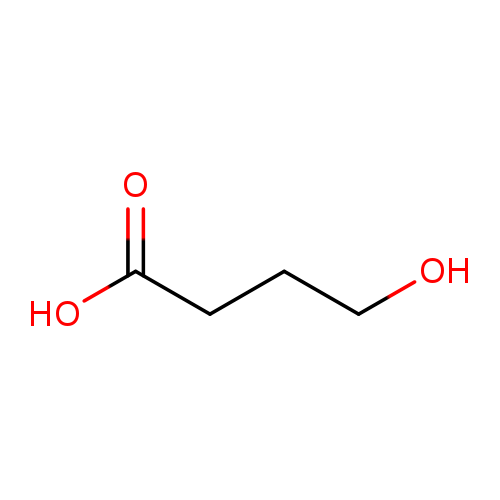
4-Hydroxybutyric acid (C4H8O3) is an endogenous organic compound with an average molecular weight of 104.10 g/mol. It exists as a solid at room temperature. 4-Hydroxybutyric acid belongs to the fatty acids and conjugates, a subclass of fatty acyls within the organic compounds. This compound functions as a sedative, a general anaesthetic, and a GHB receptor agonist, though it also acts as a biological neurotoxin. Its protein targets include the Gamma-aminobutyric acid type B receptor subunit 1 (GABBR1), Gamma-aminobutyric acid type B receptor subunit 2 (GABBR2), Gamma-aminobutyric acid receptor subunit beta-1 (GABRB1), and it serves as a modulator of Solute carrier family 52, riboflavin transporter, member 2 (SLC52A2). 4-Hydroxybutyric acid has been recorded in several sources, including food contact materials, the preparation of wine or sparkling wine, roofs, tents or canopies, amplifiers, and antennas. Exposure to the compound can occur through oral, inhalation, and touch routes.
Contaminant Type
  • Animal Toxin
  • Drug
  • Food Toxin
  • Human Neurotoxin
  • Metabolite
  • Natural Compound
  • Organic Compound
Chemical Structure
Synonyms
ValueSource
3-Carboxypropoxy acidChEBI
4-Hydroxy-butyric acidChEBI
4-Hydroxyalkanoic acidChEBI
4-HydroxybutanoateChEBI
4-Hydroxybutanoic acidChEBI
4-Hydroxycarboxylic acidChEBI
Gamma Hydroxybutyric acidChEBI
gamma-Hydroxybutyric acidChEBI
GHBChEBI
Oxy-N-butyric acidChEBI
XyremChEBI
4-Hydroxy-butyrateGenerator
4-HydroxyalkanoateGenerator
4-HydroxycarboxylateGenerator
g HydroxybutyrateGenerator
g Hydroxybutyric acidGenerator
gamma HydroxybutyrateGenerator
Γ hydroxybutyrateGenerator
Γ hydroxybutyric acidGenerator
g-HydroxybutyrateGenerator
g-Hydroxybutyric acidGenerator
gamma-HydroxybutyrateGenerator
Γ-hydroxybutyrateGenerator
Γ-hydroxybutyric acidGenerator
Oxy-N-butyrateGenerator
4-HydroxybutyrateGenerator
4-Hydroxy-butanoateHMDB
4-Hydroxy-butanoic acidHMDB
4-Hydroxybutyrate sodiumHMDB
4-Hydroxybutyric acid monosodium saltHMDB
gamma-Hydroxy butyrateHMDB
gamma-Hydroxy sodium butyrateHMDB
gamma-Hydroxybutyrate sodiumHMDB
Hydroxybutyric acidHMDB
Chemical FormulaC4H8O3
Average Molecular Mass104.105 g/mol
Monoisotopic Mass104.047 g/mol
CAS Registry Number591-81-1
IUPAC Name4-hydroxybutanoic acid
Traditional Namegamma hydroxybutyric acid
SMILESOCCCC(O)=O
InChI IdentifierInChI=1S/C4H8O3/c5-3-1-2-4(6)7/h5H,1-3H2,(H,6,7)
InChI KeySJZRECIVHVDYJC-UHFFFAOYSA-N
Chemical Taxonomy
Description Belongs to the class of organic compounds known as hydroxy fatty acids. These are fatty acids in which the chain bears a hydroxyl group.
KingdomOrganic compounds
Super ClassLipids and lipid-like molecules
ClassFatty Acyls
Sub ClassFatty acids and conjugates
Direct ParentHydroxy fatty acids
Alternative Parents
Substituents
  • Short-chain hydroxy acid
  • Hydroxy fatty acid
  • Straight chain fatty acid
  • Monocarboxylic acid or derivatives
  • Carboxylic acid
  • Carboxylic acid derivative
  • Organic oxygen compound
  • Organic oxide
  • Hydrocarbon derivative
  • Primary alcohol
  • Organooxygen compound
  • Carbonyl group
  • Alcohol
  • Aliphatic acyclic compound
Molecular FrameworkAliphatic acyclic compounds
External Descriptors
Biological Properties
StatusDetected and Not Quantified
OriginEndogenous
Cellular Locations
  • Cytoplasm
  • Extracellular
Biofluid LocationsNot Available
Tissue LocationsNot Available
Applications
Biological Roles
Chemical RolesNot Available
Organoleptic Effects
  • odorless odour ?
Physical Properties
StateSolid
AppearanceWhite powder.
Experimental Properties
PropertyValue
Melting PointNot Available
Boiling PointNot Available
SolubilityNot Available
Predicted Properties
PropertyValueSource
Water Solubility494 g/LALOGPS
logP-0.63ALOGPS
logP-0.51ChemAxon
logS0.68ALOGPS
pKa (Strongest Acidic)4.44ChemAxon
pKa (Strongest Basic)-2.4ChemAxon
Physiological Charge-1ChemAxon
Hydrogen Acceptor Count3ChemAxon
Hydrogen Donor Count2ChemAxon
Polar Surface Area57.53 ŲChemAxon
Rotatable Bond Count3ChemAxon
Refractivity23.8 m³·mol⁻¹ChemAxon
Polarizability10.17 ųChemAxon
Number of Rings0ChemAxon
BioavailabilityYesChemAxon
Rule of FiveYesChemAxon
Ghose FilterNoChemAxon
Veber's RuleNoChemAxon
MDDR-like RuleNoChemAxon
Spectra
Spectra
Spectrum TypeDescriptionSplash KeyDeposition DateView
GC-MSGC-MS Spectrumsplash10-0159-2920000000-131f94186a93d0aa315dNot AvailableView Spectrum
GC-MSGC-MS Spectrumsplash10-0002-0910000000-7240955b6b16291cf793Not AvailableView Spectrum
Predicted GC-MSPredicted GC-MS Spectrumsplash10-0a5c-9000000000-915d32c0dbd6e6d19a55Not AvailableView Spectrum
Predicted GC-MSPredicted GC-MS Spectrumsplash10-00di-9610000000-52e5254f6eba257ad184Not AvailableView Spectrum
Predicted GC-MSPredicted GC-MS SpectrumNot AvailableNot AvailableView Spectrum
LC-MS/MSLC-MS/MS Spectrumsplash10-14ii-9400000000-77378d9d837f1823ed37Not AvailableView Spectrum
LC-MS/MSLC-MS/MS Spectrumsplash10-0udi-0900000000-ca02549abb7c7402b481Not AvailableView Spectrum
LC-MS/MSLC-MS/MS Spectrumsplash10-0udi-0900000000-942af3cd327a2dd39887Not AvailableView Spectrum
LC-MS/MSLC-MS/MS Spectrumsplash10-0udi-1900000000-671c45f3bda2eabba3c1Not AvailableView Spectrum
LC-MS/MSLC-MS/MS Spectrumsplash10-0udi-1900000000-36fabc35679210a4621aNot AvailableView Spectrum
LC-MS/MSLC-MS/MS Spectrumsplash10-0udi-2900000000-146b4ca6698f6c40d476Not AvailableView Spectrum
LC-MS/MSLC-MS/MS Spectrumsplash10-0udi-4900000000-32e86ae76401d830a8a1Not AvailableView Spectrum
LC-MS/MSLC-MS/MS Spectrumsplash10-0udi-8900000000-07fc17585cf5e8d2ba9bNot AvailableView Spectrum
LC-MS/MSLC-MS/MS Spectrumsplash10-0pbi-9400000000-70777a3c6521e72b59b4Not AvailableView Spectrum
LC-MS/MSLC-MS/MS Spectrumsplash10-0a4i-9000000000-cad0cc415c906a783cfcNot AvailableView Spectrum
LC-MS/MSLC-MS/MS Spectrumsplash10-0zg0-9500000000-9dfcd62aeff3ff1e731dNot AvailableView Spectrum
LC-MS/MSLC-MS/MS Spectrumsplash10-0pb9-9300000000-0e1b3056ef85c0fbe59dNot AvailableView Spectrum
LC-MS/MSLC-MS/MS Spectrumsplash10-0a4i-9200000000-144d4f05dfc0b2dbd827Not AvailableView Spectrum
LC-MS/MSLC-MS/MS Spectrumsplash10-0a4i-9100000000-5a807248d180fcc738eeNot AvailableView Spectrum
LC-MS/MSLC-MS/MS Spectrumsplash10-0a4i-9000000000-aeb70e18a8467ef1b4b1Not AvailableView Spectrum
LC-MS/MSLC-MS/MS Spectrumsplash10-0a4i-9000000000-50691ede3dffed6a4afbNot AvailableView Spectrum
LC-MS/MSLC-MS/MS Spectrumsplash10-0a4i-9000000000-13adfaf490932a7c0fb9Not AvailableView Spectrum
LC-MS/MSLC-MS/MS Spectrumsplash10-000i-9000000000-3051dc4fe82b4abf5478Not AvailableView Spectrum
LC-MS/MSLC-MS/MS Spectrumsplash10-0002-0900000000-8f691ae372d6f1d18226Not AvailableView Spectrum
LC-MS/MSLC-MS/MS Spectrumsplash10-0002-1900000000-1181e4c25fae840a8c31Not AvailableView Spectrum
LC-MS/MSLC-MS/MS Spectrumsplash10-0002-3900000000-c2eabf37d71b8893cb1fNot AvailableView Spectrum
LC-MS/MSLC-MS/MS Spectrumsplash10-01ot-6900000000-60263c6860d6124ae3c4Not AvailableView Spectrum
LC-MS/MSLC-MS/MS Spectrumsplash10-03dj-9700000000-7e9c788786346a794eadNot AvailableView Spectrum
LC-MS/MSLC-MS/MS Spectrumsplash10-03di-9400000000-4acf3fff62b5da816fe9Not AvailableView Spectrum
LC-MS/MSLC-MS/MS Spectrumsplash10-03di-9200000000-e55a6e126dff89b762f2Not AvailableView Spectrum
LC-MS/MSLC-MS/MS Spectrumsplash10-03di-9100000000-ee666e085ef051d4edbcNot AvailableView Spectrum
LC-MS/MSLC-MS/MS Spectrumsplash10-03di-9000000000-b1f82bbaa1f148b1ad4dNot AvailableView Spectrum
LC-MS/MSLC-MS/MS Spectrumsplash10-03di-9000000000-f294a9788d423bf57848Not AvailableView Spectrum
LC-MS/MSLC-MS/MS Spectrumsplash10-03di-9000000000-150bc7a92954b31ae64aNot AvailableView Spectrum
Predicted LC-MS/MSPredicted LC-MS/MS Spectrumsplash10-000i-9100000000-80636ab7e3cb47d4d58fNot AvailableView Spectrum
Predicted LC-MS/MSPredicted LC-MS/MS Spectrumsplash10-05n4-9000000000-71899633e269029ab7f9Not AvailableView Spectrum
Predicted LC-MS/MSPredicted LC-MS/MS Spectrumsplash10-0006-9000000000-910235f5bc92bcca7469Not AvailableView Spectrum
Predicted LC-MS/MSPredicted LC-MS/MS Spectrumsplash10-0udi-8900000000-5890f0a527dd16d9ac75Not AvailableView Spectrum
Predicted LC-MS/MSPredicted LC-MS/MS Spectrumsplash10-0k9i-9200000000-241210fedf9304168090Not AvailableView Spectrum
Predicted LC-MS/MSPredicted LC-MS/MS Spectrumsplash10-0a4l-9000000000-21d09118dfcfcb093f8dNot AvailableView Spectrum
Predicted LC-MS/MSPredicted LC-MS/MS Spectrumsplash10-052u-9000000000-2888ae6297feb066a91eNot AvailableView Spectrum
Predicted LC-MS/MSPredicted LC-MS/MS Spectrumsplash10-0006-9000000000-ff34749269a5ff304e34Not AvailableView Spectrum
Predicted LC-MS/MSPredicted LC-MS/MS Spectrumsplash10-0006-9000000000-3a8e1e0591831fd7fc1fNot AvailableView Spectrum
Predicted LC-MS/MSPredicted LC-MS/MS Spectrumsplash10-0udr-9500000000-b1fbafa9d587f3336b49Not AvailableView Spectrum
Predicted LC-MS/MSPredicted LC-MS/MS Spectrumsplash10-0ap0-9000000000-fc711c911cf694acd237Not AvailableView Spectrum
Predicted LC-MS/MSPredicted LC-MS/MS Spectrumsplash10-0a4i-9000000000-a00d3b877e9d2eceee76Not AvailableView Spectrum
MSMS Spectrumsplash10-0006-9000000000-d55d971a361b41564681Not AvailableView Spectrum
1D NMR13C NMR Spectrum (1D, H2O, predicted)Not AvailableNot AvailableView Spectrum
1D NMR1H NMR Spectrum (1D, H2O, predicted)Not AvailableNot AvailableView Spectrum
Toxicity Profile
Toxicity Values
Toxicity ValueOrganismDose DescriptorRoute of ExposurePredicted or ExperimentalToxicity RatingReference
3076.0 Log mg/kg [1700:5500]RatLD50oralpredictedNot AvailableNot Available
Toxicity / Toxin ClassNot Available
Mechanism of ToxicityGHB reaches much higher concentrations in the brain and activates GABAB receptors, which are primarily responsible for its sedative effects. GHB receptors are densely expressed in many areas of the brain, including the cortex and hippocampus, and these are the receptors that GHB displays the highest affinity for. There has been somewhat limited research into the GHB receptor; however, there is evidence that activation of the GHB receptor in some brain areas results in the release of glutamate, the principal excitatory neurotransmitter. Activation of both the GHB receptor and GABA(B) is responsible for the addictive profile of GHB. GHB's effect on dopamine release is biphasic,[19] low concentrations stimulate dopamine release via the GHB receptor.[20] Higher concentrations inhibit dopamine release via GABA(B) receptors as do other GABA(B) agonists such as baclofen and phenibut.[21] After an initial phase of inhibition, dopamine release is then increased via the GHB receptor. This explains the paradoxical mix of sedative and stimulatory properties of GHB, as well as the so-called "rebound" effect, experienced by individuals using GHB as a sleeping agent, wherein they awake suddenly after several hours of GHB-induced deep sleep. That is to say that, over time, the concentration of GHB in the system decreases below the threshold for significant GABAB receptor activation and activates predominantly the GHB receptor, leading to wakefulness.
Carcinogenicity (IARC Classification)No indication of carcinogenicity to humans (not listed by IARC).
Minimum Risk LevelNot Available
SymptomsNot Available
TreatmentNot Available
Health Effects
Health EffectRelationshipDirectionDescriptionReference
EuphoriaAssociated With?Not AvailableNot AvailablePMC7147479
RelaxationAssociated With?Not AvailableNot AvailablePMC7147479
Exposure Sources
Source IDSourceSectorReference
CEDs000233Brushes?Brushes used in personal care and cosmetics can be a source of synthetic chemical contamination due to the materials and coatings used in their manufacturing.Personal care & cosmeticsPubChem
CEDs000494Food contact materials?Food contact materials refer to substances and products that are intended to come into contact with food during processing, packaging, or preparation.Food, food processing & cookwareNot Available
CEDs000499Roofs?Roofs can be a significant source of synthetic chemical contamination due to the materials used in their construction and maintenance.Building & ConstructionPubChem
CEDs000503Tents Or Canopies?Tents and canopies used in various applications can be a source of synthetic chemical contamination primarily due to the materials from which they are made.Building & ConstructionPubChem
CEDs000505Amplifiers?Amplifiers, commonly used in various electronic devices to enhance signal strength, can be a source of synthetic chemical contamination due to the materials and processes involved in their production and disposal.Electrical & Electronic EquipmentPubChem
CEDs000506Antennas?Antennas, commonly used in communication technologies, can be a source of synthetic chemical contamination through the materials and coatings used in their construction.Electrical & Electronic EquipmentPubChem
CEDs000519Electrodes?Electrodes, used in various electrical and electronic applications, can be a source of synthetic chemical contamination due to the materials from which they are constructed and the processes involved in their manufacturing.Electrical & Electronic EquipmentPubChem
CEDs000544Fermentation Processes For Beer?Fermentation processes for beer involve the conversion of sugars into alcohol and carbon dioxide by yeast.Food, food processing & cookwarePubChem
CEDs000545Food Preservation?Food preservation often involves the use of synthetic chemicals, such as preservatives, flavor enhancers, and color additives, to extend shelf life and enhance the sensory qualities of food products.Food, food processing & cookwarePubChem
CEDs000549Preparation Of Wine Or Sparkling Wine?The preparation of wine or sparkling wine involves various stages, including fermentation, aging, and bottling, which can introduce potential sources of synthetic chemical contamination.Food, food processing & cookwarePubChem
CEDs000552Processing Meats?Processing meats can lead to synthetic chemical contamination primarily through the use of additives and preservatives.Food, food processing & cookwarePubChem
CEDs000556Cigar Cigarettes?Cigar cigarettes are a source of synthetic chemical contamination due to the combustion of various tobacco blends and additives.Household cleaning & consumer productsPubChem
CEDs000561Perfumes Within Detergents And Soaps?Perfumes within detergents and soaps are synthetic fragrance compounds added to enhance the sensory experience of cleaning products.Household cleaning & consumer productsPubChem
CEDs000563Soap Detergents?Soap detergents are synthetic surfactants designed to enhance the cleaning efficacy of water by reducing surface tension, allowing for better interaction with dirt and grease.Household cleaning & consumer productsPubChem
CEDs000569Tobacco Smoke Filters?Tobacco smoke filters are designed to reduce the inhalation of harmful substances in cigarette smoke, including tar and other particulate matter.Household cleaning & consumer productsPubChem
CEDs000580Manufacture Preparation Of Tobacco Products?The manufacture and preparation of tobacco products involve various processes that can result in the introduction of synthetic chemicals into the environment.Industrial manufacturing & chemical processingPubChem
CEDs000600Herbicides And Algicides?Herbicides and algicides are synthetic chemicals primarily used to control unwanted plants and algae in various environments.Agriculture & land managementPubChem
CEDs000603Nematocides?Nematocides are synthetic chemicals specifically designed to control nematodes, which are microscopic roundworms that can cause significant damage to crops and plants.Agriculture & land managementPubChem
CEDs000606Plant Growth Regulators?Plant Growth Regulators (PGRs) are synthetic chemicals designed to influence the growth and development of plants.Agriculture & land managementPubChem
CEDs000611Anti Perspirants Or Body Deoderants?Antiperspirants and body deodorants commonly contain synthetic chemicals such as aluminum compounds, parabens, and synthetic fragrances.Personal care & cosmeticsPubChem
CEDs000614Essential Oils Or Perfumes?Essential oils and perfumes are complex mixtures of volatile compounds derived from natural or synthetic sources, commonly used for their aromatic properties.Personal care & cosmeticsPubChem
CEDs000615Eye Makeup Products?Eye makeup products, including mascaras, eyeliners, and eyeshadows, often contain a variety of synthetic chemicals such as pigments, preservatives, and film-forming agents.Personal care & cosmeticsPubChem
CEDs000616Face Mask Cosmetics?Face mask cosmetics often contain a variety of synthetic chemicals, including preservatives, emulsifiers, and fragrances, which can contribute to chemical contamination.Personal care & cosmeticsPubChem
CEDs000618Lip Makeup Products?Lip makeup products, such as lipsticks, lip glosses, and lip liners, often contain a variety of synthetic chemicals, including pigments, preservatives, and emollients.Personal care & cosmeticsPubChem
CEDs000632Apparel?Apparel production often involves the use of various synthetic chemicals, including dyes, finishing agents, and preservatives.Textiles, leather & furnishingsPubChem
CEDs000638Decorating Textiles?Decorating textiles often involves the use of synthetic chemicals such as dyes, finishes, and coatings.Textiles, leather & furnishingsPubChem
CEDs000640Embroidering And Tufting?Embroidering and tufting processes often involve the use of synthetic chemicals such as dyes, adhesives, and finishing agents.Textiles, leather & furnishingsPubChem
CEDs000642Footwear?Footwear production often involves the use of various synthetic chemicals, such as adhesives, dyes, and treatments, which can contribute to environmental contamination.Textiles, leather & furnishingsPubChem
CEDs000643Headwear?Headwear made from synthetic materials often incorporates chemicals used in the manufacturing and finishing processes, such as dyes, flame retardants, and water repellents.Textiles, leather & furnishingsPubChem
CEDs000647Multicolour Dyeing?Multicolour dyeing involves the application of multiple synthetic dyes to textiles and other materials to achieve vibrant, diverse color patterns.Textiles, leather & furnishingsPubChem
CEDs000650Purses Luggage Hand Bags?Purses, luggage, and handbags are often manufactured using synthetic materials such as polyvinyl chloride (PVC), polyurethane, and various types of nylon.Textiles, leather & furnishingsPubChem
CEDs000651Purses Money Bags Wallets?Purses, money bags, and wallets are often manufactured using synthetic materials, including plastics, polyurethanes, and various treated fabrics.Textiles, leather & furnishingsPubChem
CEDs000652Ropes?Ropes manufactured from synthetic fibers, such as polypropylene, nylon, and polyester, are widely used in various applications, including marine, construction, and outdoor activities.Textiles, leather & furnishingsPubChem
CEDs000653Sewing?Sewing processes often involve the use of various synthetic chemicals, which can become sources of contamination in the environment.Textiles, leather & furnishingsPubChem
CEDs000655Slide Fasteners?Slide fasteners, commonly known as zippers, are mechanical devices used to join two edges of fabric or other materials.Textiles, leather & furnishingsPubChem
CEDs000662Yarns Or Threads?Yarns or threads used in textiles can be a source of synthetic chemical contamination due to the production processes and treatments they undergo.Textiles, leather & furnishingsPubChem
CEDs000664Fire Fighting Gels?Fire fighting gels are synthetic chemical formulations designed to enhance fire suppression effectiveness by creating a protective barrier against heat and flames.Fire suppression systems & agentsPubChem
CEDs000669PFAS Fire Fighting Foam?PFAS fire fighting foam refers to a class of synthetic foams containing per- and polyfluoroalkyl substances (PFAS), which are designed to suppress flammable liquid fires.Fire suppression systems & agentsPubChem
CEDs000671Airplanes And Helicopters?Airplanes and helicopters are significant sources of synthetic chemical contamination primarily through the use of aviation fuels, lubricants, and de-icing agents.Aviation & AerospacePubChem
CEDs000678Nitrogenous Fertilisers?Nitrogenous fertilizers are synthetic chemical compounds primarily used to enhance plant growth by supplying essential nitrogen, a crucial nutrient for photosynthesis and protein synthesis.Agriculture & land managementPubChem
CEDs000679Phosphatic Fertilisers?Phosphatic fertilizers are synthetic chemical products primarily composed of phosphorus, which is essential for plant growth.Agriculture & land managementPubChem
CEDs000684Cements?Cements are a composite material primarily used as a binding agent in construction applications, formed by the calcination of limestone and clay minerals at high temperatures.Building & ConstructionPubChem
CEDs000685Ceramics?Ceramics can be a source of synthetic chemical contamination through various additives and processing agents used in their production.Building & ConstructionPubChem
CEDs000686Clay Wares?Clay wares are ceramic products made from natural clay, often utilized in various construction applications such as tiles, bricks, and sanitary ware.Building & ConstructionPubChem
CEDs000688Glass Coatings?Glass coatings are synthetic chemical formulations applied to glass surfaces to enhance properties such as durability, UV resistance, and aesthetic appeal.Building & ConstructionPubChem
CEDs000689Glass Fibres?Glass fibres are composed of fine strands of glass, commonly utilized for their tensile strength and lightweight properties.Building & ConstructionPubChem
CEDs000690Lime?Lime, primarily comprised of calcium oxide (CaO) or calcium hydroxide (Ca(OH)₂), is widely used in various applications, including as a key ingredient in mortars, plasters, and cement.Building & ConstructionPubChem
CEDs000692Silica Free Oxide Glass?Silica Free Oxide Glass is a type of glass that is produced using alternative materials to traditional silica-based formulations.Building & ConstructionPubChem
CEDs000693Silica Glass?Silica glass, primarily composed of silicon dioxide (SiO2), is widely used in various applications, including windows, glass facades, and insulation materials.Building & ConstructionPubChem
CEDs000696Nanotechnology?Nanotechnology involves the manipulation of materials at the molecular or atomic level, typically within the range of 1 to 100 nanometers.Industrial manufacturing & chemical processingPubChem
CEDs000698Jewellery?Jewellery production often involves the use of various synthetic chemicals during the extraction and processing of metals.Mining & metal processingPubChem
CEDs000699Mining Or Quarrying?Mining and quarrying operations can lead to synthetic chemical contamination through the release of various pollutants associated with the extraction and processing of minerals.Mining & metal processingPubChem
CEDs000706Bookmarkers?Bookmarkers, often made from paper or cardstock, can be a source of synthetic chemical contamination due to the use of various inks, coatings, and adhesives in their production.Paper, pulp & fiber productsPubChem
CEDs000707Books?Books can be a source of synthetic chemical contamination due to the use of various chemicals in their production and preservation processes.Paper, pulp & fiber productsPubChem
CEDs000711Coloured Pencils?Coloured pencils are commonly used tools for artistic expression and education, composed primarily of a wood casing and a core made from a mixture of pigments, binders, and waxes.Paper, pulp & fiber productsPubChem
CEDs000716Erasers?Erasers, commonly used in writing and drawing applications, are often made from synthetic rubber or thermoplastic materials, which can contain various additives such as plasticizers, fillers, and colorants.Paper, pulp & fiber productsPubChem
CEDs000727Printing Machines Or Presses?Printing machines or presses commonly utilize synthetic chemicals such as inks, solvents, and cleaning agents.Paper, pulp & fiber productsPubChem
CEDs000730Contact Lens Cases?Contact lens cases are small containers designed to store contact lenses in a sterile environment, typically made from various synthetic materials including plastics such as polypropylene or polycarbonate.Healthcare, pharmaceuticals & veterinary productsPubChem
CEDs000733Walking Sticks?Walking sticks, while primarily designed for mobility assistance, can be sources of synthetic chemical contamination if not properly manufactured or maintained.Healthcare, pharmaceuticals & veterinary productsPubChem
CEDs000734Coating Compositions?Coating compositions, which include paints, sealants, and varnishes, are formulated with a variety of synthetic chemicals such as solvents, resins, pigments, and additives.Building & ConstructionPubChem
CEDs000735Explosives?Explosives are chemical compounds or mixtures designed to undergo rapid decomposition, releasing energy in the form of gas and heat.Defense & military infrastructurePubChem
CEDs000738Cooling Circuit Water?Cooling circuit water is utilized in various industrial processes to absorb and dissipate heat generated during operations.Industrial manufacturing & chemical processingPubChem
CEDs000739Inks?Inks are complex mixtures composed of pigments or dyes, solvents, resins, and additives used primarily for printing and writing applications.Paper, pulp & fiber productsPubChem
CEDs000740Paper?Paper production involves the processing of wood fibers and the use of various chemicals, which can lead to synthetic chemical contamination.Paper, pulp & fiber productsPubChem
CEDs000741Pigment Pastes?Pigment pastes are concentrated dispersions of pigments used to impart color and properties to materials.Paper, pulp & fiber productsPubChem
CEDs000742Leather Tanning?Leather tanning is a process that transforms raw animal hides into durable leather through the application of various chemicals, including chromium salts, aldehydes, and vegetable tannins.Textiles, leather & furnishingsPubChem
CEDs000743Sludge Treatment?Sludge treatment involves the processing of waste materials generated from wastewater treatment plants, which often contain a variety of organic and inorganic substances.Wastewater, sanitation & biosolidsPubChem
CEDs000744Water, Wastewater, & Sewage Treatment?Water, wastewater, and sewage treatment processes are critical for managing and mitigating pollutants in water systems.Wastewater, sanitation & biosolidsPubChem
CEDs01929BioplasticIndustrial manufacturing & chemical processingPMC8763809
Pathways
2 pathwaysPathway Source: PathBank
Targets
StructureProteinUniProt IDOrganismRelationshipDetails
Click to view 3D structureSodium- and chloride-dependent GABA transporter 2P31646Rattus norvegicusPredicted (SEA)
Prediction Confidence Score
0.526
Applicability Domain
0.526
Statistical Significance
2.00e-05
Supporting Reference Compounds
1
E-value
0.155698
Tyrosine-protein phosphatase non-receptor type 1 structureClick to view 3D structureTyrosine-protein phosphatase non-receptor type 1P18031HumansPredicted (SEA)
Prediction Confidence Score
0.434
Applicability Domain
0.476
Statistical Significance
0.0014
Supporting Reference Compounds
197
E-value
10.7432
Peroxisome proliferator-activated receptor alpha structureClick to view 3D structurePeroxisome proliferator-activated receptor alphaQ07869HumansPredicted (SEA)
Prediction Confidence Score
0.434
Applicability Domain
0.476
Statistical Significance
0.0019
Supporting Reference Compounds
127
E-value
14.6357
Peroxisome proliferator-activated receptor delta structureClick to view 3D structurePeroxisome proliferator-activated receptor deltaQ03181HumansPredicted (SEA)
Prediction Confidence Score
0.41
Applicability Domain
0.476
Statistical Significance
0.0016
Supporting Reference Compounds
89
E-value
12.5337
Transient receptor potential cation channel subfamily V member 2 structureClick to view 3D structureTransient receptor potential cation channel subfamily V member 2Q9WUD2Rattus norvegicusPredicted (SEA)
Prediction Confidence Score
0.387
Applicability Domain
0.476
Statistical Significance
9.80e-04
Supporting Reference Compounds
21
E-value
7.62922
Peroxisome proliferator-activated receptor gamma structureClick to view 3D structurePeroxisome proliferator-activated receptor gammaP37231HumansPredicted (SEA)
Prediction Confidence Score
0.384
Applicability Domain
0.476
Statistical Significance
0.0042
Supporting Reference Compounds
192
E-value
32.6967
Click to view 3D structureHistone deacetylase 11Q96DB2HumansPredicted (SEA)
Prediction Confidence Score
0.362
Applicability Domain
0.476
Statistical Significance
0.0051
Supporting Reference Compounds
149
E-value
39.4696
Free fatty acid receptor 1 structureClick to view 3D structureFree fatty acid receptor 1O14842HumansPredicted (SEA)
Prediction Confidence Score
0.336
Applicability Domain
0.476
Statistical Significance
0.0037
Supporting Reference Compounds
56
E-value
28.5707
Fatty acid-binding protein, adipocyte structureClick to view 3D structureFatty acid-binding protein, adipocyteP15090HumansPredicted (SEA)
Prediction Confidence Score
0.33
Applicability Domain
0.476
Statistical Significance
6.90e-04
Supporting Reference Compounds
19
E-value
5.3716
Egl nine homolog 1 structureClick to view 3D structureEgl nine homolog 1Q9GZT9HumansPredicted (SEA)
Prediction Confidence Score
0.327
Applicability Domain
0.533
Statistical Significance
0.0011
Supporting Reference Compounds
41
E-value
8.48557
G-protein coupled receptor 84 structureClick to view 3D structureG-protein coupled receptor 84Q9NQS5HumansPredicted (SEA)
Prediction Confidence Score
0.327
Applicability Domain
0.476
Statistical Significance
7.70e-04
Supporting Reference Compounds
15
E-value
5.99439
Lysine-specific demethylase 2A structureClick to view 3D structureLysine-specific demethylase 2AQ9Y2K7HumansPredicted (SEA)
Prediction Confidence Score
0.326
Applicability Domain
0.364
Statistical Significance
5.70e-04
Supporting Reference Compounds
35
E-value
4.43741
Histone lysine demethylase PHF8 structureClick to view 3D structureHistone lysine demethylase PHF8Q9UPP1HumansPredicted (SEA)
Prediction Confidence Score
0.326
Applicability Domain
0.364
Statistical Significance
9.00e-05
Supporting Reference Compounds
14
E-value
0.700643
Free fatty acid receptor 4 structureClick to view 3D structureFree fatty acid receptor 4Q5NUL3HumansPredicted (SEA)
Prediction Confidence Score
0.324
Applicability Domain
0.476
Statistical Significance
0.0029
Supporting Reference Compounds
63
E-value
22.4206
Click to view 3D structureCytochrome P450 4A4P10611Oryctolagus cuniculusPredicted (SEA)
Prediction Confidence Score
0.323
Applicability Domain
0.323
Statistical Significance
9.00e-05
Supporting Reference Compounds
1
E-value
0.700643
Betaine--homocysteine S-methyltransferase 1 structureClick to view 3D structureBetaine--homocysteine S-methyltransferase 1Q93088HumansPredicted (SEA)
Prediction Confidence Score
0.323
Applicability Domain
0.323
Statistical Significance
2.50e-04
Supporting Reference Compounds
1
E-value
1.94623
Olfactory receptor 51E2 structureClick to view 3D structureOlfactory receptor 51E2Q9H255HumansPredicted (SEA)
Prediction Confidence Score
0.321
Applicability Domain
0.476
Statistical Significance
4.00e-05
Supporting Reference Compounds
9
E-value
0.311397
Click to view 3D structureSuccinate receptor 1Q99MT6Mus musculusPredicted (SEA)
Prediction Confidence Score
0.321
Applicability Domain
0.533
Statistical Significance
2.00e-05
Supporting Reference Compounds
2
E-value
0.155698
Click to view 3D structureN-acetylaspartylglutamate synthase AQ8IXN7HumansPredicted (SEA)
Prediction Confidence Score
0.296
Applicability Domain
0.296 Low confidence
Statistical Significance
8.30e-04
Supporting Reference Compounds
1
E-value
6.46149
Lysine-specific demethylase 5C structureClick to view 3D structureLysine-specific demethylase 5CP41229HumansPredicted (SEA)
Prediction Confidence Score
0.282
Applicability Domain
0.364
Statistical Significance
0.0022
Supporting Reference Compounds
45
E-value
17.4382
Click to view 3D structureOxoeicosanoid receptor 1Q8TDS5HumansPredicted (SEA)
Prediction Confidence Score
0.275
Applicability Domain
0.357
Statistical Significance
6.90e-04
Supporting Reference Compounds
4
E-value
5.3716
Fatty acid-binding protein, heart structureClick to view 3D structureFatty acid-binding protein, heartP05413HumansPredicted (SEA)
Prediction Confidence Score
0.275
Applicability Domain
0.476
Statistical Significance
8.00e-04
Supporting Reference Compounds
13
E-value
6.22794
Beta-lactamase VIM-1 structureClick to view 3D structureBeta-lactamase VIM-1Q9XAY4Pseudomonas aeruginosaPredicted (SEA)
Prediction Confidence Score
0.273
Applicability Domain
0.273 Low confidence
Statistical Significance
1.40e-04
Supporting Reference Compounds
1
E-value
1.08989
Click to view 3D structureSodium- and chloride-dependent betaine transporterP48065HumansPredicted (SEA)
Prediction Confidence Score
0.269
Applicability Domain
0.526
Statistical Significance
4.00e-05
Supporting Reference Compounds
8
E-value
0.311397
Click to view 3D structureMetabotropic glutamate receptor 2P31421Rattus norvegicusPredicted (SEA)
Prediction Confidence Score
0.261
Applicability Domain
0.333
Statistical Significance
0.0086
Supporting Reference Compounds
53
E-value
66.7946
Solute carrier family 52, riboflavin transporter, member 2 structureClick to view 3D structureSolute carrier family 52, riboflavin transporter, member 2Q9HAB3HumansKnownNot Available
Gamma-aminobutyric acid receptor subunit beta-1 structureClick to view 3D structureGamma-aminobutyric acid receptor subunit beta-1P18505HumansKnownNot Available
Concentrations
Not Available
External Links
DrugBank IDNot Available
HMDB IDHMDB0000710
FooDB IDFDB022196
Phenol Explorer IDNot Available
KNApSAcK IDNot Available
BiGG IDNot Available
BioCyc ID4-HYDROXY-BUTYRATE
METLIN ID5678
PDB IDNot Available
Wikipedia LinkOxybate
Chemspider ID9984
ChEBI ID30830
PubChem Compound ID10413
Kegg Compound IDC01991
YMDB IDNot Available
ECMDB IDECMDB21338
References
Synthesis Reference

Joseph Klosa, “Production of nonhygroscopic salts of 4-hydroxybutyric acid.” U.S. Patent US4393236, issued March, 1963.

MSDSNot Available
General References
  1. LeBeau MA, Montgomery MA, Morris-Kukoski C, Schaff JE, Deakin A, Levine B: A comprehensive study on the variations in urinary concentrations of endogenous gamma-hydroxybutyrate (GHB). J Anal Toxicol. 2006 Mar;30(2):98-105. [PubMed: 16620539]
  2. Kankaanpaa A, Liukkonen R, Ariniemi K: Determination of gamma-hydroxybutyrate (GHB) and its precursors in blood and urine samples: a salting-out approach. Forensic Sci Int. 2007 Aug 6;170(2-3):133-8. Epub 2007 Jul 20. [PubMed: 17658710]
  3. Gibson KM, Baumann C, Ogier H, Rossier E, Vollmer B, Jakobs C: Pre- and postnatal diagnosis of succinic semialdehyde dehydrogenase deficiency using enzyme and metabolite assays. J Inherit Metab Dis. 1994;17(6):732-7. [PubMed: 7707697]
  4. Gibson KM, Aramaki S, Sweetman L, Nyhan WL, DeVivo DC, Hodson AK, Jakobs C: Stable isotope dilution analysis of 4-hydroxybutyric acid: an accurate method for quantification in physiological fluids and the prenatal diagnosis of 4-hydroxybutyric aciduria. Biomed Environ Mass Spectrom. 1990 Feb;19(2):89-93. [PubMed: 2407302]
  5. Shinka T, Inoue Y, Ohse M, Ito A, Ohfu M, Hirose S, Kuhara T: Rapid and sensitive detection of urinary 4-hydroxybutyric acid and its related compounds by gas chromatography-mass spectrometry in a patient with succinic semialdehyde dehydrogenase deficiency. J Chromatogr B Analyt Technol Biomed Life Sci. 2002 Aug 25;776(1):57-63. [PubMed: 12127325]
  6. Ergezinger K, Jeschke R, Frauendienst-Egger G, Korall H, Gibson KM, Schuster VH: Monitoring of 4-hydroxybutyric acid levels in body fluids during vigabatrin treatment in succinic semialdehyde dehydrogenase deficiency. Ann Neurol. 2003 Nov;54(5):686-9. [PubMed: 14595661]
  7. Brown GK, Cromby CH, Manning NJ, Pollitt RJ: Urinary organic acids in succinic semialdehyde dehydrogenase deficiency: evidence of alpha-oxidation of 4-hydroxybutyric acid, interaction of succinic semialdehyde with pyruvate dehydrogenase and possible secondary inhibition of mitochondrial beta-oxidation. J Inherit Metab Dis. 1987;10(4):367-75. [PubMed: 3126356]