Pyroglutamic acid (CED0003811)

Record Information
Version1.0
Creation Date2014-08-29 06:11:12 UTC
Update Date2026-05-14 17:48:02 UTC
SynCED IDCED0003811
Secondary Accession Numbers
  • CHEM003230
  • T3D4270
Identification
Common NamePyroglutamic acid
ClassSmall Molecule
Description
Pyroglutamic acid (C5H7NO3) is an endogenous compound with an average molecular weight of 129.11 g/mol. At room temperature, it exists as a solid. Pyroglutamic acid belongs to the amino acids, peptides, and analogues, a subclass of carboxylic acids and derivatives within the organic compounds. This compound is detected in the skin, brain, and prostate tissues. It interacts with 15 recorded protein targets, including pancreatic alpha-amylase (AMY2A), Alpha-amylase 2B (AMY2B), Angiogenin (ANG), and Vascular endothelial growth factor A, long form (VEGFA). Industrially, pyroglutamic acid is used as a nutrient, flavouring, and humectant. It is found in 28 recorded sources. Within food, food processing, and cookware, it is associated with the preparation of vinegar, the preparation of malt, molasses and the treatment of molasses, food preservation, and fermentation processes for beer. In household cleaning and consumer products, it is found in bleaching agents, perfumes within detergents and soaps, cigar cigarettes, non electric simulated smoking devices, and other smoking requisites. It is also recorded in building and construction floors, minerals within healthcare, pharmaceuticals, and veterinary products, and electrical and electronic equipment such as electrodes, antennas, electric hearing aids, conductive bodies characterized by the conductive materials, and electrically stimulated smoking devices. Exposure routes for the compound include topical and oral.
Contaminant Type
  • Animal Toxin
  • Food Toxin
  • Metabolite
  • Natural Compound
  • Organic Compound
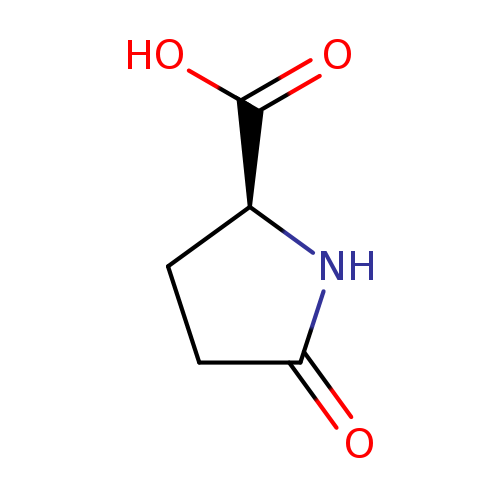
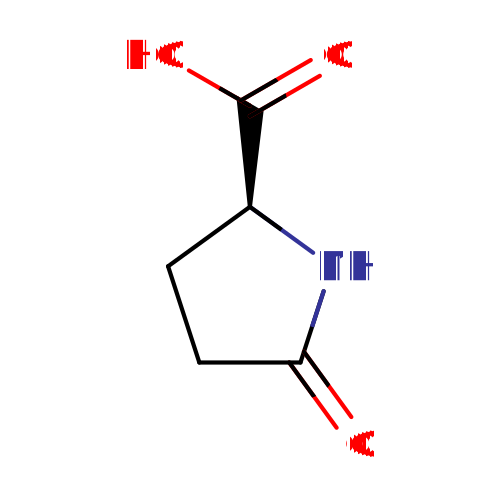
Chemical Structure
Synonyms
ValueSource
(-)-2-Pyrrolidone-5-carboxylic acidChEBI
(S)-(-)-2-Pyrrolidone-5-carboxylic acidChEBI
(S)-Pyroglutamic acidChEBI
5-Pyrrolidone-2-carboxylic acidChEBI
L-5-Pyrrolidone-2-carboxylic acidChEBI
L-Pyroglutamic acidChEBI
Pidolic acidChEBI
PyroglutamateChEBI
5-oxo-L-ProlineKegg
(-)-2-Pyrrolidone-5-carboxylateGenerator
(S)-(-)-2-Pyrrolidone-5-carboxylateGenerator
(S)-PyroglutamateGenerator
5-Pyrrolidone-2-carboxylateGenerator
L-5-Pyrrolidone-2-carboxylateGenerator
L-PyroglutamateGenerator
PidolateGenerator
(-)-PyroglutamateHMDB
(-)-Pyroglutamic acidHMDB
(5S)-2-Oxopyrrolidine-5-carboxylateHMDB
(5S)-2-Oxopyrrolidine-5-carboxylic acidHMDB
(S)-(-)-g-Butyrolactam-g-carboxylateHMDB
(S)-(-)-g-Butyrolactam-g-carboxylic acidHMDB
(S)-(-)-gamma-Butyrolactam-gamma-carboxylateHMDB
(S)-(-)-gamma-Butyrolactam-gamma-carboxylic acidHMDB
(S)-2-Pyrrolidone-5-carboxylateHMDB
(S)-2-Pyrrolidone-5-carboxylic acidHMDB
(S)-5-oxo-2-PyrrolidinecarboxylateHMDB
(S)-5-oxo-2-Pyrrolidinecarboxylic acidHMDB
2-L-Pyrrolidone-5-carboxylateHMDB
2-L-Pyrrolidone-5-carboxylic acidHMDB
2-Oxopyrrolidine-5(S)-carboxylateHMDB
2-Oxopyrrolidine-5(S)-carboxylic acidHMDB
2-Pyrrolidinone-5-carboxylateHMDB
2-Pyrrolidinone-5-carboxylic acidHMDB
5-Carboxy-2-pyrrolidinoneHMDB
5-L-OxoprolineHMDB
5-OxoprolineHMDB
5-Pyrrolidinone-2-carboxylateHMDB
5-Pyrrolidinone-2-carboxylic acidHMDB
Ajidew a 100HMDB
GlutimateHMDB
Glutimic acidHMDB
GlutiminateHMDB
Glutiminic acidHMDB
L-2-Pyrrolidone-5-carboxylateHMDB
L-2-Pyrrolidone-5-carboxylic acidHMDB
L-5-Carboxy-2-pyrrolidinoneHMDB
L-5-oxo-2-PyrrolidinecarboxylateHMDB
L-5-oxo-2-Pyrrolidinecarboxylic acidHMDB
L-5-OxoprolineHMDB
L-Glutamic acid g-lactamHMDB
L-GlutimateHMDB
L-Glutimic acidHMDB
L-GlutiminateHMDB
L-Glutiminic acidHMDB
L-PyrrolidinonecarboxylateHMDB
L-Pyrrolidinonecarboxylic acidHMDB
L-PyrrolidonecarboxylateHMDB
L-Pyrrolidonecarboxylic acidHMDB
OxoprolineHMDB
OxopyrrolidinecarboxylateHMDB
Oxopyrrolidinecarboxylic acidHMDB
PidolidoneHMDB
PyrrolidinonecarboxylateHMDB
Pyrrolidinonecarboxylic acidHMDB
Pyrrolidone-5-carboxylateHMDB
Pyrrolidone-5-carboxylic acidHMDB
Pyrrolidonecarboxylic acidHMDB
5-KetoprolineHMDB
Pidolate, magnesiumHMDB
5-Oxopyrrolidine-2-carboxylic acidHMDB
Magnesium pidolateHMDB
2-Pyrrolidone-5-carboxylic acidHMDB
5-OxoprolinateHMDB
PCAHMDB
Chemical FormulaC5H7NO3
Average Molecular Mass129.114 g/mol
Monoisotopic Mass129.043 g/mol
CAS Registry Number98-79-3
IUPAC Name(2S)-5-oxopyrrolidine-2-carboxylic acid
Traditional Namepyroglutamic acid
SMILESOC(=O)[C@@H]1CCC(=O)N1
InChI IdentifierInChI=1S/C5H7NO3/c7-4-2-1-3(6-4)5(8)9/h3H,1-2H2,(H,6,7)(H,8,9)/t3-/m0/s1
InChI KeyODHCTXKNWHHXJC-VKHMYHEASA-N
Chemical Taxonomy
Description Belongs to the class of organic compounds known as alpha amino acids and derivatives. These are amino acids in which the amino group is attached to the carbon atom immediately adjacent to the carboxylate group (alpha carbon), or a derivative thereof.
KingdomOrganic compounds
Super ClassOrganic acids and derivatives
ClassCarboxylic acids and derivatives
Sub ClassAmino acids, peptides, and analogues
Direct ParentAlpha amino acids and derivatives
Alternative Parents
Substituents
  • Alpha-amino acid or derivatives
  • Pyrroline carboxylic acid
  • Pyrroline carboxylic acid or derivatives
  • Pyrroline
  • Cyclic carboximidic acid
  • Lactim
  • Carboxylic acid
  • Monocarboxylic acid or derivatives
  • Propargyl-type 1,3-dipolar organic compound
  • Organic 1,3-dipolar compound
  • Azacycle
  • Organoheterocyclic compound
  • Organopnictogen compound
  • Organic oxygen compound
  • Organooxygen compound
  • Organic oxide
  • Hydrocarbon derivative
  • Carbonyl group
  • Organic nitrogen compound
  • Organonitrogen compound
  • Aliphatic heteromonocyclic compound
Molecular FrameworkAliphatic heteromonocyclic compounds
External Descriptors
Biological Properties
StatusDetected and Not Quantified
OriginEndogenous
Cellular Locations
  • Cytoplasm
  • Extracellular
Biofluid LocationsNot Available
Tissue Locations
  • Brain
  • Prostate
  • Skin
ApplicationsNot Available
Biological Roles
Chemical RolesNot Available
Organoleptic EffectsNot Available
Physical Properties
StateSolid
AppearanceWhite powder.
Experimental Properties
PropertyValue
Melting Point158°C (316.4°F)
Boiling PointNot Available
Solubility476.0 mg/mL at 13°C
Predicted Properties
PropertyValueSource
Water Solubility151 g/LALOGPS
logP-1ALOGPS
logP-0.89ChemAxon
logS0.07ALOGPS
pKa (Strongest Acidic)3.61ChemAxon
pKa (Strongest Basic)-2.2ChemAxon
Physiological Charge-1ChemAxon
Hydrogen Acceptor Count3ChemAxon
Hydrogen Donor Count2ChemAxon
Polar Surface Area66.4 ŲChemAxon
Rotatable Bond Count1ChemAxon
Refractivity28.09 m³·mol⁻¹ChemAxon
Polarizability11.56 ųChemAxon
Number of Rings1ChemAxon
BioavailabilityYesChemAxon
Rule of FiveYesChemAxon
Ghose FilterNoChemAxon
Veber's RuleNoChemAxon
MDDR-like RuleNoChemAxon
Spectra
Spectra
Spectrum TypeDescriptionSplash KeyDeposition DateView
GC-MSGC-MS Spectrumsplash10-0ab9-8900000000-f79dc90370ba38f587c9Not AvailableView Spectrum
GC-MSGC-MS Spectrumsplash10-0a4i-0900000000-90fb43273551aeb9b2c4Not AvailableView Spectrum
Predicted GC-MSPredicted GC-MS Spectrumsplash10-0a6r-9000000000-130a8f31f82e83c4be07Not AvailableView Spectrum
Predicted GC-MSPredicted GC-MS Spectrumsplash10-05fr-9200000000-d69b52257404ab658d5bNot AvailableView Spectrum
Predicted GC-MSPredicted GC-MS SpectrumNot AvailableNot AvailableView Spectrum
LC-MS/MSLC-MS/MS Spectrumsplash10-001i-9500000000-ebc64308ec5d5bdb303eNot AvailableView Spectrum
LC-MS/MSLC-MS/MS Spectrumsplash10-053r-9000000000-7377cb17491942e9589cNot AvailableView Spectrum
LC-MS/MSLC-MS/MS Spectrumsplash10-053u-9000000000-fcab1396867356ebd6aeNot AvailableView Spectrum
LC-MS/MSLC-MS/MS Spectrumsplash10-004i-0900000000-5b0c6536e1b3217b8544Not AvailableView Spectrum
LC-MS/MSLC-MS/MS Spectrumsplash10-004i-0900000000-c30ac0bd264c8007ef92Not AvailableView Spectrum
LC-MS/MSLC-MS/MS Spectrumsplash10-004i-5900000000-ea3a164653e4235716aeNot AvailableView Spectrum
LC-MS/MSLC-MS/MS Spectrumsplash10-0f89-9000000000-f6620738e68f990d0594Not AvailableView Spectrum
LC-MS/MSLC-MS/MS Spectrumsplash10-0udi-9000000000-7937bee2e9a6d6b29cbdNot AvailableView Spectrum
LC-MS/MSLC-MS/MS Spectrumsplash10-004i-0900000000-f20401903b234914b936Not AvailableView Spectrum
LC-MS/MSLC-MS/MS Spectrumsplash10-004i-0900000000-9446bb65e0edd72cfd59Not AvailableView Spectrum
LC-MS/MSLC-MS/MS Spectrumsplash10-0059-7900000000-74eccdeb9f0d5fd17614Not AvailableView Spectrum
LC-MS/MSLC-MS/MS Spectrumsplash10-0f8a-9000000000-8786a9cd5e488192f34dNot AvailableView Spectrum
LC-MS/MSLC-MS/MS Spectrumsplash10-0f6t-9000000000-ebcc1ac4acd525218e80Not AvailableView Spectrum
LC-MS/MSLC-MS/MS Spectrumsplash10-01q9-2900000000-754ae9b699ec1b22cd76Not AvailableView Spectrum
LC-MS/MSLC-MS/MS Spectrumsplash10-001i-9300000000-eabb8c4dc0d1111e0431Not AvailableView Spectrum
LC-MS/MSLC-MS/MS Spectrumsplash10-00lr-9100000000-1dd17702aee7e5bce618Not AvailableView Spectrum
LC-MS/MSLC-MS/MS Spectrumsplash10-067i-9000000000-c9669794d3a8746be498Not AvailableView Spectrum
LC-MS/MSLC-MS/MS Spectrumsplash10-014i-9000000000-9e103abb0a6ed890051eNot AvailableView Spectrum
LC-MS/MSLC-MS/MS Spectrumsplash10-03e9-3900000000-da8cf252285c1d616586Not AvailableView Spectrum
LC-MS/MSLC-MS/MS Spectrumsplash10-01q9-9400000000-96a7fe5a81188c49d1baNot AvailableView Spectrum
LC-MS/MSLC-MS/MS Spectrumsplash10-014i-9000000000-356215339a43217dea66Not AvailableView Spectrum
LC-MS/MSLC-MS/MS Spectrumsplash10-02vl-9000000000-ed47ec6e675eb338da19Not AvailableView Spectrum
LC-MS/MSLC-MS/MS Spectrumsplash10-014i-9000000000-f647da344adbdf7bfb1bNot AvailableView Spectrum
LC-MS/MSLC-MS/MS Spectrumsplash10-001i-9200000000-0bddc68d58c6fb981d1aNot AvailableView Spectrum
LC-MS/MSLC-MS/MS Spectrumsplash10-004i-0900000000-c70c79fa828bbf137ebcNot AvailableView Spectrum
LC-MS/MSLC-MS/MS Spectrumsplash10-004i-0900000000-5b0c6536e1b3217b8544Not AvailableView Spectrum
LC-MS/MSLC-MS/MS Spectrumsplash10-004i-0900000000-c30ac0bd264c8007ef92Not AvailableView Spectrum
LC-MS/MSLC-MS/MS Spectrumsplash10-004i-5900000000-ea3a164653e4235716aeNot AvailableView Spectrum
LC-MS/MSLC-MS/MS Spectrumsplash10-0f89-9000000000-f6620738e68f990d0594Not AvailableView Spectrum
LC-MS/MSLC-MS/MS Spectrumsplash10-0udi-9000000000-7937bee2e9a6d6b29cbdNot AvailableView Spectrum
LC-MS/MSLC-MS/MS Spectrumsplash10-004i-0900000000-f20401903b234914b936Not AvailableView Spectrum
LC-MS/MSLC-MS/MS Spectrumsplash10-004i-0900000000-9446bb65e0edd72cfd59Not AvailableView Spectrum
LC-MS/MSLC-MS/MS Spectrumsplash10-0059-7900000000-74eccdeb9f0d5fd17614Not AvailableView Spectrum
LC-MS/MSLC-MS/MS Spectrumsplash10-0f8a-9000000000-8786a9cd5e488192f34dNot AvailableView Spectrum
LC-MS/MSLC-MS/MS Spectrumsplash10-0f6t-9000000000-ebcc1ac4acd525218e80Not AvailableView Spectrum
LC-MS/MSLC-MS/MS Spectrumsplash10-004i-0900000000-c70c79fa828bbf137ebcNot AvailableView Spectrum
LC-MS/MSLC-MS/MS Spectrumsplash10-01q9-2900000000-754ae9b699ec1b22cd76Not AvailableView Spectrum
LC-MS/MSLC-MS/MS Spectrumsplash10-001i-9300000000-eabb8c4dc0d1111e0431Not AvailableView Spectrum
LC-MS/MSLC-MS/MS Spectrumsplash10-00lr-9100000000-1dd17702aee7e5bce618Not AvailableView Spectrum
LC-MS/MSLC-MS/MS Spectrumsplash10-067i-9000000000-c9669794d3a8746be498Not AvailableView Spectrum
LC-MS/MSLC-MS/MS Spectrumsplash10-014i-9000000000-9e103abb0a6ed890051eNot AvailableView Spectrum
LC-MS/MSLC-MS/MS Spectrumsplash10-03e9-3900000000-da8cf252285c1d616586Not AvailableView Spectrum
LC-MS/MSLC-MS/MS Spectrumsplash10-01q9-9400000000-96a7fe5a81188c49d1baNot AvailableView Spectrum
LC-MS/MSLC-MS/MS Spectrumsplash10-014i-9000000000-356215339a43217dea66Not AvailableView Spectrum
LC-MS/MSLC-MS/MS Spectrumsplash10-02vl-9000000000-ed47ec6e675eb338da19Not AvailableView Spectrum
LC-MS/MSLC-MS/MS Spectrumsplash10-014i-9000000000-f647da344adbdf7bfb1bNot AvailableView Spectrum
LC-MS/MSLC-MS/MS Spectrumsplash10-001i-9000000000-0f1d7e67dfe0b5f4f6c3Not AvailableView Spectrum
LC-MS/MSLC-MS/MS Spectrumsplash10-001i-9200000000-0bddc68d58c6fb981d1aNot AvailableView Spectrum
LC-MS/MSLC-MS/MS Spectrumsplash10-001i-9000000000-0bee055cdda4458730dcNot AvailableView Spectrum
LC-MS/MSLC-MS/MS Spectrumsplash10-0udi-9000000000-0ab9f4a8e5e486f37ac4Not AvailableView Spectrum
LC-MS/MSLC-MS/MS Spectrumsplash10-052f-9600000000-ce812283fd4b01e75bb6Not AvailableView Spectrum
LC-MS/MSLC-MS/MS Spectrumsplash10-0a4i-9000000000-5b691e6fd93648ee2bf2Not AvailableView Spectrum
LC-MS/MSLC-MS/MS Spectrumsplash10-001i-9000000000-e02bc9d01c264b48fc59Not AvailableView Spectrum
LC-MS/MSLC-MS/MS Spectrumsplash10-0a4i-9000000000-a986456f5859bc345d6fNot AvailableView Spectrum
LC-MS/MSLC-MS/MS Spectrumsplash10-001i-9000000000-35c47b9f683561a13ef4Not AvailableView Spectrum
LC-MS/MSLC-MS/MS Spectrumsplash10-001i-9100000000-7f08454701bc9d3288aeNot AvailableView Spectrum
LC-MS/MSLC-MS/MS Spectrumsplash10-001i-9100000000-0033fba109996cd08366Not AvailableView Spectrum
LC-MS/MSLC-MS/MS Spectrumsplash10-0a4i-9000000000-9ca778fa5b6bf3fe67b2Not AvailableView Spectrum
LC-MS/MSLC-MS/MS Spectrumsplash10-001i-9000000000-7e5e796cc28fc2e94618Not AvailableView Spectrum
LC-MS/MSLC-MS/MS Spectrumsplash10-0a4l-9000000000-c7474a79874e4a216997Not AvailableView Spectrum
LC-MS/MSLC-MS/MS Spectrumsplash10-001i-9100000000-d1ee8b4b75c58ffe8f6aNot AvailableView Spectrum
LC-MS/MSLC-MS/MS Spectrumsplash10-001i-9100000000-cae49058eccbfc470a22Not AvailableView Spectrum
LC-MS/MSLC-MS/MS Spectrumsplash10-0a4l-9000000000-896f33bd9f9feb0c87e4Not AvailableView Spectrum
LC-MS/MSLC-MS/MS Spectrumsplash10-001i-9200000000-050764c67183dc78b104Not AvailableView Spectrum
LC-MS/MSLC-MS/MS Spectrumsplash10-001i-9000000000-262e7c587853a4f42311Not AvailableView Spectrum
LC-MS/MSLC-MS/MS Spectrumsplash10-001i-9200000000-1791fecd5ae30e47998dNot AvailableView Spectrum
LC-MS/MSLC-MS/MS Spectrumsplash10-0btc-9000000000-5132fe0da6469afa7384Not AvailableView Spectrum
LC-MS/MSLC-MS/MS Spectrumsplash10-001i-9000000000-36aec61ea16c43c44ec3Not AvailableView Spectrum
LC-MS/MSLC-MS/MS Spectrumsplash10-004i-0900000000-e5ec26ece3ceedc62f81Not AvailableView Spectrum
LC-MS/MSLC-MS/MS Spectrumsplash10-0a59-9000000000-2c122647b586eb003777Not AvailableView Spectrum
LC-MS/MSLC-MS/MS Spectrumsplash10-001i-9200000000-423427b90a1db2e760baNot AvailableView Spectrum
LC-MS/MSLC-MS/MS Spectrumsplash10-004i-3900000000-afcda6732099c1083005Not AvailableView Spectrum
LC-MS/MSLC-MS/MS Spectrumsplash10-001i-9000000000-7a1669a57a449861f149Not AvailableView Spectrum
LC-MS/MSLC-MS/MS Spectrumsplash10-000x-9000000000-e48dabec33960d613864Not AvailableView Spectrum
LC-MS/MSLC-MS/MS Spectrumsplash10-0a4i-9000000000-5f6430d3f05e7c4804e0Not AvailableView Spectrum
LC-MS/MSLC-MS/MS Spectrumsplash10-004i-4900000000-dab732aabe9fda2f2e25Not AvailableView Spectrum
LC-MS/MSLC-MS/MS Spectrumsplash10-004i-0900000000-3894d2aa34f0fa3e00a9Not AvailableView Spectrum
LC-MS/MSLC-MS/MS Spectrumsplash10-004i-0900000000-7382ed9a540cb87ab15fNot AvailableView Spectrum
LC-MS/MSLC-MS/MS Spectrumsplash10-001i-9100000000-ab1dbed95c4652a72c4dNot AvailableView Spectrum
LC-MS/MSLC-MS/MS Spectrumsplash10-004i-5900000000-7ccc4315f4c473e63621Not AvailableView Spectrum
LC-MS/MSLC-MS/MS Spectrumsplash10-004i-0900000000-ba328db60b784d95dfafNot AvailableView Spectrum
LC-MS/MSLC-MS/MS Spectrumsplash10-004i-0900000000-b77d0c4233e0bfaf5170Not AvailableView Spectrum
LC-MS/MSLC-MS/MS Spectrumsplash10-004i-0900000000-909a9b86d6440689ff1dNot AvailableView Spectrum
LC-MS/MSLC-MS/MS Spectrumsplash10-001i-9000000000-05787209229b1a96af8cNot AvailableView Spectrum
Predicted LC-MS/MSPredicted LC-MS/MS Spectrumsplash10-001i-4900000000-d352d09556f6aa9cd491Not AvailableView Spectrum
Predicted LC-MS/MSPredicted LC-MS/MS Spectrumsplash10-001i-9300000000-3195d8913769e50c2e91Not AvailableView Spectrum
Predicted LC-MS/MSPredicted LC-MS/MS Spectrumsplash10-015c-9000000000-49397657cbb5432d98aeNot AvailableView Spectrum
Predicted LC-MS/MSPredicted LC-MS/MS Spectrumsplash10-004i-2900000000-df5f5a68c6ea589ea5d1Not AvailableView Spectrum
Predicted LC-MS/MSPredicted LC-MS/MS Spectrumsplash10-0059-9700000000-740c7370161dc2be09e0Not AvailableView Spectrum
Predicted LC-MS/MSPredicted LC-MS/MS Spectrumsplash10-0006-9000000000-91c48ce6a8ccc746e61bNot AvailableView Spectrum
Predicted LC-MS/MSPredicted LC-MS/MS Spectrumsplash10-004i-0900000000-2014c7ab0666ae328219Not AvailableView Spectrum
Predicted LC-MS/MSPredicted LC-MS/MS Spectrumsplash10-0a6r-9300000000-78a4688df6eb7061aa8eNot AvailableView Spectrum
Predicted LC-MS/MSPredicted LC-MS/MS Spectrumsplash10-0006-9000000000-650a20d86ee5f000b188Not AvailableView Spectrum
Predicted LC-MS/MSPredicted LC-MS/MS Spectrumsplash10-001i-9300000000-616f581f705def015b25Not AvailableView Spectrum
Predicted LC-MS/MSPredicted LC-MS/MS Spectrumsplash10-001i-9000000000-3116200b34488f0a8d77Not AvailableView Spectrum
Predicted LC-MS/MSPredicted LC-MS/MS Spectrumsplash10-0a4l-9000000000-70879d03adcfa23818f4Not AvailableView Spectrum
MSMS Spectrumsplash10-001i-9000000000-6c87253da642bb4800dfNot AvailableView Spectrum
1D NMR13C NMR Spectrum (1D, D2O, predicted)Not AvailableNot AvailableView Spectrum
1D NMR1H NMR Spectrum (1D, D2O, predicted)Not AvailableNot AvailableView Spectrum
Toxicity Profile
Toxicity Values
Toxicity ValueOrganismDose DescriptorRoute of ExposurePredicted or ExperimentalToxicity RatingReference
2229.0 Log mg/kg [1300:4000]RatLD50oralpredictedNot AvailableNot Available
Toxicity / Toxin ClassNot Available
Mechanism of Toxicity5-Oxoprolinuria develops in moderate to severe cases of glutathione synthetase deficiency. The deficiency in glutathione synthetase leads to the accumulation of γ-glutamylcysteine, which is converted into 5-oxoproline by the action of γ-glutamyl cyclotransferase. The excessive formation of 5-oxoproline exceeds the capacity of 5-oxoprolinase, leading to accumulation of 5-oxoproline in body fluids causing metabolic acidosis and 5-oxoprolinuria. 5-Oxoproline accumulation is thought to be the cause of metabolic acidosis in Hawkinsinuria. 5-Oxoprolinase deficiency also leads to decreased conversion of 5-oxoproline to glutamate, resulting in elevated levels of 5-oxoproline in body fluids. 5-Oxoprolinuria has also been described in patients with urea cycle defects, such as ornithine transcarbamoylase deficiency or homocystinuria. In nephropathic cystinosis 5-oxoprolinuria may occur because of secondary impairment of the γ-glutamyl cycle resulting from decreased availability of free cysteine and can be corrected through cysteamine therapy. Transient 5-oxoprolinuria of unknown cause has been reported in very preterm infants. Limited availability of glycine in malnutrition and pregnancy as well as increased turnover of collagen, fibrinogen and other proteins containing considerable amounts of 5-oxoproline in patients with severe burns or Stevens-Johnson syndrome may lead to 5-oxoprolinuria. In addition, certain drugs, such as paracetamol, vigabatrin or some antibiotics (flucloxacillin, netimicin), are known to induce 5-oxoprolinuria, probably through interaction with the γ-glutamyl cycle. Particular infant formulas and tomato juice may contain modified proteins with increased content of 5-oxoproline. (15)
Carcinogenicity (IARC Classification)No indication of carcinogenicity to humans (not listed by IARC).
Minimum Risk LevelNot Available
SymptomsPatients with the moderate variant of glutathione synthetase deficiency usually present during the neonatal period with severe and chronic metabolic acidosis, mild to moderate haemolytic anaemia, jaundice and 5-oxoprolinuria. After the neonatal period, the condition usually stabilises, but patients may become critically ill during infections owing to pronounced acidosis and electrolyte imbalances. Several patients have died during such episodes. In addition to the symptoms mentioned above, patients with severe GS deficiency develop progressive CNS symptoms, e.g. mental retardation, seizures, spasticity, ataxia and intention tremor. In addition, some patients suffer from recurrent severe bacterial infections, which is probably due to defective granulocyte function. Hawkinsinuria is characterised by failure to thrive and metabolic acidosis in infancy. After the 1st year of life the condition appears to be asymptomatic. Early weaning from breastfeeding seems to precipitate the disease; the condition may be asymptomatic in breastfed infants. 5-Oxoprolinase Deficiency: Up to now, eight patients in six different families have been described. The clinical symptoms are inconstant and very heterogeneous, including renal stone formation, enterocolitis, neonatal hypoglycaemia, microcytic anaemia, microcephaly and mental retardation. It remains to be established wheter symptoms in identified patients are merely a coincidence. (15)
TreatmentGlutathione Synthetase Deficiency: The clinical management of GS deficient patients is aimed at correction of acidosis, prevention of haemolytic crises and support of endogenous defence against reactive oxygen species (ROS). In the neonatal period, correction of metabolic acidosis, electrolyte imbalances, treatment of anaemia and excessive hyperbilirubinaemia are of crucial importance. Correction of acidosis can be reached through bicarbonate, citrate or tris-hydroxymethyl aminomethane (THAM). Doses of up to 10 mmol/kg/day, or even higher in episodes of acute infections, may be required. Repeated blood transfusions may be necessary in patients with massive haemolysis. Drugs and foods known to precipitate haemolytic crises in patients with glucose- 6-phosphatase dehydrogenase deficiency should be avoided. Successful treatment with erythropoietin has been reported in one patient. Early supplementation with vitamin E and vitamin C are thought to replenish the lack of GSH as a scavenger of free radicals. Recommended doses are 10 mg/kg/day for vitamin E and 100 mg/kg/day for vitamin C. A longterm follow-up study of 28 patients suggested that early supplementation with both vitamins may prevent CNS damage and improve the long-term clinical outcome in GS-deficient patients. The value of N-acetylcysteine, which is known to protect cells from oxidative stress in vitro, in the treatment of GS deficiency is controversial. It was suggested that the low intracellular GSH concentrations and cysteine availabilty might be increased by N-acetylcysteine. However, supplementation with N-acetylcysteine should not be recommended, because it was shown at least in cultured fibroblasts that patients with GS deficiency accumulate cysteine, which is known to be neurotoxic in excessive amounts. A therapeutic trial with orally administered GSH showed no lasting benefit in two patients with GS deficiency. GSH esters, lipid-soluble preparations which are easily transported into cells where they are converted into GSH, have been tried in animal models of GSH deficiency and in two patients with GS deficiency. However, associated toxic effects due to production of alcohols as a by-product during hydrolysis to release GSH make them of limited use. In vitro studies have shown that addition of S-acetylglutathione to the medium of cultured fibroblasts from patients with GS deficiency normalised intracellular GSH content. Owing to the rarity of the disease and the heterogeneity of the clinical condition the prognosis for individual patients is difficult to predict. Early diagnosis, correction of acidosis and early supplementation with vitamin E and vitamin C appear to be the most important factors regarding the survival and the long-term outcome. Hawkinsinuria: Symptoms in infancy respond to a return to breastfeeding or a diet restricted in tyrosine and phenylalanine along with vitamin C supplementation. The condition is asymptomatic after the 1st year of life, and affected infants are reported to have developed normally. 5-Oxoprolinase Deficiency: No specific treatment has been proposed or tried. (15)
Health Effects
Health EffectRelationshipDirectionDescriptionReference
neuropathyElevated in Blood InNot AvailableA nervous system disease that is located in nerves or nerve cells. (do).PMC10135322
metabolic acidosisElevated in Blood InNot AvailableNot AvailablePMC10135322
metabolic acidosisAssociated With?Not AvailableNot AvailablePMC3549305
myopathyElevated in Blood InNot AvailableNot AvailablePMC10135322
intellectual disabilityElevated in Blood InNot AvailableNot AvailablePMC10135322
hemolytic anemiaElevated in Blood InNot AvailableHemolytic anemia occurs when blood cells are destroyed faster than they are replaced. Diagnosis of hemolytic anemia is often based on the underlying condition that causes the increased rate of hemolysis. These conditions include, but not limited to, sickle cell disease, thalassemia, and some form of autoimmune disorders. Hemolytic anemia accounts for 5% of all existing anemias. It has numerous possible consequences, ranging from general symptoms to life-threatening systemic effects. Treatment depends on the type and cause of the hemolytic anemia. Symptoms of hemolytic anemia are similar to other forms of anemia (fatigue and shortness of breath), but in addition, the breakdown of red cells leads to jaundice and increases the risk of particular long-term complications, such as gallstones and pulmonary hypertension.PMC10135322
hemolytic anemiaAssociated With?Not AvailableHemolytic anemia occurs when blood cells are destroyed faster than they are replaced. Diagnosis of hemolytic anemia is often based on the underlying condition that causes the increased rate of hemolysis. These conditions include, but not limited to, sickle cell disease, thalassemia, and some form of autoimmune disorders. Hemolytic anemia accounts for 5% of all existing anemias. It has numerous possible consequences, ranging from general symptoms to life-threatening systemic effects. Treatment depends on the type and cause of the hemolytic anemia. Symptoms of hemolytic anemia are similar to other forms of anemia (fatigue and shortness of breath), but in addition, the breakdown of red cells leads to jaundice and increases the risk of particular long-term complications, such as gallstones and pulmonary hypertension.PMC3549305
Oxidative StressAssociated With?increaseNot AvailablePMC7109098
HepatosplenomegalyElevated in Blood InNot AvailableNot AvailablePMC10135322
AminoaciduriaElevated in Blood InNot AvailableNot AvailablePMC10135322
cerebellar ataxiaElevated in Blood InNot AvailableNot AvailablePMC10135322
Exposure Sources
Source IDSourceSectorReference
CEDs000010Insecticides?Insecticides are synthetic chemicals designed to control or eliminate insect pests that threaten crops and other agricultural products.Agriculture & land managementPubChem
CEDs000013Soil?Soil serves as a critical medium for plant growth and sustains various ecological functions; however, it can become a reservoir for synthetic chemical contamination.Agriculture & land managementPMC12742202
CEDs000233Brushes?Brushes used in personal care and cosmetics can be a source of synthetic chemical contamination due to the materials and coatings used in their manufacturing.Personal care & cosmeticsPubChem
CEDs000268Minerals?Minerals can serve as a source of synthetic chemical contamination through their use in various processes and formulations.Healthcare, pharmaceuticals & veterinary productsNot Available
CEDs000497Floors?Floors in built environments can be a significant source of synthetic chemical contamination due to the materials and finishes used in their construction.Building & ConstructionPubChem
CEDs000506Antennas?Antennas, commonly used in communication technologies, can be a source of synthetic chemical contamination through the materials and coatings used in their construction.Electrical & Electronic EquipmentPubChem
CEDs000511Conductors Or Conductive Bodies Characterised By The Conductive Materials?Conductors, or conductive bodies, are materials that allow the flow of electrical current, typically made from metals such as copper, aluminum, or silver.Electrical & Electronic EquipmentPubChem
CEDs000516Electric Hearing Aids?Electric hearing aids are small electronic devices designed to amplify sound for individuals with hearing loss.Electrical & Electronic EquipmentPubChem
CEDs000518Electrically Stimulated Smoking Devices?Electrically stimulated smoking devices, commonly known as e-cigarettes or vape pens, utilize electrical components to heat a liquid solution, often containing nicotine, flavorings, and other additives, to produce an aerosol for inhalation.Electrical & Electronic EquipmentPubChem
CEDs000519Electrodes?Electrodes, used in various electrical and electronic applications, can be a source of synthetic chemical contamination due to the materials from which they are constructed and the processes involved in their manufacturing.Electrical & Electronic EquipmentPubChem
CEDs000520Emergency Protective Devices?Emergency protective devices, such as circuit breakers and surge protectors, are essential components in electrical systems designed to prevent damage from overcurrent and surges.Electrical & Electronic EquipmentPubChem
CEDs000524Hybrid Capacitors?Hybrid capacitors are energy storage devices that combine the properties of electrolytic and supercapacitors, utilizing a combination of electrochemical principles to achieve higher energy density and power density.Electrical & Electronic EquipmentPubChem
CEDs000526Loudspeakers?Loudspeakers, as components in audio systems, can be sources of synthetic chemical contamination primarily due to the materials used in their construction.Electrical & Electronic EquipmentPubChem
CEDs000537Television Systems?Television systems can be a source of synthetic chemical contamination due to the various materials and components used in their manufacture and operation.Electrical & Electronic EquipmentPubChem
CEDs000544Fermentation Processes For Beer?Fermentation processes for beer involve the conversion of sugars into alcohol and carbon dioxide by yeast.Food, food processing & cookwarePubChem
CEDs000545Food Preservation?Food preservation often involves the use of synthetic chemicals, such as preservatives, flavor enhancers, and color additives, to extend shelf life and enhance the sensory qualities of food products.Food, food processing & cookwarePubChem
CEDs000546Molasses And Treatment Of Molasses?Molasses is a thick, viscous byproduct of sugar production, derived from the extraction of sugar cane or sugar beet juice.Food, food processing & cookwarePubChem
CEDs000547Preparation Of Malt?Malt preparation involves the germination and drying of cereal grains, primarily barley, to produce malt for brewing and food products.Food, food processing & cookwarePubChem
CEDs000548Preparation Of Vinegar?Vinegar is produced through the fermentation of ethanol by acetic acid bacteria, resulting in a solution that typically contains 4-8% acetic acid.Food, food processing & cookwarePubChem
CEDs000549Preparation Of Wine Or Sparkling Wine?The preparation of wine or sparkling wine involves various stages, including fermentation, aging, and bottling, which can introduce potential sources of synthetic chemical contamination.Food, food processing & cookwarePubChem
CEDs000550Preparation Of Wort?The preparation of wort involves the extraction of sugars from malted grains, a crucial step in the brewing process.Food, food processing & cookwarePubChem
CEDs000551Processing Fish?Processing fish can lead to synthetic chemical contamination through various stages of production and preservation.Food, food processing & cookwarePubChem
CEDs000555Bleaching Agents?Bleaching agents are chemical substances used to whiten or lighten materials, often employed in various cleaning products for their stain removal and disinfecting properties.Household cleaning & consumer productsPubChem
CEDs000556Cigar Cigarettes?Cigar cigarettes are a source of synthetic chemical contamination due to the combustion of various tobacco blends and additives.Household cleaning & consumer productsPubChem
CEDs000559Non Electric Simulated Smoking Devices?Non-electric simulated smoking devices, often designed to mimic the experience of smoking without combustion, can be sources of synthetic chemical contamination due to the materials and chemicals used in their construction and operation.Household cleaning & consumer productsPubChem
CEDs000560Other Smoking Requisites?Other smoking requisites, including items such as lighters, matches, and rolling papers, can introduce synthetic chemical contamination through various components and additives.Household cleaning & consumer productsPubChem
CEDs000561Perfumes Within Detergents And Soaps?Perfumes within detergents and soaps are synthetic fragrance compounds added to enhance the sensory experience of cleaning products.Household cleaning & consumer productsPubChem
CEDs000562Pipe Accessories?Pipe accessories, such as fittings, connectors, and seals, are components used in plumbing systems to facilitate the flow of liquids and gases.Household cleaning & consumer productsPubChem
CEDs000563Soap Detergents?Soap detergents are synthetic surfactants designed to enhance the cleaning efficacy of water by reducing surface tension, allowing for better interaction with dirt and grease.Household cleaning & consumer productsPubChem
CEDs000567Tobacco Product Cases?Tobacco product cases can serve as a source of synthetic chemical contamination due to the presence of various additives and chemicals used in tobacco processing and product manufacturing.Household cleaning & consumer productsPubChem
CEDs000569Tobacco Smoke Filters?Tobacco smoke filters are designed to reduce the inhalation of harmful substances in cigarette smoke, including tar and other particulate matter.Household cleaning & consumer productsPubChem
CEDs000578Making Cigars?The process of making cigars involves several steps, including the cultivation of tobacco, fermentation, and the application of various additives to enhance flavor and preservation.Industrial manufacturing & chemical processingPubChem
CEDs000579Manufacture Of Iron Or Steel?The manufacture of iron or steel involves various processes, including smelting, refining, and alloying, which can result in the release of synthetic chemicals and contaminants.Industrial manufacturing & chemical processingPubChem
CEDs000580Manufacture Preparation Of Tobacco Products?The manufacture and preparation of tobacco products involve various processes that can result in the introduction of synthetic chemicals into the environment.Industrial manufacturing & chemical processingPubChem
CEDs000589Life Buoys?Life buoys, commonly used in marine environments for safety and rescue operations, can be a source of synthetic chemical contamination due to the materials used in their production.Marine, shipping & aquaculturePubChem
CEDs000596Acaricides?Acaricides are synthetic chemicals specifically designed to target and control mite populations that can damage crops and plants.Agriculture & land managementPubChem
CEDs000600Herbicides And Algicides?Herbicides and algicides are synthetic chemicals primarily used to control unwanted plants and algae in various environments.Agriculture & land managementPubChem
CEDs000602Molluscicides?Molluscicides are synthetic chemicals specifically designed to control and eliminate mollusks, such as snails and slugs, which can be detrimental to crops and agricultural productivity.Agriculture & land managementPubChem
CEDs000603Nematocides?Nematocides are synthetic chemicals specifically designed to control nematodes, which are microscopic roundworms that can cause significant damage to crops and plants.Agriculture & land managementPubChem
CEDs000604Pest Attractants?Pest attractants are synthetic chemicals designed to lure specific pests for monitoring or control purposes.Agriculture & land managementPubChem
CEDs000605Pest Repellants?Pest repellents, often formulated from synthetic chemicals, are widely used to protect crops from insect infestations and other pests.Agriculture & land managementPubChem
CEDs000606Plant Growth Regulators?Plant Growth Regulators (PGRs) are synthetic chemicals designed to influence the growth and development of plants.Agriculture & land managementPubChem
CEDs000609Aftershave?Aftershave is a grooming product typically used to soothe and protect the skin following shaving.Personal care & cosmeticsPubChem
CEDs000610Aftersun Products?Aftersun products are designed to soothe and hydrate the skin after sun exposure, often containing various synthetic chemicals such as emollients, preservatives, and fragrances.Personal care & cosmeticsPubChem
CEDs000611Anti Perspirants Or Body Deoderants?Antiperspirants and body deodorants commonly contain synthetic chemicals such as aluminum compounds, parabens, and synthetic fragrances.Personal care & cosmeticsPubChem
CEDs000612Body Washing Or Cleaning Implements?Body washing or cleaning implements, such as synthetic sponges, loofahs, and washcloths, can be sources of synthetic chemical contamination due to the materials used in their production.Personal care & cosmeticsPubChem
CEDs000613Depilatories?Depilatories are products designed to remove unwanted hair through the application of synthetic chemicals that break down the protein structure of hair, facilitating its removal.Personal care & cosmeticsPubChem
CEDs000614Essential Oils Or Perfumes?Essential oils and perfumes are complex mixtures of volatile compounds derived from natural or synthetic sources, commonly used for their aromatic properties.Personal care & cosmeticsPubChem
CEDs000615Eye Makeup Products?Eye makeup products, including mascaras, eyeliners, and eyeshadows, often contain a variety of synthetic chemicals such as pigments, preservatives, and film-forming agents.Personal care & cosmeticsPubChem
CEDs000616Face Mask Cosmetics?Face mask cosmetics often contain a variety of synthetic chemicals, including preservatives, emulsifiers, and fragrances, which can contribute to chemical contamination.Personal care & cosmeticsPubChem
CEDs000617Lip Care Products?Lip care products, including lipsticks, balms, and glosses, often contain a variety of synthetic chemicals such as parabens, phthalates, and synthetic fragrances.Personal care & cosmeticsPubChem
CEDs000618Lip Makeup Products?Lip makeup products, such as lipsticks, lip glosses, and lip liners, often contain a variety of synthetic chemicals, including pigments, preservatives, and emollients.Personal care & cosmeticsPubChem
CEDs000632Apparel?Apparel production often involves the use of various synthetic chemicals, including dyes, finishing agents, and preservatives.Textiles, leather & furnishingsPubChem
CEDs000633Azo Dyes?Azo dyes are synthetic organic compounds characterized by the presence of one or more azo groups (-N=N-), which are widely used for coloring textiles, leather, and furnishings.Textiles, leather & furnishingsPubChem
CEDs000642Footwear?Footwear production often involves the use of various synthetic chemicals, such as adhesives, dyes, and treatments, which can contribute to environmental contamination.Textiles, leather & furnishingsPubChem
CEDs000650Purses Luggage Hand Bags?Purses, luggage, and handbags are often manufactured using synthetic materials such as polyvinyl chloride (PVC), polyurethane, and various types of nylon.Textiles, leather & furnishingsPubChem
CEDs000659Transfer Printing?Transfer printing is a process used to apply designs and patterns onto various substrates, commonly utilizing synthetic dyes and inks that can contain hazardous chemicals.Textiles, leather & furnishingsPubChem
CEDs000670Solid Fire Fighting Substances?Solid fire fighting substances, such as certain types of dry chemical powders, are used in fire suppression applications to extinguish flames and prevent fire spread.Fire suppression systems & agentsPubChem
CEDs000671Airplanes And Helicopters?Airplanes and helicopters are significant sources of synthetic chemical contamination primarily through the use of aviation fuels, lubricants, and de-icing agents.Aviation & AerospacePubChem
CEDs000673Unmanned Aerial Vehicles?Unmanned Aerial Vehicles (UAVs), commonly known as drones, utilize various synthetic chemicals in their manufacturing, operation, and maintenance processes.Aviation & AerospacePubChem
CEDs000678Nitrogenous Fertilisers?Nitrogenous fertilizers are synthetic chemical compounds primarily used to enhance plant growth by supplying essential nitrogen, a crucial nutrient for photosynthesis and protein synthesis.Agriculture & land managementPubChem
CEDs000679Phosphatic Fertilisers?Phosphatic fertilizers are synthetic chemical products primarily composed of phosphorus, which is essential for plant growth.Agriculture & land managementPubChem
CEDs000684Cements?Cements are a composite material primarily used as a binding agent in construction applications, formed by the calcination of limestone and clay minerals at high temperatures.Building & ConstructionPubChem
CEDs000685Ceramics?Ceramics can be a source of synthetic chemical contamination through various additives and processing agents used in their production.Building & ConstructionPubChem
CEDs000686Clay Wares?Clay wares are ceramic products made from natural clay, often utilized in various construction applications such as tiles, bricks, and sanitary ware.Building & ConstructionPubChem
CEDs000688Glass Coatings?Glass coatings are synthetic chemical formulations applied to glass surfaces to enhance properties such as durability, UV resistance, and aesthetic appeal.Building & ConstructionPubChem
CEDs000693Silica Glass?Silica glass, primarily composed of silicon dioxide (SiO2), is widely used in various applications, including windows, glass facades, and insulation materials.Building & ConstructionPubChem
CEDs000696Nanotechnology?Nanotechnology involves the manipulation of materials at the molecular or atomic level, typically within the range of 1 to 100 nanometers.Industrial manufacturing & chemical processingPubChem
CEDs000727Printing Machines Or Presses?Printing machines or presses commonly utilize synthetic chemicals such as inks, solvents, and cleaning agents.Paper, pulp & fiber productsPubChem
CEDs000729Stamps?Stamps, particularly those produced using synthetic inks and adhesives, can contribute to chemical contamination when disposed of improperly.Paper, pulp & fiber productsPubChem
CEDs000730Contact Lens Cases?Contact lens cases are small containers designed to store contact lenses in a sterile environment, typically made from various synthetic materials including plastics such as polypropylene or polycarbonate.Healthcare, pharmaceuticals & veterinary productsPubChem
CEDs000734Coating Compositions?Coating compositions, which include paints, sealants, and varnishes, are formulated with a variety of synthetic chemicals such as solvents, resins, pigments, and additives.Building & ConstructionPubChem
CEDs000735Explosives?Explosives are chemical compounds or mixtures designed to undergo rapid decomposition, releasing energy in the form of gas and heat.Defense & military infrastructurePubChem
CEDs000738Cooling Circuit Water?Cooling circuit water is utilized in various industrial processes to absorb and dissipate heat generated during operations.Industrial manufacturing & chemical processingPubChem
CEDs000739Inks?Inks are complex mixtures composed of pigments or dyes, solvents, resins, and additives used primarily for printing and writing applications.Paper, pulp & fiber productsPubChem
CEDs000740Paper?Paper production involves the processing of wood fibers and the use of various chemicals, which can lead to synthetic chemical contamination.Paper, pulp & fiber productsPubChem
CEDs000741Pigment Pastes?Pigment pastes are concentrated dispersions of pigments used to impart color and properties to materials.Paper, pulp & fiber productsPubChem
CEDs000743Sludge Treatment?Sludge treatment involves the processing of waste materials generated from wastewater treatment plants, which often contain a variety of organic and inorganic substances.Wastewater, sanitation & biosolidsPubChem
CEDs000744Water, Wastewater, & Sewage Treatment?Water, wastewater, and sewage treatment processes are critical for managing and mitigating pollutants in water systems.Wastewater, sanitation & biosolidsPubChem
Pathways
18 pathwaysPathway Source: PathBank
Targets
StructureProteinUniProt IDOrganismRelationshipDetails
Click to view 3D structureThyrotropin-releasing hormone receptorP21761Mus musculusPredicted (SEA)
Prediction Confidence Score
0.29
Applicability Domain
0.321
Statistical Significance
0.0027
Supporting Reference Compounds
3
E-value
20.7857
Click to view 3D structureFumarate hydratase, mitochondrialP10173Sus scrofaPredicted (SEA)
Prediction Confidence Score
0.269
Applicability Domain
0.269 Low confidence
Statistical Significance
3.00e-05
Supporting Reference Compounds
1
E-value
0.233548
Click to view 3D structureThyrotropin releasing hormone degrading enzymeA0A287AP33Sus scrofaPredicted (SEA)
Prediction Confidence Score
0.262
Applicability Domain
0.262 Low confidence
Statistical Significance
0.0061
Supporting Reference Compounds
1
E-value
47.488
Click to view 3D structureThyrotropin-releasing hormone receptor 2A6IZR3Rattus norvegicusPredicted (SEA)
Prediction Confidence Score
0.258
Applicability Domain
0.283 Low confidence
Statistical Significance
0.0042
Supporting Reference Compounds
4
E-value
32.7745
Ornithine aminotransferase, mitochondrial structureClick to view 3D structureOrnithine aminotransferase, mitochondrialP04181HumansPredicted (SEA)
Prediction Confidence Score
0.25
Applicability Domain
0.25 Low confidence
Statistical Significance
1.10e-04
Supporting Reference Compounds
1
E-value
0.856341
Protein cereblon structureClick to view 3D structureProtein cereblonQ96SW2HumansPredicted (SEA)
Prediction Confidence Score
0.245
Applicability Domain
0.306
Statistical Significance
0.0024
Supporting Reference Compounds
23
E-value
18.9952
Protein deacetylase HDAC6 structureClick to view 3D structureProtein deacetylase HDAC6Q9UBN7HumansPredicted (SEA)
Prediction Confidence Score
0.237
Applicability Domain
0.346
Statistical Significance
0.3695
Supporting Reference Compounds
553
E-value
2876.68
Histone deacetylase 1 structureClick to view 3D structureHistone deacetylase 1Q13547HumansPredicted (SEA)
Prediction Confidence Score
0.234
Applicability Domain
0.346
Statistical Significance
0.3791
Supporting Reference Compounds
497
E-value
2951.26
Histone deacetylase 2 structureClick to view 3D structureHistone deacetylase 2Q92769HumansPredicted (SEA)
Prediction Confidence Score
0.233
Applicability Domain
0.346
Statistical Significance
0.2773
Supporting Reference Compounds
307
E-value
2158.68
Click to view 3D structureZinc finger protein AiolosQ9UKT9HumansPredicted (SEA)
Prediction Confidence Score
0.233
Applicability Domain
0.306
Statistical Significance
0.0017
Supporting Reference Compounds
9
E-value
13.0008
Histone deacetylase 8 structureClick to view 3D structureHistone deacetylase 8Q9BY41HumansPredicted (SEA)
Prediction Confidence Score
0.231
Applicability Domain
0.346
Statistical Significance
0.3068
Supporting Reference Compounds
317
E-value
2388.34
Click to view 3D structureHistone deacetylase 11Q96DB2HumansPredicted (SEA)
Prediction Confidence Score
0.231
Applicability Domain
0.346
Statistical Significance
0.1686
Supporting Reference Compounds
149
E-value
1312.93
Click to view 3D structurePolyamine deacetylase HDAC10Q969S8HumansPredicted (SEA)
Prediction Confidence Score
0.23
Applicability Domain
0.346
Statistical Significance
0.149
Supporting Reference Compounds
130
E-value
1159.72
Glutamate receptor 2 structureClick to view 3D structureGlutamate receptor 2P42262HumansPredicted (SEA)
Prediction Confidence Score
0.228
Applicability Domain
0.268 Low confidence
Statistical Significance
0.0031
Supporting Reference Compounds
41
E-value
24.5225
Glutamate receptor 3 structureClick to view 3D structureGlutamate receptor 3P19492Rattus norvegicusPredicted (SEA)
Prediction Confidence Score
0.227
Applicability Domain
0.268 Low confidence
Statistical Significance
0.0031
Supporting Reference Compounds
30
E-value
24.3668
Click to view 3D structureThyrotropin-releasing hormone receptor 2Q9ERT1Mus musculusPredicted (SEA)
Prediction Confidence Score
0.221
Applicability Domain
0.283 Low confidence
Statistical Significance
0.0087
Supporting Reference Compounds
3
E-value
67.4174
Click to view 3D structureExtended-spectrum beta-lactamase PER-6D5HSX5Aeromonas allosaccharophilaPredicted (SEA)
Prediction Confidence Score
0.22
Applicability Domain
0.22 Low confidence
Statistical Significance
1.60e-04
Supporting Reference Compounds
1
E-value
1.24559
Click to view 3D structureADC-14 proteinQ0VTR6Acinetobacter genomosp. 3Predicted (SEA)
Prediction Confidence Score
0.22
Applicability Domain
0.22 Low confidence
Statistical Significance
1.60e-04
Supporting Reference Compounds
1
E-value
1.24559
Click to view 3D structureBeta-lactamase SHV-11Q7X575Escherichia coliPredicted (SEA)
Prediction Confidence Score
0.22
Applicability Domain
0.22 Low confidence
Statistical Significance
1.60e-04
Supporting Reference Compounds
1
E-value
1.24559
Click to view 3D structureADC-16 proteinQ0VTR8Acinetobacter genomosp. 3Predicted (SEA)
Prediction Confidence Score
0.22
Applicability Domain
0.22 Low confidence
Statistical Significance
1.60e-04
Supporting Reference Compounds
1
E-value
1.24559
Tumor necrosis factor structureClick to view 3D structureTumor necrosis factorP01375HumansPredicted (SEA)
Prediction Confidence Score
0.217
Applicability Domain
0.25 Low confidence
Statistical Significance
0.1335
Supporting Reference Compounds
81
E-value
1039.36
Metabotropic glutamate receptor 2 structureClick to view 3D structureMetabotropic glutamate receptor 2Q14416HumansPredicted (SEA)
Prediction Confidence Score
0.214
Applicability Domain
0.28 Low confidence
Statistical Significance
0.1184
Supporting Reference Compounds
85
E-value
922.124
Glutamate receptor 2 structureClick to view 3D structureGlutamate receptor 2P19491Rattus norvegicusPredicted (SEA)
Prediction Confidence Score
0.214
Applicability Domain
0.268 Low confidence
Statistical Significance
0.0044
Supporting Reference Compounds
34
E-value
34.4872
Glutamate receptor 1 structureClick to view 3D structureGlutamate receptor 1P19490Rattus norvegicusPredicted (SEA)
Prediction Confidence Score
0.213
Applicability Domain
0.268 Low confidence
Statistical Significance
0.0303
Supporting Reference Compounds
37
E-value
236.272
Exoenzyme S structureClick to view 3D structureExoenzyme SQ93SQ1Pseudomonas aeruginosaPredicted (SEA)
Prediction Confidence Score
0.212
Applicability Domain
0.212 Low confidence
Statistical Significance
1.00e-03
Supporting Reference Compounds
1
E-value
7.78492
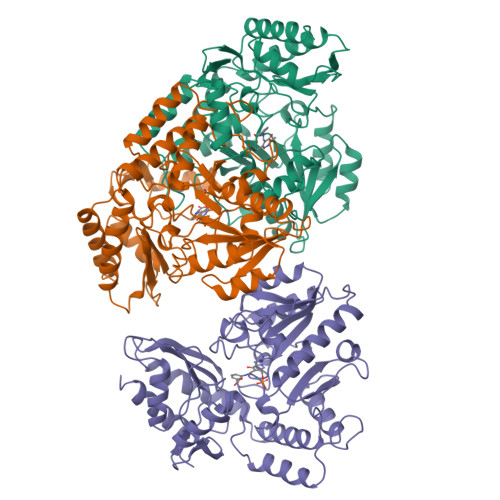
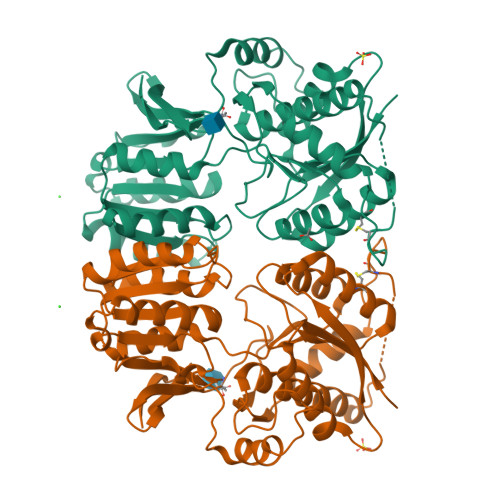
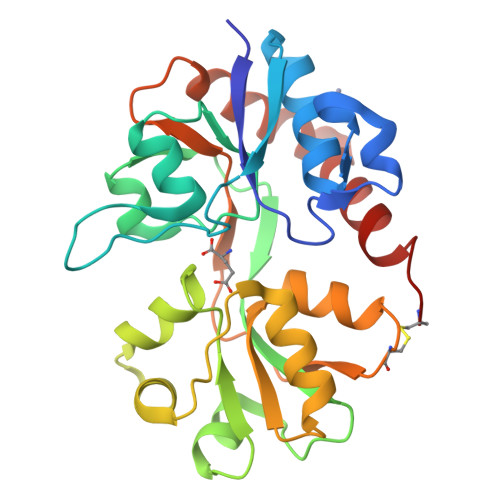
Click to view 3D structure5-oxoprolinaseO14841HumansKnownNot Available
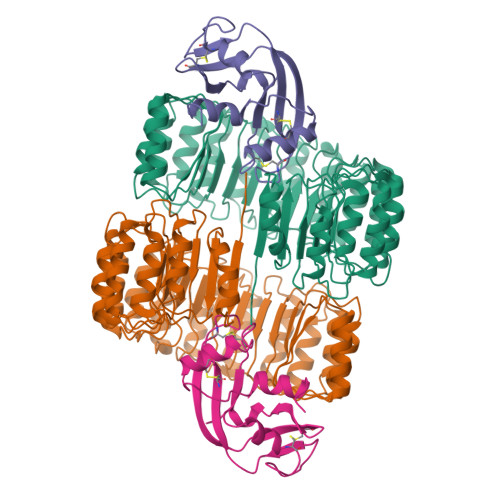
Click to view 3D structureAlpha-amylase 2BP19961HumansKnownNot Available
Vascular endothelial growth factor A, long form structureClick to view 3D structureVascular endothelial growth factor A, long formP15692HumansKnownNot Available
Angiogenin structureClick to view 3D structureAngiogeninP03950HumansKnownNot Available
Click to view 3D structureDisintegrin and metalloproteinase domain-containing protein 28Q9UKQ2HumansKnownNot Available
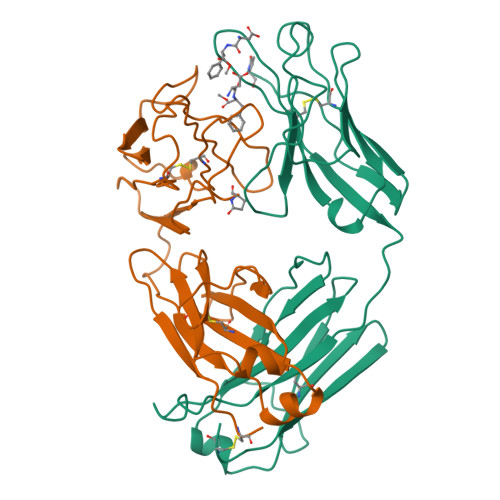
Immunoglobulin lambda constant 1 structureClick to view 3D structureImmunoglobulin lambda constant 1P0CG04HumansKnownNot Available
Click to view 3D structureKeratin-associated protein 5-2Q701N4HumansKnownNot Available
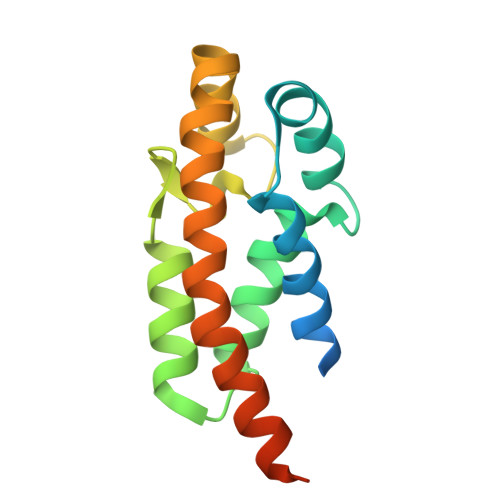
Hypocretin neuropeptide precursor structureClick to view 3D structureHypocretin neuropeptide precursorO43612HumansKnownNot Available
Click to view 3D structureTrefoil factor 2Q03403HumansKnownNot Available
C-C motif chemokine 8 structureClick to view 3D structureC-C motif chemokine 8P80075HumansKnownNot Available
Immunoglobulin lambda variable 2-8 structureClick to view 3D structureImmunoglobulin lambda variable 2-8P01709HumansKnownNot Available
Pancreatic alpha-amylase structureClick to view 3D structurePancreatic alpha-amylaseP04746HumansKnownNot Available
Concentrations
Not Available
External Links
DrugBank IDDB03088
HMDB IDHMDB0000267
FooDB IDFDB014506
Phenol Explorer IDNot Available
KNApSAcK IDC00007403
BiGG IDNot Available
BioCyc ID5-OXOPROLINE
METLIN IDNot Available
PDB IDNot Available
Wikipedia LinkPyroglutamic_acid
Chemspider IDNot Available
ChEBI ID18183
PubChem Compound ID7405
Kegg Compound IDC01879
YMDB IDYMDB00107
ECMDB IDM2MDB004291
References
Synthesis Reference

John G. Black, Ian R. Scott, “Pyroglutamic acid esters, their synthesis and use in topical products.” U.S. Patent US4774255, issued December, 1974.

MSDSLink
General References
  1. Sreekumar A, Poisson LM, Rajendiran TM, Khan AP, Cao Q, Yu J, Laxman B, Mehra R, Lonigro RJ, Li Y, Nyati MK, Ahsan A, Kalyana-Sundaram S, Han B, Cao X, Byun J, Omenn GS, Ghosh D, Pennathur S, Alexander DC, Berger A, Shuster JR, Wei JT, Varambally S, Beecher C, Chinnaiyan AM: Metabolomic profiles delineate potential role for sarcosine in prostate cancer progression. Nature. 2009 Feb 12;457(7231):910-4. doi: 10.1038/nature07762. [PubMed: 19212411]
  2. Guneral F, Bachmann C: Age-related reference values for urinary organic acids in a healthy Turkish pediatric population. Clin Chem. 1994 Jun;40(6):862-6. [PubMed: 8087979]
  3. Hoffmann GF, Meier-Augenstein W, Stockler S, Surtees R, Rating D, Nyhan WL: Physiology and pathophysiology of organic acids in cerebrospinal fluid. J Inherit Metab Dis. 1993;16(4):648-69. [PubMed: 8412012]
  4. Manning NJ, Davies NP, Olpin SE, Carpenter KH, Smith MF, Pollitt RJ, Duncan SL, Larsson A, Carlsson B: Prenatal diagnosis of glutathione synthase deficiency. Prenat Diagn. 1994 Jun;14(6):475-8. [PubMed: 7937585]
  5. Caspers PJ, Lucassen GW, Carter EA, Bruining HA, Puppels GJ: In vivo confocal Raman microspectroscopy of the skin: noninvasive determination of molecular concentration profiles. J Invest Dermatol. 2001 Mar;116(3):434-42. [PubMed: 11231318]
  6. Hussain Z, Lannigan R, Stoakes L: A new approach for presumptive identification of clinically important streptococci. Zentralbl Bakteriol Mikrobiol Hyg A. 1984 Oct;258(1):74-9. [PubMed: 6441390]
  7. Creer MH, Lau BW, Jones JD, Chan KM: Pyroglutamic acidemia in an adult patient. Clin Chem. 1989 Apr;35(4):684-6. [PubMed: 2702756]
  8. Hammond JW, Potter M, Truscott R, Wilcken B: gamma-Glutamylglutamine identified in plasma and cerebrospinal fluid from hyperammonaemic patients. Clin Chim Acta. 1990 Dec 24;194(2-3):173-83. [PubMed: 2093471]
  9. Uhlhaas S, Lange H: Striatal deficiency of L-pyroglutamic acid in Huntington's disease is accompanied by increased plasma levels. Brain Res. 1988 Aug 2;457(1):196-9. [PubMed: 2971422]
  10. Jellum E, Stokke O, Eldjarn L: Combined use of gas chromatography, mass spectrometry, and computer in diagnosis and studies of metabolic disorders. Clin Chem. 1972 Aug;18(8):800-9. [PubMed: 4557757]
  11. Croal BL, Glen AC, Kelly CJ, Logan RW: Transient 5-oxoprolinuria (pyroglutamic aciduria) with systemic acidosis in an adult receiving antibiotic therapy. Clin Chem. 1998 Feb;44(2):336-40. [PubMed: 9474033]
  12. Winslow JW, Shih A, Bourell JH, Weiss G, Reed B, Stults JT, Goldsmith LT: Human seminal relaxin is a product of the same gene as human luteal relaxin. Endocrinology. 1992 May;130(5):2660-8. [PubMed: 1572287]
  13. Wevers RA, Engelke U, Heerschap A: High-resolution 1H-NMR spectroscopy of blood plasma for metabolic studies. Clin Chem. 1994 Jul;40(7 Pt 1):1245-50. [PubMed: 8013094]
  14. Erasmus E, Mienie LJ, de Vries WN, de Wet WJ, Carlsson B, Larsson A: Prenatal analysis in two suspected cases of glutathione synthetase deficiency. J Inherit Metab Dis. 1993;16(5):837-43. [PubMed: 8295398]
  15. Saudubray, Jean-Marie, Georges van den Berghe, and John H. Walter, eds. 2012. Inborn Metabolic Diseases: Diagnosis and Treatment. 5th edition. Berlin: Springer.