Pyruvic acid (CED0001908)

Record Information
Version1.0
Creation Date2014-08-29 06:27:15 UTC
Update Date2026-05-14 16:24:02 UTC
SynCED IDCED0001908
Secondary Accession Numbers
  • CHEM003285
  • T3D4325
Identification
Common NamePyruvic acid
ClassSmall Molecule
Description
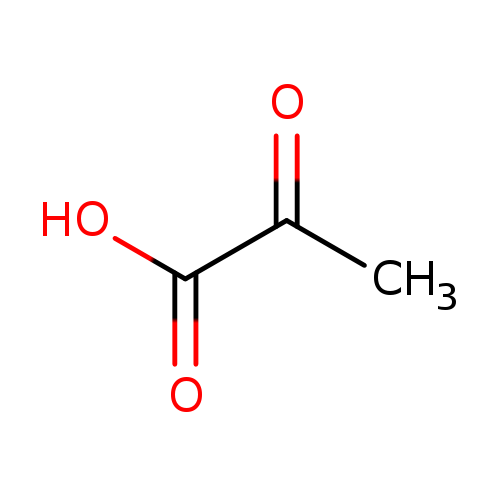
Pyruvic acid (C3H4O3) is an endogenous liquid with an average molecular weight of 88.06 g/mol. Pyruvic acid belongs to the alpha-keto acids and derivatives, a subclass of keto acids and derivatives within the organic compounds. It is an intermediate compound in the metabolism of proteins, fats, and carbohydrates, and serves as an intermediate in primary metabolism, including fermentation processes. In the muscle, it exists in redox equilibrium with lactic acid. This compound is a common constituent of bacterial polysaccharides as a chiral cyclic acetal linked to saccharide residues. It is found in peppermint, cane sugar fermentation broth, and plant species including Bauhinia purpurea, Cicer arietinum (chickpea), Delonix regia, Pisum sativum (pea), and Trigonella caerulea (sweet trefoil). Pyruvic acid is detected in various tissues, including the brain, liver, kidney, pancreas, spleen, thyroid gland, testes, myocardium, neuron, fibroblasts, adipose tissue, muscle, and skeletal muscle. It acts as a biological metabolite and targets 17 proteins, including Monocarboxylate transporter 4 (SLC16A3), Monocarboxylate transporter 8 (SLC16A2), Monocarboxylate transporter 6 (SLC16A5), and Alanine--glyoxylate aminotransferase 2, mitochondrial (AGXT2). Industrially, it is used as a deodorizer, fragrance, and flavouring and nutrient, while serving as an environmental nutrient (PMC9049632 ). It is also used as a reagent for the regeneration of carbonyl compounds from oximes, phenylhydrazones, and semicarbazones. Recorded sources include food processing and cookware (such as the preparation of vinegar, wort, beer, and wine, and food preservation), household cleaning and consumer products (including bleaching agents, perfumes within soaps and detergents, and smoking requisites), and electrical and electronic equipment (including antennas, conductors, contacts, and electric switches).
Contaminant Type
  • Animal Toxin
  • Dietary Supplement
  • Drug
  • Food Toxin
  • Metabolite
  • Micronutrient
  • Natural Compound
  • Nutraceutical
  • Organic Compound
  • Supplement
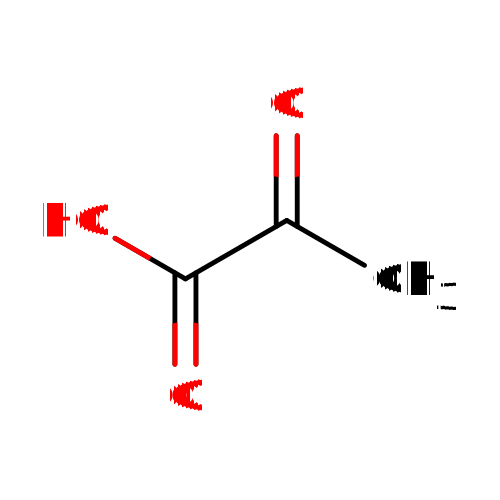
Chemical Structure
Synonyms
ValueSource
2-Ketopropionic acidChEBI
2-Oxopropanoic acidChEBI
2-OxopropansaeureChEBI
2-OxopropionsaeureChEBI
Acetylformic acidChEBI
Acide pyruviqueChEBI
alpha-Ketopropionic acidChEBI
alpha-OxopropionsaeureChEBI
BrenztraubensaeureChEBI
BTSChEBI
CH3COCOOHChEBI
Pyroracemic acidChEBI
2-OxopropanoateKegg
2-KetopropionateGenerator
AcetylformateGenerator
a-KetopropionateGenerator
a-Ketopropionic acidGenerator
alpha-KetopropionateGenerator
Α-ketopropionateGenerator
Α-ketopropionic acidGenerator
a-OxopropionsaeureGenerator
Α-oxopropionsaeureGenerator
PyroracemateGenerator
PyruvateGenerator
2-OxopropionateHMDB
2-Oxopropionic acidHMDB
Acid, pyruvicMeSH, HMDB
Pyruvic acidHMDB
alpha-Ketopropanoic acidHMDB
α-Ketopropanoic acidHMDB
Chemical FormulaC3H4O3
Average Molecular Mass88.062 g/mol
Monoisotopic Mass88.016 g/mol
CAS Registry Number127-17-3
IUPAC Name2-oxopropanoic acid
Traditional Namepyruvic acid
SMILESCC(=O)C(O)=O
InChI IdentifierInChI=1S/C3H4O3/c1-2(4)3(5)6/h1H3,(H,5,6)
InChI KeyLCTONWCANYUPML-UHFFFAOYSA-N
Chemical Taxonomy
Description Belongs to the class of organic compounds known as alpha-keto acids and derivatives. These are organic compounds containing an aldehyde substituted with a keto group on the adjacent carbon.
KingdomOrganic compounds
Super ClassOrganic acids and derivatives
ClassKeto acids and derivatives
Sub ClassAlpha-keto acids and derivatives
Direct ParentAlpha-keto acids and derivatives
Alternative Parents
Substituents
  • Alpha-keto acid
  • Alpha-hydroxy ketone
  • Ketone
  • Monocarboxylic acid or derivatives
  • Carboxylic acid
  • Carboxylic acid derivative
  • Organic oxygen compound
  • Organic oxide
  • Hydrocarbon derivative
  • Organooxygen compound
  • Carbonyl group
  • Aliphatic acyclic compound
Molecular FrameworkAliphatic acyclic compounds
External Descriptors
Biological Properties
StatusDetected and Not Quantified
OriginEndogenous
Cellular Locations
  • Cytoplasm
  • Extracellular
  • Mitochondria
  • Peroxisome
Biofluid LocationsNot Available
Tissue Locations
  • Adipose Tissue
  • Brain
  • Fibroblasts
  • Kidney
  • Liver
  • Muscle
  • Myocardium
  • Neuron
  • Pancreas
  • Skeletal Muscle
  • Spleen
  • Testes
  • Thyroid Gland
ApplicationsNot Available
Biological Roles
Chemical RolesNot Available
Organoleptic EffectsNot Available
Physical Properties
StateLiquid
AppearanceNot Available
Experimental Properties
PropertyValue
Melting Point13.8°C
Boiling Point54°C at 1.00E+01 mm Hg
Solubility1E+006 mg/L (at 20°C)
Predicted Properties
PropertyValueSource
Water Solubility134 g/LALOGPS
logP-0.38ALOGPS
logP0.066ChemAxon
logS0.18ALOGPS
pKa (Strongest Acidic)2.93ChemAxon
pKa (Strongest Basic)-9.6ChemAxon
Physiological Charge-1ChemAxon
Hydrogen Acceptor Count3ChemAxon
Hydrogen Donor Count1ChemAxon
Polar Surface Area54.37 ŲChemAxon
Rotatable Bond Count1ChemAxon
Refractivity17.99 m³·mol⁻¹ChemAxon
Polarizability7.31 ųChemAxon
Number of Rings0ChemAxon
BioavailabilityYesChemAxon
Rule of FiveYesChemAxon
Ghose FilterNoChemAxon
Veber's RuleNoChemAxon
MDDR-like RuleNoChemAxon
Spectra
Spectra
Spectrum TypeDescriptionSplash KeyDeposition DateView
GC-MSGC-MS Spectrumsplash10-00dr-4900000000-f26ef76666e40ab9fe61Not AvailableView Spectrum
GC-MSGC-MS Spectrumsplash10-00di-5900000000-b8e81f82572d4796e944Not AvailableView Spectrum
GC-MSGC-MS Spectrumsplash10-014i-5970000000-154bf9ad168a12593fccNot AvailableView Spectrum
GC-MSGC-MS Spectrumsplash10-0006-9000000000-a2cf85a5e1d2379d26dfNot AvailableView Spectrum
GC-MSGC-MS Spectrumsplash10-00dr-4900000000-f26ef76666e40ab9fe61Not AvailableView Spectrum
GC-MSGC-MS Spectrumsplash10-00di-5900000000-b8e81f82572d4796e944Not AvailableView Spectrum
GC-MSGC-MS Spectrumsplash10-014i-5970000000-154bf9ad168a12593fccNot AvailableView Spectrum
GC-MSGC-MS Spectrumsplash10-00dr-5900000000-5b1f470d4ff91420618cNot AvailableView Spectrum
Predicted GC-MSPredicted GC-MS Spectrumsplash10-0006-9000000000-5417b44aa241a7ba27e8Not AvailableView Spectrum
Predicted GC-MSPredicted GC-MS Spectrumsplash10-00dm-9400000000-6db65a709bdc47e3adf7Not AvailableView Spectrum
Predicted GC-MSPredicted GC-MS SpectrumNot AvailableNot AvailableView Spectrum
LC-MS/MSLC-MS/MS Spectrumsplash10-0006-9000000000-a2cf85a5e1d2379d26dfNot AvailableView Spectrum
LC-MS/MSLC-MS/MS Spectrumsplash10-000i-9000000000-dd49835da8355fb6e625Not AvailableView Spectrum
LC-MS/MSLC-MS/MS Spectrumsplash10-000i-9000000000-f09d8e3d7a774b255d89Not AvailableView Spectrum
LC-MS/MSLC-MS/MS Spectrumsplash10-0006-9000000000-7d91f6f626cab1a366fdNot AvailableView Spectrum
LC-MS/MSLC-MS/MS Spectrumsplash10-0006-9000000000-8ae98cdb3e142034e52aNot AvailableView Spectrum
LC-MS/MSLC-MS/MS Spectrumsplash10-0006-9000000000-e04e6c68013983e1b6dcNot AvailableView Spectrum
LC-MS/MSLC-MS/MS Spectrumsplash10-000i-9000000000-dd49835da8355fb6e625Not AvailableView Spectrum
LC-MS/MSLC-MS/MS Spectrumsplash10-000i-9000000000-f09d8e3d7a774b255d89Not AvailableView Spectrum
LC-MS/MSLC-MS/MS Spectrumsplash10-0006-9000000000-7d91f6f626cab1a366fdNot AvailableView Spectrum
LC-MS/MSLC-MS/MS Spectrumsplash10-0006-9000000000-8ae98cdb3e142034e52aNot AvailableView Spectrum
LC-MS/MSLC-MS/MS Spectrumsplash10-0006-9000000000-e04e6c68013983e1b6dcNot AvailableView Spectrum
LC-MS/MSLC-MS/MS Spectrumsplash10-000f-9000000000-f24c93ecfd3928827154Not AvailableView Spectrum
LC-MS/MSLC-MS/MS Spectrumsplash10-0udj-9000000000-fc3b9ad0c57f44261fbaNot AvailableView Spectrum
LC-MS/MSLC-MS/MS Spectrumsplash10-014i-9000000000-f3444f8b94ee5a0a9f74Not AvailableView Spectrum
LC-MS/MSLC-MS/MS Spectrumsplash10-0avr-9000000000-dc40a6a1b9b166d6e68aNot AvailableView Spectrum
LC-MS/MSLC-MS/MS Spectrumsplash10-016r-9000000000-efac7b176bb77118ecb8Not AvailableView Spectrum
Predicted LC-MS/MSPredicted LC-MS/MS Spectrumsplash10-000i-9000000000-d0defa72b09503c6d6d1Not AvailableView Spectrum
Predicted LC-MS/MSPredicted LC-MS/MS Spectrumsplash10-000f-9000000000-c25fa150e9c490319a2aNot AvailableView Spectrum
Predicted LC-MS/MSPredicted LC-MS/MS Spectrumsplash10-0006-9000000000-ccb42b4c05ddd001990fNot AvailableView Spectrum
Predicted LC-MS/MSPredicted LC-MS/MS Spectrumsplash10-000i-9000000000-faf36ff70d6205370270Not AvailableView Spectrum
Predicted LC-MS/MSPredicted LC-MS/MS Spectrumsplash10-000i-9000000000-60c1a02aabf80f51050fNot AvailableView Spectrum
Predicted LC-MS/MSPredicted LC-MS/MS Spectrumsplash10-000f-9000000000-ca5f4a2f06787d8b62a0Not AvailableView Spectrum
Predicted LC-MS/MSPredicted LC-MS/MS Spectrumsplash10-0006-9000000000-0eb1fb2cdd24bdc78601Not AvailableView Spectrum
Predicted LC-MS/MSPredicted LC-MS/MS Spectrumsplash10-0006-9000000000-87bbaed151efac084591Not AvailableView Spectrum
Predicted LC-MS/MSPredicted LC-MS/MS Spectrumsplash10-000i-9000000000-0ff17f97b83100ef5b2cNot AvailableView Spectrum
Predicted LC-MS/MSPredicted LC-MS/MS Spectrumsplash10-000f-9000000000-3732177135731d084b0eNot AvailableView Spectrum
Predicted LC-MS/MSPredicted LC-MS/MS Spectrumsplash10-0006-9000000000-d154cbf253a17855bcd7Not AvailableView Spectrum
MSMS Spectrumsplash10-0006-9000000000-f315d0752893e7d0c657Not AvailableView Spectrum
1D NMR1H NMR Spectrum (1D, D2O, predicted)Not AvailableNot AvailableView Spectrum
1D NMR13C NMR Spectrum (1D, D2O, predicted)Not AvailableNot AvailableView Spectrum
1D NMR13C NMR Spectrum (1D, H2O, experimental)Not AvailableNot AvailableView Spectrum
Toxicity Profile
Toxicity Values
Toxicity ValueOrganismDose DescriptorRoute of ExposurePredicted or ExperimentalToxicity RatingReference
2645.0 Log mg/kg [1500:4700]RatLD50oralpredictedNot AvailableNot Available
Toxicity / Toxin ClassNot Available
Mechanism of ToxicityPyruvate serves as a biological fuel by being converted to acetyl coenzyme A, which enters the tricarboxylic acid or Krebs cycle where it is metabolized to produce ATP aerobically. Energy can also be obtained anaerobically from pyruvate via its conversion to lactate. Pyruvate injections or perfusions increase contractile function of hearts when metabolizing glucose or fatty acids. This inotropic effect is striking in hearts stunned by ischemia/reperfusion. The inotropic effect of pyruvate requires intracoronary infusion. Among possible mechanisms for this effect are increased generation of ATP and an increase in ATP phosphorylation potential. Another is activation of pyruvate dehydrogenase, promoting its own oxidation by inhibiting pyruvate dehydrogenase kinase. Pyruvate dehydrogenase is inactivated in ischemia myocardium. Yet another is reduction of cytosolic inorganic phosphate concentration. Pyruvate, as an antioxidant, is known to scavenge such reactive oxygen species as hydrogen peroxide and lipid peroxides. Indirectly, supraphysiological levels of pyruvate may increase cellular reduced glutathione.
Carcinogenicity (IARC Classification)No indication of carcinogenicity to humans (not listed by IARC).
Minimum Risk LevelNot Available
SymptomsNot Available
TreatmentNot Available
Health Effects
Health EffectRelationshipDirectionDescriptionReference
inflammationAssociated With?inverseNot AvailablePMC12960162
type 2 diabetes mellitusAssociated With?Not AvailableNot AvailablePMC12109552
Exposure Sources
Source IDSourceSectorReference
CEDs000010Insecticides?Insecticides are synthetic chemicals designed to control or eliminate insect pests that threaten crops and other agricultural products.Agriculture & land managementPubChem
CEDs000233Brushes?Brushes used in personal care and cosmetics can be a source of synthetic chemical contamination due to the materials and coatings used in their manufacturing.Personal care & cosmeticsPubChem
CEDs000479Effluent?Effluent refers to liquid waste or sewage that is discharged into the environment, typically resulting from industrial processes, municipal wastewater treatment, or agricultural runoff.Wastewater, sanitation & biosolidsPMC8320890
CEDs000490Personal care & cosmeticsNot Available
CEDs000506Antennas?Antennas, commonly used in communication technologies, can be a source of synthetic chemical contamination through the materials and coatings used in their construction.Electrical & Electronic EquipmentPubChem
CEDs000511Conductors Or Conductive Bodies Characterised By The Conductive Materials?Conductors, or conductive bodies, are materials that allow the flow of electrical current, typically made from metals such as copper, aluminum, or silver.Electrical & Electronic EquipmentPubChem
CEDs000512Contacts?Contacts in electrical and electronic equipment are components that facilitate the flow of electricity between circuits.Electrical & Electronic EquipmentPubChem
CEDs000514Discharge Lamps?Discharge lamps, including fluorescent and high-intensity discharge (HID) lamps, are commonly used for lighting applications due to their energy efficiency and brightness.Electrical & Electronic EquipmentPubChem
CEDs000517Electric Switches?Electric switches, integral components in numerous devices, can be a source of synthetic chemical contamination due to the materials and manufacturing processes involved in their production.Electrical & Electronic EquipmentPubChem
CEDs000518Electrically Stimulated Smoking Devices?Electrically stimulated smoking devices, commonly known as e-cigarettes or vape pens, utilize electrical components to heat a liquid solution, often containing nicotine, flavorings, and other additives, to produce an aerosol for inhalation.Electrical & Electronic EquipmentPubChem
CEDs000519Electrodes?Electrodes, used in various electrical and electronic applications, can be a source of synthetic chemical contamination due to the materials from which they are constructed and the processes involved in their manufacturing.Electrical & Electronic EquipmentPubChem
CEDs000520Emergency Protective Devices?Emergency protective devices, such as circuit breakers and surge protectors, are essential components in electrical systems designed to prevent damage from overcurrent and surges.Electrical & Electronic EquipmentPubChem
CEDs000524Hybrid Capacitors?Hybrid capacitors are energy storage devices that combine the properties of electrolytic and supercapacitors, utilizing a combination of electrochemical principles to achieve higher energy density and power density.Electrical & Electronic EquipmentPubChem
CEDs000530Radio Transmission Systems?Radio transmission systems utilize a variety of synthetic chemicals in their manufacturing and maintenance processes.Electrical & Electronic EquipmentPubChem
CEDs000540X Ray Tubes?X-ray tubes are devices used to produce X-rays for various applications, including medical imaging and industrial inspections.Electrical & Electronic EquipmentPubChem
CEDs000544Fermentation Processes For Beer?Fermentation processes for beer involve the conversion of sugars into alcohol and carbon dioxide by yeast.Food, food processing & cookwarePubChem
CEDs000545Food Preservation?Food preservation often involves the use of synthetic chemicals, such as preservatives, flavor enhancers, and color additives, to extend shelf life and enhance the sensory qualities of food products.Food, food processing & cookwarePubChem
CEDs000548Preparation Of Vinegar?Vinegar is produced through the fermentation of ethanol by acetic acid bacteria, resulting in a solution that typically contains 4-8% acetic acid.Food, food processing & cookwarePubChem
CEDs000549Preparation Of Wine Or Sparkling Wine?The preparation of wine or sparkling wine involves various stages, including fermentation, aging, and bottling, which can introduce potential sources of synthetic chemical contamination.Food, food processing & cookwarePubChem
CEDs000550Preparation Of Wort?The preparation of wort involves the extraction of sugars from malted grains, a crucial step in the brewing process.Food, food processing & cookwarePubChem
CEDs000553Treatment Of Hops?Hops, a key ingredient in brewing and food flavoring, can be a source of synthetic chemical contamination due to various agricultural practices.Food, food processing & cookwarePubChem
CEDs000555Bleaching Agents?Bleaching agents are chemical substances used to whiten or lighten materials, often employed in various cleaning products for their stain removal and disinfecting properties.Household cleaning & consumer productsPubChem
CEDs000556Cigar Cigarettes?Cigar cigarettes are a source of synthetic chemical contamination due to the combustion of various tobacco blends and additives.Household cleaning & consumer productsPubChem
CEDs000559Non Electric Simulated Smoking Devices?Non-electric simulated smoking devices, often designed to mimic the experience of smoking without combustion, can be sources of synthetic chemical contamination due to the materials and chemicals used in their construction and operation.Household cleaning & consumer productsPubChem
CEDs000560Other Smoking Requisites?Other smoking requisites, including items such as lighters, matches, and rolling papers, can introduce synthetic chemical contamination through various components and additives.Household cleaning & consumer productsPubChem
CEDs000561Perfumes Within Detergents And Soaps?Perfumes within detergents and soaps are synthetic fragrance compounds added to enhance the sensory experience of cleaning products.Household cleaning & consumer productsPubChem
CEDs000562Pipe Accessories?Pipe accessories, such as fittings, connectors, and seals, are components used in plumbing systems to facilitate the flow of liquids and gases.Household cleaning & consumer productsPubChem
CEDs000563Soap Detergents?Soap detergents are synthetic surfactants designed to enhance the cleaning efficacy of water by reducing surface tension, allowing for better interaction with dirt and grease.Household cleaning & consumer productsPubChem
CEDs000566Tobacco Pipes?Tobacco pipes, often made from materials such as plastic, wood, or metal, can serve as sources of synthetic chemical contamination due to the residues left by tobacco products.Household cleaning & consumer productsPubChem
CEDs000567Tobacco Product Cases?Tobacco product cases can serve as a source of synthetic chemical contamination due to the presence of various additives and chemicals used in tobacco processing and product manufacturing.Household cleaning & consumer productsPubChem
CEDs000569Tobacco Smoke Filters?Tobacco smoke filters are designed to reduce the inhalation of harmful substances in cigarette smoke, including tar and other particulate matter.Household cleaning & consumer productsPubChem
CEDs000578Making Cigars?The process of making cigars involves several steps, including the cultivation of tobacco, fermentation, and the application of various additives to enhance flavor and preservation.Industrial manufacturing & chemical processingPubChem
CEDs000580Manufacture Preparation Of Tobacco Products?The manufacture and preparation of tobacco products involve various processes that can result in the introduction of synthetic chemicals into the environment.Industrial manufacturing & chemical processingPubChem
CEDs000581Paper Making Machines?Paper making machines utilize various synthetic chemicals throughout the production process, including additives, coatings, and bleaching agents.Industrial manufacturing & chemical processingPubChem
CEDs000596Acaricides?Acaricides are synthetic chemicals specifically designed to target and control mite populations that can damage crops and plants.Agriculture & land managementPubChem
CEDs000597Chemosterilants?Chemosterilants are synthetic chemicals designed to induce sterility in target pest populations, thereby controlling their reproduction and mitigating damage to crops.Agriculture & land managementPubChem
CEDs000600Herbicides And Algicides?Herbicides and algicides are synthetic chemicals primarily used to control unwanted plants and algae in various environments.Agriculture & land managementPubChem
CEDs000603Nematocides?Nematocides are synthetic chemicals specifically designed to control nematodes, which are microscopic roundworms that can cause significant damage to crops and plants.Agriculture & land managementPubChem
CEDs000605Pest Repellants?Pest repellents, often formulated from synthetic chemicals, are widely used to protect crops from insect infestations and other pests.Agriculture & land managementPubChem
CEDs000606Plant Growth Regulators?Plant Growth Regulators (PGRs) are synthetic chemicals designed to influence the growth and development of plants.Agriculture & land managementPubChem
CEDs000607Rodenticides(1)?Rodenticides are synthetic chemicals specifically formulated to control rodent populations, serving as a crucial tool in managing pests that can damage crops and spread diseases.Agriculture & land managementPubChem
CEDs000608Rodenticides?Rodenticides are chemical substances specifically designed to control rodent populations by causing death through various mechanisms, including anticoagulation or neurotoxicity.Agriculture & land managementPubChem
CEDs000609Aftershave?Aftershave is a grooming product typically used to soothe and protect the skin following shaving.Personal care & cosmeticsPubChem
CEDs000610Aftersun Products?Aftersun products are designed to soothe and hydrate the skin after sun exposure, often containing various synthetic chemicals such as emollients, preservatives, and fragrances.Personal care & cosmeticsPubChem
CEDs000611Anti Perspirants Or Body Deoderants?Antiperspirants and body deodorants commonly contain synthetic chemicals such as aluminum compounds, parabens, and synthetic fragrances.Personal care & cosmeticsPubChem
CEDs000613Depilatories?Depilatories are products designed to remove unwanted hair through the application of synthetic chemicals that break down the protein structure of hair, facilitating its removal.Personal care & cosmeticsPubChem
CEDs000614Essential Oils Or Perfumes?Essential oils and perfumes are complex mixtures of volatile compounds derived from natural or synthetic sources, commonly used for their aromatic properties.Personal care & cosmeticsPubChem
CEDs000615Eye Makeup Products?Eye makeup products, including mascaras, eyeliners, and eyeshadows, often contain a variety of synthetic chemicals such as pigments, preservatives, and film-forming agents.Personal care & cosmeticsPubChem
CEDs000616Face Mask Cosmetics?Face mask cosmetics often contain a variety of synthetic chemicals, including preservatives, emulsifiers, and fragrances, which can contribute to chemical contamination.Personal care & cosmeticsPubChem
CEDs000617Lip Care Products?Lip care products, including lipsticks, balms, and glosses, often contain a variety of synthetic chemicals such as parabens, phthalates, and synthetic fragrances.Personal care & cosmeticsPubChem
CEDs000618Lip Makeup Products?Lip makeup products, such as lipsticks, lip glosses, and lip liners, often contain a variety of synthetic chemicals, including pigments, preservatives, and emollients.Personal care & cosmeticsPubChem
CEDs000632Apparel?Apparel production often involves the use of various synthetic chemicals, including dyes, finishing agents, and preservatives.Textiles, leather & furnishingsPubChem
CEDs000638Decorating Textiles?Decorating textiles often involves the use of synthetic chemicals such as dyes, finishes, and coatings.Textiles, leather & furnishingsPubChem
CEDs000642Footwear?Footwear production often involves the use of various synthetic chemicals, such as adhesives, dyes, and treatments, which can contribute to environmental contamination.Textiles, leather & furnishingsPubChem
CEDs000652Ropes?Ropes manufactured from synthetic fibers, such as polypropylene, nylon, and polyester, are widely used in various applications, including marine, construction, and outdoor activities.Textiles, leather & furnishingsPubChem
CEDs000655Slide Fasteners?Slide fasteners, commonly known as zippers, are mechanical devices used to join two edges of fabric or other materials.Textiles, leather & furnishingsPubChem
CEDs000657Surface Finishing Of Leather?Surface finishing of leather often involves the use of various synthetic chemicals, including dyes, resins, and finishing agents.Textiles, leather & furnishingsPubChem
CEDs000659Transfer Printing?Transfer printing is a process used to apply designs and patterns onto various substrates, commonly utilizing synthetic dyes and inks that can contain hazardous chemicals.Textiles, leather & furnishingsPubChem
CEDs000662Yarns Or Threads?Yarns or threads used in textiles can be a source of synthetic chemical contamination due to the production processes and treatments they undergo.Textiles, leather & furnishingsPubChem
CEDs000664Fire Fighting Gels?Fire fighting gels are synthetic chemical formulations designed to enhance fire suppression effectiveness by creating a protective barrier against heat and flames.Fire suppression systems & agentsPubChem
CEDs000665Fire Extinguishers?Fire extinguishers contain various synthetic chemicals designed to suppress flames and prevent the spread of fire.Fire suppression systems & agentsPubChem
CEDs000670Solid Fire Fighting Substances?Solid fire fighting substances, such as certain types of dry chemical powders, are used in fire suppression applications to extinguish flames and prevent fire spread.Fire suppression systems & agentsPubChem
CEDs000678Nitrogenous Fertilisers?Nitrogenous fertilizers are synthetic chemical compounds primarily used to enhance plant growth by supplying essential nitrogen, a crucial nutrient for photosynthesis and protein synthesis.Agriculture & land managementPubChem
CEDs000679Phosphatic Fertilisers?Phosphatic fertilizers are synthetic chemical products primarily composed of phosphorus, which is essential for plant growth.Agriculture & land managementPubChem
CEDs000684Cements?Cements are a composite material primarily used as a binding agent in construction applications, formed by the calcination of limestone and clay minerals at high temperatures.Building & ConstructionPubChem
CEDs000685Ceramics?Ceramics can be a source of synthetic chemical contamination through various additives and processing agents used in their production.Building & ConstructionPubChem
CEDs000693Silica Glass?Silica glass, primarily composed of silicon dioxide (SiO2), is widely used in various applications, including windows, glass facades, and insulation materials.Building & ConstructionPubChem
CEDs000696Nanotechnology?Nanotechnology involves the manipulation of materials at the molecular or atomic level, typically within the range of 1 to 100 nanometers.Industrial manufacturing & chemical processingPubChem
CEDs000727Printing Machines Or Presses?Printing machines or presses commonly utilize synthetic chemicals such as inks, solvents, and cleaning agents.Paper, pulp & fiber productsPubChem
CEDs000734Coating Compositions?Coating compositions, which include paints, sealants, and varnishes, are formulated with a variety of synthetic chemicals such as solvents, resins, pigments, and additives.Building & ConstructionPubChem
CEDs000735Explosives?Explosives are chemical compounds or mixtures designed to undergo rapid decomposition, releasing energy in the form of gas and heat.Defense & military infrastructurePubChem
CEDs000737Chemical Igniters?Chemical igniters are substances or devices designed to initiate combustion in various applications, often found in products like lighters, candles, and certain household cleaning agents.Household itemsPubChem
CEDs000739Inks?Inks are complex mixtures composed of pigments or dyes, solvents, resins, and additives used primarily for printing and writing applications.Paper, pulp & fiber productsPubChem
CEDs000740Paper?Paper production involves the processing of wood fibers and the use of various chemicals, which can lead to synthetic chemical contamination.Paper, pulp & fiber productsPubChem
CEDs000742Leather Tanning?Leather tanning is a process that transforms raw animal hides into durable leather through the application of various chemicals, including chromium salts, aldehydes, and vegetable tannins.Textiles, leather & furnishingsPubChem
CEDs000743Sludge Treatment?Sludge treatment involves the processing of waste materials generated from wastewater treatment plants, which often contain a variety of organic and inorganic substances.Wastewater, sanitation & biosolidsPubChem
CEDs000744Water, Wastewater, & Sewage Treatment?Water, wastewater, and sewage treatment processes are critical for managing and mitigating pollutants in water systems.Wastewater, sanitation & biosolidsPubChem
CEDs01083PharmaceuticalHealthcare, pharmaceuticals & veterinary productsPMC3962153
CEDs01144FoodFood, food processing & cookwarePMC3962153
CEDs01610Model WineFood, food processing & cookwarePMC13255049
CEDs02646Air MassAir, dust & atmospheric transportPMC9433442
CEDs02851CosmeticPersonal care & cosmeticsPMC3962153
Pathways
129 pathwaysPathway Source: PathBank
Targets
StructureProteinUniProt IDOrganismRelationshipDetails
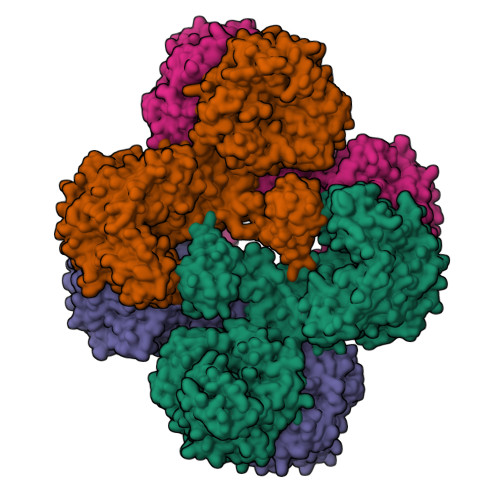
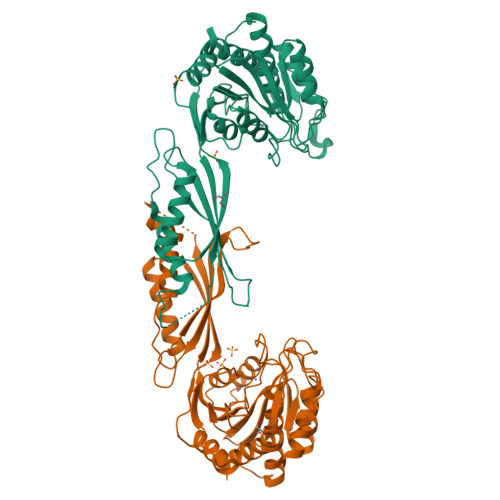
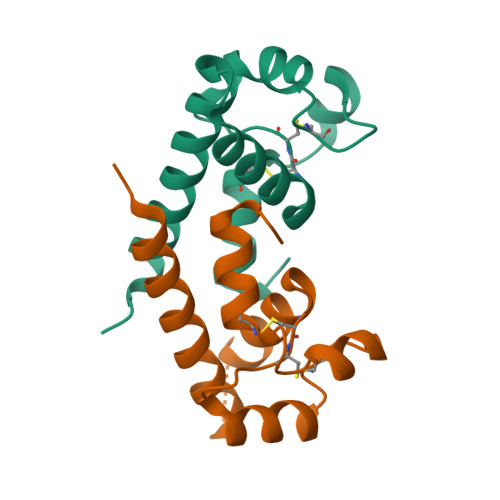
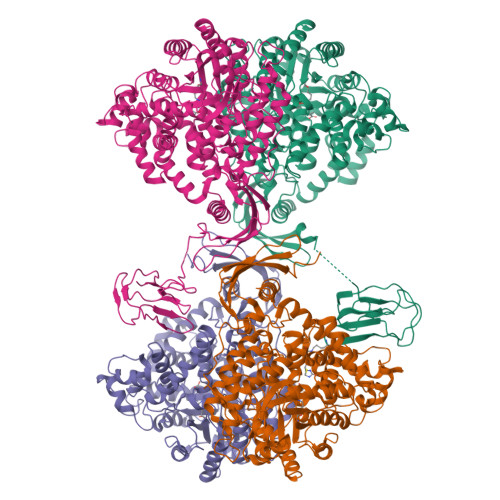
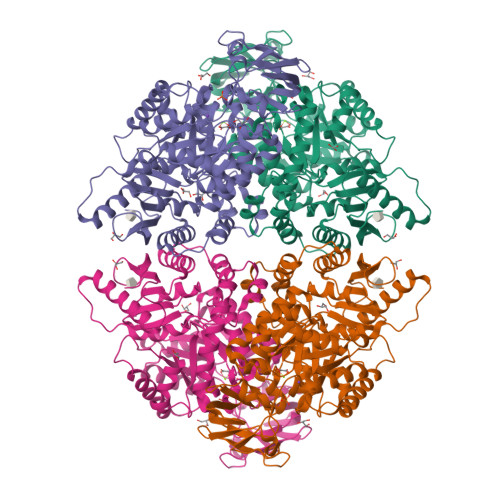
Pyruvate carboxylase structureClick to view 3D structurePyruvate carboxylaseA0A0H3JRU9Staphylococcus aureus (strain Mu50 / ATCC 700699)KnownNot Available
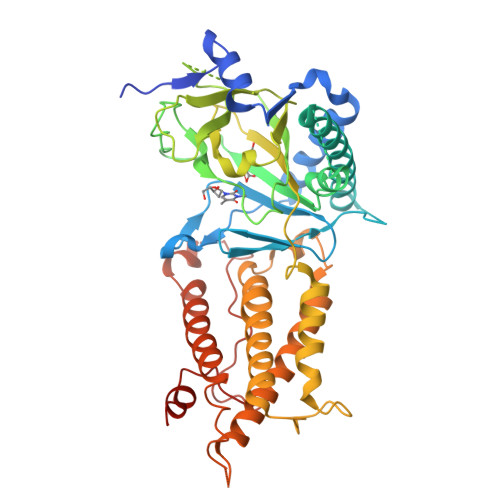
Pyruvate dehydrogenase [ubiquinone] structureClick to view 3D structurePyruvate dehydrogenase [ubiquinone]P07003Escherichia coli (strain K12)KnownNot Available
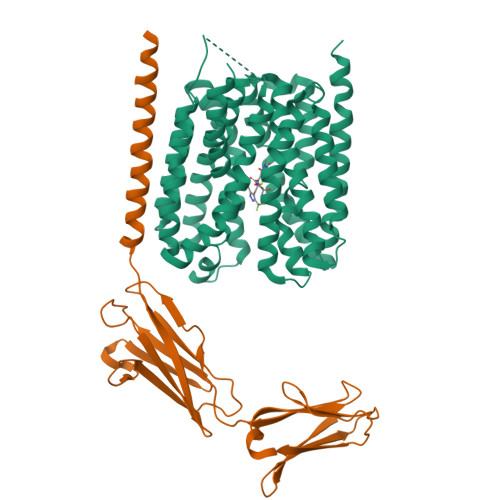
Click to view 3D structureFumarate hydratase, mitochondrialP10173Sus scrofaPredicted (SEA)
Prediction Confidence Score
0.235
Applicability Domain
0.235 Low confidence
Statistical Significance
5.00e-05
Supporting Reference Compounds
1
E-value
0.389246
Carbonic anhydrase 9 structureClick to view 3D structureCarbonic anhydrase 9Q16790HumansPredicted (SEA)
Prediction Confidence Score
0.235
Applicability Domain
0.4
Statistical Significance
0.2087
Supporting Reference Compounds
372
E-value
1624.64
Egl nine homolog 1 structureClick to view 3D structureEgl nine homolog 1Q9GZT9HumansPredicted (SEA)
Prediction Confidence Score
0.234
Applicability Domain
0.286 Low confidence
Statistical Significance
0.0225
Supporting Reference Compounds
41
E-value
174.849
Olfactory receptor 51E2 structureClick to view 3D structureOlfactory receptor 51E2Q9H255HumansPredicted (SEA)
Prediction Confidence Score
0.227
Applicability Domain
0.278 Low confidence
Statistical Significance
4.20e-04
Supporting Reference Compounds
9
E-value
3.26967
Lysine-specific demethylase 2A structureClick to view 3D structureLysine-specific demethylase 2AQ9Y2K7HumansPredicted (SEA)
Prediction Confidence Score
0.222
Applicability Domain
0.286 Low confidence
Statistical Significance
0.0279
Supporting Reference Compounds
35
E-value
216.966
Histone lysine demethylase PHF8 structureClick to view 3D structureHistone lysine demethylase PHF8Q9UPP1HumansPredicted (SEA)
Prediction Confidence Score
0.222
Applicability Domain
0.286 Low confidence
Statistical Significance
0.0011
Supporting Reference Compounds
14
E-value
8.32987
Lysine-specific demethylase 5C structureClick to view 3D structureLysine-specific demethylase 5CP41229HumansPredicted (SEA)
Prediction Confidence Score
0.219
Applicability Domain
0.286 Low confidence
Statistical Significance
0.0488
Supporting Reference Compounds
45
E-value
380.216
Tyrosine-protein phosphatase non-receptor type 1 structureClick to view 3D structureTyrosine-protein phosphatase non-receptor type 1P18031HumansPredicted (SEA)
Prediction Confidence Score
0.217
Applicability Domain
0.238 Low confidence
Statistical Significance
0.1788
Supporting Reference Compounds
197
E-value
1391.94
Peroxisome proliferator-activated receptor alpha structureClick to view 3D structurePeroxisome proliferator-activated receptor alphaQ07869HumansPredicted (SEA)
Prediction Confidence Score
0.217
Applicability Domain
0.238 Low confidence
Statistical Significance
0.2413
Supporting Reference Compounds
127
E-value
1878.66
Beta-lactamase VIM-1 structureClick to view 3D structureBeta-lactamase VIM-1Q9XAY4Pseudomonas aeruginosaPredicted (SEA)
Prediction Confidence Score
0.211
Applicability Domain
0.211 Low confidence
Statistical Significance
4.20e-04
Supporting Reference Compounds
1
E-value
3.26967
Glutamate receptor ionotropic, kainate 1 structureClick to view 3D structureGlutamate receptor ionotropic, kainate 1P39086HumansPredicted (SEA)
Prediction Confidence Score
0.209
Applicability Domain
0.222 Low confidence
Statistical Significance
0.0068
Supporting Reference Compounds
31
E-value
52.7039
3-isopropylmalate dehydrogenase structureClick to view 3D structure3-isopropylmalate dehydrogenaseQ5SIY4Thermus thermophilusPredicted (SEA)
Prediction Confidence Score
0.208
Applicability Domain
0.208 Low confidence
Statistical Significance
5.00e-05
Supporting Reference Compounds
1
E-value
0.389246
Click to view 3D structureSodium- and chloride-dependent creatine transporter 1P48029HumansPredicted (SEA)
Prediction Confidence Score
0.208
Applicability Domain
0.208 Low confidence
Statistical Significance
4.40e-04
Supporting Reference Compounds
1
E-value
3.42537
Peroxisome proliferator-activated receptor delta structureClick to view 3D structurePeroxisome proliferator-activated receptor deltaQ03181HumansPredicted (SEA)
Prediction Confidence Score
0.208
Applicability Domain
0.238 Low confidence
Statistical Significance
0.2552
Supporting Reference Compounds
89
E-value
1987.02
Click to view 3D structureComplement factor DP32038Rattus norvegicusPredicted (SEA)
Prediction Confidence Score
0.207
Applicability Domain
0.207 Low confidence
Statistical Significance
0.0117
Supporting Reference Compounds
1
E-value
91.395
Transient receptor potential cation channel subfamily V member 2 structureClick to view 3D structureTransient receptor potential cation channel subfamily V member 2Q9WUD2Rattus norvegicusPredicted (SEA)
Prediction Confidence Score
0.204
Applicability Domain
0.238 Low confidence
Statistical Significance
0.015
Supporting Reference Compounds
21
E-value
117.085
Click to view 3D structureProlyl 4-hydroxylase subunit alpha-1P54001Rattus norvegicusPredicted (SEA)
Prediction Confidence Score
0.202
Applicability Domain
0.25 Low confidence
Statistical Significance
5.20e-04
Supporting Reference Compounds
2
E-value
4.04816
Succinyl-diaminopimelate desuccinylase structureClick to view 3D structureSuccinyl-diaminopimelate desuccinylaseP44514Haemophilus influenzae (strain ATCC 51907 / DSM 11121 / KW20 / Rd)Predicted (SEA)
Prediction Confidence Score
0.202
Applicability Domain
0.227 Low confidence
Statistical Significance
0.0011
Supporting Reference Compounds
2
E-value
8.25202
Click to view 3D structure1-deoxy-D-xylulose-5-phosphate synthaseB7UJP3Escherichia coli O127:H6 (strain E2348/69 / EPEC)Predicted (SEA)
Prediction Confidence Score
0.201
Applicability Domain
0.217 Low confidence
Statistical Significance
0.001
Supporting Reference Compounds
2
E-value
7.94062
Click to view 3D structureAsc-type amino acid transporter 1P63116RatPredicted (SEA)
Prediction Confidence Score
0.2
Applicability Domain
0.2 Low confidence
Statistical Significance
0.0018
Supporting Reference Compounds
2
E-value
13.8572
CD81 antigen structureClick to view 3D structureCD81 antigenP60033HumansPredicted (SEA)
Prediction Confidence Score
0.2
Applicability Domain
0.2 Low confidence
Statistical Significance
2.70e-04
Supporting Reference Compounds
1
E-value
2.10193
Click to view 3D structureSodium- and chloride-dependent GABA transporter 2P31646Rattus norvegicusPredicted (SEA)
Prediction Confidence Score
0.2
Applicability Domain
0.2 Low confidence
Statistical Significance
0.0019
Supporting Reference Compounds
1
E-value
15.1806
Click to view 3D structureHistone deacetylase 11Q96DB2HumansPredicted (SEA)
Prediction Confidence Score
0.2
Applicability Domain
0.238 Low confidence
Statistical Significance
0.4376
Supporting Reference Compounds
149
E-value
3406.68
Click to view 3D structureAlpha carbonic anhydraseB5SU02Stylophora pistillataPredicted (SEA)
Prediction Confidence Score
0.198
Applicability Domain
0.4
Statistical Significance
0.0332
Supporting Reference Compounds
43
E-value
258.771
Carbonic anhydrase 2 structureClick to view 3D structureCarbonic anhydrase 2P00918HumansPredicted (SEA)
Prediction Confidence Score
0.196
Applicability Domain
0.208 Low confidence
Statistical Significance
0.6219
Supporting Reference Compounds
472
E-value
4841.21
Monocarboxylate transporter 1 structureClick to view 3D structureMonocarboxylate transporter 1P53985HumansKnownNot Available
Monocarboxylate transporter 2 structureClick to view 3D structureMonocarboxylate transporter 2O60669HumansKnownNot Available
Click to view 3D structureMonocarboxylate transporter 5O15374HumansKnownNot Available
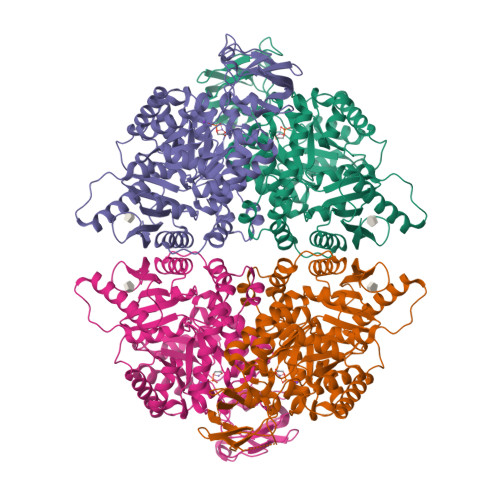
Pyruvate carboxylase, mitochondrial structureClick to view 3D structurePyruvate carboxylase, mitochondrialP11498HumansKnownNot Available
Pyruvate kinase PKLR structureClick to view 3D structurePyruvate kinase PKLRP30613HumansKnownNot Available
Pyruvate kinase PKM structureClick to view 3D structurePyruvate kinase PKMP14618HumansKnownNot Available
Click to view 3D structure4-aminobutyrate aminotransferase, mitochondrialP80404HumansKnownNot Available
Click to view 3D structureAlanine--glyoxylate aminotransferase 2, mitochondrialQ9BYV1HumansKnownNot Available
Alpha-ketoglutarate-dependent dioxygenase FTO structureClick to view 3D structureAlpha-ketoglutarate-dependent dioxygenase FTOQ9C0B1HumansKnownNot Available
Click to view 3D structureMonocarboxylate transporter 3O95907HumansKnownNot Available
Click to view 3D structureMonocarboxylate transporter 4O15427HumansKnownNot Available
Click to view 3D structureMonocarboxylate transporter 6O15375HumansKnownNot Available
Click to view 3D structureMonocarboxylate transporter 7O15403HumansKnownNot Available
Click to view 3D structureMonocarboxylate transporter 8P36021HumansKnownNot Available
Pyruvate dehydrogenase E1 component subunit beta, mitochondrial structureClick to view 3D structurePyruvate dehydrogenase E1 component subunit beta, mitochondrialP11177HumansKnownNot Available
Solute carrier organic anion transporter family member 2A1 structureClick to view 3D structureSolute carrier organic anion transporter family member 2A1Q92959HumansKnownNot Available
Concentrations
Not Available
External Links
DrugBank IDDB00119
HMDB IDHMDB0000243
FooDB IDFDB031141
Phenol Explorer IDNot Available
KNApSAcK IDC00001200
BiGG IDNot Available
BioCyc IDPYRUVATE
METLIN IDNot Available
PDB IDNot Available
Wikipedia LinkPyruvic_acid
Chemspider IDNot Available
ChEBI ID32816
PubChem Compound ID1060
Kegg Compound IDC00022
YMDB IDYMDB00175
ECMDB IDECMDB00243
References
Synthesis Reference

Tadamitsu Kiyoura, “Process for producing salts of pyruvic acid.” U.S. Patent US4242525, issued December, 1965.

MSDSLink
General References
  1. Silwood CJ, Lynch E, Claxson AW, Grootveld MC: 1H and (13)C NMR spectroscopic analysis of human saliva. J Dent Res. 2002 Jun;81(6):422-7. [PubMed: 12097436]
  2. Guneral F, Bachmann C: Age-related reference values for urinary organic acids in a healthy Turkish pediatric population. Clin Chem. 1994 Jun;40(6):862-6. [PubMed: 8087979]
  3. Hoffmann GF, Meier-Augenstein W, Stockler S, Surtees R, Rating D, Nyhan WL: Physiology and pathophysiology of organic acids in cerebrospinal fluid. J Inherit Metab Dis. 1993;16(4):648-69. [PubMed: 8412012]
  4. Subramanian A, Gupta A, Saxena S, Gupta A, Kumar R, Nigam A, Kumar R, Mandal SK, Roy R: Proton MR CSF analysis and a new software as predictors for the differentiation of meningitis in children. NMR Biomed. 2005 Jun;18(4):213-25. [PubMed: 15627241]
  5. Zupke C, Sinskey AJ, Stephanopoulos G: Intracellular flux analysis applied to the effect of dissolved oxygen on hybridomas. Appl Microbiol Biotechnol. 1995 Dec;44(1-2):27-36. [PubMed: 8579834]
  6. Nakayama Y, Kinoshita A, Tomita M: Dynamic simulation of red blood cell metabolism and its application to the analysis of a pathological condition. Theor Biol Med Model. 2005 May 9;2:18. [PubMed: 15882454]
  7. Nielsen J, Ytrebo LM, Borud O: Lactate and pyruvate concentrations in capillary blood from newborns. Acta Paediatr. 1994 Sep;83(9):920-2. [PubMed: 7819686]
  8. Ka T, Yamamoto T, Moriwaki Y, Kaya M, Tsujita J, Takahashi S, Tsutsumi Z, Fukuchi M, Hada T: Effect of exercise and beer on the plasma concentration and urinary excretion of purine bases. J Rheumatol. 2003 May;30(5):1036-42. [PubMed: 12734903]
  9. Talseth T, Haegele KD, McNay JL, Skrdlant HB, Clementi WA, Shepherd AM: Pharmacokinetics and cardiovascular effects in rabbits of a major hydralazine metabolite, the hydralazine pyruvic-acid hydrazone. J Pharmacol Exp Ther. 1979 Dec;211(3):509-13. [PubMed: 512915]
  10. Reece PA, Cozamanis I, Zacest R: Selective high-performance liquid chromatographic assays for hydralazine and its metabolites in plasma of man. J Chromatogr. 1980 Mar 14;181(3-4):427-40. [PubMed: 7391156]
  11. Meijer-Severs GJ, Van Santen E, Meijer BC: Short-chain fatty acid and organic acid concentrations in feces of healthy human volunteers and their correlations with anaerobe cultural counts during systemic ceftriaxone administration. Scand J Gastroenterol. 1990 Jul;25(7):698-704. [PubMed: 2396083]
  12. Elling D, Bader K: [Biochemical changes in cervix mucus in stepwise malignant transformation of cervix epithelium]. Zentralbl Gynakol. 1990;112(9):555-60. [PubMed: 2378186]
  13. Mongan PD, Capacchione J, West S, Karaian J, Dubois D, Keneally R, Sharma P: Pyruvate improves redox status and decreases indicators of hepatic apoptosis during hemorrhagic shock in swine. Am J Physiol Heart Circ Physiol. 2002 Oct;283(4):H1634-44. Epub 2002 Jun 20. [PubMed: 12234818]
  14. Foster KJ, Alberti KG, Hinks L, Lloyd B, Postle A, Smythe P, Turnell DC, Walton R: Blood intermediary metabolite and insulin concentrations after an overnight fast: reference ranges for adults, and interrelations. Clin Chem. 1978 Sep;24(9):1568-72. [PubMed: 688619]
  15. Tsuchiya H, Hashizume I, Tokunaga T, Tatsumi M, Takagi N, Hayashi T: High-performance liquid chromatography of alpha-keto acids in human saliva. Arch Oral Biol. 1983;28(11):989-92. [PubMed: 6581765]