Record Information
Version1.0
Creation Date2014-08-29 06:29:15 UTC
Update Date2026-05-21 14:38:36 UTC
Accession NumberCHEM003297
Identification
Common NameHomovanillic acid
ClassSmall Molecule
Description
Homovanillic acid is a dopamine metabolite occurring in human biofluids. A high proportion of patients with neuroblastoma excrete increased amounts of it in their urine. Homovanillic acid is a major catecholamine metabolite. It is used as a reagent to detect oxidative enzymes.
Contaminant Sources
  • FooDB Chemicals
  • HMDB Contaminants - Feces
  • HMDB Contaminants - Urine
  • T3DB toxins
Contaminant Type
  • Animal Toxin
  • Ether
  • Food Toxin
  • Indicator and Reagent
  • Industrial/Workplace Toxin
  • Metabolite
  • Natural Compound
  • Organic Compound
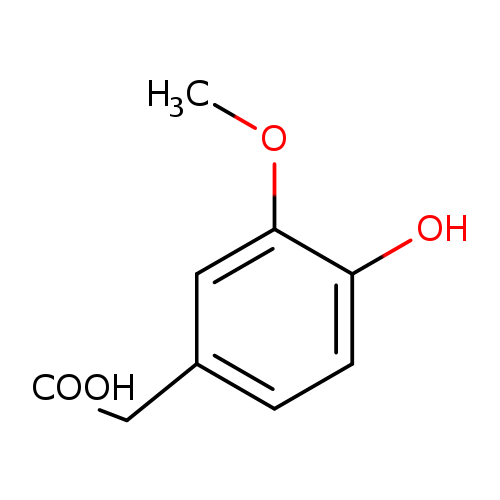
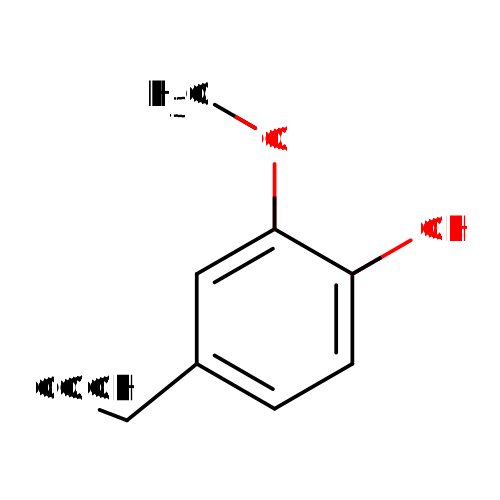
Chemical Structure
Synonyms
ValueSource
(4-Hydroxy-3-methoxyphenyl)acetic acidChEBI
3-Methoxy-4-hydroxyphenylacetateChEBI
3-Methoxy-4-hydroxyphenylacetic acidChEBI
4-Hydroxy-3-methoxybenzeneacetic acidChEBI
HVAChEBI
Vanillacetic acidChEBI
(4-Hydroxy-3-methoxyphenyl)acetateGenerator
4-Hydroxy-3-methoxybenzeneacetateGenerator
VanillacetateGenerator
HomovanillateGenerator
3-Methoxy-4-hydroxy-phenylacetic acidHMDB
4-Hydroxy 3-methoxyphenylacetic acidHMDB
4-Hydroxy-3-methoxyphenylacetic acidHMDB
HomovanilateHMDB
Homovanilic acidHMDB
Homovanillinic acidHMDB
VanilacetateHMDB
Vanilacetic acidHMDB
3 Methoxy 4 hydroxyphenylacetic acidHMDB
Acid, 3-methoxy-4-hydroxyphenylaceticHMDB
Acid, 4-hydroxy-3-methoxyphenylaceticHMDB
4 Hydroxy 3 methoxyphenylacetic acidHMDB
Acid, homovanillicHMDB
3'-Methoxy-4'-hydroxyphenylacetic acidHMDB
3’-methoxy-4’-hydroxyphenylacetic acidHMDB
4'-Hydroxy-3'-methoxy-phenylacetic acidHMDB
2-(4-Hydroxy-3-methoxyphenyl)acetic acidHMDB
4'-Hydroxy-3'-methoxyphenylacetic acidHMDB
Chemical FormulaC9H10O4
Average Molecular Mass182.173 g/mol
Monoisotopic Mass182.058 g/mol
CAS Registry Number306-08-1
IUPAC Name2-(4-hydroxy-3-methoxyphenyl)acetic acid
Traditional Namehomovanillic acid
SMILESCOC1=CC(CC(O)=O)=CC=C1O
InChI IdentifierInChI=1S/C9H10O4/c1-13-8-4-6(5-9(11)12)2-3-7(8)10/h2-4,10H,5H2,1H3,(H,11,12)
InChI KeyQRMZSPFSDQBLIX-UHFFFAOYSA-N
Chemical Taxonomy
Description Belongs to the class of organic compounds known as methoxyphenols. Methoxyphenols are compounds containing a methoxy group attached to the benzene ring of a phenol moiety.

KingdomOrganic compounds
Super ClassBenzenoids
ClassPhenols
Sub ClassMethoxyphenols
Direct ParentMethoxyphenols
Alternative Parents
Substituents
  • Methoxyphenol
  • Phenoxy compound
  • Anisole
  • Methoxybenzene
  • Phenol ether
  • 1-hydroxy-2-unsubstituted benzenoid
  • Alkyl aryl ether
  • Monocyclic benzene moiety
  • Carboxylic acid derivative
  • Monocarboxylic acid or derivatives
  • Ether
  • Carboxylic acid
  • Organic oxygen compound
  • Organooxygen compound
  • Carbonyl group
  • Hydrocarbon derivative
  • Organic oxide
  • Aromatic homomonocyclic compound
Molecular FrameworkAromatic homomonocyclic compounds
External Descriptors
Biological Properties
StatusDetected and Not Quantified
OriginEndogenous
Cellular Locations
  • Cytoplasm
  • Extracellular
Biofluid LocationsNot Available
Tissue Locations
  • Brain
  • Caudate Nucleus
  • Central Nervous System
  • Fibroblasts
  • Kidney
  • Spinal Cord
  • Striatum
Pathways
NameSMPDB LinkKEGG Link
Tyrosine MetabolismSMP00006 map00350
Dopamine beta-hydroxylase deficiencySMP00498 Not Available
ApplicationsNot Available
Biological Roles
Chemical RolesNot Available
Physical Properties
StateSolid
AppearanceWhite powder.
Experimental Properties
PropertyValue
Melting Point138 - 140°C
Boiling PointNot Available
Solubility17 mg/mL
Predicted Properties
PropertyValueSource
Water Solubility2.72 g/LALOGPS
logP1.02ALOGPS
logP1.15ChemAxon
logS-1.8ALOGPS
pKa (Strongest Acidic)3.74ChemAxon
pKa (Strongest Basic)-4.9ChemAxon
Physiological Charge-1ChemAxon
Hydrogen Acceptor Count4ChemAxon
Hydrogen Donor Count2ChemAxon
Polar Surface Area66.76 ŲChemAxon
Rotatable Bond Count3ChemAxon
Refractivity45.81 m³·mol⁻¹ChemAxon
Polarizability17.74 ųChemAxon
Number of Rings1ChemAxon
BioavailabilityYesChemAxon
Rule of FiveYesChemAxon
Ghose FilterYesChemAxon
Veber's RuleNoChemAxon
MDDR-like RuleNoChemAxon
Spectra
Spectra
Toxicity Profile
Route of ExposureNot Available
Mechanism of ToxicityNot Available
MetabolismNot Available
Toxicity ValuesNot Available
Lethal DoseNot Available
Carcinogenicity (IARC Classification)No indication of carcinogenicity to humans (not listed by IARC).
Uses/SourcesThis is an endogenously produced metabolite found in the human body. It is used in metabolic reactions, catabolic reactions or waste generation.
Minimum Risk LevelNot Available
Health EffectsNot Available
SymptomsNot Available
TreatmentNot Available
Concentrations
Not Available
External Links
DrugBank IDNot Available
HMDB IDHMDB0000118
FooDB IDFDB001783
Phenol Explorer ID574
KNApSAcK IDC00029504
BiGG ID46066
BioCyc IDCPD-7651
METLIN ID971
PDB IDNot Available
Wikipedia LinkHomovanillic_acid
Chemspider ID1675
ChEBI ID545959
PubChem Compound ID1738
Kegg Compound IDC05582
YMDB IDYMDB01711
ECMDB IDM2MDB005324
References
Synthesis ReferenceNot Available
MSDSLink
General References
1. Hagi T, Kobayashi M, Nomura M: Metabolome analysis of milk fermented by gamma-aminobutyric acid-producing Lactococcus lactis. J Dairy Sci. 2016 Feb;99(2):994-1001. doi: 10.3168/jds.2015-9945. Epub 2015 Dec 10.
2. Needlman R, Zuckerman B, Anderson GM, Mirochnick M, Cohen DJ: Cerebrospinal fluid monoamine precursors and metabolites in human neonates following in utero cocaine exposure: a preliminary study. Pediatrics. 1993 Jul;92(1):55-60.
3. Houston JP, Maas JW, Bowden CL, Contreras SA, McIntyre KL, Javors MA: Cerebrospinal fluid HVA, central brain atrophy, and clinical state in schizophrenia. Psychiatry Res. 1986 Nov;19(3):207-14.
4. Scatton B, Dennis T, L'Heureux R, Monfort JC, Duyckaerts C, Javoy-Agid F: Degeneration of noradrenergic and serotonergic but not dopaminergic neurones in the lumbar spinal cord of parkinsonian patients. Brain Res. 1986 Aug 13;380(1):181-5.
5. Javors MA, Bowden CL, Maas JW: 3-methoxy-4-hydroxyphenylglycol, 5-hydroxyindoleacetic acid, and homovanillic acid in human cerebrospinal fluid. Storage and measurement by reversed-phase high-performance liquid chromatography and coulometric detection using 3-methoxy-4-hydroxyphenyllactic acid as an internal standard. J Chromatogr. 1984 Dec 12;336(2):259-69.
6. Court JA, Lloyd S, Thomas N, Piggott MA, Marshall EF, Morris CM, Lamb H, Perry RH, Johnson M, Perry EK: Dopamine and nicotinic receptor binding and the levels of dopamine and homovanillic acid in human brain related to tobacco use. Neuroscience. 1998 Nov;87(1):63-78.
7. Reynolds GP, Garrett NJ: Striatal dopamine and homovanillic acid in Huntington's disease. J Neural Transm. 1986;65(2):151-5.
8. Kay AD, Schapiro MB, Riker AK, Haxby JV, Rapoport SI, Cutler NR: Cerebrospinal fluid monoaminergic metabolites are elevated in adults with Down's syndrome. Ann Neurol. 1987 Apr;21(4):408-11.
9. Lovenberg W, Levine RA, Robinson DS, Ebert M, Williams AC, Calne DB: Hydroxylase cofactor activity in cerebrospinal fluid of normal subjects and patients with Parkinson's disease. Science. 1979 May 11;204(4393):624-6.
10. Ruberg M, Javoy-Agid F, Hirsch E, Scatton B, LHeureux R, Hauw JJ, Duyckaerts C, Gray F, Morel-Maroger A, Rascol A, et al.: Dopaminergic and cholinergic lesions in progressive supranuclear palsy. Ann Neurol. 1985 Nov;18(5):523-9.
11. Kaminski R, Powchick P, Warne PA, Goldstein M, McQueeney RT, Davidson M: Measurement of plasma homovanillic acid concentrations in schizophrenic patients. Prog Neuropsychopharmacol Biol Psychiatry. 1990;14(3):271-87.
12. Birkmayer W, Birkmayer GJ: Nicotinamidadenindinucleotide (NADH): the new approach in the therapy of Parkinson's disease. Ann Clin Lab Sci. 1989 Jan-Feb;19(1):38-43.
13. Lambert GW, Eisenhofer G, Jennings GL, Esler MD: Regional homovanillic acid production in humans. Life Sci. 1993;53(1):63-75.
14. Pifl C, Schingnitz G, Hornykiewicz O: The neurotoxin MPTP does not reproduce in the rhesus monkey the interregional pattern of striatal dopamine loss typical of human idiopathic Parkinson's disease. Neurosci Lett. 1988 Oct 5;92(2):228-33.
15. Grant DB, Dunger DB, Smith I, Hyland K: Familial glucocorticoid deficiency with achalasia of the cardia associated with mixed neuropathy, long-tract degeneration and mild dementia. Eur J Pediatr. 1992 Feb;151(2):85-9.
16. Eriksson E, Westberg P, Alling C, Thuresson K, Modigh K: Cerebrospinal fluid levels of monoamine metabolites in panic disorder. Psychiatry Res. 1991 Mar;36(3):243-51.
17. Lepore V, Di Reda N, Defazio G, Pedone D, Giovine A, Lanzi C, Tartaglione B, Livrea P: Dopaminomimetic action of diphenylhydantoin in rat striatum: effect on homovanillic acid and cyclic AMP levels. Psychopharmacology (Berl). 1985;86(1-2):27-30.
18. Hyland K, Gunasekara RS, Munk-Martin TL, Arnold LA, Engle T: The hph-1 mouse: a model for dominantly inherited GTP-cyclohydrolase deficiency. Ann Neurol. 2003;54 Suppl 6:S46-8.
19. Levreri I, Caruso U, Deiana F, Buoncompagni A, De Bernardi B, Marchese N, Melioli G: The secretion of ibuprofen metabolites interferes with the capillary chromatography of urinary homovanillic acid and 4-hydroxy-3-methoxymandelic acid in neuroblastoma diagnosis. Clin Chem Lab Med. 2005;43(2):173-7.
20. Guneral F, Bachmann C: Age-related reference values for urinary organic acids in a healthy Turkish pediatric population. Clin Chem. 1994 Jun;40(6):862-6.
21. Broderick PA, Barr GA, Sharpless NS, Bridger WH: Biogenic amine alterations in limbic brain regions of muricidal rats. Res Commun Chem Pathol Pharmacol. 1985 Apr;48(1):3-15.
22. Sjoberg S, Eriksson M, Nordin C: L-thyroxine treatment and neurotransmitter levels in the cerebrospinal fluid of hypothyroid patients: a pilot study. Eur J Endocrinol. 1998 Nov;139(5):493-7.
23. Sullivan GM, Oquendo MA, Huang YY, Mann JJ: Elevated cerebrospinal fluid 5-hydroxyindoleacetic acid levels in women with comorbid depression and panic disorder. Int J Neuropsychopharmacol. 2006 Oct;9(5):547-56. Epub 2005 Nov 1.
24. Lekman A, Witt-Engerstrom I, Gottfries J, Hagberg BA, Percy AK, Svennerholm L: Rett syndrome: biogenic amines and metabolites in postmortem brain. Pediatr Neurol. 1989 Nov-Dec;5(6):357-62.
25. Losonczy MF, Song IS, Mohs RC, Mathe AA, Davidson M, Davis BM, Davis KL: Correlates of lateral ventricular size in chronic schizophrenia, II: biological measures. Am J Psychiatry. 1986 Sep;143(9):1113-8.
26. Seeldrayers P, Messina D, Desmedt D, Dalesio O, Hildebrand J: CSF levels of neurotransmitters in Alzheimer-type dementia. Effects of ergoloid mesylate. Acta Neurol Scand. 1985 May;71(5):411-4.
27. Lembreghts M, Ansseau M: [Biological markers in schizophrenia]. Encephale. 1993 Sep-Oct;19(5):501-23.
28. Dale G, McGill AC, Seviour JA, Craft AW: Urinary excretion of HMMA and HVA in infants. Ann Clin Biochem. 1988 May;25 ( Pt 3):233-6.
29. Sardar AM, Czudek C, Reynolds GP: Dopamine deficits in the brain: the neurochemical basis of parkinsonian symptoms in AIDS. Neuroreport. 1996 Mar 22;7(4):910-2.
30. Ormazabal A, Garcia-Cazorla A, Fernandez Y, Fernandez-Alvarez E, Campistol J, Artuch R: HPLC with electrochemical and fluorescence detection procedures for the diagnosis of inborn errors of biogenic amines and pterins. J Neurosci Methods. 2005 Mar 15;142(1):153-8.
31. Ali SF, Kordsmeier KJ, Gough B: Drug-induced circling preference in rats. Correlation with monoamine levels. Mol Neurobiol. 1995 Aug-Dec;11(1-3):145-54.
32. Eklundh T, Eriksson M, Sjoberg S, Nordin C: Monoamine precursors, transmitters and metabolites in cerebrospinal fluid: a prospective study in healthy male subjects. J Psychiatr Res. 1996 May-Jun;30(3):201-8.
33. von Holst H, Lindquist C, Sedvall G: Increased concentrations of the monoamine metabolites homovanillic acid and 5-hydroxyindoleacetic acid in lumbar and central CSF and of 3-methoxy-4-hydroxyphenylglycol in lumbar CSF after subarachnoid haemorrhage. Acta Neurochir (Wien). 1985;77(3-4):146-51.
34. Strittmatter M, Isenberg E, Grauer MT, Hamann G, Schimrigk K: CSF substance P somatostatin and monoaminergic transmitter metabolites in patients with narcolepsy. Neurosci Lett. 1996 Nov 1;218(2):99-102.
35. Curtin F, Walker JP, Peyrin L, Soulier V, Badan M, Schulz P: Reward dependence is positively related to urinary monoamines in normal men. Biol Psychiatry. 1997 Aug 15;42(4):275-81.
36. Abramowsky CR, Taylor SR, Anton AH, Berk AI, Roederer M, Murphy RF: Flow cytometry DNA ploidy analysis and catecholamine secretion profiles in neuroblastoma. Cancer. 1989 May 1;63(9):1752-6.
37. Sumiyoshi T, Yotsutsuji T, Kurachi M, Itoh H, Kurokawa K, Saitoh O: Effect of mental stress on plasma homovanillic acid in healthy human subjects. Neuropsychopharmacology. 1998 Jul;19(1):70-3.
38. Jolicoeur FB, Rivest R, Drumheller A: Hypokinesia, rigidity, and tremor induced by hypothalamic 6-OHDA lesions in the rat. Brain Res Bull. 1991 Feb;26(2):317-20.
39. Harnryd C, Bjerkenstedt L, Grimm VE, Sedvall G: Reduction of MOPEG levels in cerebrospinal fluid of psychotic women after electroconvulsive treatment. Psychopharmacology (Berl). 1979 Aug 8;64(2):131-4.
40. di Rocco A, Bottiglieri T, Dorfman D, Werner P, Morrison C, Simpson D: Decreased homovanilic acid in cerebrospinal fluid correlates with impaired neuropsychologic function in HIV-1-infected patients. Clin Neuropharmacol. 2000 Jul-Aug;23(4):190-4.
41. Van Der Heyden JC, Rotteveel JJ, Wevers RA: Decreased homovanillic acid concentrations in cerebrospinal fluid in children without a known defect in dopamine metabolism. Eur J Paediatr Neurol. 2003;7(1):31-7.
42. Shoemaker JD, Elliott WH: Automated screening of urine samples for carbohydrates, organic and amino acids after treatment with urease. J Chromatogr. 1991 Jan 2;562(1-2):125-38.
43. Brautigam C, Wevers RA, Jansen RJ, Smeitink JA, de Rijk-van Andel JF, Gabreels FJ, Hoffmann GF: Biochemical hallmarks of tyrosine hydroxylase deficiency. Clin Chem. 1998 Sep;44(9):1897-904.
44. Amin F, Stroe AE, Kahn T, Knott PJ, Kahn RS, Davidson M: Control of renal factors in plasma homovanillic acid measurements. Neuropsychopharmacology. 1998 Apr;18(4):317-20.
45. Mashige F, Ohkubo A, Matsushima Y, Takano M, Tsuchiya E, Kanazawa H, Nagata Y, Takai N, Shinozuka N, Sakuma I: High-performance liquid chromatographic determination of catecholamine metabolites and 5-hydroxyindoleacetic acid in human urine using a mixed-mode column and an eight-channel electrode electrochemical detector. J Chromatogr B Biomed Appl. 1994 Aug 5;658(1):63-8.
46. Lambert GW, Eisenhofer G, Esler MD: The influence of aging on the plasma concentration and renal clearance of homovanillic acid. Psychoneuroendocrinology. 1994;19(1):33-41.
47. Goldstein DS, Eisenhofer G, Kopin IJ: Sources and significance of plasma levels of catechols and their metabolites in humans. J Pharmacol Exp Ther. 2003 Jun;305(3):800-11. Epub 2003 Mar 20.
48. Konradi C, Kornhuber J, Sofic E, Heckers S, Riederer P, Beckmann H: Variations of monoamines and their metabolites in the human brain putamen. Brain Res. 1992 May 8;579(2):285-90.
49. Riddle MA, Jatlow PI, Anderson GM, Cho SC, Hardin MT, Cohen DJ, Leckman JF: Plasma debrisoquin levels in the assessment of reduction of plasma homovanillic acid. The debrisoquin method. Neuropsychopharmacology. 1989 Jun;2(2):123-9.
50. Honma T, Miyagawa M, Suda M, Wang RS, Kobayashi K, Sekiguchi S: Effects of perinatal exposure to bisphenol A on brain neurotransmitters in female rat offspring. Ind Health. 2006 Jul;44(3):510-24.
51. Sambo P, Baroni SS, Luchetti M, Paroncini P, Dusi S, Orlandini G, Gabrielli A: Oxidative stress in scleroderma: maintenance of scleroderma fibroblast phenotype by the constitutive up-regulation of reactive oxygen species generation through the NADPH oxidase complex pathway. Arthritis Rheum. 2001 Nov;44(11):2653-64.
52. Ferreira C, Paes M, Gouveia A, Ferreira E, Padua F, Fiuza T: Plasma homovanillic acid and prolactin in systemic lupus erythematosus. Lupus. 1998;7(6):392-7.
53. Post RM, Goodwin FK: Time-dependent effects of phenothiazines on dopamine turnover in psychiatric patients. Science. 1975 Oct 31;190(4213):488-9.
54. Azzaro AJ, King J, Kotzuk J, Schoepp DD, Frost J, Schochet S: Guinea pig striatum as a model of human dopamine deamination: the role of monoamine oxidase isozyme ratio, localization, and affinity for substrate in synaptic dopamine metabolism. J Neurochem. 1985 Sep;45(3):949-56.
55. Silbergeld EK, Chisolm JJ Jr: Lead poisoning: altered urinary catecholamine metabolites as indicators of intoxication in mice and children. Science. 1976 Apr 9;192(4235):153-5.
56. Kish SJ, Shannak K, Rajput A, Deck JH, Hornykiewicz O: Aging produces a specific pattern of striatal dopamine loss: implications for the etiology of idiopathic Parkinson's disease. J Neurochem. 1992 Feb;58(2):642-8.
57. Kania BF: Presynaptic stimulation of dopaminergic CNS structures in sheep as a mechanism of immobilising action of Immobyl (fentanyl + azaperone). Res Vet Sci. 1985 Mar;38(2):179-83.
58. Ebinger G, Michotte Y, Herregodts P: The significance of homovanillic acid and 3,4-dihydroxyphenylacetic acid concentrations in human lumbar cerebrospinal fluid. J Neurochem. 1987 Jun;48(6):1725-9.
59. Burman P, Hetta J, Wide L, Mansson JE, Ekman R, Karlsson FA: Growth hormone treatment affects brain neurotransmitters and thyroxine [see comment]. Clin Endocrinol (Oxf). 1996 Mar;44(3):319-24.
60. Narayan M, Srinath S, Anderson GM, Meundi DB: Cerebrospinal fluid levels of homovanillic acid and 5-hydroxyindoleacetic acid in autism. Biol Psychiatry. 1993 Apr 15-May 1;33(8-9):630-5.
61. Hagenfeldt L, Bjerkenstedt L, Edman G, Sedvall G, Wiesel FA: Amino acids in plasma and CSF and monoamine metabolites in CSF: interrelationship in healthy subjects. J Neurochem. 1984 Mar;42(3):833-7.
62. Bowers MB Jr, Hoffman FJ Jr, Morton JB: Diazepam and haloperidol. Effect on regional brain homovanillic acid levels. Neuropsychopharmacology. 1991 Aug;5(1):65-9.
63. Amin F, Silverman JM, Siever LJ, Smith CJ, Knott PJ, Davis KL: Genetic antecedents of dopamine dysfunction in schizophrenia. Biol Psychiatry. 1999 May 1;45(9):1143-50.
64. Boto-Ordonez M, Urpi-Sarda M, Queipo-Ortuno MI, Tulipani S, Tinahones FJ, Andres-Lacueva C: High levels of Bifidobacteria are associated with increased levels of anthocyanin microbial metabolites: a randomized clinical trial. Food Funct. 2014 Aug;5(8):1932-8. doi: 10.1039/c4fo00029c.
65. Publications of the University of Eastern Finland. Dissertations in Health Sciences., no 510
66. https://www.ncbi.nlm.nih.gov/pubmed/?term=10331106
67. https://www.ncbi.nlm.nih.gov/pubmed/?term=11020122
68. https://www.ncbi.nlm.nih.gov/pubmed/?term=115032
69. https://www.ncbi.nlm.nih.gov/pubmed/?term=1166321
70. https://www.ncbi.nlm.nih.gov/pubmed/?term=11710721
71. https://www.ncbi.nlm.nih.gov/pubmed/?term=1257763
72. https://www.ncbi.nlm.nih.gov/pubmed/?term=12615172
73. https://www.ncbi.nlm.nih.gov/pubmed/?term=12649306
74. https://www.ncbi.nlm.nih.gov/pubmed/?term=12891653
75. https://www.ncbi.nlm.nih.gov/pubmed/?term=14688447
76. https://www.ncbi.nlm.nih.gov/pubmed/?term=1537368
77. https://www.ncbi.nlm.nih.gov/pubmed/?term=15652629
78. https://www.ncbi.nlm.nih.gov/pubmed/?term=15843212
79. https://www.ncbi.nlm.nih.gov/pubmed/?term=16259647
80. https://www.ncbi.nlm.nih.gov/pubmed/?term=1628216
81. https://www.ncbi.nlm.nih.gov/pubmed/?term=16288991
82. https://www.ncbi.nlm.nih.gov/pubmed/?term=16922197
83. https://www.ncbi.nlm.nih.gov/pubmed/?term=1712114
84. https://www.ncbi.nlm.nih.gov/pubmed/?term=1729408
85. https://www.ncbi.nlm.nih.gov/pubmed/?term=1901508
86. https://www.ncbi.nlm.nih.gov/pubmed/?term=1930613
87. https://www.ncbi.nlm.nih.gov/pubmed/?term=2026685
88. https://www.ncbi.nlm.nih.gov/pubmed/?term=2193315
89. https://www.ncbi.nlm.nih.gov/pubmed/?term=24007816
90. https://www.ncbi.nlm.nih.gov/pubmed/?term=24010549
91. https://www.ncbi.nlm.nih.gov/pubmed/?term=2409733
92. https://www.ncbi.nlm.nih.gov/pubmed/?term=2416192
93. https://www.ncbi.nlm.nih.gov/pubmed/?term=2428259
94. https://www.ncbi.nlm.nih.gov/pubmed/?term=2428421
95. https://www.ncbi.nlm.nih.gov/pubmed/?term=2437853
96. https://www.ncbi.nlm.nih.gov/pubmed/?term=24416192
97. https://www.ncbi.nlm.nih.gov/pubmed/?term=24423636
98. https://www.ncbi.nlm.nih.gov/pubmed/?term=2480613
99. https://www.ncbi.nlm.nih.gov/pubmed/?term=2581293
100. https://www.ncbi.nlm.nih.gov/pubmed/?term=2604799
101. https://www.ncbi.nlm.nih.gov/pubmed/?term=2644889
102. https://www.ncbi.nlm.nih.gov/pubmed/?term=2702581
103. https://www.ncbi.nlm.nih.gov/pubmed/?term=2742727
104. https://www.ncbi.nlm.nih.gov/pubmed/?term=2939198
105. https://www.ncbi.nlm.nih.gov/pubmed/?term=2991966
106. https://www.ncbi.nlm.nih.gov/pubmed/?term=3000280
107. https://www.ncbi.nlm.nih.gov/pubmed/?term=3263594
108. https://www.ncbi.nlm.nih.gov/pubmed/?term=3400977
109. https://www.ncbi.nlm.nih.gov/pubmed/?term=3572399
110. https://www.ncbi.nlm.nih.gov/pubmed/?term=3797547
111. https://www.ncbi.nlm.nih.gov/pubmed/?term=3928811
112. https://www.ncbi.nlm.nih.gov/pubmed/?term=4039834
113. https://www.ncbi.nlm.nih.gov/pubmed/?term=432666
114. https://www.ncbi.nlm.nih.gov/pubmed/?term=6085084
115. https://www.ncbi.nlm.nih.gov/pubmed/?term=6198473
116. https://www.ncbi.nlm.nih.gov/pubmed/?term=7524950
117. https://www.ncbi.nlm.nih.gov/pubmed/?term=7687150
118. https://www.ncbi.nlm.nih.gov/pubmed/?term=8087979
119. https://www.ncbi.nlm.nih.gov/pubmed/?term=8306920
120. https://www.ncbi.nlm.nih.gov/pubmed/?term=8353435
121. https://www.ncbi.nlm.nih.gov/pubmed/?term=8515683
122. https://www.ncbi.nlm.nih.gov/pubmed/?term=8516085
123. https://www.ncbi.nlm.nih.gov/pubmed/?term=8561958
124. https://www.ncbi.nlm.nih.gov/pubmed/?term=8724671
125. https://www.ncbi.nlm.nih.gov/pubmed/?term=8729530
126. https://www.ncbi.nlm.nih.gov/pubmed/?term=8884658
127. https://www.ncbi.nlm.nih.gov/pubmed/?term=8945737
128. https://www.ncbi.nlm.nih.gov/pubmed/?term=9210210
129. https://www.ncbi.nlm.nih.gov/pubmed/?term=9270904
130. https://www.ncbi.nlm.nih.gov/pubmed/?term=9439441
131. https://www.ncbi.nlm.nih.gov/pubmed/?term=9509499
132. https://www.ncbi.nlm.nih.gov/pubmed/?term=9608578
133. https://www.ncbi.nlm.nih.gov/pubmed/?term=9722142
134. https://www.ncbi.nlm.nih.gov/pubmed/?term=9732974
135. https://www.ncbi.nlm.nih.gov/pubmed/?term=9736322
136. https://www.ncbi.nlm.nih.gov/pubmed/?term=9849813