Glycerol (CED0000415)

Record Information
Version1.0
Creation Date2014-08-29 06:34:10 UTC
Update Date2026-05-14 19:06:06 UTC
SynCED IDCED0000415
Secondary Accession Numbers
  • CHEM003320
  • T3D4360
Identification
Common NameGlycerol
ClassSmall Molecule
Description
Glycerol (C3H8O3) is an endogenous liquid with an average molecular weight of 92.09 g/mol. Glycerol belongs to the carbohydrates and carbohydrate conjugates, a subclass of organooxygen compounds within the organic compounds. This compound is detected in various tissues, including the brain, liver, kidney, skin, adipose tissue, bladder, pancreas, prostate, spleen, thyroid gland, testes, placenta, myelin, neuron, nerve cells, muscle, skeletal muscle, and stratum corneum. It interacts with twelve recorded protein targets, including Inositol-3-phosphate synthase 1 (ISYNA1), Glutathione S-transferase P (GSTP1), Group IIE secretory phospholipase A2 (PLA2G2E), and Hematopoietic prostaglandin D synthase (HPGDS). In a medical context, glycerol is used as a treatment for psoriasis (PMC7865233 ). Biologically, glycerol functions as a metabolite, human metabolite, and osmolyte (PMC10420922 , PMC11959588 ). It also serves as an environmental nutrient (PMC7921375 ). Industrially, it is utilized as a solvent (PMC10420922 , PMC11959588 ), detergent, emulsifier, humectant, fragrance, viscosity modifier, softener and conditioner, anti-adhesive/cohesive, flavouring and nutrient, lubricating agent, preservative, thickening agent, binder, surface modifier, foamant, dye, drier, anti-caking agent, solubility enhancer, and as processing aids not otherwise specified. Glycerol is found in or released from 75 recorded sources, including drinking water, food contact materials, food preservation, fermentation processes for beer, agglomerated sugar products, cellar tools, and various household cleaning and consumer products such as bleaching agents and cigar cigarettes. It is also present in building and construction materials including floors, roofs, ceilings, fencing, and ladders, as well as electronic equipment like amplifiers, antennas, coils, and adjustable resistors. Household items such as coins, badges, watch chains, key rings, and rosaries are also recorded sources. Exposure routes include oral, inhalation, and touch.
Contaminant Type
  • Animal Toxin
  • Food Toxin
  • Household Toxin
  • Human Neurotoxin
  • Metabolite
  • Natural Compound
  • Organic Compound
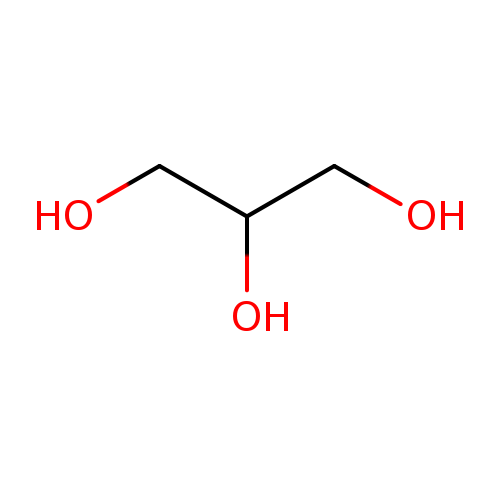
Chemical Structure
Synonyms
ValueSource
1,2,3-PropanetriolChEBI
1,2,3-TrihydroxypropaneChEBI
GlycerinChEBI
GlycerineChEBI
GlyceritolChEBI
GlycerolumChEBI
Glycyl alcoholChEBI
GlyzerinChEBI
GroChEBI
OelsuessChEBI
PropanetriolChEBI
TrihydroxypropaneChEBI
Concentrated glycerinKegg
Glycerin, concentratedKegg
BulboldHMDB
CristalHMDB
e 422HMDB
Emery 916HMDB
Glyceol opthalganHMDB
GlyrolHMDB
GlysaninHMDB
IFPHMDB
Incorporation factorHMDB
Mackstat H 66HMDB
OsmoglynHMDB
Pricerine 9091HMDB
RG-SHMDB
TryhydroxypropaneHMDB
2,5-Dihydroxyphenylacetic acidHMDB
2-(3,6-DIHYDROXYPHENYL)acetIC ACIDHMDB
2,5-DihydroxyphenylacetateHMDB
2-(3,6-DIHYDROXYPHENYL)acetateHMDB
HomogentisateHMDB
(2,5-Dihydroxyphenyl)-acetateHMDB
(2,5-Dihydroxyphenyl)-acetic acidHMDB
2,5-Dihydroxy-a-toluateHMDB
2,5-Dihydroxy-a-toluic acidHMDB
2,5-Dihydroxy-alpha-toluateHMDB
2,5-Dihydroxy-alpha-toluic acidHMDB
2,5-Dihydroxy-benzeneacetateHMDB
2,5-Dihydroxy-benzeneacetic acidHMDB
AlcaptonHMDB
Homogentisate acidHMDB
HomogentisinateHMDB
Homogentisinic acidHMDB
Melanic acidHMDB
Acid, homogentisicHMDB
GlcAaHMDB
GlcAalphaHMDB
D-GlucuronateHMDB
alpha-D-Glucopyranuronic acidHMDB
alpha-D-Glucuronic acidHMDB
alpha-delta-Glucopyranuronic acidHMDB
alpha-delta-Glucuronic acidHMDB
D-(+)-GlucuronateHMDB
D-(+)-Glucuronic acidHMDB
delta-(+)-GlucuronateHMDB
delta-(+)-Glucuronic acidHMDB
delta-GlucuronateHMDB
GCUHMDB
GlucosiduronateHMDB
Glucosiduronic acidHMDB
GlucuronateHMDB
Glucuronic acidHMDB
(2E)-2-Butenedioic acidHMDB
(e)-2-Butenedioic acidHMDB
e297HMDB
FumarsaeureHMDB
trans-1,2-Ethylenedicarboxylic acidHMDB
trans-But-2-enedioic acidHMDB
trans-Butenedioic acidHMDB
(2E)-2-ButenedioateHMDB
(e)-2-ButenedioateHMDB
trans-1,2-EthylenedicarboxylateHMDB
trans-But-2-enedioateHMDB
trans-ButenedioateHMDB
FumarateHMDB
(2E)-But-2-enedioateHMDB
(2E)-But-2-enedioic acidHMDB
2-(e)-ButenedioateHMDB
2-(e)-Butenedioic acidHMDB
AllomaleateHMDB
Allomaleic acidHMDB
BoletateHMDB
Boletic acidHMDB
FC 33HMDB
LichenateHMDB
Lichenic acidHMDB
Sodium fumarateHMDB
trans-2-ButenedioateHMDB
trans-2-Butenedioic acidHMDB
FuramagHMDB
Ammonium fumarateHMDB
Magnesium fumarateHMDB
MafusolHMDB
Chemical FormulaC3H8O3
Average Molecular Mass92.094 g/mol
Monoisotopic Mass92.047 g/mol
CAS Registry Number56-81-5
IUPAC Namepropane-1,2,3-triol
Traditional Nameglycerol
SMILESOCC(O)CO
InChI IdentifierInChI=1S/C3H8O3/c4-1-3(6)2-5/h3-6H,1-2H2
InChI KeyPEDCQBHIVMGVHV-UHFFFAOYSA-N
Chemical Taxonomy
Description Belongs to the class of organic compounds known as sugar alcohols. These are hydrogenated forms of carbohydrate in which the carbonyl group (aldehyde or ketone, reducing sugar) has been reduced to a primary or secondary hydroxyl group.
KingdomOrganic compounds
Super ClassOrganic oxygen compounds
ClassOrganooxygen compounds
Sub ClassCarbohydrates and carbohydrate conjugates
Direct ParentSugar alcohols
Alternative Parents
Substituents
  • Sugar alcohol
  • Secondary alcohol
  • Polyol
  • Hydrocarbon derivative
  • Primary alcohol
  • Alcohol
  • Aliphatic acyclic compound
Molecular FrameworkAliphatic acyclic compounds
External Descriptors
Biological Properties
StatusDetected and Not Quantified
OriginEndogenous
Cellular Locations
  • Cytoplasm
  • Extracellular
  • Mitochondria
Biofluid LocationsNot Available
Tissue Locations
  • Adipose Tissue
  • Bladder
  • Brain
  • Kidney
  • Liver
  • Muscle
  • Myelin
  • Nerve Cells
  • Neuron
  • Pancreas
  • Placenta
  • Prostate
  • Skeletal Muscle
  • Skin
  • Spleen
  • Stratum Corneum
  • Testes
  • Thyroid Gland
Applications
Biological Roles
Chemical Roles
Organoleptic Effects
  • yellow colour ?
  • white colour ?
  • odorless odour ?
  • transparent colour ?
  • colorless colour ?
  • brownish colour ?
  • translucent colour ?
  • brown colour ?
  • dark brown colour ?
  • sweet taste ?
  • opaque colour ?
  • rancid odour ?
  • clear colour ?
  • sticky touch ?
  • sweet-tasting taste ?
  • rough touch ?
  • soft touch ?
  • opalescent colour ?
  • flexible touch ?
  • softer touch ?
  • tacky touch ?
  • smooth touch ?
  • yellow discoloration colour ?
Physical Properties
StateLiquid
AppearanceNot Available
Experimental Properties
PropertyValue
Melting Point20°C
Boiling PointNot Available
Solubility1000.0 mg/mL
Predicted Properties
PropertyValueSource
Water Solubility1170 g/LALOGPS
logP-1.9ALOGPS
logP-1.8ChemAxon
logS1.1ALOGPS
pKa (Strongest Acidic)13.61ChemAxon
pKa (Strongest Basic)-3ChemAxon
Physiological Charge0ChemAxon
Hydrogen Acceptor Count3ChemAxon
Hydrogen Donor Count3ChemAxon
Polar Surface Area60.69 ŲChemAxon
Rotatable Bond Count2ChemAxon
Refractivity20.52 m³·mol⁻¹ChemAxon
Polarizability8.93 ųChemAxon
Number of Rings0ChemAxon
BioavailabilityYesChemAxon
Rule of FiveYesChemAxon
Ghose FilterNoChemAxon
Veber's RuleNoChemAxon
MDDR-like RuleNoChemAxon
Spectra
Spectra
Spectrum TypeDescriptionSplash KeyDeposition DateView
GC-MSGC-MS Spectrumsplash10-0fr2-0910000000-6497c0870b71585c6322Not AvailableView Spectrum
GC-MSGC-MS Spectrumsplash10-0ktb-0920000000-93408d69acffad6f48afNot AvailableView Spectrum
GC-MSGC-MS Spectrumsplash10-05mk-0940000000-778ba583836705f8fdf4Not AvailableView Spectrum
GC-MSGC-MS Spectrumsplash10-00kb-0920000000-2e4b358941c660851f0aNot AvailableView Spectrum
GC-MSGC-MS Spectrumsplash10-00dj-6920000000-6828d7b00cb31e84fac1Not AvailableView Spectrum
GC-MSGC-MS Spectrumsplash10-0le9-0940000000-e0b9bada9be26d720326Not AvailableView Spectrum
GC-MSGC-MS Spectrumsplash10-01ox-9000000000-3fe0c184a891364773a8Not AvailableView Spectrum
GC-MSGC-MS Spectrumsplash10-0fr2-0930000000-470b6694b25fde40d80fNot AvailableView Spectrum
GC-MSGC-MS Spectrumsplash10-0fr2-0910000000-6497c0870b71585c6322Not AvailableView Spectrum
GC-MSGC-MS Spectrumsplash10-0ktb-0920000000-93408d69acffad6f48afNot AvailableView Spectrum
GC-MSGC-MS Spectrumsplash10-05mk-0940000000-778ba583836705f8fdf4Not AvailableView Spectrum
GC-MSGC-MS Spectrumsplash10-00kb-0920000000-2e4b358941c660851f0aNot AvailableView Spectrum
GC-MSGC-MS Spectrumsplash10-00dj-6920000000-6828d7b00cb31e84fac1Not AvailableView Spectrum
GC-MSGC-MS Spectrumsplash10-0le9-0940000000-e0b9bada9be26d720326Not AvailableView Spectrum
GC-MSGC-MS Spectrumsplash10-00kb-0920000000-085a71f40d38f2729036Not AvailableView Spectrum
Predicted GC-MSPredicted GC-MS Spectrumsplash10-01qc-9000000000-80cdb8c006ea00f55a64Not AvailableView Spectrum
Predicted GC-MSPredicted GC-MS Spectrumsplash10-0q4u-9280000000-1487e8921bcecbde6458Not AvailableView Spectrum
Predicted GC-MSPredicted GC-MS SpectrumNot AvailableNot AvailableView Spectrum
LC-MS/MSLC-MS/MS Spectrumsplash10-0a4i-9000000000-d7c139dc01453f61eb99Not AvailableView Spectrum
LC-MS/MSLC-MS/MS Spectrumsplash10-0a4l-9000000000-7d7844b4813b038012daNot AvailableView Spectrum
LC-MS/MSLC-MS/MS Spectrumsplash10-0udi-9100000000-16029dbe79f139ab904aNot AvailableView Spectrum
LC-MS/MSLC-MS/MS Spectrumsplash10-01ox-9000000000-3fe0c184a891364773a8Not AvailableView Spectrum
Predicted LC-MS/MSPredicted LC-MS/MS Spectrumsplash10-0006-9000000000-a638e26fe3c3f48563c2Not AvailableView Spectrum
Predicted LC-MS/MSPredicted LC-MS/MS Spectrumsplash10-004l-9000000000-d3fd9e9abd911eb0f88eNot AvailableView Spectrum
Predicted LC-MS/MSPredicted LC-MS/MS Spectrumsplash10-0a6r-9000000000-ca218dca3a5d86196d81Not AvailableView Spectrum
Predicted LC-MS/MSPredicted LC-MS/MS Spectrumsplash10-0006-9000000000-b40367f5ca8d11288fbeNot AvailableView Spectrum
Predicted LC-MS/MSPredicted LC-MS/MS Spectrumsplash10-0006-9000000000-ba29a0647084e32d8704Not AvailableView Spectrum
Predicted LC-MS/MSPredicted LC-MS/MS Spectrumsplash10-0abc-9000000000-4cd85379d414c16f95c0Not AvailableView Spectrum
Predicted LC-MS/MSPredicted LC-MS/MS Spectrumsplash10-0a4i-9000000000-1614392356273cb2b6a0Not AvailableView Spectrum
Predicted LC-MS/MSPredicted LC-MS/MS Spectrumsplash10-0a4i-9000000000-9561fb02d4c00eb6eac1Not AvailableView Spectrum
Predicted LC-MS/MSPredicted LC-MS/MS Spectrumsplash10-0a4l-9000000000-7fe914cba67cae807300Not AvailableView Spectrum
Predicted LC-MS/MSPredicted LC-MS/MS Spectrumsplash10-0a4i-9000000000-94d8bba653e2eee46dc3Not AvailableView Spectrum
Predicted LC-MS/MSPredicted LC-MS/MS Spectrumsplash10-0a4i-9000000000-0c6df256e26adb060cbdNot AvailableView Spectrum
Predicted LC-MS/MSPredicted LC-MS/MS Spectrumsplash10-052e-9000000000-edf49773503421d3897aNot AvailableView Spectrum
MSMS Spectrumsplash10-01ox-9000000000-3706109441e6d3017895Not AvailableView Spectrum
1D NMR1H NMR Spectrum (1D, D2O, predicted)Not AvailableNot AvailableView Spectrum
1D NMR13C NMR Spectrum (1D, D2O, predicted)Not AvailableNot AvailableView Spectrum
1D NMR13C NMR Spectrum (1D, H2O, experimental)Not AvailableNot AvailableView Spectrum
Toxicity Profile
Toxicity Values
Toxicity ValueOrganismDose DescriptorRoute of ExposurePredicted or ExperimentalToxicity RatingReference
5505.0 Log mg/kg [3100:9800]RatLD50oralpredictedNot AvailableNot Available
Toxicity / Toxin ClassNot Available
Mechanism of ToxicityNot Available
Carcinogenicity (IARC Classification)No indication of carcinogenicity to humans (not listed by IARC).
Minimum Risk LevelNot Available
SymptomsNot Available
TreatmentNot Available
Health Effects
Health EffectRelationshipDirectionDescriptionReference
type 2 diabetes mellitusElevated in Blood InNot AvailableNot AvailablePMC8834714
type 2 diabetes mellitusAssociated With?Not AvailableNot AvailablePMC7261230
type 2 diabetes mellitusElevated in Blood InincreaseNot AvailablePMC12565180
diabetes mellitusAssociated With?Not AvailableA glucose metabolism disease characterized by chronic hyperglycaemia with disturbances of carbohydrate, fat and protein metabolism resulting from defects in insulin secretion, insulin action, or both. (DO)PMC11276412
strokeAssociated With?Not AvailableNot AvailablePMC5841604
diarrheaAssociated With?Not AvailableA disorder characterized by an increase in frequency and/or loose or watery bowel movements. (NCI CTCAE)PMC9824470
obesityAssociated With?Not AvailableA disorder characterized by having a high amount of body fat. (NCI CTCAE)PMC11276412
psoriasisNot AvailableNot AvailableA disorder characterized by a quicker life span of skin cells causing cells to build up rapidly on the surface of the skin.PMC7865233
nauseaAssociated With?Not AvailableA disorder characterized by a queasy sensation and/or the urge to vomit. (NCI CTCAE)PMC9824470
myocardial infarctionAssociated With?Not AvailableA disorder characterized by gross necrosis of the myocardium; this is due to an interruption of blood supply to the area. (NCI CTCAE)PMC5841604
edemaAssociated With?Not AvailableA disorder characterized by swelling due to an excessive accumulation of fluid (NCI CTCAE)PMC9824470
non-Hodgkin lymphomaAssociated With?Not AvailableNot AvailablePMC11953284
hyperactivityAssociated With?Not AvailableA condition characterized by increased movement, impulsive actions, and a shorter attention span, and being easily distracted.PMC10306405
pulmonary embolismAssociated With?Not AvailableNot AvailablePMC5841604
anxiety disorderAssociated With?Not AvailableNot AvailablePMC10306405
Oxidative StressAssociated With?Not AvailableNot AvailablePMC12845770 , PMC11953284
Oxidative StressAssociated With?increaseNot AvailablePMC8668750
MortalityAssociated With?Not AvailableNot AvailablePMC11953284
MortalityAssociated With?increaseNot AvailablePMC12047992
DNA DamageAssociated With?Not AvailableNot AvailablePMC12845770
disease of metabolismAssociated With?Not AvailableNot AvailablePMC11953284
depressive disorderAssociated With?increaseNot AvailablePMC12047992
Body WeightAssociated With?increaseNot AvailablePMC10306405
infectious diseaseAssociated With?Not AvailableNot AvailablePMC9543119
infectious diseaseAssociated With?increaseNot AvailablePMC12047992
AgingHas Therapeutic Effect OnNot AvailableNot AvailablePMC7561648
metabolic dysfunction-associated steatotic liver diseaseAssociated With?Not AvailableNot AvailablePMC11953284
PruritusAssociated With?Not AvailableNot AvailablePMC9866426
Abdominal distentionAssociated With?Not AvailableNot AvailablePMC9824470
Cognitive DysfunctionAssociated With?increaseNot AvailablePMC12047992
Testicular fibrosisAssociated With?Not AvailableNot AvailablePMC10535126
Skeletal muscle atrophyAssociated With?Not AvailableNot AvailablePMC7261230
CachexiaElevated in Blood InincreaseNot AvailablePMC7663086
Dry skinHas Therapeutic Effect OnNot AvailableNot AvailablePMC9170071 , PMC7561648
AneurysmNot AvailableNot AvailableNot AvailablePMC7014563
Exposure Sources
Source IDSourceSectorReference
CEDs000010Insecticides?Insecticides are synthetic chemicals designed to control or eliminate insect pests that threaten crops and other agricultural products.Agriculture & land managementPubChem
CEDs000013Soil?Soil serves as a critical medium for plant growth and sustains various ecological functions; however, it can become a reservoir for synthetic chemical contamination.Agriculture & land managementPMC8542190 , PMC12093299
CEDs000050Groundwater?Groundwater serves as a vital resource for drinking water and agricultural irrigation but is increasingly susceptible to contamination from synthetic chemicals.Aquatic systems & sedimentsPMC8542190 , PMC12525808
CEDs000051Surface water?Surface water can serve as a significant vector for the introduction of synthetic chemical contaminants into aquatic ecosystems.Aquatic systems & sedimentsPMC12286146
CEDs000070Stormwater runoff?Stormwater runoff refers to the flow of rainwater or melted snow that does not soak into the ground and instead collects pollutants as it travels over impervious surfaces such as roads and parking lots.Automotive & urban infrastructurePubChem
CEDs000115Drinking water?Drinking water can be a medium for synthetic chemical contamination, often originating from various industrial processes and agricultural practices.Drinking water & water supplyPMC12525808
CEDs000116Tap water?Tap water can be a potential source of synthetic chemical contamination due to various industrial processes and agricultural runoff.Drinking water & water supplyPMC9174451
CEDs000155Detergents?Detergents are synthetic surfactants used in various cleaning applications, designed to break down and remove dirt, grease, and stains from surfaces and fabrics.Household cleaning & consumer productsPMC3929378
CEDs000156Disinfectants?Disinfectants are synthetic chemicals designed to eliminate or inhibit the growth of microorganisms on surfaces.Household cleaning & consumer productsPMC5962743
CEDs000181Ballast water?Ballast water, taken on by ships to maintain stability and balance, often contains a diverse array of microorganisms, including bacteria, viruses, and plankton.Marine, shipping & aquaculturePubChem
CEDs000182Bilge water?Bilge water is a byproduct generated from the accumulation of water in the lowest part of a ship's hull, which may include a mixture of seawater, oil, fuel residues, and various contaminants.Marine, shipping & aquaculturePubChem
CEDs000214Toothpaste?Toothpaste often contains a variety of synthetic chemicals that serve specific functions, such as abrasives, foaming agents, and flavoring agents.Personal care & cosmeticsPMC10531698 , PMC10531698
CEDs000233Brushes?Brushes used in personal care and cosmetics can be a source of synthetic chemical contamination due to the materials and coatings used in their manufacturing.Personal care & cosmeticsPubChem
CEDs000479Effluent?Effluent refers to liquid waste or sewage that is discharged into the environment, typically resulting from industrial processes, municipal wastewater treatment, or agricultural runoff.Wastewater, sanitation & biosolidsPMC6408491
CEDs000490Personal care & cosmeticsNot Available
CEDs000494Food contact materials?Food contact materials refer to substances and products that are intended to come into contact with food during processing, packaging, or preparation.Food, food processing & cookwareNot Available
CEDs000495Ceilings?Ceilings in built environments can be a source of synthetic chemical contamination due to the materials used in their construction and finishes.Building & ConstructionPubChem
CEDs000496Fencing?Fencing materials, particularly those used in construction and landscaping, can be a source of synthetic chemical contamination due to the treatments and coatings applied for durability and weather resistance.Building & ConstructionPubChem
CEDs000497Floors?Floors in built environments can be a significant source of synthetic chemical contamination due to the materials and finishes used in their construction.Building & ConstructionPubChem
CEDs000498Ladders?Ladders, commonly used in various construction and maintenance activities, can become a source of synthetic chemical contamination due to the materials and coatings applied during their manufacture and use.Building & ConstructionPubChem
CEDs000499Roofs?Roofs can be a significant source of synthetic chemical contamination due to the materials used in their construction and maintenance.Building & ConstructionPubChem
CEDs000500Stairs And Ramps?Stairs and ramps in construction are often treated with various synthetic chemicals to enhance durability, slip resistance, and weather resistance.Building & ConstructionPubChem
CEDs000501Sunshades Awnings Or Outside Screens?Sunshades, awnings, and outside screens are often constructed using synthetic materials such as polyvinyl chloride (PVC), polyester, or acrylic fabrics.Building & ConstructionPubChem
CEDs000502Sunshades Awnings Or Outside Screens?Sunshades, awnings, and outside screens are commonly used in construction to enhance energy efficiency and provide shade.Building & ConstructionPubChem
CEDs000503Tents Or Canopies?Tents and canopies used in various applications can be a source of synthetic chemical contamination primarily due to the materials from which they are made.Building & ConstructionPubChem
CEDs000504Adjustable Resistors?Adjustable resistors, commonly used in various electronic devices, can contribute to synthetic chemical contamination through the materials and substances used in their manufacturing and disposal.Electrical & Electronic EquipmentPubChem
CEDs000505Amplifiers?Amplifiers, commonly used in various electronic devices to enhance signal strength, can be a source of synthetic chemical contamination due to the materials and processes involved in their production and disposal.Electrical & Electronic EquipmentPubChem
CEDs000506Antennas?Antennas, commonly used in communication technologies, can be a source of synthetic chemical contamination through the materials and coatings used in their construction.Electrical & Electronic EquipmentPubChem
CEDs000507Auxiliary Devices?Auxiliary devices, such as capacitors, transformers, and circuit breakers, are integral components in various electronic systems.Electrical & Electronic EquipmentPubChem
CEDs000508Coils?Coils are components used in various electrical and electronic applications, such as transformers, inductors, and motors.Electrical & Electronic EquipmentPubChem
CEDs000509Colour Television Systems?Colour television systems contain various synthetic chemicals that can lead to environmental contamination.Electrical & Electronic EquipmentPubChem
CEDs000510Communication Cables Or Conductors?Communication cables or conductors are essential components in the transmission of data and signals in various applications, including telecommunications and networking.Electrical & Electronic EquipmentPubChem
CEDs000511Conductors Or Conductive Bodies Characterised By The Conductive Materials?Conductors, or conductive bodies, are materials that allow the flow of electrical current, typically made from metals such as copper, aluminum, or silver.Electrical & Electronic EquipmentPubChem
CEDs000513Cores Yokes Or Armatures?Cores, yokes, or armatures are components commonly found in electrical devices, used to facilitate the magnetic and electrical functions within motors, transformers, and generators.Electrical & Electronic EquipmentPubChem
CEDs000514Discharge Lamps?Discharge lamps, including fluorescent and high-intensity discharge (HID) lamps, are commonly used for lighting applications due to their energy efficiency and brightness.Electrical & Electronic EquipmentPubChem
CEDs000515Discharge Tubes With Liquid Pool Cathodes?Discharge tubes with liquid pool cathodes are devices that utilize a liquid metal as the cathode in gas discharge applications.Electrical & Electronic EquipmentPubChem
CEDs000516Electric Hearing Aids?Electric hearing aids are small electronic devices designed to amplify sound for individuals with hearing loss.Electrical & Electronic EquipmentPubChem
CEDs000517Electric Switches?Electric switches, integral components in numerous devices, can be a source of synthetic chemical contamination due to the materials and manufacturing processes involved in their production.Electrical & Electronic EquipmentPubChem
CEDs000518Electrically Stimulated Smoking Devices?Electrically stimulated smoking devices, commonly known as e-cigarettes or vape pens, utilize electrical components to heat a liquid solution, often containing nicotine, flavorings, and other additives, to produce an aerosol for inhalation.Electrical & Electronic EquipmentPubChem
CEDs000519Electrodes?Electrodes, used in various electrical and electronic applications, can be a source of synthetic chemical contamination due to the materials from which they are constructed and the processes involved in their manufacturing.Electrical & Electronic EquipmentPubChem
CEDs000520Emergency Protective Devices?Emergency protective devices, such as circuit breakers and surge protectors, are essential components in electrical systems designed to prevent damage from overcurrent and surges.Electrical & Electronic EquipmentPubChem
CEDs000521Fixed Capacitors And Their Manufacture?Fixed capacitors are passive electronic components used to store and release electrical energy, playing a critical role in various circuits.Electrical & Electronic EquipmentPubChem
CEDs000523Gas Filled Discharge Tubes With Solid Cathode?Gas Filled Discharge Tubes with Solid Cathodes are electrical components that facilitate the flow of current by ionizing gas within a sealed tube.Electrical & Electronic EquipmentPubChem
CEDs000524Hybrid Capacitors?Hybrid capacitors are energy storage devices that combine the properties of electrolytic and supercapacitors, utilizing a combination of electrochemical principles to achieve higher energy density and power density.Electrical & Electronic EquipmentPubChem
CEDs000525Line Transmission Systems?Line Transmission Systems, commonly used for the distribution of electrical energy, can be a source of synthetic chemical contamination through the insulation materials and coatings utilized in their construction.Electrical & Electronic EquipmentPubChem
CEDs000526Loudspeakers?Loudspeakers, as components in audio systems, can be sources of synthetic chemical contamination primarily due to the materials used in their construction.Electrical & Electronic EquipmentPubChem
CEDs000527Magnets?Magnets, commonly used in various electrical and electronic applications, can be a source of synthetic chemical contamination due to the materials used in their production.Electrical & Electronic EquipmentPubChem
CEDs000528Microphones?Microphones, as components in various electronic devices, can be sources of synthetic chemical contamination due to the materials used in their construction.Electrical & Electronic EquipmentPubChem
CEDs000529Power Cables?Power cables are used to transmit electrical energy and are typically composed of conductive materials, insulation, and protective coatings.Electrical & Electronic EquipmentPubChem
CEDs000530Radio Transmission Systems?Radio transmission systems utilize a variety of synthetic chemicals in their manufacturing and maintenance processes.Electrical & Electronic EquipmentPubChem
CEDs000531Relays?Relays are electromechanical switches used to control circuits and manage electrical loads.Electrical & Electronic EquipmentPubChem
CEDs000533Sparking Plugs?Spark plugs are critical components in internal combustion engines, facilitating the ignition of fuel-air mixtures by generating a spark.Electrical & Electronic EquipmentPubChem
CEDs000534Still Video Cameras?Still video cameras, which capture images in digital format, can be a source of synthetic chemical contamination due to the materials and components used in their production and operation.Electrical & Electronic EquipmentPubChem
CEDs000535Superconducting Magnets And Superconducting Coils?Superconducting magnets and coils are utilized in various applications that require strong magnetic fields, such as magnetic resonance imaging (MRI) and particle accelerators.Electrical & Electronic EquipmentPubChem
CEDs000536Superconductive Or Hyperconductive Conductors Cables Or Transmission Lines?Superconductive or hyperconductive conductors, including cables and transmission lines, are materials that exhibit zero electrical resistance under specific conditions, typically at low temperatures.Electrical & Electronic EquipmentPubChem
CEDs000537Television Systems?Television systems can be a source of synthetic chemical contamination due to the various materials and components used in their manufacture and operation.Electrical & Electronic EquipmentPubChem
CEDs000538Thin Magnetic Films?Thin magnetic films are layers of magnetic material ranging from a few nanometers to several micrometers in thickness, commonly used in applications such as magnetic sensors, data storage devices, and electronic components.Electrical & Electronic EquipmentPubChem
CEDs000539Video Games?Video games, through their production and disposal processes, can be a source of synthetic chemical contamination.Electrical & Electronic EquipmentPubChem
CEDs000540X Ray Tubes?X-ray tubes are devices used to produce X-rays for various applications, including medical imaging and industrial inspections.Electrical & Electronic EquipmentPubChem
CEDs000541Agglomerated Sugar Products?Agglomerated sugar products are typically formed by the clustering of sugar particles to enhance solubility and improve handling properties in food applications.Food, food processing & cookwarePubChem
CEDs000543Cellar Tools?Cellar tools, commonly used in wine production and other fermentation processes, may pose a risk of synthetic chemical contamination if not properly maintained or if manufactured from substandard materials.Food, food processing & cookwarePubChem
CEDs000544Fermentation Processes For Beer?Fermentation processes for beer involve the conversion of sugars into alcohol and carbon dioxide by yeast.Food, food processing & cookwarePubChem
CEDs000545Food Preservation?Food preservation often involves the use of synthetic chemicals, such as preservatives, flavor enhancers, and color additives, to extend shelf life and enhance the sensory qualities of food products.Food, food processing & cookwarePubChem
CEDs000546Molasses And Treatment Of Molasses?Molasses is a thick, viscous byproduct of sugar production, derived from the extraction of sugar cane or sugar beet juice.Food, food processing & cookwarePubChem
CEDs000547Preparation Of Malt?Malt preparation involves the germination and drying of cereal grains, primarily barley, to produce malt for brewing and food products.Food, food processing & cookwarePubChem
CEDs000548Preparation Of Vinegar?Vinegar is produced through the fermentation of ethanol by acetic acid bacteria, resulting in a solution that typically contains 4-8% acetic acid.Food, food processing & cookwarePubChem
CEDs000549Preparation Of Wine Or Sparkling Wine?The preparation of wine or sparkling wine involves various stages, including fermentation, aging, and bottling, which can introduce potential sources of synthetic chemical contamination.Food, food processing & cookwarePubChem
CEDs000550Preparation Of Wort?The preparation of wort involves the extraction of sugars from malted grains, a crucial step in the brewing process.Food, food processing & cookwarePubChem
CEDs000551Processing Fish?Processing fish can lead to synthetic chemical contamination through various stages of production and preservation.Food, food processing & cookwarePubChem
CEDs000552Processing Meats?Processing meats can lead to synthetic chemical contamination primarily through the use of additives and preservatives.Food, food processing & cookwarePubChem
CEDs000553Treatment Of Hops?Hops, a key ingredient in brewing and food flavoring, can be a source of synthetic chemical contamination due to various agricultural practices.Food, food processing & cookwarePubChem
CEDs000554Ash Trays?Ash trays, commonly used for the disposal of cigarette butts and ash, can be a source of synthetic chemical contamination due to the presence of various toxic compounds in tobacco smoke.Household cleaning & consumer productsPubChem
CEDs000555Bleaching Agents?Bleaching agents are chemical substances used to whiten or lighten materials, often employed in various cleaning products for their stain removal and disinfecting properties.Household cleaning & consumer productsPubChem
CEDs000556Cigar Cigarettes?Cigar cigarettes are a source of synthetic chemical contamination due to the combustion of various tobacco blends and additives.Household cleaning & consumer productsPubChem
CEDs000559Non Electric Simulated Smoking Devices?Non-electric simulated smoking devices, often designed to mimic the experience of smoking without combustion, can be sources of synthetic chemical contamination due to the materials and chemicals used in their construction and operation.Household cleaning & consumer productsPubChem
CEDs000560Other Smoking Requisites?Other smoking requisites, including items such as lighters, matches, and rolling papers, can introduce synthetic chemical contamination through various components and additives.Household cleaning & consumer productsPubChem
CEDs000561Perfumes Within Detergents And Soaps?Perfumes within detergents and soaps are synthetic fragrance compounds added to enhance the sensory experience of cleaning products.Household cleaning & consumer productsPubChem
CEDs000562Pipe Accessories?Pipe accessories, such as fittings, connectors, and seals, are components used in plumbing systems to facilitate the flow of liquids and gases.Household cleaning & consumer productsPubChem
CEDs000563Soap Detergents?Soap detergents are synthetic surfactants designed to enhance the cleaning efficacy of water by reducing surface tension, allowing for better interaction with dirt and grease.Household cleaning & consumer productsPubChem
CEDs000564Soap Dispensers?Soap dispensers, commonly used for dispensing liquid soaps and sanitizers, can become a source of synthetic chemical contamination due to the materials used in their construction and the products they dispense.Household cleaning & consumer productsPubChem
CEDs000566Tobacco Pipes?Tobacco pipes, often made from materials such as plastic, wood, or metal, can serve as sources of synthetic chemical contamination due to the residues left by tobacco products.Household cleaning & consumer productsPubChem
CEDs000567Tobacco Product Cases?Tobacco product cases can serve as a source of synthetic chemical contamination due to the presence of various additives and chemicals used in tobacco processing and product manufacturing.Household cleaning & consumer productsPubChem
CEDs000568Tobacco Product Moisture Control?Tobacco product moisture control involves the use of synthetic chemicals to manage the humidity levels in tobacco products, aiming to preserve flavor and extend shelf life.Household cleaning & consumer productsPubChem
CEDs000569Tobacco Smoke Filters?Tobacco smoke filters are designed to reduce the inhalation of harmful substances in cigarette smoke, including tar and other particulate matter.Household cleaning & consumer productsPubChem
CEDs000570Badges?Badges, often used for identification or decorative purposes, can be made from various synthetic materials including plastics, metals, and coatings.Household itemsPubChem
CEDs000571Coins?Coins can serve as a source of synthetic chemical contamination due to their production processes and the materials used in their composition.Household itemsPubChem
CEDs000573Key Rings?Key rings are commonly made from various synthetic materials, including plastics and metals, which can be sources of chemical contamination.Household itemsPubChem
CEDs000575Rosaries?Rosaries, often made from various synthetic materials such as plastics, resins, or coatings, can pose a source of chemical contamination due to the release of additives or degradation products over time.Household itemsPubChem
CEDs000577Watch Chains?Watch chains, often made from various metals and synthetic materials, can be a source of chemical contamination due to the presence of coatings, adhesives, and plasticizers used in their manufacturing.Household itemsPubChem
CEDs000578Making Cigars?The process of making cigars involves several steps, including the cultivation of tobacco, fermentation, and the application of various additives to enhance flavor and preservation.Industrial manufacturing & chemical processingPubChem
CEDs000579Manufacture Of Iron Or Steel?The manufacture of iron or steel involves various processes, including smelting, refining, and alloying, which can result in the release of synthetic chemicals and contaminants.Industrial manufacturing & chemical processingPubChem
CEDs000580Manufacture Preparation Of Tobacco Products?The manufacture and preparation of tobacco products involve various processes that can result in the introduction of synthetic chemicals into the environment.Industrial manufacturing & chemical processingPubChem
CEDs000581Paper Making Machines?Paper making machines utilize various synthetic chemicals throughout the production process, including additives, coatings, and bleaching agents.Industrial manufacturing & chemical processingPubChem
CEDs000582Aircraft Carriers?Aircraft carriers are large naval vessels that serve as floating airbases, equipped with various systems that utilize synthetic chemicals.Marine, shipping & aquaculturePubChem
CEDs000583Anchoring Equipment?Anchoring equipment, commonly used in marine applications, can be a source of synthetic chemical contamination due to the materials and coatings utilized in their manufacturing.Marine, shipping & aquaculturePubChem
CEDs000584Buoys?Buoys, often used for navigation and marine monitoring, can be sources of synthetic chemical contamination due to the materials and coatings employed in their construction.Marine, shipping & aquaculturePubChem
CEDs000587Gun Or Missile Launchers?Gun or missile launchers can serve as sources of synthetic chemical contamination through the use of propellants, explosives, and lubricants that may be released into the environment during their operation or maintenance.Marine, shipping & aquaculturePubChem
CEDs000589Life Buoys?Life buoys, commonly used in marine environments for safety and rescue operations, can be a source of synthetic chemical contamination due to the materials used in their production.Marine, shipping & aquaculturePubChem
CEDs000590Lifeboat Equipment?Lifeboat equipment typically includes various synthetic materials used in the construction of life rafts, flotation devices, and safety gear.Marine, shipping & aquaculturePubChem
CEDs000591Lifeboats?Lifeboats, used for emergency evacuation at sea, can be a source of synthetic chemical contamination due to the materials and substances used in their construction and maintenance.Marine, shipping & aquaculturePubChem
CEDs000592Marine Propulsion Or Steering?Marine propulsion and steering systems often rely on various synthetic chemicals, including lubricants, fuels, and hydraulic fluids.Marine, shipping & aquaculturePubChem
CEDs000593Nautical Instruments?Nautical instruments, often utilized for navigation and monitoring in marine environments, can be a source of synthetic chemical contamination due to the materials and processes involved in their manufacture and operation.Marine, shipping & aquaculturePubChem
CEDs000594Ship Hulls?Ship hulls are often treated with various synthetic chemicals to enhance durability, prevent corrosion, and inhibit the growth of marine organisms.Marine, shipping & aquaculturePubChem
CEDs000595Ships?Ships, as vehicles for international trade and transportation, can be significant sources of synthetic chemical contamination in marine environments.Marine, shipping & aquaculturePubChem
CEDs000596Acaricides?Acaricides are synthetic chemicals specifically designed to target and control mite populations that can damage crops and plants.Agriculture & land managementPubChem
CEDs000598Fertiliser Distributors?Fertiliser distributors play a critical role in the supply of synthetic fertilizers, which are widely used to enhance soil fertility and crop yield.Agriculture & land managementPubChem
CEDs000600Herbicides And Algicides?Herbicides and algicides are synthetic chemicals primarily used to control unwanted plants and algae in various environments.Agriculture & land managementPubChem
CEDs000601Lawn Mowers?Lawn mowers, particularly those powered by gasoline, can be a source of synthetic chemical contamination due to the combustion of fossil fuels and the use of engine oils.Agriculture & land managementPubChem
CEDs000603Nematocides?Nematocides are synthetic chemicals specifically designed to control nematodes, which are microscopic roundworms that can cause significant damage to crops and plants.Agriculture & land managementPubChem
CEDs000604Pest Attractants?Pest attractants are synthetic chemicals designed to lure specific pests for monitoring or control purposes.Agriculture & land managementPubChem
CEDs000605Pest Repellants?Pest repellents, often formulated from synthetic chemicals, are widely used to protect crops from insect infestations and other pests.Agriculture & land managementPubChem
CEDs000606Plant Growth Regulators?Plant Growth Regulators (PGRs) are synthetic chemicals designed to influence the growth and development of plants.Agriculture & land managementPubChem
CEDs000607Rodenticides(1)?Rodenticides are synthetic chemicals specifically formulated to control rodent populations, serving as a crucial tool in managing pests that can damage crops and spread diseases.Agriculture & land managementPubChem
CEDs000608Rodenticides?Rodenticides are chemical substances specifically designed to control rodent populations by causing death through various mechanisms, including anticoagulation or neurotoxicity.Agriculture & land managementPubChem
CEDs000609Aftershave?Aftershave is a grooming product typically used to soothe and protect the skin following shaving.Personal care & cosmeticsPubChem
CEDs000610Aftersun Products?Aftersun products are designed to soothe and hydrate the skin after sun exposure, often containing various synthetic chemicals such as emollients, preservatives, and fragrances.Personal care & cosmeticsPubChem
CEDs000611Anti Perspirants Or Body Deoderants?Antiperspirants and body deodorants commonly contain synthetic chemicals such as aluminum compounds, parabens, and synthetic fragrances.Personal care & cosmeticsPubChem
CEDs000612Body Washing Or Cleaning Implements?Body washing or cleaning implements, such as synthetic sponges, loofahs, and washcloths, can be sources of synthetic chemical contamination due to the materials used in their production.Personal care & cosmeticsPubChem
CEDs000613Depilatories?Depilatories are products designed to remove unwanted hair through the application of synthetic chemicals that break down the protein structure of hair, facilitating its removal.Personal care & cosmeticsPubChem
CEDs000614Essential Oils Or Perfumes?Essential oils and perfumes are complex mixtures of volatile compounds derived from natural or synthetic sources, commonly used for their aromatic properties.Personal care & cosmeticsPubChem
CEDs000615Eye Makeup Products?Eye makeup products, including mascaras, eyeliners, and eyeshadows, often contain a variety of synthetic chemicals such as pigments, preservatives, and film-forming agents.Personal care & cosmeticsPubChem
CEDs000616Face Mask Cosmetics?Face mask cosmetics often contain a variety of synthetic chemicals, including preservatives, emulsifiers, and fragrances, which can contribute to chemical contamination.Personal care & cosmeticsPubChem
CEDs000617Lip Care Products?Lip care products, including lipsticks, balms, and glosses, often contain a variety of synthetic chemicals such as parabens, phthalates, and synthetic fragrances.Personal care & cosmeticsPubChem
CEDs000618Lip Makeup Products?Lip makeup products, such as lipsticks, lip glosses, and lip liners, often contain a variety of synthetic chemicals, including pigments, preservatives, and emollients.Personal care & cosmeticsPubChem
CEDs000619Manicure Pedicure?Manicure and pedicure procedures often involve the use of various synthetic chemicals, including solvents, nail polishes, and nail adhesives.Personal care & cosmeticsPubChem
CEDs000620Card Games?Card games often utilize synthetic materials for playing cards and associated gaming equipment, which may contain various chemicals such as polyvinyl chloride (PVC), plastics, and dyes.Recreation & sports surfacesPubChem
CEDs000621Chutes And Slides?Chutes and slides, commonly found in playgrounds and recreational areas, are often constructed from synthetic materials such as plastics and rubber.Recreation & sports surfacesPubChem
CEDs000622Game Accessories?Game accessories, such as synthetic turf, athletic shoes, and other sports-related equipment, often incorporate various synthetic chemicals in their production.Recreation & sports surfacesPubChem
CEDs000624Merry Go Rounds?Merry-go-rounds, commonly found in playgrounds and recreational areas, can be a source of synthetic chemical contamination primarily due to the materials used in their construction.Recreation & sports surfacesPubChem
CEDs000627Roulette Games?Roulette games, often played on synthetic surfaces like those found in recreational facilities, can be associated with various synthetic chemical contaminants.Recreation & sports surfacesPubChem
CEDs000630Toys?Toys, particularly those made from synthetic materials such as plastics, can be a source of chemical contamination due to the presence of various additives and compounds used in their production.Recreation & sports surfacesPubChem
CEDs000631Anthraquinone Dyes?Anthraquinone dyes are a class of synthetic organic compounds characterized by their vibrant colors and stability, making them widely used in various applications, particularly in coloring textiles and leather.Textiles, leather & furnishingsPubChem
CEDs000632Apparel?Apparel production often involves the use of various synthetic chemicals, including dyes, finishing agents, and preservatives.Textiles, leather & furnishingsPubChem
CEDs000633Azo Dyes?Azo dyes are synthetic organic compounds characterized by the presence of one or more azo groups (-N=N-), which are widely used for coloring textiles, leather, and furnishings.Textiles, leather & furnishingsPubChem
CEDs000634Buckles?Buckles, commonly used as fasteners in clothing, accessories, and furniture, can be a source of synthetic chemical contamination due to the materials and coatings employed in their production.Textiles, leather & furnishingsPubChem
CEDs000635Buttons?Buttons, often made from synthetic materials such as polyester, nylon, or polycarbonate, can be a source of synthetic chemical contamination during their production, use, and disposal.Textiles, leather & furnishingsPubChem
CEDs000638Decorating Textiles?Decorating textiles often involves the use of synthetic chemicals such as dyes, finishes, and coatings.Textiles, leather & furnishingsPubChem
CEDs000639Degreasing Leather?Degreasing leather involves the removal of natural fats and oils from animal hides to prepare them for tanning and finishing processes.Textiles, leather & furnishingsPubChem
CEDs000640Embroidering And Tufting?Embroidering and tufting processes often involve the use of synthetic chemicals such as dyes, adhesives, and finishing agents.Textiles, leather & furnishingsPubChem
CEDs000641Foam Dyeing?Foam dyeing is a textile dyeing technique that utilizes a foaming agent to create a dye solution in a gaseous form, allowing for the application of dyes onto fabrics.Textiles, leather & furnishingsPubChem
CEDs000642Footwear?Footwear production often involves the use of various synthetic chemicals, such as adhesives, dyes, and treatments, which can contribute to environmental contamination.Textiles, leather & furnishingsPubChem
CEDs000643Headwear?Headwear made from synthetic materials often incorporates chemicals used in the manufacturing and finishing processes, such as dyes, flame retardants, and water repellents.Textiles, leather & furnishingsPubChem
CEDs000644Hook Or Eye Fasteners?Hook or eye fasteners are commonly used in various applications, including clothing and upholstery, to secure fabric and enhance functionality.Textiles, leather & furnishingsPubChem
CEDs000647Multicolour Dyeing?Multicolour dyeing involves the application of multiple synthetic dyes to textiles and other materials to achieve vibrant, diverse color patterns.Textiles, leather & furnishingsPubChem
CEDs000648Nitro Dyes?Nitro dyes are synthetic colorants that contain nitro groups (-NO2) in their chemical structure.Textiles, leather & furnishingsPubChem
CEDs000650Purses Luggage Hand Bags?Purses, luggage, and handbags are often manufactured using synthetic materials such as polyvinyl chloride (PVC), polyurethane, and various types of nylon.Textiles, leather & furnishingsPubChem
CEDs000651Purses Money Bags Wallets?Purses, money bags, and wallets are often manufactured using synthetic materials, including plastics, polyurethanes, and various treated fabrics.Textiles, leather & furnishingsPubChem
CEDs000652Ropes?Ropes manufactured from synthetic fibers, such as polypropylene, nylon, and polyester, are widely used in various applications, including marine, construction, and outdoor activities.Textiles, leather & furnishingsPubChem
CEDs000653Sewing?Sewing processes often involve the use of various synthetic chemicals, which can become sources of contamination in the environment.Textiles, leather & furnishingsPubChem
CEDs000655Slide Fasteners?Slide fasteners, commonly known as zippers, are mechanical devices used to join two edges of fabric or other materials.Textiles, leather & furnishingsPubChem
CEDs000656Snap Fasteners?Snap fasteners, commonly used in clothing and upholstery, can be made from various synthetic materials, including plastics and metal alloys.Textiles, leather & furnishingsPubChem
CEDs000657Surface Finishing Of Leather?Surface finishing of leather often involves the use of various synthetic chemicals, including dyes, resins, and finishing agents.Textiles, leather & furnishingsPubChem
CEDs000658Touch Fasteners?Touch fasteners, commonly known as hook-and-loop fasteners, are composed of synthetic materials such as nylon or polyester.Textiles, leather & furnishingsPubChem
CEDs000659Transfer Printing?Transfer printing is a process used to apply designs and patterns onto various substrates, commonly utilizing synthetic dyes and inks that can contain hazardous chemicals.Textiles, leather & furnishingsPubChem
CEDs000661Umbrellas?Umbrellas are commonly manufactured using synthetic materials such as polyester, nylon, and polyvinyl chloride (PVC), which can contribute to synthetic chemical contamination.Textiles, leather & furnishingsPubChem
CEDs000662Yarns Or Threads?Yarns or threads used in textiles can be a source of synthetic chemical contamination due to the production processes and treatments they undergo.Textiles, leather & furnishingsPubChem
CEDs000663Sanitary Equipment?Sanitary equipment, including toilets, sinks, and drainage systems, can serve as conduits for synthetic chemical contamination.Wastewater, sanitation & biosolidsPubChem
CEDs000664Fire Fighting Gels?Fire fighting gels are synthetic chemical formulations designed to enhance fire suppression effectiveness by creating a protective barrier against heat and flames.Fire suppression systems & agentsPubChem
CEDs000665Fire Extinguishers?Fire extinguishers contain various synthetic chemicals designed to suppress flames and prevent the spread of fire.Fire suppression systems & agentsPubChem
CEDs000667Gaseous Fire Fighting?Gaseous fire fighting systems utilize synthetic chemicals, such as halocarbons and inert gases, to suppress fires through chemical and physical processes.Fire suppression systems & agentsPubChem
CEDs000668Non-PFAS Fire Fighting Foam?Non-PFAS fire fighting foam refers to fire suppression agents that do not contain per- and polyfluoroalkyl substances (PFAS), which are synthetic chemicals known for their water- and grease-resistant properties.Fire suppression systems & agentsPubChem
CEDs000669PFAS Fire Fighting Foam?PFAS fire fighting foam refers to a class of synthetic foams containing per- and polyfluoroalkyl substances (PFAS), which are designed to suppress flammable liquid fires.Fire suppression systems & agentsPubChem
CEDs000670Solid Fire Fighting Substances?Solid fire fighting substances, such as certain types of dry chemical powders, are used in fire suppression applications to extinguish flames and prevent fire spread.Fire suppression systems & agentsPubChem
CEDs000671Airplanes And Helicopters?Airplanes and helicopters are significant sources of synthetic chemical contamination primarily through the use of aviation fuels, lubricants, and de-icing agents.Aviation & AerospacePubChem
CEDs000672Light Than Air Aircraft?Light than air aircraft, such as dirigibles and airships, utilize lifting gases like helium or hydrogen for buoyancy.Aviation & AerospacePubChem
CEDs000673Unmanned Aerial Vehicles?Unmanned Aerial Vehicles (UAVs), commonly known as drones, utilize various synthetic chemicals in their manufacturing, operation, and maintenance processes.Aviation & AerospacePubChem
CEDs000678Nitrogenous Fertilisers?Nitrogenous fertilizers are synthetic chemical compounds primarily used to enhance plant growth by supplying essential nitrogen, a crucial nutrient for photosynthesis and protein synthesis.Agriculture & land managementPubChem
CEDs000679Phosphatic Fertilisers?Phosphatic fertilizers are synthetic chemical products primarily composed of phosphorus, which is essential for plant growth.Agriculture & land managementPubChem
CEDs000680Saddles?Saddles, commonly used in various agricultural practices, can serve as a source of synthetic chemical contamination primarily through the materials and coatings used in their construction.Agriculture & land managementPubChem
CEDs000682Traction Harness?Traction harnesses, commonly used in agricultural practices for animals and machinery, can be a source of synthetic chemical contamination through the materials used in their production.Agriculture & land managementPubChem
CEDs000684Cements?Cements are a composite material primarily used as a binding agent in construction applications, formed by the calcination of limestone and clay minerals at high temperatures.Building & ConstructionPubChem
CEDs000685Ceramics?Ceramics can be a source of synthetic chemical contamination through various additives and processing agents used in their production.Building & ConstructionPubChem
CEDs000686Clay Wares?Clay wares are ceramic products made from natural clay, often utilized in various construction applications such as tiles, bricks, and sanitary ware.Building & ConstructionPubChem
CEDs000688Glass Coatings?Glass coatings are synthetic chemical formulations applied to glass surfaces to enhance properties such as durability, UV resistance, and aesthetic appeal.Building & ConstructionPubChem
CEDs000689Glass Fibres?Glass fibres are composed of fine strands of glass, commonly utilized for their tensile strength and lightweight properties.Building & ConstructionPubChem
CEDs000690Lime?Lime, primarily comprised of calcium oxide (CaO) or calcium hydroxide (Ca(OH)₂), is widely used in various applications, including as a key ingredient in mortars, plasters, and cement.Building & ConstructionPubChem
CEDs000692Silica Free Oxide Glass?Silica Free Oxide Glass is a type of glass that is produced using alternative materials to traditional silica-based formulations.Building & ConstructionPubChem
CEDs000693Silica Glass?Silica glass, primarily composed of silicon dioxide (SiO2), is widely used in various applications, including windows, glass facades, and insulation materials.Building & ConstructionPubChem
CEDs000694Cheese Making?Cheese making involves the fermentation of milk, utilizing bacteria and enzymes to coagulate proteins and develop flavor.Food, food processing & cookwarePubChem
CEDs000695Treatment Of Milk Or Cream?The treatment of milk or cream involves various processes such as pasteurization, homogenization, and the addition of preservatives to enhance shelf life and safety.Food, food processing & cookwarePubChem
CEDs000696Nanotechnology?Nanotechnology involves the manipulation of materials at the molecular or atomic level, typically within the range of 1 to 100 nanometers.Industrial manufacturing & chemical processingPubChem
CEDs000697Submarines?Submarines, while essential for military and research purposes, can be a source of synthetic chemical contamination due to their use of various industrial chemicals.Marine, shipping & aquaculturePubChem
CEDs000698Jewellery?Jewellery production often involves the use of various synthetic chemicals during the extraction and processing of metals.Mining & metal processingPubChem
CEDs000699Mining Or Quarrying?Mining and quarrying operations can lead to synthetic chemical contamination through the release of various pollutants associated with the extraction and processing of minerals.Mining & metal processingPubChem
CEDs000701Ventilation Of Mines Or Tunnels?Ventilation in mines or tunnels is essential for maintaining air quality and ensuring the safety of workers.Mining & metal processingPubChem
CEDs000702Blackboard Eraser?Blackboard erasers are commonly used tools for removing chalk from blackboards, and they often contain synthetic materials such as rubber, plastics, and adhesives.Paper, pulp & fiber productsPubChem
CEDs000703Blackboards?Blackboards, traditionally made from slate or coated wood, can also be produced using synthetic materials that may contain various chemicals.Paper, pulp & fiber productsPubChem
CEDs000705Bookbinding?Bookbinding involves the use of various synthetic chemicals, including adhesives, inks, and coatings, which can contribute to environmental contamination.Paper, pulp & fiber productsPubChem
CEDs000706Bookmarkers?Bookmarkers, often made from paper or cardstock, can be a source of synthetic chemical contamination due to the use of various inks, coatings, and adhesives in their production.Paper, pulp & fiber productsPubChem
CEDs000707Books?Books can be a source of synthetic chemical contamination due to the use of various chemicals in their production and preservation processes.Paper, pulp & fiber productsPubChem
CEDs000709Carving Tools?Carving tools used in the processing of materials can become a source of synthetic chemical contamination through the residues and lubricants applied during manufacturing.Paper, pulp & fiber productsPubChem
CEDs000710Chalks?Chalks, primarily composed of calcium carbonate, are commonly used in various industrial applications, including as fillers and coatings in the production of paper and related products.Paper, pulp & fiber productsPubChem
CEDs000711Coloured Pencils?Coloured pencils are commonly used tools for artistic expression and education, composed primarily of a wood casing and a core made from a mixture of pigments, binders, and waxes.Paper, pulp & fiber productsPubChem
CEDs000712Combination Pens?Combination pens, which typically contain both ink and additional functionalities such as highlighters or stylus tips, may contribute to synthetic chemical contamination primarily through their ink formulations and plastic components.Paper, pulp & fiber productsPubChem
CEDs000714Embossing Machines?Embossing machines are industrial devices used to create raised patterns or designs on materials, including paper and fiber products.Paper, pulp & fiber productsPubChem
CEDs000716Erasers?Erasers, commonly used in writing and drawing applications, are often made from synthetic rubber or thermoplastic materials, which can contain various additives such as plasticizers, fillers, and colorants.Paper, pulp & fiber productsPubChem
CEDs000717Fountain Pens?Fountain pens utilize a liquid ink that often contains synthetic chemicals, including dyes, pigments, and solvents, which can contribute to environmental contamination.Paper, pulp & fiber productsPubChem
CEDs000718Ink Receptacles?Ink receptacles, commonly utilized in printing processes, can be a source of synthetic chemical contamination due to the solvents, pigments, and additives contained within the inks.Paper, pulp & fiber productsPubChem
CEDs000719Ink Reservoir Pens?Ink reservoir pens are writing instruments that contain a reservoir filled with ink, often made from synthetic dyes and solvents.Paper, pulp & fiber productsPubChem
CEDs000720Ink Reservoir Pens2?Ink reservoir pens are writing instruments that utilize a reservoir to store ink, which is often composed of synthetic dyes, solvents, and additives.Paper, pulp & fiber productsPubChem
CEDs000721Ink Stand?Ink stands are used in various printing processes where synthetic inks are applied to paper and other substrates.Paper, pulp & fiber productsPubChem
CEDs000722Leaf Turners?Leaf turners are mechanical devices used in the processing of plant materials to create pulp for paper and fiber products.Paper, pulp & fiber productsPubChem
CEDs000724Pencil Sharpener?A pencil sharpener, commonly used in various settings for maintaining the sharpness of pencils, can be a source of synthetic chemical contamination primarily through the materials from which it is constructed.Paper, pulp & fiber productsPubChem
CEDs000725Pencils?Pencils, primarily composed of graphite encased in wood or synthetic materials, can contribute to synthetic chemical contamination through their manufacturing and disposal processes.Paper, pulp & fiber productsPubChem
CEDs000726Pens?Pens, commonly utilized for writing and marking, can be a source of synthetic chemical contamination primarily due to the materials used in their manufacturing.Paper, pulp & fiber productsPubChem
CEDs000727Printing Machines Or Presses?Printing machines or presses commonly utilize synthetic chemicals such as inks, solvents, and cleaning agents.Paper, pulp & fiber productsPubChem
CEDs000729Stamps?Stamps, particularly those produced using synthetic inks and adhesives, can contribute to chemical contamination when disposed of improperly.Paper, pulp & fiber productsPubChem
CEDs000730Contact Lens Cases?Contact lens cases are small containers designed to store contact lenses in a sterile environment, typically made from various synthetic materials including plastics such as polypropylene or polycarbonate.Healthcare, pharmaceuticals & veterinary productsPubChem
CEDs000732Spectacle Cases?Spectacle cases can serve as a source of synthetic chemical contamination due to the materials used in their production, such as polycarbonate, PVC, and various plastics, which may leach harmful substances over time.Healthcare, pharmaceuticals & veterinary productsPubChem
CEDs000733Walking Sticks?Walking sticks, while primarily designed for mobility assistance, can be sources of synthetic chemical contamination if not properly manufactured or maintained.Healthcare, pharmaceuticals & veterinary productsPubChem
CEDs000734Coating Compositions?Coating compositions, which include paints, sealants, and varnishes, are formulated with a variety of synthetic chemicals such as solvents, resins, pigments, and additives.Building & ConstructionPubChem
CEDs000735Explosives?Explosives are chemical compounds or mixtures designed to undergo rapid decomposition, releasing energy in the form of gas and heat.Defense & military infrastructurePubChem, PMC4199929
CEDs000736Fuses?Fuses are safety devices designed to protect electrical circuits by breaking the circuit when excessive current flows through.Electrical & Electronic EquipmentPubChem
CEDs000737Chemical Igniters?Chemical igniters are substances or devices designed to initiate combustion in various applications, often found in products like lighters, candles, and certain household cleaning agents.Household itemsPubChem
CEDs000738Cooling Circuit Water?Cooling circuit water is utilized in various industrial processes to absorb and dissipate heat generated during operations.Industrial manufacturing & chemical processingPubChem
CEDs000739Inks?Inks are complex mixtures composed of pigments or dyes, solvents, resins, and additives used primarily for printing and writing applications.Paper, pulp & fiber productsPubChem
CEDs000740Paper?Paper production involves the processing of wood fibers and the use of various chemicals, which can lead to synthetic chemical contamination.Paper, pulp & fiber productsPubChem
CEDs000741Pigment Pastes?Pigment pastes are concentrated dispersions of pigments used to impart color and properties to materials.Paper, pulp & fiber productsPubChem
CEDs000742Leather Tanning?Leather tanning is a process that transforms raw animal hides into durable leather through the application of various chemicals, including chromium salts, aldehydes, and vegetable tannins.Textiles, leather & furnishingsPubChem
CEDs000743Sludge Treatment?Sludge treatment involves the processing of waste materials generated from wastewater treatment plants, which often contain a variety of organic and inorganic substances.Wastewater, sanitation & biosolidsPubChem
CEDs000744Water, Wastewater, & Sewage Treatment?Water, wastewater, and sewage treatment processes are critical for managing and mitigating pollutants in water systems.Wastewater, sanitation & biosolidsPubChem
CEDs00747Soil DustAgriculture & land managementPMC11023962
CEDs00749CornAgriculture & land managementPMC9571773
CEDs00751FeedAgriculture & land managementPMC7305100
CEDs00768Contaminated FeedAgriculture & land managementPMC12845770
CEDs00773CropAgriculture & land managementPMC11953284
CEDs00777Feed SolutionAgriculture & land managementPMC9517912
CEDs00781Corn StarchAgriculture & land managementPMC9607144 , PMC9607144
CEDs00782RhizosphereAgriculture & land managementPMC6956225
CEDs00800Soybean OilAgriculture & land managementPMC6722544
CEDs00837Rhizosphere SoilAgriculture & land managementPMC11047296
CEDs00919Corn Starch FilmsAgriculture & land managementPMC6415220 , PMC7693314
CEDs00996Bulk SoilAgriculture & land managementPMC10744065
CEDs01021Corn Starch-based FilmsAgriculture & land managementPMC9083458 , PMC9083458
CEDs01079TabletHealthcare, pharmaceuticals & veterinary productsPMC13165829
CEDs01082PharmaceuticalsHealthcare, pharmaceuticals & veterinary productsPMC5385174 , PMC5048440
CEDs01083PharmaceuticalHealthcare, pharmaceuticals & veterinary productsPMC9792797 , PMC5360980
CEDs01143DietFood, food processing & cookwarePMC9077033
CEDs01144FoodFood, food processing & cookwarePMC9792797 , PMC12655362
CEDs01145BeveragesFood, food processing & cookwarePMC5385174 , PMC5048440
CEDs01147BeerFood, food processing & cookwarePMC5203825 , PMC8625220
CEDs01148MilkFood, food processing & cookwarePMC12526477
CEDs01151FruitsFood, food processing & cookwarePMC13390663 , PMC8623731
CEDs01153Breast MilkFood, food processing & cookwarePMC9678627
CEDs01155Red WineFood, food processing & cookwarePMC12712249 , PMC10814861
CEDs01157FoodsFood, food processing & cookwarePMC5385174 , PMC5048440
CEDs01164BeverageFood, food processing & cookwarePMC9792797 , PMC6273624
CEDs01168Food ProductsFood, food processing & cookwarePMC11178791
CEDs01177BreadFood, food processing & cookwarePMC13208566
CEDs01184Vegetable OilFood, food processing & cookwarePMC9079019 , PMC11145779
CEDs01197Vegetable OilsFood, food processing & cookwarePMC10347101 , PMC8197318
CEDs01198HoneyFood, food processing & cookwarePMC2712839 , PMC12111295
CEDs01199Honey SamplesFood, food processing & cookwarePMC7764946
CEDs01200VegetablesFood, food processing & cookwarePMC13390663 , PMC9943786
CEDs01202Olive OilFood, food processing & cookwarePMC4415886
CEDs01217Wheat GlutenFood, food processing & cookwarePMC6540482 , PMC12956136
CEDs01223Green TeaFood, food processing & cookwarePMC8617744
CEDs01231WinesFood, food processing & cookwarePMC12507962 , PMC10814861
CEDs01248Wheat FlourFood, food processing & cookwarePMC10887972
CEDs01262Edible CoatingsFood, food processing & cookwarePMC11858934 , PMC12788044
CEDs01267Egg YolkFood, food processing & cookwarePMC11953284 , PMC11343058
CEDs01302WineFood, food processing & cookwarePMC8625220 , PMC10673339
CEDs01313JuiceFood, food processing & cookwarePMC11786580
CEDs01339Grape JuiceFood, food processing & cookwarePMC6297214
CEDs01359Wheat BeerFood, food processing & cookwarePMC11547884
CEDs01402Cheese WheyFood, food processing & cookwarePMC8957974
CEDs01404Wheat StarchFood, food processing & cookwarePMC6415220 , PMC9183024
CEDs01405Edible FilmsFood, food processing & cookwarePMC10346627 , PMC8534497
CEDs01406White WineFood, food processing & cookwarePMC10814861
CEDs01407Sugarcane MolassesFood, food processing & cookwarePMC11382391 , PMC11382391
CEDs01416Dried FruitsFood, food processing & cookwarePMC9943786
CEDs01494Edible FilmFood, food processing & cookwarePMC7464654 , PMC12061537
CEDs01520Animal FoodFood, food processing & cookwarePMC6966278
CEDs01576VinegarsFood, food processing & cookwarePMC6017034
CEDs01604Bread DoughFood, food processing & cookwarePMC13208566
CEDs01612Sugar SyrupFood, food processing & cookwarePMC6467416 , PMC6467416
CEDs01614Sugar SolutionsFood, food processing & cookwarePMC12167104
CEDs01797PackagingPackagingPMC10652369
CEDs01801Food PackagingPackagingPMC11398076 , PMC10877291
CEDs01802Food Packaging MaterialPackagingPMC11194616
CEDs01809Packaging MaterialsPackagingPMC12065091 , PMC11904696
CEDs01819ContainerPackagingPMC12252382
CEDs01820Food Packaging SystemsPackagingPMC6384613
CEDs01838Food Packaging FilmPackagingPMC9413046
CEDs01851Packaging FilmPackagingPMC10379345 , PMC10224387
CEDs01853Glass ContainerPackagingPMC12252382 , PMC12252382
CEDs01854Biodegradable Packaging MaterialsPackagingPMC6415220
CEDs01879ResinIndustrial manufacturing & chemical processingPMC10779990 , PMC9330079
CEDs01886PlasticIndustrial manufacturing & chemical processingPMC12061537 , PMC5151117
CEDs01895Thermoplastic MaterialIndustrial manufacturing & chemical processingPMC7602512 , PMC11820016
CEDs01904BioplasticsIndustrial manufacturing & chemical processingPMC8434089 , PMC10141695
CEDs01911Rubber MatrixIndustrial manufacturing & chemical processingPMC10490132
CEDs01916Plastic MaterialIndustrial manufacturing & chemical processingPMC8401945
CEDs01929BioplasticIndustrial manufacturing & chemical processingPMC5151117 , PMC12028573
CEDs01933Plastic FilmIndustrial manufacturing & chemical processingPMC12041636 , PMC11153097
CEDs01944Biodegradable PlasticsIndustrial manufacturing & chemical processingPMC11153097
CEDs01959Rubber CompoundsIndustrial manufacturing & chemical processingPMC10490132 , PMC9786110
CEDs01969Natural RubberIndustrial manufacturing & chemical processingPMC10490132
CEDs01981Composite BioplasticIndustrial manufacturing & chemical processingPMC12784298 , PMC6722259
CEDs01982Bioplastic FilmsIndustrial manufacturing & chemical processingPMC13369675 , PMC12028573
CEDs01983Bioplastic FilmIndustrial manufacturing & chemical processingPMC11085313 , PMC6794297
CEDs01987Rubber CompoundIndustrial manufacturing & chemical processingPMC9786110
CEDs02004Rubber FormulationsIndustrial manufacturing & chemical processingPMC9786110 , PMC9786110
CEDs02007Thermoplastic StarchIndustrial manufacturing & chemical processingPMC9048611 , PMC10223602
CEDs02034Starch-based BioplasticsIndustrial manufacturing & chemical processingPMC11511395 , PMC8348970
CEDs02035Thermoplastic Starch FilmsIndustrial manufacturing & chemical processingPMC7271630
CEDs02043Industrial By-productsIndustrial manufacturing & chemical processingPMC8539575
CEDs02055Cellulose BioplasticsIndustrial manufacturing & chemical processingPMC12251182 , PMC12251182
CEDs02061Bioplastic MatricesIndustrial manufacturing & chemical processingPMC12694450 , PMC12694450
CEDs02070WastesWaste management, landfill & incinerationPMC4425080
CEDs02078Industrial WasteWaste management, landfill & incinerationPMC4699237 , PMC13227510
CEDs02081Waste StreamWaste management, landfill & incinerationPMC6888959
CEDs02095Organic WasteWaste management, landfill & incinerationPMC13223874 , PMC12865142
CEDs02097Waste Cooking OilWaste management, landfill & incinerationPMC12659726
CEDs02113BiowasteWaste management, landfill & incinerationPMC11350736
CEDs02174Industrial Waste StreamsWaste management, landfill & incinerationPMC12071468
CEDs02255WaterAquatic systems & sedimentsPMC3432640 , PMC4690121
CEDs02257WatersAquatic systems & sedimentsPMC6359483
CEDs02264SedimentAquatic systems & sedimentsPMC12525808
CEDs02298Aquatic EcosystemAquatic systems & sedimentsPMC12286146
CEDs02348Aquatic ProductsAquatic systems & sedimentsPMC7048764
CEDs02355Surface FreshwaterAquatic systems & sedimentsPMC10535126 , PMC12525808
CEDs02489Reservoir SolutionAquatic systems & sedimentsPMC10418727 , PMC10330776
CEDs02514Marine BrothAquatic systems & sedimentsPMC12053065
CEDs02589AirAir, dust & atmospheric transportPMC12349613
CEDs02599AerosolAir, dust & atmospheric transportPMC12535149 , PMC5615506
CEDs02629PM10Air, dust & atmospheric transportPMC11023962
CEDs02637Immunoprecipitation BufferAir, dust & atmospheric transportPMC12292255
CEDs02664Room AirAir, dust & atmospheric transportPMC5615506 , PMC5615506
CEDs02738PaintBuilding & ConstructionPMC5360980
CEDs02761Epoxy AdhesivesBuilding & ConstructionPMC8037720
CEDs02845CosmeticsPersonal care & cosmeticsPMC6966278 , PMC8911559
CEDs02848LotionPersonal care & cosmeticsPMC7561648
CEDs02851CosmeticPersonal care & cosmeticsPMC12655362
CEDs02861Cosmetics ProductsPersonal care & cosmeticsPMC4166056
CEDs02863Body LotionsPersonal care & cosmeticsPMC7920297
CEDs02865Personal CarePersonal care & cosmeticsPMC5385174 , PMC6273624
CEDs02874Skin Care ProductsPersonal care & cosmeticsPMC7561648
CEDs02908PaperboardPaper, pulp & fiber productsPMC10123495
CEDs02946Indoor SurfacesHousehold itemsPMC5615506
CEDs02965Biodiesel IndustryEnergy, oil & gasPMC11795641 , PMC9885095
CEDs02977BiodieselEnergy, oil & gasPMC4264478 , PMC4269916
CEDs02983BiofuelEnergy, oil & gasPMC11637877
CEDs02985BiofuelsEnergy, oil & gasPMC3424290
CEDs03009Waste WaterWastewater, sanitation & biosolidsPMC8238742 , PMC12865142
CEDs03013EffluentsWastewater, sanitation & biosolidsPMC4425080 , PMC13288320
CEDs03017SludgeWastewater, sanitation & biosolidsPMC9801413
CEDs03170SoapsHousehold cleaning & consumer productsPMC5360980
CEDs03171SoapHousehold cleaning & consumer productsPMC11510017 , PMC6888959
CEDs03176Cleaning SolutionsHousehold cleaning & consumer productsPMC5962743
CEDs03187Bleaching SolutionHousehold cleaning & consumer productsPMC8698644
CEDs03197Bar SoapHousehold cleaning & consumer productsPMC12176228
CEDs03198Liquid SoapHousehold cleaning & consumer productsPMC12176228
CEDs03207PolyestersTextiles, leather & furnishingsPMC4111277
CEDs03246Nonwoven FabricTextiles, leather & furnishingsPMC6432382
CEDs03344Electronic CigarettesElectrical & Electronic EquipmentPMC8537670
Pathways
14 pathwaysPathway Source: PathBank
Targets
StructureProteinUniProt IDOrganismRelationshipDetails
Click to view 3D structureAsc-type amino acid transporter 1P63116RatPredicted (SEA)
Prediction Confidence Score
0.263
Applicability Domain
0.263 Low confidence
Statistical Significance
5.90e-04
Supporting Reference Compounds
2
E-value
4.5931
Click to view 3D structureG protein-activated inward rectifier potassium channel 1P48549HumansPredicted (SEA)
Prediction Confidence Score
0.211
Applicability Domain
0.211 Low confidence
Statistical Significance
0.002
Supporting Reference Compounds
1
E-value
15.3363
Click to view 3D structureBeta-galactosidaseQ58D55Bos taurusPredicted (SEA)
Prediction Confidence Score
0.182
Applicability Domain
0.231 Low confidence
Statistical Significance
0.0042
Supporting Reference Compounds
18
E-value
32.9302
Click to view 3D structureUncharacterized proteinI3LIR5Sus scrofaPredicted (SEA)
Prediction Confidence Score
0.175
Applicability Domain
0.231 Low confidence
Statistical Significance
5.50e-04
Supporting Reference Compounds
2
E-value
4.28171
Click to view 3D structureLysosomal alpha-glucosidaseQ6P7A9Rattus norvegicusPredicted (SEA)
Prediction Confidence Score
0.168
Applicability Domain
0.182 Low confidence
Statistical Significance
0.005
Supporting Reference Compounds
21
E-value
38.6911
Maltase-glucoamylase structureClick to view 3D structureMaltase-glucoamylaseO43451HumansPredicted (SEA)
Prediction Confidence Score
0.161
Applicability Domain
0.182 Low confidence
Statistical Significance
0.0609
Supporting Reference Compounds
30
E-value
474.18
Click to view 3D structureCytochrome P450 4A4P10611Oryctolagus cuniculusPredicted (SEA)
Prediction Confidence Score
0.161
Applicability Domain
0.161 Low confidence
Statistical Significance
0.0048
Supporting Reference Compounds
1
E-value
37.0562
Click to view 3D structureTyR1H9TVJ1Chilo suppressalisPredicted (SEA)
Prediction Confidence Score
0.154
Applicability Domain
0.154 Low confidence
Statistical Significance
0.0156
Supporting Reference Compounds
1
E-value
121.523
3-phosphoshikimate 1-carboxyvinyltransferase structureClick to view 3D structure3-phosphoshikimate 1-carboxyvinyltransferaseP0A6D3Escherichia coli (strain K12)KnownNot Available
Click to view 3D structureBeta-mannosidaseQ4FZV0Rattus norvegicusPredicted (SEA)
Prediction Confidence Score
0.153
Applicability Domain
0.229 Low confidence
Statistical Significance
0.0024
Supporting Reference Compounds
2
E-value
18.6838
Click to view 3D structureLactase/phlorizin hydrolaseQ02401Rattus norvegicusPredicted (SEA)
Prediction Confidence Score
0.152
Applicability Domain
0.231 Low confidence
Statistical Significance
0.0013
Supporting Reference Compounds
7
E-value
9.809
Click to view 3D structureSucrase-isomaltase, intestinalP23739Rattus norvegicusPredicted (SEA)
Prediction Confidence Score
0.152
Applicability Domain
0.176 Low confidence
Statistical Significance
0.0136
Supporting Reference Compounds
25
E-value
105.641
Click to view 3D structureCAI-1 autoinducer sensor kinase/phosphatase CqsSQ9KM66Vibrio cholerae serotype O1 (strain ATCC 39315 / El Tor Inaba N16961)Predicted (SEA)
Prediction Confidence Score
0.148
Applicability Domain
0.148 Low confidence
Statistical Significance
0.0164
Supporting Reference Compounds
1
E-value
127.906
Click to view 3D structureExcitatory amino acid transporter 3P51907Rattus norvegicusPredicted (SEA)
Prediction Confidence Score
0.147
Applicability Domain
0.147 Low confidence
Statistical Significance
0.0216
Supporting Reference Compounds
1
E-value
168.154
Click to view 3D structureCholinesteraseP81908Equus caballusPredicted (SEA)
Prediction Confidence Score
0.146
Applicability Domain
0.263 Low confidence
Statistical Significance
0.9608
Supporting Reference Compounds
201
E-value
7479.68
Dual specificity mitogen-activated protein kinase kinase 1 structureClick to view 3D structureDual specificity mitogen-activated protein kinase kinase 1Q02750HumansPredicted (SEA)
Prediction Confidence Score
0.145
Applicability Domain
0.163 Low confidence
Statistical Significance
0.9868
Supporting Reference Compounds
391
E-value
7681.93
Glycogen synthase kinase-3 beta structureClick to view 3D structureGlycogen synthase kinase-3 betaP49841HumansPredicted (SEA)
Prediction Confidence Score
0.144
Applicability Domain
0.186 Low confidence
Statistical Significance
0.9933
Supporting Reference Compounds
1157
E-value
7732.53
Click to view 3D structureBeta-2 adrenergic receptorQ8K4Z4Cavia porcellusPredicted (SEA)
Prediction Confidence Score
0.143
Applicability Domain
0.156 Low confidence
Statistical Significance
0.6727
Supporting Reference Compounds
48
E-value
5236.84
Ceramide transfer protein structureClick to view 3D structureCeramide transfer proteinQ9Y5P4HumansPredicted (SEA)
Prediction Confidence Score
0.143
Applicability Domain
0.143 Low confidence
Statistical Significance
0.2074
Supporting Reference Compounds
1
E-value
1614.75
Click to view 3D structureNeutral alpha-glucosidase CQ8TET4HumansPredicted (SEA)
Prediction Confidence Score
0.143
Applicability Domain
0.143 Low confidence
Statistical Significance
0.0015
Supporting Reference Compounds
1
E-value
11.9109
Click to view 3D structureAlpha-galactosidase AD3ZJF9Rattus norvegicusPredicted (SEA)
Prediction Confidence Score
0.143
Applicability Domain
0.143 Low confidence
Statistical Significance
0.0015
Supporting Reference Compounds
1
E-value
11.9109
Click to view 3D structureAlpha-2A adrenergic receptorQ01338Mus musculusPredicted (SEA)
Prediction Confidence Score
0.143
Applicability Domain
0.143 Low confidence
Statistical Significance
0.0331
Supporting Reference Compounds
1
E-value
257.914
Click to view 3D structureAlpha-2C adrenergic receptorQ01337Mus musculusPredicted (SEA)
Prediction Confidence Score
0.143
Applicability Domain
0.143 Low confidence
Statistical Significance
0.0331
Supporting Reference Compounds
1
E-value
257.914
Olfactory receptor 51E2 structureClick to view 3D structureOlfactory receptor 51E2Q9H255HumansPredicted (SEA)
Prediction Confidence Score
0.142
Applicability Domain
0.353
Statistical Significance
0.0357
Supporting Reference Compounds
9
E-value
278.155
GIM-1 protein structureClick to view 3D structureGIM-1 proteinQ704V1Pseudomonas aeruginosaPredicted (SEA)
Prediction Confidence Score
0.14
Applicability Domain
0.152 Low confidence
Statistical Significance
0.1679
Supporting Reference Compounds
2
E-value
1307.17
Click to view 3D structureBeta-1 adrenergic receptorB0FL73Cavia porcellusPredicted (SEA)
Prediction Confidence Score
0.14
Applicability Domain
0.152 Low confidence
Statistical Significance
0.5985
Supporting Reference Compounds
37
E-value
4659.2
Lactaldehyde reductase structureClick to view 3D structureLactaldehyde reductaseP0A9S1Escherichia coli (strain K12)KnownNot Available
Pancreatic triacylglycerol lipase structureClick to view 3D structurePancreatic triacylglycerol lipaseP16233HumansKnownNot Available
Glutathione synthetase structureClick to view 3D structureGlutathione synthetaseP48637HumansKnownNot Available
Alcohol dehydrogenase structureClick to view 3D structureAlcohol dehydrogenaseP42328Geobacillus stearothermophilusKnownNot Available
Glycerol uptake facilitator protein structureClick to view 3D structureGlycerol uptake facilitator proteinP0AER0Escherichia coli (strain K12)KnownNot Available
Estrogen receptor structureClick to view 3D structureEstrogen receptorP03372HumansKnownNot Available
Beta-1,4-galactosyltransferase 1 structureClick to view 3D structureBeta-1,4-galactosyltransferase 1P15291HumansKnownNot Available
Glycerol kinase structureClick to view 3D structureGlycerol kinaseP0A6F3Escherichia coli (strain K12)KnownNot Available
Cytochrome P450 2E1 structureClick to view 3D structureCytochrome P450 2E1P05181HumansKnownNot Available
ADP-ribosylation factor 1 structureClick to view 3D structureADP-ribosylation factor 1P84077HumansKnownNot Available
All-trans-retinol dehydrogenase [NAD(+)] ADH1B structureClick to view 3D structureAll-trans-retinol dehydrogenase [NAD(+)] ADH1BP00325HumansKnownNot Available
Alpha-N-acetylgalactosaminidase structureClick to view 3D structureAlpha-N-acetylgalactosaminidaseP17050HumansKnownNot Available
Bifunctional 3'-phosphoadenosine 5'-phosphosulfate synthase 1 structureClick to view 3D structureBifunctional 3'-phosphoadenosine 5'-phosphosulfate synthase 1O43252HumansKnownNot Available
Glycodelin structureClick to view 3D structureGlycodelinP09466HumansKnownNot Available
Group IIE secretory phospholipase A2 structureClick to view 3D structureGroup IIE secretory phospholipase A2Q9NZK7HumansKnownNot Available
Click to view 3D structureInositol 1,4,5-trisphosphate-gated calcium channel ITPR1Q14643HumansKnownNot Available
Click to view 3D structureInositol-3-phosphate synthase 1Q9NPH2HumansKnownNot Available
Glutathione S-transferase P structureClick to view 3D structureGlutathione S-transferase PP09211HumansKnownNot Available
Hematopoietic prostaglandin D synthase structureClick to view 3D structureHematopoietic prostaglandin D synthaseO60760HumansKnownNot Available
TGF-beta receptor type-2 structureClick to view 3D structureTGF-beta receptor type-2P37173HumansKnownNot Available
tRNA (cytosine(38)-C(5))-methyltransferase structureClick to view 3D structuretRNA (cytosine(38)-C(5))-methyltransferaseO14717HumansKnownNot Available
Concentrations
Not Available
External Links
DrugBank IDDB09462
HMDB IDHMDB0000131
FooDB IDFDB000756
Phenol Explorer IDNot Available
KNApSAcK IDC00001163
BiGG IDNot Available
BioCyc IDGLYCEROL
METLIN IDNot Available
PDB IDNot Available
Wikipedia LinkGlycerol
Chemspider IDNot Available
ChEBI ID17754
PubChem Compound ID753
Kegg Compound IDC00116
YMDB IDYMDB00283
ECMDB IDECMDB00131
References
Synthesis Reference

Tatsuro Tsuneno, Masaaki Takaku, “Process for preparing boric esters of glycerol fatty acid esters.” U.S. Patent US4515725, issued March, 1968.

MSDSLink
General References
  1. Sreekumar A, Poisson LM, Rajendiran TM, Khan AP, Cao Q, Yu J, Laxman B, Mehra R, Lonigro RJ, Li Y, Nyati MK, Ahsan A, Kalyana-Sundaram S, Han B, Cao X, Byun J, Omenn GS, Ghosh D, Pennathur S, Alexander DC, Berger A, Shuster JR, Wei JT, Varambally S, Beecher C, Chinnaiyan AM: Metabolomic profiles delineate potential role for sarcosine in prostate cancer progression. Nature. 2009 Feb 12;457(7231):910-4. doi: 10.1038/nature07762. [PubMed: 19212411]
  2. Sweatman BC, Farrant RD, Holmes E, Ghauri FY, Nicholson JK, Lindon JC: 600 MHz 1H-NMR spectroscopy of human cerebrospinal fluid: effects of sample manipulation and assignment of resonances. J Pharm Biomed Anal. 1993 Aug;11(8):651-64. [PubMed: 8257730]
  3. Boulat O, Gradwohl M, Matos V, Guignard JP, Bachmann C: Organic acids in the second morning urine in a healthy Swiss paediatric population. Clin Chem Lab Med. 2003 Dec;41(12):1642-58. [PubMed: 14708889]
  4. Foster KJ, Alberti KG, Hinks L, Lloyd B, Postle A, Smythe P, Turnell DC, Walton R: Blood intermediary metabolite and insulin concentrations after an overnight fast: reference ranges for adults, and interrelations. Clin Chem. 1978 Sep;24(9):1568-72. [PubMed: 688619]
  5. Olbermann M, Grunert A, Bassler KH: [Biokinetic characterization of human glycerin utilization]. Infusionsther Klin Ernahr. 1977 Apr;4(2):68-70. [PubMed: 558160]
  6. Titov VN, Lisitsyn DM, Ameliushkina VA, Lupanov VP, Staroverov II, Osipov SG, Kukharchuk VV: [Double bonds of fatty acids, alcohols glycerol, cholesterol and nonpolar serum lipids. Diagnostic value of hypercholesterolemia]. Klin Lab Diagn. 2002 May;(5):3-8. [PubMed: 12085703]
  7. Konig K, Rickels E, Heissler HE, Zumkeller M, Samii M: Artificial elevation of brain tissue glycerol by administration of a glycerol-containing agent. Case report. J Neurosurg. 2001 Apr;94(4):621-3. [PubMed: 11302662]
  8. Fluhr JW, Mao-Qiang M, Brown BE, Wertz PW, Crumrine D, Sundberg JP, Feingold KR, Elias PM: Glycerol regulates stratum corneum hydration in sebaceous gland deficient (asebia) mice. J Invest Dermatol. 2003 May;120(5):728-37. [PubMed: 12713573]
  9. Sjostrand M, Gudbjornsdottir S, Holmang A, Strindberg L, Ekberg K, Lonnroth P: Measurements of interstitial muscle glycerol in normal and insulin-resistant subjects. J Clin Endocrinol Metab. 2002 May;87(5):2206-11. [PubMed: 11994365]
  10. Sjarif DR, Hellerud C, van Amstel JK, Kleijer WJ, Sperl W, Lacombe D, Sass JO, Beemer FA, Duran M, Poll-The BT: Glycerol kinase deficiency: residual activity explained by reduced transcription and enzyme conformation. Eur J Hum Genet. 2004 Jun;12(6):424-32. [PubMed: 15026783]
  11. De Haene H, Taes Y, Christophe A, Delanghe J: Comparison of triglyceride concentration with lipemic index in disorders of triglyceride and glycerol metabolism. Clin Chem Lab Med. 2006;44(2):220-2. [PubMed: 16475911]
  12. Eriksson A, Lindstedt S, Ransnas L, von Wendt L: Deficiency of glycerol kinase (EC 2.7.1.30). Clin Chem. 1983 Apr;29(4):718-22. [PubMed: 6299616]
  13. Quisth V, Enoksson S, Blaak E, Hagstrom-Toft E, Arner P, Bolinder J: Major differences in noradrenaline action on lipolysis and blood flow rates in skeletal muscle and adipose tissue in vivo. Diabetologia. 2005 May;48(5):946-53. Epub 2005 Mar 19. [PubMed: 15778861]
  14. Pecora P, Suraci C, Antonelli M, De Maria S, Marrocco W: Blood glycerol meaning in obese patients. Boll Soc Ital Biol Sper. 1981 Dec 15;57(23):2389-93. [PubMed: 7337752]
  15. Berger C, Sakowitz OW, Kiening KL, Schwab S: Neurochemical monitoring of glycerol therapy in patients with ischemic brain edema. Stroke. 2005 Feb;36(2):e4-6. Epub 2004 Dec 23. [PubMed: 15618446]
  16. Bulow J, Gjeraa K, Enevoldsen LH, Simonsen L: Lipid mobilization from human abdominal, subcutaneous adipose tissue is independent of sex during steady-state exercise. Clin Physiol Funct Imaging. 2006 Jul;26(4):205-11. [PubMed: 16836692]
  17. Yaqoob M, Nabi A: Flow injection chemiluminescent assays for glycerol and triglycerides using a co-immobilized enzyme reactor. Luminescence. 2003 Mar-Apr;18(2):67-71. [PubMed: 12687625]
  18. Coppack SW, Chinkes DL, Miles JM, Patterson BW, Klein S: A multicompartmental model of in vivo adipose tissue glycerol kinetics and capillary permeability in lean and obese humans. Diabetes. 2005 Jul;54(7):1934-41. [PubMed: 15983192]
  19. Ross SE, Erickson RL, Gerin I, DeRose PM, Bajnok L, Longo KA, Misek DE, Kuick R, Hanash SM, Atkins KB, Andresen SM, Nebb HI, Madsen L, Kristiansen K, MacDougald OA: Microarray analyses during adipogenesis: understanding the effects of Wnt signaling on adipogenesis and the roles of liver X receptor alpha in adipocyte metabolism. Mol Cell Biol. 2002 Aug;22(16):5989-99. [PubMed: 12138207]
  20. de Araujo Burgos MG, Bion FM, Campos F: [Lactation and alcohol: clinical and nutritional effects]. Arch Latinoam Nutr. 2004 Mar;54(1):25-35. [PubMed: 15332353]
  21. Ekberg NR, Wisniewski N, Brismar K, Ungerstedt U: Measurement of glucose and metabolites in subcutaneous adipose tissue during hyperglycemia with microdialysis at various perfusion flow rates. Clin Chim Acta. 2005 Sep;359(1-2):53-64. [PubMed: 15939412]