Some data may have been extracted from scientific literature using a pipeline that uses large language models (LLMs). Source articles are cited where applicable to help verify the extracted relationships.
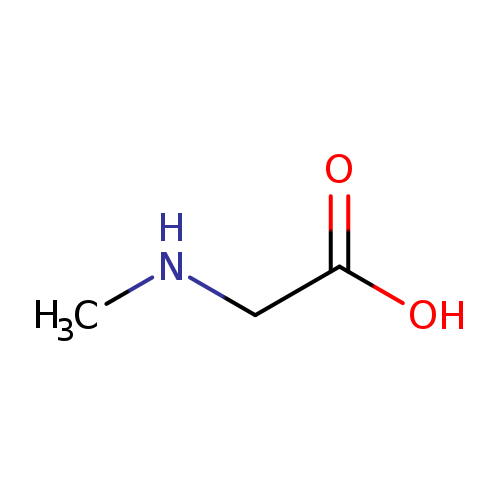
Sarcosine belongs to the amino acids, peptides, and analogues, a subclass of carboxylic acids and derivatives within the organic compounds. This endogenous human metabolite has the formula C3H7NO2 and an average molecular weight of 89.09 g/mol. At room temperature, it exists as a solid. It is detected in all tissues.
Functioning as a glycine receptor agonist and a glycine transporter 1 inhibitor, sarcosine targets the transient receptor potential cation channel subfamily A member 1 (TRPA1) and the proton-coupled amino acid transporter 1 (SLC36A1). In industrial applications, it is used as a softener and conditioner. It is recorded in various sources, including building and construction materials such as tents or canopies; household cleaning and consumer products including soap detergents, bleaching agents, and perfumes within detergents and soaps; and food processing activities such as the processing of meats, food preservation, and fermentation processes for beer, wine, or sparkling wine. It is also found in electrical and electronic equipment, such as antennas, amplifiers, and conductors.
Regarding health effects, sarcosine is associated with colorectal cancer (PMC10026263 ) and serves as a biomarker for prostate cancer (PMC10853941 ). Additionally, it has demonstrated therapeutic effects on diabetic retinopathy and epilepsy (PMC12944685 ).
Belongs to the class of organic compounds known as alpha amino acids. These are amino acids in which the amino group is attached to the carbon atom immediately adjacent to the carboxylate group (alpha carbon).
osmolyte (PMC7393045 , PMC7393045 )?A chemical that affects osmosis. Osmolytes are soluble in the cell or in the fluid between cells, and are utilized by cells during water stress to maintain the cell volume
Sarcosine is an oncometabolite. Sarcosine appears to upregulate the expression of the potent oncoprotein called human epidermal growth factor receptor 2 (HER2/neu) in androgen-dependent prostate cancer cells upon exposure to exogenous sarcosine. Thus, sarcosine may induce prostate cancer progression by increased HER2/neu expression.
NA
Not listed by IARC. Has been implicated in oncogenesis (12).
Minimum Risk Level
Not Available
Symptoms
Acute Exposure: eye irritation and skin irritation
Chronic Exposure: sarcosinemia is associated with mental delay, cardiomyopathy, deafness and visual disturbance. In individuals with prostate cancer, high prostate tissue levels of sarcosine promote aggressive, rapidly growing prostate tumors.
Treatment
Acute Exposure: EYES: irrigate opened eyes for several minutes under running water. INGESTION: do not induce vomiting. Rinse mouth with water (never give anything by mouth to an unconscious person). Seek immediate medical advice. SKIN: should be treated immediately by rinsing the affected parts in cold running water for at least 15 minutes, followed by thorough washing with soap and water. If necessary, the person should shower and change contaminated clothing and shoes, and then must seek medical attention. INHALATION: supply fresh air. If required provide artificial respiration.
Health Effects
Health Effect
Relationship
Direction
Description
Reference
colorectal cancer
Associated With?
Not Available
A large intestine cancer that is located in the colon and/or located in the rectum. (DO)
A brain disease that is characterized by the occurrance of at least two unprovoked seizures resulting from a persistent epileptogenic abnormality of the brain that is able to spontaneously generate paroxysmal activity and typically manifested by sudden brief episodes of altered or diminished consciousness, involuntary movements, or convulsions. (DO)
Irrigation water?Irrigation water can serve as a vector for synthetic chemical contamination due to its potential exposure to agricultural inputs such as fertilizers, pesticides, and herbicides.
Soil?Soil serves as a critical medium for plant growth and sustains various ecological functions; however, it can become a reservoir for synthetic chemical contamination.
Groundwater?Groundwater serves as a vital resource for drinking water and agricultural irrigation but is increasingly susceptible to contamination from synthetic chemicals.
Ballast water?Ballast water, taken on by ships to maintain stability and balance, often contains a diverse array of microorganisms, including bacteria, viruses, and plankton.
Bilge water?Bilge water is a byproduct generated from the accumulation of water in the lowest part of a ship's hull, which may include a mixture of seawater, oil, fuel residues, and various contaminants.
Brushes?Brushes used in personal care and cosmetics can be a source of synthetic chemical contamination due to the materials and coatings used in their manufacturing.
Tents Or Canopies?Tents and canopies used in various applications can be a source of synthetic chemical contamination primarily due to the materials from which they are made.
Amplifiers?Amplifiers, commonly used in various electronic devices to enhance signal strength, can be a source of synthetic chemical contamination due to the materials and processes involved in their production and disposal.
Antennas?Antennas, commonly used in communication technologies, can be a source of synthetic chemical contamination through the materials and coatings used in their construction.
Conductors Or Conductive Bodies Characterised By The Conductive Materials?Conductors, or conductive bodies, are materials that allow the flow of electrical current, typically made from metals such as copper, aluminum, or silver.
Cores Yokes Or Armatures?Cores, yokes, or armatures are components commonly found in electrical devices, used to facilitate the magnetic and electrical functions within motors, transformers, and generators.
Electric Switches?Electric switches, integral components in numerous devices, can be a source of synthetic chemical contamination due to the materials and manufacturing processes involved in their production.
Electrically Stimulated Smoking Devices?Electrically stimulated smoking devices, commonly known as e-cigarettes or vape pens, utilize electrical components to heat a liquid solution, often containing nicotine, flavorings, and other additives, to produce an aerosol for inhalation.
Electrodes?Electrodes, used in various electrical and electronic applications, can be a source of synthetic chemical contamination due to the materials from which they are constructed and the processes involved in their manufacturing.
Fixed Capacitors And Their Manufacture?Fixed capacitors are passive electronic components used to store and release electrical energy, playing a critical role in various circuits.
Hybrid Capacitors?Hybrid capacitors are energy storage devices that combine the properties of electrolytic and supercapacitors, utilizing a combination of electrochemical principles to achieve higher energy density and power density.
Magnets?Magnets, commonly used in various electrical and electronic applications, can be a source of synthetic chemical contamination due to the materials used in their production.
Television Systems?Television systems can be a source of synthetic chemical contamination due to the various materials and components used in their manufacture and operation.
Thin Magnetic Films?Thin magnetic films are layers of magnetic material ranging from a few nanometers to several micrometers in thickness, commonly used in applications such as magnetic sensors, data storage devices, and electronic components.
Food Preservation?Food preservation often involves the use of synthetic chemicals, such as preservatives, flavor enhancers, and color additives, to extend shelf life and enhance the sensory qualities of food products.
Preparation Of Malt?Malt preparation involves the germination and drying of cereal grains, primarily barley, to produce malt for brewing and food products.
Preparation Of Wine Or Sparkling Wine?The preparation of wine or sparkling wine involves various stages, including fermentation, aging, and bottling, which can introduce potential sources of synthetic chemical contamination.
Bleaching Agents?Bleaching agents are chemical substances used to whiten or lighten materials, often employed in various cleaning products for their stain removal and disinfecting properties.
Perfumes Within Detergents And Soaps?Perfumes within detergents and soaps are synthetic fragrance compounds added to enhance the sensory experience of cleaning products.
Pipe Accessories?Pipe accessories, such as fittings, connectors, and seals, are components used in plumbing systems to facilitate the flow of liquids and gases.
Soap Detergents?Soap detergents are synthetic surfactants designed to enhance the cleaning efficacy of water by reducing surface tension, allowing for better interaction with dirt and grease.
Soap Dispensers?Soap dispensers, commonly used for dispensing liquid soaps and sanitizers, can become a source of synthetic chemical contamination due to the materials used in their construction and the products they dispense.
Tobacco Smoke Filters?Tobacco smoke filters are designed to reduce the inhalation of harmful substances in cigarette smoke, including tar and other particulate matter.
Manufacture Preparation Of Tobacco Products?The manufacture and preparation of tobacco products involve various processes that can result in the introduction of synthetic chemicals into the environment.
Paper Making Machines?Paper making machines utilize various synthetic chemicals throughout the production process, including additives, coatings, and bleaching agents.
Buoys?Buoys, often used for navigation and marine monitoring, can be sources of synthetic chemical contamination due to the materials and coatings employed in their construction.
Molluscicides?Molluscicides are synthetic chemicals specifically designed to control and eliminate mollusks, such as snails and slugs, which can be detrimental to crops and agricultural productivity.
Nematocides?Nematocides are synthetic chemicals specifically designed to control nematodes, which are microscopic roundworms that can cause significant damage to crops and plants.
Rodenticides(1)?Rodenticides are synthetic chemicals specifically formulated to control rodent populations, serving as a crucial tool in managing pests that can damage crops and spread diseases.
Rodenticides?Rodenticides are chemical substances specifically designed to control rodent populations by causing death through various mechanisms, including anticoagulation or neurotoxicity.
Aftersun Products?Aftersun products are designed to soothe and hydrate the skin after sun exposure, often containing various synthetic chemicals such as emollients, preservatives, and fragrances.
Anti Perspirants Or Body Deoderants?Antiperspirants and body deodorants commonly contain synthetic chemicals such as aluminum compounds, parabens, and synthetic fragrances.
Body Washing Or Cleaning Implements?Body washing or cleaning implements, such as synthetic sponges, loofahs, and washcloths, can be sources of synthetic chemical contamination due to the materials used in their production.
Depilatories?Depilatories are products designed to remove unwanted hair through the application of synthetic chemicals that break down the protein structure of hair, facilitating its removal.
Essential Oils Or Perfumes?Essential oils and perfumes are complex mixtures of volatile compounds derived from natural or synthetic sources, commonly used for their aromatic properties.
Eye Makeup Products?Eye makeup products, including mascaras, eyeliners, and eyeshadows, often contain a variety of synthetic chemicals such as pigments, preservatives, and film-forming agents.
Face Mask Cosmetics?Face mask cosmetics often contain a variety of synthetic chemicals, including preservatives, emulsifiers, and fragrances, which can contribute to chemical contamination.
Lip Care Products?Lip care products, including lipsticks, balms, and glosses, often contain a variety of synthetic chemicals such as parabens, phthalates, and synthetic fragrances.
Lip Makeup Products?Lip makeup products, such as lipsticks, lip glosses, and lip liners, often contain a variety of synthetic chemicals, including pigments, preservatives, and emollients.
Manicure Pedicure?Manicure and pedicure procedures often involve the use of various synthetic chemicals, including solvents, nail polishes, and nail adhesives.
Azo Dyes?Azo dyes are synthetic organic compounds characterized by the presence of one or more azo groups (-N=N-), which are widely used for coloring textiles, leather, and furnishings.
Degreasing Leather?Degreasing leather involves the removal of natural fats and oils from animal hides to prepare them for tanning and finishing processes.
Foam Dyeing?Foam dyeing is a textile dyeing technique that utilizes a foaming agent to create a dye solution in a gaseous form, allowing for the application of dyes onto fabrics.
Footwear?Footwear production often involves the use of various synthetic chemicals, such as adhesives, dyes, and treatments, which can contribute to environmental contamination.
Purses Luggage Hand Bags?Purses, luggage, and handbags are often manufactured using synthetic materials such as polyvinyl chloride (PVC), polyurethane, and various types of nylon.
Ropes?Ropes manufactured from synthetic fibers, such as polypropylene, nylon, and polyester, are widely used in various applications, including marine, construction, and outdoor activities.
Surface Finishing Of Leather?Surface finishing of leather often involves the use of various synthetic chemicals, including dyes, resins, and finishing agents.
Transfer Printing?Transfer printing is a process used to apply designs and patterns onto various substrates, commonly utilizing synthetic dyes and inks that can contain hazardous chemicals.
Yarns Or Threads?Yarns or threads used in textiles can be a source of synthetic chemical contamination due to the production processes and treatments they undergo.
Fire Fighting Gels?Fire fighting gels are synthetic chemical formulations designed to enhance fire suppression effectiveness by creating a protective barrier against heat and flames.
Gaseous Fire Fighting?Gaseous fire fighting systems utilize synthetic chemicals, such as halocarbons and inert gases, to suppress fires through chemical and physical processes.
PFAS Fire Fighting Foam?PFAS fire fighting foam refers to a class of synthetic foams containing per- and polyfluoroalkyl substances (PFAS), which are designed to suppress flammable liquid fires.
Solid Fire Fighting Substances?Solid fire fighting substances, such as certain types of dry chemical powders, are used in fire suppression applications to extinguish flames and prevent fire spread.
Nitrogenous Fertilisers?Nitrogenous fertilizers are synthetic chemical compounds primarily used to enhance plant growth by supplying essential nitrogen, a crucial nutrient for photosynthesis and protein synthesis.
Cements?Cements are a composite material primarily used as a binding agent in construction applications, formed by the calcination of limestone and clay minerals at high temperatures.
Clay Wares?Clay wares are ceramic products made from natural clay, often utilized in various construction applications such as tiles, bricks, and sanitary ware.
Glass Coatings?Glass coatings are synthetic chemical formulations applied to glass surfaces to enhance properties such as durability, UV resistance, and aesthetic appeal.
Silica Glass?Silica glass, primarily composed of silicon dioxide (SiO2), is widely used in various applications, including windows, glass facades, and insulation materials.
Nanotechnology?Nanotechnology involves the manipulation of materials at the molecular or atomic level, typically within the range of 1 to 100 nanometers.
Fountain Pens?Fountain pens utilize a liquid ink that often contains synthetic chemicals, including dyes, pigments, and solvents, which can contribute to environmental contamination.
Ink Reservoir Pens2?Ink reservoir pens are writing instruments that utilize a reservoir to store ink, which is often composed of synthetic dyes, solvents, and additives.
Pens?Pens, commonly utilized for writing and marking, can be a source of synthetic chemical contamination primarily due to the materials used in their manufacturing.
Contact Lens Cases?Contact lens cases are small containers designed to store contact lenses in a sterile environment, typically made from various synthetic materials including plastics such as polypropylene or polycarbonate.
Coating Compositions?Coating compositions, which include paints, sealants, and varnishes, are formulated with a variety of synthetic chemicals such as solvents, resins, pigments, and additives.
Leather Tanning?Leather tanning is a process that transforms raw animal hides into durable leather through the application of various chemicals, including chromium salts, aldehydes, and vegetable tannins.
Sludge Treatment?Sludge treatment involves the processing of waste materials generated from wastewater treatment plants, which often contain a variety of organic and inorganic substances.
Water, Wastewater, & Sewage Treatment?Water, wastewater, and sewage treatment processes are critical for managing and mitigating pollutants in water systems.
Cipens, G.; Slavinska, V.; Sile, D.; Kreile, D.; Strautina, A.; Krikis, A.; Gutmanis, A. Synthesis of sarcosine and its use. Latvijas PSR Zinatnu Akademijas Vestis, Kimijas Serija (1986), (5), 515-24.
Heil M, Podebrad F, Prado E, Beck T, Mosand A, Sewell AC, Bohles H, Lehnert W: Enantioselective analysis of ketone bodies in patients with beta-ketothiolase deficiency, medium-chain acyl coenzyme A dehydrogenase deficiency and ketonemic vomiting. J Chromatogr B Biomed Sci Appl. 2000 Mar 10;739(2):313-24. [PubMed: 10755375]
Sreekumar A, Poisson LM, Rajendiran TM, Khan AP, Cao Q, Yu J, Laxman B, Mehra R, Lonigro RJ, Li Y, Nyati MK, Ahsan A, Kalyana-Sundaram S, Han B, Cao X, Byun J, Omenn GS, Ghosh D, Pennathur S, Alexander DC, Berger A, Shuster JR, Wei JT, Varambally S, Beecher C, Chinnaiyan AM: Metabolomic profiles delineate potential role for sarcosine in prostate cancer progression. Nature. 2009 Feb 12;457(7231):910-4. doi: 10.1038/nature07762. [PubMed: 19212411]
Silwood CJ, Lynch E, Claxson AW, Grootveld MC: 1H and (13)C NMR spectroscopic analysis of human saliva. J Dent Res. 2002 Jun;81(6):422-7. [PubMed: 12097436]
Shoemaker JD, Elliott WH: Automated screening of urine samples for carbohydrates, organic and amino acids after treatment with urease. J Chromatogr. 1991 Jan 2;562(1-2):125-38. [PubMed: 2026685]
Boulat O, Gradwohl M, Matos V, Guignard JP, Bachmann C: Organic acids in the second morning urine in a healthy Swiss paediatric population. Clin Chem Lab Med. 2003 Dec;41(12):1642-58. [PubMed: 14708889]
Akare S, Martinez JD: Bile acid induces hydrophobicity-dependent membrane alterations. Biochim Biophys Acta. 2005 Jun 15;1735(1):59-67. [PubMed: 15951237]
Lim DS, Roberts R, Marian AJ: Expression profiling of cardiac genes in human hypertrophic cardiomyopathy: insight into the pathogenesis of phenotypes. J Am Coll Cardiol. 2001 Oct;38(4):1175-80. [PubMed: 11583900]
Bales JR, Sadler PJ, Nicholson JK, Timbrell JA: Urinary excretion of acetaminophen and its metabolites as studied by proton NMR spectroscopy. Clin Chem. 1984 Oct;30(10):1631-6. [PubMed: 6206966]
Kang ES, Seyer J, Todd TA, Herrera C: Variability in the phenotypic expression of abnormal sarcosine metabolism in a family. Hum Genet. 1983;64(1):80-5. [PubMed: 6192074]
Vallera DA, Todhunter DA, Kuroki DW, Shu Y, Sicheneder A, Chen H: A bispecific recombinant immunotoxin, DT2219, targeting human CD19 and CD22 receptors in a mouse xenograft model of B-cell leukemia/lymphoma. Clin Cancer Res. 2005 May 15;11(10):3879-88. [PubMed: 15897589]
Hitomi J, Yamaguchi K, Kikuchi Y, Kimura T, Maruyama K, Nagasaki K: A novel calcium-binding protein in amniotic fluid, CAAF1: its molecular cloning and tissue distribution. J Cell Sci. 1996 Apr;109 ( Pt 4):805-15. [PubMed: 8718672]
Dahl M, Bouchelouche P, Kramer-Marek G, Capala J, Nordling J, Bouchelouche K. Sarcosine induces increase in HER2/neu expression in androgen-dependent prostate cancer cells. Mol Biol Rep. 2011 Oct;38(7):4237-43. doi: 10.1007/s11033-010-0442-2. Epub 2011 Jul 14. [PubMed: 21755295]
International Agency for Research on Cancer (2014). IARC Monographs on the Evaluation of Carcinogenic Risks to Humans. - http://monographs.iarc.fr/index.php