Pseudoephedrine (CED0004694)

Record Information
Version1.0
Creation Date2014-08-30 21:03:50 UTC
Update Date2026-05-14 16:50:45 UTC
SynCED IDCED0004694
Secondary Accession Numbers
  • CHEM003515
  • T3D4555
Identification
Common NamePseudoephedrine
ClassSmall Molecule
Description
Pseudoephedrine (C10H15NO) is an organic compound with an average molecular weight of 165.23 g/mol. It exists as a solid at room temperature and is exogenous in origin. Pseudoephedrine belongs to the phenylpropanes, a subclass of benzene and substituted derivatives within the organic compounds. This compound functions as a sympathomimetic agent, vasoconstrictor agent, and bronchodilator agent. Its applications include use as a nasal decongestant, an anti-asthmatic drug, and a central nervous system drug. It has a recorded therapeutic effect on asthma (PMC6430238 ). Among its protein targets are the Alpha-1A adrenergic receptor (ADRA1A), Alpha-2A adrenergic receptor (ADRA2A), Beta-1 adrenergic receptor (ADRB1), and Beta-2 adrenergic receptor (ADRB2), along with 18 other proteins. Pseudoephedrine is found in or released from 36 recorded sources. These include healthcare, pharmaceuticals, and veterinary products such as medical devices and nasal preparations; food, food processing, and cookware, including food preservation, food packaging, and the preparation of wort, wine, or sparkling wine, as well as fermentation processes for beer; household cleaning and consumer products, including perfumes within detergents and soaps, bleaching agents, cigar cigarettes, other smoking requisites, and non-electric simulated smoking devices; textiles, leather, and furnishings, including synthetic textiles and carpets and rugs; drinking water and water supply; and electrical and electronic equipment, including batteries, capacitors, printed circuit boards, cell phones, and wires and cables. Recorded routes of exposure include oral, nasal, inhalation, and touch.
Contaminant Type
  • Amine
  • Drug
  • Food Toxin
  • Human Neurotoxin
  • Organic Compound
  • PFAS
  • Phytotoxin
  • Synthetic Compound
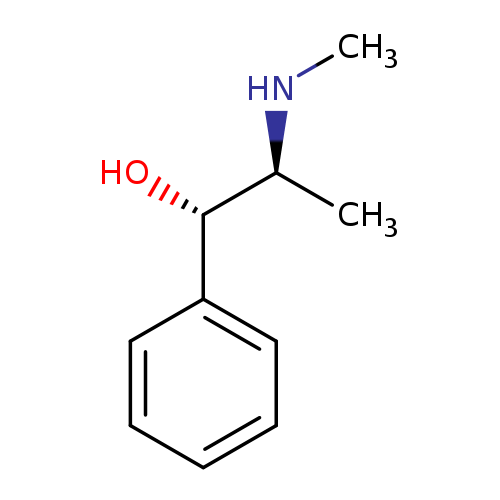
Chemical Structure
Synonyms
ValueSource
(+) Threo-2-(methylamino)-1-phenyl-1-propanolChEBI
(+)-(1S,2S)-PseudoephedrineChEBI
(+)-PseudoephedrineChEBI
(+)-Psi-ephedrineChEBI
(+)-Threo-ephedrineChEBI
(1S,2S)-(+)-PseudoephedrineChEBI
(1S,2S)-PseudoephedrineChEBI
2-(Methylamino)-1-phenyl-1-propanolChEBI
D-IsoephedrineChEBI
D-PseudoephedrineChEBI
D-Psi-2-methylamino-1-phenyl-1-propanolChEBI
D-Psi-ephedrineChEBI
IsoephedrineChEBI
L(+)-Psi-ephedrineChEBI
L-(+)-PseudoephedrineChEBI
PseudoefedrinaChEBI
Pseudoephedrine D-formChEBI
PseudoephedrinumChEBI
Psi-ephedrinChEBI
Psi-ephedrineChEBI
trans-EphedrineChEBI
NeodurasinaKegg
AcunasoKegg
1-EphedrineHMDB
BesanHMDB
D-Pseudoephedrine baseHMDB
NovafedHMDB
Pseudoephedrine ephedrineHMDB
SudafedHMDB
Ephedrine threo isomerHMDB
Pseudoephedrine HCLHMDB
Threo isomer OF ephedrineHMDB
Pseudoephedrine hydrochlorideHMDB
Chemical FormulaC10H15NO
Average Molecular Mass165.232 g/mol
Monoisotopic Mass165.115 g/mol
CAS Registry Number90-82-4
IUPAC Name(1S,2S)-2-(methylamino)-1-phenylpropan-1-ol
Traditional Namepseudoephedrine
SMILESCN[C@@H](C)[C@@H](O)C1=CC=CC=C1
InChI IdentifierInChI=1S/C10H15NO/c1-8(11-2)10(12)9-6-4-3-5-7-9/h3-8,10-12H,1-2H3/t8-,10+/m0/s1
InChI KeyKWGRBVOPPLSCSI-WCBMZHEXSA-N
Chemical Taxonomy
Description Belongs to the class of organic compounds known as phenylpropanes. These are organic compounds containing a phenylpropane moiety.
KingdomOrganic compounds
Super ClassBenzenoids
ClassBenzene and substituted derivatives
Sub ClassPhenylpropanes
Direct ParentPhenylpropanes
Alternative Parents
Substituents
  • Phenylpropane
  • Aralkylamine
  • 1,2-aminoalcohol
  • Secondary alcohol
  • Secondary aliphatic amine
  • Secondary amine
  • Alcohol
  • Organopnictogen compound
  • Organic oxygen compound
  • Organooxygen compound
  • Organonitrogen compound
  • Organic nitrogen compound
  • Amine
  • Aromatic alcohol
  • Hydrocarbon derivative
  • Aromatic homomonocyclic compound
Molecular FrameworkAromatic homomonocyclic compounds
External Descriptors
Biological Properties
StatusDetected and Not Quantified
OriginExogenous
Cellular Locations
  • Cytoplasm
  • Extracellular
Biofluid LocationsNot Available
Tissue LocationsNot Available
Applications
Biological Roles
Chemical RolesNot Available
Organoleptic EffectsNot Available
Physical Properties
StateSolid
AppearanceWhite powder.
Experimental Properties
PropertyValue
Melting Point119 °C
Boiling PointNot Available
Solubility7 mg/L
Predicted Properties
PropertyValueSource
Water Solubility8.26 g/LALOGPS
logP1ALOGPS
logP1.32ChemAxon
logS-1.3ALOGPS
pKa (Strongest Acidic)13.89ChemAxon
pKa (Strongest Basic)9.52ChemAxon
Physiological Charge1ChemAxon
Hydrogen Acceptor Count2ChemAxon
Hydrogen Donor Count2ChemAxon
Polar Surface Area32.26 ŲChemAxon
Rotatable Bond Count3ChemAxon
Refractivity49.69 m³·mol⁻¹ChemAxon
Polarizability18.83 ųChemAxon
Number of Rings1ChemAxon
BioavailabilityYesChemAxon
Rule of FiveYesChemAxon
Ghose FilterYesChemAxon
Veber's RuleYesChemAxon
MDDR-like RuleNoChemAxon
Spectra
Spectra
Spectrum TypeDescriptionSplash KeyDeposition DateView
Predicted GC-MSPredicted GC-MS Spectrumsplash10-0a4i-9200000000-0c3fe6959703a851b9ccNot AvailableView Spectrum
Predicted GC-MSPredicted GC-MS Spectrumsplash10-05cr-4900000000-d9ac11e33b32a9e427adNot AvailableView Spectrum
Predicted GC-MSPredicted GC-MS SpectrumNot AvailableNot AvailableView Spectrum
LC-MS/MSLC-MS/MS Spectrumsplash10-016s-3900000000-868bf4bba93d8b4be696Not AvailableView Spectrum
LC-MS/MSLC-MS/MS Spectrumsplash10-0159-2900000000-6c55fc67b7576cb42a8aNot AvailableView Spectrum
LC-MS/MSLC-MS/MS Spectrumsplash10-0006-9700000000-459686cbaf7d3b59c202Not AvailableView Spectrum
Predicted LC-MS/MSPredicted LC-MS/MS Spectrumsplash10-00kb-0900000000-677d622716b4c2545f16Not AvailableView Spectrum
Predicted LC-MS/MSPredicted LC-MS/MS Spectrumsplash10-00kb-2900000000-416def0e527ddf116a39Not AvailableView Spectrum
Predicted LC-MS/MSPredicted LC-MS/MS Spectrumsplash10-0aou-9500000000-155625a572f19610e138Not AvailableView Spectrum
Predicted LC-MS/MSPredicted LC-MS/MS Spectrumsplash10-03di-0900000000-ea7e1b550b5dc0d6d41dNot AvailableView Spectrum
Predicted LC-MS/MSPredicted LC-MS/MS Spectrumsplash10-03dj-2900000000-f4de25860574bb60daf1Not AvailableView Spectrum
Predicted LC-MS/MSPredicted LC-MS/MS Spectrumsplash10-0a6r-9600000000-62e375458e5f83795e90Not AvailableView Spectrum
Predicted LC-MS/MSPredicted LC-MS/MS Spectrumsplash10-0297-3900000000-4496fbcd8548f7ccc58aNot AvailableView Spectrum
Predicted LC-MS/MSPredicted LC-MS/MS Spectrumsplash10-014i-1900000000-03e637debccd8d202e3cNot AvailableView Spectrum
Predicted LC-MS/MSPredicted LC-MS/MS Spectrumsplash10-004i-9100000000-7ead088c2f003219a1cfNot AvailableView Spectrum
Predicted LC-MS/MSPredicted LC-MS/MS Spectrumsplash10-0002-0900000000-0282f3e8fc4bf9296a38Not AvailableView Spectrum
Predicted LC-MS/MSPredicted LC-MS/MS Spectrumsplash10-014m-3900000000-8ee8987e88c6a5601ef7Not AvailableView Spectrum
Predicted LC-MS/MSPredicted LC-MS/MS Spectrumsplash10-0006-9300000000-e3932e53d7936649b8dbNot AvailableView Spectrum
MSMS Spectrumsplash10-0a4i-9000000000-8f0484f72b48017f1f2eNot AvailableView Spectrum
1D NMR1H NMR Spectrum (1D, D2O, predicted)Not AvailableNot AvailableView Spectrum
1D NMR13C NMR Spectrum (1D, D2O, predicted)Not AvailableNot AvailableView Spectrum
Toxicity Profile
Toxicity Values
Toxicity ValueOrganismDose DescriptorRoute of ExposurePredicted or ExperimentalToxicity RatingReference
570.0 Log mg/kg [320:1000]RatLD50oralpredictedNot AvailableNot Available
Toxicity / Toxin ClassNot Available
Mechanism of ToxicityPseudoephedrine acts directly on both alpha- and, to a lesser degree, beta-adrenergic receptors. Through direct action on alpha-adrenergic receptors in the mucosa of the respiratory tract, pseudoephedrine produces vasoconstriction. Pseudoephedrine relaxes bronchial smooth muscle by stimulating beta2-adrenergic receptors. Like ephedrine, pseudoephedrine releasing norepinephrine from its storage sites, an indirect effect. This is its main and direct mechanism of action. The displaced noradrenaline is released into the neuronal synapse where it is free to activate the postsynaptic adrenergic receptors.
Carcinogenicity (IARC Classification)No indication of carcinogenicity to humans (not listed by IARC).
Minimum Risk LevelNot Available
SymptomsCommon adverse reactions include nervousness, restlessness, and insomnia. Rare adverse reactions include difficult/painful urination, dizziness/lightheadedness, heart palpitations, headache, increased sweating, nausea/vomiting, trembling, troubled breathing, unusual paleness, and weakness.
TreatmentNot Available
Health Effects
Health EffectRelationshipDirectionDescriptionReference
asthmaHas Therapeutic Effect OnNot AvailableA bronchial disease that is characterized by chronic inflammation and narrowing of the airways, which is caused by a combination of environmental and genetic factors. The disease has symptom recurring periods of wheezing (a whistling sound while breathing), has symptom chest tightness, has symptom shortness of breath, has symptom mucus production and has symptom coughing. The symptoms appear due to a variety of triggers such as allergens, irritants, respiratory infections, weather changes, exercise, stress, reflux disease, medications, foods and emotional anxiety. (DO)PMC6430238
asthmaNot AvailableNot AvailableA bronchial disease that is characterized by chronic inflammation and narrowing of the airways, which is caused by a combination of environmental and genetic factors. The disease has symptom recurring periods of wheezing (a whistling sound while breathing), has symptom chest tightness, has symptom shortness of breath, has symptom mucus production and has symptom coughing. The symptoms appear due to a variety of triggers such as allergens, irritants, respiratory infections, weather changes, exercise, stress, reflux disease, medications, foods and emotional anxiety. (DO)PMC9839728
Allergic rhinitisAssociated With?Not AvailableA rhinitis that is an allergic inflammation and irritation of the nasal airways involving sneezing, runny nose, nasal congestion, itching and tearing of the eyes caused by exposure to an allergen such as pollen, dust, mold, animal dander and droppings of cockroaches or house dust mites.PMC6992211
allergic diseaseHas Therapeutic Effect OnNot AvailableAllergic diseases, also known as allergies, are a number of conditions caused by hypersensitivity of the immune system to typically harmless substances in the environment. These diseases include hay fever, food allergies, atopic dermatitis, allergic asthma, and anaphylaxis. Symptoms may include red eyes, an itchy rash, sneezing, a runny nose, shortness of breath, or swelling. Common allergens include pollen and certain foods. Metals and other substances may also cause allergies. Food, insect stings, and medications are common causes of severe allergic reactions. Allergies can be due to both genetic and environmental factors. The underlying mechanism involves immunoglobulin E antibodies (IgE) binding to an allergen and then to a receptor on mast cells or basophils where it triggers the release of inflammatory chemicals such as histamine. Allergies are among the most common conditions in the world. In the developed world, about 20% of people are affected by allergic rhinitis, about 6% of people have at least one food allergy, and about 20% have atopic dermatitis at some point in time.PMC6430238
WheezingNot AvailableNot AvailableNot AvailablePMC9839728
respiratory allergyAssociated With?Not AvailableNot AvailablePMC6992211
hypotensive disorderNot AvailableNot AvailableNot AvailablePMC9839728
Respiratory Tract InfectionsHas Therapeutic Effect OnNot AvailableNot AvailablePMC6430238
Nasal congestionNot AvailableNot AvailableNot AvailablePMC9775352 , PMC9839728
Exposure Sources
Source IDSourceSectorReference
CEDs000007Pesticides?Pesticides are synthetic chemicals designed to prevent, destroy, or control pests that threaten crops and agricultural productivity.Agriculture & land managementNot Available
CEDs000010Insecticides?Insecticides are synthetic chemicals designed to control or eliminate insect pests that threaten crops and other agricultural products.Agriculture & land managementPubChem
CEDs000051Surface water?Surface water can serve as a significant vector for the introduction of synthetic chemical contaminants into aquatic ecosystems.Aquatic systems & sedimentsPMC6529598
CEDs000115Drinking water?Drinking water can be a medium for synthetic chemical contamination, often originating from various industrial processes and agricultural practices.Drinking water & water supplyNot Available
CEDs000120Wires and cables?Wires and cables are integral components in the transmission of electrical power and signals.Electrical & Electronic EquipmentNot Available
CEDs000121Printed circuit boards?Printed circuit boards (PCBs) are essential components in the manufacturing of electronic devices, serving as the backbone for electrical connections and circuit pathways.Electrical & Electronic EquipmentNot Available
CEDs000125Batteries?Batteries are devices that store and release electrical energy through electrochemical reactions.Electrical & Electronic EquipmentNot Available
CEDs000130Semiconductors?Semiconductors are materials that possess electrical conductivity between that of conductors and insulators, making them essential for various electronic applications, including transistors, diodes, and integrated circuits.Electrical & Electronic EquipmentNot Available
CEDs000138Lubricants?Lubricants are synthetic or petroleum-derived substances used to reduce friction between surfaces in machinery and equipment, enhancing operational efficiency and longevity.Energy, oil & gasNot Available
CEDs000147Food packaging?Food packaging often utilizes synthetic chemicals, such as plastics and coatings, to enhance durability, moisture resistance, and shelf life.Food, food processing & cookwareNot Available
CEDs000174Lubricants?Lubricants are synthetic or petroleum-based substances used to reduce friction and wear between moving parts in machinery and equipment.Industrial manufacturing & chemical processingNot Available
CEDs000233Brushes?Brushes used in personal care and cosmetics can be a source of synthetic chemical contamination due to the materials and coatings used in their manufacturing.Personal care & cosmeticsPubChem
CEDs000234Medical devices?Medical devices often incorporate synthetic chemicals in their manufacturing processes, which can contribute to contamination in healthcare settings.Healthcare, pharmaceuticals & veterinary productsNot Available
CEDs000389Nasal preparations?Nasal preparations, including sprays and drops, are commonly used for therapeutic purposes such as treating allergies, congestion, and infections.Healthcare, pharmaceuticals & veterinary productsNot Available
CEDs000451Carpets and Rugs?Carpets and rugs are commonly manufactured using synthetic fibers such as nylon, polyester, and polypropylene, which can be derived from petrochemical sources.Textiles, leather & furnishingsNot Available
CEDs000454Synthetic textiles?Synthetic textiles are materials derived from man-made fibers, such as polyester, nylon, and acrylic, which are produced through chemical processes involving petrochemicals.Textiles, leather & furnishingsNot Available
CEDs000490Personal care & cosmeticsNot Available
CEDs000492Cell phones?Cell phones contain a variety of synthetic chemicals and materials, including plastics, metals, and glass, which can contribute to environmental contamination.Electrical & Electronic EquipmentNot Available
CEDs000493Capacitors?Capacitors are electronic components that store and release electrical energy, often using dielectric materials that can include synthetic chemicals.Electrical & Electronic EquipmentNot Available
CEDs000503Tents Or Canopies?Tents and canopies used in various applications can be a source of synthetic chemical contamination primarily due to the materials from which they are made.Building & ConstructionPubChem
CEDs000511Conductors Or Conductive Bodies Characterised By The Conductive Materials?Conductors, or conductive bodies, are materials that allow the flow of electrical current, typically made from metals such as copper, aluminum, or silver.Electrical & Electronic EquipmentPubChem
CEDs000516Electric Hearing Aids?Electric hearing aids are small electronic devices designed to amplify sound for individuals with hearing loss.Electrical & Electronic EquipmentPubChem
CEDs000518Electrically Stimulated Smoking Devices?Electrically stimulated smoking devices, commonly known as e-cigarettes or vape pens, utilize electrical components to heat a liquid solution, often containing nicotine, flavorings, and other additives, to produce an aerosol for inhalation.Electrical & Electronic EquipmentPubChem
CEDs000524Hybrid Capacitors?Hybrid capacitors are energy storage devices that combine the properties of electrolytic and supercapacitors, utilizing a combination of electrochemical principles to achieve higher energy density and power density.Electrical & Electronic EquipmentPubChem
CEDs000537Television Systems?Television systems can be a source of synthetic chemical contamination due to the various materials and components used in their manufacture and operation.Electrical & Electronic EquipmentPubChem
CEDs000540X Ray Tubes?X-ray tubes are devices used to produce X-rays for various applications, including medical imaging and industrial inspections.Electrical & Electronic EquipmentPubChem
CEDs000544Fermentation Processes For Beer?Fermentation processes for beer involve the conversion of sugars into alcohol and carbon dioxide by yeast.Food, food processing & cookwarePubChem
CEDs000545Food Preservation?Food preservation often involves the use of synthetic chemicals, such as preservatives, flavor enhancers, and color additives, to extend shelf life and enhance the sensory qualities of food products.Food, food processing & cookwarePubChem
CEDs000549Preparation Of Wine Or Sparkling Wine?The preparation of wine or sparkling wine involves various stages, including fermentation, aging, and bottling, which can introduce potential sources of synthetic chemical contamination.Food, food processing & cookwarePubChem
CEDs000550Preparation Of Wort?The preparation of wort involves the extraction of sugars from malted grains, a crucial step in the brewing process.Food, food processing & cookwarePubChem
CEDs000553Treatment Of Hops?Hops, a key ingredient in brewing and food flavoring, can be a source of synthetic chemical contamination due to various agricultural practices.Food, food processing & cookwarePubChem
CEDs000555Bleaching Agents?Bleaching agents are chemical substances used to whiten or lighten materials, often employed in various cleaning products for their stain removal and disinfecting properties.Household cleaning & consumer productsPubChem
CEDs000556Cigar Cigarettes?Cigar cigarettes are a source of synthetic chemical contamination due to the combustion of various tobacco blends and additives.Household cleaning & consumer productsPubChem
CEDs000559Non Electric Simulated Smoking Devices?Non-electric simulated smoking devices, often designed to mimic the experience of smoking without combustion, can be sources of synthetic chemical contamination due to the materials and chemicals used in their construction and operation.Household cleaning & consumer productsPubChem
CEDs000560Other Smoking Requisites?Other smoking requisites, including items such as lighters, matches, and rolling papers, can introduce synthetic chemical contamination through various components and additives.Household cleaning & consumer productsPubChem
CEDs000561Perfumes Within Detergents And Soaps?Perfumes within detergents and soaps are synthetic fragrance compounds added to enhance the sensory experience of cleaning products.Household cleaning & consumer productsPubChem
CEDs000562Pipe Accessories?Pipe accessories, such as fittings, connectors, and seals, are components used in plumbing systems to facilitate the flow of liquids and gases.Household cleaning & consumer productsPubChem
CEDs000563Soap Detergents?Soap detergents are synthetic surfactants designed to enhance the cleaning efficacy of water by reducing surface tension, allowing for better interaction with dirt and grease.Household cleaning & consumer productsPubChem
CEDs000567Tobacco Product Cases?Tobacco product cases can serve as a source of synthetic chemical contamination due to the presence of various additives and chemicals used in tobacco processing and product manufacturing.Household cleaning & consumer productsPubChem
CEDs000569Tobacco Smoke Filters?Tobacco smoke filters are designed to reduce the inhalation of harmful substances in cigarette smoke, including tar and other particulate matter.Household cleaning & consumer productsPubChem
CEDs000580Manufacture Preparation Of Tobacco Products?The manufacture and preparation of tobacco products involve various processes that can result in the introduction of synthetic chemicals into the environment.Industrial manufacturing & chemical processingPubChem
CEDs000592Marine Propulsion Or Steering?Marine propulsion and steering systems often rely on various synthetic chemicals, including lubricants, fuels, and hydraulic fluids.Marine, shipping & aquaculturePubChem
CEDs000595Ships?Ships, as vehicles for international trade and transportation, can be significant sources of synthetic chemical contamination in marine environments.Marine, shipping & aquaculturePubChem
CEDs000596Acaricides?Acaricides are synthetic chemicals specifically designed to target and control mite populations that can damage crops and plants.Agriculture & land managementPubChem
CEDs000600Herbicides And Algicides?Herbicides and algicides are synthetic chemicals primarily used to control unwanted plants and algae in various environments.Agriculture & land managementPubChem
CEDs000605Pest Repellants?Pest repellents, often formulated from synthetic chemicals, are widely used to protect crops from insect infestations and other pests.Agriculture & land managementPubChem
CEDs000606Plant Growth Regulators?Plant Growth Regulators (PGRs) are synthetic chemicals designed to influence the growth and development of plants.Agriculture & land managementPubChem
CEDs000609Aftershave?Aftershave is a grooming product typically used to soothe and protect the skin following shaving.Personal care & cosmeticsPubChem
CEDs000610Aftersun Products?Aftersun products are designed to soothe and hydrate the skin after sun exposure, often containing various synthetic chemicals such as emollients, preservatives, and fragrances.Personal care & cosmeticsPubChem
CEDs000611Anti Perspirants Or Body Deoderants?Antiperspirants and body deodorants commonly contain synthetic chemicals such as aluminum compounds, parabens, and synthetic fragrances.Personal care & cosmeticsPubChem
CEDs000614Essential Oils Or Perfumes?Essential oils and perfumes are complex mixtures of volatile compounds derived from natural or synthetic sources, commonly used for their aromatic properties.Personal care & cosmeticsPubChem
CEDs000615Eye Makeup Products?Eye makeup products, including mascaras, eyeliners, and eyeshadows, often contain a variety of synthetic chemicals such as pigments, preservatives, and film-forming agents.Personal care & cosmeticsPubChem
CEDs000618Lip Makeup Products?Lip makeup products, such as lipsticks, lip glosses, and lip liners, often contain a variety of synthetic chemicals, including pigments, preservatives, and emollients.Personal care & cosmeticsPubChem
CEDs000632Apparel?Apparel production often involves the use of various synthetic chemicals, including dyes, finishing agents, and preservatives.Textiles, leather & furnishingsPubChem
CEDs000650Purses Luggage Hand Bags?Purses, luggage, and handbags are often manufactured using synthetic materials such as polyvinyl chloride (PVC), polyurethane, and various types of nylon.Textiles, leather & furnishingsPubChem
CEDs000653Sewing?Sewing processes often involve the use of various synthetic chemicals, which can become sources of contamination in the environment.Textiles, leather & furnishingsPubChem
CEDs000679Phosphatic Fertilisers?Phosphatic fertilizers are synthetic chemical products primarily composed of phosphorus, which is essential for plant growth.Agriculture & land managementPubChem
CEDs000684Cements?Cements are a composite material primarily used as a binding agent in construction applications, formed by the calcination of limestone and clay minerals at high temperatures.Building & ConstructionPubChem
CEDs000685Ceramics?Ceramics can be a source of synthetic chemical contamination through various additives and processing agents used in their production.Building & ConstructionPubChem
CEDs000696Nanotechnology?Nanotechnology involves the manipulation of materials at the molecular or atomic level, typically within the range of 1 to 100 nanometers.Industrial manufacturing & chemical processingPubChem
CEDs000727Printing Machines Or Presses?Printing machines or presses commonly utilize synthetic chemicals such as inks, solvents, and cleaning agents.Paper, pulp & fiber productsPubChem
CEDs000730Contact Lens Cases?Contact lens cases are small containers designed to store contact lenses in a sterile environment, typically made from various synthetic materials including plastics such as polypropylene or polycarbonate.Healthcare, pharmaceuticals & veterinary productsPubChem
CEDs000735Explosives?Explosives are chemical compounds or mixtures designed to undergo rapid decomposition, releasing energy in the form of gas and heat.Defense & military infrastructurePubChem
CEDs000739Inks?Inks are complex mixtures composed of pigments or dyes, solvents, resins, and additives used primarily for printing and writing applications.Paper, pulp & fiber productsPubChem
CEDs000740Paper?Paper production involves the processing of wood fibers and the use of various chemicals, which can lead to synthetic chemical contamination.Paper, pulp & fiber productsPubChem
CEDs000741Pigment Pastes?Pigment pastes are concentrated dispersions of pigments used to impart color and properties to materials.Paper, pulp & fiber productsPubChem
CEDs000742Leather Tanning?Leather tanning is a process that transforms raw animal hides into durable leather through the application of various chemicals, including chromium salts, aldehydes, and vegetable tannins.Textiles, leather & furnishingsPubChem
CEDs000744Water, Wastewater, & Sewage Treatment?Water, wastewater, and sewage treatment processes are critical for managing and mitigating pollutants in water systems.Wastewater, sanitation & biosolidsPubChem
CEDs01077MedicationsHealthcare, pharmaceuticals & veterinary productsPMC6205722
CEDs01082PharmaceuticalsHealthcare, pharmaceuticals & veterinary productsPMC6100737
Pathways
3 pathwaysPathway Source: PathBank
Targets
StructureProteinUniProt IDOrganismRelationshipDetails
Click to view 3D structureAlkaline ceramidase 2Q5QJU3HumansPredicted (SEA)
Prediction Confidence Score
0.462
Applicability Domain
0.462
Statistical Significance
3.00e-05
Supporting Reference Compounds
1
E-value
0.233548
Mandelate racemase structureClick to view 3D structureMandelate racemaseP11444Pseudomonas putidaPredicted (SEA)
Prediction Confidence Score
0.355
Applicability Domain
0.355
Statistical Significance
7.00e-05
Supporting Reference Compounds
1
E-value
0.544945
Sodium-dependent serotonin transporter structureClick to view 3D structureSodium-dependent serotonin transporterP31645HumansPredicted (SEA)
Prediction Confidence Score
0.341
Applicability Domain
0.4
Statistical Significance
0.0235
Supporting Reference Compounds
593
E-value
182.634
Sodium-dependent noradrenaline transporter structureClick to view 3D structureSodium-dependent noradrenaline transporterP23975HumansPredicted (SEA)
Prediction Confidence Score
0.341
Applicability Domain
0.4
Statistical Significance
0.0147
Supporting Reference Compounds
451
E-value
114.594
Sigma non-opioid intracellular receptor 1 structureClick to view 3D structureSigma non-opioid intracellular receptor 1Q99720HumansPredicted (SEA)
Prediction Confidence Score
0.332
Applicability Domain
0.387
Statistical Significance
0.0354
Supporting Reference Compounds
562
E-value
275.586
Histone deacetylase 4 structureClick to view 3D structureHistone deacetylase 4P56524HumansPredicted (SEA)
Prediction Confidence Score
0.32
Applicability Domain
0.406
Statistical Significance
0.0137
Supporting Reference Compounds
185
E-value
106.576
Voltage-gated inwardly rectifying potassium channel KCNH2 structureClick to view 3D structureVoltage-gated inwardly rectifying potassium channel KCNH2Q12809HumansPredicted (SEA)
Prediction Confidence Score
0.319
Applicability Domain
0.4
Statistical Significance
0.1107
Supporting Reference Compounds
1498
E-value
861.713
Sodium-dependent dopamine transporter structureClick to view 3D structureSodium-dependent dopamine transporterQ01959HumansPredicted (SEA)
Prediction Confidence Score
0.314
Applicability Domain
0.4
Statistical Significance
0.0292
Supporting Reference Compounds
506
E-value
227.631
5-hydroxytryptamine receptor 2B structureClick to view 3D structure5-hydroxytryptamine receptor 2BP41595HumansPredicted (SEA)
Prediction Confidence Score
0.313
Applicability Domain
0.353
Statistical Significance
0.0395
Supporting Reference Compounds
686
E-value
307.816
Histone deacetylase 1 structureClick to view 3D structureHistone deacetylase 1Q13547HumansPredicted (SEA)
Prediction Confidence Score
0.312
Applicability Domain
0.344
Statistical Significance
0.0511
Supporting Reference Compounds
497
E-value
397.81
Cytochrome P450 2D6 structureClick to view 3D structureCytochrome P450 2D6P10635HumansPredicted (SEA)
Prediction Confidence Score
0.31
Applicability Domain
0.4
Statistical Significance
0.0821
Supporting Reference Compounds
1130
E-value
639.142
Alpha-2A adrenergic receptor structureClick to view 3D structureAlpha-2A adrenergic receptorP08913HumansPredicted (SEA)
Prediction Confidence Score
0.307
Applicability Domain
0.324
Statistical Significance
0.0353
Supporting Reference Compounds
487
E-value
274.73
5-hydroxytryptamine receptor 7 structureClick to view 3D structure5-hydroxytryptamine receptor 7P34969HumansPredicted (SEA)
Prediction Confidence Score
0.303
Applicability Domain
0.324
Statistical Significance
0.0459
Supporting Reference Compounds
565
E-value
357.406
Alpha-1A adrenergic receptor structureClick to view 3D structureAlpha-1A adrenergic receptorP35348HumansPredicted (SEA)
Prediction Confidence Score
0.303
Applicability Domain
0.324
Statistical Significance
0.0346
Supporting Reference Compounds
376
E-value
269.748
5-hydroxytryptamine receptor 2A structureClick to view 3D structure5-hydroxytryptamine receptor 2AP28223HumansPredicted (SEA)
Prediction Confidence Score
0.3
Applicability Domain
0.31
Statistical Significance
0.0806
Supporting Reference Compounds
955
E-value
627.465
Histone deacetylase 7 structureClick to view 3D structureHistone deacetylase 7Q8WUI4HumansPredicted (SEA)
Prediction Confidence Score
0.298
Applicability Domain
0.406
Statistical Significance
0.0172
Supporting Reference Compounds
148
E-value
134.29
Click to view 3D structureSigma non-opioid intracellular receptor 1Q60492Cavia porcellusPredicted (SEA)
Prediction Confidence Score
0.298
Applicability Domain
0.298 Low confidence
Statistical Significance
0.0371
Supporting Reference Compounds
229
E-value
288.821
Glutamate receptor ionotropic, NMDA 2B structureClick to view 3D structureGlutamate receptor ionotropic, NMDA 2BQ13224HumansPredicted (SEA)
Prediction Confidence Score
0.298
Applicability Domain
0.298 Low confidence
Statistical Significance
0.0045
Supporting Reference Compounds
54
E-value
35.11
Click to view 3D structureSigma intracellular receptor 2Q5U3Y7Rattus norvegicusPredicted (SEA)
Prediction Confidence Score
0.298
Applicability Domain
0.298 Low confidence
Statistical Significance
0.021
Supporting Reference Compounds
110
E-value
163.639
Click to view 3D structureSodium-dependent dopamine transporterP23977Rattus norvegicusPredicted (SEA)
Prediction Confidence Score
0.298
Applicability Domain
0.342
Statistical Significance
0.0207
Supporting Reference Compounds
203
E-value
161.07
5-hydroxytryptamine receptor 2C structureClick to view 3D structure5-hydroxytryptamine receptor 2CP28335HumansPredicted (SEA)
Prediction Confidence Score
0.297
Applicability Domain
0.298 Low confidence
Statistical Significance
0.0727
Supporting Reference Compounds
823
E-value
566.353
5-hydroxytryptamine receptor 6 structureClick to view 3D structure5-hydroxytryptamine receptor 6P50406HumansPredicted (SEA)
Prediction Confidence Score
0.297
Applicability Domain
0.298 Low confidence
Statistical Significance
0.0485
Supporting Reference Compounds
536
E-value
377.802
5-hydroxytryptamine receptor 1A structureClick to view 3D structure5-hydroxytryptamine receptor 1AP08908HumansPredicted (SEA)
Prediction Confidence Score
0.297
Applicability Domain
0.298 Low confidence
Statistical Significance
0.0775
Supporting Reference Compounds
953
E-value
603.254
Beta-3 adrenergic receptor structureClick to view 3D structureBeta-3 adrenergic receptorP13945HumansPredicted (SEA)
Prediction Confidence Score
0.297
Applicability Domain
0.359
Statistical Significance
0.0064
Supporting Reference Compounds
145
E-value
50.2127
Histamine H1 receptor structureClick to view 3D structureHistamine H1 receptorP35367HumansPredicted (SEA)
Prediction Confidence Score
0.296
Applicability Domain
0.318
Statistical Significance
0.0537
Supporting Reference Compounds
507
E-value
417.817
Alpha-1A adrenergic receptor structureClick to view 3D structureAlpha-1A adrenergic receptorP35348HumansKnownNot Available
Beta-2 adrenergic receptor structureClick to view 3D structureBeta-2 adrenergic receptorP07550HumansKnownNot Available
Alpha-2A adrenergic receptor structureClick to view 3D structureAlpha-2A adrenergic receptorP08913HumansKnownNot Available
Sodium-dependent dopamine transporter structureClick to view 3D structureSodium-dependent dopamine transporterQ01959HumansKnownNot Available
Sodium-dependent noradrenaline transporter structureClick to view 3D structureSodium-dependent noradrenaline transporterP23975HumansKnownNot Available
Tumor necrosis factor structureClick to view 3D structureTumor necrosis factorP01375HumansKnownNot Available
Beta-1 adrenergic receptor structureClick to view 3D structureBeta-1 adrenergic receptorP08588HumansKnownNot Available
Interleukin-2 structureClick to view 3D structureInterleukin-2P60568HumansKnownNot Available
Nuclear factor of activated T-cells, cytoplasmic 1 structureClick to view 3D structureNuclear factor of activated T-cells, cytoplasmic 1O95644HumansKnownNot Available
Sodium-dependent serotonin transporter structureClick to view 3D structureSodium-dependent serotonin transporterP31645HumansKnownNot Available
Click to view 3D structureCyclic AMP-dependent transcription factor ATF-5Q9Y2D1HumansKnownNot Available
Concentrations
Not Available
External Links
DrugBank IDDB00852
HMDB IDHMDB0001943
FooDB IDFDB022758
Phenol Explorer IDNot Available
KNApSAcK IDC00031097
BiGG IDNot Available
BioCyc IDCPD-9954
METLIN ID2189
PDB IDNot Available
Wikipedia LinkPseudoephedrine
Chemspider ID6761
ChEBI ID51209
PubChem Compound ID7028
Kegg Compound IDC02765
YMDB IDNot Available
ECMDB IDNot Available
References
Synthesis Reference

Andrew G. Myers, “Synthesis of l-azatyrosine using pseudoephedrine as a chiral auxiliary.” U.S. Patent US5760237, issued June, 1991.

MSDSNot Available
General ReferencesNot Available