Tofisopam (CED0015253)

Record Information
Version1.0
Creation Date2014-08-30 21:06:19 UTC
Update Date2026-08-21 22:28:03 UTC
SynCED IDCED0015253
Secondary Accession Numbers
  • CHEM003532
  • T3D4572
Identification
Common NameTofisopam
ClassSmall Molecule
Description
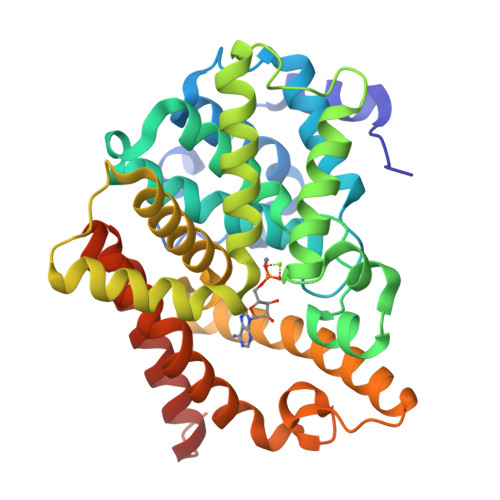
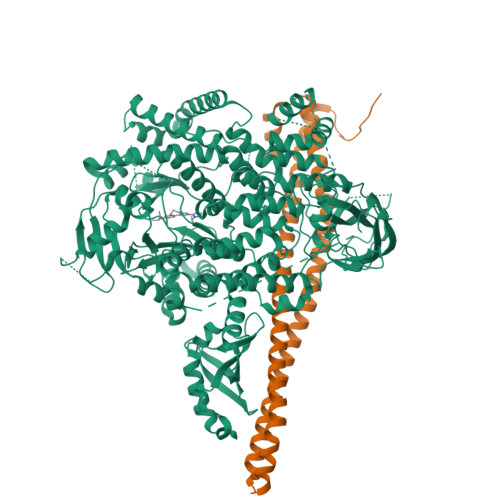
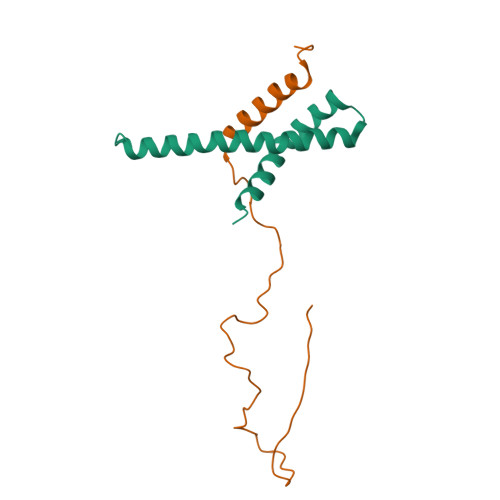
Tofisopam is an exogenous organic compound with the formula C22H26N2O4 and an average molecular weight of 382.45 g/mol. It exists as a solid at room temperature. Tofisopam belongs to the benzodiazepines, a class of organoheterocyclic compounds within the organic compounds. The compound has 21 recorded protein targets, which include 3',5'-cyclic-AMP phosphodiesterase 4A (PDE4A), cAMP and cAMP-inhibited cGMP 3',5'-cyclic phosphodiesterase 10A (PDE10A), cGMP-inhibited 3',5'-cyclic phosphodiesterase 3A (PDE3A), cGMP-dependent 3',5'-cyclic phosphodiesterase (PDE2A), and 17 other proteins. Additionally, tofisopam is found in or released from 19 recorded sources. These sources include building and construction materials such as stairs, ramps, and fencing; food, cookware, and food processing activities specifically involving the processing of meats; and electrical and electronic equipment, including antennas, amplifiers, auxiliary devices, conductors or conductive bodies characterized by the conductive materials, colour television systems, and 11 other sources.
Contaminant Type
  • Amine
  • Antidepressive Agent
  • Benzodiazepine
  • Drug
  • Ether
  • Organic Compound
  • Synthetic Compound
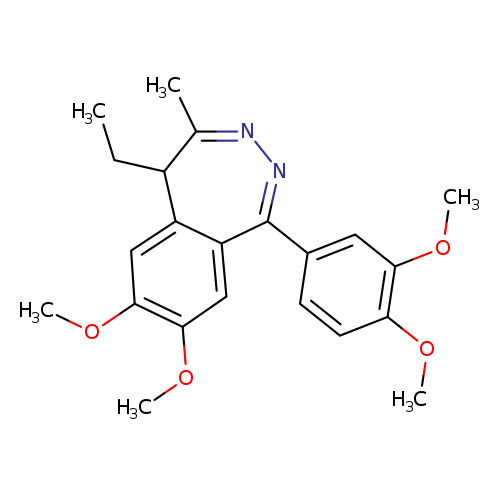
Chemical Structure
Synonyms
ValueSource
EmandaxinKegg
TofizopamHMDB
EGYT-341MeSH, HMDB
LevotofisopamMeSH, HMDB
DextofisopamMeSH, HMDB
GrandaxinMeSH, HMDB
1-(3,4-Dimethoxyphenyl)-5-ethyl-7,8-dimethoxy-4-methyl-5H-2,3-benzodiazepineMeSH, HMDB
Chemical FormulaC22H26N2O4
Average Molecular Mass382.453 g/mol
Monoisotopic Mass382.189 g/mol
CAS Registry Number22345-47-7
IUPAC Name1-(3,4-dimethoxyphenyl)-5-ethyl-7,8-dimethoxy-4-methyl-5H-2,3-benzodiazepine
Traditional Nameseriel
SMILESCCC1C2=CC(OC)=C(OC)C=C2C(=NN=C1C)C1=CC(OC)=C(OC)C=C1
InChI IdentifierInChI=1S/C22H26N2O4/c1-7-15-13(2)23-24-22(14-8-9-18(25-3)19(10-14)26-4)17-12-21(28-6)20(27-5)11-16(15)17/h8-12,15H,7H2,1-6H3
InChI KeyRUJBDQSFYCKFAA-UHFFFAOYSA-N
Chemical Taxonomy
Description Belongs to the class of organic compounds known as benzodiazepines. These are organic compounds containing a benzene ring fused to either isomers of diazepine(unsaturated seven-member heterocycle with two nitrogen atoms replacing two carbon atoms).
KingdomOrganic compounds
Super ClassOrganoheterocyclic compounds
ClassBenzodiazepines
Sub ClassNot Available
Direct ParentBenzodiazepines
Alternative Parents
Substituents
  • Benzodiazepine
  • Dimethoxybenzene
  • O-dimethoxybenzene
  • Phenoxy compound
  • Anisole
  • Phenol ether
  • Methoxybenzene
  • Alkyl aryl ether
  • Monocyclic benzene moiety
  • Benzenoid
  • Ether
  • Azacycle
  • Hydrocarbon derivative
  • Organooxygen compound
  • Organonitrogen compound
  • Organopnictogen compound
  • Organic nitrogen compound
  • Organic oxygen compound
  • Aromatic heteropolycyclic compound
Molecular FrameworkAromatic heteropolycyclic compounds
External DescriptorsNot Available
Biological Properties
StatusDetected and Not Quantified
OriginExogenous
Cellular Locations
  • Membrane
Biofluid LocationsNot Available
Tissue LocationsNot Available
ApplicationsNot Available
Biological RolesNot Available
Chemical RolesNot Available
Organoleptic EffectsNot Available
Physical Properties
StateSolid
AppearanceWhite powder.
Experimental Properties
PropertyValue
Melting Point156.5°C
Boiling PointNot Available
SolubilityNot Available
Predicted Properties
PropertyValueSource
Water Solubility0.0024 g/LALOGPS
logP4.29ALOGPS
logP3.83ChemAxon
logS-5.2ALOGPS
pKa (Strongest Basic)-2.2ChemAxon
Physiological Charge0ChemAxon
Hydrogen Acceptor Count6ChemAxon
Hydrogen Donor Count0ChemAxon
Polar Surface Area61.64 ŲChemAxon
Rotatable Bond Count6ChemAxon
Refractivity109.03 m³·mol⁻¹ChemAxon
Polarizability42.14 ųChemAxon
Number of Rings3ChemAxon
BioavailabilityYesChemAxon
Rule of FiveYesChemAxon
Ghose FilterYesChemAxon
Veber's RuleNoChemAxon
MDDR-like RuleYesChemAxon
Spectra
Spectra
Spectrum TypeDescriptionSplash KeyDeposition DateView
Predicted GC-MSPredicted GC-MS Spectrumsplash10-014i-0039000000-5cb577edbbc8cc8d6873Not AvailableView Spectrum
Predicted GC-MSPredicted GC-MS SpectrumNot AvailableNot AvailableView Spectrum
Predicted LC-MS/MSPredicted LC-MS/MS Spectrumsplash10-001i-0009000000-37ba280ae280f0151420Not AvailableView Spectrum
Predicted LC-MS/MSPredicted LC-MS/MS Spectrumsplash10-0006-9138000000-45b5e7b9478d1c0dcc70Not AvailableView Spectrum
Predicted LC-MS/MSPredicted LC-MS/MS Spectrumsplash10-06vi-3935000000-4b7b313aca10282cc22aNot AvailableView Spectrum
Predicted LC-MS/MSPredicted LC-MS/MS Spectrumsplash10-001i-0009000000-6678f5bee5aedc2c1c6cNot AvailableView Spectrum
Predicted LC-MS/MSPredicted LC-MS/MS Spectrumsplash10-00lr-0009000000-c7930084c12118c44738Not AvailableView Spectrum
Predicted LC-MS/MSPredicted LC-MS/MS Spectrumsplash10-000j-0059000000-dc272a4e40d2fd95dfa8Not AvailableView Spectrum
Predicted LC-MS/MSPredicted LC-MS/MS Spectrumsplash10-001i-0009000000-d3a09a44daea37832ae1Not AvailableView Spectrum
Predicted LC-MS/MSPredicted LC-MS/MS Spectrumsplash10-0a59-0009000000-4014af46649ca04615c7Not AvailableView Spectrum
Predicted LC-MS/MSPredicted LC-MS/MS Spectrumsplash10-02iw-0159000000-b6276af63dc415bf6cbbNot AvailableView Spectrum
Predicted LC-MS/MSPredicted LC-MS/MS Spectrumsplash10-001i-0009000000-e8b11cf16a87c36881acNot AvailableView Spectrum
Predicted LC-MS/MSPredicted LC-MS/MS Spectrumsplash10-001i-0009000000-fd93de7d58c1e12ea9b5Not AvailableView Spectrum
Predicted LC-MS/MSPredicted LC-MS/MS Spectrumsplash10-0079-0039000000-c61d648c1bd4562a933eNot AvailableView Spectrum
Toxicity Profile
Toxicity Values
Toxicity ValueOrganismDose DescriptorRoute of ExposurePredicted or ExperimentalToxicity RatingReference
783.0 Log mg/kg [440:1400]RatLD50oralpredictedNot AvailableNot Available
Toxicity / Toxin ClassNot Available
Mechanism of ToxicityTofisopam does not bind to the benzodiazepine binding site of the gamma-aminobutyric acid receptor. One study (Rundfeldt C. et al.) has shown that tofisopam acts as an isoenzyme-selective inhibitor of phosphodiesterases (PDEs) with highest affinity to PDE-4A1 (0.42 _Мц_M) followed by PDE-10A1 (0.92 _Мц_M), PDE-3 (1.98 _Мц_M) and PDE-2A3 (2.11 _Мц_M). Oral, Rat: LD50 = 825 mg/kg.
Carcinogenicity (IARC Classification)No indication of carcinogenicity to humans (not listed by IARC).
Minimum Risk LevelNot Available
SymptomsThe onset of impairment of consciousness is relatively rapid in benzodiazepine poisoning. Onset is more rapid following larger doses and with agents of shorter duration of action. The most common and initial symptom is somnolence. This may progress to coma (Grade I or Grade II) following very large ingestions.
TreatmentGeneral supportive measures should be employed, along with intravenous fluids, and an adequate airway maintained. Hypotension may be combated by the use of norepinephrine or metaraminol. Dialysis is of limited value. Flumazenil (Anexate) is a competitive benzodiazepine receptor antagonist that can be used as an antidote for benzodiazepine overdose. In particular, flumazenil is very effective at reversing the CNS depression associated with benzodiazepines but is less effective at reversing respiratory depression. Its use, however, is controversial as it has numerous contraindications. It is contraindicated in patients who are on long-term benzodiazepines, those who have ingested a substance that lowers the seizure threshold, or in patients who have tachycardia or a history of seizures. As a general rule, medical observation and supportive care are the mainstay of treatment of benzodiazepine overdose. Although benzodiazepines are absorbed by activated charcoal, gastric decontamination with activated charcoal is not beneficial in pure benzodiazepine overdose as the risk of adverse effects often outweigh any potential benefit from the procedure. It is recommended only if benzodiazepines have been taken in combination with other drugs that may benefit from decontamination. Gastric lavage (stomach pumping) or whole bowel irrigation are also not recommended.
Health Effects
Health EffectRelationshipDirectionDescriptionReference
Exposure Sources
Source IDSourceSectorReference
CEDs000496Fencing?Fencing materials, particularly those used in construction and landscaping, can be a source of synthetic chemical contamination due to the treatments and coatings applied for durability and weather resistance.Building & ConstructionPubChem
CEDs000500Stairs And Ramps?Stairs and ramps in construction are often treated with various synthetic chemicals to enhance durability, slip resistance, and weather resistance.Building & ConstructionPubChem
CEDs000505Amplifiers?Amplifiers, commonly used in various electronic devices to enhance signal strength, can be a source of synthetic chemical contamination due to the materials and processes involved in their production and disposal.Electrical & Electronic EquipmentPubChem
CEDs000506Antennas?Antennas, commonly used in communication technologies, can be a source of synthetic chemical contamination through the materials and coatings used in their construction.Electrical & Electronic EquipmentPubChem
CEDs000507Auxiliary Devices?Auxiliary devices, such as capacitors, transformers, and circuit breakers, are integral components in various electronic systems.Electrical & Electronic EquipmentPubChem
CEDs000509Colour Television Systems?Colour television systems contain various synthetic chemicals that can lead to environmental contamination.Electrical & Electronic EquipmentPubChem
CEDs000511Conductors Or Conductive Bodies Characterised By The Conductive Materials?Conductors, or conductive bodies, are materials that allow the flow of electrical current, typically made from metals such as copper, aluminum, or silver.Electrical & Electronic EquipmentPubChem
CEDs000516Electric Hearing Aids?Electric hearing aids are small electronic devices designed to amplify sound for individuals with hearing loss.Electrical & Electronic EquipmentPubChem
CEDs000517Electric Switches?Electric switches, integral components in numerous devices, can be a source of synthetic chemical contamination due to the materials and manufacturing processes involved in their production.Electrical & Electronic EquipmentPubChem
CEDs000518Electrically Stimulated Smoking Devices?Electrically stimulated smoking devices, commonly known as e-cigarettes or vape pens, utilize electrical components to heat a liquid solution, often containing nicotine, flavorings, and other additives, to produce an aerosol for inhalation.Electrical & Electronic EquipmentPubChem
CEDs000519Electrodes?Electrodes, used in various electrical and electronic applications, can be a source of synthetic chemical contamination due to the materials from which they are constructed and the processes involved in their manufacturing.Electrical & Electronic EquipmentPubChem
CEDs000520Emergency Protective Devices?Emergency protective devices, such as circuit breakers and surge protectors, are essential components in electrical systems designed to prevent damage from overcurrent and surges.Electrical & Electronic EquipmentPubChem
CEDs000525Line Transmission Systems?Line Transmission Systems, commonly used for the distribution of electrical energy, can be a source of synthetic chemical contamination through the insulation materials and coatings utilized in their construction.Electrical & Electronic EquipmentPubChem
CEDs000530Radio Transmission Systems?Radio transmission systems utilize a variety of synthetic chemicals in their manufacturing and maintenance processes.Electrical & Electronic EquipmentPubChem
CEDs000531Relays?Relays are electromechanical switches used to control circuits and manage electrical loads.Electrical & Electronic EquipmentPubChem
CEDs000534Still Video Cameras?Still video cameras, which capture images in digital format, can be a source of synthetic chemical contamination due to the materials and components used in their production and operation.Electrical & Electronic EquipmentPubChem
CEDs000537Television Systems?Television systems can be a source of synthetic chemical contamination due to the various materials and components used in their manufacture and operation.Electrical & Electronic EquipmentPubChem
CEDs000539Video Games?Video games, through their production and disposal processes, can be a source of synthetic chemical contamination.Electrical & Electronic EquipmentPubChem
CEDs000552Processing Meats?Processing meats can lead to synthetic chemical contamination primarily through the use of additives and preservatives.Food, food processing & cookwarePubChem
CEDs000578Making Cigars?The process of making cigars involves several steps, including the cultivation of tobacco, fermentation, and the application of various additives to enhance flavor and preservation.Industrial manufacturing & chemical processingPubChem
CEDs000579Manufacture Of Iron Or Steel?The manufacture of iron or steel involves various processes, including smelting, refining, and alloying, which can result in the release of synthetic chemicals and contaminants.Industrial manufacturing & chemical processingPubChem
CEDs000580Manufacture Preparation Of Tobacco Products?The manufacture and preparation of tobacco products involve various processes that can result in the introduction of synthetic chemicals into the environment.Industrial manufacturing & chemical processingPubChem
CEDs000589Life Buoys?Life buoys, commonly used in marine environments for safety and rescue operations, can be a source of synthetic chemical contamination due to the materials used in their production.Marine, shipping & aquaculturePubChem
CEDs000625Racing Sports?Racing sports often utilize synthetic surfaces, such as polyurethane or rubberized tracks, to enhance performance and safety.Recreation & sports surfacesPubChem
CEDs000630Toys?Toys, particularly those made from synthetic materials such as plastics, can be a source of chemical contamination due to the presence of various additives and compounds used in their production.Recreation & sports surfacesPubChem
CEDs000632Apparel?Apparel production often involves the use of various synthetic chemicals, including dyes, finishing agents, and preservatives.Textiles, leather & furnishingsPubChem
CEDs000650Purses Luggage Hand Bags?Purses, luggage, and handbags are often manufactured using synthetic materials such as polyvinyl chloride (PVC), polyurethane, and various types of nylon.Textiles, leather & furnishingsPubChem
CEDs000653Sewing?Sewing processes often involve the use of various synthetic chemicals, which can become sources of contamination in the environment.Textiles, leather & furnishingsPubChem
CEDs000655Slide Fasteners?Slide fasteners, commonly known as zippers, are mechanical devices used to join two edges of fabric or other materials.Textiles, leather & furnishingsPubChem
CEDs000671Airplanes And Helicopters?Airplanes and helicopters are significant sources of synthetic chemical contamination primarily through the use of aviation fuels, lubricants, and de-icing agents.Aviation & AerospacePubChem
CEDs000682Traction Harness?Traction harnesses, commonly used in agricultural practices for animals and machinery, can be a source of synthetic chemical contamination through the materials used in their production.Agriculture & land managementPubChem
CEDs000685Ceramics?Ceramics can be a source of synthetic chemical contamination through various additives and processing agents used in their production.Building & ConstructionPubChem
CEDs000696Nanotechnology?Nanotechnology involves the manipulation of materials at the molecular or atomic level, typically within the range of 1 to 100 nanometers.Industrial manufacturing & chemical processingPubChem
CEDs000704Blotters?Blotters are absorbent paper products commonly used in various applications, including ink absorption, oil removal, and moisture control.Paper, pulp & fiber productsPubChem
CEDs000707Books?Books can be a source of synthetic chemical contamination due to the use of various chemicals in their production and preservation processes.Paper, pulp & fiber productsPubChem
CEDs000727Printing Machines Or Presses?Printing machines or presses commonly utilize synthetic chemicals such as inks, solvents, and cleaning agents.Paper, pulp & fiber productsPubChem
CEDs000729Stamps?Stamps, particularly those produced using synthetic inks and adhesives, can contribute to chemical contamination when disposed of improperly.Paper, pulp & fiber productsPubChem
CEDs000740Paper?Paper production involves the processing of wood fibers and the use of various chemicals, which can lead to synthetic chemical contamination.Paper, pulp & fiber productsPubChem
CEDs000744Water, Wastewater, & Sewage Treatment?Water, wastewater, and sewage treatment processes are critical for managing and mitigating pollutants in water systems.Wastewater, sanitation & biosolidsPubChem
Pathways
0 pathwaysPathway Source: PathBank

No pathways found

No metabolic pathways have been associated with this synthetic chemical

Targets
StructureProteinUniProt IDOrganismRelationshipDetails
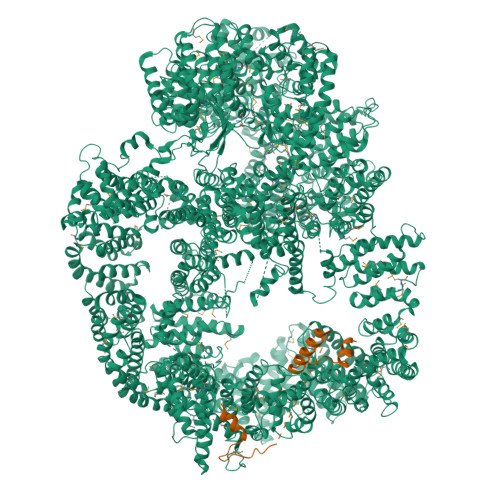
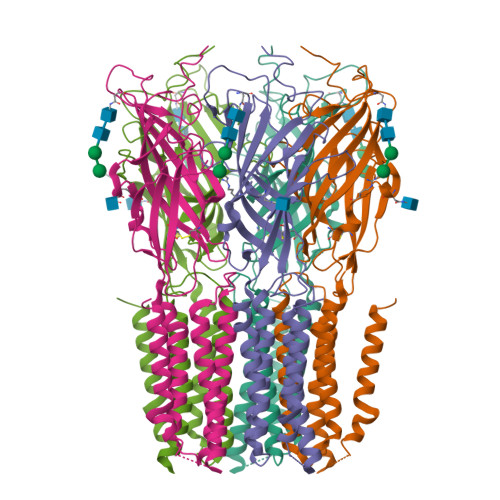
Serine/threonine-protein phosphatase 5 structureClick to view 3D structureSerine/threonine-protein phosphatase 5P53042Rattus norvegicusPredicted (SEA)
Prediction Confidence Score
0.322
Applicability Domain
0.322
Statistical Significance
3.20e-04
Supporting Reference Compounds
1
E-value
2.49118
3',5'-cyclic-AMP phosphodiesterase 4D structureClick to view 3D structure3',5'-cyclic-AMP phosphodiesterase 4DQ08499HumansPredicted (SEA)
Prediction Confidence Score
0.286
Applicability Domain
0.309
Statistical Significance
0.0112
Supporting Reference Compounds
170
E-value
87.5025
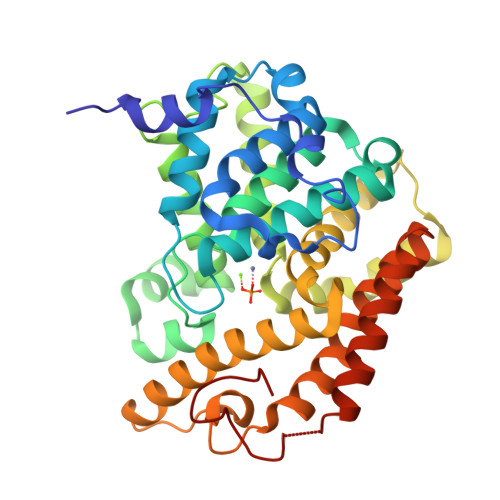
3',5'-cyclic-AMP phosphodiesterase 4A structureClick to view 3D structure3',5'-cyclic-AMP phosphodiesterase 4AP27815HumansPredicted (SEA)
Prediction Confidence Score
0.286
Applicability Domain
0.309
Statistical Significance
0.0042
Supporting Reference Compounds
80
E-value
33.0081
Phosphatidylinositol 4,5-bisphosphate 3-kinase catalytic subunit alpha isoform structureClick to view 3D structurePhosphatidylinositol 4,5-bisphosphate 3-kinase catalytic subunit alpha isoformP42336HumansPredicted (SEA)
Prediction Confidence Score
0.284
Applicability Domain
0.321
Statistical Significance
0.0806
Supporting Reference Compounds
536
E-value
627.698
3',5'-cyclic-AMP phosphodiesterase 4B structureClick to view 3D structure3',5'-cyclic-AMP phosphodiesterase 4BQ07343HumansPredicted (SEA)
Prediction Confidence Score
0.283
Applicability Domain
0.297 Low confidence
Statistical Significance
0.0079
Supporting Reference Compounds
121
E-value
61.2673
cAMP and cAMP-inhibited cGMP 3',5'-cyclic phosphodiesterase 10A structureClick to view 3D structurecAMP and cAMP-inhibited cGMP 3',5'-cyclic phosphodiesterase 10AQ9Y233HumansPredicted (SEA)
Prediction Confidence Score
0.279
Applicability Domain
0.309
Statistical Significance
0.01
Supporting Reference Compounds
146
E-value
77.5378
Mast/stem cell growth factor receptor Kit structureClick to view 3D structureMast/stem cell growth factor receptor KitP10721HumansPredicted (SEA)
Prediction Confidence Score
0.273
Applicability Domain
0.321
Statistical Significance
0.1997
Supporting Reference Compounds
905
E-value
1554.65
Phosphatidylinositol 4,5-bisphosphate 3-kinase catalytic subunit delta isoform structureClick to view 3D structurePhosphatidylinositol 4,5-bisphosphate 3-kinase catalytic subunit delta isoformO00329HumansPredicted (SEA)
Prediction Confidence Score
0.273
Applicability Domain
0.29 Low confidence
Statistical Significance
0.086
Supporting Reference Compounds
459
E-value
669.581
Phosphatidylinositol 4,5-bisphosphate 3-kinase catalytic subunit gamma isoform structureClick to view 3D structurePhosphatidylinositol 4,5-bisphosphate 3-kinase catalytic subunit gamma isoformP48736HumansPredicted (SEA)
Prediction Confidence Score
0.273
Applicability Domain
0.29 Low confidence
Statistical Significance
0.0892
Supporting Reference Compounds
450
E-value
694.726
DNA-dependent protein kinase catalytic subunit structureClick to view 3D structureDNA-dependent protein kinase catalytic subunitP78527HumansPredicted (SEA)
Prediction Confidence Score
0.273
Applicability Domain
0.29 Low confidence
Statistical Significance
0.0289
Supporting Reference Compounds
219
E-value
225.296
Tyrosine-protein kinase HCK structureClick to view 3D structureTyrosine-protein kinase HCKP08631HumansPredicted (SEA)
Prediction Confidence Score
0.272
Applicability Domain
0.29 Low confidence
Statistical Significance
0.0712
Supporting Reference Compounds
293
E-value
554.364
Click to view 3D structurePhosphatidylinositol 4,5-bisphosphate 3-kinase catalytic subunit beta isoformP42338HumansPredicted (SEA)
Prediction Confidence Score
0.272
Applicability Domain
0.29 Low confidence
Statistical Significance
0.0772
Supporting Reference Compounds
372
E-value
600.685
Phosphatidylinositol 4-kinase beta structureClick to view 3D structurePhosphatidylinositol 4-kinase betaQ9UBF8HumansPredicted (SEA)
Prediction Confidence Score
0.271
Applicability Domain
0.29 Low confidence
Statistical Significance
0.047
Supporting Reference Compounds
184
E-value
365.969
Epidermal growth factor receptor structureClick to view 3D structureEpidermal growth factor receptorP00533HumansPredicted (SEA)
Prediction Confidence Score
0.269
Applicability Domain
0.27 Low confidence
Statistical Significance
0.2665
Supporting Reference Compounds
1301
E-value
2074.84
Tyrosine-protein kinase ABL1 structureClick to view 3D structureTyrosine-protein kinase ABL1P00519HumansPredicted (SEA)
Prediction Confidence Score
0.269
Applicability Domain
0.29 Low confidence
Statistical Significance
0.22
Supporting Reference Compounds
927
E-value
1712.76
Proto-oncogene tyrosine-protein kinase Src structureClick to view 3D structureProto-oncogene tyrosine-protein kinase SrcP12931HumansPredicted (SEA)
Prediction Confidence Score
0.269
Applicability Domain
0.27 Low confidence
Statistical Significance
0.2407
Supporting Reference Compounds
1158
E-value
1873.91
Toll-like receptor 9 structureClick to view 3D structureToll-like receptor 9Q9NR96HumansPredicted (SEA)
Prediction Confidence Score
0.266
Applicability Domain
0.288 Low confidence
Statistical Significance
0.0128
Supporting Reference Compounds
111
E-value
99.7249
Vascular endothelial growth factor receptor 2 structureClick to view 3D structureVascular endothelial growth factor receptor 2P35968HumansPredicted (SEA)
Prediction Confidence Score
0.264
Applicability Domain
0.294 Low confidence
Statistical Significance
0.3279
Supporting Reference Compounds
1660
E-value
2552.75
Aurora kinase B structureClick to view 3D structureAurora kinase BQ96GD4HumansPredicted (SEA)
Prediction Confidence Score
0.264
Applicability Domain
0.288 Low confidence
Statistical Significance
0.2694
Supporting Reference Compounds
1017
E-value
2097.41
Glycogen synthase kinase-3 beta structureClick to view 3D structureGlycogen synthase kinase-3 betaP49841HumansPredicted (SEA)
Prediction Confidence Score
0.261
Applicability Domain
0.286 Low confidence
Statistical Significance
0.3156
Supporting Reference Compounds
1157
E-value
2456.77
Serine/threonine-protein kinase mTOR structureClick to view 3D structureSerine/threonine-protein kinase mTORP42345HumansPredicted (SEA)
Prediction Confidence Score
0.261
Applicability Domain
0.27 Low confidence
Statistical Significance
0.1135
Supporting Reference Compounds
403
E-value
883.511
Click to view 3D structureAryl hydrocarbon receptorP41738Rattus norvegicusPredicted (SEA)
Prediction Confidence Score
0.26
Applicability Domain
0.298 Low confidence
Statistical Significance
7.10e-04
Supporting Reference Compounds
2
E-value
5.52729
Cytochrome P450 2C19 structureClick to view 3D structureCytochrome P450 2C19P33261HumansPredicted (SEA)
Prediction Confidence Score
0.26
Applicability Domain
0.309
Statistical Significance
0.2639
Supporting Reference Compounds
825
E-value
2054.36
Sodium-dependent serotonin transporter structureClick to view 3D structureSodium-dependent serotonin transporterP31645HumansPredicted (SEA)
Prediction Confidence Score
0.26
Applicability Domain
0.314
Statistical Significance
0.1433
Supporting Reference Compounds
593
E-value
1115.97
Tyrosine-protein kinase Lck structureClick to view 3D structureTyrosine-protein kinase LckP06239HumansPredicted (SEA)
Prediction Confidence Score
0.26
Applicability Domain
0.27 Low confidence
Statistical Significance
0.3243
Supporting Reference Compounds
1130
E-value
2524.73
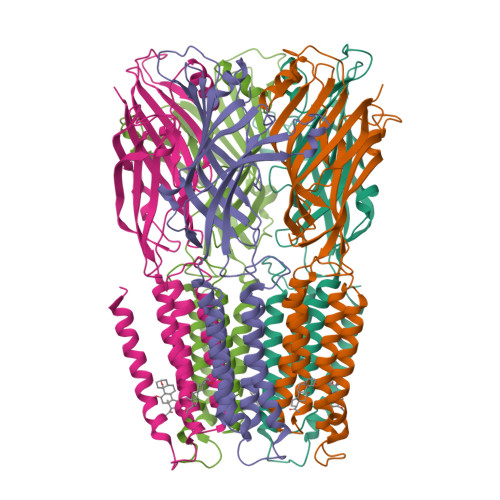
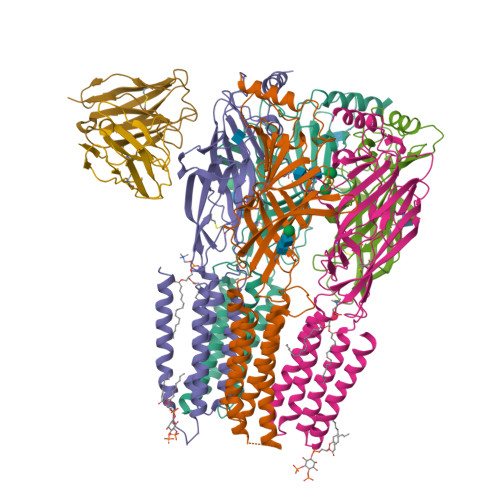
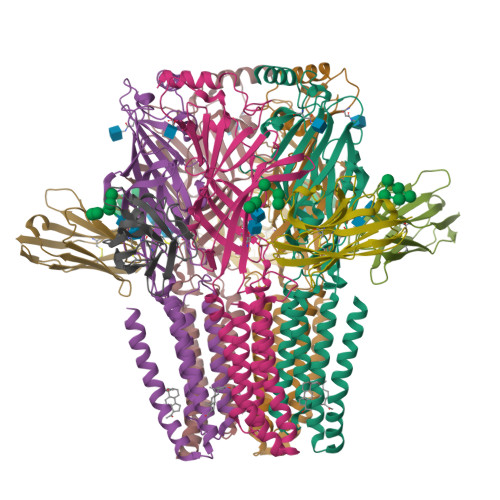
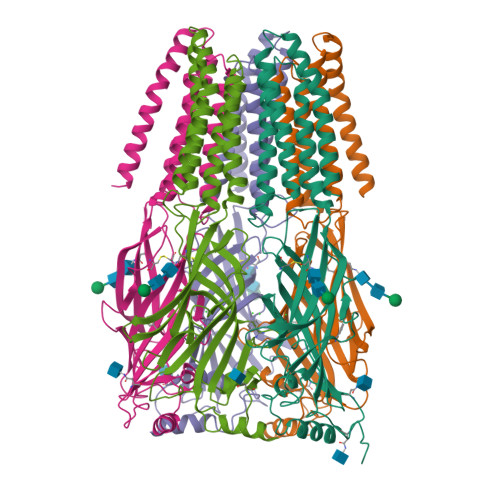
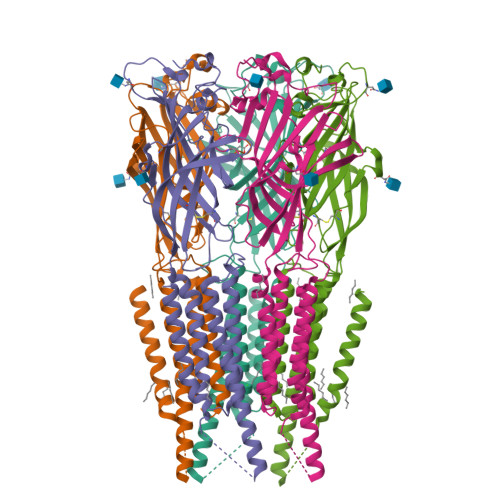
Gamma-aminobutyric acid receptor subunit alpha-1 structureClick to view 3D structureGamma-aminobutyric acid receptor subunit alpha-1P14867HumansKnownNot Available
Gamma-aminobutyric acid receptor subunit alpha-2 structureClick to view 3D structureGamma-aminobutyric acid receptor subunit alpha-2P47869HumansKnownNot Available
Gamma-aminobutyric acid receptor subunit alpha-3 structureClick to view 3D structureGamma-aminobutyric acid receptor subunit alpha-3P34903HumansKnownNot Available
Gamma-aminobutyric acid receptor subunit alpha-5 structureClick to view 3D structureGamma-aminobutyric acid receptor subunit alpha-5P31644HumansKnownNot Available
Gamma-aminobutyric acid receptor subunit beta-1 structureClick to view 3D structureGamma-aminobutyric acid receptor subunit beta-1P18505HumansKnownNot Available
Gamma-aminobutyric acid receptor subunit beta-2 structureClick to view 3D structureGamma-aminobutyric acid receptor subunit beta-2P47870HumansKnownNot Available
Gamma-aminobutyric acid receptor subunit beta-3 structureClick to view 3D structureGamma-aminobutyric acid receptor subunit beta-3P28472HumansKnownNot Available
Gamma-aminobutyric acid receptor subunit delta structureClick to view 3D structureGamma-aminobutyric acid receptor subunit deltaO14764HumansKnownNot Available
Click to view 3D structureGamma-aminobutyric acid receptor subunit epsilonP78334HumansKnownNot Available
Click to view 3D structureGamma-aminobutyric acid receptor subunit gamma-1Q8N1C3HumansKnownNot Available
Gamma-aminobutyric acid receptor subunit gamma-2 structureClick to view 3D structureGamma-aminobutyric acid receptor subunit gamma-2P18507HumansKnownNot Available
Click to view 3D structureGamma-aminobutyric acid receptor subunit gamma-3Q99928HumansKnownNot Available
Gamma-aminobutyric acid receptor subunit pi structureClick to view 3D structureGamma-aminobutyric acid receptor subunit piO00591HumansKnownNot Available
Gamma-aminobutyric acid receptor subunit rho-1 structureClick to view 3D structureGamma-aminobutyric acid receptor subunit rho-1P24046HumansKnownNot Available
Click to view 3D structureGamma-aminobutyric acid receptor subunit rho-2P28476HumansKnownNot Available
Click to view 3D structureGamma-aminobutyric acid receptor subunit rho-3A8MPY1HumansKnownNot Available
Click to view 3D structureTranslocator proteinP30536HumansKnownNot Available
cAMP and cAMP-inhibited cGMP 3',5'-cyclic phosphodiesterase 10A structureClick to view 3D structurecAMP and cAMP-inhibited cGMP 3',5'-cyclic phosphodiesterase 10AQ9Y233HumansKnownNot Available
3',5'-cyclic-AMP phosphodiesterase 4A structureClick to view 3D structure3',5'-cyclic-AMP phosphodiesterase 4AP27815HumansKnownNot Available
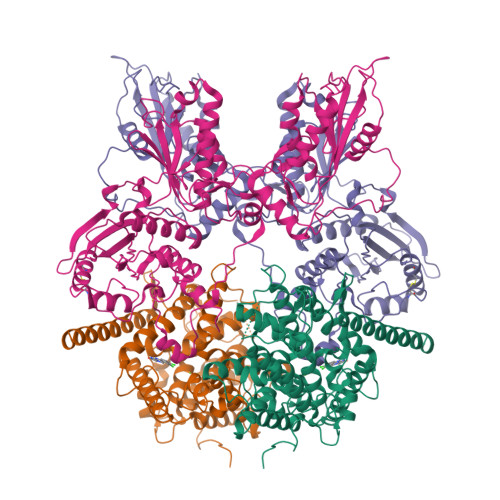
cGMP-dependent 3',5'-cyclic phosphodiesterase structureClick to view 3D structurecGMP-dependent 3',5'-cyclic phosphodiesteraseO00408HumansKnownNot Available
cGMP-inhibited 3',5'-cyclic phosphodiesterase 3A structureClick to view 3D structurecGMP-inhibited 3',5'-cyclic phosphodiesterase 3AQ14432HumansKnownNot Available
Concentrations
Not Available
External Links
DrugBank IDDB08811
HMDB IDHMDB0254065
FooDB IDNot Available
Phenol Explorer IDNot Available
KNApSAcK IDNot Available
BiGG IDNot Available
BioCyc IDNot Available
METLIN IDNot Available
PDB IDNot Available
Wikipedia LinkTofisopam
Chemspider ID5301
ChEBI IDNot Available
PubChem Compound IDNot Available
Kegg Compound IDNot Available
YMDB IDNot Available
ECMDB IDNot Available
References
Synthesis ReferenceNot Available
MSDSNot Available
General References
  1. Rundfeldt C, Socala K, Wlaz P: The atypical anxiolytic drug, tofisopam, selectively blocks phosphodiesterase isoenzymes and is active in the mouse model of negative symptoms of psychosis. J Neural Transm. 2010 Nov;117(11):1319-25. doi: 10.1007/s00702-010-0507-3. Epub 2010 Oct 22. [PubMed: 20967473]