Hydroquinone (CED0002057)

Record Information
Version1.0
Creation Date2014-09-05 17:10:15 UTC
Update Date2026-05-14 19:06:26 UTC
SynCED IDCED0002057
Secondary Accession Numbers
  • CHEM003537
  • T3D4577
Identification
Common NameHydroquinone
ClassSmall Molecule
Description
Hydroquinone belongs to the benzenediols, a subclass of phenols within the organic compounds. It is a solid at room temperature with a chemical formula of C6H6O2 and an average molecular weight of 110.11 g/mol. This exogenous compound is classified as a benzenoid and serves various biological and industrial roles. Biologically, it acts as a cofactor, a carcinogenic agent, an inhibitor (PMC8540663 , PMC10422372 ), and is a metabolite for both humans and Escherichia coli. Industrially, it is utilized as a stabilizing agent, a reducing agent (PMC11991570 ), an antioxidant (PMC11991570 ), a catalyst (PMC9821536 ), an inhibitor (PMC8540663 , PMC10422372 ), a dye, a fragrance (PMC11991570 ), a flavouring and nutrient (PMC11991570 ), and a monomer (PMC11991570 ). It is also used in the production of Polyethylene Terephthalate. Hydroquinone is an environmental xenobiotic (PMC10001213 ) detected in tissues including the liver, kidney, bone marrow, skin, fibroblasts, and stratum corneum. It is found in 58 recorded sources across sectors such as healthcare and pharmaceuticals (dermatological preparations, medical devices), household cleaning and consumer products (bleaching agents, perfumes within detergents and soaps, cigar cigarettes), electrical and electronic equipment (batteries, capacitors, cell phones), food and food processing (food packaging, fermentation processes for beer), building and construction (roofs, floors), and textiles (synthetic textiles, carpets and rugs). Exposure routes include oral, cutaneous, topical, touch, and inhalation (PMC11313755 ). Regarding health effects, hydroquinone is used as a treatment for itching (PMC11307991 ). It interacts with 16 protein targets, acting as an activator, antagonist, inhibitor, or substrate for Carbonic anhydrase 1, 2, 3, and 12.
Contaminant Type
  • Cigarette Toxin
  • Food Toxin
  • Household Toxin
  • Human Neurotoxin
  • Metabolite
  • Organic Compound
  • PFAS
  • Phytotoxin
  • Pollutant
  • Synthetic Compound
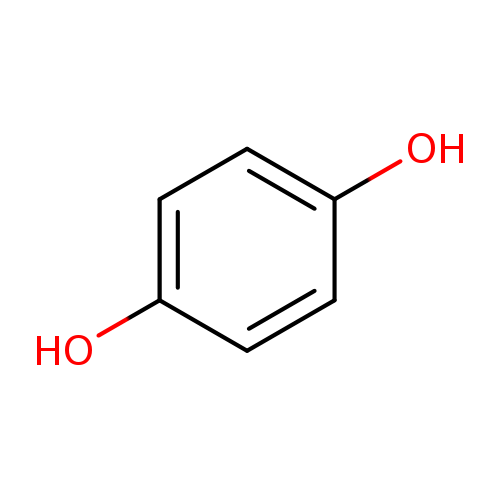
Chemical Structure
Synonyms
ValueSource
1,4-BenzenediolChEBI
1,4-DihydroxybenzeneChEBI
4-HydroxyphenolChEBI
Benzene-1,4-diolChEBI
EldoquinChEBI
p-BenzenediolChEBI
p-HydroquinoneChEBI
p-HydroxyphenolChEBI
QuinolChEBI
ArtraMeSH
EldopaqueMeSH
EsotericaMeSH
HidroquilaudeMeSH
HidroquinMeSH
Hidroquinona isdinMeSH
LicostrataMeSH
LustraMeSH
MelanasaMeSH
MelanexMeSH
MelpaqueMeSH
MelquinMeSH
Neostrata HQMeSH
PhiaquinMeSH
SolaquinMeSH
UltraquinMeSH
beta-QuinolMeSH
Hydroquinone, copper (1+) saltMeSH
Hydroquinone, lead (2+) salt (2:1)MeSH
Hydroquinone, monocopper (2+) saltMeSH
1,4-Dihydroxy-benzeenHMDB
1,4-Dihydroxy-benzolHMDB
1,4-DihydroxybenzenHMDB
1,4-DiidrobenzeneHMDB
a-HydroquinoneHMDB
alpha-HydroquinoneHMDB
b-QuinolHMDB
BenzohydroquinoneHMDB
BenzoquinolHMDB
DihydroquinoneHMDB
DihydroxybenzeneHMDB
HydrochinonHMDB
HydrochinoneHMDB
HydroquinolHMDB
HydroquinoleHMDB
Hydroquinone for synthesisHMDB
Hydroquinone GRHMDB
HydroquinoueHMDB
IdrochinoneHMDB
p-DihydroxybenzeneHMDB
P-DioxobenzeneHMDB
p-DioxybenzeneHMDB
P-HydroxybenzeneHMDB
Solaquin forteHMDB
Eldoquin forteMeSH, HMDB
Stratus brand 1 OF hydroquinoneMeSH, HMDB
ICN brand 1 OF hydroquinoneMeSH, HMDB
Plough brand 2 OF hydroquinoneMeSH, HMDB
Eldopaque forteMeSH, HMDB
ICN brand 4 OF hydroquinoneMeSH, HMDB
Black and whiteMeSH, HMDB
ICN brand 2 OF hydroquinoneMeSH, HMDB
ICN brand 3 OF hydroquinoneMeSH, HMDB
Plough brand 1 OF hydroquinoneMeSH, HMDB
Stratus brand 2 OF hydroquinoneMeSH, HMDB
1,4-BenzoquinolPhytoBank
1,4-PhenylenediolPhytoBank
1,4-p-BenzenediolPhytoBank
p-DihydroquinonePhytoBank
p-PhenylenediolPhytoBank
p-QuinolPhytoBank
Chemical FormulaC6H6O2
Average Molecular Mass110.111 g/mol
Monoisotopic Mass110.037 g/mol
CAS Registry Number123-31-9
IUPAC Namebenzene-1,4-diol
Traditional Nameα-hydroquinone
SMILESOC1=CC=C(O)C=C1
InChI IdentifierInChI=1S/C6H6O2/c7-5-1-2-6(8)4-3-5/h1-4,7-8H
InChI KeyQIGBRXMKCJKVMJ-UHFFFAOYSA-N
Chemical Taxonomy
Description Belongs to the class of organic compounds known as hydroquinones. Hydroquinones are compounds containing a hydroquinone moiety, which consists of a benzene ring with a hydroxyl groups at positions 1 and 4.
KingdomOrganic compounds
Super ClassBenzenoids
ClassPhenols
Sub ClassBenzenediols
Direct ParentHydroquinones
Alternative Parents
Substituents
  • Hydroquinone
  • 1-hydroxy-2-unsubstituted benzenoid
  • Monocyclic benzene moiety
  • Organic oxygen compound
  • Hydrocarbon derivative
  • Organooxygen compound
  • Aromatic homomonocyclic compound
Molecular FrameworkAromatic homomonocyclic compounds
External Descriptors
Biological Properties
StatusDetected and Not Quantified
OriginExogenous
Cellular Locations
  • Cytoplasm
  • Extracellular
Biofluid LocationsNot Available
Tissue Locations
  • Bone Marrow
  • Fibroblasts
  • Kidney
  • Liver
  • Skin
  • Stratum Corneum
ApplicationsNot Available
Biological Roles
Chemical RolesNot Available
Organoleptic Effects
  • white colour ?
  • colorless colour ?
Physical Properties
StateSolid
AppearanceHydroquinone is a white granular solid at room temperature and pressure.
Experimental Properties
PropertyValue
Melting Point172.3 °C
Boiling Point286°C (546.8°F)
Solubility72.0 mg/mL at 25 °C
Predicted Properties
PropertyValueSource
Water Solubility95.5 g/LALOGPS
logP0.71ALOGPS
logP1.37ChemAxon
logS-0.06ALOGPS
pKa (Strongest Acidic)9.68ChemAxon
pKa (Strongest Basic)-5.9ChemAxon
Physiological Charge0ChemAxon
Hydrogen Acceptor Count2ChemAxon
Hydrogen Donor Count2ChemAxon
Polar Surface Area40.46 ŲChemAxon
Rotatable Bond Count0ChemAxon
Refractivity30.02 m³·mol⁻¹ChemAxon
Polarizability10.75 ųChemAxon
Number of Rings1ChemAxon
BioavailabilityYesChemAxon
Rule of FiveYesChemAxon
Ghose FilterNoChemAxon
Veber's RuleNoChemAxon
MDDR-like RuleNoChemAxon
Spectra
Spectra
Spectrum TypeDescriptionSplash KeyDeposition DateView
GC-MSGC-MS Spectrumsplash10-0f79-2490000000-6b4fec222a3499d93790Not AvailableView Spectrum
GC-MSGC-MS Spectrumsplash10-03di-9800000000-c90fd4986fea9691ecbfNot AvailableView Spectrum
GC-MSGC-MS Spectrumsplash10-03e9-9300000000-f8b11742557329691e8aNot AvailableView Spectrum
GC-MSGC-MS Spectrumsplash10-0f79-2490000000-6b4fec222a3499d93790Not AvailableView Spectrum
GC-MSGC-MS Spectrumsplash10-0f79-2690000000-7306adcc7121a11d67ccNot AvailableView Spectrum
Predicted GC-MSPredicted GC-MS Spectrumsplash10-03di-5900000000-954dc96d8e3eb85b8324Not AvailableView Spectrum
Predicted GC-MSPredicted GC-MS Spectrumsplash10-00e9-8950000000-512c0cf5ddc0b120ec8eNot AvailableView Spectrum
Predicted GC-MSPredicted GC-MS SpectrumNot AvailableNot AvailableView Spectrum
LC-MS/MSLC-MS/MS Spectrumsplash10-03di-9600000000-e670ba090cb27367db12Not AvailableView Spectrum
LC-MS/MSLC-MS/MS Spectrumsplash10-01p6-9000000000-5fc32c7688c1612df1e7Not AvailableView Spectrum
LC-MS/MSLC-MS/MS Spectrumsplash10-000i-9000000000-c5853ce8ef225ea5c353Not AvailableView Spectrum
LC-MS/MSLC-MS/MS Spectrumsplash10-03di-9800000000-c90fd4986fea9691ecbfNot AvailableView Spectrum
LC-MS/MSLC-MS/MS Spectrumsplash10-0a4i-0900000000-5635f0157cd37deb1121Not AvailableView Spectrum
LC-MS/MSLC-MS/MS Spectrumsplash10-03di-2900000000-05be113033a709130eedNot AvailableView Spectrum
LC-MS/MSLC-MS/MS Spectrumsplash10-0a4i-9600000000-e0d15b2e4ea35a7a76beNot AvailableView Spectrum
LC-MS/MSLC-MS/MS Spectrumsplash10-01r6-9000000000-946504408977df40269aNot AvailableView Spectrum
LC-MS/MSLC-MS/MS Spectrumsplash10-0a4i-0900000000-c16180dd26c127563155Not AvailableView Spectrum
LC-MS/MSLC-MS/MS Spectrumsplash10-03dl-9000000000-cea1cb486f12ea31e3a1Not AvailableView Spectrum
LC-MS/MSLC-MS/MS Spectrumsplash10-01ox-9000000000-3a9d5710c88793e698f1Not AvailableView Spectrum
LC-MS/MSLC-MS/MS Spectrumsplash10-0006-9000000000-60eeaa79bff371773b2eNot AvailableView Spectrum
LC-MS/MSLC-MS/MS Spectrumsplash10-0a4i-0900000000-3a9e293da186985db7faNot AvailableView Spectrum
LC-MS/MSLC-MS/MS Spectrumsplash10-0pb9-9000000000-84bb0a9b4c3cd16da2a7Not AvailableView Spectrum
LC-MS/MSLC-MS/MS Spectrumsplash10-0a4i-7900000000-2256214c81a3e04e01b7Not AvailableView Spectrum
Predicted LC-MS/MSPredicted LC-MS/MS Spectrumsplash10-03di-0900000000-8d8328e4f7cd2ebaa27dNot AvailableView Spectrum
Predicted LC-MS/MSPredicted LC-MS/MS Spectrumsplash10-03di-1900000000-9290fcb93f170fc3143fNot AvailableView Spectrum
Predicted LC-MS/MSPredicted LC-MS/MS Spectrumsplash10-01si-9200000000-9f707b9d0c4ad0b73b30Not AvailableView Spectrum
Predicted LC-MS/MSPredicted LC-MS/MS Spectrumsplash10-0a4i-0900000000-d3aae38632ac4c40fd4fNot AvailableView Spectrum
Predicted LC-MS/MSPredicted LC-MS/MS Spectrumsplash10-0a4i-0900000000-74f15490ba4f49cf8c18Not AvailableView Spectrum
Predicted LC-MS/MSPredicted LC-MS/MS Spectrumsplash10-0a4i-9800000000-1cb01248e88fce387578Not AvailableView Spectrum
Predicted LC-MS/MSPredicted LC-MS/MS Spectrumsplash10-0a4i-0900000000-9f2c82efe2cba7470e17Not AvailableView Spectrum
Predicted LC-MS/MSPredicted LC-MS/MS Spectrumsplash10-0f6x-9000000000-8213c13cc381b346f976Not AvailableView Spectrum
Predicted LC-MS/MSPredicted LC-MS/MS Spectrumsplash10-03di-0900000000-fd10fd64675560620b8dNot AvailableView Spectrum
Predicted LC-MS/MSPredicted LC-MS/MS Spectrumsplash10-014i-9000000000-87bc4e0c6d0139387739Not AvailableView Spectrum
Predicted LC-MS/MSPredicted LC-MS/MS Spectrumsplash10-02t9-9000000000-31ceb3589ebc7363b2b6Not AvailableView Spectrum
MSMS Spectrumsplash10-03di-9500000000-1fa8477944a662535e76Not AvailableView Spectrum
1D NMR13C NMR Spectrum (1D, D2O, predicted)Not AvailableNot AvailableView Spectrum
1D NMR1H NMR Spectrum (1D, D2O, predicted)Not AvailableNot AvailableView Spectrum
Toxicity Profile
Toxicity Values
Toxicity ValueOrganismDose DescriptorRoute of ExposurePredicted or ExperimentalToxicity RatingReference
244.0 Log mg/kg [140:430]RatLD50oralpredictedNot AvailableNot Available
80.0 mg/kg-day MouseNOELinjectionexperimentalNot AvailableECOTOX - EPA ORD
80.0 mg/kg-day MouseLOELinjectionexperimentalNot AvailableECOTOX - EPA ORD
120.0 mg/kg-day MouseNOELoralexperimentalNot AvailableECOTOX - EPA ORD
64.0 mg/kg-day RatLOELoralexperimentalNot AvailableECOTOX - EPA ORD
20.0 mg/kg-day RatNOELoralexperimentalNot AvailableECOTOX - EPA ORD
150.0 mg/kg-day RatNOELoralexperimentalNot AvailableECOTOX - EPA ORD
15.0 mg/kg-day RatNOELoralexperimentalNot AvailableECOTOX - EPA ORD
300.0 mg/kg-day RatNOELoralexperimentalNot AvailableECOTOX - EPA ORD
100.0 mg/kg-day RatNOELoralexperimentalNot AvailableECOTOX - EPA ORD
300.0 mg/kg-day RatLOELoralexperimentalNot AvailableECOTOX - EPA ORD
150.0 mg/kg-day RatNOELoralexperimentalNot AvailableECOTOX - EPA ORD
Toxicity / Toxin ClassNot Available
Mechanism of ToxicityNot Available
Carcinogenicity (IARC Classification)3, not classifiable as to its carcinogenicity to humans. (15)
Minimum Risk LevelNot Available
SymptomsNot Available
TreatmentNot Available
Health Effects
Health EffectRelationshipDirectionDescriptionReference
cancerAssociated With?Not AvailableCancer is a group of diseases involving abnormal cell growth with the potential to invade or spread to other parts of the body. Possible signs and symptoms include a lump, abnormal bleeding, prolonged cough, unexplained weight loss, and a change in bowel movements. There are over 100 types of cancers affect humans. The risk of developing certain cancers can be reduced by not smoking, maintaining a healthy weight, not drinking too much alcohol, eating plenty of vegetables, fruits and whole grains, vaccination against certain infectious diseases, not eating too much processed and red meat and avoiding too much sunlight exposure. Cancer is often treated with some combination of radiation therapy, surgery, chemotherapy and targeted therapy. The majority of cancers, some 90–95% of cases, are due to genetic mutations from environmental and lifestyle factors. The remaining 5–10% are due to inherited genetics.PMC4154068 , PMC10759166
fatigueAssociated With?Not AvailableA disorder characterized by a state of generalized weakness with a pronounced inability to summon sufficient energy to accomplish daily activities. (NCI CTCAE)PMC12384190
hemolysisAssociated With?Not AvailableNot AvailablePMC10759166
leukemiaAssociated With?Not AvailableA cancer that affects the blood or bone marrow characterized by an abnormal proliferation of blood cells. (DO)PMC11152453
itchingNot AvailableNot AvailableNot AvailablePMC11307991
aplastic anemiaAssociated With?Not AvailableNot AvailablePMC11152453
neurodegenerative diseaseAssociated With?Not AvailableA central nervous system disease that results in the progressive deterioration of function or structure of neurons. (DO)PMC10759166
ochronosisAssociated With?Not AvailableNot AvailablePMC11246752 , PMC11364480
Oxidative StressAssociated With?Not AvailableNot AvailablePMC4621755
DNA DamageAssociated With?Not AvailableNot AvailablePMC2888624 , PMC2888624
DNA DamageAssociated With?increaseNot AvailablePMC2888624 , PMC2888624
CarcinogenesisAssociated With?Not AvailableNot AvailablePMC6535878 , PMC6017046
MelasmaNot AvailableNot AvailableNot AvailablePMC11762136
hyperpigmentationNot AvailableNot AvailableNot AvailablePMC5300883 , PMC5300883
MelanosisNot AvailableNot AvailableNot AvailablePMC9355008
exogenous ochronosisAssociated With?Not AvailableNot AvailablePMC6535878 , PMC10759166
Cutaneous photosensitivityAssociated With?increaseNot AvailablePMC12911318
PustuleAssociated With?Not AvailableNot AvailablePMC4154068
Exposure Sources
Source IDSourceSectorReference
CEDs000007Pesticides?Pesticides are synthetic chemicals designed to prevent, destroy, or control pests that threaten crops and agricultural productivity.Agriculture & land managementNot Available
CEDs000010Insecticides?Insecticides are synthetic chemicals designed to control or eliminate insect pests that threaten crops and other agricultural products.Agriculture & land managementPubChem
CEDs000050Groundwater?Groundwater serves as a vital resource for drinking water and agricultural irrigation but is increasingly susceptible to contamination from synthetic chemicals.Aquatic systems & sedimentsPMC10759166 , PMC10759166
CEDs000051Surface water?Surface water can serve as a significant vector for the introduction of synthetic chemical contaminants into aquatic ecosystems.Aquatic systems & sedimentsPMC10759166 , PMC10759166
CEDs000070Stormwater runoff?Stormwater runoff refers to the flow of rainwater or melted snow that does not soak into the ground and instead collects pollutants as it travels over impervious surfaces such as roads and parking lots.Automotive & urban infrastructurePubChem
CEDs000115Drinking water?Drinking water can be a medium for synthetic chemical contamination, often originating from various industrial processes and agricultural practices.Drinking water & water supplyPMC10759166
CEDs000116Tap water?Tap water can be a potential source of synthetic chemical contamination due to various industrial processes and agricultural runoff.Drinking water & water supplyPMC7408367 , PMC12911318
CEDs000120Wires and cables?Wires and cables are integral components in the transmission of electrical power and signals.Electrical & Electronic EquipmentNot Available
CEDs000121Printed circuit boards?Printed circuit boards (PCBs) are essential components in the manufacturing of electronic devices, serving as the backbone for electrical connections and circuit pathways.Electrical & Electronic EquipmentNot Available
CEDs000125Batteries?Batteries are devices that store and release electrical energy through electrochemical reactions.Electrical & Electronic EquipmentNot Available
CEDs000130Semiconductors?Semiconductors are materials that possess electrical conductivity between that of conductors and insulators, making them essential for various electronic applications, including transistors, diodes, and integrated circuits.Electrical & Electronic EquipmentNot Available
CEDs000138Lubricants?Lubricants are synthetic or petroleum-derived substances used to reduce friction between surfaces in machinery and equipment, enhancing operational efficiency and longevity.Energy, oil & gasNot Available
CEDs000147Food packaging?Food packaging often utilizes synthetic chemicals, such as plastics and coatings, to enhance durability, moisture resistance, and shelf life.Food, food processing & cookwareNot Available
CEDs000174Lubricants?Lubricants are synthetic or petroleum-based substances used to reduce friction and wear between moving parts in machinery and equipment.Industrial manufacturing & chemical processingNot Available
CEDs000227Hair dyes?Hair dyes often contain a range of synthetic chemicals, including aromatic amines, resorcinol, and formaldehyde, which can pose environmental contamination risks.Personal care & cosmeticsPMC9214764
CEDs000233Brushes?Brushes used in personal care and cosmetics can be a source of synthetic chemical contamination due to the materials and coatings used in their manufacturing.Personal care & cosmeticsPubChem
CEDs000234Medical devices?Medical devices often incorporate synthetic chemicals in their manufacturing processes, which can contribute to contamination in healthcare settings.Healthcare, pharmaceuticals & veterinary productsNot Available
CEDs000315Dermatological preparations?Dermatological preparations encompass a wide range of topical products, including creams, ointments, gels, and lotions, designed for the treatment of skin conditions.Healthcare, pharmaceuticals & veterinary productsNot Available
CEDs000451Carpets and Rugs?Carpets and rugs are commonly manufactured using synthetic fibers such as nylon, polyester, and polypropylene, which can be derived from petrochemical sources.Textiles, leather & furnishingsNot Available
CEDs000454Synthetic textiles?Synthetic textiles are materials derived from man-made fibers, such as polyester, nylon, and acrylic, which are produced through chemical processes involving petrochemicals.Textiles, leather & furnishingsNot Available
CEDs000479Effluent?Effluent refers to liquid waste or sewage that is discharged into the environment, typically resulting from industrial processes, municipal wastewater treatment, or agricultural runoff.Wastewater, sanitation & biosolidsPMC6135927
CEDs000490Personal care & cosmeticsNot Available
CEDs000492Cell phones?Cell phones contain a variety of synthetic chemicals and materials, including plastics, metals, and glass, which can contribute to environmental contamination.Electrical & Electronic EquipmentNot Available
CEDs000493Capacitors?Capacitors are electronic components that store and release electrical energy, often using dielectric materials that can include synthetic chemicals.Electrical & Electronic EquipmentNot Available
CEDs000494Food contact materials?Food contact materials refer to substances and products that are intended to come into contact with food during processing, packaging, or preparation.Food, food processing & cookwareNot Available
CEDs000497Floors?Floors in built environments can be a significant source of synthetic chemical contamination due to the materials and finishes used in their construction.Building & ConstructionPubChem
CEDs000499Roofs?Roofs can be a significant source of synthetic chemical contamination due to the materials used in their construction and maintenance.Building & ConstructionPubChem
CEDs000500Stairs And Ramps?Stairs and ramps in construction are often treated with various synthetic chemicals to enhance durability, slip resistance, and weather resistance.Building & ConstructionPubChem
CEDs000503Tents Or Canopies?Tents and canopies used in various applications can be a source of synthetic chemical contamination primarily due to the materials from which they are made.Building & ConstructionPubChem
CEDs000504Adjustable Resistors?Adjustable resistors, commonly used in various electronic devices, can contribute to synthetic chemical contamination through the materials and substances used in their manufacturing and disposal.Electrical & Electronic EquipmentPubChem
CEDs000506Antennas?Antennas, commonly used in communication technologies, can be a source of synthetic chemical contamination through the materials and coatings used in their construction.Electrical & Electronic EquipmentPubChem
CEDs000507Auxiliary Devices?Auxiliary devices, such as capacitors, transformers, and circuit breakers, are integral components in various electronic systems.Electrical & Electronic EquipmentPubChem
CEDs000508Coils?Coils are components used in various electrical and electronic applications, such as transformers, inductors, and motors.Electrical & Electronic EquipmentPubChem
CEDs000510Communication Cables Or Conductors?Communication cables or conductors are essential components in the transmission of data and signals in various applications, including telecommunications and networking.Electrical & Electronic EquipmentPubChem
CEDs000511Conductors Or Conductive Bodies Characterised By The Conductive Materials?Conductors, or conductive bodies, are materials that allow the flow of electrical current, typically made from metals such as copper, aluminum, or silver.Electrical & Electronic EquipmentPubChem
CEDs000513Cores Yokes Or Armatures?Cores, yokes, or armatures are components commonly found in electrical devices, used to facilitate the magnetic and electrical functions within motors, transformers, and generators.Electrical & Electronic EquipmentPubChem
CEDs000514Discharge Lamps?Discharge lamps, including fluorescent and high-intensity discharge (HID) lamps, are commonly used for lighting applications due to their energy efficiency and brightness.Electrical & Electronic EquipmentPubChem
CEDs000516Electric Hearing Aids?Electric hearing aids are small electronic devices designed to amplify sound for individuals with hearing loss.Electrical & Electronic EquipmentPubChem
CEDs000517Electric Switches?Electric switches, integral components in numerous devices, can be a source of synthetic chemical contamination due to the materials and manufacturing processes involved in their production.Electrical & Electronic EquipmentPubChem
CEDs000518Electrically Stimulated Smoking Devices?Electrically stimulated smoking devices, commonly known as e-cigarettes or vape pens, utilize electrical components to heat a liquid solution, often containing nicotine, flavorings, and other additives, to produce an aerosol for inhalation.Electrical & Electronic EquipmentPubChem
CEDs000519Electrodes?Electrodes, used in various electrical and electronic applications, can be a source of synthetic chemical contamination due to the materials from which they are constructed and the processes involved in their manufacturing.Electrical & Electronic EquipmentPubChem
CEDs000520Emergency Protective Devices?Emergency protective devices, such as circuit breakers and surge protectors, are essential components in electrical systems designed to prevent damage from overcurrent and surges.Electrical & Electronic EquipmentPubChem
CEDs000521Fixed Capacitors And Their Manufacture?Fixed capacitors are passive electronic components used to store and release electrical energy, playing a critical role in various circuits.Electrical & Electronic EquipmentPubChem
CEDs000523Gas Filled Discharge Tubes With Solid Cathode?Gas Filled Discharge Tubes with Solid Cathodes are electrical components that facilitate the flow of current by ionizing gas within a sealed tube.Electrical & Electronic EquipmentPubChem
CEDs000524Hybrid Capacitors?Hybrid capacitors are energy storage devices that combine the properties of electrolytic and supercapacitors, utilizing a combination of electrochemical principles to achieve higher energy density and power density.Electrical & Electronic EquipmentPubChem
CEDs000525Line Transmission Systems?Line Transmission Systems, commonly used for the distribution of electrical energy, can be a source of synthetic chemical contamination through the insulation materials and coatings utilized in their construction.Electrical & Electronic EquipmentPubChem
CEDs000526Loudspeakers?Loudspeakers, as components in audio systems, can be sources of synthetic chemical contamination primarily due to the materials used in their construction.Electrical & Electronic EquipmentPubChem
CEDs000529Power Cables?Power cables are used to transmit electrical energy and are typically composed of conductive materials, insulation, and protective coatings.Electrical & Electronic EquipmentPubChem
CEDs000530Radio Transmission Systems?Radio transmission systems utilize a variety of synthetic chemicals in their manufacturing and maintenance processes.Electrical & Electronic EquipmentPubChem
CEDs000531Relays?Relays are electromechanical switches used to control circuits and manage electrical loads.Electrical & Electronic EquipmentPubChem
CEDs000532Selectors?Selectors are components used in various electronic devices to control the flow of electrical signals.Electrical & Electronic EquipmentPubChem
CEDs000537Television Systems?Television systems can be a source of synthetic chemical contamination due to the various materials and components used in their manufacture and operation.Electrical & Electronic EquipmentPubChem
CEDs000538Thin Magnetic Films?Thin magnetic films are layers of magnetic material ranging from a few nanometers to several micrometers in thickness, commonly used in applications such as magnetic sensors, data storage devices, and electronic components.Electrical & Electronic EquipmentPubChem
CEDs000539Video Games?Video games, through their production and disposal processes, can be a source of synthetic chemical contamination.Electrical & Electronic EquipmentPubChem
CEDs000544Fermentation Processes For Beer?Fermentation processes for beer involve the conversion of sugars into alcohol and carbon dioxide by yeast.Food, food processing & cookwarePubChem
CEDs000545Food Preservation?Food preservation often involves the use of synthetic chemicals, such as preservatives, flavor enhancers, and color additives, to extend shelf life and enhance the sensory qualities of food products.Food, food processing & cookwarePubChem
CEDs000547Preparation Of Malt?Malt preparation involves the germination and drying of cereal grains, primarily barley, to produce malt for brewing and food products.Food, food processing & cookwarePubChem
CEDs000548Preparation Of Vinegar?Vinegar is produced through the fermentation of ethanol by acetic acid bacteria, resulting in a solution that typically contains 4-8% acetic acid.Food, food processing & cookwarePubChem
CEDs000550Preparation Of Wort?The preparation of wort involves the extraction of sugars from malted grains, a crucial step in the brewing process.Food, food processing & cookwarePubChem
CEDs000552Processing Meats?Processing meats can lead to synthetic chemical contamination primarily through the use of additives and preservatives.Food, food processing & cookwarePubChem
CEDs000555Bleaching Agents?Bleaching agents are chemical substances used to whiten or lighten materials, often employed in various cleaning products for their stain removal and disinfecting properties.Household cleaning & consumer productsPubChem
CEDs000556Cigar Cigarettes?Cigar cigarettes are a source of synthetic chemical contamination due to the combustion of various tobacco blends and additives.Household cleaning & consumer productsPubChem
CEDs000559Non Electric Simulated Smoking Devices?Non-electric simulated smoking devices, often designed to mimic the experience of smoking without combustion, can be sources of synthetic chemical contamination due to the materials and chemicals used in their construction and operation.Household cleaning & consumer productsPubChem
CEDs000560Other Smoking Requisites?Other smoking requisites, including items such as lighters, matches, and rolling papers, can introduce synthetic chemical contamination through various components and additives.Household cleaning & consumer productsPubChem
CEDs000561Perfumes Within Detergents And Soaps?Perfumes within detergents and soaps are synthetic fragrance compounds added to enhance the sensory experience of cleaning products.Household cleaning & consumer productsPubChem
CEDs000563Soap Detergents?Soap detergents are synthetic surfactants designed to enhance the cleaning efficacy of water by reducing surface tension, allowing for better interaction with dirt and grease.Household cleaning & consumer productsPubChem
CEDs000569Tobacco Smoke Filters?Tobacco smoke filters are designed to reduce the inhalation of harmful substances in cigarette smoke, including tar and other particulate matter.Household cleaning & consumer productsPubChem
CEDs000579Manufacture Of Iron Or Steel?The manufacture of iron or steel involves various processes, including smelting, refining, and alloying, which can result in the release of synthetic chemicals and contaminants.Industrial manufacturing & chemical processingPubChem
CEDs000580Manufacture Preparation Of Tobacco Products?The manufacture and preparation of tobacco products involve various processes that can result in the introduction of synthetic chemicals into the environment.Industrial manufacturing & chemical processingPubChem
CEDs000581Paper Making Machines?Paper making machines utilize various synthetic chemicals throughout the production process, including additives, coatings, and bleaching agents.Industrial manufacturing & chemical processingPubChem
CEDs000589Life Buoys?Life buoys, commonly used in marine environments for safety and rescue operations, can be a source of synthetic chemical contamination due to the materials used in their production.Marine, shipping & aquaculturePubChem
CEDs000592Marine Propulsion Or Steering?Marine propulsion and steering systems often rely on various synthetic chemicals, including lubricants, fuels, and hydraulic fluids.Marine, shipping & aquaculturePubChem
CEDs000596Acaricides?Acaricides are synthetic chemicals specifically designed to target and control mite populations that can damage crops and plants.Agriculture & land managementPubChem
CEDs000598Fertiliser Distributors?Fertiliser distributors play a critical role in the supply of synthetic fertilizers, which are widely used to enhance soil fertility and crop yield.Agriculture & land managementPubChem
CEDs000600Herbicides And Algicides?Herbicides and algicides are synthetic chemicals primarily used to control unwanted plants and algae in various environments.Agriculture & land managementPubChem
CEDs000603Nematocides?Nematocides are synthetic chemicals specifically designed to control nematodes, which are microscopic roundworms that can cause significant damage to crops and plants.Agriculture & land managementPubChem
CEDs000604Pest Attractants?Pest attractants are synthetic chemicals designed to lure specific pests for monitoring or control purposes.Agriculture & land managementPubChem
CEDs000605Pest Repellants?Pest repellents, often formulated from synthetic chemicals, are widely used to protect crops from insect infestations and other pests.Agriculture & land managementPubChem
CEDs000606Plant Growth Regulators?Plant Growth Regulators (PGRs) are synthetic chemicals designed to influence the growth and development of plants.Agriculture & land managementPubChem
CEDs000609Aftershave?Aftershave is a grooming product typically used to soothe and protect the skin following shaving.Personal care & cosmeticsPubChem
CEDs000610Aftersun Products?Aftersun products are designed to soothe and hydrate the skin after sun exposure, often containing various synthetic chemicals such as emollients, preservatives, and fragrances.Personal care & cosmeticsPubChem
CEDs000611Anti Perspirants Or Body Deoderants?Antiperspirants and body deodorants commonly contain synthetic chemicals such as aluminum compounds, parabens, and synthetic fragrances.Personal care & cosmeticsPubChem
CEDs000612Body Washing Or Cleaning Implements?Body washing or cleaning implements, such as synthetic sponges, loofahs, and washcloths, can be sources of synthetic chemical contamination due to the materials used in their production.Personal care & cosmeticsPubChem
CEDs000613Depilatories?Depilatories are products designed to remove unwanted hair through the application of synthetic chemicals that break down the protein structure of hair, facilitating its removal.Personal care & cosmeticsPubChem
CEDs000614Essential Oils Or Perfumes?Essential oils and perfumes are complex mixtures of volatile compounds derived from natural or synthetic sources, commonly used for their aromatic properties.Personal care & cosmeticsPubChem
CEDs000615Eye Makeup Products?Eye makeup products, including mascaras, eyeliners, and eyeshadows, often contain a variety of synthetic chemicals such as pigments, preservatives, and film-forming agents.Personal care & cosmeticsPubChem
CEDs000616Face Mask Cosmetics?Face mask cosmetics often contain a variety of synthetic chemicals, including preservatives, emulsifiers, and fragrances, which can contribute to chemical contamination.Personal care & cosmeticsPubChem
CEDs000617Lip Care Products?Lip care products, including lipsticks, balms, and glosses, often contain a variety of synthetic chemicals such as parabens, phthalates, and synthetic fragrances.Personal care & cosmeticsPubChem
CEDs000618Lip Makeup Products?Lip makeup products, such as lipsticks, lip glosses, and lip liners, often contain a variety of synthetic chemicals, including pigments, preservatives, and emollients.Personal care & cosmeticsPubChem
CEDs000619Manicure Pedicure?Manicure and pedicure procedures often involve the use of various synthetic chemicals, including solvents, nail polishes, and nail adhesives.Personal care & cosmeticsPubChem
CEDs000630Toys?Toys, particularly those made from synthetic materials such as plastics, can be a source of chemical contamination due to the presence of various additives and compounds used in their production.Recreation & sports surfacesPubChem
CEDs000632Apparel?Apparel production often involves the use of various synthetic chemicals, including dyes, finishing agents, and preservatives.Textiles, leather & furnishingsPubChem
CEDs000633Azo Dyes?Azo dyes are synthetic organic compounds characterized by the presence of one or more azo groups (-N=N-), which are widely used for coloring textiles, leather, and furnishings.Textiles, leather & furnishingsPubChem
CEDs000635Buttons?Buttons, often made from synthetic materials such as polyester, nylon, or polycarbonate, can be a source of synthetic chemical contamination during their production, use, and disposal.Textiles, leather & furnishingsPubChem
CEDs000638Decorating Textiles?Decorating textiles often involves the use of synthetic chemicals such as dyes, finishes, and coatings.Textiles, leather & furnishingsPubChem
CEDs000640Embroidering And Tufting?Embroidering and tufting processes often involve the use of synthetic chemicals such as dyes, adhesives, and finishing agents.Textiles, leather & furnishingsPubChem
CEDs000642Footwear?Footwear production often involves the use of various synthetic chemicals, such as adhesives, dyes, and treatments, which can contribute to environmental contamination.Textiles, leather & furnishingsPubChem
CEDs000643Headwear?Headwear made from synthetic materials often incorporates chemicals used in the manufacturing and finishing processes, such as dyes, flame retardants, and water repellents.Textiles, leather & furnishingsPubChem
CEDs000644Hook Or Eye Fasteners?Hook or eye fasteners are commonly used in various applications, including clothing and upholstery, to secure fabric and enhance functionality.Textiles, leather & furnishingsPubChem
CEDs000647Multicolour Dyeing?Multicolour dyeing involves the application of multiple synthetic dyes to textiles and other materials to achieve vibrant, diverse color patterns.Textiles, leather & furnishingsPubChem
CEDs000648Nitro Dyes?Nitro dyes are synthetic colorants that contain nitro groups (-NO2) in their chemical structure.Textiles, leather & furnishingsPubChem
CEDs000650Purses Luggage Hand Bags?Purses, luggage, and handbags are often manufactured using synthetic materials such as polyvinyl chloride (PVC), polyurethane, and various types of nylon.Textiles, leather & furnishingsPubChem
CEDs000652Ropes?Ropes manufactured from synthetic fibers, such as polypropylene, nylon, and polyester, are widely used in various applications, including marine, construction, and outdoor activities.Textiles, leather & furnishingsPubChem
CEDs000653Sewing?Sewing processes often involve the use of various synthetic chemicals, which can become sources of contamination in the environment.Textiles, leather & furnishingsPubChem
CEDs000655Slide Fasteners?Slide fasteners, commonly known as zippers, are mechanical devices used to join two edges of fabric or other materials.Textiles, leather & furnishingsPubChem
CEDs000657Surface Finishing Of Leather?Surface finishing of leather often involves the use of various synthetic chemicals, including dyes, resins, and finishing agents.Textiles, leather & furnishingsPubChem
CEDs000659Transfer Printing?Transfer printing is a process used to apply designs and patterns onto various substrates, commonly utilizing synthetic dyes and inks that can contain hazardous chemicals.Textiles, leather & furnishingsPubChem
CEDs000662Yarns Or Threads?Yarns or threads used in textiles can be a source of synthetic chemical contamination due to the production processes and treatments they undergo.Textiles, leather & furnishingsPubChem
CEDs000667Gaseous Fire Fighting?Gaseous fire fighting systems utilize synthetic chemicals, such as halocarbons and inert gases, to suppress fires through chemical and physical processes.Fire suppression systems & agentsPubChem
CEDs000670Solid Fire Fighting Substances?Solid fire fighting substances, such as certain types of dry chemical powders, are used in fire suppression applications to extinguish flames and prevent fire spread.Fire suppression systems & agentsPubChem
CEDs000671Airplanes And Helicopters?Airplanes and helicopters are significant sources of synthetic chemical contamination primarily through the use of aviation fuels, lubricants, and de-icing agents.Aviation & AerospacePubChem
CEDs000678Nitrogenous Fertilisers?Nitrogenous fertilizers are synthetic chemical compounds primarily used to enhance plant growth by supplying essential nitrogen, a crucial nutrient for photosynthesis and protein synthesis.Agriculture & land managementPubChem
CEDs000679Phosphatic Fertilisers?Phosphatic fertilizers are synthetic chemical products primarily composed of phosphorus, which is essential for plant growth.Agriculture & land managementPubChem
CEDs000684Cements?Cements are a composite material primarily used as a binding agent in construction applications, formed by the calcination of limestone and clay minerals at high temperatures.Building & ConstructionPubChem
CEDs000685Ceramics?Ceramics can be a source of synthetic chemical contamination through various additives and processing agents used in their production.Building & ConstructionPubChem
CEDs000686Clay Wares?Clay wares are ceramic products made from natural clay, often utilized in various construction applications such as tiles, bricks, and sanitary ware.Building & ConstructionPubChem
CEDs000688Glass Coatings?Glass coatings are synthetic chemical formulations applied to glass surfaces to enhance properties such as durability, UV resistance, and aesthetic appeal.Building & ConstructionPubChem
CEDs000689Glass Fibres?Glass fibres are composed of fine strands of glass, commonly utilized for their tensile strength and lightweight properties.Building & ConstructionPubChem
CEDs000693Silica Glass?Silica glass, primarily composed of silicon dioxide (SiO2), is widely used in various applications, including windows, glass facades, and insulation materials.Building & ConstructionPubChem
CEDs000696Nanotechnology?Nanotechnology involves the manipulation of materials at the molecular or atomic level, typically within the range of 1 to 100 nanometers.Industrial manufacturing & chemical processingPubChem
CEDs000698Jewellery?Jewellery production often involves the use of various synthetic chemicals during the extraction and processing of metals.Mining & metal processingPubChem
CEDs000705Bookbinding?Bookbinding involves the use of various synthetic chemicals, including adhesives, inks, and coatings, which can contribute to environmental contamination.Paper, pulp & fiber productsPubChem
CEDs000721Ink Stand?Ink stands are used in various printing processes where synthetic inks are applied to paper and other substrates.Paper, pulp & fiber productsPubChem
CEDs000727Printing Machines Or Presses?Printing machines or presses commonly utilize synthetic chemicals such as inks, solvents, and cleaning agents.Paper, pulp & fiber productsPubChem
CEDs000734Coating Compositions?Coating compositions, which include paints, sealants, and varnishes, are formulated with a variety of synthetic chemicals such as solvents, resins, pigments, and additives.Building & ConstructionPubChem
CEDs000735Explosives?Explosives are chemical compounds or mixtures designed to undergo rapid decomposition, releasing energy in the form of gas and heat.Defense & military infrastructurePubChem
CEDs000736Fuses?Fuses are safety devices designed to protect electrical circuits by breaking the circuit when excessive current flows through.Electrical & Electronic EquipmentPubChem
CEDs000738Cooling Circuit Water?Cooling circuit water is utilized in various industrial processes to absorb and dissipate heat generated during operations.Industrial manufacturing & chemical processingPubChem
CEDs000739Inks?Inks are complex mixtures composed of pigments or dyes, solvents, resins, and additives used primarily for printing and writing applications.Paper, pulp & fiber productsPubChem
CEDs000740Paper?Paper production involves the processing of wood fibers and the use of various chemicals, which can lead to synthetic chemical contamination.Paper, pulp & fiber productsPubChem
CEDs000741Pigment Pastes?Pigment pastes are concentrated dispersions of pigments used to impart color and properties to materials.Paper, pulp & fiber productsPubChem
CEDs000742Leather Tanning?Leather tanning is a process that transforms raw animal hides into durable leather through the application of various chemicals, including chromium salts, aldehydes, and vegetable tannins.Textiles, leather & furnishingsPubChem
CEDs000743Sludge Treatment?Sludge treatment involves the processing of waste materials generated from wastewater treatment plants, which often contain a variety of organic and inorganic substances.Wastewater, sanitation & biosolidsPubChem
CEDs000744Water, Wastewater, & Sewage Treatment?Water, wastewater, and sewage treatment processes are critical for managing and mitigating pollutants in water systems.Wastewater, sanitation & biosolidsPubChem
CEDs01082PharmaceuticalsHealthcare, pharmaceuticals & veterinary productsPMC10759166
CEDs01091Pharmaceutical FormulationsHealthcare, pharmaceuticals & veterinary productsPMC9031493
CEDs01198HoneyFood, food processing & cookwarePMC2712839
CEDs01302WineFood, food processing & cookwarePMC6480299
CEDs01886PlasticIndustrial manufacturing & chemical processingPMC8073989
CEDs01896Industrial WaterIndustrial manufacturing & chemical processingPMC12384190
CEDs02220Drinking Water SourcesDrinking water & water supplyPMC10759166
CEDs02255WaterAquatic systems & sedimentsPMC10709368 , PMC13353514
CEDs02265River WaterAquatic systems & sedimentsPMC10759166 , PMC12384190
CEDs02268Water SamplesAquatic systems & sedimentsPMC10709368 , PMC8233775
CEDs02319Lake WaterAquatic systems & sedimentsPMC12384190
CEDs02340Water BodyAquatic systems & sedimentsPMC10759166 , PMC10759166
CEDs02378Environmental WaterAquatic systems & sedimentsPMC9221240
CEDs02766Bone CementBuilding & ConstructionPMC11722910
CEDs02845CosmeticsPersonal care & cosmeticsPMC10759166 , PMC12911318
CEDs02847Personal Care ProductsPersonal care & cosmeticsPMC10759166 , PMC10759166
CEDs02855Cosmetic ProductPersonal care & cosmeticsPMC11381309 , PMC9355008
CEDs02993Motor FuelsEnergy, oil & gasPMC10001213
CEDs03020Domestic WastewaterWastewater, sanitation & biosolidsPMC7408367
CEDs03026Industrial EffluentWastewater, sanitation & biosolidsPMC10934514
Pathways
16 pathwaysPathway Source: PathBank
Targets
StructureProteinUniProt IDOrganismRelationshipDetails
Carbonic anhydrase 3 structureClick to view 3D structureCarbonic anhydrase 3P07451HumansPredicted (SEA)
Prediction Confidence Score
0.64
Applicability Domain
1.0
Statistical Significance
1.00e-05
Supporting Reference Compounds
64
E-value
0.0778492
Carbonic anhydrase 2 structureClick to view 3D structureCarbonic anhydrase 2P00918HumansPredicted (SEA)
Prediction Confidence Score
0.611
Applicability Domain
1.0
Statistical Significance
2.50e-04
Supporting Reference Compounds
472
E-value
1.94623
Carbonic anhydrase 12 structureClick to view 3D structureCarbonic anhydrase 12O43570HumansPredicted (SEA)
Prediction Confidence Score
0.606
Applicability Domain
1.0
Statistical Significance
1.40e-04
Supporting Reference Compounds
332
E-value
1.08989
Click to view 3D structureCarbonic anhydraseQ2PCB5Dicentrarchus labraxPredicted (SEA)
Prediction Confidence Score
0.505
Applicability Domain
1.0
Statistical Significance
1.00e-05
Supporting Reference Compounds
9
E-value
0.0778492
Click to view 3D structureSarcoplasmic/endoplasmic reticulum calcium ATPase 2P11507Rattus norvegicusPredicted (SEA)
Prediction Confidence Score
0.5
Applicability Domain
0.5
Statistical Significance
3.00e-05
Supporting Reference Compounds
1
E-value
0.233548
Estrogen receptor beta structureClick to view 3D structureEstrogen receptor betaQ92731HumansPredicted (SEA)
Prediction Confidence Score
0.472
Applicability Domain
0.5
Statistical Significance
5.60e-04
Supporting Reference Compounds
174
E-value
4.35956
Estrogen receptor structureClick to view 3D structureEstrogen receptorP03372HumansPredicted (SEA)
Prediction Confidence Score
0.472
Applicability Domain
0.5
Statistical Significance
9.70e-04
Supporting Reference Compounds
201
E-value
7.55137
Carbonic anhydrase 9 structureClick to view 3D structureCarbonic anhydrase 9Q16790HumansPredicted (SEA)
Prediction Confidence Score
0.466
Applicability Domain
0.583
Statistical Significance
0.0021
Supporting Reference Compounds
372
E-value
16.5819
Click to view 3D structureTyrosinaseO42713Agaricus bisporusPredicted (SEA)
Prediction Confidence Score
0.451
Applicability Domain
1.0
Statistical Significance
1.00e-04
Supporting Reference Compounds
39
E-value
0.778492
Endolysin structureClick to view 3D structureEndolysinP00720Enterobacteria phage T4Predicted (SEA)
Prediction Confidence Score
0.444
Applicability Domain
0.444
Statistical Significance
2.00e-05
Supporting Reference Compounds
1
E-value
0.155698
Carbonic anhydrase 4 structureClick to view 3D structureCarbonic anhydrase 4P22748HumansPredicted (SEA)
Prediction Confidence Score
0.43
Applicability Domain
0.583
Statistical Significance
0.0015
Supporting Reference Compounds
193
E-value
11.4438
Carbonic anhydrase 1 structureClick to view 3D structureCarbonic anhydrase 1P00915HumansPredicted (SEA)
Prediction Confidence Score
0.429
Applicability Domain
0.5
Statistical Significance
0.0044
Supporting Reference Compounds
407
E-value
34.6429
Click to view 3D structureCarbonic anhydrase 5B, mitochondrialQ9Y2D0HumansPredicted (SEA)
Prediction Confidence Score
0.423
Applicability Domain
0.5
Statistical Significance
0.0014
Supporting Reference Compounds
157
E-value
11.0546
Polyunsaturated fatty acid lipoxygenase ALOX15 structureClick to view 3D structurePolyunsaturated fatty acid lipoxygenase ALOX15P12530Oryctolagus cuniculusPredicted (SEA)
Prediction Confidence Score
0.411
Applicability Domain
0.5
Statistical Significance
9.00e-05
Supporting Reference Compounds
47
E-value
0.700643
Carbonic anhydrase 7 structureClick to view 3D structureCarbonic anhydrase 7P43166HumansPredicted (SEA)
Prediction Confidence Score
0.41
Applicability Domain
0.5
Statistical Significance
0.003
Supporting Reference Compounds
242
E-value
23.744
Large T antigen structureClick to view 3D structureLarge T antigenP03070Simian virus 40Predicted (SEA)
Prediction Confidence Score
0.402
Applicability Domain
1.0
Statistical Significance
2.70e-04
Supporting Reference Compounds
78
E-value
2.10193
Succinate-semialdehyde dehydrogenase, mitochondrial structureClick to view 3D structureSuccinate-semialdehyde dehydrogenase, mitochondrialP51649HumansPredicted (SEA)
Prediction Confidence Score
0.4
Applicability Domain
0.4
Statistical Significance
6.00e-05
Supporting Reference Compounds
1
E-value
0.467095
Click to view 3D structureCarbonic anhydrase 5A, mitochondrialP35218HumansPredicted (SEA)
Prediction Confidence Score
0.398
Applicability Domain
0.5
Statistical Significance
0.0024
Supporting Reference Compounds
165
E-value
18.606
Carbonic anhydrase 14 structureClick to view 3D structureCarbonic anhydrase 14Q9ULX7HumansPredicted (SEA)
Prediction Confidence Score
0.387
Applicability Domain
0.5
Statistical Significance
0.0032
Supporting Reference Compounds
172
E-value
24.6782
Carbonic anhydrase 6 structureClick to view 3D structureCarbonic anhydrase 6P23280HumansPredicted (SEA)
Prediction Confidence Score
0.382
Applicability Domain
0.5
Statistical Significance
0.0023
Supporting Reference Compounds
151
E-value
18.1389
Click to view 3D structureTyR1H9TVJ1Chilo suppressalisPredicted (SEA)
Prediction Confidence Score
0.381
Applicability Domain
0.381
Statistical Significance
3.00e-05
Supporting Reference Compounds
1
E-value
0.233548
Prostaglandin G/H synthase 1 structureClick to view 3D structureProstaglandin G/H synthase 1P23219HumansPredicted (SEA)
Prediction Confidence Score
0.376
Applicability Domain
0.444
Statistical Significance
0.002
Supporting Reference Compounds
136
E-value
15.3363
Tyrosinase structureClick to view 3D structureTyrosinaseP14679HumansPredicted (SEA)
Prediction Confidence Score
0.372
Applicability Domain
0.5
Statistical Significance
2.00e-04
Supporting Reference Compounds
29
E-value
1.55698
Sodium-dependent noradrenaline transporter structureClick to view 3D structureSodium-dependent noradrenaline transporterP23975HumansPredicted (SEA)
Prediction Confidence Score
0.37
Applicability Domain
0.444
Statistical Significance
0.0086
Supporting Reference Compounds
451
E-value
66.9503
Click to view 3D structureSarcoplasmic/endoplasmic reticulum calcium ATPase 3Q64518Mus musculusPredicted (SEA)
Prediction Confidence Score
0.364
Applicability Domain
0.364
Statistical Significance
6.10e-04
Supporting Reference Compounds
1
E-value
4.7488
Tyrosinase structureClick to view 3D structureTyrosinaseP14679HumansKnownNot Available
Myeloperoxidase structureClick to view 3D structureMyeloperoxidaseP05164HumansKnownNot Available
Aryl hydrocarbon receptor structureClick to view 3D structureAryl hydrocarbon receptorP35869HumansKnownNot Available
Endoglucanase structureClick to view 3D structureEndoglucanaseP19424Bacillus sp. (strain KSM-635)KnownNot Available
Carbonic anhydrase 1 structureClick to view 3D structureCarbonic anhydrase 1P00915HumansKnownNot Available
Carbonic anhydrase 2 structureClick to view 3D structureCarbonic anhydrase 2P00918HumansKnownNot Available
Carbonic anhydrase 12 structureClick to view 3D structureCarbonic anhydrase 12O43570HumansKnownNot Available
Carbonic anhydrase 14 structureClick to view 3D structureCarbonic anhydrase 14Q9ULX7HumansKnownNot Available
Carbonic anhydrase 3 structureClick to view 3D structureCarbonic anhydrase 3P07451HumansKnownNot Available
Carbonic anhydrase 4 structureClick to view 3D structureCarbonic anhydrase 4P22748HumansKnownNot Available
Click to view 3D structureCarbonic anhydrase 5A, mitochondrialP35218HumansKnownNot Available
Click to view 3D structureCarbonic anhydrase 5B, mitochondrialQ9Y2D0HumansKnownNot Available
Carbonic anhydrase 6 structureClick to view 3D structureCarbonic anhydrase 6P23280HumansKnownNot Available
Carbonic anhydrase 7 structureClick to view 3D structureCarbonic anhydrase 7P43166HumansKnownNot Available
Carbonic anhydrase 9 structureClick to view 3D structureCarbonic anhydrase 9Q16790HumansKnownNot Available
Cytochrome c structureClick to view 3D structureCytochrome cP99999HumansKnownNot Available
Concentrations
Not Available
External Links
DrugBank IDDB09526
HMDB IDHMDB0002434
FooDB IDFDB000885
Phenol Explorer ID660
KNApSAcK IDC00002656
BiGG IDNot Available
BioCyc IDHYDROQUINONE
METLIN ID6681
PDB IDNot Available
Wikipedia LinkHydroquinone
Chemspider ID764
ChEBI ID17594
PubChem Compound ID785
Kegg Compound IDC00530
YMDB IDNot Available
ECMDB IDECMDB02434
References
Synthesis ReferenceMiyanohara, Isao; Yanagihara, Tadahisa. Hydroquinone. Jpn. Kokai Tokkyo Koho (1977), 4 pp.
MSDSLink
General References
  1. Gaskell M, McLuckie KI, Farmer PB: Comparison of the repair of DNA damage induced by the benzene metabolites hydroquinone and p-benzoquinone: a role for hydroquinone in benzene genotoxicity. Carcinogenesis. 2005 Mar;26(3):673-80. Epub 2004 Dec 23. [PubMed: 15618234]
  2. McDonald TA, Holland NT, Skibola C, Duramad P, Smith MT: Hypothesis: phenol and hydroquinone derived mainly from diet and gastrointestinal flora activity are causal factors in leukemia. Leukemia. 2001 Jan;15(1):10-20. [PubMed: 11243376]
  3. Inayat-Hussain SH, McGuinness SM, Johansson R, Lundstrom J, Ross D: Caspase-dependent and -independent mechanisms in apoptosis induced by hydroquinone and catechol metabolites of remoxipride in HL-60 cells. Chem Biol Interact. 2000 Aug 15;128(1):51-63. [PubMed: 10996300]
  4. Carbonnelle P, Lison D, Leroy JY, Lauwerys R: Effect of the benzene metabolite, hydroquinone, on interleukin-1 secretion by human monocytes in vitro. Toxicol Appl Pharmacol. 1995 Jun;132(2):220-6. [PubMed: 7540334]
  5. Keh ES, Hayakawa I, Takahashi H, Watanabe A, Iwasaki Y, Akiyoshi K, Nakabayashi N: Improving a self-curing dental resin by eliminating oxygen, hydroquinone and water from its curing process. Dent Mater J. 2002 Dec;21(4):373-82. [PubMed: 12608426]
  6. Subrahmanyam VV, Kolachana P, Smith MT: Hydroxylation of phenol to hydroquinone catalyzed by a human myeloperoxidase-superoxide complex: possible implications in benzene-induced myelotoxicity. Free Radic Res Commun. 1991;15(5):285-96. [PubMed: 1666626]
  7. Li X, Zhuang Z, Liu J, Huang H, Wei Q, Yang X: [Protein changes in human embryonic lung fibroblasts after hydroquinone stimulation using proteomic technique]. Wei Sheng Yan Jiu. 2004 Nov;33(6):654-7. [PubMed: 15727168]
  8. Bucks DA, McMaster JR, Guy RH, Maibach HI: Percutaneous absorption of hydroquinone in humans: effect of 1-dodecylazacycloheptan-2-one (azone) and the 2-ethylhexyl ester of 4-(dimethylamino)benzoic acid (Escalol 507). J Toxicol Environ Health. 1988;24(3):279-89. [PubMed: 3260963]
  9. Barber ED, Hill T, Schum DB: The percutaneous absorption of hydroquinone (HQ) through rat and human skin in vitro. Toxicol Lett. 1995 Oct;80(1-3):167-72. [PubMed: 7482585]
  10. Boyle J, Kennedy CT: Hydroquinone concentrations in skin lightening creams. Br J Dermatol. 1986 Apr;114(4):501-4. [PubMed: 3964548]
  11. Nilsson LB: High sensitivity determination of the remoxipride hydroquinone metabolite NCQ-344 in plasma by coupled column reversed-phase liquid chromatography and electrochemical detection. Biomed Chromatogr. 1998 Mar-Apr;12(2):65-8. [PubMed: 9568272]
  12. Oliveira NL, Kalf GF: Induced differentiation of HL-60 promyelocytic leukemia cells to monocyte/macrophages is inhibited by hydroquinone, a hematotoxic metabolite of benzene. Blood. 1992 Feb 1;79(3):627-33. [PubMed: 1732008]
  13. Wester RC, Melendres J, Hui X, Cox R, Serranzana S, Zhai H, Quan D, Maibach HI: Human in vivo and in vitro hydroquinone topical bioavailability, metabolism, and disposition. J Toxicol Environ Health A. 1998 Jun 26;54(4):301-17. [PubMed: 9638901]
  14. Kooyers TJ, Westerhof W: [Toxicological aspects and health risks associated with hydroquinone in skin bleaching formula]. Ned Tijdschr Geneeskd. 2004 Apr 17;148(16):768-71. [PubMed: 15129564]
  15. International Agency for Research on Cancer (2014). IARC Monographs on the Evaluation of Carcinogenic Risks to Humans. - http://monographs.iarc.fr/index.php
  16. Halliwell, Barry B., and Henrik E. Poulsen (2006). Cigarette Smoke and Oxidative Stress. Berlin: Springer.