Some data may have been extracted from scientific literature using a pipeline that uses large language models (LLMs). Source articles are cited where applicable to help verify the extracted relationships.
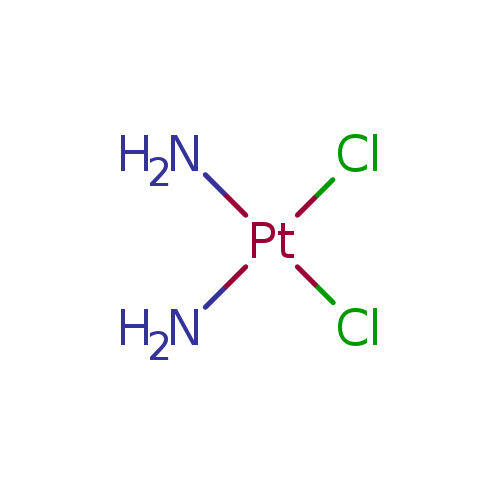
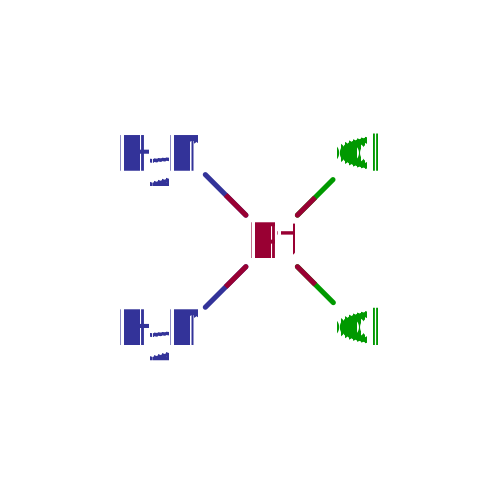
Cisplatin, also known as cisplatinum or cis-diamminedichloroplatinum(II) (CDDP), is a platinum-based chemotherapy drug with the formula Cl2H4N2Pt and an average molecular weight of 298.04 g/mol. It is a solid at room temperature and is exogenous in origin. Cisplatin belongs to the transition metal chlorides, a subclass of transition metal salts within the inorganic compounds. It is used to treat various types of cancers, including sarcomas, lymphomas, germ cell tumors, and some carcinomas, such as ovarian cancer and small cell lung cancer. It was the first member of its class, which also includes oxaliplatin and carboplatin.
The compound is found in or released from three recorded sources: antineoplastic agents within healthcare, pharmaceuticals and veterinary products, and electrical and electronic equipment, specifically antennas and amplifiers. The recorded route of exposure is intravenous. Cisplatin interacts with four recorded protein targets: copper transport protein ATOX1, serotransferrin (TF), alpha-2-macroglobulin (), and it acts as a binder/blocker of DNA-3-methyladenine glycosylase (MPG).
Belongs to the class of inorganic compounds known as transition metal chlorides. These are inorganic compounds in which the largest halogen atom is Chlorine, and the heaviest metal atom is a transition metal.
nephrotoxic agent (PMC3794522 , PMC10673607 )?A role played by a chemical compound exihibiting itself through the ability to induce damage to the kidney in animals.
Alkylating agents work by three different mechanisms: 1) attachment of alkyl groups to DNA bases, resulting in the DNA being fragmented by repair enzymes in their attempts to replace the alkylated bases, preventing DNA synthesis and RNA transcription from the affected DNA, 2) DNA damage via the formation of cross-links (bonds between atoms in the DNA) which prevents DNA from being separated for synthesis or transcription, and 3) the induction of mispairing of the nucleotides leading to mutations.
EYES: irrigate opened eyes for several minutes under running water. INGESTION: do not induce vomiting. Rinse mouth with water (never give anything by mouth to an unconscious person). Seek immediate medical advice. SKIN: should be treated immediately by rinsing the affected parts in cold running water for at least 15 minutes, followed by thorough washing with soap and water. If necessary, the person should shower and change contaminated clothing and shoes, and then must seek medical attention. INHALATION: supply fresh air. If required provide artificial respiration.
Health Effects
Health Effect
Relationship
Direction
Description
Reference
lung cancer
Not Available
Not Available
A respiratory system cancer that is located in the lung. (DO)
Cancer is a group of diseases involving abnormal cell growth with the potential to invade or spread to other parts of the body. Possible signs and symptoms include a lump, abnormal bleeding, prolonged cough, unexplained weight loss, and a change in bowel movements. There are over 100 types of cancers affect humans. The risk of developing certain cancers can be reduced by not smoking, maintaining a healthy weight, not drinking too much alcohol, eating plenty of vegetables, fruits and whole grains, vaccination against certain infectious diseases, not eating too much processed and red meat and avoiding too much sunlight exposure. Cancer is often treated with some combination of radiation therapy, surgery, chemotherapy and targeted therapy. The majority of cancers, some 90–95% of cases, are due to genetic mutations from environmental and lifestyle factors. The remaining 5–10% are due to inherited genetics.
Cancer is a group of diseases involving abnormal cell growth with the potential to invade or spread to other parts of the body. Possible signs and symptoms include a lump, abnormal bleeding, prolonged cough, unexplained weight loss, and a change in bowel movements. There are over 100 types of cancers affect humans. The risk of developing certain cancers can be reduced by not smoking, maintaining a healthy weight, not drinking too much alcohol, eating plenty of vegetables, fruits and whole grains, vaccination against certain infectious diseases, not eating too much processed and red meat and avoiding too much sunlight exposure. Cancer is often treated with some combination of radiation therapy, surgery, chemotherapy and targeted therapy. The majority of cancers, some 90–95% of cases, are due to genetic mutations from environmental and lifestyle factors. The remaining 5–10% are due to inherited genetics.
A disorder characterized by a reduction in the amount of hemoglobin in 100 ml of blood. Signs and symptoms of anemia may include pallor of the skin and mucous membranes, shortness of breath, palpitations of the heart, soft systolic murmurs, lethargy, and fatigability. (NCI CTCAE)
A disorder characterized by a sensation of marked discomfort in various parts of the head, not confined to the area of distribution of any nerve. (NCI CTCAE)
A cell type cancer that has material basis in abnormally proliferating cells derives from melanocytes which are found in skin, the bowel and the eye. (DO)
A cell type cancer that has material basis in abnormally proliferating cells derives from melanocytes which are found in skin, the bowel and the eye. (DO)
Esophageal cancer is cancer that occurs in the esophagus — a long, hollow tube that runs from the throat to the stomach. Esophageal cancer usually begins in the cells that line the inside of the esophagus. Esophageal cancer is the sixth most common cause of cancer deaths worldwide. Incidence rates vary within different geographic locations. In some regions, higher rates of esophageal cancer may be attributed to tobacco and alcohol use or particular nutritional habits and obesity. Signs and symptoms of esophageal cancer are weight loss and painful or difficult swallowing.
Allergic diseases, also known as allergies, are a number of conditions caused by hypersensitivity of the immune system to typically harmless substances in the environment. These diseases include hay fever, food allergies, atopic dermatitis, allergic asthma, and anaphylaxis. Symptoms may include red eyes, an itchy rash, sneezing, a runny nose, shortness of breath, or swelling. Common allergens include pollen and certain foods. Metals and other substances may also cause allergies. Food, insect stings, and medications are common causes of severe allergic reactions. Allergies can be due to both genetic and environmental factors. The underlying mechanism involves immunoglobulin E antibodies (IgE) binding to an allergen and then to a receptor on mast cells or basophils where it triggers the release of inflammatory chemicals such as histamine. Allergies are among the most common conditions in the world. In the developed world, about 20% of people are affected by allergic rhinitis, about 6% of people have at least one food allergy, and about 20% have atopic dermatitis at some point in time.
Fanconi Anemia, also known as Fanconi hypoplastic anemia, Fanconi pancytopenia, and Fanconi panmyelopathy, is a rare condition that affects many parts of the body. About 90 percent of people with FA have impaired bone marrow function leading to aplastic anemia. More than half have physical abnormalities including light-colored skin or café-au-lait spots, malformed thumbs or forearms or other skeletal problems including short stature, malformed or absent kidneys or other urinary tract defects, gastrointestinal abnormalities, heart defects, small or abnormally shaped eyes, malformed ears, and hearing loss. They may also have abnormal genitalia or malformations of the reproductive system. Most males and about half affected females are infertile. Additional signs and symptoms of FA can include brain and spinal cord abnormalities. People with FA are at an increased risk of developing acute myeloid leukemia or tumors of the neck, head, skin, gastrointestinal system, or genital tract. FA is most often inherited in an autosomal recessive pattern, but in rare instances it is inherited in an X-linked recessive pattern. (NIH: GHR)
An autoimmune disease is a condition arising from an abnormal immune response to a functioning body part. There are at least 80 types of autoimmune diseases. Nearly any body part can be involved. Common symptoms include low grade fever and feeling tired. Some autoimmune diseases such as lupus run in families, and certain cases may be triggered by infections or other environmental factors. Some common diseases that are generally considered autoimmune include celiac disease, diabetes mellitus type 1, Graves' disease, inflammatory bowel disease, multiple sclerosis, psoriasis, rheumatoid arthritis, and systemic lupus erythematosus. About 24 million (7%) people in the United States are affected by an autoimmune disease. Women are more commonly affected than men.
Soil?Soil serves as a critical medium for plant growth and sustains various ecological functions; however, it can become a reservoir for synthetic chemical contamination.
Indoor dust?Indoor dust is a complex mixture of particles that accumulates in indoor environments, consisting of materials such as skin flakes, hair, textile fibers, and particles from outdoor sources.
Effluent?Effluent refers to liquid waste or sewage that is discharged into the environment, typically resulting from industrial processes, municipal wastewater treatment, or agricultural runoff.
Amplifiers?Amplifiers, commonly used in various electronic devices to enhance signal strength, can be a source of synthetic chemical contamination due to the materials and processes involved in their production and disposal.
Antennas?Antennas, commonly used in communication technologies, can be a source of synthetic chemical contamination through the materials and coatings used in their construction.
Ships?Ships, as vehicles for international trade and transportation, can be significant sources of synthetic chemical contamination in marine environments.
Gaseous Fire Fighting?Gaseous fire fighting systems utilize synthetic chemicals, such as halocarbons and inert gases, to suppress fires through chemical and physical processes.
Cements?Cements are a composite material primarily used as a binding agent in construction applications, formed by the calcination of limestone and clay minerals at high temperatures.
Glass Coatings?Glass coatings are synthetic chemical formulations applied to glass surfaces to enhance properties such as durability, UV resistance, and aesthetic appeal.
Silica Free Oxide Glass?Silica Free Oxide Glass is a type of glass that is produced using alternative materials to traditional silica-based formulations.
Nanotechnology?Nanotechnology involves the manipulation of materials at the molecular or atomic level, typically within the range of 1 to 100 nanometers.
Spectacle Cases?Spectacle cases can serve as a source of synthetic chemical contamination due to the materials used in their production, such as polycarbonate, PVC, and various plastics, which may leach harmful substances over time.
Sludge Treatment?Sludge treatment involves the processing of waste materials generated from wastewater treatment plants, which often contain a variety of organic and inorganic substances.
Water, Wastewater, & Sewage Treatment?Water, wastewater, and sewage treatment processes are critical for managing and mitigating pollutants in water systems.
Massart C, Gibassier J, Le Gall F, Raoul ML, Leclech G, Lucas C: [Modulation of cisplatin cytotoxicity by amphotericin B in six human cell lines of medullary thyroid cancer]. Bull Cancer. 1996 Aug;83(8):619-25. [PubMed: 8869041]
Garcia-Giralt E, Beuzeboc P, Deffontaines D, Dieras V, Dorval T, Jouve M, Palangie T, Scholl S, Pouillart P: First-line protracted venous infusion fluorouracil with CisDDP or carboplatin in advanced colorectal cancer. J Infus Chemother. 1996 Summer;6(3):149-51. [PubMed: 9229328]
Scherini E, Bernocchi G: cisDDP treatment and development of the rat cerebellum. Prog Neurobiol. 1994 Feb;42(2):161-96. [PubMed: 8008824]
Van Waardenburg RC, Prins J, Meijer C, Uges DR, De Vries EG, Mulder NH: Effects of c-myc oncogene modulation on drug resistance in human small cell lung carcinoma cell lines. Anticancer Res. 1996 Jul-Aug;16(4A):1963-70. [PubMed: 8712728]
Marcucci L, Petrinelli P, Antonelli A, Elli R: Expression of genes carried by pR plasmid in damaged E. coli and mouse cells. Mutat Res. 1994 Aug 1;309(1):53-61. [PubMed: 7519733]
Hrubisko M, McGown AT, Fox BW: The role of metallothionein, glutathione, glutathione S-transferases and DNA repair in resistance to platinum drugs in a series of L1210 cell lines made resistant to anticancer platinum agents. Biochem Pharmacol. 1993 Jan 7;45(1):253-6. [PubMed: 8424817]
Zhang B, Pan JS, Liu JY, Han SP, Hu G, Wang B: Effects of chemotherapy and/or radiotherapy on survivin expression in ovarian cancer. Methods Find Exp Clin Pharmacol. 2006 Nov;28(9):619-25. [PubMed: 17200728]
Kiseleva VI, Vrana O, Brabets I, Poverennyi AM: [Detection of hybridization probes using antibodies to DNA adducts with cis- and trans-diaminodichloroplatinum (II). I. Immunochemical characteristics of DNA modified by cis- and trans-diaminodichloroplatinum (II)]. Mol Biol (Mosk). 1991 Mar-Apr;25(2):503-7. [PubMed: 1881396]
He P, Ahn JC, Shin JI, Hwang HJ, Kang JW, Lee SJ, Chung PS: Enhanced apoptotic effect of combined modality of 9-hydroxypheophorbide alpha-mediated photodynamic therapy and carboplatin on AMC-HN-3 human head and neck cancer cells. Oncol Rep. 2009 Feb;21(2):329-34. [PubMed: 19148503]
Yamamoto J, Miyagi Y, Kawanishi K, Yamada S, Miyagi Y, Kodama J, Yoshinouchi M, Kudo T: Effect of cisplatin on cell death and DNA crosslinking in rat mammary. Adenocarcinoma in vitro. Acta Med Okayama. 1999 Oct;53(5):201-8. [PubMed: 10561728]
Papadopoulou MV, Ji M, Bloomer WD: NLCQ-1, a novel hypoxic cytotoxin: potentiation of melphalan, cisDDP and cyclophosphamide in vivo. Int J Radiat Oncol Biol Phys. 1998 Nov 1;42(4):775-9. [PubMed: 9845094]
Fleck C, Kretzschel I, Sperschneider T, Appenroth D: Renal amino acid transport in immature and adult rats during chromate and cisplatinum-induced nephrotoxicity. Amino Acids. 2001;20(2):201-15. [PubMed: 11332454]
Osinsky SP, Levitin IY, Bubnovskaya LN, Ganusevich II, Tsikalova MV, Istomin YP, Zhavrid EA, Volpin ME: Modifying effect of organocobalt complexes on the tumour response to anticancer treatments. Anticancer Res. 1997 Sep-Oct;17(5A):3457-62. [PubMed: 9413187]
Fukunaga Y, Higashihara A, Nishino Y, Yasunaga T, Jin M, Miyazawa A: Enhanced detection efficiency of genetically encoded tag allows the visualization of monomeric proteins by electron microscopy. J Electron Microsc (Tokyo). 2012 Aug;61(4):229-36. doi: 10.1093/jmicro/dfs043. Epub 2012 Apr 16. [PubMed: 22508950]
Necchi D, Scherini E, Bernocchi G: Glial cell reaction to cis-dichlorodiammine platinum treatment in the immature rat cerebellum. Exp Neurol. 1997 Mar;144(1):219-26. [PubMed: 9126174]
Morgan RJ Jr, Newman EM, Sowers L, Scanlon K, Harrison J, Akman S, Leong L, Margolin K, Niland J, Raschko J, Somlo G, Carroll M, Chow W, Tetef M, Hamasaki V, Yen Y, Doroshow JH: Phase I study of cisdiamminedichloroplatinum in combination with azidothymidine in the treatment of patients with advanced malignancies. Cancer Chemother Pharmacol. 2003 Jun;51(6):459-64. Epub 2003 Apr 15. [PubMed: 12695856]
Florio S, Pagnini G, Pagnini U, Crispino A: Effect of cis-diamminedichloroplatinum (II) on rat thymocyte membrane potential. J Chemother. 1996 Apr;8(2):147-53. [PubMed: 8708747]
Schweyer S, Soruri A, Heintze A, Radzun HJ, Fayyazi A: The role of reactive oxygen species in cisplatin-induced apoptosis in human malignant testicular germ cell lines. Int J Oncol. 2004 Dec;25(6):1671-6. [PubMed: 15547704]
Wilborn F, Brendel M: Formation and stability of interstrand cross-links induced by cis- and trans-diamminedichloroplatinum (II) in the DNA of Saccharomyces cerevisiae strains differing in repair capacity. Curr Genet. 1989 Dec;16(5-6):331-8. [PubMed: 2692851]
Kiseleva VI, Turchinskii MF, Poverennyi AM: [II. Use of antibodies to DNA modified by trans-diaminodichloroplatinum, for identification of specific DNA sequences]. Mol Biol (Mosk). 1991 Mar-Apr;25(2):508-14. [PubMed: 1881397]
Utsumi H, Kodama S, Tano K, Hashimoto MW, Watanabe H: Establishment and characterization of a hypocatalasemic mouse cell strain. J Radiat Res. 1998 Sep;39(3):165-74. [PubMed: 9868865]
Schweyer S, Soruri A, Meschter O, Heintze A, Zschunke F, Miosge N, Thelen P, Schlott T, Radzun HJ, Fayyazi A: Cisplatin-induced apoptosis in human malignant testicular germ cell lines depends on MEK/ERK activation. Br J Cancer. 2004 Aug 2;91(3):589-98. [PubMed: 15266324]
Bissett D, McLaughlin K, Kelland LR, Brown R: Cisplatin-DNA damage recognition proteins in human tumour extracts. Br J Cancer. 1993 Apr;67(4):742-8. [PubMed: 8471431]
Wu YJ, Muldoon LL, Neuwelt EA: The chemoprotective agent N-acetylcysteine blocks cisplatin-induced apoptosis through caspase signaling pathway. J Pharmacol Exp Ther. 2005 Feb;312(2):424-31. Epub 2004 Oct 20. [PubMed: 15496615]
Garcia-Giralt E, Omodei Zorini C, Beuzeboc P, Deffontaines D, Dieras V, Dorval T, Jouve M, Palangie T, Scholl S, Pouillart P: First line protracted venous infusion fluorouracil with CisDDP or carboplatine in advanced colorectal cancer. Clin Ter. 1997 Sep;148(9):393-401. [PubMed: 9374077]
Chekhun VF, Lukyanova NY, Kovalchuk O, Tryndyak VP, Pogribny IP: Epigenetic profiling of multidrug-resistant human MCF-7 breast adenocarcinoma cells reveals novel hyper- and hypomethylated targets. Mol Cancer Ther. 2007 Mar;6(3):1089-98. [PubMed: 17363502]
Gorski MM, Eeken JC, de Jong AW, Klink I, Loos M, Romeijn RJ, van Veen BL, Mullenders LH, Ferro W, Pastink A: The Drosophila melanogaster DNA Ligase IV gene plays a crucial role in the repair of radiation-induced DNA double-strand breaks and acts synergistically with Rad54. Genetics. 2003 Dec;165(4):1929-41. [PubMed: 14704177]
Wang P, Gao XF, Bu WY, Zhang J, Hou YF, Niu BH, Wang W, Ma YF, Qi YJ: [Differential proteins in esophageal squamous cell line EC9706/CDDP identified by SILAC quantitative proteomic approach]. Yao Xue Xue Bao. 2012 Mar;47(3):409-16. [PubMed: 22645768]
Taki T, Ohnishi T, Arita N, Hiraga S, Hayakawa T: In vivo etoposide-resistant C6 glioma cell line: significance of altered DNA topoisomerase II activity in multi-drug resistance. J Neurooncol. 1998 Jan;36(1):41-53. [PubMed: 9525824]
International Agency for Research on Cancer (2014). IARC Monographs on the Evaluation of Carcinogenic Risks to Humans. - http://monographs.iarc.fr/index.php
![Amine oxidase [flavin-containing] B structure](https://cdn.rcsb.org/images/structures/1gos_assembly-1.jpeg)
![Amine oxidase [flavin-containing] A structure](https://cdn.rcsb.org/images/structures/2bxr_assembly-1.jpeg)