Some data may have been extracted from scientific literature using a pipeline that uses large language models (LLMs). Source articles are cited where applicable to help verify the extracted relationships.
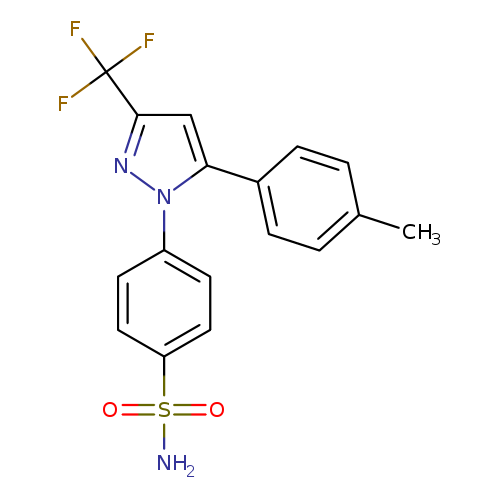
Celecoxib is an exogenous organic compound with the formula C17H14F3N3O2S and an average molecular weight of 381.37 g/mol. It exists as a solid at room temperature. Celecoxib belongs to the pyrazoles, a subclass of azoles within the organic compounds.
The compound acts as an inhibitor of Nuclear receptor subfamily 1 group I member 2 (NR1I2) and targets the Vitamin D3 receptor (VDR), Cytochrome P450 2C9 (CYP2C9), and Estrogen receptor beta (ESR2), among eight other proteins. It is used in the treatment of pain (PMC12684957 ), fever (PMC7470770 , PMC8332605 ), ovarian cancer (PMC8072532 ), arthritis (PMC11226812 , PMC13029672 ), and inflammation (PMC8332605 ). Additionally, it has therapeutic effects on inflammation (PMC12684957 ), pain (PMC12684957 ), fatigue (PMC5013212 ), and skin cancer (PMC2935905 ). However, the compound is associated with bleeding (PMC11226812 ) and an increase in stroke (PMC11226812 ).
Celecoxib is found in or released from 25 recorded sources, including healthcare, pharmaceuticals and veterinary products such as analgesics, antiinflammatory and antirheumatic products, antineoplastic agents, and calcium channel blockers. Other sources include indoor air, food processing and cookware (preparation of wort, food preservation, and fermentation processes for beer), household cleaning and consumer products (bleaching agents, perfumes within detergents and soaps, and smoking requisites), and electrical and electronic equipment (conductors, electrodes, and hybrid capacitors). Recorded exposure routes include oral, topical, and inhalation.
Belongs to the class of organic compounds known as phenylpyrazoles. Phenylpyrazoles are compounds containing a phenylpyrazole skeleton, which consists of a pyrazole bound to a phenyl group.
The mechanism of action of celecoxib is believed to be due to inhibition of prostaglandin synthesis. Unlike most NSAIDs, which inhibit both types of cyclooxygenases (COX-1 and COX-2), celecoxib is a selective noncompetitive inhibitor of cyclooxygenase-2 (COX-2) enzyme. It binds with its polar sulfonamide side chain to a hydrophilic side pocket region close to the active COX-2 binding site. Both COX-1 and COX-2 catalyze the conversion of arachidonic acid to prostaglandin (PG) H2, the precursor of PGs and thromboxane.
Cancer is a group of diseases involving abnormal cell growth with the potential to invade or spread to other parts of the body. Possible signs and symptoms include a lump, abnormal bleeding, prolonged cough, unexplained weight loss, and a change in bowel movements. There are over 100 types of cancers affect humans. The risk of developing certain cancers can be reduced by not smoking, maintaining a healthy weight, not drinking too much alcohol, eating plenty of vegetables, fruits and whole grains, vaccination against certain infectious diseases, not eating too much processed and red meat and avoiding too much sunlight exposure. Cancer is often treated with some combination of radiation therapy, surgery, chemotherapy and targeted therapy. The majority of cancers, some 90–95% of cases, are due to genetic mutations from environmental and lifestyle factors. The remaining 5–10% are due to inherited genetics.
A disorder characterized by a state of generalized weakness with a pronounced inability to summon sufficient energy to accomplish daily activities. (NCI CTCAE)
A disorder characterized by a sensation of marked discomfort in various parts of the head, not confined to the area of distribution of any nerve. (NCI CTCAE)
A heart disease that is characterized by any structural or functional cardiac disorder that impairs the ability of the heart to fill with or pump a sufficient amount of blood throughout the body. (DO)
Allergic diseases, also known as allergies, are a number of conditions caused by hypersensitivity of the immune system to typically harmless substances in the environment. These diseases include hay fever, food allergies, atopic dermatitis, allergic asthma, and anaphylaxis. Symptoms may include red eyes, an itchy rash, sneezing, a runny nose, shortness of breath, or swelling. Common allergens include pollen and certain foods. Metals and other substances may also cause allergies. Food, insect stings, and medications are common causes of severe allergic reactions. Allergies can be due to both genetic and environmental factors. The underlying mechanism involves immunoglobulin E antibodies (IgE) binding to an allergen and then to a receptor on mast cells or basophils where it triggers the release of inflammatory chemicals such as histamine. Allergies are among the most common conditions in the world. In the developed world, about 20% of people are affected by allergic rhinitis, about 6% of people have at least one food allergy, and about 20% have atopic dermatitis at some point in time.
Indoor air?Indoor air can be a significant reservoir for synthetic chemical contaminants, which often originate from various sources within enclosed environments.
Brushes?Brushes used in personal care and cosmetics can be a source of synthetic chemical contamination due to the materials and coatings used in their manufacturing.
Calcium channel blockers?Calcium channel blockers are a class of synthetic chemicals primarily used to manage cardiovascular conditions by inhibiting calcium influx through cell membranes, thereby relaxing blood vessels and reducing heart workload.
Gynecologicals?Gynecologicals encompass a range of synthetic chemicals used in the treatment of various women's health issues, including hormonal therapies, contraceptives, and antifungal agents.
Antiinflammatory and antirheumatic products?Anti-inflammatory and antirheumatic products are synthetic chemicals commonly used to alleviate pain, reduce inflammation, and manage conditions such as arthritis.
Antennas?Antennas, commonly used in communication technologies, can be a source of synthetic chemical contamination through the materials and coatings used in their construction.
Conductors Or Conductive Bodies Characterised By The Conductive Materials?Conductors, or conductive bodies, are materials that allow the flow of electrical current, typically made from metals such as copper, aluminum, or silver.
Electrically Stimulated Smoking Devices?Electrically stimulated smoking devices, commonly known as e-cigarettes or vape pens, utilize electrical components to heat a liquid solution, often containing nicotine, flavorings, and other additives, to produce an aerosol for inhalation.
Electrodes?Electrodes, used in various electrical and electronic applications, can be a source of synthetic chemical contamination due to the materials from which they are constructed and the processes involved in their manufacturing.
Hybrid Capacitors?Hybrid capacitors are energy storage devices that combine the properties of electrolytic and supercapacitors, utilizing a combination of electrochemical principles to achieve higher energy density and power density.
Magnets?Magnets, commonly used in various electrical and electronic applications, can be a source of synthetic chemical contamination due to the materials used in their production.
Television Systems?Television systems can be a source of synthetic chemical contamination due to the various materials and components used in their manufacture and operation.
Food Preservation?Food preservation often involves the use of synthetic chemicals, such as preservatives, flavor enhancers, and color additives, to extend shelf life and enhance the sensory qualities of food products.
Bleaching Agents?Bleaching agents are chemical substances used to whiten or lighten materials, often employed in various cleaning products for their stain removal and disinfecting properties.
Non Electric Simulated Smoking Devices?Non-electric simulated smoking devices, often designed to mimic the experience of smoking without combustion, can be sources of synthetic chemical contamination due to the materials and chemicals used in their construction and operation.
Other Smoking Requisites?Other smoking requisites, including items such as lighters, matches, and rolling papers, can introduce synthetic chemical contamination through various components and additives.
Perfumes Within Detergents And Soaps?Perfumes within detergents and soaps are synthetic fragrance compounds added to enhance the sensory experience of cleaning products.
Pipe Accessories?Pipe accessories, such as fittings, connectors, and seals, are components used in plumbing systems to facilitate the flow of liquids and gases.
Soap Detergents?Soap detergents are synthetic surfactants designed to enhance the cleaning efficacy of water by reducing surface tension, allowing for better interaction with dirt and grease.
Tobacco Smoke Filters?Tobacco smoke filters are designed to reduce the inhalation of harmful substances in cigarette smoke, including tar and other particulate matter.
Manufacture Of Iron Or Steel?The manufacture of iron or steel involves various processes, including smelting, refining, and alloying, which can result in the release of synthetic chemicals and contaminants.
Manufacture Preparation Of Tobacco Products?The manufacture and preparation of tobacco products involve various processes that can result in the introduction of synthetic chemicals into the environment.
Paper Making Machines?Paper making machines utilize various synthetic chemicals throughout the production process, including additives, coatings, and bleaching agents.
Buoys?Buoys, often used for navigation and marine monitoring, can be sources of synthetic chemical contamination due to the materials and coatings employed in their construction.
Rodenticides(1)?Rodenticides are synthetic chemicals specifically formulated to control rodent populations, serving as a crucial tool in managing pests that can damage crops and spread diseases.
Rodenticides?Rodenticides are chemical substances specifically designed to control rodent populations by causing death through various mechanisms, including anticoagulation or neurotoxicity.
Aftersun Products?Aftersun products are designed to soothe and hydrate the skin after sun exposure, often containing various synthetic chemicals such as emollients, preservatives, and fragrances.
Anti Perspirants Or Body Deoderants?Antiperspirants and body deodorants commonly contain synthetic chemicals such as aluminum compounds, parabens, and synthetic fragrances.
Essential Oils Or Perfumes?Essential oils and perfumes are complex mixtures of volatile compounds derived from natural or synthetic sources, commonly used for their aromatic properties.
Eye Makeup Products?Eye makeup products, including mascaras, eyeliners, and eyeshadows, often contain a variety of synthetic chemicals such as pigments, preservatives, and film-forming agents.
Lip Care Products?Lip care products, including lipsticks, balms, and glosses, often contain a variety of synthetic chemicals such as parabens, phthalates, and synthetic fragrances.
Lip Makeup Products?Lip makeup products, such as lipsticks, lip glosses, and lip liners, often contain a variety of synthetic chemicals, including pigments, preservatives, and emollients.
Toys?Toys, particularly those made from synthetic materials such as plastics, can be a source of chemical contamination due to the presence of various additives and compounds used in their production.
Anthraquinone Dyes?Anthraquinone dyes are a class of synthetic organic compounds characterized by their vibrant colors and stability, making them widely used in various applications, particularly in coloring textiles and leather.
Footwear?Footwear production often involves the use of various synthetic chemicals, such as adhesives, dyes, and treatments, which can contribute to environmental contamination.
Purses Luggage Hand Bags?Purses, luggage, and handbags are often manufactured using synthetic materials such as polyvinyl chloride (PVC), polyurethane, and various types of nylon.
Yarns Or Threads?Yarns or threads used in textiles can be a source of synthetic chemical contamination due to the production processes and treatments they undergo.
Nitrogenous Fertilisers?Nitrogenous fertilizers are synthetic chemical compounds primarily used to enhance plant growth by supplying essential nitrogen, a crucial nutrient for photosynthesis and protein synthesis.
Cements?Cements are a composite material primarily used as a binding agent in construction applications, formed by the calcination of limestone and clay minerals at high temperatures.
Silica Free Oxide Glass?Silica Free Oxide Glass is a type of glass that is produced using alternative materials to traditional silica-based formulations.
Silica Glass?Silica glass, primarily composed of silicon dioxide (SiO2), is widely used in various applications, including windows, glass facades, and insulation materials.
Nanotechnology?Nanotechnology involves the manipulation of materials at the molecular or atomic level, typically within the range of 1 to 100 nanometers.
Spectacle Cases?Spectacle cases can serve as a source of synthetic chemical contamination due to the materials used in their production, such as polycarbonate, PVC, and various plastics, which may leach harmful substances over time.
Coating Compositions?Coating compositions, which include paints, sealants, and varnishes, are formulated with a variety of synthetic chemicals such as solvents, resins, pigments, and additives.
Sludge Treatment?Sludge treatment involves the processing of waste materials generated from wastewater treatment plants, which often contain a variety of organic and inorganic substances.
Water, Wastewater, & Sewage Treatment?Water, wastewater, and sewage treatment processes are critical for managing and mitigating pollutants in water systems.
Malhotra S, Shafiq N, Pandhi P: COX-2 inhibitors: a CLASS act or Just VIGORously promoted. MedGenMed. 2004 Mar 23;6(1):6. [PubMed: 15208519]
Silverstein FE, Faich G, Goldstein JL, Simon LS, Pincus T, Whelton A, Makuch R, Eisen G, Agrawal NM, Stenson WF, Burr AM, Zhao WW, Kent JD, Lefkowith JB, Verburg KM, Geis GS: Gastrointestinal toxicity with celecoxib vs nonsteroidal anti-inflammatory drugs for osteoarthritis and rheumatoid arthritis: the CLASS study: A randomized controlled trial. Celecoxib Long-term Arthritis Safety Study. JAMA. 2000 Sep 13;284(10):1247-55. [PubMed: 10979111]
Solomon SD, McMurray JJ, Pfeffer MA, Wittes J, Fowler R, Finn P, Anderson WF, Zauber A, Hawk E, Bertagnolli M: Cardiovascular risk associated with celecoxib in a clinical trial for colorectal adenoma prevention. N Engl J Med. 2005 Mar 17;352(11):1071-80. Epub 2005 Feb 15. [PubMed: 15713944]
Yelland MJ, Nikles CJ, McNairn N, Del Mar CB, Schluter PJ, Brown RM: Celecoxib compared with sustained-release paracetamol for osteoarthritis: a series of n-of-1 trials. Rheumatology (Oxford). 2007 Jan;46(1):135-40. Epub 2006 Jun 15. [PubMed: 16777855]
Bertagnolli MM, Eagle CJ, Zauber AG, Redston M, Solomon SD, Kim K, Tang J, Rosenstein RB, Wittes J, Corle D, Hess TM, Woloj GM, Boisserie F, Anderson WF, Viner JL, Bagheri D, Burn J, Chung DC, Dewar T, Foley TR, Hoffman N, Macrae F, Pruitt RE, Saltzman JR, Salzberg B, Sylwestrowicz T, Gordon GB, Hawk ET: Celecoxib for the prevention of sporadic colorectal adenomas. N Engl J Med. 2006 Aug 31;355(9):873-84. [PubMed: 16943400]
Sandberg M, Yasar U, Stromberg P, Hoog JO, Eliasson E: Oxidation of celecoxib by polymorphic cytochrome P450 2C9 and alcohol dehydrogenase. Br J Clin Pharmacol. 2002 Oct;54(4):423-9. [PubMed: 12392591]