Some data may have been extracted from scientific literature using a pipeline that uses large language models (LLMs). Source articles are cited where applicable to help verify the extracted relationships.
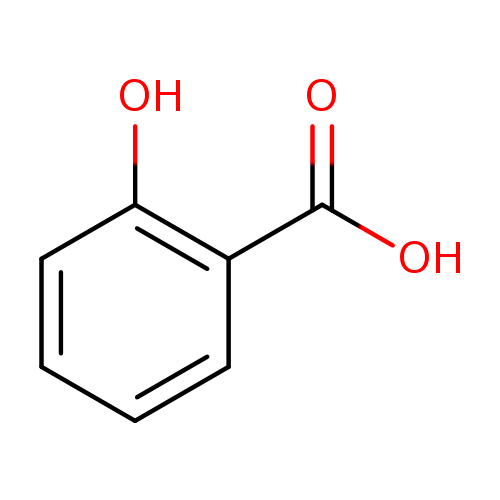
Salicylic acid belongs to the benzoic acids and derivatives, a subclass of benzene and substituted derivatives within the organic compounds. This exogenous solid has a chemical formula of C7H6O3 and an average molecular weight of 138.12 g/mol. Biologically, it functions as a drug (PMC4550758 ), metabolite (PMC6843951 ), antioxidant (PMC11643819 ), antibacterial agent (PMC10220696 ), analgesic (PMC5698550 ), and anti-inflammatory agent (PMC13149677 ). It is detected in the skin and liver, where it targets nine proteins, including the Androgen receptor (AR), Aldo-keto reductase family 1 member C1 (AKR1C1), Prostaglandin G/H synthase 1 (PTGS1), and Prostaglandin G/H synthase 2 (PTGS2).
In industrial applications, the compound is used as a preservative, deodorizer, softener and conditioner, anti-dandruff agent, pharmaceutical, flavouring and nutrient, hardener, fragrance, and solvent. It is used as a treatment for acne (PMC11246752 , PMC12427177 ) and psoriasis (PMC4893110 ), and it has therapeutic effects on chronic pain (PMC4644553 ), inflammation (PMC4600474 ), and acne (PMC11865917 ). Additionally, it is associated with an increase in polycystic ovary syndrome (PMC12715743 ).
Salicylic acid is found in 57 recorded sources across multiple sectors, including drinking water and water supply, building and construction (tents or canopies, roofs, floors, stairs and ramps), household cleaning and consumer products (bleaching agents, perfumes within detergents and soaps, cigar cigarettes, and other smoking requisites), healthcare, pharmaceuticals and veterinary products (antiinflammatory agents, analgesics, urologicals, and antifungals for dermatological use), and food, food processing and cookware (food preservation, food contact materials, brew kettles, preparation of malt, and fermentation processes for beer). It is also found in electrical and electronic equipment (amplifiers, antennas, communication cables or conductors, auxiliary devices, and colour television systems). Recorded exposure routes include oral, topical, cutaneous, percutaneous, transdermal, inhalation, intravenous, dental, ophthalmic, touch, and extracorporeal.
plant metabolite (PMC10899372 )?Any eukaryotic metabolite produced during a metabolic reaction in plants, the kingdom that include flowering plants, conifers and other gymnosperms
plant growth regulator (PMC4647110 , PMC4163486 )?A chemical, not endogenous to plants, that controls the rate of growth or maturation of plants, especially fruits and vegetables. (EPA).
Salicylic acid directly and irreversibly inhibits the activity of both types of cyclo-oxygenases (COX-1 and COX-2) to decrease the formation of precursors of prostaglandins and thromboxanes from arachidonic acid. Salicylate may competitively inhibit prostaglandin formation. Salicylate's antirheumatic (nonsteroidal anti-inflammatory) actions are a result of its analgesic and anti-inflammatory mechanisms. Salicylic acid is a key ingredient in many skin-care products for the treatment of acne, psoriasis, calluses, corns, keratosis pilaris, and warts. It works by causing the cells of the epidermis to slough off more readily, preventing pores from clogging up, and allowing room for new cell growth. Because of its effect on skin cells, salicylic acid is used in several shampoos used to treat dandruff. Salicylic acid is also used as an active ingredient in gels which remove verrucas (plantar warts). Salicylic acid inhibits the oxidation of uridine-5-diphosphoglucose (UDPG) competitively with nicotinamide adenosine dinucleotide (NAD) and noncompetitively with UDPG. It also competitively inhibits the transferring of glucuronyl group of uridine-5-phosphoglucuronic acid (UDPGA) to the phenolic acceptor. The wound-healing retardation action of salicylates is probably due mainly to its inhibitory action on mucopolysaccharide synthesis.
Oral rat LD50: 891 mg/kg. Inhalation rat LC50: > 900 mg/m3/1hr. Irritation: skin rabbit: 500 mg/24H mild. Eye rabbit: 100 mg severe.
Cancer is a group of diseases involving abnormal cell growth with the potential to invade or spread to other parts of the body. Possible signs and symptoms include a lump, abnormal bleeding, prolonged cough, unexplained weight loss, and a change in bowel movements. There are over 100 types of cancers affect humans. The risk of developing certain cancers can be reduced by not smoking, maintaining a healthy weight, not drinking too much alcohol, eating plenty of vegetables, fruits and whole grains, vaccination against certain infectious diseases, not eating too much processed and red meat and avoiding too much sunlight exposure. Cancer is often treated with some combination of radiation therapy, surgery, chemotherapy and targeted therapy. The majority of cancers, some 90–95% of cases, are due to genetic mutations from environmental and lifestyle factors. The remaining 5–10% are due to inherited genetics.
A disorder characterized by the acute and sudden development of confusion, illusions, movement changes, inattentiveness, agitation, and hallucinations. Usually, it is a reversible condition. (NCI CTCAE)
A disorder characterized by laboratory test results that indicate an elevation in the concentration of blood sugar. It is usually an indication of diabetes mellitus or glucose intolerance. (NCI CTCAE)
A state of profound unconsciousness associated with markedly depressed cerebral activity. Causes include central nervous system damage, intoxication, and metabolic abnormalities.
Herbicides?Herbicides are synthetic chemicals designed to control or eliminate unwanted vegetation, particularly weeds, in various agricultural practices.
Fungicides?Fungicides are synthetic chemical agents designed to prevent or eliminate fungal infections in crops, thereby enhancing agricultural productivity and crop quality.
Soil?Soil serves as a critical medium for plant growth and sustains various ecological functions; however, it can become a reservoir for synthetic chemical contamination.
Indoor air?Indoor air can be a significant reservoir for synthetic chemical contaminants, which often originate from various sources within enclosed environments.
Groundwater?Groundwater serves as a vital resource for drinking water and agricultural irrigation but is increasingly susceptible to contamination from synthetic chemicals.
Drinking water?Drinking water can be a medium for synthetic chemical contamination, often originating from various industrial processes and agricultural practices.
Detergents?Detergents are synthetic surfactants used in various cleaning applications, designed to break down and remove dirt, grease, and stains from surfaces and fabrics.
Ballast water?Ballast water, taken on by ships to maintain stability and balance, often contains a diverse array of microorganisms, including bacteria, viruses, and plankton.
Bilge water?Bilge water is a byproduct generated from the accumulation of water in the lowest part of a ship's hull, which may include a mixture of seawater, oil, fuel residues, and various contaminants.
Lotions?Lotions are emulsified formulations primarily composed of water, oils, and various active ingredients designed for skin hydration and protection.
Nail polish?Nail polish is a cosmetic product that typically contains a mixture of synthetic chemicals, including solvents, resins, plasticizers, and colorants.
Brushes?Brushes used in personal care and cosmetics can be a source of synthetic chemical contamination due to the materials and coatings used in their manufacturing.
Antifungals for dermatological use?Antifungals for dermatological use are synthetic chemicals developed to treat fungal infections affecting the skin, hair, and nails.
Urologicals?Urologicals refer to a class of synthetic chemicals that are primarily used in the treatment of urinary tract disorders and related medical conditions.
Industrial wastewater?Industrial wastewater is a byproduct generated during various manufacturing and processing activities, which often contains a complex mixture of organic and inorganic synthetic chemicals.
Effluent?Effluent refers to liquid waste or sewage that is discharged into the environment, typically resulting from industrial processes, municipal wastewater treatment, or agricultural runoff.
Food contact materials?Food contact materials refer to substances and products that are intended to come into contact with food during processing, packaging, or preparation.
Floors?Floors in built environments can be a significant source of synthetic chemical contamination due to the materials and finishes used in their construction.
Stairs And Ramps?Stairs and ramps in construction are often treated with various synthetic chemicals to enhance durability, slip resistance, and weather resistance.
Tents Or Canopies?Tents and canopies used in various applications can be a source of synthetic chemical contamination primarily due to the materials from which they are made.
Amplifiers?Amplifiers, commonly used in various electronic devices to enhance signal strength, can be a source of synthetic chemical contamination due to the materials and processes involved in their production and disposal.
Antennas?Antennas, commonly used in communication technologies, can be a source of synthetic chemical contamination through the materials and coatings used in their construction.
Communication Cables Or Conductors?Communication cables or conductors are essential components in the transmission of data and signals in various applications, including telecommunications and networking.
Conductors Or Conductive Bodies Characterised By The Conductive Materials?Conductors, or conductive bodies, are materials that allow the flow of electrical current, typically made from metals such as copper, aluminum, or silver.
Cores Yokes Or Armatures?Cores, yokes, or armatures are components commonly found in electrical devices, used to facilitate the magnetic and electrical functions within motors, transformers, and generators.
Discharge Lamps?Discharge lamps, including fluorescent and high-intensity discharge (HID) lamps, are commonly used for lighting applications due to their energy efficiency and brightness.
Electric Switches?Electric switches, integral components in numerous devices, can be a source of synthetic chemical contamination due to the materials and manufacturing processes involved in their production.
Electrically Stimulated Smoking Devices?Electrically stimulated smoking devices, commonly known as e-cigarettes or vape pens, utilize electrical components to heat a liquid solution, often containing nicotine, flavorings, and other additives, to produce an aerosol for inhalation.
Electrodes?Electrodes, used in various electrical and electronic applications, can be a source of synthetic chemical contamination due to the materials from which they are constructed and the processes involved in their manufacturing.
Emergency Protective Devices?Emergency protective devices, such as circuit breakers and surge protectors, are essential components in electrical systems designed to prevent damage from overcurrent and surges.
Fixed Capacitors And Their Manufacture?Fixed capacitors are passive electronic components used to store and release electrical energy, playing a critical role in various circuits.
Hybrid Capacitors?Hybrid capacitors are energy storage devices that combine the properties of electrolytic and supercapacitors, utilizing a combination of electrochemical principles to achieve higher energy density and power density.
Line Transmission Systems?Line Transmission Systems, commonly used for the distribution of electrical energy, can be a source of synthetic chemical contamination through the insulation materials and coatings utilized in their construction.
Magnets?Magnets, commonly used in various electrical and electronic applications, can be a source of synthetic chemical contamination due to the materials used in their production.
Power Cables?Power cables are used to transmit electrical energy and are typically composed of conductive materials, insulation, and protective coatings.
Television Systems?Television systems can be a source of synthetic chemical contamination due to the various materials and components used in their manufacture and operation.
Food Preservation?Food preservation often involves the use of synthetic chemicals, such as preservatives, flavor enhancers, and color additives, to extend shelf life and enhance the sensory qualities of food products.
Preparation Of Malt?Malt preparation involves the germination and drying of cereal grains, primarily barley, to produce malt for brewing and food products.
Preparation Of Vinegar?Vinegar is produced through the fermentation of ethanol by acetic acid bacteria, resulting in a solution that typically contains 4-8% acetic acid.
Preparation Of Wine Or Sparkling Wine?The preparation of wine or sparkling wine involves various stages, including fermentation, aging, and bottling, which can introduce potential sources of synthetic chemical contamination.
Treatment Of Hops?Hops, a key ingredient in brewing and food flavoring, can be a source of synthetic chemical contamination due to various agricultural practices.
Bleaching Agents?Bleaching agents are chemical substances used to whiten or lighten materials, often employed in various cleaning products for their stain removal and disinfecting properties.
Non Electric Simulated Smoking Devices?Non-electric simulated smoking devices, often designed to mimic the experience of smoking without combustion, can be sources of synthetic chemical contamination due to the materials and chemicals used in their construction and operation.
Other Smoking Requisites?Other smoking requisites, including items such as lighters, matches, and rolling papers, can introduce synthetic chemical contamination through various components and additives.
Perfumes Within Detergents And Soaps?Perfumes within detergents and soaps are synthetic fragrance compounds added to enhance the sensory experience of cleaning products.
Pipe Accessories?Pipe accessories, such as fittings, connectors, and seals, are components used in plumbing systems to facilitate the flow of liquids and gases.
Soap Detergents?Soap detergents are synthetic surfactants designed to enhance the cleaning efficacy of water by reducing surface tension, allowing for better interaction with dirt and grease.
Soap Dispensers?Soap dispensers, commonly used for dispensing liquid soaps and sanitizers, can become a source of synthetic chemical contamination due to the materials used in their construction and the products they dispense.
Tobacco Pipes?Tobacco pipes, often made from materials such as plastic, wood, or metal, can serve as sources of synthetic chemical contamination due to the residues left by tobacco products.
Tobacco Product Cases?Tobacco product cases can serve as a source of synthetic chemical contamination due to the presence of various additives and chemicals used in tobacco processing and product manufacturing.
Tobacco Smoke Filters?Tobacco smoke filters are designed to reduce the inhalation of harmful substances in cigarette smoke, including tar and other particulate matter.
Badges?Badges, often used for identification or decorative purposes, can be made from various synthetic materials including plastics, metals, and coatings.
Making Cigars?The process of making cigars involves several steps, including the cultivation of tobacco, fermentation, and the application of various additives to enhance flavor and preservation.
Manufacture Of Iron Or Steel?The manufacture of iron or steel involves various processes, including smelting, refining, and alloying, which can result in the release of synthetic chemicals and contaminants.
Manufacture Preparation Of Tobacco Products?The manufacture and preparation of tobacco products involve various processes that can result in the introduction of synthetic chemicals into the environment.
Paper Making Machines?Paper making machines utilize various synthetic chemicals throughout the production process, including additives, coatings, and bleaching agents.
Buoys?Buoys, often used for navigation and marine monitoring, can be sources of synthetic chemical contamination due to the materials and coatings employed in their construction.
Marine Propulsion Or Steering?Marine propulsion and steering systems often rely on various synthetic chemicals, including lubricants, fuels, and hydraulic fluids.
Nautical Instruments?Nautical instruments, often utilized for navigation and monitoring in marine environments, can be a source of synthetic chemical contamination due to the materials and processes involved in their manufacture and operation.
Ship Hulls?Ship hulls are often treated with various synthetic chemicals to enhance durability, prevent corrosion, and inhibit the growth of marine organisms.
Ships?Ships, as vehicles for international trade and transportation, can be significant sources of synthetic chemical contamination in marine environments.
Fertiliser Distributors?Fertiliser distributors play a critical role in the supply of synthetic fertilizers, which are widely used to enhance soil fertility and crop yield.
Nematocides?Nematocides are synthetic chemicals specifically designed to control nematodes, which are microscopic roundworms that can cause significant damage to crops and plants.
Rodenticides(1)?Rodenticides are synthetic chemicals specifically formulated to control rodent populations, serving as a crucial tool in managing pests that can damage crops and spread diseases.
Rodenticides?Rodenticides are chemical substances specifically designed to control rodent populations by causing death through various mechanisms, including anticoagulation or neurotoxicity.
Aftersun Products?Aftersun products are designed to soothe and hydrate the skin after sun exposure, often containing various synthetic chemicals such as emollients, preservatives, and fragrances.
Anti Perspirants Or Body Deoderants?Antiperspirants and body deodorants commonly contain synthetic chemicals such as aluminum compounds, parabens, and synthetic fragrances.
Body Washing Or Cleaning Implements?Body washing or cleaning implements, such as synthetic sponges, loofahs, and washcloths, can be sources of synthetic chemical contamination due to the materials used in their production.
Depilatories?Depilatories are products designed to remove unwanted hair through the application of synthetic chemicals that break down the protein structure of hair, facilitating its removal.
Essential Oils Or Perfumes?Essential oils and perfumes are complex mixtures of volatile compounds derived from natural or synthetic sources, commonly used for their aromatic properties.
Eye Makeup Products?Eye makeup products, including mascaras, eyeliners, and eyeshadows, often contain a variety of synthetic chemicals such as pigments, preservatives, and film-forming agents.
Face Mask Cosmetics?Face mask cosmetics often contain a variety of synthetic chemicals, including preservatives, emulsifiers, and fragrances, which can contribute to chemical contamination.
Lip Care Products?Lip care products, including lipsticks, balms, and glosses, often contain a variety of synthetic chemicals such as parabens, phthalates, and synthetic fragrances.
Lip Makeup Products?Lip makeup products, such as lipsticks, lip glosses, and lip liners, often contain a variety of synthetic chemicals, including pigments, preservatives, and emollients.
Manicure Pedicure?Manicure and pedicure procedures often involve the use of various synthetic chemicals, including solvents, nail polishes, and nail adhesives.
Chutes And Slides?Chutes and slides, commonly found in playgrounds and recreational areas, are often constructed from synthetic materials such as plastics and rubber.
Toys?Toys, particularly those made from synthetic materials such as plastics, can be a source of chemical contamination due to the presence of various additives and compounds used in their production.
Anthraquinone Dyes?Anthraquinone dyes are a class of synthetic organic compounds characterized by their vibrant colors and stability, making them widely used in various applications, particularly in coloring textiles and leather.
Buckles?Buckles, commonly used as fasteners in clothing, accessories, and furniture, can be a source of synthetic chemical contamination due to the materials and coatings employed in their production.
Buttons?Buttons, often made from synthetic materials such as polyester, nylon, or polycarbonate, can be a source of synthetic chemical contamination during their production, use, and disposal.
Embroidering And Tufting?Embroidering and tufting processes often involve the use of synthetic chemicals such as dyes, adhesives, and finishing agents.
Footwear?Footwear production often involves the use of various synthetic chemicals, such as adhesives, dyes, and treatments, which can contribute to environmental contamination.
Headwear?Headwear made from synthetic materials often incorporates chemicals used in the manufacturing and finishing processes, such as dyes, flame retardants, and water repellents.
Multicolour Dyeing?Multicolour dyeing involves the application of multiple synthetic dyes to textiles and other materials to achieve vibrant, diverse color patterns.
Purses Luggage Hand Bags?Purses, luggage, and handbags are often manufactured using synthetic materials such as polyvinyl chloride (PVC), polyurethane, and various types of nylon.
Ropes?Ropes manufactured from synthetic fibers, such as polypropylene, nylon, and polyester, are widely used in various applications, including marine, construction, and outdoor activities.
Surface Finishing Of Leather?Surface finishing of leather often involves the use of various synthetic chemicals, including dyes, resins, and finishing agents.
Transfer Printing?Transfer printing is a process used to apply designs and patterns onto various substrates, commonly utilizing synthetic dyes and inks that can contain hazardous chemicals.
Umbrellas?Umbrellas are commonly manufactured using synthetic materials such as polyester, nylon, and polyvinyl chloride (PVC), which can contribute to synthetic chemical contamination.
Yarns Or Threads?Yarns or threads used in textiles can be a source of synthetic chemical contamination due to the production processes and treatments they undergo.
Gaseous Fire Fighting?Gaseous fire fighting systems utilize synthetic chemicals, such as halocarbons and inert gases, to suppress fires through chemical and physical processes.
PFAS Fire Fighting Foam?PFAS fire fighting foam refers to a class of synthetic foams containing per- and polyfluoroalkyl substances (PFAS), which are designed to suppress flammable liquid fires.
Solid Fire Fighting Substances?Solid fire fighting substances, such as certain types of dry chemical powders, are used in fire suppression applications to extinguish flames and prevent fire spread.
Airplanes And Helicopters?Airplanes and helicopters are significant sources of synthetic chemical contamination primarily through the use of aviation fuels, lubricants, and de-icing agents.
Nitrogenous Fertilisers?Nitrogenous fertilizers are synthetic chemical compounds primarily used to enhance plant growth by supplying essential nitrogen, a crucial nutrient for photosynthesis and protein synthesis.
Cements?Cements are a composite material primarily used as a binding agent in construction applications, formed by the calcination of limestone and clay minerals at high temperatures.
Clay Wares?Clay wares are ceramic products made from natural clay, often utilized in various construction applications such as tiles, bricks, and sanitary ware.
Glass Coatings?Glass coatings are synthetic chemical formulations applied to glass surfaces to enhance properties such as durability, UV resistance, and aesthetic appeal.
Lime?Lime, primarily comprised of calcium oxide (CaO) or calcium hydroxide (Ca(OH)₂), is widely used in various applications, including as a key ingredient in mortars, plasters, and cement.
Silica Free Oxide Glass?Silica Free Oxide Glass is a type of glass that is produced using alternative materials to traditional silica-based formulations.
Silica Glass?Silica glass, primarily composed of silicon dioxide (SiO2), is widely used in various applications, including windows, glass facades, and insulation materials.
Nanotechnology?Nanotechnology involves the manipulation of materials at the molecular or atomic level, typically within the range of 1 to 100 nanometers.
Mining Or Quarrying?Mining and quarrying operations can lead to synthetic chemical contamination through the release of various pollutants associated with the extraction and processing of minerals.
Blackboard Eraser?Blackboard erasers are commonly used tools for removing chalk from blackboards, and they often contain synthetic materials such as rubber, plastics, and adhesives.
Blackboards?Blackboards, traditionally made from slate or coated wood, can also be produced using synthetic materials that may contain various chemicals.
Bookbinding?Bookbinding involves the use of various synthetic chemicals, including adhesives, inks, and coatings, which can contribute to environmental contamination.
Embossing Machines?Embossing machines are industrial devices used to create raised patterns or designs on materials, including paper and fiber products.
Contact Lens Cases?Contact lens cases are small containers designed to store contact lenses in a sterile environment, typically made from various synthetic materials including plastics such as polypropylene or polycarbonate.
Coating Compositions?Coating compositions, which include paints, sealants, and varnishes, are formulated with a variety of synthetic chemicals such as solvents, resins, pigments, and additives.
Chemical Igniters?Chemical igniters are substances or devices designed to initiate combustion in various applications, often found in products like lighters, candles, and certain household cleaning agents.
Leather Tanning?Leather tanning is a process that transforms raw animal hides into durable leather through the application of various chemicals, including chromium salts, aldehydes, and vegetable tannins.
Sludge Treatment?Sludge treatment involves the processing of waste materials generated from wastewater treatment plants, which often contain a variety of organic and inorganic substances.
Water, Wastewater, & Sewage Treatment?Water, wastewater, and sewage treatment processes are critical for managing and mitigating pollutants in water systems.
Vane JR: Inhibition of prostaglandin synthesis as a mechanism of action for aspirin-like drugs. Nat New Biol. 1971 Jun 23;231(25):232-5. [PubMed: 5284360]
Flower R, Gryglewski R, Herbaczynska-Cedro K, Vane JR: Effects of anti-inflammatory drugs on prostaglandin biosynthesis. Nat New Biol. 1972 Jul 26;238(82):104-6. [PubMed: 4505422]
Schmook FP, Meingassner JG, Billich A: Comparison of human skin or epidermis models with human and animal skin in in-vitro percutaneous absorption. Int J Pharm. 2001 Mar 14;215(1-2):51-6. [PubMed: 11250091]
Rutner M, Fitzek J, Jahnel-Kracht H, Otto J, Krause W: [Therapy of rheumatic disease with a hydroxyethylsalicylate gel. Results of 2 clinical studies of effectiveness and bioavailability]. Fortschr Med. 1995 Mar 20;113(8):111-3. [PubMed: 7759034]
Khan AZ, Aarons L: A note on the use of salicylate saliva concentration in clinical pharmacokinetic studies. J Pharm Pharmacol. 1989 Oct;41(10):710-1. [PubMed: 2575150]
Vila MM, Tubino M, de Oliveira Neto G: Determination of salicylate in blood serum by flow injection with immobilized salicylate hydroxylase. J AOAC Int. 2001 Sep-Oct;84(5):1363-9. [PubMed: 11601455]
Zaugg S, Zhang X, Sweedler J, Thormann W: Determination of salicylate, gentisic acid and salicyluric acid in human urine by capillary electrophoresis with laser-induced fluorescence detection. J Chromatogr B Biomed Sci Appl. 2001 Mar 5;752(1):17-31. [PubMed: 11254191]
Berkovitch M, Uziel Y, Greenberg R, Chen-Levy Z, Arcusin M, Marcus O, Pinto O, Evans S, Matias A, Lahat E: False-high blood salicylate levels in neonates with hyperbilirubinemia. Ther Drug Monit. 2000 Dec;22(6):757-61. [PubMed: 11128247]
Goussis OS, Theodoropoulos TJ: Dilantin and salicylate effects on hepatic thyroxine bio-availability and dialyzable thyroxine. Horm Metab Res. 1990 Jun;22(6):342-4. [PubMed: 2379917]
Benfeldt E, Serup J, Menne T: Microdialysis vs. suction blister technique for in vivo sampling of pharmacokinetics in the human dermis. Acta Derm Venereol. 1999 Sep;79(5):338-42. [PubMed: 10494706]
Ndovi TT, Choi L, Caffo B, Parsons T, Baker S, Zhao M, Rohde C, Hendrix CW: Quantitative assessment of seminal vesicle and prostate drug concentrations by use of a noninvasive method. Clin Pharmacol Ther. 2006 Aug;80(2):146-58. [PubMed: 16890576]
Kocoshis SA, Wong CT: Sodium salicylate and bile acid-induced colonic secretion in the rat. Ann Clin Lab Sci. 1991 May-Jun;21(3):197-204. [PubMed: 2064304]
Owen SG, Francis HW, Roberts MS: Disappearance kinetics of solutes from synovial fluid after intra-articular injection. Br J Clin Pharmacol. 1994 Oct;38(4):349-55. [PubMed: 7833225]
Quaranta A, Portalatini P, Camporeale M, Sallustio V: Effects of salicylates on evoked otoacoustic emissions and remote masking in humans. Audiology. 1999 May-Jun;38(3):174-9. [PubMed: 10437688]
Yoshida NH, Roberts MS: Prediction of cathodal iontophoretic transport of various anions across excised skin from different vehicles using conductivity measurements. J Pharm Pharmacol. 1995 Nov;47(11):883-90. [PubMed: 8708980]
Alanko K, Stubb S, Salo OP, Reitamo S: Suction blister fluid histamine in fixed drug eruption. Acta Derm Venereol. 1992;72(2):89-91. [PubMed: 1350413]
Singh P, Anliker M, Smith GA, Zavortink D, Maibach HI: Transdermal iontophoresis and solute penetration across excised human skin. J Pharm Sci. 1995 Nov;84(11):1342-6. [PubMed: 8587053]
Hazouard E, Grimbert M, Jonville-Berra AP, De Toffol MC, Legras A: [Salicylism and glaucoma: reciprocal augmentation of the toxicity of acetazolamide and acetylsalicylic acid]. J Fr Ophtalmol. 1999 Feb;22(1):73-5. [PubMed: 10221197]
Pirola R, Bareggi SR, De Benedittis G: Determination of acetylsalicylic acid and salicylic acid in skin and plasma by high-performance liquid chromatography. J Chromatogr B Biomed Sci Appl. 1998 Feb 13;705(2):309-15. [PubMed: 9521569]
Kunkel A, Watzig H: Pharmacokinetic investigations with direct injection of plasma samples: possible savings using capillary electrophoresis (CE). Arch Pharm (Weinheim). 1999 May;332(5):175-8. [PubMed: 10366903]
Azaroual, Imbenotte M, Cartigny B, Lhermitte M, Vermeersch G: [Identification and quantification of exogenous metabolites in biological liquids with new development in NMR spectroscopy in one and two dimensions]. Acta Clin Belg Suppl. 1999;1:97-100. [PubMed: 10216993]
Baggott JE, Morgan SL, Ha T, Vaughn WH, Hine RJ: Inhibition of folate-dependent enzymes by non-steroidal anti-inflammatory drugs. Biochem J. 1992 Feb 15;282 ( Pt 1):197-202. [PubMed: 1540135]












![Amine oxidase [flavin-containing] B structure](https://cdn.rcsb.org/images/structures/1gos_assembly-1.jpeg)