2,4-Di-tert-butylphenol (CED0007113)

Record Information
Version1.0
Creation Date2014-09-11 05:20:30 UTC
Update Date2026-08-19 06:59:01 UTC
SynCED IDCED0007113
Secondary Accession Numbers
  • CHEM003834
  • T3D4878
Identification
Common Name2,4-Di-tert-butylphenol
ClassSmall Molecule
Description
2,4-Di-tert-butylphenol belongs to the phenylpropanes, a subclass of benzene and substituted derivatives within the organic compounds. This exogenous compound has the formula C14H20O and an average molecular weight of 204.31 g/mol. At room temperature, it exists as a solid. The compound is associated with 21 recorded sources, including drinking water and water supply (bottled, desalinated, tap, and drinking water), aquatic systems and sediments (freshwater, groundwater, seawater, and surface water), and wastewater, sanitation and biosolids (industrial wastewater, mine wastewater, wastewater treatment effluent, and unspecified wastewater). It is also found in appliances, HVAC and refrigerants (water heaters and water coolers), marine, shipping and aquaculture (bilge and ballast water), and indoor air. Exposure routes include oral, inhalation, and touch. In relation to plastics, 2,4-Di-tert-butylphenol is used in low-density polyethylene and is present in polycarbonate, polystyrene, and polyvinyl chloride. It is released in polyamide, polyethylene terephthalate, polypropylene, and high-density polyethylene. Its presence in ethylene vinyl alcohol, polyurethane, and poly(ether-sulfone) remains inconclusive. The compound interacts with seven recorded protein targets, including nuclear receptor subfamily 1 group I member 2 (NR1I2), nuclear receptor subfamily 1 group I member 3 (NR1I3), oxysterols receptor LXR-alpha (NR1H3), and oxysterols receptor LXR-beta (NR1H2), along with three other proteins.
Contaminant Type
  • Fuel
  • Industrial/Workplace Toxin
  • Metabolite
  • Organic Compound
  • PMT
  • Plastic
  • Synthetic Compound
  • Tertiary butyl phenols
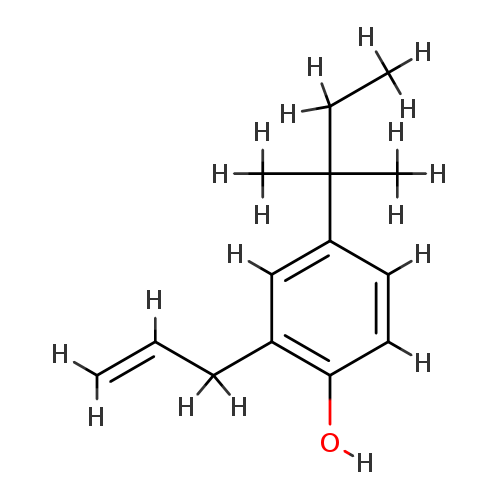
Chemical Structure
Synonyms
ValueSource
2-Allyl-4-(1,1-dimethylpropyl)-phenolHMDB
4-(1,1-Dimethylpropyl)-2-(2-propen-1-yl)-phenolHMDB
Chemical FormulaC14H20O
Average Molecular Mass204.308 g/mol
Monoisotopic Mass204.151 g/mol
CAS Registry Number96-76-4
IUPAC Name4-(2-methylbutan-2-yl)-2-(prop-2-en-1-yl)phenol
Traditional Name4-(2-methylbutan-2-yl)-2-(prop-2-en-1-yl)phenol
SMILES[H]OC1=C(C([H])=C(C([H])=C1[H])C(C([H])([H])[H])(C([H])([H])[H])C([H])([H])C([H])([H])[H])C([H])([H])C([H])=C([H])[H]
InChI IdentifierInChI=1S/C14H20O/c1-5-7-11-10-12(8-9-13(11)15)14(3,4)6-2/h5,8-10,15H,1,6-7H2,2-4H3
InChI KeyDFAHCHKNTOVDQQ-UHFFFAOYSA-N
Chemical Taxonomy
Description Belongs to the class of organic compounds known as phenylpropanes. These are organic compounds containing a phenylpropane moiety.
KingdomOrganic compounds
Super ClassBenzenoids
ClassBenzene and substituted derivatives
Sub ClassPhenylpropanes
Direct ParentPhenylpropanes
Alternative Parents
Substituents
  • Phenylpropane
  • 1-hydroxy-2-unsubstituted benzenoid
  • Phenol
  • Organic oxygen compound
  • Hydrocarbon derivative
  • Organooxygen compound
  • Aromatic homomonocyclic compound
Molecular FrameworkAromatic homomonocyclic compounds
External DescriptorsNot Available
Biological Properties
StatusDetected and Not Quantified
OriginExogenous
Cellular Locations
  • Membrane
Biofluid LocationsNot Available
Tissue LocationsNot Available
ApplicationsNot Available
Biological RolesNot Available
Chemical RolesNot Available
Organoleptic EffectsNot Available
Physical Properties
StateSolid
AppearanceWhite powder.
Experimental Properties
PropertyValue
Melting Point56.5 °C
Boiling PointNot Available
Solubility0.035 mg/mL at 25 °C
Predicted Properties
PropertyValueSource
Water Solubility0.01 g/LALOGPS
logP5.16ALOGPS
logP4.76ChemAxon
logS-4.3ALOGPS
pKa (Strongest Acidic)9.55ChemAxon
pKa (Strongest Basic)-6ChemAxon
Physiological Charge0ChemAxon
Hydrogen Acceptor Count1ChemAxon
Hydrogen Donor Count1ChemAxon
Polar Surface Area20.23 ŲChemAxon
Rotatable Bond Count4ChemAxon
Refractivity65.59 m³·mol⁻¹ChemAxon
Polarizability24.48 ųChemAxon
Number of Rings1ChemAxon
BioavailabilityYesChemAxon
Rule of FiveYesChemAxon
Ghose FilterYesChemAxon
Veber's RuleYesChemAxon
MDDR-like RuleNoChemAxon
Spectra
Spectra
Spectrum TypeDescriptionSplash KeyDeposition DateView
Predicted GC-MSPredicted GC-MS Spectrumsplash10-004i-2900000000-a2e0b333fa34a1549910Not AvailableView Spectrum
Predicted GC-MSPredicted GC-MS Spectrumsplash10-03ka-2190000000-fe4bcb51d64c7f7bc5e0Not AvailableView Spectrum
Predicted LC-MS/MSPredicted LC-MS/MS Spectrumsplash10-0a4i-1290000000-a216add8b285f9716147Not AvailableView Spectrum
Predicted LC-MS/MSPredicted LC-MS/MS Spectrumsplash10-0a4l-8960000000-39d906bea3b982c79b10Not AvailableView Spectrum
Predicted LC-MS/MSPredicted LC-MS/MS Spectrumsplash10-00kf-9300000000-161bc1a06fe3abef2d63Not AvailableView Spectrum
Predicted LC-MS/MSPredicted LC-MS/MS Spectrumsplash10-0udi-0090000000-895924316981c69189aaNot AvailableView Spectrum
Predicted LC-MS/MSPredicted LC-MS/MS Spectrumsplash10-0udi-0190000000-cc78f0f5df14e097fa74Not AvailableView Spectrum
Predicted LC-MS/MSPredicted LC-MS/MS Spectrumsplash10-0imr-1900000000-12ce1e2a6b8bd6971bacNot AvailableView Spectrum
Toxicity Profile
Toxicity Values
Toxicity ValueOrganismDose DescriptorRoute of ExposurePredicted or ExperimentalToxicity RatingReference
2682.0 Log mg/kg [1500:4800]RatLD50oralpredictedNot AvailableNot Available
Toxicity / Toxin ClassNot Available
Mechanism of ToxicityNot Available
Carcinogenicity (IARC Classification)No indication of carcinogenicity to humans (not listed by IARC).
Minimum Risk LevelNot Available
SymptomsNot Available
TreatmentNot Available
Health Effects
Health EffectRelationshipDirectionDescriptionReference
Exposure Sources
Source IDSourceSectorReference
CEDs000003Irrigation water?Irrigation water can serve as a vector for synthetic chemical contamination due to its potential exposure to agricultural inputs such as fertilizers, pesticides, and herbicides.Agriculture & land managementNot Available
CEDs000019Indoor air?Indoor air can be a significant reservoir for synthetic chemical contaminants, which often originate from various sources within enclosed environments.Air, dust & atmospheric transportNot Available
CEDs000027Water Coolers?Water coolers can be a source of synthetic chemical contamination due to various materials used in their construction and operation.Appliances, HVAC & refrigerantsNot Available
CEDs000043Water heaters?Water heaters can be a source of synthetic chemical contamination primarily through the materials and coatings used in their construction.Appliances, HVAC & refrigerantsNot Available
CEDs000050Groundwater?Groundwater serves as a vital resource for drinking water and agricultural irrigation but is increasingly susceptible to contamination from synthetic chemicals.Aquatic systems & sedimentsNot Available
CEDs000051Surface water?Surface water can serve as a significant vector for the introduction of synthetic chemical contaminants into aquatic ecosystems.Aquatic systems & sedimentsNot Available
CEDs000052Seawater?Seawater can serve as a significant reservoir for synthetic chemical contamination due to various industrial activities, including shipping, oil drilling, and coastal manufacturing.Aquatic systems & sedimentsNot Available
CEDs000053Freshwater?Freshwater bodies, including rivers, lakes, and reservoirs, can serve as significant sources of synthetic chemical contamination due to various anthropogenic activities.Aquatic systems & sedimentsNot Available
CEDs000070Stormwater runoff?Stormwater runoff refers to the flow of rainwater or melted snow that does not soak into the ground and instead collects pollutants as it travels over impervious surfaces such as roads and parking lots.Automotive & urban infrastructureNot Available
CEDs000088Waterproofing sprays?Waterproofing sprays are synthetic chemical formulations designed to create a protective barrier against moisture on various surfaces, including fabrics, wood, and masonry.Building & ConstructionNot Available
CEDs000115Drinking water?Drinking water can be a medium for synthetic chemical contamination, often originating from various industrial processes and agricultural practices.Drinking water & water supplyNot Available
CEDs000116Tap water?Tap water can be a potential source of synthetic chemical contamination due to various industrial processes and agricultural runoff.Drinking water & water supplyNot Available
CEDs000117Bottled water?Bottled water, while perceived as a safe and convenient alternative to tap water, can be a source of synthetic chemical contamination.Drinking water & water supplyNot Available
CEDs000118Desalinated water?Desalinated water, produced through processes such as reverse osmosis or distillation, is increasingly utilized to meet freshwater demands in various regions.Drinking water & water supplyNot Available
CEDs000181Ballast water?Ballast water, taken on by ships to maintain stability and balance, often contains a diverse array of microorganisms, including bacteria, viruses, and plankton.Marine, shipping & aquacultureNot Available
CEDs000182Bilge water?Bilge water is a byproduct generated from the accumulation of water in the lowest part of a ship's hull, which may include a mixture of seawater, oil, fuel residues, and various contaminants.Marine, shipping & aquacultureNot Available
CEDs000468Industrial wastewater?Industrial wastewater is a byproduct generated during various manufacturing and processing activities, which often contains a complex mixture of organic and inorganic synthetic chemicals.Wastewater, sanitation & biosolidsNot Available
CEDs000470Wastewater treatment effluent?Wastewater treatment effluent is the liquid byproduct discharged from the treatment processes designed to remove contaminants from wastewater.Wastewater, sanitation & biosolidsNot Available
CEDs000475Mine wastewater?Mine wastewater refers to the liquid waste generated during the extraction and processing of minerals.Wastewater, sanitation & biosolidsNot Available
CEDs000477Wastewater, unspecified?Wastewater refers to water that has been adversely affected in quality by anthropogenic influence, typically through domestic, industrial, or agricultural activities.Wastewater, sanitation & biosolidsNot Available
CEDs000491Industrial manufacturing & chemical processingNot Available
CEDs000494Food contact materials?Food contact materials refer to substances and products that are intended to come into contact with food during processing, packaging, or preparation.Food, food processing & cookwareNot Available
Pathways
0 pathwaysPathway Source: PathBank

No pathways found

No metabolic pathways have been associated with this synthetic chemical

Targets
StructureProteinUniProt IDOrganismRelationshipDetails
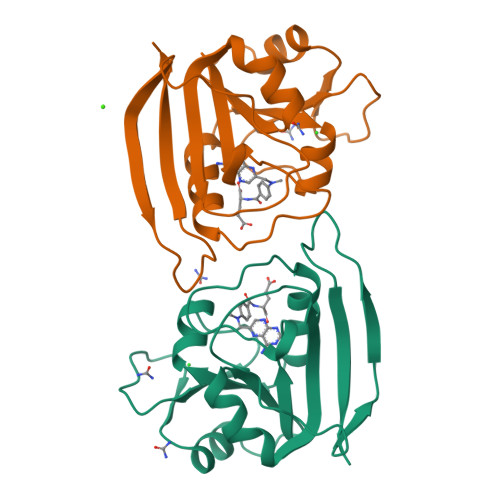
Cannabinoid receptor 2 structureClick to view 3D structureCannabinoid receptor 2P34972HumansPredicted (SEA)
Prediction Confidence Score
0.344
Applicability Domain
0.442
Statistical Significance
0.0059
Supporting Reference Compounds
175
E-value
46.0089
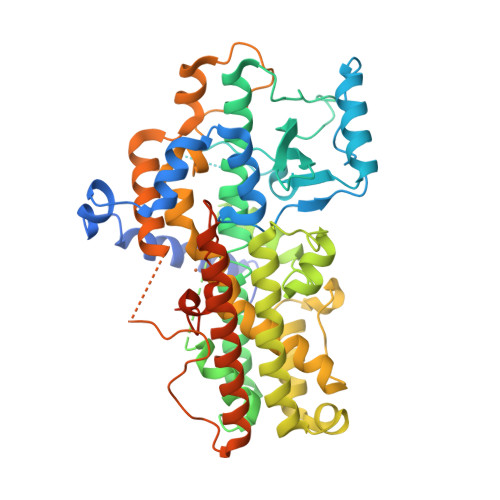
Polyunsaturated fatty acid 5-lipoxygenase structureClick to view 3D structurePolyunsaturated fatty acid 5-lipoxygenaseP09917HumansPredicted (SEA)
Prediction Confidence Score
0.314
Applicability Domain
0.442
Statistical Significance
0.009
Supporting Reference Compounds
182
E-value
70.4535
Cannabinoid receptor 1 structureClick to view 3D structureCannabinoid receptor 1P21554HumansPredicted (SEA)
Prediction Confidence Score
0.311
Applicability Domain
0.442
Statistical Significance
0.0133
Supporting Reference Compounds
200
E-value
103.539
Click to view 3D structureProstaglandin G/H synthase 2P79208Ovis ariesPredicted (SEA)
Prediction Confidence Score
0.31
Applicability Domain
0.442
Statistical Significance
0.002
Supporting Reference Compounds
50
E-value
15.6477
Prostaglandin G/H synthase 1 structureClick to view 3D structureProstaglandin G/H synthase 1P05979Ovis ariesPredicted (SEA)
Prediction Confidence Score
0.306
Applicability Domain
0.442
Statistical Significance
0.0055
Supporting Reference Compounds
106
E-value
42.7392
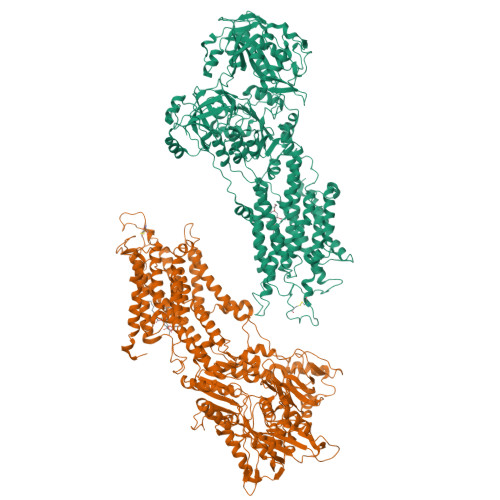
Click to view 3D structureSarcoplasmic/endoplasmic reticulum calcium ATPase 2P11507Rattus norvegicusPredicted (SEA)
Prediction Confidence Score
0.27
Applicability Domain
0.27 Low confidence
Statistical Significance
4.00e-04
Supporting Reference Compounds
1
E-value
3.11397
Polyunsaturated fatty acid lipoxygenase ALOX15 structureClick to view 3D structurePolyunsaturated fatty acid lipoxygenase ALOX15P12530Oryctolagus cuniculusPredicted (SEA)
Prediction Confidence Score
0.24
Applicability Domain
0.27 Low confidence
Statistical Significance
0.0099
Supporting Reference Compounds
47
E-value
77.1486
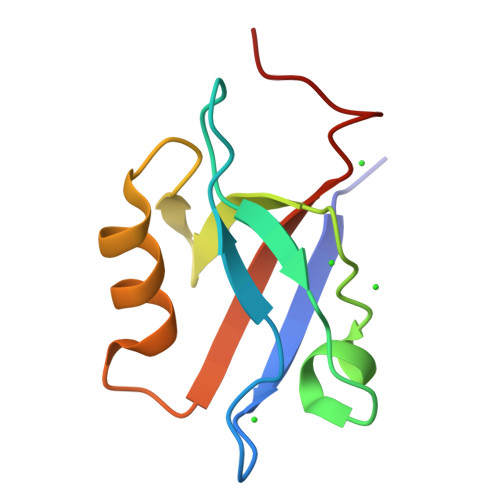
Zinc finger protein mex-5 structureClick to view 3D structureZinc finger protein mex-5Q9XUB2Caenorhabditis elegansPredicted (SEA)
Prediction Confidence Score
0.239
Applicability Domain
0.308
Statistical Significance
0.0155
Supporting Reference Compounds
88
E-value
120.666
Histamine N-methyltransferase structureClick to view 3D structureHistamine N-methyltransferaseP50135HumansPredicted (SEA)
Prediction Confidence Score
0.238
Applicability Domain
0.238 Low confidence
Statistical Significance
0.0023
Supporting Reference Compounds
1
E-value
18.1389
Beta-2 adrenergic receptor structureClick to view 3D structureBeta-2 adrenergic receptorP07550HumansPredicted (SEA)
Prediction Confidence Score
0.237
Applicability Domain
0.306
Statistical Significance
0.1602
Supporting Reference Compounds
258
E-value
1247.3
Beta-1 adrenergic receptor structureClick to view 3D structureBeta-1 adrenergic receptorP08588HumansPredicted (SEA)
Prediction Confidence Score
0.237
Applicability Domain
0.306
Statistical Significance
0.1068
Supporting Reference Compounds
180
E-value
831.352
Click to view 3D structurePolyunsaturated fatty acid lipoxygenase ALOX15P16050HumansPredicted (SEA)
Prediction Confidence Score
0.232
Applicability Domain
0.239 Low confidence
Statistical Significance
0.0173
Supporting Reference Compounds
46
E-value
134.601
Click to view 3D structureBeta-2 adrenergic receptorQ8K4Z4Cavia porcellusPredicted (SEA)
Prediction Confidence Score
0.231
Applicability Domain
0.306
Statistical Significance
0.0156
Supporting Reference Compounds
48
E-value
121.367
Androgen receptor structureClick to view 3D structureAndrogen receptorP10275HumansPredicted (SEA)
Prediction Confidence Score
0.231
Applicability Domain
0.27 Low confidence
Statistical Significance
0.0821
Supporting Reference Compounds
146
E-value
639.142
Click to view 3D structureBeta-2 adrenergic receptorQ28044Bos taurusPredicted (SEA)
Prediction Confidence Score
0.23
Applicability Domain
0.306
Statistical Significance
0.0027
Supporting Reference Compounds
16
E-value
21.2528
High affinity choline transporter 1 structureClick to view 3D structureHigh affinity choline transporter 1Q9GZV3HumansPredicted (SEA)
Prediction Confidence Score
0.23
Applicability Domain
0.385
Statistical Significance
0.0471
Supporting Reference Compounds
75
E-value
366.826
Click to view 3D structureStreptokinase AP10520Streptococcus pyogenes serotype M1Predicted (SEA)
Prediction Confidence Score
0.228
Applicability Domain
0.283 Low confidence
Statistical Significance
0.2948
Supporting Reference Compounds
425
E-value
2294.76
Induced myeloid leukemia cell differentiation protein Mcl-1 structureClick to view 3D structureInduced myeloid leukemia cell differentiation protein Mcl-1Q07820HumansPredicted (SEA)
Prediction Confidence Score
0.227
Applicability Domain
0.308
Statistical Significance
0.2212
Supporting Reference Compounds
343
E-value
1721.71
Sarcoplasmic/endoplasmic reticulum calcium ATPase 1 structureClick to view 3D structureSarcoplasmic/endoplasmic reticulum calcium ATPase 1P04191Oryctolagus cuniculusPredicted (SEA)
Prediction Confidence Score
0.225
Applicability Domain
0.27 Low confidence
Statistical Significance
0.0011
Supporting Reference Compounds
15
E-value
8.95266
Polyunsaturated fatty acid lipoxygenase ALOX12 structureClick to view 3D structurePolyunsaturated fatty acid lipoxygenase ALOX12P18054HumansPredicted (SEA)
Prediction Confidence Score
0.225
Applicability Domain
0.239 Low confidence
Statistical Significance
0.0157
Supporting Reference Compounds
31
E-value
122.068
Amine oxidase [flavin-containing] B structureClick to view 3D structureAmine oxidase [flavin-containing] BP27338HumansPredicted (SEA)
Prediction Confidence Score
0.224
Applicability Domain
0.275 Low confidence
Statistical Significance
0.2863
Supporting Reference Compounds
315
E-value
2229.06
Click to view 3D structureNeuraminidaseB4URF0Influenza A virusPredicted (SEA)
Prediction Confidence Score
0.222
Applicability Domain
0.442
Statistical Significance
0.0079
Supporting Reference Compounds
42
E-value
61.3452
Tyrosinase structureClick to view 3D structureTyrosinaseP14679HumansPredicted (SEA)
Prediction Confidence Score
0.221
Applicability Domain
0.25 Low confidence
Statistical Significance
0.0126
Supporting Reference Compounds
29
E-value
98.09
Dihydrofolate reductase structureClick to view 3D structureDihydrofolate reductaseP0ABQ4Escherichia coli (strain K12)Predicted (SEA)
Prediction Confidence Score
0.221
Applicability Domain
0.276 Low confidence
Statistical Significance
0.0393
Supporting Reference Compounds
92
E-value
305.947
Click to view 3D structureDihydrofolate reductaseQ59487Lactococcus lactis subsp. lactis (strain IL1403) (Streptococcuslactis)Predicted (SEA)
Prediction Confidence Score
0.221
Applicability Domain
0.276 Low confidence
Statistical Significance
0.0032
Supporting Reference Compounds
10
E-value
24.9118
Nuclear receptor subfamily 1 group I member 2 structureClick to view 3D structureNuclear receptor subfamily 1 group I member 2O75469HumansKnownNot Available
Retinoic acid receptor RXR-beta structureClick to view 3D structureRetinoic acid receptor RXR-betaP28702HumansKnownNot Available
Nuclear receptor subfamily 1 group I member 3 structureClick to view 3D structureNuclear receptor subfamily 1 group I member 3Q14994HumansKnownNot Available
Retinoic acid receptor beta structureClick to view 3D structureRetinoic acid receptor betaP10826HumansKnownNot Available
Oxysterols receptor LXR-beta structureClick to view 3D structureOxysterols receptor LXR-betaP55055HumansKnownNot Available
Oxysterols receptor LXR-alpha structureClick to view 3D structureOxysterols receptor LXR-alphaQ13133HumansKnownNot Available
Retinoic acid receptor RXR-alpha structureClick to view 3D structureRetinoic acid receptor RXR-alphaP19793HumansKnownNot Available
Concentrations
Not Available
External Links
DrugBank IDNot Available
HMDB IDNot Available
FooDB IDNot Available
Phenol Explorer IDNot Available
KNApSAcK IDNot Available
BiGG IDNot Available
BioCyc IDNot Available
METLIN IDNot Available
PDB IDNot Available
Wikipedia LinkNot Available
Chemspider ID30776719
ChEBI ID89188
PubChem Compound ID14339290
Kegg Compound IDNot Available
YMDB IDNot Available
ECMDB IDNot Available
References
Synthesis ReferenceNot Available
MSDSNot Available
General ReferencesNot Available