p-Chlorophenyl isocyanate (CED0018726)

Record Information
Version1.0
Creation Date2016-05-19 01:35:04 UTC
Update Date2026-08-24 01:07:20 UTC
SynCED IDCED0018726
Secondary Accession Numbers
  • CHEM004113
Identification
Common Namep-Chlorophenyl isocyanate
ClassSmall Molecule
Description
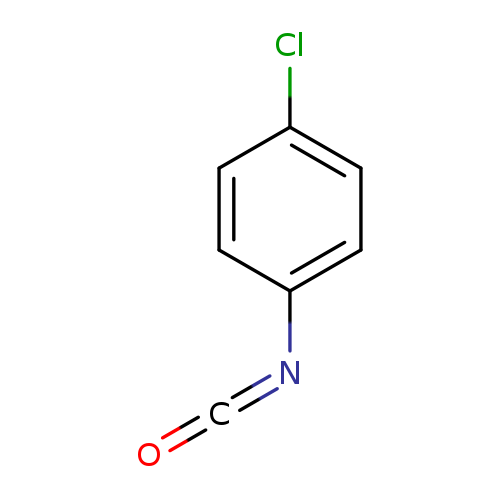
p-Chlorophenyl isocyanate is an organic compound with the chemical formula C7H4ClNO and an average molecular weight of 153.57 g/mol. p-Chlorophenyl isocyanate belongs to the halobenzenes, a subclass of benzene and substituted derivatives within the organic compounds. This substance has been identified in or released from 25 recorded sources. Within the electrical and electronic equipment sector, it is associated with colour television systems, video games, electrodes, hybrid capacitors, and conductors or conductive bodies characterised by the conductive materials. It is found in drinking water and water supply systems, including tap water, bottled water, desalinated water, and general drinking water. In aquatic systems and sediments, the compound is present in seawater, freshwater, surface water, and groundwater. It is also detected in wastewater, sanitation, and biosolids, specifically in mine wastewater, industrial wastewater, wastewater treatment effluent, and unspecified wastewater. Additional sources include marine, shipping, and aquaculture sectors, such as bilge water and ballast water, as well as appliances, HVAC, and refrigerants, including water heaters and water coolers, among four other sectors. Recorded exposure routes for p-chlorophenyl isocyanate include touch, oral, and inhalation.
Contaminant Type
  • PMT
Chemical Structure
Synonyms
ValueSource
4-Chlorophenyl isocyanic acidGenerator
p-Chlorophenyl isocyanateMeSH
Chlorophenyl isocyanateMeSH
Chemical FormulaC7H4ClNO
Average Molecular Mass153.570 g/mol
Monoisotopic Mass152.998 g/mol
CAS Registry Number104-12-1
IUPAC Name1-chloro-4-isocyanatobenzene
Traditional Name1-chloro-4-isocyanatobenzene
SMILESClC1=CC=C(C=C1)N=C=O
InChI IdentifierInChI=1S/C7H4ClNO/c8-6-1-3-7(4-2-6)9-5-10/h1-4H
InChI KeyADAKRBAJFHTIEW-UHFFFAOYSA-N
Chemical Taxonomy
Description Belongs to the class of organic compounds known as chlorobenzenes. Chlorobenzenes are compounds containing one or more chlorine atoms attached to a benzene moiety.
KingdomOrganic compounds
Super ClassBenzenoids
ClassBenzene and substituted derivatives
Sub ClassHalobenzenes
Direct ParentChlorobenzenes
Alternative Parents
Substituents
  • Chlorobenzene
  • Aryl chloride
  • Aryl halide
  • Isocyanate
  • Propargyl-type 1,3-dipolar organic compound
  • Organic 1,3-dipolar compound
  • Organic nitrogen compound
  • Hydrocarbon derivative
  • Organooxygen compound
  • Organonitrogen compound
  • Organochloride
  • Organohalogen compound
  • Organic oxide
  • Organopnictogen compound
  • Organic oxygen compound
  • Aromatic homomonocyclic compound
Molecular FrameworkAromatic homomonocyclic compounds
External DescriptorsNot Available
Biological Properties
StatusDetected and Not Quantified
OriginNot Available
Cellular LocationsNot Available
Biofluid LocationsNot Available
Tissue LocationsNot Available
ApplicationsNot Available
Biological RolesNot Available
Chemical RolesNot Available
Organoleptic EffectsNot Available
Physical Properties
StateNot Available
AppearanceNot Available
Experimental Properties
PropertyValue
Melting PointNot Available
Boiling PointNot Available
SolubilityNot Available
Predicted Properties
PropertyValueSource
Water Solubility0.18 g/LALOGPS
logP2.05ALOGPS
logP2.49ChemAxon
logS-2.9ALOGPS
pKa (Strongest Basic)-1.8ChemAxon
Physiological Charge0ChemAxon
Hydrogen Acceptor Count2ChemAxon
Hydrogen Donor Count0ChemAxon
Polar Surface Area29.43 ŲChemAxon
Rotatable Bond Count1ChemAxon
Refractivity39.93 m³·mol⁻¹ChemAxon
Polarizability13.97 ųChemAxon
Number of Rings1ChemAxon
BioavailabilityYesChemAxon
Rule of FiveYesChemAxon
Ghose FilterNoChemAxon
Veber's RuleYesChemAxon
MDDR-like RuleNoChemAxon
Spectra
Spectra
Spectrum TypeDescriptionSplash KeyDeposition DateView
Predicted LC-MS/MSPredicted LC-MS/MS Spectrumsplash10-0udi-0900000000-fb46fc146e294c14d46eNot AvailableView Spectrum
Predicted LC-MS/MSPredicted LC-MS/MS Spectrumsplash10-0udi-2900000000-bf3b611ad8875507809bNot AvailableView Spectrum
Predicted LC-MS/MSPredicted LC-MS/MS Spectrumsplash10-0udi-0900000000-09502bcb9b745881bcd5Not AvailableView Spectrum
Predicted LC-MS/MSPredicted LC-MS/MS Spectrumsplash10-0udi-0900000000-a0ccd5d2dec836631d8aNot AvailableView Spectrum
Predicted LC-MS/MSPredicted LC-MS/MS Spectrumsplash10-0udi-4900000000-667aa81c63220b890e15Not AvailableView Spectrum
Toxicity Profile
Toxicity Values
Toxicity ValueOrganismDose DescriptorRoute of ExposurePredicted or ExperimentalToxicity RatingReference
968.0 Log mg/kg [540:1700]RatLD50oralpredictedNot AvailableNot Available
Toxicity / Toxin ClassNot Available
Mechanism of ToxicityNot Available
Carcinogenicity (IARC Classification)Not Available
Minimum Risk LevelNot Available
SymptomsNot Available
TreatmentNot Available
Health Effects
Health EffectRelationshipDirectionDescriptionReference
Exposure Sources
Source IDSourceSectorReference
CEDs000003Irrigation water?Irrigation water can serve as a vector for synthetic chemical contamination due to its potential exposure to agricultural inputs such as fertilizers, pesticides, and herbicides.Agriculture & land managementNot Available
CEDs000010Insecticides?Insecticides are synthetic chemicals designed to control or eliminate insect pests that threaten crops and other agricultural products.Agriculture & land managementPubChem
CEDs000027Water Coolers?Water coolers can be a source of synthetic chemical contamination due to various materials used in their construction and operation.Appliances, HVAC & refrigerantsNot Available
CEDs000043Water heaters?Water heaters can be a source of synthetic chemical contamination primarily through the materials and coatings used in their construction.Appliances, HVAC & refrigerantsNot Available
CEDs000050Groundwater?Groundwater serves as a vital resource for drinking water and agricultural irrigation but is increasingly susceptible to contamination from synthetic chemicals.Aquatic systems & sedimentsNot Available
CEDs000051Surface water?Surface water can serve as a significant vector for the introduction of synthetic chemical contaminants into aquatic ecosystems.Aquatic systems & sedimentsNot Available
CEDs000052Seawater?Seawater can serve as a significant reservoir for synthetic chemical contamination due to various industrial activities, including shipping, oil drilling, and coastal manufacturing.Aquatic systems & sedimentsNot Available
CEDs000053Freshwater?Freshwater bodies, including rivers, lakes, and reservoirs, can serve as significant sources of synthetic chemical contamination due to various anthropogenic activities.Aquatic systems & sedimentsNot Available
CEDs000070Stormwater runoff?Stormwater runoff refers to the flow of rainwater or melted snow that does not soak into the ground and instead collects pollutants as it travels over impervious surfaces such as roads and parking lots.Automotive & urban infrastructureNot Available
CEDs000088Waterproofing sprays?Waterproofing sprays are synthetic chemical formulations designed to create a protective barrier against moisture on various surfaces, including fabrics, wood, and masonry.Building & ConstructionNot Available
CEDs000115Drinking water?Drinking water can be a medium for synthetic chemical contamination, often originating from various industrial processes and agricultural practices.Drinking water & water supplyNot Available
CEDs000116Tap water?Tap water can be a potential source of synthetic chemical contamination due to various industrial processes and agricultural runoff.Drinking water & water supplyNot Available
CEDs000117Bottled water?Bottled water, while perceived as a safe and convenient alternative to tap water, can be a source of synthetic chemical contamination.Drinking water & water supplyNot Available
CEDs000118Desalinated water?Desalinated water, produced through processes such as reverse osmosis or distillation, is increasingly utilized to meet freshwater demands in various regions.Drinking water & water supplyNot Available
CEDs000181Ballast water?Ballast water, taken on by ships to maintain stability and balance, often contains a diverse array of microorganisms, including bacteria, viruses, and plankton.Marine, shipping & aquacultureNot Available
CEDs000182Bilge water?Bilge water is a byproduct generated from the accumulation of water in the lowest part of a ship's hull, which may include a mixture of seawater, oil, fuel residues, and various contaminants.Marine, shipping & aquacultureNot Available
CEDs000468Industrial wastewater?Industrial wastewater is a byproduct generated during various manufacturing and processing activities, which often contains a complex mixture of organic and inorganic synthetic chemicals.Wastewater, sanitation & biosolidsNot Available
CEDs000470Wastewater treatment effluent?Wastewater treatment effluent is the liquid byproduct discharged from the treatment processes designed to remove contaminants from wastewater.Wastewater, sanitation & biosolidsNot Available
CEDs000475Mine wastewater?Mine wastewater refers to the liquid waste generated during the extraction and processing of minerals.Wastewater, sanitation & biosolidsNot Available
CEDs000477Wastewater, unspecified?Wastewater refers to water that has been adversely affected in quality by anthropogenic influence, typically through domestic, industrial, or agricultural activities.Wastewater, sanitation & biosolidsNot Available
CEDs000509Colour Television Systems?Colour television systems contain various synthetic chemicals that can lead to environmental contamination.Electrical & Electronic EquipmentPubChem
CEDs000511Conductors Or Conductive Bodies Characterised By The Conductive Materials?Conductors, or conductive bodies, are materials that allow the flow of electrical current, typically made from metals such as copper, aluminum, or silver.Electrical & Electronic EquipmentPubChem
CEDs000519Electrodes?Electrodes, used in various electrical and electronic applications, can be a source of synthetic chemical contamination due to the materials from which they are constructed and the processes involved in their manufacturing.Electrical & Electronic EquipmentPubChem
CEDs000524Hybrid Capacitors?Hybrid capacitors are energy storage devices that combine the properties of electrolytic and supercapacitors, utilizing a combination of electrochemical principles to achieve higher energy density and power density.Electrical & Electronic EquipmentPubChem
CEDs000539Video Games?Video games, through their production and disposal processes, can be a source of synthetic chemical contamination.Electrical & Electronic EquipmentPubChem
CEDs000561Perfumes Within Detergents And Soaps?Perfumes within detergents and soaps are synthetic fragrance compounds added to enhance the sensory experience of cleaning products.Household cleaning & consumer productsPubChem
CEDs000581Paper Making Machines?Paper making machines utilize various synthetic chemicals throughout the production process, including additives, coatings, and bleaching agents.Industrial manufacturing & chemical processingPubChem
CEDs000596Acaricides?Acaricides are synthetic chemicals specifically designed to target and control mite populations that can damage crops and plants.Agriculture & land managementPubChem
CEDs000602Molluscicides?Molluscicides are synthetic chemicals specifically designed to control and eliminate mollusks, such as snails and slugs, which can be detrimental to crops and agricultural productivity.Agriculture & land managementPubChem
CEDs000603Nematocides?Nematocides are synthetic chemicals specifically designed to control nematodes, which are microscopic roundworms that can cause significant damage to crops and plants.Agriculture & land managementPubChem
CEDs000606Plant Growth Regulators?Plant Growth Regulators (PGRs) are synthetic chemicals designed to influence the growth and development of plants.Agriculture & land managementPubChem
CEDs000613Depilatories?Depilatories are products designed to remove unwanted hair through the application of synthetic chemicals that break down the protein structure of hair, facilitating its removal.Personal care & cosmeticsPubChem
CEDs000648Nitro Dyes?Nitro dyes are synthetic colorants that contain nitro groups (-NO2) in their chemical structure.Textiles, leather & furnishingsPubChem
CEDs000657Surface Finishing Of Leather?Surface finishing of leather often involves the use of various synthetic chemicals, including dyes, resins, and finishing agents.Textiles, leather & furnishingsPubChem
CEDs000659Transfer Printing?Transfer printing is a process used to apply designs and patterns onto various substrates, commonly utilizing synthetic dyes and inks that can contain hazardous chemicals.Textiles, leather & furnishingsPubChem
CEDs000685Ceramics?Ceramics can be a source of synthetic chemical contamination through various additives and processing agents used in their production.Building & ConstructionPubChem
CEDs000688Glass Coatings?Glass coatings are synthetic chemical formulations applied to glass surfaces to enhance properties such as durability, UV resistance, and aesthetic appeal.Building & ConstructionPubChem
CEDs000696Nanotechnology?Nanotechnology involves the manipulation of materials at the molecular or atomic level, typically within the range of 1 to 100 nanometers.Industrial manufacturing & chemical processingPubChem
CEDs000735Explosives?Explosives are chemical compounds or mixtures designed to undergo rapid decomposition, releasing energy in the form of gas and heat.Defense & military infrastructurePubChem
CEDs000739Inks?Inks are complex mixtures composed of pigments or dyes, solvents, resins, and additives used primarily for printing and writing applications.Paper, pulp & fiber productsPubChem
CEDs000740Paper?Paper production involves the processing of wood fibers and the use of various chemicals, which can lead to synthetic chemical contamination.Paper, pulp & fiber productsPubChem
CEDs000744Water, Wastewater, & Sewage Treatment?Water, wastewater, and sewage treatment processes are critical for managing and mitigating pollutants in water systems.Wastewater, sanitation & biosolidsPubChem
Pathways
0 pathwaysPathway Source: PathBank

No pathways found

No metabolic pathways have been associated with this synthetic chemical

Targets
StructureProteinUniProt IDOrganismRelationshipDetails
Superoxide dismutase [Cu-Zn] structureClick to view 3D structureSuperoxide dismutase [Cu-Zn]P00441HumansPredicted (SEA)
Prediction Confidence Score
0.263
Applicability Domain
0.263 Low confidence
Statistical Significance
9.30e-04
Supporting Reference Compounds
1
E-value
7.23998
Sodium-dependent dopamine transporter structureClick to view 3D structureSodium-dependent dopamine transporterQ01959HumansPredicted (SEA)
Prediction Confidence Score
0.23
Applicability Domain
0.25 Low confidence
Statistical Significance
0.3632
Supporting Reference Compounds
506
E-value
2827.41
UDP-N-acetylenolpyruvoylglucosamine reductase structureClick to view 3D structureUDP-N-acetylenolpyruvoylglucosamine reductaseP08373Escherichia coli (strain K12)Predicted (SEA)
Prediction Confidence Score
0.229
Applicability Domain
0.25 Low confidence
Statistical Significance
0.0025
Supporting Reference Compounds
3
E-value
19.4623
Sodium-dependent serotonin transporter structureClick to view 3D structureSodium-dependent serotonin transporterP31645HumansPredicted (SEA)
Prediction Confidence Score
0.224
Applicability Domain
0.229 Low confidence
Statistical Significance
0.4405
Supporting Reference Compounds
593
E-value
3428.95
Click to view 3D structureAldehyde dehydrogenase 1A1P51647Rattus norvegicusPredicted (SEA)
Prediction Confidence Score
0.222
Applicability Domain
0.222 Low confidence
Statistical Significance
7.30e-04
Supporting Reference Compounds
1
E-value
5.68299
Sodium-dependent noradrenaline transporter structureClick to view 3D structureSodium-dependent noradrenaline transporterP23975HumansPredicted (SEA)
Prediction Confidence Score
0.219
Applicability Domain
0.25 Low confidence
Statistical Significance
0.4362
Supporting Reference Compounds
451
E-value
3395.94
Cannabinoid receptor 1 structureClick to view 3D structureCannabinoid receptor 1P21554HumansPredicted (SEA)
Prediction Confidence Score
0.218
Applicability Domain
0.231 Low confidence
Statistical Significance
0.3196
Supporting Reference Compounds
200
E-value
2487.83
Kappa-type opioid receptor structureClick to view 3D structureKappa-type opioid receptorP41145HumansPredicted (SEA)
Prediction Confidence Score
0.217
Applicability Domain
0.243 Low confidence
Statistical Significance
0.5355
Supporting Reference Compounds
532
E-value
4169.06
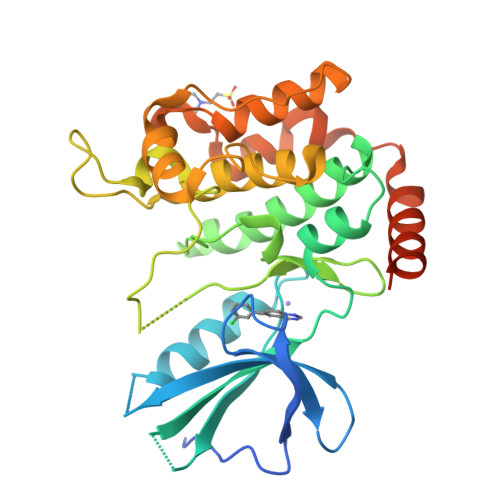
Mitogen-activated protein kinase kinase kinase kinase 4 structureClick to view 3D structureMitogen-activated protein kinase kinase kinase kinase 4O95819HumansPredicted (SEA)
Prediction Confidence Score
0.216
Applicability Domain
0.256 Low confidence
Statistical Significance
0.6628
Supporting Reference Compounds
714
E-value
5160.0
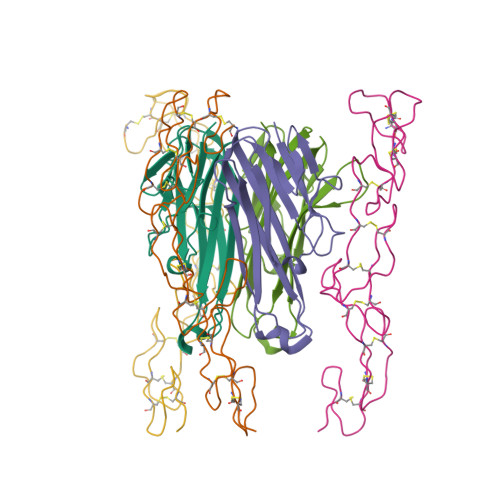
Lymphotoxin-alpha structureClick to view 3D structureLymphotoxin-alphaP01374HumansPredicted (SEA)
Prediction Confidence Score
0.214
Applicability Domain
0.214 Low confidence
Statistical Significance
2.50e-04
Supporting Reference Compounds
1
E-value
1.94623
STE20-like serine/threonine-protein kinase structureClick to view 3D structureSTE20-like serine/threonine-protein kinaseQ9H2G2HumansPredicted (SEA)
Prediction Confidence Score
0.214
Applicability Domain
0.256 Low confidence
Statistical Significance
0.6124
Supporting Reference Compounds
515
E-value
4767.56
Lymphokine-activated killer T-cell-originated protein kinase structureClick to view 3D structureLymphokine-activated killer T-cell-originated protein kinaseQ96KB5HumansPredicted (SEA)
Prediction Confidence Score
0.214
Applicability Domain
0.256 Low confidence
Statistical Significance
0.5317
Supporting Reference Compounds
383
E-value
4139.24
Click to view 3D structureSerine/threonine-protein kinase TAO1Q7L7X3HumansPredicted (SEA)
Prediction Confidence Score
0.214
Applicability Domain
0.256 Low confidence
Statistical Significance
0.6529
Supporting Reference Compounds
620
E-value
5082.7
Click to view 3D structureStreptokinase AP10520Streptococcus pyogenes serotype M1Predicted (SEA)
Prediction Confidence Score
0.212
Applicability Domain
0.25 Low confidence
Statistical Significance
0.4588
Supporting Reference Compounds
425
E-value
3572.03
Click to view 3D structureHeat shock factor protein 1P38532Mus musculusPredicted (SEA)
Prediction Confidence Score
0.212
Applicability Domain
0.25 Low confidence
Statistical Significance
0.297
Supporting Reference Compounds
166
E-value
2312.04
Phospholipase A and acyltransferase 4 structureClick to view 3D structurePhospholipase A and acyltransferase 4Q9UL19HumansPredicted (SEA)
Prediction Confidence Score
0.209
Applicability Domain
0.209 Low confidence
Statistical Significance
0.0373
Supporting Reference Compounds
1
E-value
290.066
Click to view 3D structurePhospholipase A and acyltransferase 5Q96KN8HumansPredicted (SEA)
Prediction Confidence Score
0.209
Applicability Domain
0.209 Low confidence
Statistical Significance
0.0373
Supporting Reference Compounds
1
E-value
290.066
Phospholipase A and acyltransferase 3 structureClick to view 3D structurePhospholipase A and acyltransferase 3P53816HumansPredicted (SEA)
Prediction Confidence Score
0.209
Applicability Domain
0.209 Low confidence
Statistical Significance
0.0373
Supporting Reference Compounds
1
E-value
290.066
Phospholipase A and acyltransferase 2 structureClick to view 3D structurePhospholipase A and acyltransferase 2Q9NWW9HumansPredicted (SEA)
Prediction Confidence Score
0.209
Applicability Domain
0.209 Low confidence
Statistical Significance
0.0373
Supporting Reference Compounds
1
E-value
290.066
Amine oxidase [flavin-containing] B structureClick to view 3D structureAmine oxidase [flavin-containing] BP27338HumansPredicted (SEA)
Prediction Confidence Score
0.209
Applicability Domain
0.243 Low confidence
Statistical Significance
0.4325
Supporting Reference Compounds
315
E-value
3367.13
Click to view 3D structurePhotosystem II protein D1P06402Marchantia polymorphaPredicted (SEA)
Prediction Confidence Score
0.207
Applicability Domain
0.265 Low confidence
Statistical Significance
0.0208
Supporting Reference Compounds
2
E-value
161.693
Protein RecA structureClick to view 3D structureProtein RecAP9WHJ3Mycobacterium tuberculosisPredicted (SEA)
Prediction Confidence Score
0.204
Applicability Domain
0.222 Low confidence
Statistical Significance
0.468
Supporting Reference Compounds
296
E-value
3643.27
Glycogen synthase kinase-3 beta structureClick to view 3D structureGlycogen synthase kinase-3 betaP49841HumansPredicted (SEA)
Prediction Confidence Score
0.204
Applicability Domain
0.222 Low confidence
Statistical Significance
0.8531
Supporting Reference Compounds
1157
E-value
6641.01
Dual specificity tyrosine-phosphorylation-regulated kinase 1A structureClick to view 3D structureDual specificity tyrosine-phosphorylation-regulated kinase 1AQ13627HumansPredicted (SEA)
Prediction Confidence Score
0.204
Applicability Domain
0.222 Low confidence
Statistical Significance
0.8053
Supporting Reference Compounds
906
E-value
6268.96
Click to view 3D structureGlucose-6-phosphate dehydrogenase-6-phosphogluconolactonaseQ9BHT9Plasmodium bergheiPredicted (SEA)
Prediction Confidence Score
0.204
Applicability Domain
0.231 Low confidence
Statistical Significance
0.1758
Supporting Reference Compounds
105
E-value
1368.67
Concentrations
Not Available
External Links
DrugBank IDNot Available
HMDB IDNot Available
FooDB IDNot Available
Phenol Explorer IDNot Available
KNApSAcK IDNot Available
BiGG IDNot Available
BioCyc IDNot Available
METLIN IDNot Available
PDB IDNot Available
Wikipedia LinkNot Available
Chemspider IDNot Available
ChEBI IDNot Available
PubChem Compound ID7693
Kegg Compound IDNot Available
YMDB IDNot Available
ECMDB IDNot Available
References
Synthesis ReferenceNot Available
MSDSNot Available
General ReferencesNot Available