p-Phenylenediamine (CED0002931)

Record Information
Version1.0
Creation Date2016-05-19 01:35:11 UTC
Update Date2026-05-14 19:41:25 UTC
SynCED IDCED0002931
Secondary Accession Numbers
  • CHEM004118
Identification
Common Namep-Phenylenediamine
ClassSmall Molecule
Description
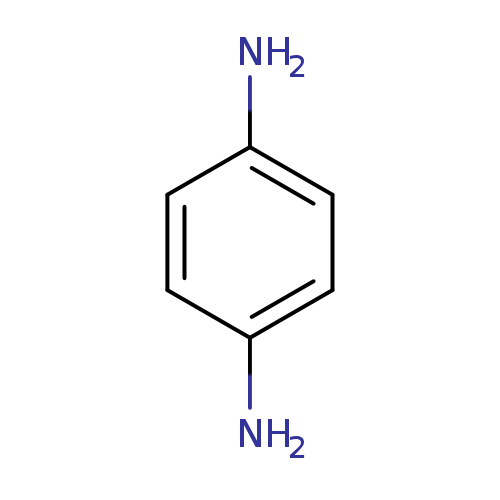
p-Phenylenediamine is an organic compound with the formula C6H8N2 and an average molecular weight of 108.14 g/mol. p-Phenylenediamine belongs to the aniline and substituted anilines, a subclass of benzene and substituted derivatives within the organic compounds. Industrially, the compound serves as a dye and a hardener. In the context of plastics, it is used in Polyamide, though its presence in Polyethylene Terephthalate remains inconclusive. The compound is found in or released from 30 recorded sources. These include electrical and electronic equipment such as antennas, auxiliary devices, coils, communication cables or conductors, and conductors or conductive bodies characterised by the conductive materials, among 12 others. Within building and construction, it is associated with fencing, roofs, tents or canopies, and sunshades awnings or outside screens. Household cleaning and consumer products containing the compound include soap detergents, perfumes within detergents and soaps, bleaching agents, and cigar cigarettes. It is also found in food contact materials, food preservation, and processing meats, as well as in drinking water. Recorded exposure routes for p-Phenylenediamine include oral, inhalation, and touch.
Contaminant Type
  • Human Neurotoxin
Chemical Structure
Synonyms
ValueSource
1,4-BenzenediamineChEBI
1,4-DiaminobenzeneChEBI
4-AminoanilineChEBI
4-PhenylenediamineChEBI
p-DiaminobenzeneChEBI
p-PhenylenediamineChEBI
p-Phenylenediamine baseChEBI
Para-phenylenediamineChEBI
Paraphenylene-diamineChEBI
PPDChEBI
PPDAChEBI
1,4-PhenyldiamineMeSH
1,4-PhenylenediamineMeSH
4-Phenylenediamine bromide, ion(1+)MeSH
4-Phenylenediamine dihydrochlorideMeSH
4-Phenylenediamine diperchlorateMeSH
4-Phenylenediamine ion (1+)MeSH
4-Phenylenediamine monohydrobromideMeSH
4-Phenylenediamine monohydrochlorideMeSH
4-Phenylenediamine monohydroiodideMeSH
4-Phenylenediamine monooxalateMeSH
4-Phenylenediamine monoperchlorateMeSH
4-Phenylenediamine monosulfateMeSH
4-Phenylenediamine sulfateMeSH
Ursol-DMeSH
Black hennaMeSH
ParaphenylenediamineMeSH
Chemical FormulaC6H8N2
Average Molecular Mass108.144 g/mol
Monoisotopic Mass108.069 g/mol
CAS Registry Number106-50-3
IUPAC Namebenzene-1,4-diamine
Traditional Namep-phenylenediamine
SMILESNC1=CC=C(N)C=C1
InChI IdentifierInChI=1S/C6H8N2/c7-5-1-2-6(8)4-3-5/h1-4H,7-8H2
InChI KeyCBCKQZAAMUWICA-UHFFFAOYSA-N
Chemical Taxonomy
Description Belongs to the class of organic compounds known as aniline and substituted anilines. These are organic compounds containing an aminobenzene moiety.
KingdomOrganic compounds
Super ClassBenzenoids
ClassBenzene and substituted derivatives
Sub ClassAniline and substituted anilines
Direct ParentAniline and substituted anilines
Alternative Parents
Substituents
  • Aniline or substituted anilines
  • Organic nitrogen compound
  • Organopnictogen compound
  • Hydrocarbon derivative
  • Primary amine
  • Organonitrogen compound
  • Amine
  • Aromatic homomonocyclic compound
Molecular FrameworkAromatic homomonocyclic compounds
External Descriptors
Biological Properties
StatusDetected and Not Quantified
OriginNot Available
Cellular LocationsNot Available
Biofluid LocationsNot Available
Tissue LocationsNot Available
ApplicationsNot Available
Biological Roles
Chemical RolesNot Available
Organoleptic Effects
  • dark brown colour ?
Physical Properties
StateNot Available
AppearanceNot Available
Experimental Properties
PropertyValue
Melting PointNot Available
Boiling PointNot Available
SolubilityNot Available
Predicted Properties
PropertyValueSource
Water Solubility75.8 g/LALOGPS
logP-0.01ALOGPS
logP0.32ChemAxon
logS-0.15ALOGPS
pKa (Strongest Basic)6.46ChemAxon
Physiological Charge0ChemAxon
Hydrogen Acceptor Count2ChemAxon
Hydrogen Donor Count2ChemAxon
Polar Surface Area52.04 ŲChemAxon
Rotatable Bond Count0ChemAxon
Refractivity35.46 m³·mol⁻¹ChemAxon
Polarizability11.72 ųChemAxon
Number of Rings1ChemAxon
BioavailabilityYesChemAxon
Rule of FiveYesChemAxon
Ghose FilterNoChemAxon
Veber's RuleNoChemAxon
MDDR-like RuleNoChemAxon
Spectra
Spectra
Spectrum TypeDescriptionSplash KeyDeposition DateView
Predicted GC-MSPredicted GC-MS Spectrumsplash10-0a4i-3900000000-61081929d919d712e335Not AvailableView Spectrum
Predicted GC-MSPredicted GC-MS SpectrumNot AvailableNot AvailableView Spectrum
LC-MS/MSLC-MS/MS Spectrumsplash10-0006-9000000000-34661e2d00632dd3d051Not AvailableView Spectrum
LC-MS/MSLC-MS/MS Spectrumsplash10-0a4i-2900000000-ac88e1845d9bf63df052Not AvailableView Spectrum
LC-MS/MSLC-MS/MS Spectrumsplash10-052f-9300000000-507544e80b10aab33534Not AvailableView Spectrum
LC-MS/MSLC-MS/MS Spectrumsplash10-05mo-9300000000-21ac15e6aeee18f1222cNot AvailableView Spectrum
LC-MS/MSLC-MS/MS Spectrumsplash10-014l-9200000000-a703ee189bc526ca921dNot AvailableView Spectrum
LC-MS/MSLC-MS/MS Spectrumsplash10-014i-9100000000-06e266af4900a62680efNot AvailableView Spectrum
LC-MS/MSLC-MS/MS Spectrumsplash10-052f-9400000000-7219f4ee8ca59ed3ecc9Not AvailableView Spectrum
LC-MS/MSLC-MS/MS Spectrumsplash10-0006-9000000000-1d60caf090423cc1094fNot AvailableView Spectrum
LC-MS/MSLC-MS/MS Spectrumsplash10-052f-9600000000-12dcc6e2ac4da25c3ebfNot AvailableView Spectrum
LC-MS/MSLC-MS/MS Spectrumsplash10-0a4l-6900000000-b333335a7099f9a8b5f3Not AvailableView Spectrum
LC-MS/MSLC-MS/MS Spectrumsplash10-0a4i-0900000000-2c9680b8af4e12a2acfaNot AvailableView Spectrum
LC-MS/MSLC-MS/MS Spectrumsplash10-0a4i-0900000000-e44a8b42a4a6fca2f034Not AvailableView Spectrum
LC-MS/MSLC-MS/MS Spectrumsplash10-0006-9000000000-772244a291b18534be3cNot AvailableView Spectrum
LC-MS/MSLC-MS/MS Spectrumsplash10-0006-9000000000-4fc045d75a788d609c72Not AvailableView Spectrum
Predicted LC-MS/MSPredicted LC-MS/MS Spectrumsplash10-0a4i-0900000000-c85293167c3205295bd9Not AvailableView Spectrum
Predicted LC-MS/MSPredicted LC-MS/MS Spectrumsplash10-0a4i-0900000000-a313caa7a5892d95b415Not AvailableView Spectrum
Predicted LC-MS/MSPredicted LC-MS/MS Spectrumsplash10-0f89-9000000000-b84951cb869463c57c01Not AvailableView Spectrum
Predicted LC-MS/MSPredicted LC-MS/MS Spectrumsplash10-0a4i-0900000000-7f020be8fb005e0dfc4cNot AvailableView Spectrum
Predicted LC-MS/MSPredicted LC-MS/MS Spectrumsplash10-0a4i-3900000000-2d74ca8488bb9547e780Not AvailableView Spectrum
MSMS Spectrumsplash10-0a4i-9800000000-e3b4bf12745fc30aecd9Not AvailableView Spectrum
1D NMR1H NMR Spectrum (1D, D2O, predicted)Not AvailableNot AvailableView Spectrum
1D NMR13C NMR Spectrum (1D, D2O, predicted)Not AvailableNot AvailableView Spectrum
Toxicity Profile
Toxicity Values
Toxicity ValueOrganismDose DescriptorRoute of ExposurePredicted or ExperimentalToxicity RatingReference
243.0 Log mg/kg [140:430]RatLD50oralpredictedNot AvailableNot Available
Toxicity / Toxin ClassNot Available
Mechanism of ToxicityNot Available
Carcinogenicity (IARC Classification)Not Available
Minimum Risk LevelNot Available
SymptomsNot Available
TreatmentNot Available
Health Effects
Health EffectRelationshipDirectionDescriptionReference
allergic contact dermatitisAssociated With?increaseNot AvailablePMC13230110
occupational asthmaAssociated With?increaseNot AvailablePMC11016626
rhinitisAssociated With?increaseA disorder characterized by an inflammation of the nasal mucosal. (NCI CTCAE)PMC11016626
vitiligoAssociated With?Not AvailableA hypersensitivity reaction type II disease that causes depigmentation of patches of skin resulting from loss of function or death of melanoctyes. (DO)PMC5362111
Oxidative StressAssociated With?Not AvailableNot AvailablePMC9210865
DeathAssociated With?Not AvailableNot AvailablePMC11246752
ErythemaAssociated With?increaseNot AvailablePMC13230110
Exposure Sources
Source IDSourceSectorReference
CEDs000010Insecticides?Insecticides are synthetic chemicals designed to control or eliminate insect pests that threaten crops and other agricultural products.Agriculture & land managementPubChem
CEDs000070Stormwater runoff?Stormwater runoff refers to the flow of rainwater or melted snow that does not soak into the ground and instead collects pollutants as it travels over impervious surfaces such as roads and parking lots.Automotive & urban infrastructurePubChem
CEDs000115Drinking water?Drinking water can be a medium for synthetic chemical contamination, often originating from various industrial processes and agricultural practices.Drinking water & water supplyNot Available
CEDs000227Hair dyes?Hair dyes often contain a range of synthetic chemicals, including aromatic amines, resorcinol, and formaldehyde, which can pose environmental contamination risks.Personal care & cosmeticsPMC9214764 , PMC9214764
CEDs000233Brushes?Brushes used in personal care and cosmetics can be a source of synthetic chemical contamination due to the materials and coatings used in their manufacturing.Personal care & cosmeticsPubChem
CEDs000455Polyester?Polyester is a synthetic polymer derived from petrochemicals, primarily used in the production of textiles and furnishings.Textiles, leather & furnishingsPMC8434964
CEDs000490Personal care & cosmeticsNot Available
CEDs000494Food contact materials?Food contact materials refer to substances and products that are intended to come into contact with food during processing, packaging, or preparation.Food, food processing & cookwareNot Available
CEDs000496Fencing?Fencing materials, particularly those used in construction and landscaping, can be a source of synthetic chemical contamination due to the treatments and coatings applied for durability and weather resistance.Building & ConstructionPubChem
CEDs000499Roofs?Roofs can be a significant source of synthetic chemical contamination due to the materials used in their construction and maintenance.Building & ConstructionPubChem
CEDs000501Sunshades Awnings Or Outside Screens?Sunshades, awnings, and outside screens are often constructed using synthetic materials such as polyvinyl chloride (PVC), polyester, or acrylic fabrics.Building & ConstructionPubChem
CEDs000502Sunshades Awnings Or Outside Screens?Sunshades, awnings, and outside screens are commonly used in construction to enhance energy efficiency and provide shade.Building & ConstructionPubChem
CEDs000503Tents Or Canopies?Tents and canopies used in various applications can be a source of synthetic chemical contamination primarily due to the materials from which they are made.Building & ConstructionPubChem
CEDs000506Antennas?Antennas, commonly used in communication technologies, can be a source of synthetic chemical contamination through the materials and coatings used in their construction.Electrical & Electronic EquipmentPubChem
CEDs000507Auxiliary Devices?Auxiliary devices, such as capacitors, transformers, and circuit breakers, are integral components in various electronic systems.Electrical & Electronic EquipmentPubChem
CEDs000508Coils?Coils are components used in various electrical and electronic applications, such as transformers, inductors, and motors.Electrical & Electronic EquipmentPubChem
CEDs000510Communication Cables Or Conductors?Communication cables or conductors are essential components in the transmission of data and signals in various applications, including telecommunications and networking.Electrical & Electronic EquipmentPubChem
CEDs000511Conductors Or Conductive Bodies Characterised By The Conductive Materials?Conductors, or conductive bodies, are materials that allow the flow of electrical current, typically made from metals such as copper, aluminum, or silver.Electrical & Electronic EquipmentPubChem
CEDs000517Electric Switches?Electric switches, integral components in numerous devices, can be a source of synthetic chemical contamination due to the materials and manufacturing processes involved in their production.Electrical & Electronic EquipmentPubChem
CEDs000519Electrodes?Electrodes, used in various electrical and electronic applications, can be a source of synthetic chemical contamination due to the materials from which they are constructed and the processes involved in their manufacturing.Electrical & Electronic EquipmentPubChem
CEDs000520Emergency Protective Devices?Emergency protective devices, such as circuit breakers and surge protectors, are essential components in electrical systems designed to prevent damage from overcurrent and surges.Electrical & Electronic EquipmentPubChem
CEDs000521Fixed Capacitors And Their Manufacture?Fixed capacitors are passive electronic components used to store and release electrical energy, playing a critical role in various circuits.Electrical & Electronic EquipmentPubChem
CEDs000524Hybrid Capacitors?Hybrid capacitors are energy storage devices that combine the properties of electrolytic and supercapacitors, utilizing a combination of electrochemical principles to achieve higher energy density and power density.Electrical & Electronic EquipmentPubChem
CEDs000527Magnets?Magnets, commonly used in various electrical and electronic applications, can be a source of synthetic chemical contamination due to the materials used in their production.Electrical & Electronic EquipmentPubChem
CEDs000529Power Cables?Power cables are used to transmit electrical energy and are typically composed of conductive materials, insulation, and protective coatings.Electrical & Electronic EquipmentPubChem
CEDs000530Radio Transmission Systems?Radio transmission systems utilize a variety of synthetic chemicals in their manufacturing and maintenance processes.Electrical & Electronic EquipmentPubChem
CEDs000534Still Video Cameras?Still video cameras, which capture images in digital format, can be a source of synthetic chemical contamination due to the materials and components used in their production and operation.Electrical & Electronic EquipmentPubChem
CEDs000536Superconductive Or Hyperconductive Conductors Cables Or Transmission Lines?Superconductive or hyperconductive conductors, including cables and transmission lines, are materials that exhibit zero electrical resistance under specific conditions, typically at low temperatures.Electrical & Electronic EquipmentPubChem
CEDs000539Video Games?Video games, through their production and disposal processes, can be a source of synthetic chemical contamination.Electrical & Electronic EquipmentPubChem
CEDs000540X Ray Tubes?X-ray tubes are devices used to produce X-rays for various applications, including medical imaging and industrial inspections.Electrical & Electronic EquipmentPubChem
CEDs000545Food Preservation?Food preservation often involves the use of synthetic chemicals, such as preservatives, flavor enhancers, and color additives, to extend shelf life and enhance the sensory qualities of food products.Food, food processing & cookwarePubChem
CEDs000552Processing Meats?Processing meats can lead to synthetic chemical contamination primarily through the use of additives and preservatives.Food, food processing & cookwarePubChem
CEDs000555Bleaching Agents?Bleaching agents are chemical substances used to whiten or lighten materials, often employed in various cleaning products for their stain removal and disinfecting properties.Household cleaning & consumer productsPubChem
CEDs000556Cigar Cigarettes?Cigar cigarettes are a source of synthetic chemical contamination due to the combustion of various tobacco blends and additives.Household cleaning & consumer productsPubChem
CEDs000561Perfumes Within Detergents And Soaps?Perfumes within detergents and soaps are synthetic fragrance compounds added to enhance the sensory experience of cleaning products.Household cleaning & consumer productsPubChem
CEDs000563Soap Detergents?Soap detergents are synthetic surfactants designed to enhance the cleaning efficacy of water by reducing surface tension, allowing for better interaction with dirt and grease.Household cleaning & consumer productsPubChem
CEDs000581Paper Making Machines?Paper making machines utilize various synthetic chemicals throughout the production process, including additives, coatings, and bleaching agents.Industrial manufacturing & chemical processingPubChem
CEDs000598Fertiliser Distributors?Fertiliser distributors play a critical role in the supply of synthetic fertilizers, which are widely used to enhance soil fertility and crop yield.Agriculture & land managementPubChem
CEDs000603Nematocides?Nematocides are synthetic chemicals specifically designed to control nematodes, which are microscopic roundworms that can cause significant damage to crops and plants.Agriculture & land managementPubChem
CEDs000605Pest Repellants?Pest repellents, often formulated from synthetic chemicals, are widely used to protect crops from insect infestations and other pests.Agriculture & land managementPubChem
CEDs000606Plant Growth Regulators?Plant Growth Regulators (PGRs) are synthetic chemicals designed to influence the growth and development of plants.Agriculture & land managementPubChem
CEDs000610Aftersun Products?Aftersun products are designed to soothe and hydrate the skin after sun exposure, often containing various synthetic chemicals such as emollients, preservatives, and fragrances.Personal care & cosmeticsPubChem
CEDs000611Anti Perspirants Or Body Deoderants?Antiperspirants and body deodorants commonly contain synthetic chemicals such as aluminum compounds, parabens, and synthetic fragrances.Personal care & cosmeticsPubChem
CEDs000613Depilatories?Depilatories are products designed to remove unwanted hair through the application of synthetic chemicals that break down the protein structure of hair, facilitating its removal.Personal care & cosmeticsPubChem
CEDs000614Essential Oils Or Perfumes?Essential oils and perfumes are complex mixtures of volatile compounds derived from natural or synthetic sources, commonly used for their aromatic properties.Personal care & cosmeticsPubChem
CEDs000615Eye Makeup Products?Eye makeup products, including mascaras, eyeliners, and eyeshadows, often contain a variety of synthetic chemicals such as pigments, preservatives, and film-forming agents.Personal care & cosmeticsPubChem
CEDs000618Lip Makeup Products?Lip makeup products, such as lipsticks, lip glosses, and lip liners, often contain a variety of synthetic chemicals, including pigments, preservatives, and emollients.Personal care & cosmeticsPubChem
CEDs000630Toys?Toys, particularly those made from synthetic materials such as plastics, can be a source of chemical contamination due to the presence of various additives and compounds used in their production.Recreation & sports surfacesPubChem
CEDs000631Anthraquinone Dyes?Anthraquinone dyes are a class of synthetic organic compounds characterized by their vibrant colors and stability, making them widely used in various applications, particularly in coloring textiles and leather.Textiles, leather & furnishingsPubChem
CEDs000632Apparel?Apparel production often involves the use of various synthetic chemicals, including dyes, finishing agents, and preservatives.Textiles, leather & furnishingsPubChem
CEDs000633Azo Dyes?Azo dyes are synthetic organic compounds characterized by the presence of one or more azo groups (-N=N-), which are widely used for coloring textiles, leather, and furnishings.Textiles, leather & furnishingsPubChem
CEDs000638Decorating Textiles?Decorating textiles often involves the use of synthetic chemicals such as dyes, finishes, and coatings.Textiles, leather & furnishingsPubChem
CEDs000642Footwear?Footwear production often involves the use of various synthetic chemicals, such as adhesives, dyes, and treatments, which can contribute to environmental contamination.Textiles, leather & furnishingsPubChem
CEDs000643Headwear?Headwear made from synthetic materials often incorporates chemicals used in the manufacturing and finishing processes, such as dyes, flame retardants, and water repellents.Textiles, leather & furnishingsPubChem
CEDs000650Purses Luggage Hand Bags?Purses, luggage, and handbags are often manufactured using synthetic materials such as polyvinyl chloride (PVC), polyurethane, and various types of nylon.Textiles, leather & furnishingsPubChem
CEDs000652Ropes?Ropes manufactured from synthetic fibers, such as polypropylene, nylon, and polyester, are widely used in various applications, including marine, construction, and outdoor activities.Textiles, leather & furnishingsPubChem
CEDs000655Slide Fasteners?Slide fasteners, commonly known as zippers, are mechanical devices used to join two edges of fabric or other materials.Textiles, leather & furnishingsPubChem
CEDs000657Surface Finishing Of Leather?Surface finishing of leather often involves the use of various synthetic chemicals, including dyes, resins, and finishing agents.Textiles, leather & furnishingsPubChem
CEDs000662Yarns Or Threads?Yarns or threads used in textiles can be a source of synthetic chemical contamination due to the production processes and treatments they undergo.Textiles, leather & furnishingsPubChem
CEDs000665Fire Extinguishers?Fire extinguishers contain various synthetic chemicals designed to suppress flames and prevent the spread of fire.Fire suppression systems & agentsPubChem
CEDs000667Gaseous Fire Fighting?Gaseous fire fighting systems utilize synthetic chemicals, such as halocarbons and inert gases, to suppress fires through chemical and physical processes.Fire suppression systems & agentsPubChem
CEDs000670Solid Fire Fighting Substances?Solid fire fighting substances, such as certain types of dry chemical powders, are used in fire suppression applications to extinguish flames and prevent fire spread.Fire suppression systems & agentsPubChem
CEDs000671Airplanes And Helicopters?Airplanes and helicopters are significant sources of synthetic chemical contamination primarily through the use of aviation fuels, lubricants, and de-icing agents.Aviation & AerospacePubChem
CEDs000673Unmanned Aerial Vehicles?Unmanned Aerial Vehicles (UAVs), commonly known as drones, utilize various synthetic chemicals in their manufacturing, operation, and maintenance processes.Aviation & AerospacePubChem
CEDs000678Nitrogenous Fertilisers?Nitrogenous fertilizers are synthetic chemical compounds primarily used to enhance plant growth by supplying essential nitrogen, a crucial nutrient for photosynthesis and protein synthesis.Agriculture & land managementPubChem
CEDs000679Phosphatic Fertilisers?Phosphatic fertilizers are synthetic chemical products primarily composed of phosphorus, which is essential for plant growth.Agriculture & land managementPubChem
CEDs000684Cements?Cements are a composite material primarily used as a binding agent in construction applications, formed by the calcination of limestone and clay minerals at high temperatures.Building & ConstructionPubChem
CEDs000685Ceramics?Ceramics can be a source of synthetic chemical contamination through various additives and processing agents used in their production.Building & ConstructionPubChem
CEDs000686Clay Wares?Clay wares are ceramic products made from natural clay, often utilized in various construction applications such as tiles, bricks, and sanitary ware.Building & ConstructionPubChem
CEDs000688Glass Coatings?Glass coatings are synthetic chemical formulations applied to glass surfaces to enhance properties such as durability, UV resistance, and aesthetic appeal.Building & ConstructionPubChem
CEDs000696Nanotechnology?Nanotechnology involves the manipulation of materials at the molecular or atomic level, typically within the range of 1 to 100 nanometers.Industrial manufacturing & chemical processingPubChem
CEDs000697Submarines?Submarines, while essential for military and research purposes, can be a source of synthetic chemical contamination due to their use of various industrial chemicals.Marine, shipping & aquaculturePubChem
CEDs000701Ventilation Of Mines Or Tunnels?Ventilation in mines or tunnels is essential for maintaining air quality and ensuring the safety of workers.Mining & metal processingPubChem
CEDs000716Erasers?Erasers, commonly used in writing and drawing applications, are often made from synthetic rubber or thermoplastic materials, which can contain various additives such as plasticizers, fillers, and colorants.Paper, pulp & fiber productsPubChem
CEDs000727Printing Machines Or Presses?Printing machines or presses commonly utilize synthetic chemicals such as inks, solvents, and cleaning agents.Paper, pulp & fiber productsPubChem
CEDs000734Coating Compositions?Coating compositions, which include paints, sealants, and varnishes, are formulated with a variety of synthetic chemicals such as solvents, resins, pigments, and additives.Building & ConstructionPubChem
CEDs000735Explosives?Explosives are chemical compounds or mixtures designed to undergo rapid decomposition, releasing energy in the form of gas and heat.Defense & military infrastructurePubChem
CEDs000736Fuses?Fuses are safety devices designed to protect electrical circuits by breaking the circuit when excessive current flows through.Electrical & Electronic EquipmentPubChem
CEDs000738Cooling Circuit Water?Cooling circuit water is utilized in various industrial processes to absorb and dissipate heat generated during operations.Industrial manufacturing & chemical processingPubChem
CEDs000739Inks?Inks are complex mixtures composed of pigments or dyes, solvents, resins, and additives used primarily for printing and writing applications.Paper, pulp & fiber productsPubChem
CEDs000740Paper?Paper production involves the processing of wood fibers and the use of various chemicals, which can lead to synthetic chemical contamination.Paper, pulp & fiber productsPubChem
CEDs000741Pigment Pastes?Pigment pastes are concentrated dispersions of pigments used to impart color and properties to materials.Paper, pulp & fiber productsPubChem
CEDs000742Leather Tanning?Leather tanning is a process that transforms raw animal hides into durable leather through the application of various chemicals, including chromium salts, aldehydes, and vegetable tannins.Textiles, leather & furnishingsPubChem
CEDs000743Sludge Treatment?Sludge treatment involves the processing of waste materials generated from wastewater treatment plants, which often contain a variety of organic and inorganic substances.Wastewater, sanitation & biosolidsPubChem
CEDs000744Water, Wastewater, & Sewage Treatment?Water, wastewater, and sewage treatment processes are critical for managing and mitigating pollutants in water systems.Wastewater, sanitation & biosolidsPubChem
CEDs00754BiocharAgriculture & land managementPMC9077033
CEDs01888Rubber ProductsIndustrial manufacturing & chemical processingPMC12301457
CEDs02255WaterAquatic systems & sedimentsPMC12251324 , PMC12392735
CEDs02592PM2.5Air, dust & atmospheric transportPMC11097632
CEDs02679Fine Particulate MatterAir, dust & atmospheric transportPMC11097632
CEDs02867Hair DyePersonal care & cosmeticsPMC2965911 , PMC9210865
Pathways
1 pathwayPathway Source: PathBank
Targets
StructureProteinUniProt IDOrganismRelationshipDetails
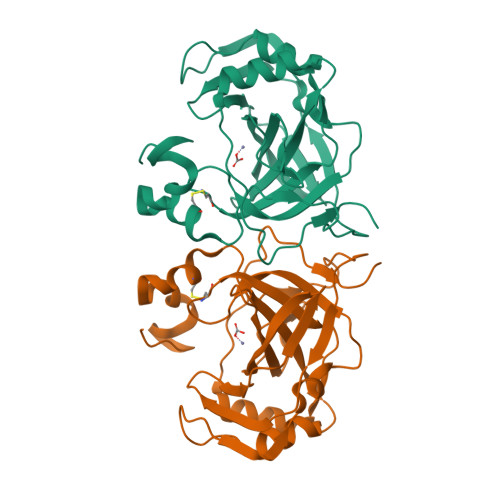
Click to view 3D structureGlutathione reductaseP70619Rattus norvegicusPredicted (SEA)
Prediction Confidence Score
0.364
Applicability Domain
0.364
Statistical Significance
1.00e-05
Supporting Reference Compounds
1
E-value
0.0778492
Carbonic anhydrase 3 structureClick to view 3D structureCarbonic anhydrase 3P07451HumansPredicted (SEA)
Prediction Confidence Score
0.337
Applicability Domain
0.615
Statistical Significance
0.0018
Supporting Reference Compounds
64
E-value
13.7793
Carbonic anhydrase 9 structureClick to view 3D structureCarbonic anhydrase 9Q16790HumansPredicted (SEA)
Prediction Confidence Score
0.327
Applicability Domain
0.471
Statistical Significance
0.0199
Supporting Reference Compounds
372
E-value
154.686
Tyrosinase structureClick to view 3D structureTyrosinaseP14679HumansKnownNot Available
Carbonic anhydrase 2 structureClick to view 3D structureCarbonic anhydrase 2P00918HumansPredicted (SEA)
Prediction Confidence Score
0.327
Applicability Domain
0.471
Statistical Significance
0.0258
Supporting Reference Compounds
472
E-value
200.54
Carbonic anhydrase 12 structureClick to view 3D structureCarbonic anhydrase 12O43570HumansPredicted (SEA)
Prediction Confidence Score
0.318
Applicability Domain
0.471
Statistical Significance
0.0214
Supporting Reference Compounds
332
E-value
166.909
Click to view 3D structureCarbonic anhydrase 4Q95323Bos taurusPredicted (SEA)
Prediction Confidence Score
0.315
Applicability Domain
0.471
Statistical Significance
0.0072
Supporting Reference Compounds
64
E-value
56.3628
Click to view 3D structureDelta carbonic anhydraseQ5U9J1Conticribra weissflogiiPredicted (SEA)
Prediction Confidence Score
0.315
Applicability Domain
0.471
Statistical Significance
0.0033
Supporting Reference Compounds
35
E-value
25.8459
Click to view 3D structureAGAP002992-PAQ5TU56Anopheles gambiaePredicted (SEA)
Prediction Confidence Score
0.315
Applicability Domain
0.471
Statistical Significance
0.0026
Supporting Reference Compounds
30
E-value
20.3186
Carbonic anhydrase 1 structureClick to view 3D structureCarbonic anhydrase 1P00915HumansPredicted (SEA)
Prediction Confidence Score
0.311
Applicability Domain
0.471
Statistical Significance
0.0303
Supporting Reference Compounds
407
E-value
235.883
Click to view 3D structureCarbonic anhydrase 13Q9D6N1Mus musculusPredicted (SEA)
Prediction Confidence Score
0.311
Applicability Domain
0.471
Statistical Significance
0.0052
Supporting Reference Compounds
70
E-value
40.7151
Carbonic anhydrase 6 structureClick to view 3D structureCarbonic anhydrase 6P23280HumansPredicted (SEA)
Prediction Confidence Score
0.31
Applicability Domain
0.471
Statistical Significance
0.0096
Supporting Reference Compounds
151
E-value
74.891
Carbonic anhydrase 4 structureClick to view 3D structureCarbonic anhydrase 4P22748HumansPredicted (SEA)
Prediction Confidence Score
0.308
Applicability Domain
0.471
Statistical Significance
0.0121
Supporting Reference Compounds
193
E-value
93.8862
Carbonic anhydrase 14 structureClick to view 3D structureCarbonic anhydrase 14Q9ULX7HumansPredicted (SEA)
Prediction Confidence Score
0.307
Applicability Domain
0.471
Statistical Significance
0.0136
Supporting Reference Compounds
172
E-value
106.264
Carbonic anhydrase 7 structureClick to view 3D structureCarbonic anhydrase 7P43166HumansPredicted (SEA)
Prediction Confidence Score
0.307
Applicability Domain
0.471
Statistical Significance
0.0178
Supporting Reference Compounds
242
E-value
138.416
Beta-carbonic anhydrase 1 structureClick to view 3D structureBeta-carbonic anhydrase 1P9WPJ7Mycobacterium tuberculosisPredicted (SEA)
Prediction Confidence Score
0.305
Applicability Domain
0.471
Statistical Significance
0.0063
Supporting Reference Compounds
55
E-value
49.2007
Click to view 3D structurePROBABLE TRANSMEMBRANE CARBONIC ANHYDRASE (CARBONATE DEHYDRATASE) (CARBONIC DEHYDRATASE)P96878Mycobacterium tuberculosisPredicted (SEA)
Prediction Confidence Score
0.296
Applicability Domain
0.471
Statistical Significance
0.0069
Supporting Reference Compounds
38
E-value
53.9495
Click to view 3D structureCarbonate dehydrataseB2V8E3Sulfurihydrogenibium sp. (strain YO3AOP1)Predicted (SEA)
Prediction Confidence Score
0.295
Applicability Domain
0.471
Statistical Significance
0.0049
Supporting Reference Compounds
40
E-value
38.3018
Click to view 3D structureAstrosclerin-3A6YCJ1Astrosclera willeyanaPredicted (SEA)
Prediction Confidence Score
0.295
Applicability Domain
0.471
Statistical Significance
0.0051
Supporting Reference Compounds
44
E-value
39.9366
Click to view 3D structureCarbonic anhydraseO24855Helicobacter pylori (strain ATCC 700392 / 26695) (Campylobacterpylori)Predicted (SEA)
Prediction Confidence Score
0.295
Applicability Domain
0.471
Statistical Significance
0.0049
Supporting Reference Compounds
38
E-value
38.0683
Click to view 3D structureCarbonic anhydraseQ6FTL6Candida glabrata CBS 138Predicted (SEA)
Prediction Confidence Score
0.295
Applicability Domain
0.471
Statistical Significance
0.0077
Supporting Reference Compounds
46
E-value
60.2553
Click to view 3D structureAlpha carbonic anhydraseB5SU02Stylophora pistillataPredicted (SEA)
Prediction Confidence Score
0.295
Applicability Domain
0.471
Statistical Significance
0.0048
Supporting Reference Compounds
43
E-value
37.0562
Carbonic anhydrase 2 structureClick to view 3D structureCarbonic anhydrase 2Q3I4V7Cryptococcus neoformansPredicted (SEA)
Prediction Confidence Score
0.295
Applicability Domain
0.471
Statistical Significance
0.0067
Supporting Reference Compounds
60
E-value
52.5482
Carbonic anhydrase, alpha family structureClick to view 3D structureCarbonic anhydrase, alpha familyQ31FD6Thiomicrospira crunogenaPredicted (SEA)
Prediction Confidence Score
0.295
Applicability Domain
0.471
Statistical Significance
0.0049
Supporting Reference Compounds
41
E-value
38.3018
Carbonic anhydrase structureClick to view 3D structureCarbonic anhydraseQ5AJ71Candida albicans (strain SC5314 / ATCC MYA-2876) (Yeast)Predicted (SEA)
Prediction Confidence Score
0.295
Applicability Domain
0.471
Statistical Significance
0.008
Supporting Reference Compounds
68
E-value
62.3572
Click to view 3D structureCarbonic anhydraseC0IX24Stylophora pistillataPredicted (SEA)
Prediction Confidence Score
0.295
Applicability Domain
0.471
Statistical Significance
0.0047
Supporting Reference Compounds
41
E-value
36.9784
Concentrations
Not Available
External Links
DrugBank IDNot Available
HMDB IDHMDB0256055
FooDB IDNot Available
Phenol Explorer IDNot Available
KNApSAcK IDC00014965
BiGG IDNot Available
BioCyc IDNot Available
METLIN IDNot Available
PDB IDNot Available
Wikipedia LinkP-Phenylenediamine
Chemspider ID13835179
ChEBI ID51403
PubChem Compound IDNot Available
Kegg Compound IDC19499
YMDB IDNot Available
ECMDB IDNot Available
References
Synthesis ReferenceNot Available
MSDSNot Available
General ReferencesNot Available