3-HEXENYL ISOVALERATE (CED0013334)

Record Information
Version1.0
Creation Date2016-05-19 02:08:44 UTC
Update Date2026-03-31 22:05:31 UTC
SynCED IDCED0013334
Secondary Accession Numbers
  • CHEM005982
Identification
Common Name3-HEXENYL ISOVALERATE
ClassSmall Molecule
Description
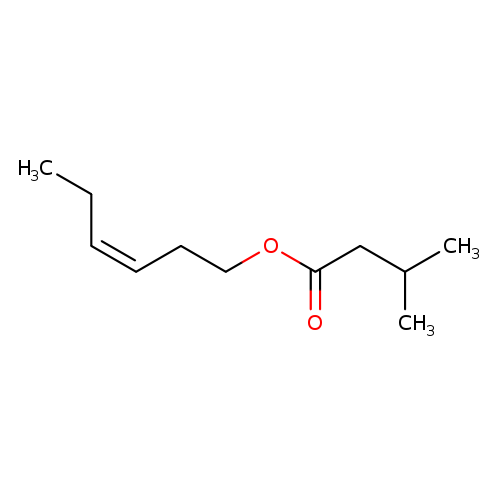
3-HEXENYL ISOVALERATE is an organic compound with the formula C11H20O2 and an average molecular weight of 184.28 g/mol. 3-HEXENYL ISOVALERATE belongs to the fatty acid esters, a subclass of fatty acyls within the organic compounds. This substance is utilized industrially as a nutrient and flavouring agent. It has been recorded as being found in household cleaning and consumer products, specifically within tobacco product cases.
Contaminant TypeNot Available
Chemical Structure
Synonyms
ValueSource
cis-3-Hexenyl 3-methylbutanoic acidGenerator
(3Z)-3-Hexenyl 3-methylbutanoateHMDB
(Z)-3-Hexen-1-yl isovalerateHMDB
(Z)-3-Hexenyl 3-methylbutanoateHMDB
(Z)-3-Hexenyl 3-methylbutyrateHMDB
(Z)-3-Hexenyl isopentanoateHMDB
(Z)-3-Hexenyl isovalerateHMDB
(Z)-Hex-3-enyl 3-methylbutanoateHMDB
(Z)-Hex-3-enyl isovalerateHMDB
3-Hexen-1-yl 3-methylbutanoateHMDB
3-Hexenyl 3-methylbutanoateHMDB
3-Hexenyl ester(Z)-isovaleric acidHMDB
3-Hexenyl isopentanoateHMDB
3-Hexenyl isovalerateHMDB
3-Methyl-3-hexenyl ester(Z)-butanoic acidHMDB
Butanoic acid, 3-methyl-, (3Z)-3-hexen-1-yl esterHMDB
Butanoic acid, 3-methyl-, (3Z)-3-hexenyl esterHMDB
Butanoic acid, 3-methyl-, 3-hexen-1-yl esterHMDB
Butanoic acid, 3-methyl-, 3-hexenyl esterHMDB
cis-3-Hexenyl isopentanoateHMDB
cis-3-Hexenyl isovalerateHMDB
cis-Hex-3-enyl 3-methylbutanoateHMDB
FEMA 3498HMDB
Hex-3-enyl isovalerateHMDB
Isovaleric acid cis-3-hexenyl esterHMDB
Isovaleric acid, 3-hexenyl esterHMDB
(Z)-3-Hexenyl 3-methylbutanoic acidGenerator
Chemical FormulaC11H20O2
Average Molecular Mass184.275 g/mol
Monoisotopic Mass184.146 g/mol
CAS Registry Number10032-11-8
IUPAC Name(3Z)-hex-3-en-1-yl 3-methylbutanoate
Traditional Name(3Z)-hex-3-en-1-yl 3-methylbutanoate
SMILESCC\C=C/CCOC(=O)CC(C)C
InChI IdentifierInChI=1S/C11H20O2/c1-4-5-6-7-8-13-11(12)9-10(2)3/h5-6,10H,4,7-9H2,1-3H3/b6-5-
InChI KeyAIQLNKITFBJPFO-WAYWQWQTSA-N
Chemical Taxonomy
Description Belongs to the class of organic compounds known as fatty acid esters. These are carboxylic ester derivatives of a fatty acid.
KingdomOrganic compounds
Super ClassLipids and lipid-like molecules
ClassFatty Acyls
Sub ClassFatty acid esters
Direct ParentFatty acid esters
Alternative Parents
Substituents
  • Fatty acid ester
  • Carboxylic acid ester
  • Monocarboxylic acid or derivatives
  • Carboxylic acid derivative
  • Organic oxygen compound
  • Organic oxide
  • Hydrocarbon derivative
  • Organooxygen compound
  • Carbonyl group
  • Aliphatic acyclic compound
Molecular FrameworkAliphatic acyclic compounds
External Descriptors
Biological Properties
StatusDetected and Not Quantified
OriginNot Available
Cellular LocationsNot Available
Biofluid LocationsNot Available
Tissue LocationsNot Available
ApplicationsNot Available
Biological RolesNot Available
Chemical RolesNot Available
Organoleptic Effects
  • freshness odour ?
Physical Properties
StateNot Available
AppearanceNot Available
Experimental Properties
PropertyValue
Melting PointNot Available
Boiling PointNot Available
SolubilityNot Available
Predicted Properties
PropertyValueSource
Water Solubility0.13 g/LALOGPS
logP3.65ALOGPS
logP3.21ChemAxon
logS-3.2ALOGPS
pKa (Strongest Basic)-7ChemAxon
Physiological Charge0ChemAxon
Hydrogen Acceptor Count1ChemAxon
Hydrogen Donor Count0ChemAxon
Polar Surface Area26.3 ŲChemAxon
Rotatable Bond Count7ChemAxon
Refractivity55.38 m³·mol⁻¹ChemAxon
Polarizability22.22 ųChemAxon
Number of Rings0ChemAxon
BioavailabilityYesChemAxon
Rule of FiveYesChemAxon
Ghose FilterYesChemAxon
Veber's RuleYesChemAxon
MDDR-like RuleNoChemAxon
Spectra
Spectra
Spectrum TypeDescriptionSplash KeyDeposition DateView
Predicted GC-MSPredicted GC-MS Spectrumsplash10-0ap0-9000000000-0c809782830a2df98a23Not AvailableView Spectrum
Predicted GC-MSPredicted GC-MS SpectrumNot AvailableNot AvailableView Spectrum
Predicted LC-MS/MSPredicted LC-MS/MS Spectrumsplash10-000i-7900000000-fecf9121d448127a0c49Not AvailableView Spectrum
Predicted LC-MS/MSPredicted LC-MS/MS Spectrumsplash10-001r-9100000000-2e7eef2378186000febdNot AvailableView Spectrum
Predicted LC-MS/MSPredicted LC-MS/MS Spectrumsplash10-0a4l-9000000000-fa5db637641e3c3fba29Not AvailableView Spectrum
Predicted LC-MS/MSPredicted LC-MS/MS Spectrumsplash10-001i-8900000000-54963f5b4493bb2ae704Not AvailableView Spectrum
Predicted LC-MS/MSPredicted LC-MS/MS Spectrumsplash10-0f89-9500000000-833812d3933fd77ddfe6Not AvailableView Spectrum
Predicted LC-MS/MSPredicted LC-MS/MS Spectrumsplash10-053r-9100000000-7ba0e90b1b3972856931Not AvailableView Spectrum
Predicted LC-MS/MSPredicted LC-MS/MS Spectrumsplash10-000t-9500000000-6f6ba53173a16c0ccf67Not AvailableView Spectrum
Predicted LC-MS/MSPredicted LC-MS/MS Spectrumsplash10-0ue9-6900000000-b38a76d4aab1f27d142aNot AvailableView Spectrum
Predicted LC-MS/MSPredicted LC-MS/MS Spectrumsplash10-00kf-9000000000-5a6c706ae8bb4141b22cNot AvailableView Spectrum
Predicted LC-MS/MSPredicted LC-MS/MS Spectrumsplash10-0540-9200000000-9a1d4307e7d0a847f6f4Not AvailableView Spectrum
Predicted LC-MS/MSPredicted LC-MS/MS Spectrumsplash10-052u-9000000000-f4df1a1baed48e4eb406Not AvailableView Spectrum
Predicted LC-MS/MSPredicted LC-MS/MS Spectrumsplash10-0a4l-9000000000-a5202bde74642daf56d4Not AvailableView Spectrum
Toxicity Profile
Toxicity Values
Toxicity ValueOrganismDose DescriptorRoute of ExposurePredicted or ExperimentalToxicity RatingReference
6607.0 Log mg/kg [3700:12000]RatLD50oralpredictedNot AvailableNot Available
Toxicity / Toxin ClassNot Available
Mechanism of ToxicityNot Available
Carcinogenicity (IARC Classification)Not Available
Minimum Risk LevelNot Available
SymptomsNot Available
TreatmentNot Available
Health Effects
Health EffectRelationshipDirectionDescriptionReference
Exposure Sources
Source IDSourceSectorReference
CEDs000010Insecticides?Insecticides are synthetic chemicals designed to control or eliminate insect pests that threaten crops and other agricultural products.Agriculture & land managementPubChem
CEDs000490Personal care & cosmeticsNot Available
CEDs000518Electrically Stimulated Smoking Devices?Electrically stimulated smoking devices, commonly known as e-cigarettes or vape pens, utilize electrical components to heat a liquid solution, often containing nicotine, flavorings, and other additives, to produce an aerosol for inhalation.Electrical & Electronic EquipmentPubChem
CEDs000545Food Preservation?Food preservation often involves the use of synthetic chemicals, such as preservatives, flavor enhancers, and color additives, to extend shelf life and enhance the sensory qualities of food products.Food, food processing & cookwarePubChem
CEDs000561Perfumes Within Detergents And Soaps?Perfumes within detergents and soaps are synthetic fragrance compounds added to enhance the sensory experience of cleaning products.Household cleaning & consumer productsPubChem
CEDs000563Soap Detergents?Soap detergents are synthetic surfactants designed to enhance the cleaning efficacy of water by reducing surface tension, allowing for better interaction with dirt and grease.Household cleaning & consumer productsPubChem
CEDs000567Tobacco Product Cases?Tobacco product cases can serve as a source of synthetic chemical contamination due to the presence of various additives and chemicals used in tobacco processing and product manufacturing.Household cleaning & consumer productsPubChem
CEDs000569Tobacco Smoke Filters?Tobacco smoke filters are designed to reduce the inhalation of harmful substances in cigarette smoke, including tar and other particulate matter.Household cleaning & consumer productsPubChem
CEDs000580Manufacture Preparation Of Tobacco Products?The manufacture and preparation of tobacco products involve various processes that can result in the introduction of synthetic chemicals into the environment.Industrial manufacturing & chemical processingPubChem
CEDs000604Pest Attractants?Pest attractants are synthetic chemicals designed to lure specific pests for monitoring or control purposes.Agriculture & land managementPubChem
CEDs000605Pest Repellants?Pest repellents, often formulated from synthetic chemicals, are widely used to protect crops from insect infestations and other pests.Agriculture & land managementPubChem
CEDs000611Anti Perspirants Or Body Deoderants?Antiperspirants and body deodorants commonly contain synthetic chemicals such as aluminum compounds, parabens, and synthetic fragrances.Personal care & cosmeticsPubChem
CEDs000614Essential Oils Or Perfumes?Essential oils and perfumes are complex mixtures of volatile compounds derived from natural or synthetic sources, commonly used for their aromatic properties.Personal care & cosmeticsPubChem
CEDs000735Explosives?Explosives are chemical compounds or mixtures designed to undergo rapid decomposition, releasing energy in the form of gas and heat.Defense & military infrastructurePubChem
CEDs01165Tea SamplesFood, food processing & cookwarePMC11988505
CEDs01634White TeaFood, food processing & cookwarePMC11988505
Pathways
0 pathwaysPathway Source: PathBank

No pathways found

No metabolic pathways have been associated with this synthetic chemical

Targets
StructureProteinUniProt IDOrganismRelationshipDetails
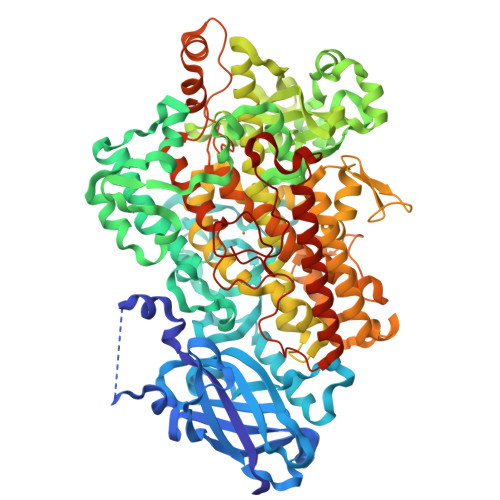
Click to view 3D structureEsteraseA3QR02Chilo suppressalisPredicted (SEA)
Prediction Confidence Score
0.317
Applicability Domain
0.317
Statistical Significance
3.40e-04
Supporting Reference Compounds
1
E-value
2.64687
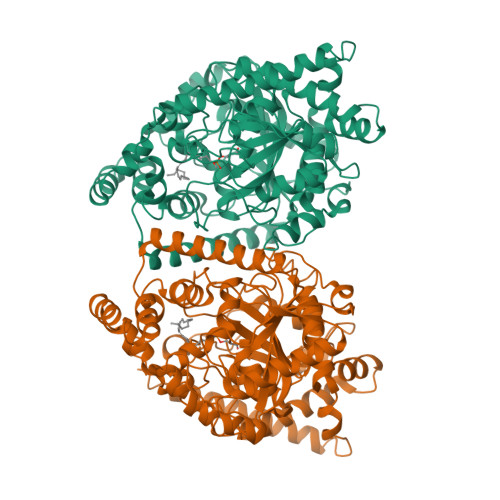
Peroxisome proliferator-activated receptor gamma structureClick to view 3D structurePeroxisome proliferator-activated receptor gammaP37231HumansPredicted (SEA)
Prediction Confidence Score
0.281
Applicability Domain
0.342
Statistical Significance
0.032
Supporting Reference Compounds
192
E-value
248.962
Peroxisome proliferator-activated receptor alpha structureClick to view 3D structurePeroxisome proliferator-activated receptor alphaQ07869HumansPredicted (SEA)
Prediction Confidence Score
0.281
Applicability Domain
0.342
Statistical Significance
0.0255
Supporting Reference Compounds
127
E-value
198.749
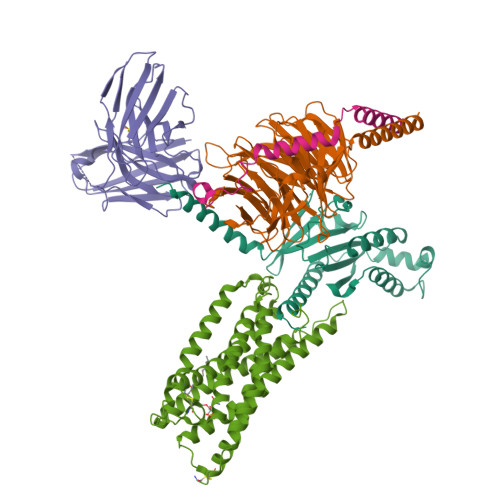
Click to view 3D structureLysophosphatidic acid receptor 4Q8BLG2Mus musculusPredicted (SEA)
Prediction Confidence Score
0.269
Applicability Domain
0.269 Low confidence
Statistical Significance
0.0013
Supporting Reference Compounds
1
E-value
9.88685
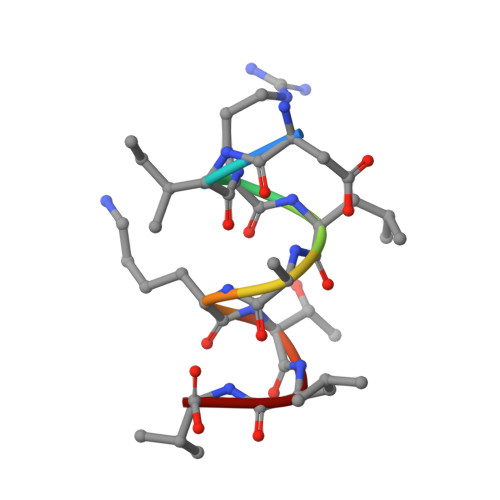
Click to view 3D structureOxoeicosanoid receptor 1Q8TDS5HumansPredicted (SEA)
Prediction Confidence Score
0.268
Applicability Domain
0.361
Statistical Significance
7.40e-04
Supporting Reference Compounds
4
E-value
5.76084
Seed linoleate 9S-lipoxygenase structureClick to view 3D structureSeed linoleate 9S-lipoxygenaseP24095Glycine maxPredicted (SEA)
Prediction Confidence Score
0.263
Applicability Domain
0.263 Low confidence
Statistical Significance
2.30e-04
Supporting Reference Compounds
1
E-value
1.79053
Peroxisome proliferator-activated receptor delta structureClick to view 3D structurePeroxisome proliferator-activated receptor deltaQ03181HumansPredicted (SEA)
Prediction Confidence Score
0.263
Applicability Domain
0.342
Statistical Significance
0.0298
Supporting Reference Compounds
89
E-value
231.991
Click to view 3D structureLysophosphatidic acid receptor 3Q9UBY5HumansPredicted (SEA)
Prediction Confidence Score
0.26
Applicability Domain
0.269 Low confidence
Statistical Significance
0.0034
Supporting Reference Compounds
21
E-value
26.7023
Click to view 3D structureCannabinoid receptor 2P47936Mus musculusPredicted (SEA)
Prediction Confidence Score
0.257
Applicability Domain
0.277 Low confidence
Statistical Significance
0.0102
Supporting Reference Compounds
39
E-value
79.0948
Click to view 3D structureCannabinoid receptor 1P20272Rattus norvegicusPredicted (SEA)
Prediction Confidence Score
0.255
Applicability Domain
0.277 Low confidence
Statistical Significance
0.0181
Supporting Reference Compounds
83
E-value
141.141
Fatty-acid amide hydrolase 1 structureClick to view 3D structureFatty-acid amide hydrolase 1P97612Rattus norvegicusPredicted (SEA)
Prediction Confidence Score
0.253
Applicability Domain
0.327
Statistical Significance
0.0455
Supporting Reference Compounds
102
E-value
354.603
Lysophosphatidic acid receptor 1 structureClick to view 3D structureLysophosphatidic acid receptor 1Q92633HumansPredicted (SEA)
Prediction Confidence Score
0.246
Applicability Domain
0.269 Low confidence
Statistical Significance
0.005
Supporting Reference Compounds
31
E-value
39.0025
Lysophosphatidic acid receptor 2 structureClick to view 3D structureLysophosphatidic acid receptor 2Q9HBW0HumansPredicted (SEA)
Prediction Confidence Score
0.245
Applicability Domain
0.269 Low confidence
Statistical Significance
0.0033
Supporting Reference Compounds
30
E-value
25.3788
Click to view 3D structureProstaglandin G/H synthase 2P79208Ovis ariesPredicted (SEA)
Prediction Confidence Score
0.242
Applicability Domain
0.361
Statistical Significance
0.0181
Supporting Reference Compounds
50
E-value
140.907
Putative P2Y purinoceptor 10 structureClick to view 3D structurePutative P2Y purinoceptor 10O00398HumansPredicted (SEA)
Prediction Confidence Score
0.24
Applicability Domain
0.276 Low confidence
Statistical Significance
0.0022
Supporting Reference Compounds
10
E-value
17.3604
Cannabinoid receptor 2 structureClick to view 3D structureCannabinoid receptor 2P34972HumansPredicted (SEA)
Prediction Confidence Score
0.239
Applicability Domain
0.277 Low confidence
Statistical Significance
0.1364
Supporting Reference Compounds
175
E-value
1062.25
Cannabinoid receptor 1 structureClick to view 3D structureCannabinoid receptor 1P21554HumansPredicted (SEA)
Prediction Confidence Score
0.237
Applicability Domain
0.277 Low confidence
Statistical Significance
0.1578
Supporting Reference Compounds
200
E-value
1228.54
Click to view 3D structureFatty-acid amide hydrolase 1O00519HumansPredicted (SEA)
Prediction Confidence Score
0.231
Applicability Domain
0.277 Low confidence
Statistical Significance
0.1482
Supporting Reference Compounds
106
E-value
1153.49
Click to view 3D structureCannabinoid receptor 1P47746Mus musculusPredicted (SEA)
Prediction Confidence Score
0.231
Applicability Domain
0.271 Low confidence
Statistical Significance
0.0186
Supporting Reference Compounds
42
E-value
144.488
Transient receptor potential cation channel subfamily V member 2 structureClick to view 3D structureTransient receptor potential cation channel subfamily V member 2Q9WUD2Rattus norvegicusPredicted (SEA)
Prediction Confidence Score
0.231
Applicability Domain
0.25 Low confidence
Statistical Significance
0.0075
Supporting Reference Compounds
21
E-value
58.3869
Muscarinic acetylcholine receptor M2 structureClick to view 3D structureMuscarinic acetylcholine receptor M2P08172HumansPredicted (SEA)
Prediction Confidence Score
0.23
Applicability Domain
0.25 Low confidence
Statistical Significance
0.2898
Supporting Reference Compounds
373
E-value
2256.3
Muscarinic acetylcholine receptor M1 structureClick to view 3D structureMuscarinic acetylcholine receptor M1P11229HumansPredicted (SEA)
Prediction Confidence Score
0.228
Applicability Domain
0.243 Low confidence
Statistical Significance
0.3167
Supporting Reference Compounds
385
E-value
2465.17
Muscarinic acetylcholine receptor M3 structureClick to view 3D structureMuscarinic acetylcholine receptor M3P20309HumansPredicted (SEA)
Prediction Confidence Score
0.228
Applicability Domain
0.243 Low confidence
Statistical Significance
0.2597
Supporting Reference Compounds
310
E-value
2021.51
Retinoic acid receptor RXR-alpha structureClick to view 3D structureRetinoic acid receptor RXR-alphaP19793HumansPredicted (SEA)
Prediction Confidence Score
0.227
Applicability Domain
0.361
Statistical Significance
0.0427
Supporting Reference Compounds
82
E-value
332.105
Probable G-protein coupled receptor 34 structureClick to view 3D structureProbable G-protein coupled receptor 34Q9UPC5HumansPredicted (SEA)
Prediction Confidence Score
0.225
Applicability Domain
0.276 Low confidence
Statistical Significance
0.0096
Supporting Reference Compounds
11
E-value
75.0467
Concentrations
Not Available
External Links
DrugBank IDNot Available
HMDB IDHMDB0038278
FooDB IDFDB017576
Phenol Explorer IDNot Available
KNApSAcK IDC00029347
BiGG IDNot Available
BioCyc IDNot Available
METLIN IDNot Available
PDB IDNot Available
Wikipedia LinkNot Available
Chemspider ID4519169
ChEBI IDNot Available
PubChem Compound ID5367681
Kegg Compound IDNot Available
YMDB IDNot Available
ECMDB IDNot Available
References
Synthesis ReferenceNot Available
MSDSNot Available
General ReferencesNot Available