ISOPROPYL-2-CYCLOHEXENONE (CED0036474)

Record Information
Version1.0
Creation Date2016-05-19 02:11:14 UTC
Update Date2026-08-25 12:36:16 UTC
SynCED IDCED0036474
Secondary Accession Numbers
  • CHEM006206
Identification
Common NameISOPROPYL-2-CYCLOHEXENONE
ClassSmall Molecule
Description
ISOPROPYL-2-CYCLOHEXENONE is an organic compound with the formula C9H14O and an average molecular weight of 138.21 g/mol. ISOPROPYL-2-CYCLOHEXENONE belongs to the carbonyl compounds, a subclass of organooxygen compounds within the organic compounds. Industrially, this substance is utilized as a fragrance, a nutrient, and a flavouring agent. The compound is found in or released from eight recorded sources. Within electrical and electronic equipment, it is associated with antennas, sparking plugs, discharge lamps, discharge tubes with liquid pool cathodes, and gas filled discharge tubes with solid cathode, among one other source. Additionally, it is found in building and construction materials, specifically tents or canopies, as well as in food contact materials used in food, food processing, and cookware. Recorded exposure routes for this compound include oral intake, inhalation, and touch.
Contaminant TypeNot Available
Chemical Structure
Synonyms
ValueSource
4-(1-Methylethyl)-2-cyclohexen-1-oneHMDB
4-iso-Propyl-2-cyclohexenoneHMDB
4-Isopropyl-2-cyclohexen-1-oneHMDB
4-Isopropyl-2-cyclohexenoneHMDB
4-Isopropylcyclohex-2-en-1-oneHMDB
CryptonHMDB
Chemical FormulaC9H14O
Average Molecular Mass138.207 g/mol
Monoisotopic Mass138.104 g/mol
CAS Registry Number500-02-7
IUPAC Name4-(propan-2-yl)cyclohex-2-en-1-one
Traditional Name4-isopropylcyclohex-2-en-1-one
SMILESCC(C)C1CCC(=O)C=C1
InChI IdentifierInChI=1S/C9H14O/c1-7(2)8-3-5-9(10)6-4-8/h3,5,7-8H,4,6H2,1-2H3
InChI KeyAANMVENRNJYEMK-UHFFFAOYSA-N
Chemical Taxonomy
Description Belongs to the class of organic compounds known as cyclohexenones. Cyclohexenones are compounds containing a cylohexenone moiety, which is a six-membered aliphatic ring that carries a ketone and has one endocyclic double bond.
KingdomOrganic compounds
Super ClassOrganic oxygen compounds
ClassOrganooxygen compounds
Sub ClassCarbonyl compounds
Direct ParentCyclohexenones
Alternative Parents
Substituents
  • Cyclohexenone
  • Organic oxide
  • Hydrocarbon derivative
  • Aliphatic homomonocyclic compound
Molecular FrameworkAliphatic homomonocyclic compounds
External DescriptorsNot Available
Biological Properties
StatusDetected and Not Quantified
OriginNot Available
Cellular LocationsNot Available
Biofluid LocationsNot Available
Tissue LocationsNot Available
ApplicationsNot Available
Biological RolesNot Available
Chemical RolesNot Available
Organoleptic EffectsNot Available
Physical Properties
StateNot Available
AppearanceNot Available
Experimental Properties
PropertyValue
Melting PointNot Available
Boiling PointNot Available
SolubilityNot Available
Predicted Properties
PropertyValueSource
Water Solubility1.03 g/LALOGPS
logP2.1ALOGPS
logP2.5ChemAxon
logS-2.1ALOGPS
pKa (Strongest Basic)-4.8ChemAxon
Physiological Charge0ChemAxon
Hydrogen Acceptor Count1ChemAxon
Hydrogen Donor Count0ChemAxon
Polar Surface Area17.07 ŲChemAxon
Rotatable Bond Count1ChemAxon
Refractivity43.04 m³·mol⁻¹ChemAxon
Polarizability16.03 ųChemAxon
Number of Rings1ChemAxon
BioavailabilityYesChemAxon
Rule of FiveYesChemAxon
Ghose FilterNoChemAxon
Veber's RuleYesChemAxon
MDDR-like RuleNoChemAxon
Spectra
Spectra
Spectrum TypeDescriptionSplash KeyDeposition DateView
GC-MSGC-MS Spectrumsplash10-0002-9100000000-8be20fa842397bcfd4b4Not AvailableView Spectrum
Predicted GC-MSPredicted GC-MS Spectrumsplash10-0005-9100000000-ff0b24de64d48d629c16Not AvailableView Spectrum
Predicted GC-MSPredicted GC-MS SpectrumNot AvailableNot AvailableView Spectrum
Predicted LC-MS/MSPredicted LC-MS/MS Spectrumsplash10-000i-1900000000-72834625f62cb65d5cbfNot AvailableView Spectrum
Predicted LC-MS/MSPredicted LC-MS/MS Spectrumsplash10-000i-9600000000-ef16a53776ff5c4c0a00Not AvailableView Spectrum
Predicted LC-MS/MSPredicted LC-MS/MS Spectrumsplash10-014i-9000000000-6a11afe688d5ffab94caNot AvailableView Spectrum
Predicted LC-MS/MSPredicted LC-MS/MS Spectrumsplash10-000i-0900000000-a062c33724e39e8dc7f3Not AvailableView Spectrum
Predicted LC-MS/MSPredicted LC-MS/MS Spectrumsplash10-000i-0900000000-229da24860719e7f334cNot AvailableView Spectrum
Predicted LC-MS/MSPredicted LC-MS/MS Spectrumsplash10-05tp-9600000000-72905b3a55a662804d05Not AvailableView Spectrum
Predicted LC-MS/MSPredicted LC-MS/MS Spectrumsplash10-000i-0900000000-928b413704490084a303Not AvailableView Spectrum
Predicted LC-MS/MSPredicted LC-MS/MS Spectrumsplash10-000i-0900000000-191f6881c3fbda454408Not AvailableView Spectrum
Predicted LC-MS/MSPredicted LC-MS/MS Spectrumsplash10-000f-9600000000-c548fb1f0cb1c2c509c3Not AvailableView Spectrum
Predicted LC-MS/MSPredicted LC-MS/MS Spectrumsplash10-000m-9600000000-022a79a9d444be115f30Not AvailableView Spectrum
Predicted LC-MS/MSPredicted LC-MS/MS Spectrumsplash10-00lu-9000000000-1dee57de71c27caf26aeNot AvailableView Spectrum
Predicted LC-MS/MSPredicted LC-MS/MS Spectrumsplash10-069u-9000000000-4d3325d86ab87f07d1f4Not AvailableView Spectrum
Toxicity Profile
Toxicity Values
Toxicity ValueOrganismDose DescriptorRoute of ExposurePredicted or ExperimentalToxicity RatingReference
2556.0 Log mg/kg [1400:4500]RatLD50oralpredictedNot AvailableNot Available
Toxicity / Toxin ClassNot Available
Mechanism of ToxicityNot Available
Carcinogenicity (IARC Classification)Not Available
Minimum Risk LevelNot Available
SymptomsNot Available
TreatmentNot Available
Health Effects
Health EffectRelationshipDirectionDescriptionReference
Exposure Sources
Source IDSourceSectorReference
CEDs000010Insecticides?Insecticides are synthetic chemicals designed to control or eliminate insect pests that threaten crops and other agricultural products.Agriculture & land managementPubChem
CEDs000494Food contact materials?Food contact materials refer to substances and products that are intended to come into contact with food during processing, packaging, or preparation.Food, food processing & cookwareNot Available
CEDs000503Tents Or Canopies?Tents and canopies used in various applications can be a source of synthetic chemical contamination primarily due to the materials from which they are made.Building & ConstructionPubChem
CEDs000506Antennas?Antennas, commonly used in communication technologies, can be a source of synthetic chemical contamination through the materials and coatings used in their construction.Electrical & Electronic EquipmentPubChem
CEDs000514Discharge Lamps?Discharge lamps, including fluorescent and high-intensity discharge (HID) lamps, are commonly used for lighting applications due to their energy efficiency and brightness.Electrical & Electronic EquipmentPubChem
CEDs000515Discharge Tubes With Liquid Pool Cathodes?Discharge tubes with liquid pool cathodes are devices that utilize a liquid metal as the cathode in gas discharge applications.Electrical & Electronic EquipmentPubChem
CEDs000518Electrically Stimulated Smoking Devices?Electrically stimulated smoking devices, commonly known as e-cigarettes or vape pens, utilize electrical components to heat a liquid solution, often containing nicotine, flavorings, and other additives, to produce an aerosol for inhalation.Electrical & Electronic EquipmentPubChem
CEDs000519Electrodes?Electrodes, used in various electrical and electronic applications, can be a source of synthetic chemical contamination due to the materials from which they are constructed and the processes involved in their manufacturing.Electrical & Electronic EquipmentPubChem
CEDs000523Gas Filled Discharge Tubes With Solid Cathode?Gas Filled Discharge Tubes with Solid Cathodes are electrical components that facilitate the flow of current by ionizing gas within a sealed tube.Electrical & Electronic EquipmentPubChem
CEDs000524Hybrid Capacitors?Hybrid capacitors are energy storage devices that combine the properties of electrolytic and supercapacitors, utilizing a combination of electrochemical principles to achieve higher energy density and power density.Electrical & Electronic EquipmentPubChem
CEDs000533Sparking Plugs?Spark plugs are critical components in internal combustion engines, facilitating the ignition of fuel-air mixtures by generating a spark.Electrical & Electronic EquipmentPubChem
CEDs000540X Ray Tubes?X-ray tubes are devices used to produce X-rays for various applications, including medical imaging and industrial inspections.Electrical & Electronic EquipmentPubChem
CEDs000545Food Preservation?Food preservation often involves the use of synthetic chemicals, such as preservatives, flavor enhancers, and color additives, to extend shelf life and enhance the sensory qualities of food products.Food, food processing & cookwarePubChem
CEDs000556Cigar Cigarettes?Cigar cigarettes are a source of synthetic chemical contamination due to the combustion of various tobacco blends and additives.Household cleaning & consumer productsPubChem
CEDs000561Perfumes Within Detergents And Soaps?Perfumes within detergents and soaps are synthetic fragrance compounds added to enhance the sensory experience of cleaning products.Household cleaning & consumer productsPubChem
CEDs000569Tobacco Smoke Filters?Tobacco smoke filters are designed to reduce the inhalation of harmful substances in cigarette smoke, including tar and other particulate matter.Household cleaning & consumer productsPubChem
CEDs000579Manufacture Of Iron Or Steel?The manufacture of iron or steel involves various processes, including smelting, refining, and alloying, which can result in the release of synthetic chemicals and contaminants.Industrial manufacturing & chemical processingPubChem
CEDs000580Manufacture Preparation Of Tobacco Products?The manufacture and preparation of tobacco products involve various processes that can result in the introduction of synthetic chemicals into the environment.Industrial manufacturing & chemical processingPubChem
CEDs000596Acaricides?Acaricides are synthetic chemicals specifically designed to target and control mite populations that can damage crops and plants.Agriculture & land managementPubChem
CEDs000600Herbicides And Algicides?Herbicides and algicides are synthetic chemicals primarily used to control unwanted plants and algae in various environments.Agriculture & land managementPubChem
CEDs000602Molluscicides?Molluscicides are synthetic chemicals specifically designed to control and eliminate mollusks, such as snails and slugs, which can be detrimental to crops and agricultural productivity.Agriculture & land managementPubChem
CEDs000603Nematocides?Nematocides are synthetic chemicals specifically designed to control nematodes, which are microscopic roundworms that can cause significant damage to crops and plants.Agriculture & land managementPubChem
CEDs000605Pest Repellants?Pest repellents, often formulated from synthetic chemicals, are widely used to protect crops from insect infestations and other pests.Agriculture & land managementPubChem
CEDs000606Plant Growth Regulators?Plant Growth Regulators (PGRs) are synthetic chemicals designed to influence the growth and development of plants.Agriculture & land managementPubChem
CEDs000609Aftershave?Aftershave is a grooming product typically used to soothe and protect the skin following shaving.Personal care & cosmeticsPubChem
CEDs000610Aftersun Products?Aftersun products are designed to soothe and hydrate the skin after sun exposure, often containing various synthetic chemicals such as emollients, preservatives, and fragrances.Personal care & cosmeticsPubChem
CEDs000611Anti Perspirants Or Body Deoderants?Antiperspirants and body deodorants commonly contain synthetic chemicals such as aluminum compounds, parabens, and synthetic fragrances.Personal care & cosmeticsPubChem
CEDs000614Essential Oils Or Perfumes?Essential oils and perfumes are complex mixtures of volatile compounds derived from natural or synthetic sources, commonly used for their aromatic properties.Personal care & cosmeticsPubChem
CEDs000615Eye Makeup Products?Eye makeup products, including mascaras, eyeliners, and eyeshadows, often contain a variety of synthetic chemicals such as pigments, preservatives, and film-forming agents.Personal care & cosmeticsPubChem
CEDs000618Lip Makeup Products?Lip makeup products, such as lipsticks, lip glosses, and lip liners, often contain a variety of synthetic chemicals, including pigments, preservatives, and emollients.Personal care & cosmeticsPubChem
CEDs000632Apparel?Apparel production often involves the use of various synthetic chemicals, including dyes, finishing agents, and preservatives.Textiles, leather & furnishingsPubChem
CEDs000640Embroidering And Tufting?Embroidering and tufting processes often involve the use of synthetic chemicals such as dyes, adhesives, and finishing agents.Textiles, leather & furnishingsPubChem
CEDs000642Footwear?Footwear production often involves the use of various synthetic chemicals, such as adhesives, dyes, and treatments, which can contribute to environmental contamination.Textiles, leather & furnishingsPubChem
CEDs000647Multicolour Dyeing?Multicolour dyeing involves the application of multiple synthetic dyes to textiles and other materials to achieve vibrant, diverse color patterns.Textiles, leather & furnishingsPubChem
CEDs000650Purses Luggage Hand Bags?Purses, luggage, and handbags are often manufactured using synthetic materials such as polyvinyl chloride (PVC), polyurethane, and various types of nylon.Textiles, leather & furnishingsPubChem
CEDs000657Surface Finishing Of Leather?Surface finishing of leather often involves the use of various synthetic chemicals, including dyes, resins, and finishing agents.Textiles, leather & furnishingsPubChem
CEDs000685Ceramics?Ceramics can be a source of synthetic chemical contamination through various additives and processing agents used in their production.Building & ConstructionPubChem
CEDs000688Glass Coatings?Glass coatings are synthetic chemical formulations applied to glass surfaces to enhance properties such as durability, UV resistance, and aesthetic appeal.Building & ConstructionPubChem
CEDs000696Nanotechnology?Nanotechnology involves the manipulation of materials at the molecular or atomic level, typically within the range of 1 to 100 nanometers.Industrial manufacturing & chemical processingPubChem
CEDs000739Inks?Inks are complex mixtures composed of pigments or dyes, solvents, resins, and additives used primarily for printing and writing applications.Paper, pulp & fiber productsPubChem
CEDs000740Paper?Paper production involves the processing of wood fibers and the use of various chemicals, which can lead to synthetic chemical contamination.Paper, pulp & fiber productsPubChem
CEDs000741Pigment Pastes?Pigment pastes are concentrated dispersions of pigments used to impart color and properties to materials.Paper, pulp & fiber productsPubChem
CEDs000744Water, Wastewater, & Sewage Treatment?Water, wastewater, and sewage treatment processes are critical for managing and mitigating pollutants in water systems.Wastewater, sanitation & biosolidsPubChem
Pathways
0 pathwaysPathway Source: PathBank

No pathways found

No metabolic pathways have been associated with this synthetic chemical

Targets
StructureProteinUniProt IDOrganismRelationshipDetails
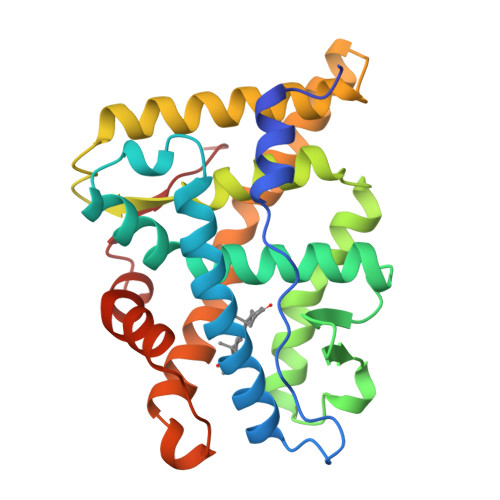
Androgen receptor structureClick to view 3D structureAndrogen receptorP15207Rattus norvegicusPredicted (SEA)
Prediction Confidence Score
0.221
Applicability Domain
0.24 Low confidence
Statistical Significance
0.0264
Supporting Reference Compounds
73
E-value
205.911
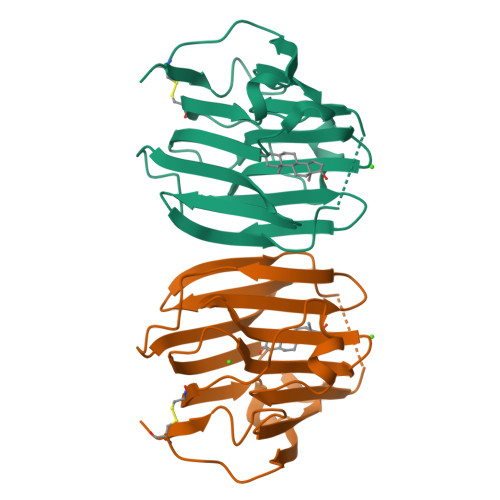
Sex hormone-binding globulin structureClick to view 3D structureSex hormone-binding globulinP04278HumansPredicted (SEA)
Prediction Confidence Score
0.215
Applicability Domain
0.24 Low confidence
Statistical Significance
0.0067
Supporting Reference Compounds
33
E-value
51.9254
Click to view 3D structureProgesterone receptorQ690N0Bos taurusPredicted (SEA)
Prediction Confidence Score
0.211
Applicability Domain
0.24 Low confidence
Statistical Significance
0.008
Supporting Reference Compounds
40
E-value
62.6686
Glucocorticoid receptor structureClick to view 3D structureGlucocorticoid receptorP04150HumansPredicted (SEA)
Prediction Confidence Score
0.208
Applicability Domain
0.226 Low confidence
Statistical Significance
0.1909
Supporting Reference Compounds
154
E-value
1486.53
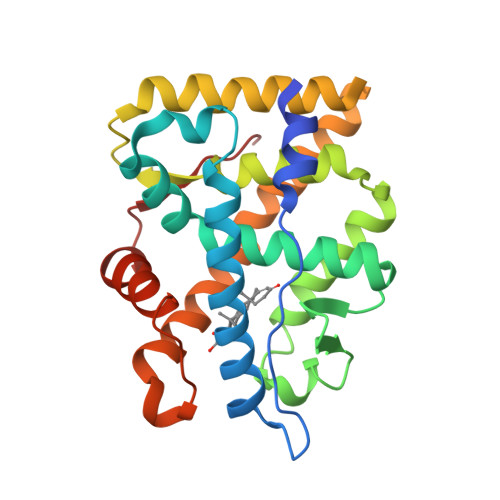
Progesterone receptor structureClick to view 3D structureProgesterone receptorP06401HumansPredicted (SEA)
Prediction Confidence Score
0.202
Applicability Domain
0.226 Low confidence
Statistical Significance
0.2627
Supporting Reference Compounds
119
E-value
2044.79
Corticosteroid-binding globulin structureClick to view 3D structureCorticosteroid-binding globulinP08185HumansPredicted (SEA)
Prediction Confidence Score
0.202
Applicability Domain
0.24 Low confidence
Statistical Significance
0.006
Supporting Reference Compounds
21
E-value
47.0988
Androgen receptor structureClick to view 3D structureAndrogen receptorP10275HumansPredicted (SEA)
Prediction Confidence Score
0.197
Applicability Domain
0.226 Low confidence
Statistical Significance
0.3549
Supporting Reference Compounds
146
E-value
2762.56
Mineralocorticoid receptor structureClick to view 3D structureMineralocorticoid receptorP08235HumansPredicted (SEA)
Prediction Confidence Score
0.195
Applicability Domain
0.226 Low confidence
Statistical Significance
0.1907
Supporting Reference Compounds
74
E-value
1484.35
Type II NADH:quinone oxidoreductase Ndh structureClick to view 3D structureType II NADH:quinone oxidoreductase NdhP95160Mycobacterium tuberculosisPredicted (SEA)
Prediction Confidence Score
0.194
Applicability Domain
0.194 Low confidence
Statistical Significance
0.0249
Supporting Reference Compounds
1
E-value
193.533
Click to view 3D structureType II NADH:quinone oxidoreductase NdhAP95200Mycobacterium tuberculosisPredicted (SEA)
Prediction Confidence Score
0.194
Applicability Domain
0.194 Low confidence
Statistical Significance
0.0249
Supporting Reference Compounds
1
E-value
193.533
Click to view 3D structureSex hormone-binding globulinP08689Rattus norvegicusPredicted (SEA)
Prediction Confidence Score
0.192
Applicability Domain
0.226 Low confidence
Statistical Significance
0.003
Supporting Reference Compounds
2
E-value
23.6662
Receptor-type tyrosine-protein kinase FLT3 structureClick to view 3D structureReceptor-type tyrosine-protein kinase FLT3P36888HumansPredicted (SEA)
Prediction Confidence Score
0.191
Applicability Domain
0.2 Low confidence
Statistical Significance
0.9178
Supporting Reference Compounds
1274
E-value
7145.0
Click to view 3D structure3 beta-hydroxysteroid dehydrogenase/Delta 5-->4-isomeraseP9WQP7Mycobacterium tuberculosisPredicted (SEA)
Prediction Confidence Score
0.19
Applicability Domain
0.19 Low confidence
Statistical Significance
0.0041
Supporting Reference Compounds
1
E-value
31.8403
Serine/threonine-protein phosphatase 2A 65 kDa regulatory subunit A alpha isoform structureClick to view 3D structureSerine/threonine-protein phosphatase 2A 65 kDa regulatory subunit A alpha isoformQ76MZ3Mus musculusPredicted (SEA)
Prediction Confidence Score
0.189
Applicability Domain
0.189 Low confidence
Statistical Significance
2.10e-04
Supporting Reference Compounds
1
E-value
1.63483
Proteasome assembly chaperone 3 structureClick to view 3D structureProteasome assembly chaperone 3Q9BT73HumansPredicted (SEA)
Prediction Confidence Score
0.188
Applicability Domain
0.188 Low confidence
Statistical Significance
0.0019
Supporting Reference Compounds
1
E-value
14.8692
Vascular endothelial growth factor receptor 2 structureClick to view 3D structureVascular endothelial growth factor receptor 2P35968HumansPredicted (SEA)
Prediction Confidence Score
0.187
Applicability Domain
0.2 Low confidence
Statistical Significance
0.9438
Supporting Reference Compounds
1660
E-value
7347.1
Protein kinase C delta type structureClick to view 3D structureProtein kinase C delta typeQ05655HumansPredicted (SEA)
Prediction Confidence Score
0.187
Applicability Domain
0.212 Low confidence
Statistical Significance
0.8985
Supporting Reference Compounds
681
E-value
6994.52
Protein kinase C gamma type structureClick to view 3D structureProtein kinase C gamma typeP05129HumansPredicted (SEA)
Prediction Confidence Score
0.187
Applicability Domain
0.212 Low confidence
Statistical Significance
0.8765
Supporting Reference Compounds
552
E-value
6823.25
Sodium-dependent serotonin transporter structureClick to view 3D structureSodium-dependent serotonin transporterP31645HumansPredicted (SEA)
Prediction Confidence Score
0.186
Applicability Domain
0.218 Low confidence
Statistical Significance
0.8736
Supporting Reference Compounds
593
E-value
6800.75
Estrogen receptor structureClick to view 3D structureEstrogen receptorP03372HumansPredicted (SEA)
Prediction Confidence Score
0.185
Applicability Domain
0.218 Low confidence
Statistical Significance
0.5935
Supporting Reference Compounds
201
E-value
4620.35
Vascular endothelial growth factor receptor 3 structureClick to view 3D structureVascular endothelial growth factor receptor 3P35916HumansPredicted (SEA)
Prediction Confidence Score
0.184
Applicability Domain
0.2 Low confidence
Statistical Significance
0.9114
Supporting Reference Compounds
687
E-value
7095.41
HTH-type quorum-sensing regulator RhlR structureClick to view 3D structureHTH-type quorum-sensing regulator RhlRP54292Pseudomonas aeruginosa (strain ATCC 15692 / PAO1 / 1C / PRS 101 / LMG12228)Predicted (SEA)
Prediction Confidence Score
0.184
Applicability Domain
0.184 Low confidence
Statistical Significance
0.0104
Supporting Reference Compounds
1
E-value
81.2746
Platelet-derived growth factor receptor alpha structureClick to view 3D structurePlatelet-derived growth factor receptor alphaP16234HumansPredicted (SEA)
Prediction Confidence Score
0.183
Applicability Domain
0.193 Low confidence
Statistical Significance
0.8876
Supporting Reference Compounds
519
E-value
6909.74
Mast/stem cell growth factor receptor Kit structureClick to view 3D structureMast/stem cell growth factor receptor KitP10721HumansPredicted (SEA)
Prediction Confidence Score
0.183
Applicability Domain
0.193 Low confidence
Statistical Significance
0.9251
Supporting Reference Compounds
905
E-value
7201.99
Tyrosine-protein kinase Lck structureClick to view 3D structureTyrosine-protein kinase LckP06239HumansPredicted (SEA)
Prediction Confidence Score
0.182
Applicability Domain
0.2 Low confidence
Statistical Significance
0.9593
Supporting Reference Compounds
1130
E-value
7467.84
Concentrations
Not Available
External Links
DrugBank IDNot Available
HMDB IDHMDB0035929
FooDB IDFDB014727
Phenol Explorer IDNot Available
KNApSAcK IDC00010860
BiGG IDNot Available
BioCyc IDNot Available
METLIN IDNot Available
PDB IDNot Available
Wikipedia LinkNot Available
Chemspider ID83754
ChEBI IDNot Available
PubChem Compound ID92780
Kegg Compound IDNot Available
YMDB IDNot Available
ECMDB IDNot Available
References
Synthesis ReferenceNot Available
MSDSNot Available
General ReferencesNot Available