SOYBEAN OIL, EPOXIDIZED (CED0004321)

Record Information
Version1.0
Creation Date2016-05-19 02:27:10 UTC
Update Date2026-08-22 19:38:30 UTC
SynCED IDCED0004321
Secondary Accession Numbers
  • CHEM007542
Identification
Common NameSOYBEAN OIL, EPOXIDIZED
ClassSmall Molecule
Description
SOYBEAN OIL, EPOXIDIZED belongs to the triradylcglycerols, a subclass of glycerolipids within the organic compounds. With an average molecular weight of 975.40 g/mol, SOYBEAN OIL, EPOXIDIZED is a heavy molecule. It is characterized by the chemical formula C57H98O12. This compound serves a wide variety of industrial roles and uses. It is utilized as a plasticizer, solvent, filler, and lubricating agent. Additionally, it functions as a softener and conditioner, a thickening agent, and a stabilizing agent, specifically acting as both a heat stabilizer and a UV stabilizer. It is also employed as processing aids not otherwise specified. SOYBEAN OIL, EPOXIDIZED has been identified in two recorded sources. These include floors within the building and construction sector, as well as food contact materials such as food, food processing, and cookware. Recorded exposure routes for this compound include inhalation, oral exposure, and touch.
Contaminant TypeNot Available
Chemical Structure
SynonymsNot Available
Chemical FormulaC57H98O12
Average Molecular Mass975.400 g/mol
Monoisotopic Mass974.706 g/mol
CAS Registry Number8013-07-8
IUPAC NameNot Available
Traditional NameNot Available
SMILESCCCCCC1C(O1)CC2C(O2)CCCCCCCC(=O)OCC(COC(=O)CCCCCCCC3C(O3)CC4C(O4)CCCCC)OC(=O)CCCCCCCC5C(O5)CC6C(O6)CCCCC
InChI IdentifierInChI=1S/C57H98O12/c1-4-7-19-28-43-49(64-43)37-52-46(67-52)31-22-13-10-16-25-34-55(58)61-40-42(63-57(60)36-27-18-12-15-24-33-48-54(69-48)39-51-45(66-51)30-21-9-6-3)41-62-56(59)35-26-17-11-14-23-32-47-53(68-47)38-50-44(65-50)29-20-8-5-2/h42-54H,4-41H2,1-3H3
InChI KeyJJGBFZZXKPWGCW-UHFFFAOYSA-N
Chemical Taxonomy
ClassificationNot classified
Biological Properties
StatusDetected and Not Quantified
OriginNot Available
Cellular LocationsNot Available
Biofluid LocationsNot Available
Tissue LocationsNot Available
ApplicationsNot Available
Biological RolesNot Available
Chemical RolesNot Available
Organoleptic EffectsNot Available
Physical Properties
StateNot Available
AppearanceNot Available
Experimental Properties
PropertyValue
Melting PointNot Available
Boiling PointNot Available
SolubilityNot Available
Predicted PropertiesNot Available
Spectra
SpectraNot Available
Toxicity Profile
Toxicity Values
Toxicity ValueOrganismDose DescriptorRoute of ExposurePredicted or ExperimentalToxicity RatingReference
4731.0 Log mg/kg [2700:8400]RatLD50oralpredictedNot AvailableNot Available
Toxicity / Toxin ClassNot Available
Mechanism of ToxicityNot Available
Carcinogenicity (IARC Classification)Not Available
Minimum Risk LevelNot Available
SymptomsNot Available
TreatmentNot Available
Health Effects
Health EffectRelationshipDirectionDescriptionReference
Exposure Sources
Source IDSourceSectorReference
CEDs000010Insecticides?Insecticides are synthetic chemicals designed to control or eliminate insect pests that threaten crops and other agricultural products.Agriculture & land managementPubChem
CEDs000494Food contact materials?Food contact materials refer to substances and products that are intended to come into contact with food during processing, packaging, or preparation.Food, food processing & cookwareNot Available
CEDs000497Floors?Floors in built environments can be a significant source of synthetic chemical contamination due to the materials and finishes used in their construction.Building & ConstructionPubChem
CEDs000511Conductors Or Conductive Bodies Characterised By The Conductive Materials?Conductors, or conductive bodies, are materials that allow the flow of electrical current, typically made from metals such as copper, aluminum, or silver.Electrical & Electronic EquipmentPubChem
CEDs000519Electrodes?Electrodes, used in various electrical and electronic applications, can be a source of synthetic chemical contamination due to the materials from which they are constructed and the processes involved in their manufacturing.Electrical & Electronic EquipmentPubChem
CEDs000545Food Preservation?Food preservation often involves the use of synthetic chemicals, such as preservatives, flavor enhancers, and color additives, to extend shelf life and enhance the sensory qualities of food products.Food, food processing & cookwarePubChem
CEDs000561Perfumes Within Detergents And Soaps?Perfumes within detergents and soaps are synthetic fragrance compounds added to enhance the sensory experience of cleaning products.Household cleaning & consumer productsPubChem
CEDs000569Tobacco Smoke Filters?Tobacco smoke filters are designed to reduce the inhalation of harmful substances in cigarette smoke, including tar and other particulate matter.Household cleaning & consumer productsPubChem
CEDs000581Paper Making Machines?Paper making machines utilize various synthetic chemicals throughout the production process, including additives, coatings, and bleaching agents.Industrial manufacturing & chemical processingPubChem
CEDs000596Acaricides?Acaricides are synthetic chemicals specifically designed to target and control mite populations that can damage crops and plants.Agriculture & land managementPubChem
CEDs000600Herbicides And Algicides?Herbicides and algicides are synthetic chemicals primarily used to control unwanted plants and algae in various environments.Agriculture & land managementPubChem
CEDs000606Plant Growth Regulators?Plant Growth Regulators (PGRs) are synthetic chemicals designed to influence the growth and development of plants.Agriculture & land managementPubChem
CEDs000614Essential Oils Or Perfumes?Essential oils and perfumes are complex mixtures of volatile compounds derived from natural or synthetic sources, commonly used for their aromatic properties.Personal care & cosmeticsPubChem
CEDs000632Apparel?Apparel production often involves the use of various synthetic chemicals, including dyes, finishing agents, and preservatives.Textiles, leather & furnishingsPubChem
CEDs000640Embroidering And Tufting?Embroidering and tufting processes often involve the use of synthetic chemicals such as dyes, adhesives, and finishing agents.Textiles, leather & furnishingsPubChem
CEDs000642Footwear?Footwear production often involves the use of various synthetic chemicals, such as adhesives, dyes, and treatments, which can contribute to environmental contamination.Textiles, leather & furnishingsPubChem
CEDs000647Multicolour Dyeing?Multicolour dyeing involves the application of multiple synthetic dyes to textiles and other materials to achieve vibrant, diverse color patterns.Textiles, leather & furnishingsPubChem
CEDs000671Airplanes And Helicopters?Airplanes and helicopters are significant sources of synthetic chemical contamination primarily through the use of aviation fuels, lubricants, and de-icing agents.Aviation & AerospacePubChem
CEDs000685Ceramics?Ceramics can be a source of synthetic chemical contamination through various additives and processing agents used in their production.Building & ConstructionPubChem
CEDs000696Nanotechnology?Nanotechnology involves the manipulation of materials at the molecular or atomic level, typically within the range of 1 to 100 nanometers.Industrial manufacturing & chemical processingPubChem
CEDs000711Coloured Pencils?Coloured pencils are commonly used tools for artistic expression and education, composed primarily of a wood casing and a core made from a mixture of pigments, binders, and waxes.Paper, pulp & fiber productsPubChem
CEDs000716Erasers?Erasers, commonly used in writing and drawing applications, are often made from synthetic rubber or thermoplastic materials, which can contain various additives such as plasticizers, fillers, and colorants.Paper, pulp & fiber productsPubChem
CEDs000726Pens?Pens, commonly utilized for writing and marking, can be a source of synthetic chemical contamination primarily due to the materials used in their manufacturing.Paper, pulp & fiber productsPubChem
CEDs000727Printing Machines Or Presses?Printing machines or presses commonly utilize synthetic chemicals such as inks, solvents, and cleaning agents.Paper, pulp & fiber productsPubChem
CEDs000739Inks?Inks are complex mixtures composed of pigments or dyes, solvents, resins, and additives used primarily for printing and writing applications.Paper, pulp & fiber productsPubChem
CEDs000740Paper?Paper production involves the processing of wood fibers and the use of various chemicals, which can lead to synthetic chemical contamination.Paper, pulp & fiber productsPubChem
CEDs000741Pigment Pastes?Pigment pastes are concentrated dispersions of pigments used to impart color and properties to materials.Paper, pulp & fiber productsPubChem
CEDs000744Water, Wastewater, & Sewage Treatment?Water, wastewater, and sewage treatment processes are critical for managing and mitigating pollutants in water systems.Wastewater, sanitation & biosolidsPubChem
Pathways
0 pathwaysPathway Source: PathBank

No pathways found

No metabolic pathways have been associated with this synthetic chemical

Targets
StructureProteinUniProt IDOrganismRelationshipDetails
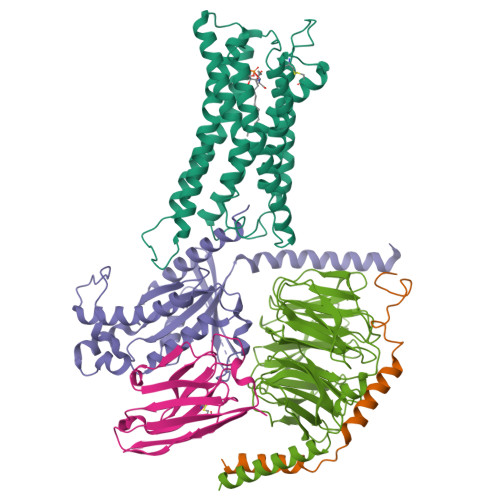
Click to view 3D structureLysophosphatidic acid receptor 3Q9UBY5HumansPredicted (SEA)
Prediction Confidence Score
0.506
Applicability Domain
0.574
Statistical Significance
1.50e-04
Supporting Reference Compounds
21
E-value
1.16774
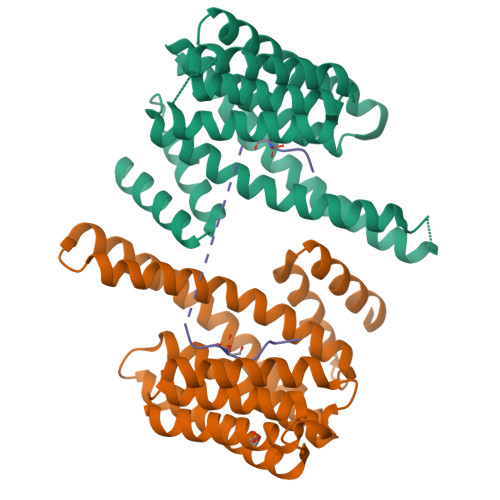
Autotaxin structureClick to view 3D structureAutotaxinQ13822HumansPredicted (SEA)
Prediction Confidence Score
0.502
Applicability Domain
0.574
Statistical Significance
3.50e-04
Supporting Reference Compounds
40
E-value
2.72472
Lysophosphatidic acid receptor 1 structureClick to view 3D structureLysophosphatidic acid receptor 1Q92633HumansPredicted (SEA)
Prediction Confidence Score
0.463
Applicability Domain
0.574
Statistical Significance
2.10e-04
Supporting Reference Compounds
31
E-value
1.63483
Lysophosphatidic acid receptor 2 structureClick to view 3D structureLysophosphatidic acid receptor 2Q9HBW0HumansPredicted (SEA)
Prediction Confidence Score
0.461
Applicability Domain
0.563
Statistical Significance
2.00e-04
Supporting Reference Compounds
30
E-value
1.55698
Click to view 3D structureMitochondrial carnitine/acylcarnitine carrier proteinO43772HumansPredicted (SEA)
Prediction Confidence Score
0.404
Applicability Domain
0.404
Statistical Significance
5.00e-05
Supporting Reference Compounds
1
E-value
0.389246
Click to view 3D structureLysophosphatidic acid receptor 4Q8BLG2Mus musculusPredicted (SEA)
Prediction Confidence Score
0.368
Applicability Domain
0.368
Statistical Significance
3.60e-04
Supporting Reference Compounds
1
E-value
2.80257
Protein kinase C alpha type structureClick to view 3D structureProtein kinase C alpha typeP17252HumansPredicted (SEA)
Prediction Confidence Score
0.362
Applicability Domain
0.605
Statistical Significance
0.0043
Supporting Reference Compounds
258
E-value
33.3973
Click to view 3D structureLysophosphatidic acid receptor 4Q99677HumansPredicted (SEA)
Prediction Confidence Score
0.349
Applicability Domain
0.442
Statistical Significance
2.20e-04
Supporting Reference Compounds
9
E-value
1.71268
Lysophosphatidic acid receptor 6 structureClick to view 3D structureLysophosphatidic acid receptor 6P43657HumansPredicted (SEA)
Prediction Confidence Score
0.348
Applicability Domain
0.442
Statistical Significance
1.80e-04
Supporting Reference Compounds
3
E-value
1.40129
Cannabinoid receptor 1 structureClick to view 3D structureCannabinoid receptor 1P21554HumansPredicted (SEA)
Prediction Confidence Score
0.338
Applicability Domain
0.381
Statistical Significance
0.0072
Supporting Reference Compounds
200
E-value
56.3628
Click to view 3D structureDiacylglycerol lipase-alphaQ9Y4D2HumansPredicted (SEA)
Prediction Confidence Score
0.329
Applicability Domain
0.381
Statistical Significance
0.001
Supporting Reference Compounds
35
E-value
8.01847
Putative P2Y purinoceptor 10 structureClick to view 3D structurePutative P2Y purinoceptor 10O00398HumansPredicted (SEA)
Prediction Confidence Score
0.328
Applicability Domain
0.356
Statistical Significance
5.00e-04
Supporting Reference Compounds
10
E-value
3.89246
Cannabinoid receptor 2 structureClick to view 3D structureCannabinoid receptor 2P34972HumansPredicted (SEA)
Prediction Confidence Score
0.327
Applicability Domain
0.381
Statistical Significance
0.0081
Supporting Reference Compounds
175
E-value
62.8243
Fatty-acid amide hydrolase 1 structureClick to view 3D structureFatty-acid amide hydrolase 1P97612Rattus norvegicusPredicted (SEA)
Prediction Confidence Score
0.322
Applicability Domain
0.381
Statistical Significance
0.0054
Supporting Reference Compounds
102
E-value
42.4278
Click to view 3D structureLysophosphatidic acid receptor 5Q9H1C0HumansPredicted (SEA)
Prediction Confidence Score
0.31
Applicability Domain
0.442
Statistical Significance
2.20e-04
Supporting Reference Compounds
12
E-value
1.71268
Probable G-protein coupled receptor 34 structureClick to view 3D structureProbable G-protein coupled receptor 34Q9UPC5HumansPredicted (SEA)
Prediction Confidence Score
0.304
Applicability Domain
0.356
Statistical Significance
6.50e-04
Supporting Reference Compounds
11
E-value
5.0602
Click to view 3D structureCAI-1 autoinducer sensor kinase/phosphatase CqsSQ9KM66Vibrio cholerae serotype O1 (strain ATCC 39315 / El Tor Inaba N16961)Predicted (SEA)
Prediction Confidence Score
0.298
Applicability Domain
0.298 Low confidence
Statistical Significance
5.30e-04
Supporting Reference Compounds
1
E-value
4.12601
Toll-like receptor 2 structureClick to view 3D structureToll-like receptor 2O60603HumansPredicted (SEA)
Prediction Confidence Score
0.297
Applicability Domain
0.419
Statistical Significance
3.60e-04
Supporting Reference Compounds
9
E-value
2.80257
Probable G-protein coupled receptor 174 structureClick to view 3D structureProbable G-protein coupled receptor 174Q9BXC1HumansPredicted (SEA)
Prediction Confidence Score
0.293
Applicability Domain
0.356
Statistical Significance
4.00e-04
Supporting Reference Compounds
8
E-value
3.11397
Protein kinase C epsilon type structureClick to view 3D structureProtein kinase C epsilon typeQ02156HumansPredicted (SEA)
Prediction Confidence Score
0.292
Applicability Domain
0.605
Statistical Significance
0.024
Supporting Reference Compounds
189
E-value
186.76
Click to view 3D structureNuclear receptor subfamily 4 group A member 2Q07917Rattus norvegicusPredicted (SEA)
Prediction Confidence Score
0.291
Applicability Domain
0.297 Low confidence
Statistical Significance
3.40e-04
Supporting Reference Compounds
3
E-value
2.64687
Tyrosine-protein phosphatase non-receptor type 1 structureClick to view 3D structureTyrosine-protein phosphatase non-receptor type 1P18031HumansPredicted (SEA)
Prediction Confidence Score
0.288
Applicability Domain
0.302
Statistical Significance
0.0156
Supporting Reference Compounds
197
E-value
121.678
Peroxisome proliferator-activated receptor alpha structureClick to view 3D structurePeroxisome proliferator-activated receptor alphaQ07869HumansPredicted (SEA)
Prediction Confidence Score
0.288
Applicability Domain
0.302
Statistical Significance
0.0202
Supporting Reference Compounds
127
E-value
157.255
DNA-directed DNA/RNA polymerase mu structureClick to view 3D structureDNA-directed DNA/RNA polymerase muQ9NP87HumansPredicted (SEA)
Prediction Confidence Score
0.283
Applicability Domain
0.283 Low confidence
Statistical Significance
8.20e-04
Supporting Reference Compounds
1
E-value
6.38364
Click to view 3D structureDNA nucleotidylexotransferaseP06526Bos taurusPredicted (SEA)
Prediction Confidence Score
0.283
Applicability Domain
0.283 Low confidence
Statistical Significance
8.20e-04
Supporting Reference Compounds
1
E-value
6.38364
Concentrations
Not Available
External Links
IdentifiersNot Available
References
Synthesis ReferenceNot Available
MSDSNot Available
General ReferencesNot Available