STARCH, FOOD, MODIFIED: STARCH ACETATE (CED0015528)

Record Information
Version1.0
Creation Date2016-05-19 02:27:30 UTC
Update Date2026-08-22 09:22:46 UTC
SynCED IDCED0015528
Secondary Accession Numbers
  • CHEM007568
Identification
Common NameSTARCH, FOOD, MODIFIED: STARCH ACETATE
ClassSmall Molecule
Description
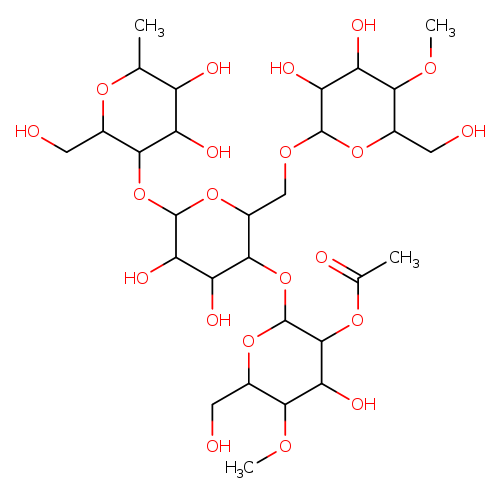
STARCH, FOOD, MODIFIED: STARCH ACETATE belongs to the carbohydrates and carbohydrate conjugates, a subclass of organooxygen compounds within the organic compounds. This organic oxygen compound is characterized by the chemical formula C29H50O21. With an average molecular weight of 734.70 g/mol, STARCH, FOOD, MODIFIED: STARCH ACETATE is a heavy molecule. In industrial applications, this compound serves as a thickening agent. It is documented as being found in or released from six recorded sources across various sectors. Within the category of household cleaning and consumer products, it is associated with pipe accessories, tobacco pipes, and other smoking requisites. In the building and construction sector, it is found in tents, canopies, and ceilings. Additionally, it is utilized in food, food processing, and cookware, specifically in the processing of fish.
Contaminant TypeNot Available
Chemical Structure
Synonyms
ValueSource
2-[(6-{[4,5-dihydroxy-2-(hydroxymethyl)-6-methyloxan-3-yl]oxy}-2-({[3,4-dihydroxy-6-(hydroxymethyl)-5-methoxyoxan-2-yl]oxy}methyl)-4,5-dihydroxyoxan-3-yl)oxy]-4-hydroxy-6-(hydroxymethyl)-5-methoxyoxan-3-yl acetic acidGenerator
Chemical FormulaC29H50O21
Average Molecular Mass734.698 g/mol
Monoisotopic Mass734.284 g/mol
CAS Registry Number9045-28-7
IUPAC Name2-[(6-{[4,5-dihydroxy-2-(hydroxymethyl)-6-methyloxan-3-yl]oxy}-2-({[3,4-dihydroxy-6-(hydroxymethyl)-5-methoxyoxan-2-yl]oxy}methyl)-4,5-dihydroxyoxan-3-yl)oxy]-4-hydroxy-6-(hydroxymethyl)-5-methoxyoxan-3-yl acetate
Traditional Name2-[(6-{[4,5-dihydroxy-2-(hydroxymethyl)-6-methyloxan-3-yl]oxy}-2-({[3,4-dihydroxy-6-(hydroxymethyl)-5-methoxyoxan-2-yl]oxy}methyl)-4,5-dihydroxyoxan-3-yl)oxy]-4-hydroxy-6-(hydroxymethyl)-5-methoxyoxan-3-yl acetate
SMILESCOC1C(O)C(O)C(OCC2OC(OC3C(O)C(O)C(C)OC3CO)C(O)C(O)C2OC2OC(CO)C(OC)C(O)C2OC(C)=O)OC1CO
InChI IdentifierInChI=1S/C29H50O21/c1-9-15(34)16(35)24(13(7-32)44-9)49-28-20(39)18(37)25(50-29-26(45-10(2)33)21(40)23(42-4)12(6-31)47-29)14(48-28)8-43-27-19(38)17(36)22(41-3)11(5-30)46-27/h9,11-32,34-40H,5-8H2,1-4H3
InChI KeyMKRNVBXERAPZOP-UHFFFAOYSA-N
Chemical Taxonomy
Description Belongs to the class of organic compounds known as oligosaccharides. These are carbohydrates made up of 3 to 10 monosaccharide units linked to each other through glycosidic bonds.
KingdomOrganic compounds
Super ClassOrganic oxygen compounds
ClassOrganooxygen compounds
Sub ClassCarbohydrates and carbohydrate conjugates
Direct ParentOligosaccharides
Alternative Parents
Substituents
  • Oligosaccharide
  • O-glycosyl compound
  • Glycosyl compound
  • Oxane
  • Secondary alcohol
  • Carboxylic acid ester
  • Oxacycle
  • Organoheterocyclic compound
  • Monocarboxylic acid or derivatives
  • Ether
  • Dialkyl ether
  • Carboxylic acid derivative
  • Acetal
  • Organic oxide
  • Hydrocarbon derivative
  • Primary alcohol
  • Carbonyl group
  • Alcohol
  • Aliphatic heteromonocyclic compound
Molecular FrameworkAliphatic heteromonocyclic compounds
External DescriptorsNot Available
Biological Properties
StatusDetected and Not Quantified
OriginNot Available
Cellular LocationsNot Available
Biofluid LocationsNot Available
Tissue LocationsNot Available
ApplicationsNot Available
Biological RolesNot Available
Chemical RolesNot Available
Organoleptic EffectsNot Available
Physical Properties
StateNot Available
AppearanceNot Available
Experimental Properties
PropertyValue
Melting PointNot Available
Boiling PointNot Available
SolubilityNot Available
Predicted Properties
PropertyValueSource
Water Solubility141 g/LALOGPS
logP-2ALOGPS
logP-5.7ChemAxon
logS-0.72ALOGPS
pKa (Strongest Acidic)11.87ChemAxon
pKa (Strongest Basic)-3ChemAxon
Physiological Charge0ChemAxon
Hydrogen Acceptor Count20ChemAxon
Hydrogen Donor Count10ChemAxon
Polar Surface Area311.67 ŲChemAxon
Rotatable Bond Count14ChemAxon
Refractivity155.21 m³·mol⁻¹ChemAxon
Polarizability71.24 ųChemAxon
Number of Rings4ChemAxon
BioavailabilityNoChemAxon
Rule of FiveNoChemAxon
Ghose FilterNoChemAxon
Veber's RuleNoChemAxon
MDDR-like RuleYesChemAxon
Spectra
Spectra
Spectrum TypeDescriptionSplash KeyDeposition DateView
Predicted GC-MSPredicted GC-MS SpectrumNot AvailableNot AvailableView Spectrum
Predicted LC-MS/MSPredicted LC-MS/MS Spectrumsplash10-00os-1900433500-6e4d5d2163cb7349c270Not AvailableView Spectrum
Predicted LC-MS/MSPredicted LC-MS/MS Spectrumsplash10-01t9-0902220000-6ad86479dd5036483950Not AvailableView Spectrum
Predicted LC-MS/MSPredicted LC-MS/MS Spectrumsplash10-004i-1901100000-de86c8da2e9f7abb4604Not AvailableView Spectrum
Predicted LC-MS/MSPredicted LC-MS/MS Spectrumsplash10-069u-6900244600-386607d88fd651e857bcNot AvailableView Spectrum
Predicted LC-MS/MSPredicted LC-MS/MS Spectrumsplash10-0a6r-9800112200-0afdd384dbffb041e23cNot AvailableView Spectrum
Predicted LC-MS/MSPredicted LC-MS/MS Spectrumsplash10-0a4i-9400000000-9ab00e426fb9fc2cf775Not AvailableView Spectrum
Toxicity Profile
Toxicity ValuesNot Available
Toxicity / Toxin ClassNot Available
Mechanism of ToxicityNot Available
Carcinogenicity (IARC Classification)Not Available
Minimum Risk LevelNot Available
SymptomsNot Available
TreatmentNot Available
Health Effects
Health EffectRelationshipDirectionDescriptionReference
Exposure Sources
Source IDSourceSectorReference
CEDs000010Insecticides?Insecticides are synthetic chemicals designed to control or eliminate insect pests that threaten crops and other agricultural products.Agriculture & land managementPubChem
CEDs000070Stormwater runoff?Stormwater runoff refers to the flow of rainwater or melted snow that does not soak into the ground and instead collects pollutants as it travels over impervious surfaces such as roads and parking lots.Automotive & urban infrastructurePubChem
CEDs000233Brushes?Brushes used in personal care and cosmetics can be a source of synthetic chemical contamination due to the materials and coatings used in their manufacturing.Personal care & cosmeticsPubChem
CEDs000495Ceilings?Ceilings in built environments can be a source of synthetic chemical contamination due to the materials used in their construction and finishes.Building & ConstructionPubChem
CEDs000503Tents Or Canopies?Tents and canopies used in various applications can be a source of synthetic chemical contamination primarily due to the materials from which they are made.Building & ConstructionPubChem
CEDs000511Conductors Or Conductive Bodies Characterised By The Conductive Materials?Conductors, or conductive bodies, are materials that allow the flow of electrical current, typically made from metals such as copper, aluminum, or silver.Electrical & Electronic EquipmentPubChem
CEDs000518Electrically Stimulated Smoking Devices?Electrically stimulated smoking devices, commonly known as e-cigarettes or vape pens, utilize electrical components to heat a liquid solution, often containing nicotine, flavorings, and other additives, to produce an aerosol for inhalation.Electrical & Electronic EquipmentPubChem
CEDs000519Electrodes?Electrodes, used in various electrical and electronic applications, can be a source of synthetic chemical contamination due to the materials from which they are constructed and the processes involved in their manufacturing.Electrical & Electronic EquipmentPubChem
CEDs000524Hybrid Capacitors?Hybrid capacitors are energy storage devices that combine the properties of electrolytic and supercapacitors, utilizing a combination of electrochemical principles to achieve higher energy density and power density.Electrical & Electronic EquipmentPubChem
CEDs000545Food Preservation?Food preservation often involves the use of synthetic chemicals, such as preservatives, flavor enhancers, and color additives, to extend shelf life and enhance the sensory qualities of food products.Food, food processing & cookwarePubChem
CEDs000551Processing Fish?Processing fish can lead to synthetic chemical contamination through various stages of production and preservation.Food, food processing & cookwarePubChem
CEDs000552Processing Meats?Processing meats can lead to synthetic chemical contamination primarily through the use of additives and preservatives.Food, food processing & cookwarePubChem
CEDs000555Bleaching Agents?Bleaching agents are chemical substances used to whiten or lighten materials, often employed in various cleaning products for their stain removal and disinfecting properties.Household cleaning & consumer productsPubChem
CEDs000556Cigar Cigarettes?Cigar cigarettes are a source of synthetic chemical contamination due to the combustion of various tobacco blends and additives.Household cleaning & consumer productsPubChem
CEDs000559Non Electric Simulated Smoking Devices?Non-electric simulated smoking devices, often designed to mimic the experience of smoking without combustion, can be sources of synthetic chemical contamination due to the materials and chemicals used in their construction and operation.Household cleaning & consumer productsPubChem
CEDs000560Other Smoking Requisites?Other smoking requisites, including items such as lighters, matches, and rolling papers, can introduce synthetic chemical contamination through various components and additives.Household cleaning & consumer productsPubChem
CEDs000561Perfumes Within Detergents And Soaps?Perfumes within detergents and soaps are synthetic fragrance compounds added to enhance the sensory experience of cleaning products.Household cleaning & consumer productsPubChem
CEDs000562Pipe Accessories?Pipe accessories, such as fittings, connectors, and seals, are components used in plumbing systems to facilitate the flow of liquids and gases.Household cleaning & consumer productsPubChem
CEDs000563Soap Detergents?Soap detergents are synthetic surfactants designed to enhance the cleaning efficacy of water by reducing surface tension, allowing for better interaction with dirt and grease.Household cleaning & consumer productsPubChem
CEDs000566Tobacco Pipes?Tobacco pipes, often made from materials such as plastic, wood, or metal, can serve as sources of synthetic chemical contamination due to the residues left by tobacco products.Household cleaning & consumer productsPubChem
CEDs000569Tobacco Smoke Filters?Tobacco smoke filters are designed to reduce the inhalation of harmful substances in cigarette smoke, including tar and other particulate matter.Household cleaning & consumer productsPubChem
CEDs000578Making Cigars?The process of making cigars involves several steps, including the cultivation of tobacco, fermentation, and the application of various additives to enhance flavor and preservation.Industrial manufacturing & chemical processingPubChem
CEDs000579Manufacture Of Iron Or Steel?The manufacture of iron or steel involves various processes, including smelting, refining, and alloying, which can result in the release of synthetic chemicals and contaminants.Industrial manufacturing & chemical processingPubChem
CEDs000580Manufacture Preparation Of Tobacco Products?The manufacture and preparation of tobacco products involve various processes that can result in the introduction of synthetic chemicals into the environment.Industrial manufacturing & chemical processingPubChem
CEDs000581Paper Making Machines?Paper making machines utilize various synthetic chemicals throughout the production process, including additives, coatings, and bleaching agents.Industrial manufacturing & chemical processingPubChem
CEDs000592Marine Propulsion Or Steering?Marine propulsion and steering systems often rely on various synthetic chemicals, including lubricants, fuels, and hydraulic fluids.Marine, shipping & aquaculturePubChem
CEDs000609Aftershave?Aftershave is a grooming product typically used to soothe and protect the skin following shaving.Personal care & cosmeticsPubChem
CEDs000610Aftersun Products?Aftersun products are designed to soothe and hydrate the skin after sun exposure, often containing various synthetic chemicals such as emollients, preservatives, and fragrances.Personal care & cosmeticsPubChem
CEDs000611Anti Perspirants Or Body Deoderants?Antiperspirants and body deodorants commonly contain synthetic chemicals such as aluminum compounds, parabens, and synthetic fragrances.Personal care & cosmeticsPubChem
CEDs000613Depilatories?Depilatories are products designed to remove unwanted hair through the application of synthetic chemicals that break down the protein structure of hair, facilitating its removal.Personal care & cosmeticsPubChem
CEDs000614Essential Oils Or Perfumes?Essential oils and perfumes are complex mixtures of volatile compounds derived from natural or synthetic sources, commonly used for their aromatic properties.Personal care & cosmeticsPubChem
CEDs000615Eye Makeup Products?Eye makeup products, including mascaras, eyeliners, and eyeshadows, often contain a variety of synthetic chemicals such as pigments, preservatives, and film-forming agents.Personal care & cosmeticsPubChem
CEDs000617Lip Care Products?Lip care products, including lipsticks, balms, and glosses, often contain a variety of synthetic chemicals such as parabens, phthalates, and synthetic fragrances.Personal care & cosmeticsPubChem
CEDs000618Lip Makeup Products?Lip makeup products, such as lipsticks, lip glosses, and lip liners, often contain a variety of synthetic chemicals, including pigments, preservatives, and emollients.Personal care & cosmeticsPubChem
CEDs000632Apparel?Apparel production often involves the use of various synthetic chemicals, including dyes, finishing agents, and preservatives.Textiles, leather & furnishingsPubChem
CEDs000638Decorating Textiles?Decorating textiles often involves the use of synthetic chemicals such as dyes, finishes, and coatings.Textiles, leather & furnishingsPubChem
CEDs000642Footwear?Footwear production often involves the use of various synthetic chemicals, such as adhesives, dyes, and treatments, which can contribute to environmental contamination.Textiles, leather & furnishingsPubChem
CEDs000650Purses Luggage Hand Bags?Purses, luggage, and handbags are often manufactured using synthetic materials such as polyvinyl chloride (PVC), polyurethane, and various types of nylon.Textiles, leather & furnishingsPubChem
CEDs000659Transfer Printing?Transfer printing is a process used to apply designs and patterns onto various substrates, commonly utilizing synthetic dyes and inks that can contain hazardous chemicals.Textiles, leather & furnishingsPubChem
CEDs000662Yarns Or Threads?Yarns or threads used in textiles can be a source of synthetic chemical contamination due to the production processes and treatments they undergo.Textiles, leather & furnishingsPubChem
CEDs000678Nitrogenous Fertilisers?Nitrogenous fertilizers are synthetic chemical compounds primarily used to enhance plant growth by supplying essential nitrogen, a crucial nutrient for photosynthesis and protein synthesis.Agriculture & land managementPubChem
CEDs000679Phosphatic Fertilisers?Phosphatic fertilizers are synthetic chemical products primarily composed of phosphorus, which is essential for plant growth.Agriculture & land managementPubChem
CEDs000684Cements?Cements are a composite material primarily used as a binding agent in construction applications, formed by the calcination of limestone and clay minerals at high temperatures.Building & ConstructionPubChem
CEDs000685Ceramics?Ceramics can be a source of synthetic chemical contamination through various additives and processing agents used in their production.Building & ConstructionPubChem
CEDs000686Clay Wares?Clay wares are ceramic products made from natural clay, often utilized in various construction applications such as tiles, bricks, and sanitary ware.Building & ConstructionPubChem
CEDs000688Glass Coatings?Glass coatings are synthetic chemical formulations applied to glass surfaces to enhance properties such as durability, UV resistance, and aesthetic appeal.Building & ConstructionPubChem
CEDs000696Nanotechnology?Nanotechnology involves the manipulation of materials at the molecular or atomic level, typically within the range of 1 to 100 nanometers.Industrial manufacturing & chemical processingPubChem
CEDs000726Pens?Pens, commonly utilized for writing and marking, can be a source of synthetic chemical contamination primarily due to the materials used in their manufacturing.Paper, pulp & fiber productsPubChem
CEDs000734Coating Compositions?Coating compositions, which include paints, sealants, and varnishes, are formulated with a variety of synthetic chemicals such as solvents, resins, pigments, and additives.Building & ConstructionPubChem
CEDs000735Explosives?Explosives are chemical compounds or mixtures designed to undergo rapid decomposition, releasing energy in the form of gas and heat.Defense & military infrastructurePubChem
CEDs000739Inks?Inks are complex mixtures composed of pigments or dyes, solvents, resins, and additives used primarily for printing and writing applications.Paper, pulp & fiber productsPubChem
CEDs000740Paper?Paper production involves the processing of wood fibers and the use of various chemicals, which can lead to synthetic chemical contamination.Paper, pulp & fiber productsPubChem
CEDs000741Pigment Pastes?Pigment pastes are concentrated dispersions of pigments used to impart color and properties to materials.Paper, pulp & fiber productsPubChem
CEDs000743Sludge Treatment?Sludge treatment involves the processing of waste materials generated from wastewater treatment plants, which often contain a variety of organic and inorganic substances.Wastewater, sanitation & biosolidsPubChem
CEDs000744Water, Wastewater, & Sewage Treatment?Water, wastewater, and sewage treatment processes are critical for managing and mitigating pollutants in water systems.Wastewater, sanitation & biosolidsPubChem
CEDs01021Corn Starch-based FilmsAgriculture & land managementPMC10222927
CEDs01904BioplasticsIndustrial manufacturing & chemical processingPMC8348970
Pathways
0 pathwaysPathway Source: PathBank

No pathways found

No metabolic pathways have been associated with this synthetic chemical

Targets
StructureProteinUniProt IDOrganismRelationshipDetails
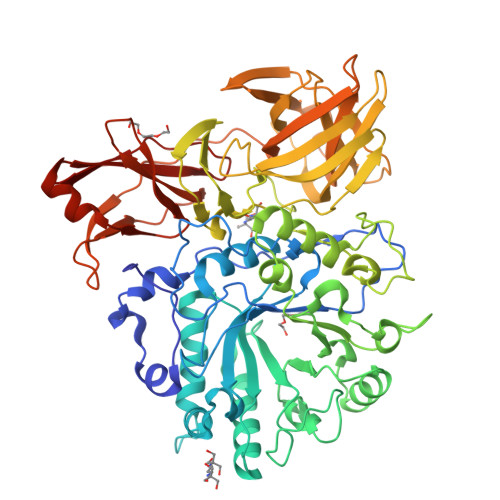
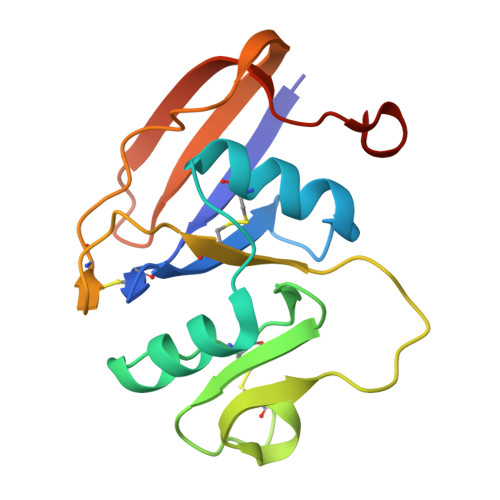
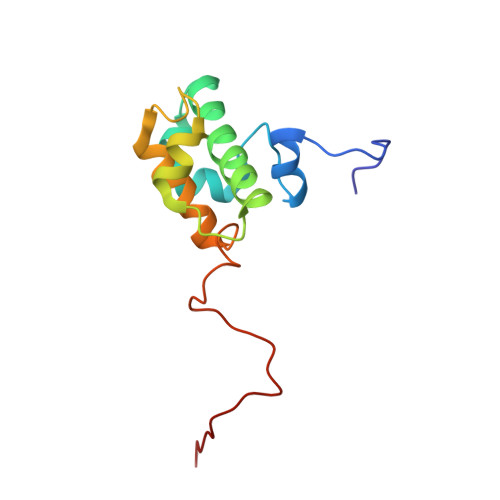
Endo-beta-N-acetylglucosaminidase structureClick to view 3D structureEndo-beta-N-acetylglucosaminidaseQ9ZB22Arthrobacter protophormiaePredicted (SEA)
Prediction Confidence Score
0.403
Applicability Domain
0.403
Statistical Significance
1.00e-05
Supporting Reference Compounds
1
E-value
0.0778492
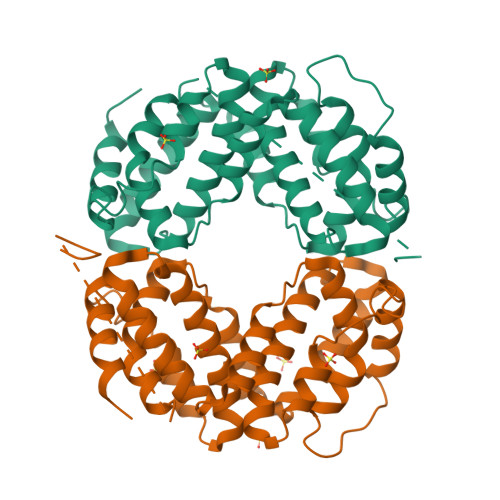
Click to view 3D structureAlpha-amylaseQ7M328Sus scrofa domesticusPredicted (SEA)
Prediction Confidence Score
0.342
Applicability Domain
0.342
Statistical Significance
6.00e-05
Supporting Reference Compounds
1
E-value
0.467095
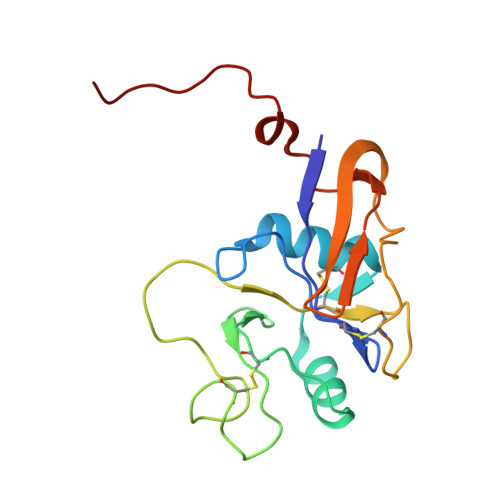
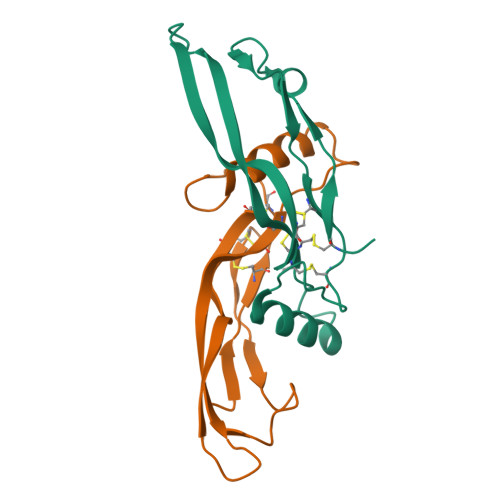
CD44 antigen structureClick to view 3D structureCD44 antigenP16070HumansPredicted (SEA)
Prediction Confidence Score
0.338
Applicability Domain
0.338
Statistical Significance
1.00e-04
Supporting Reference Compounds
1
E-value
0.778492
CD44 antigen structureClick to view 3D structureCD44 antigenP15379Mus musculusPredicted (SEA)
Prediction Confidence Score
0.338
Applicability Domain
0.338
Statistical Significance
1.00e-04
Supporting Reference Compounds
1
E-value
0.778492
Click to view 3D structureN-acetyllactosaminide alpha-1,3-galactosyltransferaseP50127Sus scrofaPredicted (SEA)
Prediction Confidence Score
0.338
Applicability Domain
0.338
Statistical Significance
1.50e-04
Supporting Reference Compounds
1
E-value
1.16774
Interferon gamma structureClick to view 3D structureInterferon gammaP01579HumansPredicted (SEA)
Prediction Confidence Score
0.332
Applicability Domain
0.333
Statistical Significance
7.00e-05
Supporting Reference Compounds
2
E-value
0.544945
Bone morphogenetic protein 6 structureClick to view 3D structureBone morphogenetic protein 6P22004HumansPredicted (SEA)
Prediction Confidence Score
0.33
Applicability Domain
0.33
Statistical Significance
7.00e-05
Supporting Reference Compounds
1
E-value
0.544945
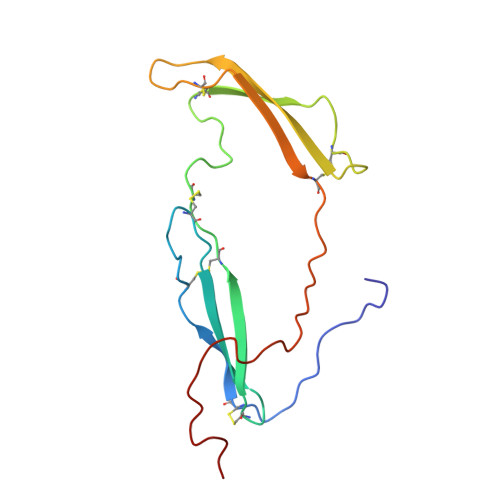
Platelet factor 4 structureClick to view 3D structurePlatelet factor 4P02776HumansPredicted (SEA)
Prediction Confidence Score
0.33
Applicability Domain
0.33
Statistical Significance
7.00e-05
Supporting Reference Compounds
1
E-value
0.544945
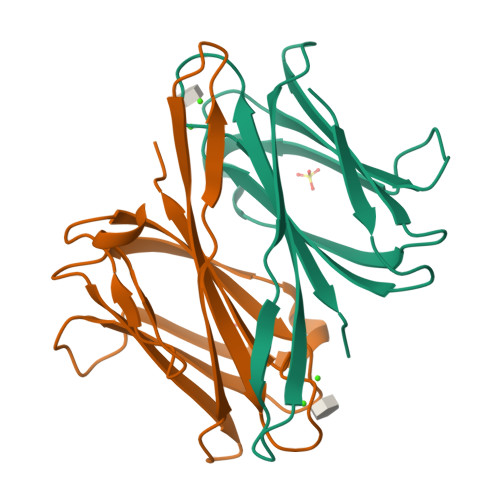
Galectin-3 structureClick to view 3D structureGalectin-3P17931HumansPredicted (SEA)
Prediction Confidence Score
0.329
Applicability Domain
0.429
Statistical Significance
0.001
Supporting Reference Compounds
23
E-value
8.09632
Click to view 3D structureKiller cell lectin-like receptor subfamily B member 1AP27471Rattus norvegicusPredicted (SEA)
Prediction Confidence Score
0.308
Applicability Domain
0.328
Statistical Significance
5.00e-05
Supporting Reference Compounds
2
E-value
0.389246
Click to view 3D structureE-selectinP98105Rattus norvegicusPredicted (SEA)
Prediction Confidence Score
0.306
Applicability Domain
0.306
Statistical Significance
5.00e-05
Supporting Reference Compounds
1
E-value
0.389246
Click to view 3D structureCMP-N-acetylneuraminate-beta-galactosamide-alpha-2,3-sialyltransferase 1P54751Mus musculusPredicted (SEA)
Prediction Confidence Score
0.275
Applicability Domain
0.275 Low confidence
Statistical Significance
4.90e-04
Supporting Reference Compounds
1
E-value
3.81461
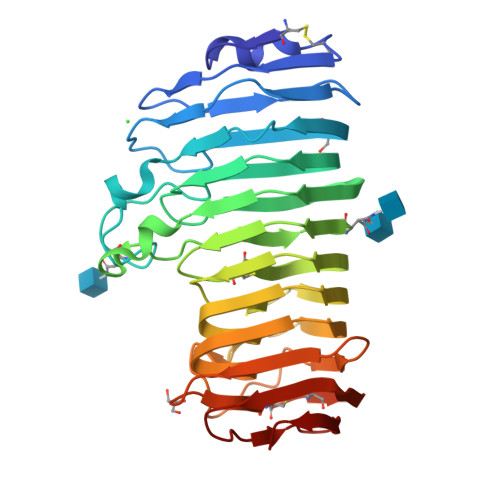
Endopolygalactyuronase structureClick to view 3D structureEndopolygalactyuronaseP79074Chondrostereum purpureumPredicted (SEA)
Prediction Confidence Score
0.271
Applicability Domain
0.271 Low confidence
Statistical Significance
5.00e-05
Supporting Reference Compounds
1
E-value
0.389246
Gap junction beta-2 protein structureClick to view 3D structureGap junction beta-2 proteinP29033HumansPredicted (SEA)
Prediction Confidence Score
0.271
Applicability Domain
0.299 Low confidence
Statistical Significance
1.70e-04
Supporting Reference Compounds
2
E-value
1.32344
PA-I galactophilic lectin structureClick to view 3D structurePA-I galactophilic lectinQ05097Pseudomonas aeruginosa (strain ATCC 15692 / PAO1 / 1C / PRS 101 / LMG12228)Predicted (SEA)
Prediction Confidence Score
0.263
Applicability Domain
0.34
Statistical Significance
3.50e-04
Supporting Reference Compounds
4
E-value
2.72472
Lysine-specific histone demethylase 1A structureClick to view 3D structureLysine-specific histone demethylase 1AO60341HumansPredicted (SEA)
Prediction Confidence Score
0.26
Applicability Domain
0.361
Statistical Significance
0.035
Supporting Reference Compounds
85
E-value
272.628
Lectin structureClick to view 3D structureLectinB4EH87Burkholderia cenocepacia (strain ATCC BAA-245 / DSM 16553 / LMG 16656/ NCTC 13227 / J2315 / CF5610) (Burkholderia cepacia (strain J2315))Predicted (SEA)
Prediction Confidence Score
0.256
Applicability Domain
0.34
Statistical Significance
0.0012
Supporting Reference Compounds
3
E-value
9.18621
Gap junction alpha-1 protein structureClick to view 3D structureGap junction alpha-1 proteinP17302HumansPredicted (SEA)
Prediction Confidence Score
0.253
Applicability Domain
0.253 Low confidence
Statistical Significance
2.10e-04
Supporting Reference Compounds
1
E-value
1.63483
Neurotrophic factor BDNF precursor form structureClick to view 3D structureNeurotrophic factor BDNF precursor formP23560HumansPredicted (SEA)
Prediction Confidence Score
0.253
Applicability Domain
0.253 Low confidence
Statistical Significance
1.30e-04
Supporting Reference Compounds
2
E-value
1.01204
Pleiotrophin structureClick to view 3D structurePleiotrophinP21246HumansPredicted (SEA)
Prediction Confidence Score
0.253
Applicability Domain
0.253 Low confidence
Statistical Significance
1.30e-04
Supporting Reference Compounds
1
E-value
1.01204
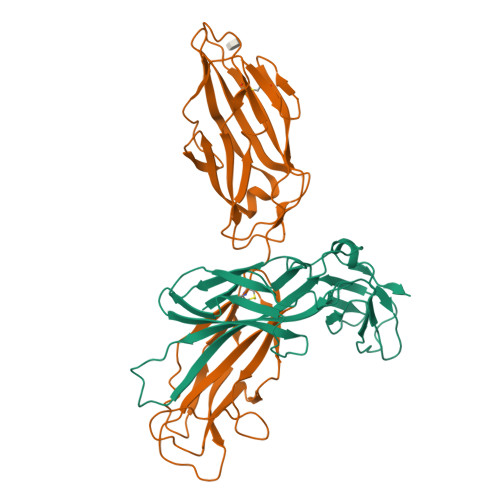
Galectin-9 structureClick to view 3D structureGalectin-9O00182HumansPredicted (SEA)
Prediction Confidence Score
0.251
Applicability Domain
0.429
Statistical Significance
0.0016
Supporting Reference Compounds
15
E-value
12.3002
Type 1 fimbrin D-mannose specific adhesin structureClick to view 3D structureType 1 fimbrin D-mannose specific adhesinP08191Escherichia coli K-12Predicted (SEA)
Prediction Confidence Score
0.248
Applicability Domain
0.34
Statistical Significance
0.0015
Supporting Reference Compounds
4
E-value
11.8331
Protein kinase C alpha type structureClick to view 3D structureProtein kinase C alpha typeP17252HumansPredicted (SEA)
Prediction Confidence Score
0.239
Applicability Domain
0.361
Statistical Significance
0.1422
Supporting Reference Compounds
258
E-value
1106.86
Sialic acid-binding Ig-like lectin 7 structureClick to view 3D structureSialic acid-binding Ig-like lectin 7Q9Y286HumansPredicted (SEA)
Prediction Confidence Score
0.231
Applicability Domain
0.231 Low confidence
Statistical Significance
1.90e-04
Supporting Reference Compounds
1
E-value
1.47914
Fucose-binding lectin PA-IIL structureClick to view 3D structureFucose-binding lectin PA-IILQ9HYN5Pseudomonas aeruginosa (strain ATCC 15692 / PAO1 / 1C / PRS 101 / LMG 12228)Predicted (SEA)
Prediction Confidence Score
0.231
Applicability Domain
0.308
Statistical Significance
3.20e-04
Supporting Reference Compounds
5
E-value
2.49118
Concentrations
Not Available
External Links
DrugBank IDNot Available
HMDB IDHMDB0258484
FooDB IDNot Available
Phenol Explorer IDNot Available
KNApSAcK IDNot Available
BiGG IDNot Available
BioCyc IDNot Available
METLIN IDNot Available
PDB IDNot Available
Wikipedia LinkNot Available
Chemspider ID21242909
ChEBI IDNot Available
PubChem Compound IDNot Available
Kegg Compound IDNot Available
YMDB IDNot Available
ECMDB IDNot Available
References
Synthesis ReferenceNot Available
MSDSNot Available
General ReferencesNot Available